advertisement
Cabin fever: Three stand-out holiday homes in Norway

Cabin fever: Three stand-out holiday homes in Norway

For centuries, Norwegians from all walks of life have been making their way to seasonal rural residences. Thesehytter(holiday homes) andårestuer(traditional huts) offer a base for favourite Norwegian pastimes of hunting, fishing, hiking and cross-country skiing.With some 450,000 of these structures spread across the country (and one in three families in Norway owning one), it’s no surprise that some of the country’s finest architects are turning a hand to their design. Across the next few pages, we visit three outstanding examples.1.The blended buildNorefjellOffice Kim LenschowCabin culture and the desire for a holiday in nature – whether a lengthy summer on the lake or cosy winter weekend – is not unique to Norway among northern European nations. But the development of thehytteis. This humble holiday cottage has its roots in the vacation habits of the country’s city dwellers and their desire to escape from urban areas, going off-grid in simple huts, so as to allow themselves to be immersed in Norway’s rugged landscapes. These forces are still present in thehytteof today.“These are places where you step out of your normal routines and live life differently, almost allowing yourself to be bored,” says Kim Lenschow of these countryside retreats. The Copenhagen-based Norwegian architect has recently finished one of these small, traditional timber holiday cabins in a rocky area northwest of Oslo.Three-metre high windows frame sweeping viewsLocated 800 metres above sea level in Norefjell, this cabin was commissioned by a friend of the architect, who discovered the plot while searching for the perfect spot to build his own country escape. “This project was about bringing traditional elements of ahytteto life through modern construction,” says Lenschow, whose approach to architecture is defined by a desire to create harmony between the built world and the natural environment.“The area surrounding Norefjell is beautiful,” says Lenschow. “You have this rocky terrain contrasted by spruce trees.” The architect adds that one of his guiding principles for the project was to ensure that the cabin complemented its surroundings. “We wanted to understand the relationship between architecture and nature.”To explore this relationship, Lenschow identified the need for the building’s colour and materials to work in harmony with the surroundings. “Architecture and nature are opposites in a way, because you’re adding something to a landscape with a specific logic in mind,” he says. “So the most effective approach was to emphasise simplicity and use colours that complemented the muted tones of the woodlands.” The resulting palette of primarily earthy tones allows the home to bleed visually into the background, and is particularly evident in the exterior surfaces, which feature two distinct elements.On one side, the façade is finished with a textured render applied over the underlying brick structure. This grooved, light-grey surface gives the exterior a unique character – and creates striking shadows on sunny days – without clashing with the rocky terrain on which it sits. “We wanted to add subtle details to make it clear that this wasn’t just part of the rock,” says Lenschow. “But it also could not be too bold.”On the opposite side, facing the sloping landscape and expansive woodland, is a façade made from spruce sourced from the local region. The timber is treated using iron vitriol, which speeds up the initial decay of the wood to create a protective surface that can endure harsh winters. Connection with the landscape is enhanced on this side of the building thanks to three-metre-high windows that frame sweeping views of the surrounding terrain. To further intensify this relationship with the natural world, Lenschow positioned the building in such a way that the boulders and natural elements block sightlines to the road. “The surrounding rocks almost become part of the furniture,” he says.Charred spruce façadeThe colour, material and windows have helped thishytteto blend into the landscape but Lenschow didn’t want to completely disguise the building, so he opted for a straightforward geometric design. “It wasn’t about coming up with clever shapes to camouflage the house,” says the architect. “I like it when a building is proudly a work of architecture but still resonates with the setting.”It’s a theme that continues inside, where thehytte’s floors belie the challenging terrain on which it sits. Rather than smoothing out the plot, Lenschow designed the structure so that the site’s varied grade define its rooms, utilising single steps to act as dividers between them. “We worked with the natural levels of the ground to section off different spaces,” he says. A bedroom sits on one level and a living room on another, with a separate kitchen level creating the sensation of walking on uneven terrain as you move through the house. “You almost feel like you’re outside.”Crisp weather, light and shadowsThe interiors are kept simple. Many of the rooms are clad in a light wood, which is bathed in natural light even during the darkest months of the year. There’s a sense of spaciousness too, with minimal furnishings – a mix of Nordic design classics and wooden pieces – complementing the building’s palette. “The furniture, like the building, is very simple,” says Lenschow. “It gives the space a cosy feel.”Key items include a rattan and teak cabinet by Danish homeware brand Nordal, and a modular L-shaped sofa in cream that defines the lounge area. Next to it, a step leads to the dining space, which features a long wooden table surrounded by Bambi 57/4 dining chairs – a 1955 design by Rastad&Relling now produced by Norwegian furniture brand Fjordfiesta. Behind this, floor-to-ceiling windows with light-hued semi-transparent curtains diffuse light throughout the space.Custom shelving divides the spaceA light palette is essential for dark winter monthsFor Lenschow, designing thishyttemeant creating a new structure equipped with modern amenities, while preserving the traditional essence of an off-grid retreat by way of simple construction and a deep connection with nature. “What the modern country escape looks like is an ongoing conversation in Norway,” says the architect. “It’s not about going back in time; it’s about each individual’s interpretation of what it means to be immersed in nature. For some, this means having a cabin in a remote spot, only accessible by skis. For others, it’s simply about being surrounded by stillness. What ahyttemeans to you is very personal.”kimlenschow.com2.The new visionÅrestuaGartnerfuglen Arkitekter“We believe that every building should have its own soul,” says architect Ole Larsen of Oslo’s Gartnerfuglen Arkitekter, a firm he co-founded with Astrid Wang and Olav Lunde Arneberg in 2014. “Our aim is to uncover the unique potential of every project, rather than applying a specific signature style to everything we do,” adds Wang.Case in point is Årestua, a newly finished holiday home for a family, inspired by the traditional design ofårestue: traditional wooden homes built around an open fireplace. Located in Telemark, a region southwest of Oslo, it has been built using traditional methods, with specialist carpenters carefully stacking timber logs to form walls. “This construction method was a beautiful way to connect architecture with its place,” says Wang.It’s an approach that also allowed the architects to explore how traditional architectural vernaculars, such as theårestue, can be reimagined for modern living. “Traditionally, this type of cabin is quite dark and enclosed, a place to retreat to after a long day outdoors,” says Larsen. “We wanted to preserve some traditional elements while also being innovative.”In response to this ambition, the house’s layout is organised into five distinct volumes that house the bedrooms and bathroom, all centred around a main living area fitted with a fireplace. Expansive windows frame sweeping views of the snowy woodlands, creating a seamless connection between indoors and the surrounding landscape. The furniture is carefully positioned to encourage connection around the central living area. “Using the space is about being together,” says Wang. “We’ve added large windows to bring in plenty of natural light. That transforms the space.”A window seat is a link to the outdoorsThere are also unexpected architectural interventions that respond to the habits of its inhabitants: a small outdoor staircase by one of the doors provides a cosy spot for the family to enjoy classic Norwegian clover-shaped waffles while taking in the view. Additionally, one of the connecting rooms, elevated above the others, includes a window specifically positioned for observing the eagles that soar around the cabin.“Building the right cabin is all about the small details,” says Larsen. “As an architect, it’s essential to keep an open mind when designing a cabin and to let the location and the inhabitants shape the space.”gartnerfuglen.com3.The simple spaceMyllaFjord ArkitekterOiled spruceDespite its proximity to the city, the landscape surrounding Oslo remains largely unspoilt, characterised by mountains, vast stretches of forest, occasional lakes and cross-country ski trails. And though the area is dotted with cabins to which those in the Norwegian capital retreat during the holidays, for the architects practising here, creating buildings that have a “light touch” is essential to preserving these environmental qualities.It’s something that Oslo-based studio Fjord Arkitekter has done with aplomb on a cabin project called Mylla. The design of this contemporaryhytteis rooted in simplicity and sustainability. “The construction is made simple and rational,” says Fjord Arkitekter partner Finn Magnus Rasmussen. “And the materials are durable and natural.”For proof, he points to the exterior, which is clad in pine treated in the Møre Royal style, a time-honoured Norwegian method that involves vacuum-cooking the wood in oil, creating a durable and weather-resistant surface that ages gracefully. This approach reduces the need for extensive ongoing maintenance or harmful chemical weatherproofing treatments. Thehyttealso uses a geothermal heating system. But, recognising that green credentials mean little without quality space, the architects have prioritised a calming interior. Oiled spruce walls and ceilings create a warm and inviting atmosphere, while a central sculptural staircase divides the space into zones.“The cabin is elongated and narrow for the best adaptation to the plot,” says Rasmussen. “It provides distance between the quiet and active parts of the cabin. It might have a sober exterior but when you get inside, it is rich in spatial qualities.”fjordarkitekter.noThe cabin works with the natural terrain of the siteThe layout of the cabin is defined by the staircase

From Puglia to the skies: Three innovations in hospitality and design

From Puglia to the skies: Three innovations in hospitality and design

Growth strategyCasina Cinquepozzi, ItalyWhen Nigerian-born, London-based jewellery designer Thelma West and her partner, Stefano Liotta, first visited the Casina Cinquepozzi property in Puglia, they fell in love with it immediately. “Even from the driveway, I could tell that there was something special about it,” says West. Since then, the pair have been renovating the space to turn it into a guesthouse, which is expected to open in early 2025.Named after the five wells on the property, the Casina Cinquepozzi is an 18th-century manor house surrounded by more than 16 hectares of land. When the couple took on the restoration, they decided to retain everything that could be preserved. “We wanted to keep the magic that we felt when we first saw it,” says West. “It has been a beautiful process of getting to know the people of Puglia better and finding out what they can bring to the table in terms of craft.”There are 55 rooms spread over the three floors of the main manor house and attached buildings, where original tiles and frescoes mix with more modern elements inspired by one of Liotta’s favourite architects, Mario Bellini. “The ground floor held on to a lot of the originalmasseriafeatures so we only brought in a few additional colours,” he says.As well as the hotel, West and Liotta are preparing an artist’s residency programme, which will allow creatives to spend time in Puglia. Here, they will be able to take inspiration from the region and find moments of serenity.As the couple get ready to welcome their first guests, they aren’t too worried about achieving perfection right away. “This isn’t a hotel where everything is fixed for ever,” says Liotta. “The Casina Cinquepozzi is a home and it will change as we and the guests live and grow.”casinacinquepozzi.comExperimental jet setNoma Projects,CopenhagenThough Noma closed its doors at the end of 2024, the exploratory spirit of the three-Michelin-star restaurant lives on in Noma Projects. At this “food laboratory”, launched in 2022, chef René Redzepi and his team are busy experimenting with flavours and bottling up their findings for home cooks. Its most recent release consists of six products for the pantry – think pumpkin-seed praline with hints of pine oil and umami-rich mushroom garum. Here’s hoping that securing these goodies is easier than nabbing a table at the restaurant.nomaprojects.comSoft optionCaon Design Office, SydneyIllustrator:Steve ScottIt isn’t always easy to nod off when you’re hurtling through the sky at an altitude of 35,000 feet. Thankfully, two Australian companies have collaborated on a new concept that might help. Sydney-based practice Caon Design Office has teamed up with the Woolmark Company, the global authority on wool, to develop Modulo – a cocoon-like First Class seat consisting of merino wool wound around a light titanium and carbon-fibre frame.“Merino wool is a wonderful material when it comes to breathability and heat dissipation,” says David Caon, the lead industrial designer at Caon Design Office. “One of the big barriers to falling sleep onboard an aircraft is being too warm. Passengers often struggle to regulate temperature. The Modulo seat’s open-membrane structure will allow for better airflow and a unique, textured aesthetic.” Caon will also install backlighting and smart speakers in the seat’s meshed weave to help foster a calming atmosphere.Modulo’s benefits will extend to airlines that adopt the system too. The use of Australian merino wool as a primary material means that there’s no need to rely on bulky, unsustainable foam. Furthermore, merino will save on weight.Best of all, Modulo is – as its name suggests – modular, so airlines can easily strip the weave and replace it with another. “The concept’s flexibility allows airlines to evolve their cabins, brand them and keep things fresh,” says Caon. Sweet dreams.caondesignoffice.com; woolmark.com

Loose Ends, the community project turning unfinished projects into heirlooms

Loose Ends, the community project turning unfinished projects into heirlooms

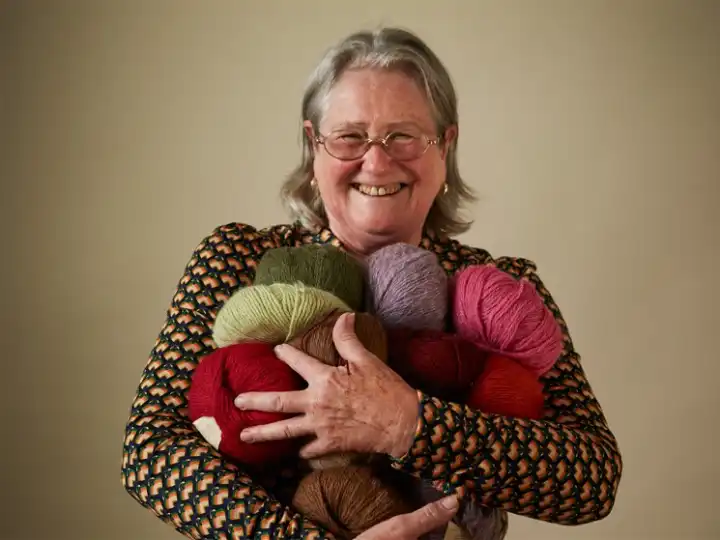
There’s a secret digital map of London that even mi5 has never seen. On its glowing surface, hundreds of coloured lights dot the capital. Each represents someone who plays a crucial role in knitting the city together – or weaving, dyeing or crocheting it. That’s because this map shows volunteers from Loose Ends, the originator of the global phenomenon known as “legacy handicrafts”. Its mission is simple and stirring: to deliver the last mile of love.Loose Ends is registered in Seattle and unlike another local success story, launched by Bill Gates, this one really did start out micro and soft. Knitting is what brought Jennifer Simonic and Masey Kaplan together. From fumbling first attempts at baby blankets to choosing jumper designs for that last university-bound teen, their shared hobby was a constant. And so was a touching story that the two kept hearing in knitting circles.Charlotte Warshaw learned her needlework skills from her grandmotherWhenever their craft community lost a member to death or disability, that person’s knitting basket invariably contained a work in progress intended for loved ones. But for bereaved families, inheriting these unfinished handiworks could be its own sad challenge – what could they do with a confusing tangle of yarn, patterns and equipment? To the trained eyes of Kaplan and Simonic, however, something very different lay in those bundles: a handmade quilt, a cardigan or another poignant heirloom so close to being treasured.The two friends had an epiphany: that they could link these labours of love with “finishers”, volunteer craftspeople who are eager to complete them. Except for postage and the cost of materials, all work could be done for free. The Loose Ends motto reads, “Started with love by them. Finished with care by us.” Soon, word of the initiative spread. Requests and volunteers poured in. When the Loose Ends brochure appeared in yarn shops, volunteers offered to translate it into Spanish and Swedish, Hmong and Hebrew.Though Loose Ends began with a focus on knitting, families started asking for help completing everything from English tapestry to Tunisian crochet. Just months after launch, Loose Ends had to retire its original logo. Their original ball-of-yarn design no longer captured its worldwide network, busy not only with knitting needles but also with weaving looms, quilting frames andamigurumipatterns. Today, Loose Ends has 29,000 finishers spread across 70 countries – not bad for a homespun project started barely two years ago. “It doesn’t belong to me and Jen,” says Kaplan. “We co-founded it but we just set the table. Then all of these people started showing up.”Among them was Olympic diver Tom Daley. The UK athlete became a sensation at the Paris Games when the media caught him knitting between medal-winning dives. The scoop that those reporters missed? Daley had just become a Loose Ends finisher. He even planned to crochet his first assignment during the competition, returning from Paris carrying it in his arms. Instead, he brought home a silver medal. But completing his project soon after (a grandmother’s rainbow blanket, chewed in half by the family terrier), he sang the praises of Loose Ends to his million-plus social-media followers. “They’re a small team doing amazing things,” he wrote. A surge of new volunteers and projects inundated Kaplan and Simonic.On a recent morning, joining the queen bees of this global fibre-crafts movement, we assumed that we were sitting in the presence of knitting masters. We were mistaken. Simonic, needles flashing throughout our conversation, is asked to unveil her handiwork. “Oh, this?” she says, smirking and holding up the beginnings of a colourful jumper. “Had to rip apart the whole thing. Twice. Par for the course when I knit.”So which craft is their true speciality? “That’s easy,” says Kaplan. “Matchmaking.” Indeed, like a pair of knitted Sorting Hats, they have matched thousands of carefully chosen finishers with individual heirlooms. Pairing people with projects, they say, requires the right balance of “geography, skill level and druthers”. And perhaps add an abiding trust in human nature.“There’s a level of divisiveness everywhere these days,” says Kaplan. “Though we never ask about such things, participants who submit a project sometimes bring up their religion and their politics.”“And their pronouns,” adds Simonic.“We don’t take any of that into account when making a match,” says Kaplan. “So we’re connecting people who might, under other circumstances, be protesting against each other. But right now, right here? Each of them knows that this person has lost a loved one. So they just think, ‘I know how to knit. I can do this for them.’”What every crafter understands, they point out, and what cuts through this divide, is that there’s nothing quite like a handcrafted gift. Recipients often speak of a knit or woven present as an embrace, carrying the warmth of the person who started it. It’s little wonder that many crafters facing a health crisis will begin a handmade project for someone close, to comfort that person and themselves. Loose Ends’ mission is to ensure that every one of those gifts reaches the loved one for whom it was intended.Finishers often put in a duplicate stitch, sometimes easier to feel than see, as a subtle marker. It’s where the original crafter left off and the volunteer’s handiwork begins. Finishers relate how moving it can be, not just to receive a completed piece, but to work on one – transforming what is often an everyday hobby into a profound act.A finished jumperColourful bounty inherited by Elizabeth ClarkTapestry expertly completed by Murray LaneClark’s mother left wool and a colour keyCharlotte Warshaw, a London finisher, is carefully stitching another family’s heirloom tapestry. Its owner, who was never taught needlepoint, couldn’t finish her mother’s beautiful handiwork nor bear to part with it. So she carried its dangling threads for 25 years until she heard of Loose Ends.Vintage projects – and this one is far from the oldest – can pose challenges. In this case, neither the pattern nor the yarn colours needed to complete it are still being made. This led to the kind of treasure hunt that is a Loose Ends speciality.With Warshaw’s ingenuity (and this time without the help of the group’s online forum), yarn collections were rummaged through and matching colours sourced. “Speaking as a finisher, it’s a real honour to be trusted with something like this,” says Warshaw. “It’s not a burden. It’s a gift. This is not one more random scarf I’m knitting. It’s a project that means something.”Finishers are as varied as the projects that they take on. Meeting them dispels stereo­types about your typical handcrafter. Daley might be Loose Ends’ best-known millennial but he is far from the only one. Interest in fibre crafts, which was growing even before the coronavirus pandemic, became supercharged during lockdown. While other home-friendly activities also flourished, most lost steam once restrictions were lifted. But the boom in handicrafts just kept expanding. According to a study by the Association for Creative Industries, the global crafts market is, for the first time, expected to top $50bn (€47bn) this year. That’s an increase of more than 20 per cent since the height of the pandemic. In another recent study, it found that the largest group of crafters (41 per cent) are millennials.As many younger consumers question the effects of fast fashion – or just find handiwork cool – granny’s crafting skills are increasingly being embraced by her diy grandchildren. One of them, Elise Craft, more than lives up to her name. “I’m basically an old-time grandma in a Gen X body,” says Craft. From an early age, she picked up knitting, sewing, cross stitch and quilting, finally drawing the line at willow-basket making. But becoming a finisher has been its own kind of learning experience, she adds. “When I opened the email from Jen and read about this project, it struck me that this could have been my own grandmother leaving these quilting squares behind. The more you work on a project such as this, the more you feel a connection to this person who you’ve never met. You sort of form a kinship and feel a real responsibility to preserve the aspects of the original crafter that are in the piece.”In a rare case for Loose Ends, this quilt is being finished for a finisher. Expert knitter Lynn Richardson, volunteering to complete a complex jumper pattern, suddenly remembered that her family had its own partially done heirloom. It included notes, carefully chosen colours and quilting squares that her mother had started and her father had later saved from going to charity.The bonds linking project owners and finishers can run deep. “Doing something for someone else, who is grieving, doesn’t mean that the finisher doesn’t feel it too,” says Simonic. “The loss affects both sides.” And so, it seems, does the joy. The jumper that was keeping Richardson’s needles busy belongs to Hilary Krisman. Her mother had worked on it until she died recently, just shy of 100. “It has been transformational,” says Krisman of the richly coloured gift in her hands. “She was so determined that this would be ready for me but, as she got older, her hands became less and less able to continue.” Krisman, who doesn’t knit, remembers thinking at the time, “There must be other people like me in this situation, who don’t know how to get their legacy completed. But who do you turn to?” Then she heard about Loose Ends. Still too emotional to try on her jumper, she can’t stop admiring it. “This will be cherished,” she says. “It will be passed down through my family. This is so wonderful.”Finisher Georgeana GonzalezAs Loose Ends continues to grow, touching lives across the globe, is there anywhere for the organisation to go but up? Yes, as it turns out: sideways. New volunteers, asked to list the fibre crafts that they know, include other creative skills that they would like to share. The successful model that Loose Ends has pioneered seems ripe for helping more crafts. If two suburban knitters can quit their day jobs and nurture a global community, perhaps finishers can be found to complete works in other creative fields. Pushed to reveal whether they might expand beyond fibre crafts, the founders hesitate. Then both start talking at once. “Woodworking,” says Simonic. “We’re exploring that. I’m actually meeting a woodworker next week to talk about what it might look like. But we’re just tinkering.”“People are demanding it already,” says Kaplan, laughing. “Plenty of men tell us that they’re keen for us to begin offering woodworking. One guy says that it will finally let him buy that expensive tool that he could never justify before.”“But we’re not ready yet,” says Simonic. “We need to fund our technology first, so we can get all of this stuff into an app. But in two, three years? Check back.”As it passes its second anniversary, Loose Ends has been expanding into new countries – Armenia being the latest – and maybe new crafts. Looking back, which achievement stands out for the founders? The two old friends look at each other. Kaplan speaks first.“We have a local woman in her eighties, an amazing knitter and one of our earliest finishers,” she says. “At the beginning she completed one of our first pilot projects. Afterwards she came up to me and said, ‘I’ve been afraid to start a new project for my own grandkids because I didn’t know what would happen to me; I didn’t know if I’d be here to get it done. But what you’re doing has given me the courage to keep crafting.’ And she sent us pictures after she made her first new piece for the children.”Simonic nods. “The work we do lets older people, or people who may fall ill, continue to do something that means so much and that makes them happy,” she says. “With Loose Ends around, they no longer have to worry that the gift that they’re making will be thrown away or end up in some charity shop.”Connecting generations, cementing legacies and giving elder craftspeople the assurance to carry on – maybe these 28,000 volunteers shouldn’t be called finishers. Their achievements seem to warrant a new name: continuers.And perhaps the worldwide success of Loose Ends is a sign of something else as well. It shows that, even in today’s metaverse moment, not all of the important innovations are digital. Sometimes the best way to pass down a skill – and a gift – is still from hand to hand.

Interview: Design Week South Africa curator Zanele Kumalo

Interview: Design Week South Africa curator Zanele Kumalo

Zanele Kumalo is the curator of Design Week South Africa, a celebration of design that takes place every October across Johannesburg and Cape Town. Here, we talk to Kumalo about providing a platform for African creatives, increasing access and growing in influence.Why did you decide to get involved in Design Week South Africa?When I worked in magazines I always tried to amplify voices that weren’t given space. [Now] what drives me is helping young creatives find a firmer footing in places where they haven’t had access. There’s such a wealth of talent in this country, so highlighting creatives makes me happy. How will Design Week affect the design scene in South Africa?What’s interesting about this design week is that there’s no barrier to entry, [whereas other] expos usually ask exhibitors to outlay some money to exhibit in a booth. People can [also] enjoy design in a place that feels more accessible. Instead of walking into one space, it’s spread across the city, so it presents a different kind of opportunity for the regular person on the street – you might walk into a restaurant and there’s a pop-up or panel discussion. It’s also an opportunity to amplify and give [designers] a greater platform to share their brand internationally and create more sales. Tell us more about the curation and how you select designers.The first iteration of Design Week happened quite quickly, so it was a general call-out from myself, Margot Molyneux [founder] and Roland Postma [curator]. We leaned on established names but we also relied on some of the newer players to feed us inspiration. This year we want to be a little more transparent. We want to ensure that there’s no room for anyone to doubt how we are doing things and that we might be favouring certain entities. We also want to be a little more inclusive, so we are working out ways we can create a larger panel or board to help ensure that we cover all the bases and that our discovery is more broadly set.We want to be the authority on design and our point of difference will be the nurture aspect: supporting emerging talent, while still highlighting the bigger players. For our curation, it’s really important to bring new voices to the forefront. There are so many exciting ventures happening [around the country] and we want to give them the space to turn those ideas into sustainable projects. To do this, we also provide financial or project-management support. Other [design fairs] expect brands to pay fees that can be limiting and cut down access. There’s so much potential; we just need to highlight it. What do you think sets South African design apart?The biggest things are our points of view and philosophy of design, which I think [non-South Africans] are always on the lookout for. South Africa has multiple cultures and a lot of untold stories that have been buried, which are now being rediscovered through design. People from different cultures are also collaborating: they’re mixing a foreign design principle with things that are completely unique [to South Africa] and rediscovering what it means to be South African, which is layered and varied.Why is there such good design coming out of South Africa?Good design has always been coming out of the country but now there’s a greater spotlight on it, probably because of initiatives such as Cape Town Furniture Week and 100% Design. We’re also constantly discovering [new designers]. A lot of smaller design companies are underreported – it has taken growing initiatives and design platforms to spotlight these makers. Previously, South Africans always looked everywhere else for validation but we’re starting to appreciate what’s happening inside our own country. There’s a deeper pride in what we produce and we’re realising that it’s of the same quality as items being produced elsewhere. While we gain validation when our design is featured around the world, there’s a lot of internal validation happening too.What are your ambitions for the show?We don’t just want it to be an annual event. We’d like to keep it running over the course of the year, whether that means supporting smaller projects or highlighting what’s happening around the country. The event won’t be a thing that happens in isolation. I want to make sure that we have a panel of people who could take Design Week to a pan-African or even international level. It would be great to have that recognition. We don’t necessarily want to grow in scale but grow in impact. We’d also like to plug into the rest of Africa, such as Design Week in Lagos or Accra. While we still want to keep it local, we’d like to reach out to a more global network too. The opportunities are endless. Do you think it has the capacity to become an event that draws people from around the world, like Salone del Mobile?It would be interesting to see whether we could attract people from all over the world. But we’ll always make sure that, above all, we are supporting all of these South African voices.

A striking new restaurant in Aspen and Lisbon’s museum revival

A striking new restaurant in Aspen and Lisbon’s museum revival

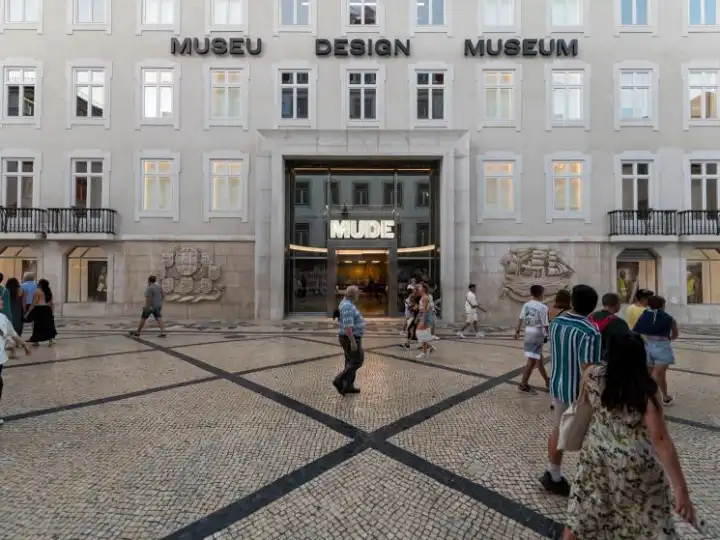
Renovation: LisbonOpen armsFollowing a eight-year hiatus, Lisbon’s Museu do Design (MUDE) has finally reopened. The update has created space for a new long-term exhibition that displays more than 500 design and fashion pieces by Portuguese and international creatives. The renovation work, led by Bárbara Coutinho, director of MUDE, and Luis Miguel Saraiva, architect of the Lisbon City Council, focused on stabilising the eight-storey, 18th-century edifice. Critical anti-seismic reinforcements have allowed for existing materials such as brick, concrete and stone to be left exposed in a nod to the various renovation works that have taken place during the building’s 300-year history. The revitalised exhibition galleries occupy four floors and have no partitions, creating open spaces that can adapt to suit the needs of temporary shows.Perhaps the most significant change, however, is that this former headquarters of Banco Nacional Ultramarino (a financial institution with ties to Portugal’s 20th-century national dictatorship) is now fully open to the public for the first time in its history. Previously hidden spaces and floors – including a dedicated design library, which has been expanded over the past 10 years and is furnished with Portuguese-made wooden furniture – now welcomealfacinhas(people from Lisbon) and foreign visitors alike. “In the past the building was a closed, hierarchical and segregated space,” says Coutinho. “Now it has been transformed into an open, democratic and participative place.”mude.ptInteriors: USAHolding swayLooking for an unexpected spot for dinner before your après-ski moment? The US resort town of Aspen might just have the answer, in the form of a new Thai-fusion restaurant. The blend of influences, however, is more in the design of the space than its cuisine (which is straight-up modern Thai). Sway Aspen’s inviting interiors are the handiwork of the Texas-based Michael Hsu Office of Architecture (MHOA), which previously worked on Sway’s flagship restaurant in the state capital, Austin. The design takes its cues both from Thailand’s decorative traditions and from the aesthetics of the Rocky mountains, with plenty of teak fittings, gentle lighting and plush banquettes. It’s an ideal setting to sample the restaurant’s dinner and après menus, not to mention its fantastic cocktails.The interiors use warm materials and tones: think brass details, leather seats, clay plaster and lamps made from Thai mulberry paper. “It’s a carefully designed space but not too precious,” says MHOA founder Michael Hsu. “It’s intimate and the type of place you want to gather and relax with friends for a great meal after a day on the slopes.” Come winter, we’re sure that this new addition to Aspen will sway many.aspen.swaythai.com; hsuoffice.com

Profile: Fabian and Liza Laserow Berglund, Nordic Knots

Profile: Fabian and Liza Laserow Berglund, Nordic Knots

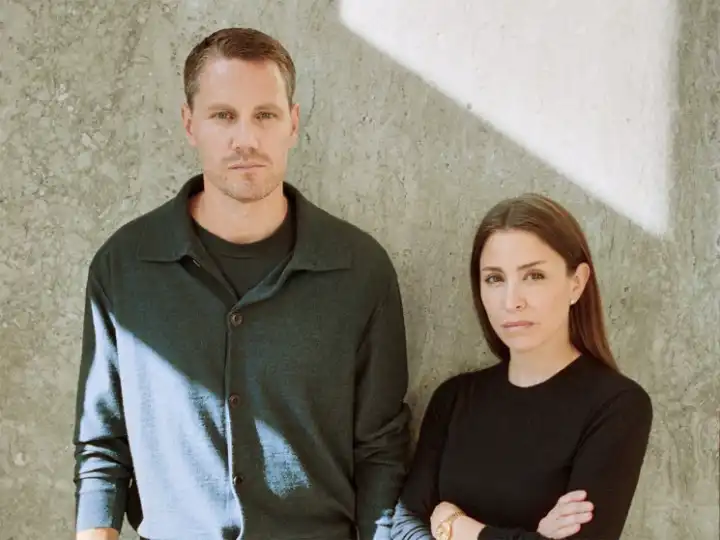
When it comes to furnishing our spaces, buying a rug can be low on the list of exciting purchases when compared to armchairs, tables or even smaller items such as candle holders. The process of selecting a rug can feel somewhat flat. This is the reality that Stockholm-based couple Liza Laserow Berglund and Fabian Berglund faced when looking for options for their own home – leading them to co-found, along with Fabian’s brother Felix, rug and textile company Nordic Knots in 2016.“It was when we were buying a rug for our own apartment that we realised how difficult it is to navigate [the market],” says Fabian, who is Nordic Knot’s ceo and brand director, while Liza heads up the creative side. “There was a lot to choose from but not many appealing brands that you felt you could trust or know what they stand for. We felt a gap in the market.”The brand’s founders, Fabian Berglund and Liza Laserow BerglundRug by Nordic KnotsAt the time, the couple were living and working in New York – Liza in the field of interiors and Swedish antiques and Fabian in advertising. This combined background is a powerful combination: Nordic Knots’ campaigns are often shot in people’s homes and given context with the help of clever staging. A plush wool walnut rug might be paired with a Le Bambole sofa by Mario Bellini. The graphic pattern of a flatweave carpet will sit in dialogue with modernist armchairs by Alvar Aalto. “We like to convey an atmosphere,” says Liza. “It’s about creating our perfect world. How do we envision our dream home in New York, Paris or by the coast? That’s the fun part.”Today, Nordic Knots has something for everyone: wool, jute, shaggy styles, practical flatweaves, graphic patterns, solid colour, neutral, bold tones and collaborations with designers such as Giancarlo Valle, as well as a recent foray into the world of curtains. All of the company’s rugs are produced in India and the other textiles are made between Milan and Lake Como. This spring, Nordic Knots is adding new colourways to their bestselling Grand collection of wool (a standout is the pale-yellow Butter) and expanding their offerings of sheer curtains. When coming up with new collections, Liza and Fabian often find inspiration in their travels to cities such as Milan or Paris and design movements including Swedish Grace or Bauhaus. “There’s also a great heritage of weaving and textiles in Sweden because of the cold,” says Liza. “People would even hang rugs on the walls to insulate. So we don’t want to take away the functionality but we do want to add beauty – and it’s important to never compromise on quality. We want our customers to live with the product, so it should be able to take wear and tear.” Fabian agrees. “Everyone needs a rug.”nordicknots.com

Forest Home: A mid-century bungalow that was designed with R&R in mind

Forest Home: A mid-century bungalow that was designed with R&R in mind

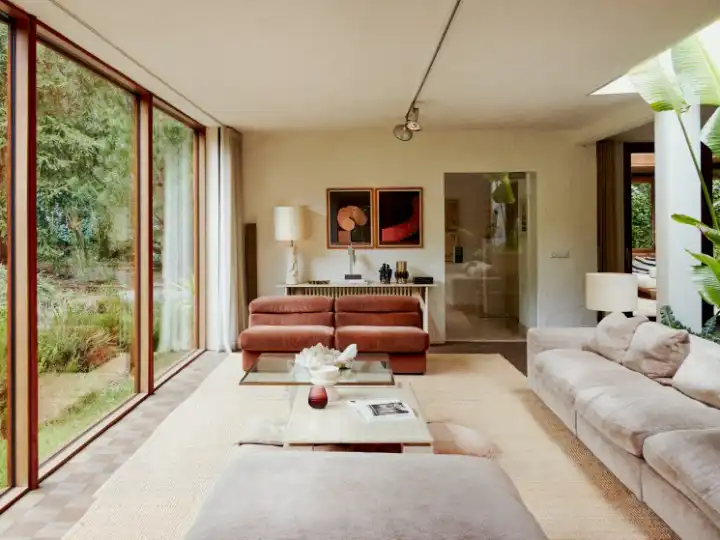
When the founders and creative directors of Amsterdam-based interior design studio Nicemakers are off duty, you can find them in a residence so remote that locating it feels like a treasure hunt. “Google Maps tends to send you the wrong way,” Dax Roll warns Monocle before we arrive at his sprawling rural retreat in Veluwe, a lush nature reserve in the northeastern tip of the Gelderland province, an hour outside the Dutch capital. But our efforts are richly rewarded: the mid-century bungalow, set among fir trees and fields of heather, is an incentive to put down your phone and let nature guide the way.Dax Roll and Joyce UrbanusTable setting at the Forest Home bungalowTucked away in Veluwe“Since we completed The Hoxton in 2014 the phone has been ringing off the hook,” says Roll, while unpacking organic vegetables, fresh loaves and fragrant coriander picked up at a food market in nearby Zwolle. Following the unanticipated success of the studio they founded in 2011, Roll and Joyce Urbanus, his partner, created a house in which they could unwind, called the Forest Home. After they discovered the run-down property, they tapped their interior design and architect friends, and within six months the house had been opened up so that its surroundings were visible from all angles.The pair has designed a slew of smart hospitality spaces: Amsterdam’s renovated De L’Europe hotel in 2021; a country house in Ardennes in 2022; The Brecon, a revamped ski chalet in the Swiss Alps, completed last year; and De Plesman, a hotel in The Hague in the former KLM headquarters, which opened in March. The pair are now working on their Mediterranean residence in Menorca, a restaurant on a regenerative farm in Tuscany and a project in Abu Dhabi, their first foray into Emirati hospitality.Comfortable sitting areaDesigning for hospitality came particularly easy to Roll, who grew up working in restaurants and bars before going into fashion marketing. “I didn’t have experience in interior design like Joyce but I understood the practical requirements of designing a hospitality venue,” he says. “Warm lighting is imperative: designers tend to consider illumination as the last stage of the project but we begin with it and work backwards.” Urbanus agrees: “We want our interiors to feel unforced,” she says. “The best compliment we’ve received is that our designs feel timeless, like they’ve been like that forever.”Indeed, the Nicemakers duo create each of their spaces with longevity in mind. “A client recently invited us back to the penthouse we designed for them a few years ago and the place looked the same,” says Urbanus. It’s their barometer of success: “If something is well-designed, there should be no need to change it.” Three of Nicemakers’ recent refurbishments De Plesman, The Hague (2025)Originally built in 1939, Nicemakers’ most recent project was conceived in the art deco former headquarters of Dutch airline KLM. Now it’s a meeting point for visitors to the seat of the Dutch government. “The story was already in place,” says Urbanus. “We just had to bring it back to the fore.” deplesman.comThe Brecon, Adelboden (2024)This 22-key retreat in the Swiss Alpine village of Adelboden, in the Bernese Oberland and formerly known as Waldhaus (forest house), goes heavy on stone flooring, textured woollen upholstery and leather trims. Its decor has a pared-back palette that allows the eye to wander towards the natural beauty without veering too far from the comforts of a traditional timber-clad Swiss chalet. thebrecon.comDe L’Europe, Amsterdam (2021)Nicemakers refreshed this Heineken-owned seventh-century inn on the banks of the river Amstel. “After investigating the building’s illustrious history, we set about collecting one-off pieces from the 1900s,” says Roll. “We like to create collected interiors, so it doesn’t feel like a showroom.” The result is a tasteful redesign of the red-brick building in keeping with the Dutch neoclassical style and executed with aplomb. deleurope.com

Five days of fun at Salone del Mobile 2025

Five days of fun at Salone del Mobile 2025

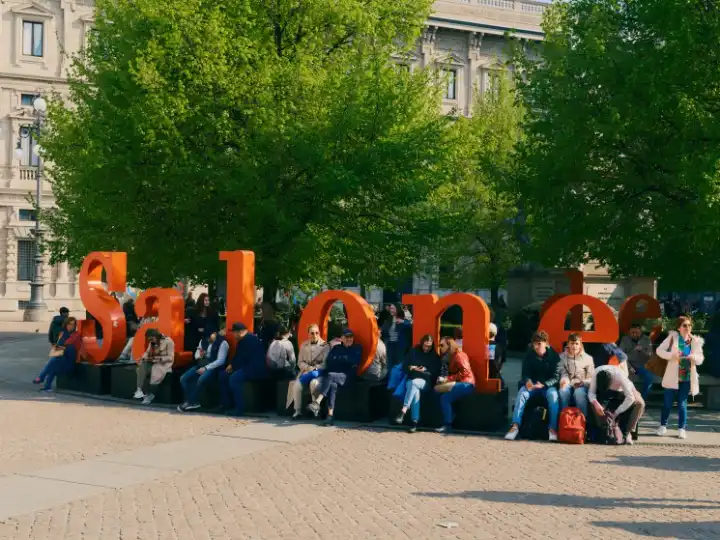
Have you ever wondered how beds, desks and chairs land in an 800-room hotel? Or where major furniture brands spot new talent? Or how the likes of Jasper Morrison and Marc Newson became household names? Or even what trends mass-market furniture firms might try to follow? The answers can be found in Milan, every April, when the city’s design week, headlined by the vast furniture trade fair Salone del Mobile, takes place as the most influential industry gathering in the world.BBPR’s Torre VelascaOn the Sunday evening before the 2025 edition kicks off, Monocle finds itself at a party on the edge of the city’s Chinatown district. In the throng of people jostling for a spot outside the bar, a young New York-based designer is talking to the head of communications for a major Italian design firm, while a Seoul-based writer for an interiors magazine shares a drink with an Australian architect.The party hints at the activity that will take place over the next five days: there will be plenty of business but also moments when the industry’s brightest talents will rub shoulders with established stars, laying the foundations for new collaborations. It’s the week that sets the agenda for what our built environments will look and feel like in the coming decades, and Monocle is there for the duration.Monday: big brandsFor an Italian city, Milan can be secretive, with closed-off courtyards framed by wrought-iron gates. But for the duration of this week, the Milanese throw caution to the wind. The city’spalazziandcortileare taken over by design brands showing their latest work in the most dramatic settings: a multistorey building in Porta Monforte becomes a showroom for Milan- and New York-based design retailer Artemest; the cloisters of the Santa Maria degli Angeli church play host to Italian furniture powerhouse Flexform’s outdoor range. Neither is usually open to the public. The ambition is for these settings to underscore the ability of a chair, sofa or table to shift our emotional landscape. It’s a demonstration of how product and architecture come together to influence a space’s mood.Norwegian aluminium company Hydro’s showcase at Capsule PlazaImage: NO GA Projects’ Mirrors and Side Tables by Willo PerronA case in point is Dedar’s showcase at the refurbished Torre Velasca, built in the 1950s by the BBPR architecture partnership. It’s a structure that defines the city’s skyline. And it’s here that the Italian textile firm is showing a new fabric collection featuring the abstract weaving patterns of German artist and Bauhaus master Anni Albers, produced in collaboration with the Josef&Anni Albers Foundation.“Torre Velasca is a symbol of the city and it inspired the installation in terms of itsgenius loci,” says Raffaele Fabrizio, Dedar’s co-owner, as he points to the BBPR-designed furniture dotted across the space. His sister and fellow co-owner Caterina Fabrizio agrees. “It’s the perfect place to celebrate this series by Anni Albers,” she says. “We want to share the beauty of the fabrics and the beauty of Milan.” By combining Albers’ modernist work with the setting of the mid-century Torre Velasca, Dedar achieves a kind of Milanese Bauhaus effect, bringing art and design into contact with the everyday. Here, visitors to the exhibition take photos of the graphic and colourful fabrics as much as they do the city’s skyline, Duomo and all.Capsule Plaza founders Alessio Ascari (on left) and Paul Cournet Image:NO GA Projects’ Mirrors and Side Tables by Willo PerronBright colours in BreraIt’s proof that the showcases are as much about the products on display as the atmospheres created. No one knows this better than Emiliano Salci and Britt Moran, who co-founded Milan-based interiors firm Dimorestudio in 2003. Over the past decade the practice has hosted some dramatic showcases, including a rationalist retrospective in 2021 and art deco apartment installations. “For us, Milan Design Week is more than a fair, it’s a collective moment of reflection on contemporary living,” says Salci. “Spaces are no longer just to be seen – they are to be felt, experienced.” This year the duo have created a 33-piece collection of fabrics for Kyoto-based textile manufacturing company Hosoo. Additionally, under the guise of Dimoremilano, the studio’s homeware label, Salci and Moran staged a cinematic installation of furniture that they designed for luxury fashion brand Loro Piana. Through a corridor clad in red velvet, visitors are led to a 1970s-inspired apartment where a more sinister backstory is insinuated by plates left shattered on the ground, the sound of a bathtub running over and a ringing phone going unanswered. The duo explain that such an installation is part of the transformation of the city into what they call an open-air laboratory. “Design moves beyond function and aesthetics to become something deeper, more sensory, more narrative,” says Moran. “It’s an opportunity to redefine the relationship between individuals and the environments they occupy.”Fashionable attendeesLight by Tokyo-based firm Aatismo Inside the Rho FieraTuesday: fair playSalone del Mobile was born in 1961 when a group of furniture entrepreneurs decided to extol the values of Italian design. Cut to this year, at the fair’s 63rd edition, and more than 300,000 visitors are drawn to the Rho Fiera. More than 2,100 exhibitors from 37 countries welcome architects, developers and buyers looking for the latest products with which to furnish their projects. It is, in short, a business behemoth. “The numbers prove it,” says Maria Porro, the fair’s president. “A study we conducted with Politecnico di Milano showed Salone’s enormous economic and cultural impact.” She’s referencing a report that revealed the fair earned €275m for Milan in 2024. “It generates work and stimulates global creative industries.”Salone Satellite Despite this impressive bottom line, attendance is down by about 70,000 from the record-breaking numbers of 2024 and there are some absences in this year’s line-up of exhibitors, most notably a trio of Italian manufacturing stalwarts: Cassina, Flexform and Molteni stayed in the city. But other brands still see it as essential and new players are joining them. “It is important for us to be here to launch our outdoor collection – a new product category – and Salone helps you to tap into new and different distribution channels,” says Massimiliano Tosetto, director of Vicenza-based Lodes, which is participating in the fair for the first time since a rebrand in 2020. “Salone gives you international reach that you don’t get elsewhere.”But perhaps the main advantage of the fair is its density. Where else can you grab a casual five minutes to talk about a sofa with Italian architect and creative director Piero Lissoni? Or get to meet Marva Griffin, the godmother of emerging designers? Monocle spots her strolling through the stalls of SaloneSatellite, the section of the fair she founded to promote the work of designers under the age of 35. “We don’t charge designers to participate, and this is important,” says Griffin. “Many exhibitions ask young creatives to pay. Instead, we give them a platform because talent deserves to be seen.”Wednesday: emerging talentWednesday begins in the early hours of the morning at the celebrated Bar Basso. It’s a networking hotspot made famous in the 1990s by the likes of the young Jasper Morrison, Marc Newson and Konstantin Grcic, who caroused and conducted business here over negronis.Dedar’s co-owners, Caterina and Raffaele FabrizioMarimekko 3 Gohar WorldCitywide takeoverSo, some hours later, nursing a slight hangover, Monocle takes the opportunity to explore off-piste. A number of hybrid showcases here walk the line between miniature furniture fairs and collective exhibitions that are more about exploring potential rather than commercial deals (that can come later). Leading the pack this year are Deoron, Convey and Capsule Plaza. The latter was born from design annualCapsule, and its third outing this year brings together brands and designers that blur the lines between interiors, architecture, beauty and technology. “We created Capsule Plaza as a bridge between creative communities,” says Milan-based publisher and editor Alessio Ascari, who established the magazine and curates the plaza with Rotterdam-based architect Paul Cournet. “You can feel this in the curation. We have presentations from brands, institutions and designers from different fields.”Simone Farresin (on left) and Andrea Trimarchi of FormafantasmaAboard the ArlecchinoSignificantly, the showcase pairs lesser-known names with established players to great effect: Nike with musician-designer Bill Kouligas and creative director Niklas Bildstein Zaar; fashion brand Stone Island with bespoke hi-fi firm Friendly Pressure. “It’s a place of discovery and for looking at where creativity is going,” says Ascari. “This year we explored the future of the home. There’s food, with Georg Jensen running a gelato shop, and beauty and bathroom with Humanrace and USM, which is using its products for the first time to make a bathroom. It’s about beauty, craft and innovation.”Thursday: fashionable takesMonocle begins the morning by making a beeline for the press line ahead of a queue that stretches more than 100 metres around a block in the Porta Genova district. We’re outside a nightclub-like space but nobody is here to dance. Instead, we’ve pulled up to see an exhibition of an exclusive new collaboration between the archive of Charlotte Perriand and French fashion house Saint Laurent.Unlike the fashion world, the names behind the best sofas, chairs and glassware rarely adorn billboards or capture headlines. But the presence here of brands such as Dolce&Gabbana, Fendi, Armani, Loewe and Hermès, which all show their own furniture and homeware, suggests a changing narrative. The number of people prepared to queue for fashion-led showcases hints at the role luxury houses are playing in drawing new crowds. In line to see Saint Laurent’s Perriand-designed bookcase, coffee table, armchairs and room divider are not developers in suits nor architects dressed in black, but a fashionable set.Reflections at Capsule PlazaAfter party at Bar BassoRead all about itFashion brands are also helping to broaden the design discourse. Prada, in partnership with Italian design firm FormaFantasma, leads the way. Every year during Milan Design Week the luxury fashion house eschews releasing a design product in favour of hosting Prada Frames – a series of conversations about topics that relate to the wider design ecosystem, now in its fourth edition. This year the talks explored themes of infrastructure, mobility and global distribution. “Talking about infrastructure is about understanding the world we live in,” FormaFantasma’s co-founder Simone Farresin tells Monocle aboard Gio Ponti and Giulio Minoletti’s recently restored 1950s Arlecchino train, where the Prada Frames panels are held. “If we don’t talk, it means being unaware of why electricity or water runs through our homes.”But it’s not all one-way traffic. For Renzo Rosso, Italian entrepreneur and president of the OTB Group of labels that includes Diesel, Maison Margiela and Jil Sander, it’s the fashion world that could learn from Milan Design Week. “Salone del Mobile is the best because everybody gets involved, every single shop hosts an event,” he says. “We need to work to achieve something similar in fashion. If Milan Fashion Week had a more open mentality, we could be even better than Paris.”Friday: joy rideAs Monocle prepares to hit the road, it becomes apparent that car manufacturers are also in hot pursuit of the design industry. In 2025, Italian automobile manufacturer Maserati has joined forces with design company Giorgetti to unveil new vehicle interiors and a collection of low-slung armchairs, coffee tables and sofas that echo the sleek silhouettes of cars. Elsewhere, German automaker Audi presented its latest models in a Piazza Quadrilatero pavilion designed by Dutch firm Studio Drift.Range Rover’s Will Verity (centre) with Rodrigo Caula (on left) and Enrico Pietra of Nuova Making its Milan Design Week debut was British car maker Range Rover, which took over the Palazzo Belgioioso with an installation designed in collaboration with California-based Nuova. “Futurespective: Connected Worlds” offers small groups of people a time-bending journey to a car dealership in 1970 – the year the Range Rover was launched. Visitors are then guided through a door into the present, where the fifth and latest electric-hybrid iteration of the Range Rover is presented.“We love the 1970s because it’s an approachable decade with plenty of positivity and great art direction,” says Enrico Pietra, co-founder of Nuova. “We then use a cinematographic approach to set the mood.” Will Verity, Range Rover’s brand design chief, agrees. “We wanted to take people completely out of the fair and put them in a space where they can have time to reflect, which is also a reference to the calmness of moving through the world in a Range Rover,” he says. “For something like Milan Design Week, you can dial a concept up to 11.” What could have felt like a presentation at risk of choking on nostalgia, instead evokes a mood that is resolutely playful.This lightness of being has been a common thread at this year’s Milan Design Week. The streets of Brera, the city’s bona fide design neighbourhood, brimmed with people. Brands prioritised creating effective showcases within architecturally significant spots. Exciting collaborations nurtured new talent and unexpected industry adjacencies, from vehicles to fashion, complementing the business-like nature of the fair. Provocation and unease were kept to a minimum despite the implications of US tariffs and talks of a luxury slowdown. And it was all toasted at late-night watering holes across the city.Fine lines: Our picks of things to buy from Salone del MobileDevelopers, architects, buyers and gallerists descend on Milan Design Week to revel in novelty. All are on a mission to find the perfect chairs, tables, sofas and lamps to furnish their projects and showrooms with. Here’s our pick of the bunch.Woven bookshelf by VeroArche dining chair by SemN-ST03 side table by Karimoku CaseArctic lamp by ArtemideKumu chair by NikariMurano glassware by HermèsBiboni sofa by Knoll

How Loro Piana CEO Damien Bertrand is doubling down on a commitment to luxury

How Loro Piana CEO Damien Bertrand is doubling down on a commitment to luxury

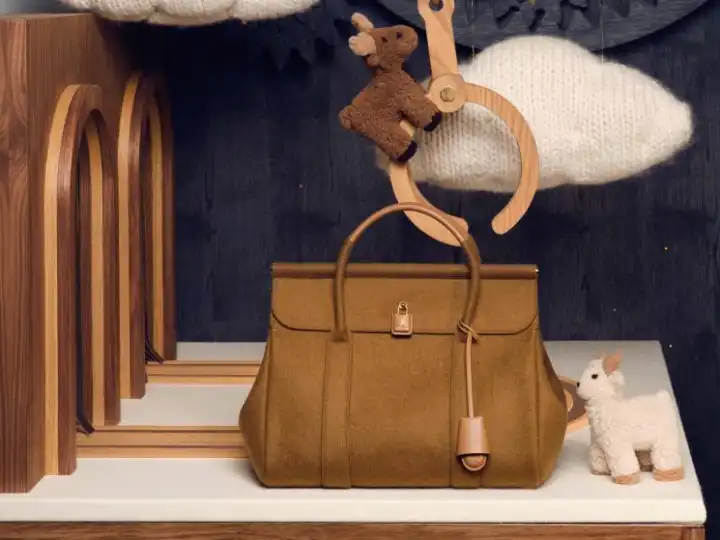
“I’m a man of product,” says Damien Bertrand, the CEO of LVMH-owned luxury house Loro Piana. “Whether it’s haute couture, cosmetics or textiles, I love to feel exceptional quality.” Monocle meets Bertrand in his neutral-hued office in central Milan, which has been his base since he took up the post three years ago. It is filled with the kinds of well-crafted products that he is so fond of – Loro Piana’s signature Bale bucket bag, for example, and the men’s sharp Spagna jacket. We also spot the winning entry of this year’s Loro Piana Knit Design Award: a cashmere sweater inspired by knights’ armour, made by two students from the École Duperré in Paris.“I’m sorry that the winners ended up being French, OK?” he says with a smile. Bertrand grew up in the south of France. He went on to serve as managing director of Christian Dior Couture for five years, after a stint in the US working in the fast-moving world of cosmetics for L’Oréal Group. “Every morning, on my way to work, I would walk past the Loro Piana shop on Madison Avenue and find it so intriguing. I would go in to touch and feel the products, so I developed a sensory knowledge of the brand a long time ago.”That’s perhaps why Bertrand adjusted so quickly to life in Italy and dived headfirst into the CEO job, asking to visit all of the company’s factories in Piedmont, tour its global boutique network and speak to its clients to deepen his understanding of the brand, which was founded in 1924. “I remember ending up in a client’s dressing room until 02.00, looking at Loro Piana jackets that were more than 25 years old,” he says. “They were absolutely perfect. He knew exactly when he had bought them and how many times he had worn them, which was plenty.”It was clear to Bertrand that he had a gem in his hands but he also sensed that there were “a few things missing”. Loro Piana needed to modernise its campaign imagery, develop stronger womenswear and accessories businesses, and become a bigger part of the fashion zeitgeist. “We set out to create a vision that would position us at the pinnacle of luxury,” he says.A mere three years later, he is already well on his way to achieving his goal, with several sell-out handbag designs, new jewellery and sunglasses collections and a quickly expanding global clientele that has become “addicted” to Loro Piana’s feeling of quality – whether it’s the supple suede of the label’s boat shoes, the fine cashmere of its polo shirts or the ultra-soft Gift of Kings wool used to craft its sharp Traveller jackets, trench coats, lounge sets and more.A lot of work has also gone into adding a more contemporary flair. The Loro Piana team has always been obsessed with producing the best textiles but it has now become equally fixated with refining a new signature silhouette: relaxed, perfectly draped and designed to always hug the body of the wearer. “We’re a house of no logos, so how do you create a recognisable silhouette?” asks Bertrand. “We had beautiful products but not this type of modern silhouette. That was the hardest thing to do but it affects everything, including the brand image.”The CEO points out a photograph from a recent campaign that’s hanging on his wall. It shows a couple lounging in Scotland, wearing matching riding boots and tweed-and-wool ensembles. “It’s more contemporary but, at the same time, it’s very Loro Piana,” says Bertrand. “And you can tell the quality of the boots and the sweater jacket that he wears.” He adds that, since Loro Piana began to present its men’s and women’s collections together and establish a stronger dialogue between the two, the company, which had hitherto largely focused on menswear, has been able to attract a wider female clientele. Textile innovation is another key ingredient in his recipe for success. Under Bertrand’s watch, the business has introduced new textiles such as cash-denim, a mix of cashmere and Japanese denim that is used to create some of the world’s softest, most luxurious jeans, among other denim items. This summer, Loro Piana also debuted pieces featuring graphene, a heat-absorbent material obtained from graphite, mixed with wool to create durable performance wear. “Our clients love spending time outdoors so we created a new capsule,” says Bertrand. “The combination of natural fibres and performance is very rare but I wanted to enhance the brand’s reputation for innovation.” He stresses, however, that such developments require time and can only be rolled out in small quantities.That isn’t how fashion brands tend to do business today – especially if they are part of a publicly traded company such as lvmh with financial targets to hit every quarter. But the rules are clearly different for Loro Piana, which seeks to position itself at the highest echelons of luxury. “Today many companies use the 101 marketing playbook, where you appoint a famous creative director and then dress a star for the red carpet,” says Bertrand. “But that kind of thing isn’t always aligned with our dna. Loro Piana isn’t Dior and Dior isn’t Loro Piana. The ethos here is about discretion, subtlety and sophistication.”That’s why Bertrand has made a point of avoiding quick fixes, such as celebrity placements or runway shows, in favour of a longer-term view. “Our clients are connoisseurs,” he says. “There’s that famous saying: ‘If you know, you know.’ Though our brand name isn’t written anywhere, people recognise the quality and details.” All of this comes at a cost: €3,200 for a wool jacket, for example, or €16,000 for a shearling coat. What does he think of those who argue that the price tags are unreasonable? “They are not Loro Piana customers,” says Bertrand, who is perhaps the most knowledgeable customer of all and claims to be able to identify his brand’s cashmere in the dark just by feeling it. “They haven’t experienced the quality to understand it. We’re masters of fibres, so the idea is that you’re buying a piece that will carry you through a long stretch of your life. Some artists even tell me that they can only compose music in Loro Piana clothing, because of the feeling of confidence that it gives them.”Bertrand applies the same luxury mindset to his management style, taking time to execute projects to perfection, paying close attention to minuscule details and daring to place bold bets. It’s why he hasn’t tried to expand the business’s retail footprint too quickly, despite increased demand across the globe. “What we’re doing instead is making sure that we have our boutiques in the best locations – Rodeo Drive in Los Angeles, for instance, has just reopened,” he says. “If we are offering the crème de la crème of products, we need to offer the crème de la crème of experiences too. I’m not in a hurry. The beauty of my job is that I don’t have to rush to create beautiful things, such as our pop-up in Zermatt. That was a first for us but it became the talk of the town.”Bertrand’s approach is clearly working. “We’re seeing dynamic growth that’s quite balanced in every region,” he says. Luca Solca, a senior analyst at wealth-management firm Bernstein, tells Monocle that Loro Piana has been “one of the best brands in the lvmh group in recent years. It caters perfectly for high-end consumers who are veering towards casual wear, in the most elegant, sophisticated and expensive way possible.”The increased visibility of the company’s pieces on social media and hit television programmes such asSuccessionhas also played a part in the transformation of the business. This type of publicity often proves to be a double-edged sword, with the buzz dying down as quickly as it was generated and customers moving on. Can Loro Piana sustain the momentum at a time when fashion seems to be preparing for a return to maximalism?Bertrand is certain that the only way is up. He says that the leather-goods and accessories departments that barely existed three years ago will continue to grow and debut new hits. At the brand’s most recent presentation – at Milan’s Palazzo Belgioioso, where elegant tailoring was paired with pillbox hats, silk scarves and new iterations of the loafer – the CEO’s ambition to offer a head-to-toe Loro Piana look while growing in all accessories categories was clear.He is also confident that conversations taking place online and the direction of trends won’t affect his brand’s customer base, which has a different set of priorities. “Social media can sometimes create a sort of hyper-visibility all on its own,” says Bertrand. “You can be aware of it but you can’t control it.” He adds that Loro Piana products are limited by their nature and will never suffer from online oversaturation. “We don’t often work with influencers but, if people want to talk about our pieces, I welcome it because it’s interesting. We’re not loud but we don’t need to be silent.” This was the attitude that guided Bertrand’s decision to take over 36 windows at UK department store Harrods from 7 November to 2 January, to ring in the festive season and celebrate the brand’s centenary. This takeover at one of London’s busiest retail destinations is far from quiet; yet, in true Loro Piana fashion, the designs of the windows are elegant, logo-free and utterly charming. The idea was to create a “workshop of wonders” and tell the story of the company through wooden figurines, as though the pages of a children’s storybook had come to life. One window, for instance, showcases the journey of vicuña wool from animals to atelier and then finished product.“Loro Piana’s discreet, logo-free approach speaks to a clientele that values substance over spectacle,” says Simon Longland, fashion buying director at Harrods, who praises the label’s sense of precision. “It captures the magic of the season without relying on overt branding. The success of its accessories lines has set new standards in the industry and its influence on contemporary footwear design is evident. And these categories are just the beginning. There is substantial potential for continued growth, as the brand deepens its offering in soft accessories and other luxury lifestyle products.”The concept of an open book presented across the Harrods windows is particularly poignant; it is perhaps a subtle statement of Loro Piana’s confidence in its manufacturing practices, after allegations surfaced earlier this year that the company was sourcing vicuña wool for its garments from unfairly remunerated indigenous workers in Peru. The brand has since responded with statements of fair payments – between $300 (€277) and $400 (€370) per kilogramme of vicuña wool, according to a statement – and stressed its commitment to working in Peru, not only to refute the accusations but to honour the 30-year relationships that it has built with the country’s farmers.“Our aim is to limit our environmental impact and safeguard the future of the next generation,” says Bertrand. “We have been doing this for many years but our efforts are intensifying. For instance, in Aqueripa, we created water reserves in 2018 to protect the animals and help the communities [which were suffering from droughts]. At a time when people are spending more and more time on their phones and might think that the world is virtual, we want to emphasise the beauty of the artisan world.”It has been 100 years since Loro Piana started as a family business of wool traders and merchants. Both the brand and the fashion industry have completely transformed since then, with Loro Piana now owned by the world’s biggest luxury conglomerate and evolving well beyond its original textile business. Yet, for Bertrand, the label’s core values of family, quality and sophistication remain very much intact. The Arnaults, the powerful French family behind lvmh, have been long-time customers and fans, so they respect the company’s founding ethos and Bertrand’s signature strategy of evolution versus revolution.That’s why, for the year ahead, Bertrand is focusing on “consolidating the vision”, rather than trying to keep up with market changes. “That is a part of luxury: knowing where you want to go and not looking left and right,” he says.In many ways, Bertrand’s philosophy serves as a reminder of what luxury fashion should stand for at a time when too much attention is being paid to logos, seasonal hits and items that serve as status symbols. “Luxury is something with soul that you buy for yourself, not for others,” he says. “It’s like the private dinner that we hosted in Lake Como and didn’t communicate. Or, as Sergio Loro Piana would have said with his signature humour, we really should be talking more about quality and less about luxury.”loropiana.com

In conversation with Dan Thawley, creative director of Matter and Shape

In conversation with Dan Thawley, creative director of Matter and Shape

The design industry doesn’t usually have the pop-cultural power of fashion. You are unlikely to find the names of the best sofa, chair or glassware designers plastered across billboards or making headlines in weekend supplements after the Academy Awards. And that’s perhaps understandable: fashion seems more accessible because it feels more personal – our clothes are a big part of how we present ourselves to the world, an expression of who we are. It makes sense that the industry gets priority in terms of coverage and interest. But according to Dan Thawley, things are changing. “There has never been so much interest in design,” says the Paris-based artistic director. “If I had done this interview 10 years ago, I probably would have said to you that fashion has never been more fashionable. Now that’s true of design.”Monocle is speaking to Thawley following the second edition of Matter and Shape, an annual design salon for which Thawley is artistic director. The event, which coincides with Paris Fashion Week every March, is the brainchild of Matthieu Pinet, who established the brand as an online design platform before deciding to turn it into a physical event with Thawley’s assistance. “The idea was to create something that would disrupt Fashion Week a little bit and make people question why, where and when they show projects related to design,” says Thawley of the salon’s 2024 debut. “We didn’t want to graft Matter and Shape onto existing design world events but rather to reach new audiences and think about people that don’t have the opportunity to be [at those design events].”The initial fair featured 32 exhibitors and hosted a Jil Sander-backed series of design talks (which returned again this year). By the second edition, it had grown to host 60 exhibitors, with 8,000 visitors perusing works from a mix of emerging and established names, including Italian rug company Cc-Tapis, Bovezzo-based lighting firm Flos and Switzerland’s Vitra. “I want to tap into customers who are interested in both fashion and design,” says Abid Javed, founder of Objets Mito, an emerging London-based design studio that showed at this year’s salon. “There’s a nice crossover of sensibilities.” It was a crowd that also appealed to David Mahyari, the founder of Dutch natural stone company SolidNature. “Everybody was there – all of the architects and designers. And so was the fashion crowd, with all of the big names for Fashion Week,” Mahyari tells Monocle. “Paris makes sense as a place for this element of design to come together with fashion.”Lobmeyr ft. Gohar WorldThe shopIndeed, as Monocle wandered the halls of this year’s event, there were Italian greyhounds strutting about alongside young women perusing the salon in groups. It was a different demographic to those typically found at design fairs (there were very few old Italian men in suits and ties, for starters), with people clearly flitting between attending runway shows and walking around the salon.“It often feels as though designers and design brands are always speaking to the same people,” says Thawley. “What I enjoy about Matter and Shape is walking through it with a person who I respect but isn’t a design expert and hearing them say, ‘Oh, I really like that!’ and ‘Tell me more about this.’ There might be an aestheticised public that is attuned to fashion and culture but there’s still a long way to go when it comes to design.”NO GA StandThe shopMatter and Shape is on course to changing that narrative – and, at the very least, it’s giving design some pop-cultural relevance during Fashion Week.matterandshape.com

Five creative forces shaping the worlds of architecture and design

Five creative forces shaping the worlds of architecture and design

1.The architectCristina CelestinoMilanCristina Celestino is the founder of her namesake design studio, established in 2013. Known for work that is playful and practical, often referencing geometry and rooted in material innovation, the Milan-based architect has collaborated with a host of household names. Partners have included fragrance brand Diptyque, luxury fashion powerhouse Fendi, and, in 2025, outdoor furniture specialists Ethimo. She tells us how her style shines when working with different brands.How important is Milan to your work?It’s the starting point of my work and where I discovered my passion for interiors and design. Everything shifted for me when I moved to Milan. If you’re creative, everything in the city is about design. You end up meeting a lot of people involved in design, such as stylists and photographers. There is also the Triennale di Milano; they all of them make it easy to focus on your passion.You are launching a collaboration with lighting brand Moooi during Salone del Mobile. Tell us more…The lighting references the Venetian glass chandelier. The archetypal shape links to the geometrical shape of Luca Pacioli, who was a mathematician during the Renaissance period. It’s made out of methacrylate, a material that seems like glass at first glance and reflects the light in a special way.Is there a link that runs through all your projects?We don’t force our design to fit the brand we work with. Instead, we research and try to understand how to match the brand without changing our identity. We aim to come up with a new piece that, in some way, differs from the others on the market, is commercial and offers some personality.2.The designerNifemi Marcus-BelloLagosLagos-based Nifemi Marcus-Bello is a creative force, shaping Nigeria’s design narrative with his distinctive geometric and colourful creations. His design office, Nmbello Studio, focuses on craftsmanship: “I decided to start making handmade pieces as much as possible,” he tells Monocle. The designer’s talent lies in his ability to synthesise diverse influences. It’s an approach that manifests in a range of object typologies, garnering him recognition from the likes of the Hublot Design Prize, the Loewe Foundation Craft Prize and the Monocle Design Awards in 2023. In 2025, Milan Design Week is also high on his priority list. “Salone del Mobile is where like-minded people come together to discuss the future of design,” he says. As corny as that sounds, that’s what’s on everyone’s mind and they are all diving into that conversation.” We catch him prior to the event.Why is design a powerful way of telling stories?I always wanted to be an artist before becoming a designer. What I love about art is its narrative and the power of storytelling. In some cases, especially the way I was taught, storytelling is treated as an afterthought, or even as something that shouldn’t be part of the design process. But for me, design is a powerful medium precisely because objects are easier to digest. Everyone interacts with objects, but not everyone interacts with art. What is the temperament of design for you right now?It’s about understanding design from a cultural standpoint. We live in a global village, but people interact with their daily lives in completely different ways. I think it’s important to consider how we can design objects that enhance everyday experiences based on specific geographical spaces.How would you like to see this idea reflected across the design community?I’d like to see a stronger ethnographic approach to design, as it seems to be disappearing. Everything looks and feels the same, people are telling the same stories and trying to solve the same problems. But our problems are not the same. It’s about designing with that in mind.3.The galleristNina YasharMilanNina Yashar, one of Milan’s most revered design curators, founded Nilufar Gallery in 1979, pioneering a rediscovery of 20th-century Italian design. Through her gallery space on Via della Spiga and warehouse-like Nilufar Depot, she champions both established masters and emerging talents, creating a dialogue between vintage and contemporary pieces. Her exhibitions, renowned for their theatrical staging, have redefined our approach to presenting design. Here, she discusses the 10th anniversary of the Depot and what she dubs her “new gold”. What can you tell us aboutyour upcoming exhibition at Milan Design Week?Silver Liningis an exhibition based on metal. It was designed by Fosbury Architecture collective, a Milanese firm that is really aligned with the Nilufar philosophy: the relationship between heritage and contemporary. I have always been fascinated by the duality of metal; it’s something that balances strength and vulnerability. The raw material becomes different in the hands of the artisan. Over the past five or six years, the market has been dominated by brass and bronze. I wanted to define my new gold: silver. Nilufar Depot is celebrating its 10th year in Milan. How does it continue to inspire you?Looking back at all of the different exhibitions that I have worked on over the past 10 years, I realised that I treated Nilufar Depot as a platform for dialogue, experimentation, conversation and cross-generational exchange. At Milan Design Week, I will exhibit pieces by talented new creatives and people who I have worked with for many years. They are all inspired by 1970s styles. Take, for example, Italian architect Gio Ponti, French designer Audrey Large and Brussels and Antwerp-based studio Destroyers/Builders.How do industry events such as Salone del Mobile contribute to Milan’s creative life?For me, Salone is a platform where I can learn and discover, sometimes throughan object or a new designer. It’s a melting pot of different conversations, techniques and narratives. Over the past few years an increasing number of foreigners have moved to the city, which has given it another kind of power. Milan is now a cultural hub that connects the entire creative world, not only in design but also in fashion and art. Creativity is endless when all these different disciplines meet.4.The interior designerPierre-Yves RochonFranceFor more than 45 years, French interior designer and decorator Pierre-Yves Rochon has designed interiors for a variety of prestigious clients. These include hotels such as the Waldorf Astoria and the Ritz-Carlton, as well as the Michelin-starred restaurants of chefs Joël Robuchon and Alain Ducasse. Rochon is known for his work creating spaces that transcend trends, embodying a sense of timeless elegance and cultural depth. For this year’s edition of Salone del Mobile, he createdVilla Héritage, an installation celebrating his vast experience in luxury interior design.How do you approach heritage in your designs?I try not to be influenced by fads because I see them as a moment when the majority of people are thinking the same thing. Heritage is different. It’s not nostalgia – it allows you to pick and choose influences that speak to your sensitivity.Can you tell us about your installation, ‘Villa Héritage’, inside Salone del Mobile?At Salone, visitors don’t necessarily visit the so-called “classical-style” halls as much as those dedicated to contemporary pieces, which is a shame. The idea is to show how different periods of Italian architecture and interior design, as represented by Salone’s exhibitors, can coexist. In creatingVilla Héritage, we chose the most beautiful pieces, be it lighting or furnishings, and combined them with music and scents to create a more immersive experience. The goal was to design a space where light, texture and sound came together to elicit an emotional response from the viewer.What do you hope that visitors will take away from ‘Villa Héritage’?I hope that they will reflect on the idea of transmission, of how the past informs the present and allows us to imagine the future.5.The CEOGiovanni AnzaniBrianzaPoliform, under the stewardship of Giovanni Anzani and his cousins Alberto and Aldo Spinelli – the company’s second generation – is a brand renowned for its comprehensive range of custom-made systems and luxury furnishings. Established in 1942, the Brianza-based brand has retained a dedication to high-end craftsmanship while also exporting Italian quality to the world. Anzani tells us his ambitions for 2025.What are Poliform’s priorities for 2025?From an economic perspective, our presence in international markets continues to grow. In 2023, for instance, we recorded a 9 per cent increase in sales turnover, reaching a figure of approximately €256m. This success is the result of our constant dedication to innovation and quality, and we are determined to continue on this growth trajectory in the future. China is gradually recovering, Germany and France will find a new balance, and there is a wealth of products heading to the United States.How does Poliform balance its past and present?Our most valuable assets are its cultural heritage and technological know-how. With unlimited creativity and expertise inherited from the tradition of Brianza, the best furniture district in the world, combined with cutting-edge know-how, Poliform can meet the needs of an international audience while maintaining a typically artisanal approach. How will Poliform look to grow in the future?We’ll continue to focus on a design concept of “Poliform Home” in which each component [of our collection] is stylistically coherent. It’s a “global project” in which the versatility of our modular systems can be fashioned to suit any architectural situation.

How architect Jeanne Gang is reshaping cities through purposeful design

How architect Jeanne Gang is reshaping cities through purposeful design

US architect Jeanne Gang established Studio Gang in 1997 and has since built an expansive portfolio of parks, community centres and public institutions. She has also picked up numerous accolades – among them Monocle’s civic, commercial and cultural architect of the year award in 2025 – and is presenting work at the Venice Biennale’s 19th International Architecture exhibition. Key projects include Populus, a new hotel in Denver with a green roof and distinct white façade, and Verde, a residential tower that doubles as a social hub for a new San Francisco neighbourhood. Both are outstanding examples of Gang’s approach to practice, which seeks to connect people, their communities and the environment.Tell us about Studio Gang’s approach to architecture. Do you have a defined system that you apply to all of your work?Our core principles come through in how we approach every project, starting with context and what’s already on site. That doesn’t just involve the environment but also people, geology, history and existing buildings. The goal is to work resourcefully, reusing what’s available. It’s about making architecture less wasteful and more rooted in ideas that build on what already exists.Where do you see opportunities for architects to improve?Lowering carbon emissions is a huge priority. There’s always more that we can do by using fewer materials, working with existing structures and reducing reliance on concrete and steel. But it’s also about designing buildings that don’t become obsolete. At our Populus project in Denver, for instance, we rethought how it engages with its surroundings. Instead of a big underground parking garage, we focused on creating active street-level spaces.The aspen-inspired Populus hotel (on left) and the Verde residential tower.(Image: Jason O’Rear)How do you avoid banality in architecture?A big challenge in large-scale developments is uniformity. When everything is built at once, it can feel too homogeneous. A great neighbourhood develops over time, with layers of history, adaptation and evolution. But when you don’t have that advantage, you have to think about how to make a neighbourhood exciting and resilient in a short period of time. One way to do that is by balancing specificity and adaptability. A good example is our Verde tower in the Mission Rock neighbourhood of San Francisco, where we led a cohort of architects to ensure cohesiveness. We also worked with them to introduce small-scale interventions in the public spaces, such as seating, fountains and lending libraries, which make the area more engaging. If you design for the human scale – the things that don’t change, such as light, air and movement – you create something flexible and full of character.Do you see sustainability as designing buildings that serve multiple purposes?Yes, because good design should always do more than one thing well. It’s not about making a purely sculptural form, it’s about form doing work for the project. Take Populus, again. Many buildings today are entirely made of glass but we designed the windows on this tower differently. Inspired by aspen trees, these windows have a depth that directs light, reduces glare and sheds water. Some of the windows also function as built-in interior seating, making them an integral part of the indoor experience. Sustainability isn’t just about materials or energy use –  it’s also about how a building interacts with its surroundings. If a place is designed well, people will want to be there and they’ll develop a sense of care for it.Your projects always seem to consider the space around them, not just the buildings. Why?Even when designing a single building, we consider how it connects to the city and shapes movement through a place. That’s why I love working with landscape architects. They think in terms of time – how spaces will grow and change, how people will interact with them over decades. That perspective is valuable in architecture too. Designing for longevity isn’t just about durability, it’s about creating places that people want to return to.Monisse is Monocle’s design editor and a former landscape architect, a fact that he’ll seek to share with you at any opportunity.This story originally appeared in The Monocle Minute…Monocle’s free-to-read daily newsletter. Sign up to get insight from Monocle in your inbox every day.Your EmailSubscribe

Right up our street: Cities as design objects

Right up our street: Cities as design objects

1.New YorkUSAJapanese-American artist and designer Isamu Noguchi created this coffee table in 1947 for Herman Miller. At the time, Noguchi was living in New York – and we think the jazzy curves of this piece echo the modernist spirit of the city perfectly.2.MilanItalyPlush, wildly popular and a little bit sexy, the 1970 Camaleonda sofa system by Mario Bellini is Milanese design at its best. Proudly Italian in its roots – as well as an international bestseller – the Camaleonda could only come out of Milan.3.ParisFranceThis 1950s Nuage bookcase by Charlotte Perriand is decorative and complex, much like Paris. Imagine it in a Hausmannian apartment, displaying French literary classics and providing an elegant backdrop at Château Margaux-fuelled dinner parties.4.São PauloBrazilThis wooden stool by Italian-born Brazilian architect Lina Bo Bardi was produced in the 1980s for the SESC Pompéia in São Paulo, a vast sports-and-culture centre. Democratic in spirit and with a playful silhouette, this perch flies the flag for São Paulo.5.CopenhagenDenmarkCopenhagen is a design capital in its own right and is best captured by a true icon from the mind of a Danish luminary. The PH5 pendant lamp by Poul Henningsen for light-manufacturing stalwart Louis Poulsen, first produced in 1958, fits the bill.6.MelbourneAustraliaMelburnian manufacturer Companion is behind this compact Round-A-Bout gas barbecue, originally from 1975, that consists of a hard-wearing metal shell on three legs. What could be more Australian than firing up the barbie on a scorching summer’s day?7.DakarSenegalDesigned in 2009 by Birsel+Seck, the Madame Dakar chair is handwoven from plastic threads by the studio’s founders, Paris-born Senegalese Bibi Seck and Ayse Birsel from Turkey. It is an ode to the fishing nets found across Senegal’s capital.8.TokyoJapanShiro Kuramata’s futuristic and sleek How High the Moon armchair from the late 1980s is on the same wavelength as Tokyo. Made from a perforated nickel-plated steel mesh, there is a cool, enigmatic quality to this chair that leaves us wanting more.9.ZürichSwitzerlandIn the financial capital of Switzerland, time really is money. Since 1944 this Mondaine clock by Hans Hilfiker has been keeping Swiss trains (and residents) on time in the design-forward manner that we have come to associate with Zürich itself.10.Mexico CityMexicoThis chair and accompanying stool might be called Barcelona but the set is a resolutely Mexican take on Mies van der Rohe by local architect and designer Luis Barragán, who used it when furnishing Mexico City’s mid-century Casa Prieto López.

Where football and furniture collide: Orior

Where football and furniture collide: Orior

Breakfast, bright and early at Strandfield café and farm shop in Dundalk, a few kilometres from the Republic of Ireland’s border with Northern Ireland. Over the first cup of the day’s conveyor belt of milky tea, Monocle is being schooled in the improbable link between soccer and the isle’s high-end furniture design. Orior’s gregarious creative director, Ciarán McGuigan – dressed in a New York Mets cap, a neckerchief and a gilet – is explaining how the furniture brand’s current leadership all met on the football pitch at Savannah College of Art and Design in the US state of Georgia.Sports scholarship student McGuigan, a right-footed centre back, became close friends with Jean Morana, Orior’s current head of design, as well as Jordan Trinci-Lyne, a former semi-professional striker from Cheshire who is now managing director, and group coo Richard Langthorne. “I realised that my [sporting] career wasn’t going to go anywhere,” says McGuigan, who studied film and TV, and had a spell as a college soccer coach. “But I fell in love with Savannah.” The friends, mostly hailing from Europe, would go on to forge the ambitious mindset that Orior has today.McGuigan, now in his mid-thirties, left his football career behind when he took over the Orior family business from his parents, Brian and Rosie, in 2013 – though they remain heavily involved. The furniture company had been ticking along, servicing an Irish clientele, without setting the world alight. McGuigan knew that Orior had the potential to be much more and reoriented it, highlighting the craft of the Irish makers who work on its pieces, which range from sofas and credenzas to coffee tables and vases.The McGuigans (from left): Katie, Rosie, Brian, Ciarán and Uncle PeteOrior has a great origin story. Brian and Rosie, Irish Catholics born on different sides of the border, decided to leave in the 1970s during the worst years of sectarian violence, and moved to Copenhagen. They did multiple jobs, cleaning hotels as well as working at a fast-food restaurant opposite the Tivoli Gardens theme park. It was during their stay that Brian, who studied upholstery at school, fell in love with furniture.When the couple returned to Ireland, they were in no doubt about what to do with the money that they had saved during their stay in Denmark. “There were no jobs here back then so we had to create our own,” says Brian, when Monocle joins him for pizza and jet-black pints of Guinness at Dundalk’s Mo Chara pub, raising his voice to be heard over a pub quiz. Orior – named after the street that Brian grew up on – was established in 1979, with Brian at the helm designing and making pieces that had a mid-century feel. But it’s under his son’s leadership over the past decade that the business has thrived.Sofa frames in NewryInspired by the time that he had spent in Georgia, McGuigan decided that Orior needed to cross the pond. He moved its branding, design and sales leadership to New York, with manufacturing remaining in Ireland, and focused on selling Orior’s Irish heritage into the huge US consumer market. “When you think of furniture, Ireland doesn’t come to mind,” he says. “It’s pretty cool that Orior’s pieces are made here.” The US now accounts for 87 per cent of business, though the brand is now keen to start growing the Europeans side, which currently accounts for about 10 per cent of sales.Over the two days that Monocle spends with McGuigan and Trinci-Lyne, who are on one of their regular visits from New York to check in with the team, we delve into the brand’s dna, criss-crossing the fluid Irish borderlands in the sunshine from the Republic into Northern Ireland, as euros switch to pounds and mobile phone coverage bounces between providers. When not in the Big Apple, McGuigan, his wife Logann and their young son live in a converted fishing hut in Omeath, on the edge of Carlingford Lough, which is south of the border. At lunchtime, we sit down for fish and chips at a pretty ivy-clad stone cottage in Newry, north of the border, where Brian and Rosie first lived when they set up Orior. Today their daughter Katie, who has recently returned from working in fashion in London, lives and works here. She is part of the family firm, designing rugs and doing other creative work.Orior might have a fancy home in New York – including a showroom on Mercer Street in Soho, which opened in 2022 – but its soul is very much at the utilitarian headquarters and upholstery centre in Newry, where the bulk of Orior’s staff work. McGuigan has the business acumen and the confidence to focus on the US – and a raconteur’s ability to hold court – but this is where much of the brand’s hard graft takes place. When Monocle visits, apprentices are stapling the wooden frames of sofas. Upstairs, leather is being carefully wrapped onto Bembo credenza parts, a beautiful piece with brass feet and handles.Niamh Burgess, head of Orior’s leather departmentIt’s here, among the industry, that Brian comes every day, more comfortable putting his hands to work than being asked to articulate his backstory. He’s busy upholstering a low-backed, chunky leather Shanog sofa – his original design from 1979, brought back into the collection in 2019, the year that the brand relaunched. “Dad was in here at 07.00, dying to finish that sofa,” says Katie.You might think that there might be some friction between the new guard, with their US education and cosmopolitan ways, and the old timers. Instead, it plays out in plenty of banter and mickey-taking. For McGuigan it’s all about the craic, an Irish word that is never far from anyone’s lips, meaning to have a laugh or a good time. He tells a story of going back to the factory from New York once and saying that he was going to get something out of the “trunk”, a pin-drop moment that caused the whole factory to stop at his Americanism. “The juxtaposition of the showroom in Soho and seeing where it’s made; it’s like chalk and cheese,” he says. “It’s refreshing coming back and having the piss taken out of me.”Upholstery for the Shanog sofaArchive design, reimagined into a prototype outdoor chairMcGuigan calls Orior a “family-and-friends company” revolving around his father, who trains everyone who passes through the Newry doors and, according to his son, is still the brand’s “north star”. There are workers hailing from 12 families here, from a total of some 65, and trying to work out who is related to whom is a dizzying exercise. We bump into warm and welcoming Aunt Gertrude, a seamstress, in the warehouse’s kitchen and later Uncle Pete, who is head of Irish sales. Brian’s neighbour, Pedar Jackson, has worked in upholstery for more than 40 years and his son Neil has also joined the company.When an Orior delivery van arrives, McGuigan jumps up into the cab and starts bantering with driver Shane (whose brother, Harry, handles installations), a rolled-up cigarette dangling from his lips. The Newry complex is also home to Orior’s original showroom, where it’s possible to see the evolution of the brand. There are Brian’s mid-century-inspired archive pieces, which have been given a contemporary tweak, such as the Mozart chair that now has thicker wooden legs and a cross-stitch detail in the middle of the upholstery. And there are more recent releases, such as the Corca table – a combination of a three-legged cast-bronze body and a round crystal top – and the solid-stone Marmar coffee table. These newer pieces wouldn’t have been possible without a network of craftspeople from across the isle. McGuigan calls these makers “beyond important”.A case in point is Alan McConnell, who is based a short drive from the factory and walks out to meet us with his German shepherd, Layla, in tow. McConnell presides over a business started by his grandfather more than 60 years ago, which specialises in working with natural stone (there are huge cutting wheels with sharp teeth inside his factory). S McConnell & Sons’ normal fare is anything from building façades to headstones, so working with an Irish furniture brand has been somewhat of a departure. “There’s no room for error and it has to be top-notch,” he says. “When you see the finished product, there’s a certain amount of pride.” When Monocle visits McConnell’s factory, his colleagues are sanding down Orior’s curvaceous Umber tabletop and starting to cut the four tear-drop-like table legs for the Easca coffee table, a job that takes about eight hours. The coffee table comes in one of Orior’s signature stones: multi-hued Irish green marble that is extracted in Galway, on the Republic of Ireland’s western coast. “Carrara marble from Italy is 200 million years old,” says McGuigan. “But this stone is 850 million.”Prototype of the Reo tableShaping stone for the Reo tableEasca table top at the cottage in NewryMick Wilkins at his Cork foundryThere are also makers further afield. In Cork, a four-hour drive south of Newry, father and son Mick and Darragh Wilkins are part of a crew of makers who have been essential to Orior’s recent evolution. The duo are artisans in the truest sense of the word – they don’t have a website and rely on word of mouth. They work in a former farmstead in Kilnaglery, where they run a small bronze foundry out of an A-framed barn.“A lot of learning the craft was by trial and error,” says Darragh, as he pulls a visor down over his face. They are working on Orior’s Corca side table, which is cast in five parts. It’s a complicated process that involves a mould made from resin and sand, covered in graphite and alcohol to protect it from the orange molten bronze being carefully poured at a temperature of 1,150c. Darragh says that McGuigan just “showed up at the door one day” and that was the start of the relationship. In fact, Monocle fails to find anyone who is yet to be won over by the Orior creative director’s effervescence and enthusiasm; he’s clearly up for the craic but tenacious enough to not take no for an answer. Glass sculptor Eoin Turner, whose studio is located a short drive from the Wilkins’ workshop, confesses happily that the second time McGuigan came to try to convince him to work with the brand he brought “a very comfortable carrot” in the form of an Orior sofa.Nead armchairTurner, a colourful character who studied fine art and worked as a fisherman, marches around the studio he shares with his wife, Lorraine, as he shows us around. For Orior he makes the Easca and Corca tabletops using recycled Irish crystal that gets melted down, reformed and fired in a huge kiln. “It has unique air bubbles in it,” says Turner, running his hands over the Easca’s surface, which has a resin-like feel to it.Glass sculptor and Orior collaborator Eoin TurnerThe sculptor has recently started his own foundry and is clearly important to Orior’s future as the brand continues to push the boundaries of Irish craftmanship while preserving traditional techniques. McGuigan calls Turner a “mentor” and part of the firm’s ambition is to open a large new factory, by 2027 or 2028, in the hope of bringing makers like Turner in-house and have them train new talent. It will be a big investment and all part of Orior’s continued drive to make itself an established international brand and put Irish furniture on the map.Orior is in the lucky position of being part of a larger group, which means that some of its outgoings can be offset against the success of its less sexy contract-furniture operation. But as McGuigan says, Orior is “the jewel in the crown” that has the potential to grow its catalogue and move in new directions.Monocle stops with McGuigan and Trinci-Lyne for one last pint of Guinness and something to eat before heading to the airport. The 12 prototypes that the brand is set to work on this year are discussed, with talk of adding beds and mirrors to the line-up. “We’re in a good spot right now,” says Trinci-Lyne, taking a sip of his pint. It’s hard to disagree.oriorfurniture.com

Inside the seven-floor Valletta townhouse that sets a new standard for work-from-home spaces

Inside the seven-floor Valletta townhouse that sets a new standard for work-from-home spaces

Designed as though imprinted by a waffle iron, Valletta, Malta’s capital, is a 16th-century gridded city whose streets are bound by a perimeter of stone bastions. Here, like in many other southern European and Mediterranean cities, townhouses were once built to serve multiple purposes – commercial or production spaces could be found on the ground floor with living quarters above. These centuries-old homes provided the original mixed-use, live-work model that appeared to lose its sheen in Malta in the late 20th century, with light industry moving beyond the city centre and Valetta’s workers commuting to the capital from cosy conurbations, rather than from the upper floors of their homes. But there’s still merit in the model for the city’s residents (and those in similarly built metropolises across the globe) and it is something that architect Chris Briffa is intent on proving.Children’s mezzanine play space and custom stair-shelving systemBorn and raised in Birgu, a historic city on the south side of the Grand Harbour, Briffa now lives on Valetta’s St Paul’s Street, which is defined by timber-fronted shop façades and limestone townhouses. “When I told my mum that I was moving to Valletta in 2001 she cried for two days because it was so desolate at the time,” says Briffa as he welcomes Monocle to Casa Bottega, his studio and home, where he lives with his wife, Hanna, and three children, Elia, Mira and Finn. “But I saw potential here and I thought that it was only a matter of time before people recognised what we have.”And it’s this potential that has been realised at Casa Bottega, a once-abandoned townhouse that Briffa, with the help of his namesake design studio, has converted into seven floors of living and working space. Such a concept – of domesticity and creative labour under one roof – had been on the architect’s mind since arriving in the Maltese capital. Then, as a 25-year-old, he lived alone in an 80 sq m apartment with a bathtub in its living room.Chris Briffa“I guess I sincerely believed that you could set an intention with the kind of house you chose to live in,” he says. “If you want to be a bachelor, you live in a flat with a bath in the middle of the living room. But if you’re moving to a house with three bedrooms and space for a family [you might just start one]. In my case, it happened, even though I didn’t yet have a family or a clue that it would come.”Work on Casa Bottega began in 2014, with Briffa aiming to restore the original townhouse, which had been divided up, and then build upwards, creating space for growth. “That year was the craziest of my life,” he says. “I met Hanna, and Elia came soon after.”Briffa bought the house, which dates back to the late 1600s, at a court auction. In its former life, the ground floor was used for stabling horses, their muzzles poking into the internal courtyard. The brief for the building’s new iteration was simple: to host a live-work space in the heart of the city. Briffa quickly moved his studio into the structure’s first floor. “It was just a restored ruin then. The element of preserving the skin and bones of the house happened in phase one, while simultaneously planning, designing and dreaming about phase two,” he says. “The fact that we worked here before we lived here gave us a lot of insight into the building – how it functioned, how it didn’t.”Main living spaceThe result is a structure that transitions from working to living as one moves upwards through its floors. It begins with an entrance for both sets of occupants – family and studio – pulling people through a sparse hallway and then towards the building’s restored semi-outdoor stairwell or its new courtyard lift. On the first floor, Chris Briffa Architects still finds a home. Here, designers’ desks run in parallel with three balconies, which let shuttered light into the orderly room. On the second floor, asala nobileextends across the entire façade with a bespoke shelving system defining the back wall; this timber composition of black lines and subdivisions holds books, architecture models and Briffa’s swelling collection of design curios.The next level, entered via a staircase, marks the shift from Casa Bottega’s working area to the family home. In lieu of a physical gateway, the ritual of removing shoes as one enters the domestic space separates the live and work components. Footwear in a gamut of sizes – from toddler and child to adult – coalesces on concrete steps. A shared children’s bedroom comes first, with an ensuite bathroom whose marble offcuts recall the loggia tiling at St John’s Square in Valletta. This washroom is enclosed with glass-reeded timber doors, which reference one of Briffa’s earlier projects, an installation called Antiporta at Palazzo Mora in Venice. It was crafted as an ode to the negotiatory role of traditional Maltese interior porches, which are made from translucent glass panelling.Up another level and the master bedroom is spartan and blanketed by chalky light, which enters through a low-lying glazed strip. This runs along the room’s external-facing wall, leading onto a shallow glass terrace.Sala nobilewith custom-designed timber shelving systemThe fifth floor is the heart of the home, which can be accessed by stairs or the courtyard lift. The elevator skips the building’s work and sleeping levels, opening directly into this living area, where a semi-outdoor bathroom of weathered timber is the first space seen as its doors open, introducing Briffa’s fidelity to Japanese author Junichiro Tanizaki. “When we were laying out the building, I said to my team that we should make a folly at the entrance to the lift because it’s a dark space,” says Briffa. “So I took Tanizaki’s book,In Praise of Shadows, and literally transformed it into an interior.”Walking past the bathroom, you find an Arclinea kitchen tucked around a curved concrete corner, its stainless-steel configuration shimmering in the light that flows in through flanking glass-block walls. Above the kitchen, a solid-oak mezzanine, dubbed the “three-house”, was built for the children to climb up to and occupy, safe within a bordering netted lining. A timber-and-metal stair system – part rungs, part rails, part shelving – connects the two levels. Across the kitchen, a multi-directional sofa becomes the soft centrepiece of the room (Piero Lissoni’s Extrasoft for Living Divani, to be precise). Throughout the day, peachy rays of sunlight enter through breezy curtains that separate the space from the deep terrace that looks out onto the street.Briffa grew up in his father’s carpentry workshop before studying in Malta, at Virginia Tech in the US and the Politecnico di Milano. This early experience has informed his obsession with how things fit together, his concern for how they are used and the need to design elegance into every object or experience. Like the whole building itself, many of Casa Bottega’s features are intended to do, or be, more than one thing at once. Off the kitchen area, a timber bench serves as a seat for nightly family meals, before extending downwards to become a stairwell, which leads to a laundry room. Beyond that is a half-height den holding and hiding all of the building’s services.Reception area on the ground floorLiving level terrace shielded by foliageConcrete concertina beams denoting the building’s two new upper levelsHanna and ChrisTimber panelling conceals a laundry room and servicesPerhaps the most defining architectural feature of Casa Bottega is the most challenging to see, unless viewed from the upper levels of the building across the street. Its new floors in concertina concrete are held up by two nine-metre-long beams. They are made from precast concrete, produced off-site with factory precision to satisfy the sharp articulation that Briffa envisioned for their external profile; their folds are as crisp as bent paper. This is one of countless design decisions that he nursed tenaciously over the years. “You do become attached to places that you design, especially when you design them for yourself,” he says. “There’s a need, almost, to continue understanding oneself; it’s an introspective process.”The final levels of Casa Bottega – its terraces and roof – are what bring the building’s private world back into the city. Aside from extending interiors out into the beating sun, they intentionally added a garden to St Paul’s Street – a piece of the city otherwise dominated by limestone, a road and sky. It’s here, in this new green space, that the family spends days and balmy nights with friends; where the separate functions of city life, work and play merge inexorably, allowing Casa Bottega to set a new benchmark for live-work spaces in Valetta and beyond. — Lchrisbriffa.comProjects of noteSince opening his studio in Valetta in 2004, Chris Briffa has designed striking spaces in the city, including a public toilet, a restaurant encased in a fortification and his own home. Here are three projects that capture the architect’s ability to interpret local vernaculars in new, irreverent ways.1.Valletta vintageMaltaA collection of converted and curated Valletta apartments grew from one in 2012 to 10 spaces. All are studios that Briffa has furnished in partnership with his wife, Hanna, with hand-picked designer furniture and art collections from the region’s practitioners. The holiday homes demonstrate Valletta’s complex mingling of new and old and how best to live with it.2.Tanizaki’s shadowsGozoThe influence of Junichiro Tanizaki reappears in a sea-facing apartment once blighted by intense easterly sunlight. Just as Tanizaki celebrates the use of shade in In Praise of Shadows, Briffa’s design for this home mitigates the area’s brightness with shadow. Tanizaki’s premise translates into timber lattices, lightweight screens and a neutral palette.3. Seaside seclusionBahrainBriffa has an instinct for crafting spaces that either harness or temper the elements. At Reef Guesthouse a giant funnel directs northwestern winds away from the yard of the seaside property in Manama. Inspired by typical Bahraini residential layouts, a sparse selection of travertine, concrete, wood and glass define the space.

Good architects need a DJ on their team – here’s why

Good architects need a DJ on their team – here’s why

Music and architecture are inextricably entwined. One can inform the other. As an architect, I have always felt more inspired by DJs and producers than master builders. While other creative industries, such as fashion, have far more confidence in their connection to music, the link with architecture is less defined.This might seem surprising when you consider the way that our eyes and ears work in tandem in physical spaces. It’s a relationship that means a room or building can shape your appreciation of a piece of music and, in return, influence the way that you appreciate design.At Soda, the architecture practice that I co-founded with Laura Sanjuan, many of our projects feature social spaces, particularly those geared around hospitality or work. These settings contain multiple ingredients that contribute to the atmosphere – and music is a key one.Take the Sessions Arts Club in London, a restaurant that I set up with painter Jonny Gent in an 18th-century courthouse. We curated a playlist with Rob Burn, from recording studio Ten87, which manifested our sonic ideas about the mutability of a building’s atmosphere.The restaurant has two distinct personalities, which are split between lunch and dinner service. The daytime is soundtracked by “9”, a delicate piano piece by the British multidisciplinary artist Duval Timothy. It works beautifully alongside the daylight streaming through the upper-level windows. By way of contrast, Steve Monite’s “Only You”, a 1980s Nigerian disco anthem, is perfect listening for a Friday night at a corner table. It has a smooth, flowing bassline that would easily back a romantic date or a more raucous night out with friends.We’ve found that some of the most moving pairings of architecture and music are those that don’t necessarily enhance the function of a space but contrast with it. For example, as part of the London Festival of Architecture in 2018, a choir piece was specially composed for the Silver Building at the city’s Royal Docks, a brutalist former beer factory that Soda converted into creative workspaces. It was organised by producer Luke Neve and composer Benjamin Tassie, taking a poem by Annie Freud that was sung by choral group Musarc, whose polished performance was unexpected in such rough, unfinished surroundings.The flexible workspaces that we created for The Office Group and MYO required a different approach again. Here, as part of an ongoing partnership, we thought about ways that we could use the soundtrack to strike a balance between communal and intimate spaces. We needed to ensure that the soft tones of the background music – essential for working environments – were in harmony with the material palette of natural timbers and warm colours.We found that the music of US singer-songwriter Erykah Badu worked perfectly. There is an elegant simplicity to many of her songs – including “Incense”, a celestial number featuring a theremin and harp – that was perfect for the space.Bearing all this in mind, it’s worth noting that there’s no formula for pairing architecture and music. Our latest office design was based on a mid-century modern aesthetic – but that doesn’t mean that you have to play jazz from the same era. No one wants that. As with most creative work, the expected can be boring. Rules are made to be broken.

Interview: Draga & Aurel on using resin to create multiple dimensions

Interview: Draga & Aurel on using resin to create multiple dimensions

Draga&Aurel, founded in Como in 2007, is a true multidisciplinary studio, working across design and art, with one field informing the other. This is thanks to the creative pedigree of the work-and-life partners behind the practice: Draga Obradovic, a former textile designer, and Aurel Basedow, an artist. We catch up with the duo at their studio to hear about their process ahead of Milan Design Week, where they will showcase new work, heavily rooted in the use of materials such as resin.Aurel Basedow and Draga ObradovicTell us how art and design intersect in your work.Aurel Basedow:We are both artists – that’s our starting point. So everything that we do is through the eyes of an artist. When we first exhibited our Transparency Matters collection, showcasing art alongside our design pieces, it was considered unconventional. But I believe that we were pioneers in this. Now, more galleries and fairs are embracing this crossover.Draga Obradovic: I initially studied painting but then I worked in textiles and fashion for 15 years. Now I have the freedom to explore the entire creative process, from shaping an idea to its final application. It allows me to fully engage with my skills and passions.AB: It’s similar for me too. For example, five years ago, my paintings were mostly monochrome. But as we explored transparency in our design work, my paintings became more colourful. The evolution happened intuitively, influenced by the materials that we were working with.Inside Draga & Aurel’s studioWhy is resin one of your favoured materials?DO:  At the beginning it was just the best material for giving a new life to the damaged surfaces of heritage furniture we were upcycling. Resin is flexible; it works with imperfections, allowing the scars of the past to become a pattern or expression. Explorations of transparencyWhat’s the appeal of transparency?AB: Resin has metaphorical, symbolic and mystical significance. It adds depth and volume. When people see my work in person, they’re often surprised: “Oh wow, I saw it online but this is completely different.” I tell them, “Yes, because you don’t see the third dimension in a photo.”draga-aurel.com

Addis Ababa’s recently renovated Africa Hall is a symbol of the continent’s unity

Addis Ababa’s recently renovated Africa Hall is a symbol of the continent’s unity

The world is filled with buildings erected primarily as symbols. Some are impressive; others are not. When Em­peror Haile Selassie of Ethiopia inaugurated Addis Ababa’s Africa Hall in 1961, it hit the sweet spot between symbolism, functionality and form. Designed by Italian architect Arturo Mezzèdimi, the HQ of the United Nations’ Economic Commission for Africa (ECA), whose mandate is to promote the economic and social development of its member states, became a beacon of architectural modernity for an entire continent, while heralding the transformation of Addis Ababa from, in the emperor’s words, a “great village” into a “truly great capital”, and acting as a lodestar for African political co-operation. That’s why the brief for the building’s renovation, issued in time for its 50th anniversary in 2011, was weighted with historical expectation; and why its subsequent transformation has lent it renewed symbolic value.In 2013 the commission for the work was awarded to a Brisbane-based team from Architectus Conrad Gargett. “It was a first for us to work in Africa,” project architect Simon Boundy tells Monocle. “But the UN being an equal-opportunity employer, we established that we were the most qualified and experienced for the job.”Africa Hall’s striking façadeOne of the first things that the firm did was hire Mewded Wolde, a fresh-faced architecture graduate from Addis Ababa, to be its point person on the ground. It then asked her to provide accurate measurements in order to build a scale model of the building. “Eleven years ago, we didn’t have all of the modelling software that we have today,” says Boundy. “A few years later, when we got a 3D-scanning machine, we overlaid our scan onto the model and it was remarkably accurate.” Accuracy became Architectus Conrad Gargett’s watchword. The hardest thing about renovating a protected building is the lack of freedom to make major alterations – a restriction compounded by the 21st century’s near-exhaustive list of health and safety regulations. “If you’re a heritage architect, you want to preserve and conserve the building,” says Boundy. “But on the other hand, you have still got to modernise it and keep it relevant by making it accessible and safe. Otherwise, it doesn’t get used.”Africa Hall in numbersYear completed:1961Original construction time:18 monthsOverall area:75,000sq mRe-inaugurated:October 2024Size of ‘Total Liberation of Africa’, a stained-glass artwork by Afewerk Tekle:150 sq mNumber of bespoke original furniture pieces created by Arturo Mezzèdimi:500Number of new mosaic tiles fabricated to replace the deteriorating façade:13,000,000When the building’s horseshoe-shaped plenary hall was built, 26 African countries were represented in the ECA. By 2011 this number had risen to 54. As a result, Mezzèdimi’s original wooden seating had to be sacrificed. “We designed new joinery using these old architectural drawings,” says Boundy. “This meant that we were able to make something contemporary that could house audiovisual conferencing and voting systems, while also ticking the box for accessibility.”Plenary hallOutside the plenary hallRedesigned seatingWell-lit lobbyAny additional box-ticking was concerned with preserving the space as much as possible, even if that required painstakingly producing like-for-like replacements of features that were deteriorating. The mosaic tiles on the exterior of the building had to be removed to address structural degradation, so 13 million new ones were fabricated using the original ceramic material and replicating their textured profile and brown, orange and off-white colour scheme. The building’s entire façade was then reglazed to improve its energy efficiency and structural integrity, while the landscape garden, and its fountains, garden beds and integrated stairs, were completely refreshed and reinstalled.Afewerk Tekle’s 150 sq m stained-glass triptych, ‘The Total Liberation of Africa’But the jewels in the building’s crown are its integrated artworks. The most famous of these is the 150 sq m stained-glass triptych “Total Liberation of Africa” by Ethiopian artist Afewerk Tekle. The dazzling work, which features scenes from the continent’s history, was made by Studio Atelier Thomas Vitraux in Valence, France. Architectus Conrad Gargett enlisted Emmanuel Thomas, the grandson of the original maker, to restore it.A mosaic artwork depicting fearsome African fauna, which was removed soon after the building was opened, was also recreated using archival drawings and photographs. Meanwhile, 500 pieces of bespoke modernist furniture, designed by Mezzèdimi, were spruced up and returned to their intended positions. “From the cafeteria to the rotunda, every space had a designed furniture piece and a specific colour palette,” says Wolde. “It’s very difficult to find a building these days with integrated artwork, let alone on this scale.”Glowing benchStepping upIt would not be hyperbolic to describe this building as the crucible of 20th-century African integration. Two years after its inauguration, the leaders of 33 states across the continent signed the Charter for the Organisation of African Unity (oau), while basking in the polychrome splendour of Tekle’s stained-glass window. The oau was the precursor to the African Union, which is also headquartered in Addis Ababa. Among the latter’s founding principles is a pledge to promote “unity, solidarity, cohesion and co-operation” among African countries. Such sentiment was born in the heady days of decolonisation, when nations pulsed with the optimism of splendid autonomy that Africa Hall represented. Unfortunately, much of the hope that powered the building’s construction has been tempered through the continuation of seemingly interminable strife across the continent, not least in Ethiopia, which continues to suffer from the aftermath of a bloody civil war in its Tigray province.Africa Hall in Addis AbabaBut Wolde believes that Africa Hall’s refurbished state, unveiled in October 2024, augurs some sunshine on the road ahead. “This building will be a symbol of what renovation can bring back to life – how we can look back at our history and reimagine our future,” she says. As symbolic buildings go, it doesn’t get much more potent than that. — LThree other unsung HQs1.International Seabed AuthorityKingston, JamaicaThe vast windows of this tropical modernist edifice gaze out on the sparkling Caribbean Sea. Its occupants moved here in 1994; since then, the importance of the intergovernmental body has grown, especially in recent years as deep-sea mining has become a hot topic across the globe.2.InterpolLyon, FranceSince French president François Mitterand inaugurated this glassy postmodern HQ in 1989, the membership of the world’s largest international police organisation has grown from 150 to 194 countries.3.Palace of NationsGeneva,SwitzerlandInaugurated in 1938 to house the League of Nations, this dazzling neoclassical building is now home to the United Nations Office at Geneva, where an array of the organisation’s agencies regularly meet. Among its many splendid spaces is the 754-seat Human Rights and Alliance of Civilizations Room, which features a ceiling sculpture by Spanish artist Miquel Barceló.

Interview: Jordi Canudas on the creation of Marset’s Dripping Light

Interview: Jordi Canudas on the creation of Marset’s Dripping Light

A visit to the headquarters and factory of Marset, in Terrassa near Barcelona, is an illuminating experience. Here, the lighting brand produces its impressive array of luminaires – often with bespoke machinery. One such example is the special “drill press-inspired” apparatus, which allows its operator to gently dip bulbs into paint to create the Dipping Light. Designed by Jordi Canudas, it has been manufactured by Marset since 2018. Its defining feature is a spherical glass body that is dipped into coloured paint to create a layered, gradient effect. This year at Euroluce, Marset is expanding the collection with three new colours: a cream that projects warmth, a chic chocolate and a burgundy number. We catch up with Canudas in Terrassa to reflect on the evolution of the lamp. Jordi CanudasHow did the Dipping Light come to be? I designed it for a restaurant in Barcelona that invites artists to create installations. I realised that a lamp is what you put around a bulb to control the light. I thought, “What if to make a lamp we just painted the light source?” I started dipping white, opaline bulbs into paint, adding layers until the light was dimmed, and paired it with a brass base. It started as a performance for this restaurant but then people wanted them, so I started producing them. It sounds like a very experimental process. I would never have been able to imagine this design on a drawing board. My studio has become a playground of filters, translucencies, fabrics, glasses, colours and light sources. Sometimes you start testing and it leads nowhere – but other times you keep finding things that are worth pursuing. Marset’s Dipping Light in productionFinished articlesMarset has developed a manually operated machine for dipping the Dipping Light. Why is the human touch important? It means that everyone gets a unique piece. The reality is that it’s so tricky to make the light. You need to be able to control the speed when the ball goes into the paint and the speed when it comes out. It needs to be checked to make sure that no bubbles develop. There are still small imperfections and that’s a good thing. Sometimes people buy an industrial product and they expect it to be the same as in the picture but I’m happy that the market can embrace the beauty of imperfection. Tell us about the new colours. The existing range is very colourful and has a very strong identity. These new colours can integrate better with an existing space; they’re less of a statement and more about cohesion, bringing the collection into a more mature place. 

Meet the designer bringing architecture to life with doll-sized models

Meet the designer bringing architecture to life with doll-sized models

At the back of American designer Giancarlo Valle’s New York studio, there’s a room that looks as though it could be a Wallace and Gromit film set. Shelves are lined with maquettes from architecture and interior-design projects, which include miniature furniture pieces such as thumb-sized lampshades and chairs no larger than hens’ eggs. For Valle, who trained as an architect, these small-scale buildings and furnishings are integral to his practice, which encompasses architecture, interiors and the decorative arts for residential and commercial projects. His studio has designed lofts in New York, villas in St Barths and residences in Mexico City. “We work on a lot of interior architecture, so using models is important,” says Valle. “They help you to understand the proportions or height of something – both essential when it comes to composition.” The team spends hours crafting and then rearranging the sculptures within the maquettes. The studio has acquired a 3D printer that renders products in materials such as aluminium and wood. But sculpting pieces by hand from clay is still a large part of the creative process. “It’s fun,” says Valle, picking up a hand-moulded chair.“As a creative person, one of the most rewarding things that you can achieve is an element of surprise,” he says. “There is a lot of planning in architecture, so you know what you’re going to get. But this process also allows you to do unexpected things,” he adds, holding up a green couch about the size of a deck of cards. He places it back on the shelf, next to a miniature coffee table. “Models force you to edit your work. With a computer, you can make objects as big or as small as you want. But with models, you actually have to make decisions.” The sculptures also act as a kind of visible archive that the team can tap in to at any point. “Having them in the space is a big part of the way we work,” says Valle, who often uses old models to inspire new projects. “We take ideas and repurpose them,” he adds, looking around the room at the various models, which resemble unfinished dolls’ houses. “There’s no formula to it. Sometimes we start on a computer and other times we start on a model but the idea is to keep things visible.”Monocle follows Valle to the main room, where an employee is painting a maquette with squiggles and half-moon shapes in shades of black and gold. We then travel downstairs to a studio with a long, crafting worktable. Creating models in this way ensures that the team comes up with innovative design ideas that haven’t been perpetuated online. “It’s our remedy for internet algorithms,” says Valle. “Everything is digital now and everyone sees the same things. There’s no way to break out of that cycle unless you create your own analogue algorithm,” he says, gesturing to the shelves lined with objects and tools. “A generation of work is being created that is just referential; a recycling of ideas,” he says. “You have to invent your own world.”Want more stories like these in your inbox?Sign up to Monocle’s email newsletters to stay on top of news and opinion, plus the latest from the magazine, radio, film and shop.Your EmailSubscribe

UK design firm Future Facility is working to ensure that the next generation of devices always puts the consumer first

UK design firm Future Facility is working to ensure that the next generation of devices always puts the consumer first

In the 2010s the idea of the “internet of things” (IOT), in which physical devices are linked together via the web, began to take off. This was thanks to faster internet connections, the increasing affordability of digital sensors and growing computing power. “When IOT products came out and you could have your washing machine send your phone a notification telling you that it was finished, we realised that everything had got a bit loopy,” says Sam Hecht, who established creative studio Future Facility with Kim Colin in 2016. Sitting in the practice’s London studio, surrounded by working prototypes of security cameras and battery packs, Hecht tells monocle that both he and Colin felt that practical, human-centric product design had begun to give way to technology for its own sake. “It wasn’t that these were bad products – more that there wasn’t an understanding of the potential of what they were working with,” he says. “That’s where Future Facility came in.”Susa in actionThe Herman Miller OE1 Powerbox as part of the Power Eco-SystemThe company, which sits at the intersection of product design and technology, began as a complementary practice to Industrial Facility, a furniture-focused studio that Hecht and Colin founded in 2002 whose portfolio includes work for the likes of MillerKnoll, Mattiazzi, Santa&Cole, Muji and Emeco. By contrast, Future Facility set out to research, invent and prototype products that bring humanity to technology. “The way that engineers and industry experts imagine the potential for their products usually has very little to do with how we’re actually living with things,” says Colin. He adds that Future Facility’s way of addressing the aforementioned loopiness was to take technology off its pedestal and put it on level terms with a piece’s form and function.Leo Leitner, Sam Hecht and Kim ColinIt’s an approach that Leo Leitner helped to define when he joined Future Facility in 2021. The German-born designer is the firm’s creative director. “Big companies often try to make something that sounds technologically innovative but their products don’t actually bring a lot of benefits to the user,” he says. As an alternative, he points to an AI companion device that the firm developed with Taiwanese computer and electronics company Asus. Called Susa, it allows users to load maps, share photos, take phone calls and more. Its digital screen is hidden behind a perforated, tactile frontage made from Ceraluminum (fused ceramic and aluminium, specially developed by Asus), creating a deliberately low-resolution haptic surface. “This product was about saying, ‘You can do all of the things that you normally do on your phone but the screen is going to be lower resolution,’” says Hecht, explaining that the team wanted to reduce the appeal of glowing pixels and counter the overstimulating effect of a conventional screen, while also showcasing the beauty of the device’s materials.The project sums up Future Facility’s ambition – one that places users and their needs at the heart of its product and technology design. (In Susa’s case, one goal was to help people to cut back on screen time.) “In our everyday lives, we don’t think of a chair any differently to how we think about our phone – both are part of our environment and the way we live,” says Colin. “What we do at Future Facility is think across product design and technology, and integrate them.” — Lfuturefacility.co.uk

Neighbourhood enclave: Budapest’s Napraforgo Street

Neighbourhood enclave: Budapest’s Napraforgo Street

When the Napraforgo Street enclave was built in the space of a few months in 1931, it was revolutionary. Similar in spirit to the so-called Werkbund estates in Austria, Germany, Poland, Switzerland and Czechia, the idea behind the low-rise suburb was to create a new model for urban living. Building detached, single-family homes was hardly the norm at a time when Budapest, like the other great cities of Central Europe, was reeling from a profound housing shortage.Cyclist on NapraforgoAndrea Mari (centre) with her daughter, Nora Szeleczky, and architect Adam ReiszSitting on the quieter Buda side of the Hungarian capital, the neighbourhood is well served by tram and metro lines, meaning that the city’s fairytale-like parliament building is a mere 30 minutes’ walk away. And yet, Napraforgo still feels like a world unto itself. The houses are detachedLibrary in the home of Dora Groo and Gabor MegyeriThe 22 houses of Napraforgo – Hungarian for sunflower, a name chosen to highlight the houses’ airy design – vary in size but range from 140 to 250 sq m. They strech over two or three storeys and sit in a small plot of land, each flanked by a garden. Unlike its Werkbund counterparts, there is little rigid stylistic uniformity, though all the units adhere to the principles of modernism and, more narrowly, the Bauhaus school. Indeed, many of the architects involved – 18 firms – studied in Germany, including one at the Weimar school itself. Others, such as Alfred Hajos, had backgrounds as inventive as their creations. Before forging a career in architecture, Hajos was Hungary’s first Olympic swimming champion, a runner and footballer. In Napraforgo, he designed House No 19, now home to Dora Groo and her husband, Gabor Megyeri.Groo, a medical researcher before she retired, is the only descendant of an original owner family still living here. Her grandparents’ motivation for moving to Napraforgo sounds as relevant today as it did then. “My grandfather was a mid-level banking manager, and his wife and their children, including my mother, were living in the centre of Budapest but wanted to move somewhere green,” says Groo as she settles into the downstairs living room with her husband, a chemical engineer whom she met and married in the 1970s. Behind her, a swirling wooden staircase leads up to the first floor, where there is a bedroom and an office, complete with original beds and bookcases, as well as a sunny terrace. Yet to Groo, it doesn’t feel like living in a time capsule. “I have lived in this house since I was born so for me it’s not a museum. We raised our two children here. This street was created as a place to live.” And life has been plentiful. By the late 1930s, some of the original owners – mainly from the middle-class intelligentsia with the occasional aristocrat and military officer – moved out as war loomed. After 1945, as Hungary became communist, some buildings were requisitioned and subdivided to house multiple families, before another wave of selling and reselling reshaped the street.Throughout, the ensemble remained intact but some degree of protection was necessary and in 1999 (much too late for Groo’s liking) the street was finally given listed status. By then, however, many alterations had already been made to the original designs, a consequence of Hungary’s lax heritage rules and the upheaval – and rampant speculation – that followed the fall of the Iron Curtain.In 2017, Groo and Megyeri founded the Napraforgo Street Bauhaus Association, both to help secure the ensemble’s historic status and to establish a shared archive of materials while raising public awareness. The results are encouraging: there are now guided tours, as well as a strong interest in purchasing. Despite limited availability, the houses still come up for sale with some regularity. One two-storey house – designed by architect Ervin Quittner, who later built several factories in Budapest and served as president of Hungary’s touring club – recently sold for a little more than €1.1m.Resident Erno Muranyi collects paintings and postersOne of the larger houses on NapraforgoIn keeping with the homes’ original ethos, their new owners tend to come from the creative industries – a phrase that wouldn’t have existed in the 1930s. No 1 stands at the head of the street and forms a symbolic gateway with views over a football pitch. Lawyer, journalist and art collector Erno Muranyi lives here with his wife, who is also in the legal profession, and their teenage daughter. They moved a year ago into a property that had belonged to the dean of law faculty of the university they attended. The Muranyis had been living on a nearby street and would often walk through Napraforgo, wondering what it might be like to have a house here all to themselves. “We saw our dean many times here and greeted him,” says Muranyi. Then, the dean’s nephew – a family friend – asked whether they might be interested in taking over. “My wife said, ‘Call him immediately!’”Like most of the other houses, the Muranyi residence is furnished with antiques, though not necessarily all from the Bauhaus period. There are cupboards from the turn of the 20th century, heavy desks and bookcases from the 19th, and even furniture from the 18th century sofa. In this respect, the Napraforgo estate stood apart from similar projects elsewhere, where buildings typically came with furniture and fittings included as part of the package. But from the very start, Napraforgo owners had the freedom to choose their own decor so true modernist pieces, like those in the home of Groo and Megyeri, were comparatively rare.Church of St Anthony of PaduaInside Andrea Mari’s houseNevertheless, the 1930s interior design aesthetic remains strikingly modern – and many now aspire to it. Returning the original feel of her new house is the aim of another recent arrival, Andrea Mari. Mari runs a furniture showroom in Pest and owns three properties across Buda, including House No 11 (formerly 13) in Napraforgo. The house – an elegant corner building designed by architect Laszlo Vago, a member of the Congrès Internationaux d’Architecture Moderne group, which included Bauhaus founder Walter Gropius and celebrated Soviet constructivist Moisei Ginzburg – had been altered by its previous owners, who added a controversial extension.Budapest architecture firm Rapa is now planning a discreet overhaul (the extension – essentially a windowed winter garden – will remain), which will introduce thinly framed windows to allow even more light, while keeping amenities, such as the kitchen and bathrooms, up to modern standards. “We have to respect the past but also do something new with these buildings,” says Mari. Rapa co-founder Adam Reisz is still waiting on approval from heritage authorities. The Szepilona Bisztro evokes the atmosphere of French cafésStaircase in the home of Dora Groo and Gabor Megyeri“The biggest challenge is how to modify the exterior and interior in a way that reflects the original architect’s intentions but in a modern manner so we have had to find this connection between then and now,” says Reisz. But he is undaunted – not only because of his expertise in dealing with historic architecture but also because of the overarching spirit of the Bauhaus, which championed technical innovation.For Mari and her daughter, Nora Szeleczky, a recruitment expert who lives in the house, there is something else about Napraforgo that makes it special – the sense of community that they say has all but disappeared in Hungarian cities. “People are very individualistic now,” says Szeleczky, who lived in eight countries, including a seven-year stint in Vancouver, before returning to Hungary. She believes that this has prepared her for life here. “This street was built around the idea of community. It is unique in Budapest and anyone moving in should expect to be open with their surroundings – and with their neighbours.”Lunch at the Pasaret BisztroAt the Muranyi residenceIn the know: NapraforgoCost per sqm:Between 2m and 4m Hungarian forints, or €5,000 to €10,000.Best school: Pasareti Szabo Lorinc SchoolSet on a hill above a stream, just across a bridge from Napraforgo Street, this bilingual Hungarian-English primary and secondary school counts Groo and her two sons among its alumni.Amenities and cafés:The Pasareti roundabout hosts all the essential amenities, including a pharmacy with a natural cosmetics section, a medical centre and the much-loved Pasaret Bisztro, a favourite of locals for daily meals. A few streets away is the Szepilona Bisztro, offering an international menu that blends Hungarian and Austrian classics, such astafelspitz(boiled beef), with French and Italian dishes.Further info:Groo and Megyeri’s association can assist with any inquiries and can be contacted throughnapraforgoutca.hu

Ohlab’s House in the Mountains celebrates the overlooked beauty of Palma

Ohlab’s House in the Mountains celebrates the overlooked beauty of Palma

Take the winding road west out of Palma and you’ll soon find yourself in the low, craggy limestone mountains and pine-tree-lined valleys that frame the Mallorcan capital. Here, there are leafy suburbs with houses that sit prominently in the landscape, some boldly clinging to cliff-faces while others, three-storeys high, announce themselves from the road. Most enjoy east-facing views of the city and Mediterranean Sea. But House in the Mountains is different: it seeks to celebrate Mallorcan landscape and identity by turning its back to these trademark vistas and retreating from view altogether.“It’s very discreet,” says Paloma Hernaiz, the co-founder of Palma-based architecture studio Ohlab, established with her work and life partner Jaime Oliver in 2007. The duo walk Monocle through the project, which the studio has newly completed. “We’re still very close to Palma but we positioned the house so that it’s not visible from the road or neighbouring properties,” says Hernaiz. “It makes you feel like you are in the countryside.”View of the valley from the bedroomSkylight spotlights a La Pecera Robustsa loungeThe residence, despite being only a 20-minute drive from the city centre, does indeed feel remote. It sits on a site that is covered with rock carnations, fan palms and large boulders, and has views south across a forested valley rather than towards the city and the sea. “The first few times we came to this site, we would walk around with the client, discussing how much they loved its unspoiled nature,” adds Oliver, explaining the brief. “The client showed respect and care for the actual landscape, so there was a need to integrate it into the house.”The resulting floor plan embraces the area’s naturally askew topography. The architects worked with, not against the slope, creating a series of interconnected platforms that house a dining room, a kitchen, a living room, bedrooms and a studio, respectively, and gently cascade down the site. Most of these platforms – with the exception of the kitchen and studio – sit just off a south-facing courtyard that features garden beds planted with native species, mirroring the untouched landscape around the building. Thanks to an infinity edge, the elongated swimming pool, which sits to one side of the courtyard and is lined with pinewood sunloungers, blends in seamlessly with the vegetation beyond.Dining room featuring a custom limestone tablePool blending with the landscape beyondThis platform-led approach minimised the excavation work required, allowing the architecture to be positioned on the site in a way that left it mostly untouched. “We wanted to celebrate the rocks,” says Oliver. To do so, Ohlab transformed some of the rocky outcrops that existed on site into natural walls, which line a corridor leading to the bedrooms and support the carport.The architects also partnered with local manufacturer Huguet to develop a bespoke terrazzo cladding for additional artificial walls. Composed of recycled materials and aggregates, including some from the site’s limited excavation works, this custom product is naturally coloured to match the pigment of the local rock; each piece has saw-cut grooves in its surface, which have been roughed up by hammers, to create an irregular finish that references the rocky surroundings. “The aim with this cladding is not to imitate rock,” says Oliver. “It’s more abstract; it’s like we have domesticated it. It’s important because the rock is the narrative of the house.”This championing of the Mallorcan landscape and materiality continues inside: the dining table and kitchen counter are made from Binissalem limestone quarried nearby. The latter is sculpted from a single block, with the hard, grey-hued limestone providing a solid foundation for cooking and preparing meals. It’s enhanced by precision-built custom woodwork and untreated brass fixtures that introduce warmth and counterbalance the rugged nature of the stone.Snappy artwork selectionKitchen with a Binissalem bench and Contain light fixturesAdditionally, there’s lighting created by Palma-based firm Contain, which includes bespoke table lamps made from blackened natural brass. These are complemented by existing Contain products such as the Ohlab-designed H Pendant Lamp, a long overhead fixture with a H-shaped profile, which now hangs above the kitchen bench. Notable furniture pieces by La Pecera, a Mallorca-based furniture shop and brand, include the living room’s Robusta armchairs.Mallorcan identity is celebrated through the architect’s embrace of the microclimate too. Oliver and Hernaiz looked to enhance the local biodiversity by creating a green roof that functions as a thermal insulator for the house, which helps reduce energy demand and improve air quality. The duo also worked with the prevailing winds and natural light to ensure that the home would be in tune with the environment by orienting the majority of the building along a north-south axis. “This positioning means that the sun enters all the way into the house during winter, with awnings blocking it out in the summer, so it remains very fresh,” says Oliver.Cooling thermal breezes are harnessed thanks to this orientation too, with a sea-to-mountain breeze rolling south through the valley in the mornings and a mountain-to-sea coming from the north in the evenings. Windows on both façades also ensure there is plenty of cross-ventilation.All of this builds upon the initial move to orient the home north-south to provide both privacy and a verdant vista. “It purposefully gives its back to the sea and city, for privacy, light and energy efficiency,” says Oliver. “It feels like you’re in the middle of the mountain and part of the Mallorcan landscape.”Ohlab: On sustainabilityHouse in the Mountains is a prime example of Ohlab’s architectural ethos, which is defined by building strong relationships between their architecture and the local environment. It’s an approach that’s easy to classify as “green” or “sustainable” – but the duo are keen to dispel the notion that this doesn’t mean such architecture can be remarkable or fun.“We want to attract people not just because a project we do is sustainable but because the architecture is cool,” says Oliver. “We are tired of the discourse that ‘you have to like it because it is sustainable’. That’s a lazy argument. I want our architecture to feel a bit naughty – like having a really good, well-made burger.”Naughtiness aside, Oliver and Hernaiz are keen to stress that they still consider carbon footprint and energy efficiency in all their projects. “In general terms, we try to produce locally, benefit local communities and minimise the carbon footprint,” adds Oliver.

How Completedworks has made a name for itself using materials in unconventional ways

How Completedworks has made a name for itself using materials in unconventional ways

Anna Jewsbury’s London-based studio Completedworks offers up a world of colour, charm and inspired objects. These range from sculptural earrings to molten-looking glass jugs and puffy vases cinched with pearl necklaces. In her work, Jewsbury places a premium on the idea as opposed to the medium. Perhaps it’s that restless, searching energy that encouraged her to move the brand, which started with jewellery in 2013 before later taking on homeware and leather handbags, into the world of furniture, too. Completedworks’ latest jewellery collectionWall of inspirationJewsbury built her first piece of furniture when she was renovating her London home three years ago, using the scrap materials that had been left behind by her builders. Fashioning a tiered shelf out of polystyrene, she found that her design language translated well to a larger scale. “Jewellery is so small and intimate,” she says. “But it’s satisfying to work on something bigger.” Recycled glass candlestick featuring Jewsbury’s signature swirlsObjects for the homeShe is getting ready to present her first furniture collection at Alcova, the emerging designers’ showcase at Salone del Mobile. The five pieces will be on show in the grand Villa Borsani in Varedo, an hour’s drive from Milan. Like all Completedworks designs, each features fluid lines and a dose of humour. “There are elements here of things that we’ve done before, with materials imitating fabric and exploring folds and movement,” says Jewsbury, gesturing to the pieces on the ground floor of her London atelier. “It’s fun to see how my designs manifest in different ways, from an earring – which, in a way, is a tiny sculpture – to homeware, which becomes more functional. And now, furniture.” Completedworks founder Anna JewsburyOne piece in the collection, a patinated bronze chair, has a spine that’s made to look like tied rope. While it appears too delicate to sit on, a photograph on the studio wall shows a sturdy man “testing” it. The line also features a bench, a side table and a larger coffee table, which all, by contrast, look as though they’re made from heavy metal. Think again: bonded clay and silver nitrate coat lightweight polystyrene. “You don’t quite know whether it will be squishy or hard, light or strong,” says Jewsbury of her designs. She has only created prototypes so far, though she hopes for limited-run collections that will be sold alongside her jewellery and homeware. While moulds permit the bronze pieces to be replicated, the polystyrene-and-silver pieces will each have to be specially made.At this stage, jewellery still makes up about 80 per cent of Completedworks’ sales. Time will tell how furniture will fit in. “Customers now like to buy across different categories,” says Jewsbury. “They want to come back and discover something new.” For her, experimenting is also just part of the fun. “I just want to create pieces that make you do a double take – the kind of designs that you don’t understand until you slow down and look more closely.”completedworks.com

Danish brand Georg Jensen is reimagining classic items with a material twist

Danish brand Georg Jensen is reimagining classic items with a material twist

Sometimes all you need to elevate an old staple is a new material. For its celebratory Danish-style ice-cream shop, opening as part of the Capsule Plaza showcase, Georg Jensen has reimagined items such as the traditional paper cup in sterling silver with accompanying glassware.The Milanese are famous for indulging in the art of respite. Even during Salone del Mobile, one of the city’s busiest weeks, postprandialpasseggiateor gelato breaks are commonplace. In this spirit, heritage design house Georg Jensen is opening a gelateria danese(Danish ice-cream shop) as part of this year’s Capsule Plaza showcase at the Spazio Maiocchi gallery in Porta Venezia. To bring a Danish touch to proceedings, the brand has enlisted Chiara Barla from popular Copenhagen bakery Apotek 57 to devise the gelato flavours and the team behind Prolog Coffee (a favourite spot in the Danish capital’s Meatpacking District) to provide the beans, which will be served in Georg Jensen’s new line of silver coffee cups and glasses.  Ice-cream cupSilver scooper“It’s interesting to put silver into practice rather than keeping it on shelves, to be handled with white gloves on special occasions,” Paula Gerbase, Georg Jensen’s Brazilian-born creative director, tells Monocle. “We want to bring a little bit of lightness to a material that can sometimes be perceived as untouchable.” The ice-cream kiosk will be the launch pad for Gerbase’s first collection for the house. Since joining last year, she has focused on the reissuing of archival pieces and for her debut, she opted for light-hearted, witty designs: cups, glasses for affogatos, stirrers and more unexpected items, including an ashtray and a popsicle stick, have all been rendered in fine silver by Georg Jensen’s in-house silversmiths. “It’s a comment on the ability of objects to elevate any mundane moment,” says Gerbase. By upgrading the choice of material, the familiar idea of the disposable paper ice-cream cup is flipped on its head and turned into something to be cherished, to be reused again and again.Creative director Paula GerbaseFor the occasion, a longstanding Georg Jensen tradition of crafting an annual sterling-silver spoon was revived, with Gerbase putting forward a competition to design a coffee spoon. Two designs came out on top: one by a master who has been with Georg Jensen for 12 years and another by an apprentice who only joined the company a couple of months ago. “We wanted to open up the design process to those who know the material best,” says Gerbase.Prior to her appointment as creative director of Georg Jensen, Gerbase trained as a tailor on London’s Savile Row and went on to become artistic director at the British luxury shoe brand John Lobb. As a transplant from the fashion industry, she brings a fresh pair of eyes to a Danish house that boasts more than 120 years of history. “It felt like a natural transition. I’ve always been compelled by the tension between modernity and heritage,” she says. “[I like to] redefine the values of a house by finding elements of history that are actually rooted in moving forward and modernity.”Gerbase is not the only fashion insider making the move to design. Janni Vepsäläinen is now at the creative helm of Finnish company Iittala after working in-house at JW Anderson; while former Balmain executives Emmanuel Diemoz and Antoine Bejui are the new owners of French steel-furniture manufacturer Tolix. “What I’m taking with me from the fashion industry is a general curiosity, being inspired by different aspects and an ability to reinvent yourself,” says Gerbase. “It’s about being more fluid, never resting on your laurels. The ultimate compliment for me is seeing pieces that I’ve created in use – and with objects for the home, you have even more ability to be in people’s intimate spaces.”Georg Jensen’s affogato cupAs a non-Dane, Gerbase is also well placed to extol the virtues of Georg Jensen to an international audience that might not be familiar with the brand. In Denmark, the house is well-known and regarded as an institution. “If you speak to Danes, [Georg Jensen] is part of their culture,” she says. “Everyone has multiple items [from the brand] that are part of their celebrations and their day-to-day.” For a Danish creative director, this historical baggage might weigh down their ability to challenge the status quo. As an outsider, Gerbase is able to approach the house from a fresh perspective. Case in point, thisgelateria danesethat marks a new chapter for the storied brand, under a creative director who is, with an appropriate balance of respect and irreverence, doing away with the rulebook and bringing some levity to the house.We predict that this ice-cream kiosk will become a hot spot at which to cool off this Milan Design Week. “I would love for people to come and spend a moment with us,” says Gerbase. “I want to provide respite. To frame a solitary moment or coffee with a friend.” See you there, for a mid-afternoon affogato. georgjensen.com

Editor’s letter: Building better cities starts from the ground up

Editor’s letter: Building better cities starts from the ground up

If you start talking about architecture, design or urbanism, people will immediately be primed for an engaging conversation that involves big ideas, fresh thinking about how we want to live and introductions to folk trying to make the places where we reside better. They are all disciplines imbued with hope. But mention property developers – those who are charged with making all of these fantastic ideas come to fruition – and countenances will often turn stony. Now they’ll be steeling themselves for a discussion that will focus on cost and how so-called “value engineering” might turn ambitious proposals into humdrum ones, all in the name of driving up profits.One of the many reasons why we have always kept a weather eye on the property world is that this perspective is a false one. Across the globe there are developers, large and small, who want to turn a profit but also improve and invest in the cities where they do business.While this issue is on newsstands, Cannes will hosting the 2025 edition of Mipim, the world’s largest property event. Monocle will be on the ground to report on the plans and projects under way by companies in places from the Gulf and Portugal to Bavaria and the US. So, ahead of this epic gathering of investors, mayors, national leaders and hospitality chiefs, we have dedicated this issue’s business pages to the developers and buildings that are helping to revitalise communities.One of the most interesting reports is by writer Tom Vanderbilt, who visits a new neighbourhood outside Phoenix, Arizona, which has been created by a developer called Culdesac. What’s remarkable is that it’s car-free and walkable – and a success. Culdesac’s CEO, Ryan Johnson, describes it as “the first car-free neighbourhood built from scratch in the US”. It has proved so popular that two more large-scale projects are being lined up.The other wonderful thing about property – a building made right – is how it can shape the lives and perspectives of those who use it. That’s certainly the case with Monocle. I often wonder whether our business would have thrived so much if Midori House wasn’t our London home. The car-park-turned-garden provides a spot where we can sit and soak up the sun, the ample balconies offer a place to work come summer and the kitchen-cum-dining room is where we naturally catch up with colleagues and take time to break bread. It’s the same with our Zürich headquarters. When our set-up at Dufourstrasse 90 opened, it elevated our brand and also our ambitions. It’s a property that combines elegance with functionality, cosiness with some modest swagger. And now there’s Paris.A few days before this issue went to press, I nipped over to the French capital to see our team and have a planning lunch with Tyler. I also stopped by our new café-shop- radio outpost on Rue Bachaumont. I had visited the premises just before we signed the lease – they were being used for a flash fashion sale – so I knew the layout and scale. Well, sort of. Even though there were boxes of new products to unpack, a bar to stock and art to hang, I was blown away by how big and amazing it all looked.It is the most contemporary, on-point execution of everything that Monocle stands for – a place where we can take care of our guests, showcase all of the print products that we produce and offer a visual journey through our design and business ethos. Come and see it for yourself: the doors are open and we would love to welcome you.There are numerous more stories and buildings to discover in this issue but make sure that you check out our Expo. Editor Josh Fehnert has commissioned a story celebrating the establishments that take care of late-night diners, from lovers and party people to theatregoers who eschew that early-evening table in favour of a midnight feast and one or two more drinks. I am pleased to say that Paris has many such establishments (the city’s Le Grand Colbert makes an appearance), so there’s another reason to head to the City of Light (and dark).If you have ideas, suggestions or comments, feel free to drop me an email at at@monocle.com. And perhaps see you in Paris?

Rugs to riches: How carpet-making traditions form the backbone of communities from Japan to Sweden

Rugs to riches: How carpet-making traditions form the backbone of communities from Japan to Sweden

Here are three firms that show why we should care more about what lies beneath our feet.1.The heritage makerYamagata DantsuYamanobe, JapanYamagata Dantsu’s HQIf you happen to be strolling through the lobby of Kabukiza – Tokyo’s most famous kabuki theatre – or the main lobby of the Rihga Royal Hotel in Osaka, a hulking landmark in the centre of the city, look down. Beneath you are some of the most dynamic, colour-saturated carpets that you can find anywhere in the world. The swirling patterns feature phoenixes and giant maple leaves in vibrant, autumnal hues. Inspired by nature and crafted with exceptional skill, these incredible carpets are the work of one small company in the north of Japan: Yamagata Dantsu, officially known as Oriental Carpet Mills, which has been in business since 1935.Yamagata Dantsu’s factory in the rural town of Yamanobe is made up of a well-preserved cluster of pink wooden buildings from the late 1940s, which live on as though oblivious to the rollercoaster of Japan’s postwar economic period. When monocle visits, the mood is cheerful but hushed. A team of women, who make up 90 per cent of the workforce, concentrate on the detailed work that has earned them commissions to carpet Japanese government ministries, executive boardrooms, public buildings, hotels, embassies and palaces. When the Japanese cabinet meets today, ministers sit at a wooden table and rest their feet on a soft Yamagata Dantsu carpet.It’s appropriate that the firm’s name references its own prefecture, as concern for (and pride in) its community has been built into the business from day one. In the 1930s the area was hit by cold weather, poor harvests and a gruelling recession. Junnosuke Watanabe, the company’s founder, was running a cotton-weaving business and decided to take action to help the flailing local economy. In 1935 he invited seven Beijing-based craftsmen specialising in Chinese dantsu, an East Asian rug-weaving tradition, to come to his obscure corner of Tohoku to pass on their skills. Some two years later, the first Yamagata Dantsu rug emerged – and the path for Yamanobe and its people was set. Today the business is run by Hiroaki Watanabe, grandson-in-law of the founder, and his sons Atsushi, Takashi and Naoshi.Hiroaki’s sons are building on the legacy of a company that rose to fame off the back of two products. The first, hand-knotted dantsu, involves a technique that sees individuals painstakingly hand-tie individual threads of wool onto a cotton warp at a pace of about a few centimetres per day. The other, hand-tufted dantsu (also known as “Crafton”), has been produced by Yamagata Dantsu since 1965. This approach sees workers use a special tufting gun to insert wool threads into a stretched cotton cloth.The thread-making processPatterns are carved into the rug by handWhen Monocle visits, two women are knotting slender woollen threads together to make hand-woven dantsu. “These carpets are very, very dense,” says Takashi. “They require about 10 times the number of threads that you would normally expect. Though the technique originated in China, it was adapted to suit the Japanese lifestyle. Hand-woven dantsu are perfect for walking on without shoes as they’re soft in texture but firm underfoot.” The carpets are given their distinctive three-dimensional look and texture during the next stage of the rug-making process, when they are carved by hand with small knives and scissors. It’s a high-pressure procedure in which one mistake can ruin an entire rug. As Monocle passes through, workers are also cleaning a vintage rug, which eventually emerges as good as new.The restoration of this rug hints at the longevity and ubiquity of the brand across Japan. As the country’s postwar economy grew, the workshop’s brilliantly colourful carpets were installed everywhere from the foreign ministry to the prime minister’s residence. Yamagata Dantsu made rugs, carpets and wall hangings for all the big names in mid-century Japanese design and architecture, including Togo Murano, Kenzo Tange, Isamu Kenmochi and Yoshiro Taniguchi. Late French designer Charlotte Perriand visited the workshop on her first trip to Japan in 1940 and made an original, hand-woven rug the following year. Both the Vatican and Japanese royals have been important patrons too. When architect Junzo Yoshimura designed the new Imperial Palace in Tokyo, he commissioned Yamagata Dantsu to make large quantities of plain and patterned hand-knotted carpets.But it hasn’t always been smooth sailing for the company. During the period when Japan was under US occupation following the Second World War, materials were in short supply. But the firm discovered a way to weave the roots of the kudzu tree into thread and continued to make hand-woven carpets, some of which eventually graced the command room of General Douglas MacArthur’s headquarters in Tokyo’s Hibiya neighbourhood. Another 200 carpets were woven with wool taken from military uniforms and delivered to the Imperial Hotel in Tokyo. Those efforts paid off and the business was allocated a supply of imported wool. Exports boomed and the US market clamoured for “Fuji Imperial Rugs”, as the carpets were known overseas.Despite these successes, there have been recent tremors: in 2011 the Tohoku earthquake nearly forced the company to close. “The economy was hard and when times are tough great products like ours become luxuries,” says Hiroaki. “The craftsmen were getting older too, so I was thinking about shutting down the business.” Thankfully, the owner persisted. The workshop is training young people again, many of them locals.Wool is inserted into a cotton cloth with a tufting gunHiroaki’s sons have brought their own enthusiasm to the brand and there is now a showroom in Tokyo. Though the company still receives big commissions – it was called on to create rugs for the new Kyoto State Guesthouse – construction budgets are not what they used to be. The business has since had to look beyond its traditional customer base to appeal to a more global audience. “We wanted to create something that would interest more people in the interior-design world,” says Takashi. As such, the firm has been collaborating with designers and artists on special-edition rugs. The business recently launched New Crafton, a line that focuses on smaller, supersoft rugs made from fine-count wool in contemporary neutrals selected by Tokyo fashion label Yaeca.Rugs are made in all sizes and coloursFloral motifsThe refreshed approach has led to increased brand awareness among young Japanese creatives such as interior designer Teruhiro Yanagihara, who, in 2023, commissioned soft rugs for fashion label Mame Kurogouchi’s new shop dressing room in Aoyama. When the Rihga Royal Hotel lobby was refurbished in 2019, the workshop set about making the vast leaf-covered carpet that can be found there today. It’s a recreation of the same carpet that had been installed in the hotel decades before but with a design refresh by emerging Tokyo-based studio Torafu Architects. Yamagata Dantsu craftsmen also spent two and a half years making hand-embroidered carpets with a multi-coloured Phoenix pattern for architect Kengo Kuma’s Kabukiza theatre rebuild.In January the firm launched the Yamagata Dantsu Archives collection, a series of rugs that were originally co-created by the company and other designers, and have long been out of production. These include four carpets devised by designer Isamu Kenmochi for the lobby of the Keio Plaza Hotel, which opened in Tokyo in 1971. These retro revivals are helping to bridge the gap between Yamagata Dantsu’s heritage and its embrace of modernity.“I feel optimistic about the future”, says Hiroaki, surveying a room filled with memorabilia and photographs of the company’s history. These images document a success that stems not only from making unique carpets but also from a commitment to community, the preservation of traditional skills and constant innovation. Yamagata Dantsu continues to prove that by taking such an approach, creative firms can weather economic hardship, war and natural disasters – and still make beautiful products.yamagatadantsu.co.jp2.The perfect matchJaipur Rugs and Shyam AhujaJaipur, IndiaYogesh Chaudhary (on left) and Nand Kishore ChaudharyOn a sun-soaked rooftop on the outskirts of Jaipur, India, a young woman hums a folk tune as she sews the edges of a hand-knotted carpet. Around her, fellow artisans wash, stretch, and snip rugs in a multitude of shapes and colours. This frenzied activity seems apt for an employer whose star is on the rise. Jaipur Rugs has, since it was established by Nand Kishore Chaudhary in 1978, grown to become one of India’s largest handmade-carpet manufacturers. And it is now set for further expansion following the acquisition of fellow Indian rugmaker Shyam Ahuja.“Initially, we questioned the decision,” says Yogesh Chaudhary, the second-generation director of Jaipur Rugs. “Did we need another brand? But when I considered the business potential and the amazing legacy of Shyam Ahuja, I realised that it was a great opportunity for us to bring the company back to its former glory.” Shyam Ahuja was founded in 1963, long before India’s economic liberalisation in the late 1970s. It was then that the business and its late, namesake founder placed India on the international artisanal-carpet map. Ahuja’s unique approach to colour and design saw him transform the dhurrie, a flat-woven floor covering from northern India, into a collectible item, which was eventually owned by people such as Jacqueline Kennedy Onassis, Anna Wintour and Gianni Versace.All in handCarrying a dhurrieWhile this latest move will see Shyam Ahuja rely on Jaipur Rugs’s industry expertise, the two companies will operate independently from each other. Jaipur Rugs will balance its more antique and traditional carpets with a contemporary look, working with emerging designers to create bold forms and unexpected patterns. Though Shyam Ahuja is still determining its new direction, it will lean on its archive to craft rugs to pay tribute to the brand’s storied heritage.Bright coloursIn recent years, Jaipur Rugs has worked with the likes of multidisciplinary artist Lorenzo Vitturi, Chanel-owned yarn-maker Vimar 1991 and architect Hiren Patel. “Creative people are central to our innovation,” says Chaudhary. “Some of Lorenzo’s work weighed up to 100kg and had threads coming out of it that were a metre long. It pushed the dimensions of what our artisans are capable of. Back when Shyam Ahuja started, however, its focus was on timelessness. I have been told that Ahuja used to make ads without putting his brand name on them. He believed that if the right people saw them, they would know. That’s how strong his design language was.”Intricate patternsMeasuring upKasthall’s cool interiorsJaipur Rugs’ acquistion of Shyam Ahuja is a boon for the carpet-making industry in India. In a country that has become a manufacturing hub for international labels, it’s good to have makers that are based in the same communities as their workers. This community-minded approach plays into Jaipur Rugs’ longstanding brand outlook. Historically, Rajasthan carpet makers came from communities that were regarded lower down the caste hierarchy than that which Nand Kishore Chaudhary, Jaipur Rugs’ founder, came from. But he decided early on in his career that the business would go against caste norms and empower skilled artisans. “Back in the 1970s my own relatives would refuse to shake my hand or welcome me into their homes because I worked with these people,” says Chaudhary. “But I maintained that my artisans were human too. I decided to tell their stories to the people who wanted to buy the products that they made.”Outdoor workAs part of its business model, Jaipur Rugs’ philanthropic arm, the Jaipur Rugs Foundation, trains new recruits in carpet-making, helping hereditary artisans to improve their skills. It also provides financial support to those who want to set up looms in their own homes. Today almost 85 per cent of Jaipur Rugs’ workforce is made up of women, many of whom are financially independent – no mean feat in a society that is achingly patriarchal. “When I started Jaipur Rugs, I wanted to connect my passion to my business,” says Chaudhary. “I think that I have achieved that goal. And now with Shyam Ahuja on board, we will create history.” jaipurrugs.com; shyamahuja.com3.The changemakerKasthallKinna, SwedenSweden’s Kasthall has been crafting rugs of exceptional quality and design since 1889. The firm’s factory in Kinna – an hour’s drive southeast of Gothenburg – is a well-established hub of textile innovation. This year the company will celebrate its 136th anniversary with a new chapter. Mirkku Kullberg, an industry veteran who runs multidisciplinary design consultancy Glasshouse Helsinki, has stepped in as CEO, bringing a wealth of experience from previous leadership roles at Finland’s Artek, Switzerland’s Vitra and Italy’s Poltrona Frau.Kullberg’s appointment signals a renewed focus on international expansion for Kasthall, at a time when the global rug market is experiencing a renaissance. Following its 2023 acquisition by Network of Design – a Nordic furniture group that includes String Furniture and Grythyttan Stålmöbler, and on whose board Kullberg also serves – the company is looking to its newly minted ceo to tap in to its potential. Here, Kullberg tells Monocle that this will involve material innovation and an evolution of the brand’s identity.You come from a multi-disciplinary design background. Why take a role at a company that specialises in one product?I really like brands that have an archive and design legacy. But I thought that Kasthall’s legacy was becoming a burden: it didn’t know how to interpret its heritage for new generations. I’m not great at creating organic business growth. I’m better at shaking things up and bringing people along – and that’s what I want to do at Kasthall.What does ‘shaking things up’ look like at Kasthall?Kasthall didn’t know how to position itself. It is a luxury product. But we also need to redefine what luxury means for Kasthall. We talk about this in a way that invokes a sense of beauty and natural, high-quality materials, which I think are the biggest luxuries in the world. In the context of our rugs, this means that we have to be more innovative in terms of bringing in new materials. Though we’re already doing amazing work with wool, we need to be exploring the potential of different types of textiles. Our factory has the capacity to work on everything from the spinning to dyeing of yarns. Sharing this knowledge can help us to attract international designers from across the globe because creative people want to be close to manufacturing; they want to work with those who are making things.So keeping control of your production is key to ensuring the quality of your product while also attracting design talent?Logistics and supply chains have become incredibly important. During the coronavirus pandemic, this was the most vulnerable part of many industries. With the current geopolitical climate, I think that this will remain the case. There’s also something to be said about having your own specialists. Some people have worked in the factory for 25 to 30 years; one of them even has a Kasthall logo tattooed on his hand. These people understand how to treat the materials and machines, and combine technology with classic techniques in a contemporary way.What does innovation mean for rug-making today?Innovation is always related to material technology. But the way that we work with rugs in an interior-design setting is changing too. The industry has been focused on chairs for so long, which is super boring. But I believe that this hyperfixation is finally coming to an end and people are starting to look at the floor space again. Rooms need several framing elements. We need to think about bringing textiles back into our environments. Rugs do both of these things.kasthall.com

Interview: We meet this year’s Pritzker Prize winner, to learn about his approach to architecture

Interview: We meet this year’s Pritzker Prize winner, to learn about his approach to architecture

Chengdu-based Liu Jiakun is the winner of this year’s Pritzker Architecture Prize. Since its inception in 1979, the annual award has been a barometer of where the architecture industry is heading. Naturally, designers worldwide are poring over the Chinese architect’s work. For many, it will be the first time that his work comes under their scrutiny. Liu tends to stay out of the limelight, mostly creating public works in his native Sichuan province.His commissions are focused on his community, reflecting its traditions and responding to its needs. It’s a theme that the prize’s jury, chaired by 2016 Pritzker Prize laureate Alejandro Aravena, picked up on. “Architecture should reveal something; it should distil and make visible the inherent qualities of local people,” says the jury’s citation. Here, Liu tells us about how his start in architecture is rooted in literature and how his hometown influences his work.(Photo: Tom Welsh for The Hyatt Foundation)Why did you spend your first two decades after graduation writing novels?During the 1980s and 1990s I was unsure which facets of architecture I wanted to pursue. Though I had completed a degree in architecture, I didn’t really understand the profession but I had always loved literature. Studying architecture actually helped me to write novels. It’s like riding a bicycle – it’s not something that you can forget.Given your buildings’ varying styles, is there such a thing as a typical Jiakun design?     It’s not my intention to change my style with every project but I also don’t want to limit myself. What I usually try to do is offer a creative approach to the problem presented to me with all the resources that I have available. I pride myself in my attention to detail and believe that there are distinct characteristics in my architecture.Can you give us an example of this approach?     Nature and architecture are always closely related in my projects. I like to limit the appearance of technology as much as possible and my work tends to have more of a meaning within society. Finding an ecological balance between a project and the buildings surrounding it is another one of my priorities. I want my work to assimilate to the space that it’s in. I also have a great respect for Chinese history, specifically in architecture. I want to preserve these traditions in our contemporary world.Has Chengdu influenced your architectural approach?     Definitely. It has somewhat of a subconscious influence on me and my work as I was born and raised in the city and I currently work here. Chengdu residents really enjoy recreation and leisure, and that certainly seeps into my work. Which of your buildings in Chengdu express the city’s character?West Village Basis Yard is surrounded by a lot of residential communities. The previous space wasn’t living up to its potential in terms of its interaction with residents. I wanted to turn it into a hub for the area, where people could congregate. As the site was a former green space, we had to incorporate recreational areas into the design. But we also wanted there to be commercial spaces that fed off the energy from the street. We created what the Chinese would call “a yard within a yard”. The rooftop running path was designed to bring people together, as well as fulfil recreational requirements. Back in the day, all you needed to have fun was space and maybe some trees. The village has elements of that naivety. I have heard people say, “This is very Chengdu.”

We meet Milan design doyenne Carla Sozzani in the city that has shaped her career

We meet Milan design doyenne Carla Sozzani in the city that has shaped her career

Sunlight bathes a small table for two outside Pasticceria Cucchi. But a cool breeze is also blowing, so Carla Sozzani decides to take a seat inside the Milanese pastry shop in the Ticinese neighbourhood. We’re planning to stroll across Milan today, so Sozzani is wearing George Cox lace-up shoes with thick soles. A geometric silver pendant dangles from a long chain over her cashmere jumper – a piece from her partner Kris Ruhs’s jewellery collection. Sozzani orders a cappuccino. “Cucchi’s pastries are legendary,” she says as the waiter places an étagère with cannoli, pasticciotti, cornetti and amaretti on the table.There’s something natural about seeing Sozzani in Milan. The longtime resident has left her mark on the city. In 1990 she opened 10 Corso Como, a retail space that comprises a bookshop, a gallery, a café-cum-restaurant and an art foundation. “I wanted it to feel like a walk-in magazine,” says Sozzani. It has since spawned outposts in Seoul, Paris and Munich. And though Sozzani sold 10 Corso Como in 2017, she is still the president of her namesake cultural institution, Fondazione Sozzani.Carla SozzaniWe step out together onto Corso Genova and walk 15 minutes through narrow, shady one-way streets and onto the slightly wider Viale Papiniano to reach the Church of San Francesco d’Assisi al Fopponino, which Gio Ponti designed in 1958. Sozzani lingers outside the modernist building, which offers views of the steel-blue sky through window-like openings on its façade. “When we talk about the work of Gio Ponti, this is my favourite place in Milan,” she says. After a stroll through the city, it’s time to hop in a car to Bovisa and we alight in front of a metal gate, where a covered ramp leads to a terrace planted with lush potted and hanging plants. “Come in,” says Sozzani, who leads us through an impressive library into her office, an elongated room with a splendid collection of photographs, drawings, books and artefacts. We take a seat and begin to talk. Books and ephemera in Sozzani’s officeA refined interior inside 10 Corso ComoYour new foundation officially opens this spring with a show dedicated to Kris Ruhs. Why did you choose Bovisa?I have wanted to change the foundation’s location for years. Until recently, it was located at 10 Corso Como with the shop and café. But the neighbourhood has changed. The charm of old Milan, with its craftsmen and small shops, has been lost. I sold 10 Corso Como in 2020 but stayed there for three more years with my foundation and bookshop. Then my partner, Kris Ruhs, found this former tile factory when he was looking for a new studio. Over the course of our 35-year relationship, we have never worked in the same place, so we were excited about the idea. We share the kitchen and garden, and invite friends to see the space.Your shop has long been regarded as one of the world’s most beautiful. What are your plans for the new location?I would like to open a new chapter, with exhibitions, events, lectures, scholarships, courses and special projects. I don’t want to compete with the former bookshop here. We have built a library consisting of books on fashion, photography, design and art. A few steps from the library lies the exhibition archive. I would like to make these places accessible for students. I’m interested in cultural education. We collaborate with five tutors at the foundation and offer scholarships and residencies in fashion and photography. Students can take courses in theory and practice – and we support themin working experimentally. You’ve worked with some of the most important photographers of the late 20th century. Which exhibition do you particularly remember?The first exhibition that I recall having a crazy reception was by Helmut Newton. The queue went round the block. The police came. At the beginning of the 1990s, our approach was unique in Milan. We showed photographers such as Paolo Roversi, Sarah Moon and Bruce Weber.Which contemporary photographers do you have your eye on?So many. Alex Prager, Loretta Lux, Frauke Eigen and Carlo Valsecchi, to name a few.After 50 years in the business, what drives you?I don’t see why I should stop. As long as I’m well, I see no reason to.Your late sister, Franca Sozzani, was the editor in chief of ‘Vogue Italia’. What moulded you both creatively?My parents often took us to museums and churches. We learned about the old Italian masters at an early age. Italy was divided into many kingdoms, so there were many palaces and places of worship. We grew up surrounded by beauty. This probably fuelled our desire to seek beauty later in life.

Interview: US playwright Robert Wilson

Interview: US playwright Robert Wilson

US playwright and stage director Robert Wilson’s CV also includes sound design, choreography and visual art. So it shouldn’t come as a surprise to find Wilson in a mutual embrace with the design world. At Salone del Mobile he will present a light installation, “Mother”. The 30-minute sequence of music, light and imagery will cycle continuously in the same space as Michelangelo’s “Pietà Rondanini”, an unfinished sculpture the artist worked on from 1552 until his death in February 1564. ‘Mother’ exists in dialogue with an unfinished sculpture by one of the most highly regarded artists ever. What challenges does that context present? You have to respect the master – especially someone like Michelangelo. I also have to respect Arvo Pärt, the composer whose music is part of the piece. At the same time, you have to be careful not to become a slave to the work. You have to find a balance that enables you to do something as yourself. What can visitors to ‘Mother’ expect to encounter when they arrive?The works by Pärt and Michelangelo aren’t timeless; they’re full of time. In response, I’m trying to create a space that’s full of time. What role does The Watermill Center play in your work? It’s a laboratory for creative thinking that’s open to everyone. The Center testifies to the fact that one of the few things that remains throughout time is art. If you look back 5,000 years, what do you see? You see artefacts – of the Mayans, the Egyptians and the Romans. Five thousand years from now, if anything from our time remains, it will be artefacts. The most pressing current affairs right now will be small footnotes in history. But art and culture are things that last.In your mind, is there a meaningful distinction between art and design? I see no difference between art and design. A line is a line. Space is space. If you’re Matisse, you’re drawing a line; if you’re Michelangelo, you’re drawing a line; if you’re designing a dress, you’re drawing a line. And there are only two kinds of lines in the entire universe: straight and curved. You have to decide how you want to arrange them.Want more stories like these in your inbox?Sign up to Monocle’s email newsletters to stay on top of news and opinion, plus the latest from the magazine, radio, film and shop.Your EmailSubscribe

Interview: Future Impact curator Hunn Wai on showcasing Singaporean design in Milan

Interview: Future Impact curator Hunn Wai on showcasing Singaporean design in Milan

At its best, Milan Design Week serves as a forum for championing the best design from many countries. A case in point isFuture Impact 3: Design Nation, backed by the DesignSingapore Council, which showcases works by Singaporean designers who have dreamt up forward-looking solutions to pressing global challenges. Its third edition, co-curated by designer Hunn Wai of Singaporean studio Lanzavecchia + Wai, is being presented during Salone del Mobile. Here, Wai tells us about the two complementary showcases within the exhibition.How does it feel to beFuture Impact’s first Singaporean co-curator?Twenty years ago, I was in the first batch of designers to be awarded an overseas scholarship by the DesignSingapore Council, which enabled me to pursue a master’s degree at Design Academy Eindhoven. Having established a career between Singapore and Milan, this is my opportunity to present the Lion City’s brilliance to the world—not just as an observer of how its design has evolved but as an active contributor. It’s a profound, full-circle moment for me.Tell us about the two showcases. Why is their inclusion important?Both speak of design as a force of transformation, where we have a chance to shape the world.Little Island of Brave Ideasshows how design has played a critical role in the tiny country.Virtuoso Visionariesgives an international stage to young design graduates. While this nation has tended towards practical solutions, these rising designers are today exploring notions of post-pragmatic design.Why is Milan Design Week important to Singapore?It has expanded beyond a commercial fair and become an epicentre where global design conversations happen. It’s both a stage and a testing ground for Singapore, where we get a chance to tell others about our distinct design voice but also stand up to the scrutiny of the world’s most discerning audience. While Singaporean design might not have a recognisable style, like the Japanese or Scandinavians, the next wave of local designers are hyper-connected talents who embrace complexity and aren’t afraid to challenge conventions. We’re entering into an era when Singaporean design isn’t just functional but thoughtful, poetic, and global in outlook.Want more stories like these in your inbox?Sign up to Monocle’s email newsletters to stay on top of news and opinion, plus the latest from the magazine, radio, film and shop.Your EmailSubscribe

What to expect from Salone del Mobile 2025

What to expect from Salone del Mobile 2025

Perhaps unsurprisingly, Salone del Mobile has an outsized effect on its host city. According toMilan Design (Eco) System, a study published last year by the furniture fair with Politecnico di Milano, the event generated €275m in income for the city in 2024. The report examined factors beyond the trade fair, incorporating all of the ancillary events that take place during the week of Salone del Mobile and help to make the city a global capital for the design industry.Castello SforzescoMilanese detailNone of this is happenstance. “The fair itself is about business but it’s supported by our cultural events that are about contextualising design,” says Maria Porro, Salone del Mobile’s president, when Monocle meets her outside Milan’s Castello Sforzesco. We are here to discuss the cultural events that Salone del Mobile is commissioning and curating around this year’s trade fair. “It’s a very long-lasting project – this idea of hosting cultural events and special exhibitions in the city.”Indeed, Salone del Mobile has been venturing beyond the trade hall almost since its inception in 1961. In 1965 it commissioned a showcase calledRetrospective Exhibition on Furniture Design in Italy from 1945 to the Present, a museum-like display exploring 20 years of Italian design. But the momentum of its cultural programme picked up in earnest in 1987, and almost every year since, there have been major design-minded exhibitions.Maria PorroMarva GriffinThere have been partnerships with the Triennale di Milano design museum, which held a retrospective on the work of Marva Griffin, the head of Salone Satellite, last year. (“We give young designers a platform because talent deserves to be seen,” says Griffin.) There have also been collaborations with established filmmakers such as David Lynch and, this year, Paolo Sorrentino.The headline act of 2025, however, is an installation called “Mother”, created in collaboration with Milan Municipality’s culture department. Located in Castello Sforzesco, at the Museo della Pietà Rondanini (a space dedicated to Michelangelo’s unfinished final statue), it’s a 30-minute sequence of music, lights, and images. Created by prominent US playwright and stage director Robert Wilson, it’s supported by a soundtrack of music by Estonian composer Arvo Pärt. “The ‘Rondanini Pietà’ is one of Milan’s most important artworks,” says Porro. “Can lighting and architecture enhance its accessibility? Yes. That’s why we called upon Robert Wilson to explore this.”‘La grande bellezza’Wilson’s multisensory work will be repeated on loop and be kept open to the public until 18 May, in an attempt to entice both visitors and locals to the space. “We want to show that [the right companies] can help people to discover this masterpiece,” says Porro. “We are underlining the role of design firms in creating good projects that can attract visitors to a public museum.”Aside from using one of the US’s best-known playwrights to attract people to a museum in the city, Porro is also concerned about the legacy that such initiatives leave. Salone del Mobile has also commissioned a work by UK contemporary artist and designer Es Devlin at the Pinacoteca di Brera, a university, library, and observatory in central Milan. Called the “Library of Light”, it consists of a revolving cylindrical sculpture that functions as a bookcase at the heart of the 17th-century Cortile d’Onore. Measuring 18 metres in diameter, it will contain 2,000 books exploring our humanity. As well as being an impressive undertaking intended to offer a place to stop and read during Milan Design Week, it’s also part of an effort to create a legacy.Castle courtyard“We’re gifting the city the installation because we believe that a creative city needs long-term projects and we don’t just want to be using the space as a location,” says Porro. “Salone has been shaping Milan for more than 60 years and we want every cultural initiative that we undertake to give back, leave a legacy, and start discussions on the question, ‘What is good design?’”For Salone del Mobile, this isn’t just about financial returns or even generating interest: it’s also about nourishing the cultural life of the city.

Liberty architecture: Italy’s take on art nouveau

Liberty architecture: Italy’s take on art nouveau

When Palazzo Castiglioni was completed in 1903 it was, quite literally, the butt of several jokes. The priggish aristocrats along Milan’s Corso Venezia were up in arms over two scantily clad female figurines located around the grandiose doorway who seemed to be pointing their bottoms towards the street. The cheeky ladies quickly earned thepalazzothe nickname Ca’ de Ciapp, Milanese dialect for “House of the Bottom”. With now-defunct satirical weeklyIl Guerrin Meschinojoining in with jokes at the building’s expense in its pages, the furore became such that the offending curves were removed and replaced with safer floral motifs; the ladies now reside on the Villa Romeo, relegated from the building’s centrefold to its side. Palazzo CastiglioniDoor handle at Palazzo CastiglioniOffending derrières aside, Giuseppe Somarruga’s Palazzo Castiglioni is a masterpiece of Liberty, Italy’s take on the art nouveau style known asmodernismoin Spain andJugendstilin the German-speaking world. In a Milan that is often celebrated for its contemporary architecture – and the prolific work of postwar figures such as Gio Ponti – Liberty points to another chapter in the city’s lifespan, during which artisanal skill and new techniques mixed in equal parts. Sometimes unfairly derided as an ugly city, Milan has one of Italy’s most significant bodies of Liberty buildings, along with Turin and Palermo. A mixture of Renaissance-inspired figurines, stained glass, floral imagery and the swirling shapes known ascolpo di frusta, Milan’s Liberty dominates neighbourhoods such as Porta Venezia and Risorgimento. Here, to appreciate Liberty in its full splendour, you need to get off the street, which in the case of Castiglioni involves passing a gate from renowned Liberty ironworker Alessandro Mazzucotelli. To do so, Monocle has commandeered the help of architect and Liberty guide Marta Candiani, who has the contacts to get us inside the building, which is no longer a luxurious residence; instead it is now occupied by trade organisation Confcommercio. “When you look at the building, it’s not like any of the others on the street,” says Candiani. “Those are from the 1700s and 1800s and are very neoclassical.” Nothing, however, quite prepares for the jaw-dropping interiors that Candiani says capture a specific moment in time “between art as a singular piece and industrialisation”. We wander up a vast central staircase, marvelling at the work that must have been required to bash the swirling wrought iron into shape. There are more decorative concrete moulds of figurines, beautiful branch-like lights, tiny animal heads and stained glass in orange, pink and green. Candiani then takes us to nearby Casa Campanini, which is on a par with Castiglioni and is named after the architect who designed it. Again, it’s all about the details, from the marble powder added to the concrete columns to the floral staircase designs and the intricate entrance gate (another work probably by Mazzucotelli), which has a mechanised opening-and-closing system that would have been avant garde for the time. Thecasaalso has an example of one of the first Stigler lifts in Milan, complete with an art nouveau-style logo. Stained glass at Casa CampaniniIf gazing at these details makes your heart soar, then the design is doing its job, according to Andrea Speziali. Based in Riccione and a self-declared Liberty obsessive, Speziali discovered the style at school, writing a thesis on his hometown’s Villa Antolini. He hasn’t looked back since. In 2011 he founded the Italy Liberty cultural organisation and in 2019 it became a non-profit that started to organise July’s Art Nouveau Week, which Candiani takes part in from Milan. “Remember that Liberty was born during a moment of economic crisis in Italy – an unhappy moment,” says Speziali. “And so artists and artisans tried to give a happy interpretation to work withcolpo di frustalines that were lively, colourful and sculpted.” Courtyard on Via PisacaneIt took a certain amount of guts to finance and build in the Liberty style – a movement that also spread to art, literature and poetry. And yet not all of the structures were designed for rich family clans. Most of the Liberty houses standing today in Milan are less flashypalazzi, many of them built as investments to let to tenants. Michele Sacerdoti, a resident of Via Malpighi’s Casa Guazzoni, resides in such a building. He has lived in the apartment for decades with his American wife and is proudly shows off his Liberty furniture pieces, from lamps to credenzas (not easy to find now, given that tastes have shifted to mid-century modernism), which he has collected from relatives and during trips to antiques shops. Staircase in Casa Guazzoni‘Colpo di frusta’ work at Casa Guazzoni While the building’s design flourishes are more muted than what we’ve previously seen, the quality of the materials, the playful light in the stairwell and the craft on display makes it an equal standout. Indeed, as the hordes descend on Milan for Salone del Mobile, making a beeline for Brera and the trade fair, they could do worse than pause for a moment to ponder Milan’s Liberty legacy – the product of a slower, more considered time in a city that has often been in a rush to move forward. As Speziali says, “Life had a different rhythm back then.” 

A peek into a Hector Barroso-designed house made from locally sourced materials in Valle de Bravo, Mexico

A peek into a Hector Barroso-designed house made from locally sourced materials in Valle de Bravo, Mexico

“You feel like you are right there. It’s the light that draws you in.” Hector Barroso is describing the work of French impressionist artist Claude Monet, who has cast a long shadow on him. The Mexican architect, who leads his namesake studio in Mexico City, could well be describing his own work, which draws heavily on art and literature for inspiration. “As you enter, the first room you come to is a living room,” he says of Casa Catarina, a newly finished residential project by his studio. “It’s quite dark, almost like a cave, but light from the garden encourages you to go out and have a dip in the pool.”A weekend retreat set in Valle de Bravo, a rural enclave for the well-heeled just a few hours’ drive from Mexico City, Casa Catarina sits on a plot of land the size of two soccer pitches and comes with its own reservoir. Water, therefore, features prominently in the project: a swimming pool runs parallel to the house and a reflective pool sits perpendicular to the building.Seen from above, the residence is arranged in a V-shape, pointing down a gentle slope towards the reservoir. One wing contains bedrooms for the client’s family, while the other – at the request of the client – is a self-contained guest wing that can easily be closed off when not in use.These wings spread out elegantly, recalling the shoin-zukuri building complex at Katsura Imperial Villa in Kyoto, which follows the same layout (lyrically dubbed “the flying geese formation” in Japan). And it’s this comparison, when Monocle visits, that prompts Barroso to enthuse over another source of artistic inspiration: In Praise of Shadows by Japanese author Tanizaki Junichiro. “The book changed my life,” says Barroso. Published in 1933, Tanizaki critiques the rapid changes sweeping through the country at the time and laments the old Japan, which was in touch with, in his mind, a subtler and more refined aesthetic taste. Such an outlook is reflected in Barroso’s work, which is rooted in simplicity and a return to basics.For proof of such an approach, one only has to look at the building’s layout: rooms are successively set back from one another, appearing as a series of interconnected cubes. These are pierced with light and greenery, with each communal space facing the garden, which is carefully arranged with endemic plants and shrubs.  To enhance natural light further, the architect has incorporated an enclosed garden next to each bedroom’s en suite. Numerous corners exposed by the house’s staggered plan are finished with floor-to-ceiling glazing, some perfectly framing views of the magnificent rocky cliff beyond the garden, known as El Peñon. This move ensures that both the gardens and landscape become parts of the architecture.Glimpse of greenGlazed corner of one of the bedroomsSimplicity is also embedded in Casa Catarina’s structural form. The building hugs the ground closely, only rising at the edge of one of the wings – where a sitting room has been added on top of the principal bedroom for the client to enjoy tranquil moments – and at the centre of the structure, where two double-height communal living rooms can be found. “[Having side-by-side living space] is very Mexican,” says Barroso, explaining that the living room closer to the garden acts as “an in-between space”, half-way indoors and half-way out. “It’s because we have a brilliant climate here, so people want to spend a lot of time outdoors.” Throughout the year the sunlight, reflected by the pool, bounces off the deep recesses framing the wall-to-wall windows, and is gently directed back into the communal rooms.Enhancing this straightforward design ethos are the home’s sparsely decorated interiors. Walls are finished with cream-coloured stucco, while wood features prominently throughout – pine for the ceiling beams and oak for the doors, shutters, window frames, bespoke shelves, cabinets and flooring.  Barroso engaged Renzo, an 85-year-old Italian carpenter who normally lives in Oaxaca, for his precise woodwork. “In Mexico, there is no industrial standardisation, so we rely on craftsmen like Renzo to work flexibly,” says Barroso. “He is amazing. He would keep on tweaking the wood until suddenly – bang – the glass fits perfectly into the frame.” Despite the balmy climate, a stove has been inserted into the corner of the living room to fend off any winter chill. The Santo Tomás marble used for the kitchen worktop is the only feature that stands out. It is dark grey, with white veins like a flash of lightning in the night sky.Barroso says that with this project, in addition to simplicity, he began to think more about sustainability too. The façade incorporates rammed earth, oak and stone sourced nearby, “mimicking” the landscape. The concrete, essential for structural support and used in the roof slab to shield the rammed earth from rain and erosion, has been locally pigmented to match the colour of the earthen walls.But Barroso’s love affair with soil is not new. The architect has previously built an entire stadium with rammed earth in the Mexican state of Baja California Sur. “The soil in Valle de Bravo is very different from Baja California Sur. The colour of soil here is richer due to the different climate,” says Barroso. “I employed a local construction company, Taller AF, to work on Casa Caterina, because of their knowledge of the soil. That was important.”Cosy living roomThe resulting material, with its crisp, sharp edges, rivals the allure of exposed concrete and has a smaller carbon footprint. Rammed earth is labour-intensive but fire-resistant and seismically strong. Temporary frames must be set up, then soil is poured in and compacted until it is as hard as stone. After each layer dries, the process is repeated until the desired height is achieved, leaving lines on the façade that tell the story of this meticulous process. “The Great Wall of China was built with rammed earth,” says Barroso enthusiastically. “Once built, such structures are very strong. They last for ever. I want my buildings to be around for a long time and acquire patina.”This might explain why Casa Catarina, despite being brand new, feels as though it has always been there. The knots in the pine and the roughness of the stone, incorporated into the façade, terrace and pools, all add to its timeless quality. Transplanted elsewhere, however, would the architect’s buildings retain the simplicity, material honesty and openness of Casa Catarina? “It’s about understanding the land first,” says Barroso.Indeed, sketches produced by Barroso for this project reflect the essence of his thinking. They are made with pencil, sometimes with a hint of colour – yellow to indicate sunlight, green to indicate vegetation – and are simple in nature, appearing as a cluster of dark black lines. Appropriately, and perhaps as expected, they share visual similarities with drawings made by Claude Monet. In Casa Catarina, this source of artistic inspiration and an embrace of a simple, sustainable outlook has resulted in a house that feels both fresh and as though it has always been there – a rare feat in contemporary architecture.tallerhectorbarroso.com

Villa Volman: The restoration of a Czech modernist home into an expansive museum

Villa Volman: The restoration of a Czech modernist home into an expansive museum

What to do with a culturally significant home that’s too expensive to maintain but too precious to abandon? That was the conundrum facing Zuzana Kadleckova, whose family owns Villa Volman, a 1930s masterpiece of Czech modernism. “Can you imagine living here today?” says Kadleckova with a laugh. The former marketing consultant turned full-time curator is on hand to meet Monocle to explain her answer to our original question: under her direction, the renovated villa has been transformed into a museum. “The villa is breathtaking but the scale is something else entirely,” she says. “Every walk from the bedroom to the kitchen would make you think twice.”Razor-sharp lines and intersecting surfacesLocated down a long drive in the small town of Celakovice, a journey of about 30 minutes from Prague, Villa Volman is a striking work of architecture with a chequered past. Across four storeys, it has a grand dining room, games room, an enormous open- plan living space, stately bedrooms and grand bathrooms, as well as staff quarters and a sweeping rooftop belvedere, all enclosed in architecture defined by crisp lines and intersecting planes.Designed by Jiri Stursa and Karel Janu, two radical young architects whose Marxist principles saw them typically work on social housing rather than private villas, it was commissioned by industrialist Josef Volman in 1937. He ran a machine-tool factory and built the home on an estate next to a public park used by his employees for leisure pursuits. The house, intended for the widower and his daughter, Ludmila, reflected the ambitions of both its owner and what was then Czechoslovakia, as the man and the country enjoyed newfound prosperity that required striking modern architecture to reflect their progress, prowess and contemporary tastes.This ambition was short-lived, however. Volman died four years after moving in and Ludmilla fled to France following the communist revolution in 1948, which resulted in the nationalisation of the villa. It was used as a kindergarten for decades before being abandoned in the 1990s. “The new chapter starts in 1996 with a set of new owners that included my father,” says Kadleckova. “My family is from Celakovice, and we are entrepreneurs producing machine tools, much like the Volmans. So you could say our family company is a natural successor.”Mid-century homewareKadleckova’s father, with the help of tak Architects’ founder Marek Tichy, spent the better part of 15 years renovating the home, which had decayed dramatically – rusted steel protruded from fractured concrete, windowpanes were shattered and the travertine cladding lay in fragmented ruin. “Tichy is one of the best-known Czech architects specialising in the restoration of the architecture of the first Czechoslovak republic,” says Kadleckova of the decision to work with the Prague-based creative, who matched the original material and colour palette of the villa in his restoration.The villa was built for entertainingUnder Tichy’s guidance, the travertine cladding and terracotta tiles were replaced or restored and bold splashes of colour were reinstated. Details and bespoke fittings, such as an oak staircase with a balustrade perforated with circular openings, were returned to their original and rightful majesty. Attention was also paid to the exterior spaces and façades, with the garden beds surrounding the rooftop belvedere replanted and the grandporte cochère(covered porch) given a lick of paint.Zuzana KadleckovaClassic Czech furniture found throughoutThe villa has been finished with classic modern furniture – the perfect backdrop for the activities selected by Kadleckova that invite life to continue in the building. “There’s no better way to tell the stories of modern architecture and design than within the walls that lived through the 20th century,” says Kadleckova of the decision to open the space to the public with considered programming.Form meets functionStriking balustrade with circular openings“When we welcome you as though it were your own home, you’re immersed and captivated with all your senses. It’s a completely different level of engagement compared with learning about it from books or attending lectures.”The museum is open for guided tours and one-off events, such as rooftop yoga. But there are also opportunities to stay overnight; guests can contact Kadleckova and join the waiting list. The highlights, however, are moments when the spirit of the original architecture is brought into harmony with other creative industries, including live music and performance art. “We can host intimate concerts,” says Kadleckova. “Artists absolutely love performing here. After all, who else has a 170 sq metre living room? It brings fresh energy to the villa while still respecting its original character.” — Lvilavolman.czVilla Volman timeline1937 Industrialist Josef Volman commissions Jiri Stursa and Karel Janu to design a grand home1939 Villa Volman is completed to Stursa and Janu’s exacting modernist design1948 The Volman family flees Czechoslovakia following the communist revolution1952 The villa is nationalised and converted into a kindergarten1979 It’s added to the Czech Central List of Immovable Cultural Monuments1990 The villa is abandoned following the fall of the communist regime in Czechoslovakia1996 Zuzana Kadleckova’s family become part owners of the villa2003 Renovation works begin under the direction of Marek Tichy2018 Restoration work is completed2022 Villa Volman opens to the public as a house-museum

Three makers providing a stepping stone to working with marble

Three makers providing a stepping stone to working with marble

“Our participation [in Milan Design Week] has a romantic origin,” says Eleni Petaloti, one half of New York and Athens-based Objects of Common Interest. “I always complain about us Greeks not being able to be ambitious together. So it was very important for me, psychologically, to be a part of this.” The Thessaloniki-born architect and designer, who runs the studio with her husband, Leonidas Trampoukis, is talking about the pair’s project in Milan this year at Alcova’s Pasino Glasshouses, entitled “Soft Horizons”. Featuring Greek marble from seven different companies with quarries around the country, from Athens to Thassos, the immersive installation features nine marble sculptures made by the designers using off-cuts, as well as some seating installations.Matching patternsRaw materialsPetaloti jokes that Italy has always been good at selling itself, from furniture to olive oil, whereas Greece has been “very introverted”. Which is why Objects of Common Interest jumped at the chance to be involved in a collaboration with the Greek Marble Association. Greece has been realising that its stone trade, which can trace its history back to the Parthenon, has something to say. In fact, at the end of 2022 the association, with the backing of Enterprise Greece investment entity, created a brand name to help bring it to the world: “Greek Marble: Then. Now. Forever”.The Alcova installation is an important step. “We haven’t worked on our branding and storytelling [until now],” says Irini Papagiannouli, the third-generation family member of John Papagiannoulis Bros, one of the companies that has supplied stone this year. “But the history is there.” Irini has been instrumental in helping to turn the Design Week show into a reality. Kinetic totems for AlcovaCutting to shapeObjects of Common Interest’s Petaloti admits that she didn’t always like marble growing up. “It was everywhere,” she says. “A plaza, a church, people’s houses if they wanted to be fancy in the 1980s and 1990s.” But she has come to fall in love with the fact that it is part of Greece’s “cultural DNA”, witnessing it first-hand working with a seventh-generation marble maker from Tinos. In fact, Objects of Common Interest’s first design, the Bent Stool from 2016, was made from the material. Nonetheless, the concept behind “Soft Horizons” has been to get away from the imposing and sometimes overwhelming way in which marble is often presented and instead go for something “ethereal”, as Petaloti puts it. Working on a slab in the factoryLifting a slabThe “Soft Horizons” objects, which the studio calls totems due to the way they are assembled, each use several different pieces of marble that have names as diverse as Thassos Silver stream and Arabescato Kasta, and sit on top of a water pond, while two of the pieces will react to motion and move as a visitor approaches (“It’s a comment on how marble and humans have the same link to nature,” says Petaloti). A red, disc-like speaker from New York’s Oda hangs above the installation, playing sounds from the production process. While all the focus has been on the Alcova show, Objects of Common Interest say that this is the starting point for taking Greek marble around the world. “This isn’t about impressing because it doesn’t have that scale,” adds the designer. “Instead, it’s a personal dialogue with a material.”objectsofcommoninterest.com

Interview: Iittala creative director Janni Vepsäläinen on rethinking Finnish glassware

Interview: Iittala creative director Janni Vepsäläinen on rethinking Finnish glassware

Since 1881, Iittala has been a pioneering force in artistic and artisanal glassmaking. It’s a legacy that the Finnish heritage brand is continuing under the creative direction of Janni Vepsäläinen. After working abroad and in fashion for more than a decade (most recently as London-based JW Anderson’s senior knitwear designer), Vepsäläinen returned to Helsinki in 2023, trading knitting machines for glassware kilns. In her first year in the hot seat, she imbued Iittala with renewed creative vigour and she aims to keep up the momentum this year. We caught up with her to hear about her plans for the year ahead and the company’s home event, Helsinki Design Week.Where can we expect to find Iittala in 2025?We are heading to Tokyo for the first major retrospective of acclaimed Finnish designer Tapio Wirkkala. This exhibition, calledTapio Wirkkala: The Sculptor of Ultima, will mark Wirkkala’s 110th birthday. Held at Tokyo Station Gallery in April 2025, it will feature 300 of the designer’s works, including Wirkkala’s revolutionary Ultima Thule glass collection, originally created for Iittala in the 1960s. There will be an installation of more than 400 Ultima Thule glasses, showcasing Wirkkala’s iconic design inspired by the melting ice of Lapland.How will you continue to evolve your vision, bridging the gap between respecting the past and innovation?Our vision is deeply rooted in Iittala’s rich history and core values. From the beginning, the brand has aspired to be a pioneer of modern design and that spirit remains at the heart of everything we do. The glassworks in Iittala village are still the beating heart of the company, where design innovation is born on the factory floor. Our products emerge from the fusion of forward-thinking creativity and traditional craftsmanship. As we move forward, we are committed to reigniting Iittala’s legacy while embracing transformation. This vision is our guiding principle, shaping not just our designs but also the experiences that we create – whether through product innovation, events or artist collaborations.Why is Helsinki Design Week, held in September, still important to you as a brand?Helsinki is our home base. We take great pride in our legacy as a Finnish pioneer in premium glassmaking and design. Iittala has shaped the modernist Scandinavian design movement, empowering visionary designers. But our mission is to challenge conventions in Finnish design, fostering an inclusive approach to luxury in home décor. See some of Iittala’s archive at ‘Tapio Wirkkala: The Sculptor of Ultima’ at Tokyo Station Gallery in Tokyo, Japan.Want more stories like these in your inbox?Sign up to Monocle’s email newsletters to stay on top of news and opinion, plus the latest from the magazine, radio, film and shop.Your EmailSubscribe

Five unmissable pavilions at the 19th Venice Architecture Biennale

Five unmissable pavilions at the 19th Venice Architecture Biennale

As the doors to the Venice Architecture Biennale swing open this weekend, Monocle offers a glimpse inside the national pavilions set within the historic Biennale Gardens. Also known as the Giardini della Biennale, these gardens house permanent pavilions in which countries from across the globe present architectural innovations and ideas that respond to pressing industry concerns. Here, we preview some of the must-see contributions for 2025.1.‘Build of Site’, DenmarkOne means of addressing carbon emissions from new construction projects is by reusing existing resources. It’s an appropriate notion for the Danish Pavilion to explore, given that it is currently undergoing renovation. The Scandinavian nation’s curators have jumped on the opportunity withBuild of Site, an exhibition that mimics a paused construction site, making use of materials that have been sourced from the scene itself to provide temporary walls, furniture and flooring. “Everything you see was in the building already,” says curator Søren Pihlmann. “I want people to understand that this is a method that you can use universally. There’s a huge potential with reuse that we aren’t exploring.”2.‘Home’, AustraliaThe Australian Pavilion draws inspiration from the storytelling traditions of its Aboriginal people, known as “yarning”. Featuring a curved earth-and-plaster wall and bench – a physical form that encourages dialogue – the space invites visitors to look at ways in which an Indigenous understanding of landscape can be shared with Western approaches to architecture. “It’s about coming together and telling stories about who you are and what’s important to you,” says Michael Mossman, one of the exhibition’s seven First Nation co-curators. “And then it’s about listening very deeply and carefully to what the people around you are saying.”3.‘GBR – Geology of Britannic Repair’, UKThe British Pavilion has been radically reimagined by a UK-Kenyan curatorial team consisting of British writer Owen Hopkins, professor Kathryn Yusoff and Nairobi-based Cave Bureau’s co-founders Karanja and Stella Mutegi. Under the titleGBR – Geology of Britannic Repair, the exhibition looks to reconcile the pavilion’s colonial past. To do so, it presents architecture as an “earth practice” that has the potential to rebuild connections between people, ecology and land. Inside, visitors encounter six installations, including a woven rattan structure, which is a life-size replica of a section within Kenya’s Shimoni Slave Caves.4.‘STRESSTEST’, GermanyThe German Pavilion tackles urban climate change head-on with contrasting “stress” and “de-stress” rooms. In the “stress” room, a sweaty, claustrophobic atmosphere is created by artificially heated, ceiling-mounted mats, replicating the unpleasant nature of an urban heat wave. Directly across from this, the curators offer respite in a bright “de-stress” room with three common hornbeam trees standing in large white pots as a reminder of simple strategies that are available for urban cooling. “We wanted to create an uncomfortable atmosphere to remind people that there is a real threat,” says co-curator Nicola Borgmann. “But we don’t want them to just be shocked. They should be motivated and inspired because we also show the solutions too.”5.‘Little Toad, Little Toad: Unbuilding Pavilion’, South Korea“Little Toad, Little Toad”is both the name of a Korean folk song for children and the title of the exhibition at South Korea’s national pavilion. Commemorating 30 years since the building’s construction, the curation takes a self-reflective approach and looks at the structure’s footing in the Biennale Gardens. With the “toad” as an unseen guide of the space, visitors walk through several small displays celebrating the pavilion and nature. Highlights include a large bed dedicated to its resident cat and an installation that casts shadows on the floor, mimicking the dappled light that comes through the trees surrounding the building.You can visit the Venice Biennale’s 19th International Architecture Exhibition at the Giardini della Biennale, Calle Giazzo, Venice. The showcase opens to the public on Saturday 10 May and runs until 23 November 2025. 

How Flexform has funded the renovation of a cloister in a former convent

How Flexform has funded the renovation of a cloister in a former convent

Milan’s Via della Moscova is home to many elegant retailers, including Italian luxury furniture brand Flexform. But walk further down the road and you will come across the Santa Maria degli Angeli church, a hidden jewel in the heart of town – and it’s here, in a place not typically open to the public, that the brand will also be present during Milan Design Week.The site, first built in the 1500s as a Franciscan convent, has experienced multiple transformations over the years, including being a military courthouse in the 19th century. After the main building was almost completely demolished during the First World War, the complex was redesigned by Milanese architect Giovanni Muzio in 1939. Part of thenovecentoartistic movement, Muzio was inspired by simple lines, which were in harmony with the changing landscape of the city in the middle of the 20th century. As a result of this outlook, the architect created a single courtyard framed by two old  cloisters (which survived bombings). Today greenery grows freely over the columns. It’s this unique architectural story that attracted Flexform to the location. “It is precisely in this balance between simplicity and the sophisticated construction of space that Flexform finds its own reflection,” explains Saul Galimberti, director of the Flexform Design Center, as he walks Monocle along the brick-clad galleries of the cloister. “As in the architecture of Muzio, in Flexform furniture there is nothing in excess, nothing that does not serve a specific purpose. Every line, every material is designed for long-lasting durability, to move through trends and fashions without being subjected to them.”The brand has helped to renovate Santa Maria degli Angeli Flexform chairMuzio’s style also speaks closely to the design philosophy of architect Antonio Citterio, who drew Flexform’s latest outdoor collection. This includes two outdoor armchairs and a daybed for the Oasis collection, made with woven cord-and-metal combinations and mesh-like patterns. “Antonio Citterio knows how to make the most of our know-how and pushes us towards making the most of the high level of craftsmanship we are capable of, whether it is for indoor or outdoor products,” adds Galimberti. “All of the new outdoor designs show this marriage between tradition and innovation.”Citterio has had several of his pieces photographed in spaces designed by Muzio in the past, including Flexform’s Max sofa in the Palazzo dell’Arte, making this collaboration a seemingly perfect match. But the poor current conditions of the cloisters (it seems it’s always in the wars) meant that it was a challenging proposition for Flexform to use it as a setting to welcome guests during Milan Design Week. And so the firm took on the challenge of funding the renovations of the Santa Maria degli Angeli cloister, which will soon allow visitors.For Galimberti, this was part of the brand’s social responsibility and a way to give back to a city that inspires them. “We aim to leave the cloister in better condition compared to our first visit,” he says. “We feel a responsibility as entrepreneurs to take practical steps to contribute to the welfare of the city.”Piazza Sant’ Angelo, 2; flexform.it

Artist Patrick van Riemsdijk on the daybed that turns people using it into art

Artist Patrick van Riemsdijk on the daybed that turns people using it into art

Creatives often talk about the blurring of boundaries between art and design. Patrick van Riemsdijk eloquently articulates the link between the two by referencing his partnership with Maxalto. “A daybed is an item of furniture that can be a piece of living art,” says the Dutch artist of the custom Lilum Dormeuse chaise longue that he has worked on with the Italian brand. “By sitting on it, you become part of the artwork.” The Mallorca-based painter was tapped by Maxalto to create a design for a limited run of 50 daybeds. It’s a collaboration that marks the Italian brand’s 50th anniversary – and its 30th under the artistic direction of Antonio Citterio. “We didn’t want to do a new product but a special version of an existing one,” says Citterio. “The concept was specific: we weren’t designing fabric first and upholstering it later. Instead the artist had to paint directly onto a beige daybed.”And so, Van Riemsdijk did; first he draped pieces of fabric over a Lilum Dormeuse to hone his approach before finally painting broad strokes across a couch. Colour development was key. “At first I considered black but it felt too harsh,” says Van Riemsdijk. “Maxalto has a lot of earthy tones, so I shifted to a dark brown that contrasts well with the beige fabric.” The final painted daybed was then transported back to Italy, where it was used to develop a fabric that replicated the colour and stroke-weight of this base model, which has been applied to the pieces.Broad strokesColour samplesThe result are daybeds that invite their user to engage with Van Riemsdijk’s reflection on the intersection of art and design: if one follows the brush strokes of the artist’s brush, they would find themselves in either a well-supported upright position or a leisurely laying-down pose – appropriate postures for becoming, in Van Riemsdijk’s words, a part of the art.maxalto.compatrickvanriemsdijk.comWant more stories like these in your inbox?Sign up to Monocle’s email newsletters to stay on top of news and opinion, plus the latest from the magazine, radio, film and shop.Your EmailSubscribe

Interview: Giulia Molteni, Molteni&C

Interview: Giulia Molteni, Molteni&C

Molteni&C is internationally recognised for its outstanding designs. But despite the Brianza-based company’s global reach, Lombardy is still home. And it’s here, in Milan on Via Manzoni, that it has opened its most impressive offering yet: Palazzo Molteni. Set in a former 19th-century family residence, this seven-floor flagship was renovated under the direction of the brand’s creative director, Vincent van Duysen. Here, Giulia Molteni, head of marketing and communication, tells Monocle all about the brand’s newest outpost.Giulia MolteniWhat was your ambition with Palazzo Molteni?Palazzo Molteni isn’t simply a place to showcase furniture – it’s a home, a cultural destination and a Milanese residence. The idea was to create the house of a collector, where design, art and architecture all come together. Walking in, you step into an elegant private residence, where every piece has been chosen with intention.Every floor is designed like an apartmentHow is this vision reflected?Each floor is designed as a distinct apartment, showing how our collections adapt to different styles of living. The ground floor is more formal, while upper levels are softer and more intimate. Vincent played with natural materials and layered textures, using light to define the atmosphere in a way that evolves throughout the day. Characterful interiorPalazzo MolteniWhy was celebrating culture and design important?Design is never isolated – it sits at the intersection of architecture, art and craftsmanship. Palazzo Molteni reflects that by fostering connections between them. We partnered with Galleria Massimo De Carlo, one of Italy’s leading contemporary art galleries, to curate works that engage with the space. And we launched a new Gio Ponti collection, celebrating his legacy and close relationship with Molteni&C. The Palazzo also houses a library of architecture, design and Milanese history – as a home isn’t just about furniture, it’s about ideas.9 Via Manzoni, Milanmolteni.it

Zürich children’s hospital shows that thoughtful architecture can help patients to recover

Zürich children’s hospital shows that thoughtful architecture can help patients to recover

In a residential district on the outskirts of Switzerland’s biggest city is the newly opened University Children’s Hospital Zürich. Among the site’s high-rise buildings and classically inspired, stone-clad medical- research facilities, the building stands out – not just because of its atypically low height but also as a result of its timber and concrete exterior. Nicknamed Kispi, it was designed by Swiss architecture firm Herzog&de Meuron as an alternative to sterile medical facilities.Covered timber walkwayConcrete façade“Wherever possible, we wanted to use wood,” says Christine Binswanger, a senior partner at Herzog&de Meuron and the person in charge of the project. Timber’s ability to support healing is well documented; studies have shown that simply looking at wood cladding can ease the strain on your sympathetic nervous system. However, using the material in a clinical setting with strict hygiene requirements isn’t easy. By working closely with the Eleonorenstiftung, the healthcare foundation responsible for operating the hospital, the architects found a solution that beautifully balances practicality and design.“The foundation was convinced that architecture could help to make the stay of young patients and their relatives easier,” says Binswanger, who explains that convincing the Eleonorenstiftung to go against the grain wasn’t a challenge, even if conforming to strict medical regulations was. “It was with this goal in mind that it supported us in finding a way to design the Kispi differently.”Spacious entrance framed by oversized wooden doorsAnd different it is. It’s set apart not only by its low-slung, mostly wood-based structure but by its innovative interior floor plan. Binswanger and her team took inspiration from the layout of a typical Swiss city district’s street grid. Every floor is organised along a central artery, which branches into smaller “lanes” that front open-air courtyards. The latter, which are filled with native plants, introduce natural light, which has been shown to reduce patient recovery time, into the centre of the building. These courtyards offer moments of respite, allowing children and their carers to pause and feel the sun on their skin.Light-filled treatment room with warm wooden accentsBy integrating pockets of greenery wherever they could, the architects sought to foster a calming, uplifting atmosphere. “The courtyards ensure daylight and access to what’s outside,” says Binswanger, who adds that the interior windows on every floor also offer calming views of these verdant spaces. “And the overall use of natural materials such as wood gives patients a sense of connection to the outside world. The differently planted courtyards help to make orientation for those inside the building easier too.”This thoughtful, city-like organisation takes the needs of both patients and staff into account. A clear hierarchy of pathways allows medical teams to move easily between treatment areas, offices and patient rooms. The architects carefully planned the layout so that distances between key locations – such as a pre-surgery waiting room and an operating table – would be short, making transitions smooth and reassuring for children. “Places have their own identity along the ‘main streets’ of every level,” says Binswanger.Every storey of the building is dedicated to a different function. Emergency and ambulatory rooms are on the ground floor; offices on the second; and patient rooms for overnight stays, along with dedicated rooms for specialised medical care. are on the third floor, where wooden finishes and views of nature create a soothing environment. The rooms are made to feel like a self-contained wooden cottage, complete with small nooks that provide moments of escape for children, creating a space that feels safe, inviting and tailored just for them.Sculptural staircase“Each of the patient’s rooms is like a cosy house,” says Binswanger. “They feel private. Last week a mother told us that she came here and felt safe. That, perhaps, tells you more than any description. We tried to create an inviting atmosphere for young people, reflected in details such as the round windows in the lift cabins, which are at a child’s height, so that the little ones can see something that the adults might not even notice. At the same time, there are places where adolescents can retreat and find privacy when they are not in therapy.”In designing the Kispi in a way that embraces nature, puts children first and keeps practicality in mind, Herzog&de Meuron created not only a place for treatment but a sanctuary for children, their families and staff. The building feels like a warm embrace – a hospital that saves lives while improving people’s life quality. It sets a new benchmark for what a children’s hospital should be: a place where architecture helps to support the care and wellbeing of everyone inside.herzogdemeuron.comFive considerations for building betterMany factors that make an office or a home appealing can apply to hospital environments and aid people at difficult moments of recovery.1.GreeneryStudies have shown that exposure to plants can help to improve mental health and reduce anxiety. It has also been linked to faster recovery from illness or surgery; a recent US study found that users of hospital gardens in California had improved health outcomes.2.Natural lightFlooding hospital spaces with natural light, whether through internal courtyards, light wells or big windows, aids patient recovery as daylight helps to regulate circadian rhythms and enhance rest. It also counters depression and weariness.3.MaterialsSoft and tactile finishes create an inviting atmosphere that can reduce stress levels. Natural fibres are important too. Their use in interior environments is reportedly linked with reductions in post-operative recuperation times.4.AcousticsSound-absorbing materials can improve patient comfort by creating quiet spaces for recovery. They can also enhance staff effectiveness by eliminating noisy distractions.5.VentilationThe consistent flow of fresh air through interior environments lowers the spread of infectious illness and reduces stress.

The Danish churches putting faith in yoga, jazz and modern design

The Danish churches putting faith in yoga, jazz and modern design

The Danes are among the least religiously observant people in the world, with just 2.4 per cent of the population attending church on a weekly basis. Across the country, rural churches are empty, making a recent church-building boom seem all the more improbable. More churches have been built in the past 10 years than have been deconsecrated and two more are under construction in Copenhagen.One of them is in Ørestad, on the island of Amager, which is adjacent to the city centre. “We are building new churches because the demographics are always changing,” says Eva Ravnborg, a partner at Henning Larsen architects. The firm designed the new DKK78m (€10.45m) building, which broke ground in October, as well as other churches, including Højvangen in Skanderborg, in southern Jutland.Previously, community events took place in a separate hall or basement but if a church is to be used for yoga classes and jazz concerts, the main space must be as flexible enough to allow for improvisation. “There will be no fixed furniture in Ørestad – not even the pulpit,” says Ravnborg. “The priest can preach from any corner and they will do it at eye level, not raised above the congregation.” The hope is that this approach will enable churches to remain full. “They need to be relevant for another 50 years,” she says.Ørestad is among the most culturally diverse districts in Copenhagen so, while churches used to be designed to inspire awe, this one, built from timber, has a different remit. “Traditionally, churches had a very closed exterior. If you want to keep churches alive, you need to open the doors wider. You still have that sense of being connected to something bigger than you; the changing light during the day keeps you in contact with the natural world.” Churches may not be the biggest earners for architecture studios but in terms of job satisfaction they offer a fulfilling project. “Churches have a complexity and purpose. It’s very rewarding to work on a space that touches people,” says Ravnborg. “It’s a building that shows how much atmosphere and emotion a space can evoke.”Devotional architecture: new and notable places of worship1. Djamaa el DjazaïrAlgiers, AlgeriaInaugurated in 2024, the Great Mosque of Algiers was designed by German architects KSP Jürgen Engel Architekten and Krebs und Kiefer. It has the world’s tallest minaret (265 metres) and has space for 120,000 worshippers.2. Saemoonan ChurchSeoul, South KoreaSouth Korea’s strong Protestant tradition has seen several extraordinary churches consecrated in recent years: look out across Seoul at night and you will see a constellation of neon crucifixes. This 13-storey, twin-towered church opened in 2019. Its curving frontage is supposed to evoke welcoming arms but achieves the look of a shopping mall.3. Temple in Stone and LightBarmer, IndiaThe religion most associated with architectural flamboyance is Bahá’í (one thinks of the lotus-shaped House of Worship in New Delhi) but elsewhere in India, SpaceMatters’ Temple in Stone and Light, dedicated to Lord Shiva, brilliantly modernises the Hindu temple vernacular with its warm sandstone and austere simplicity.

The Monocle Design Awards 2025: All 50 winners

The Monocle Design Awards 2025: All 50 winners

Best armchairFlair O’ Maxi by B&B ItaliaItalyThe Flair O’ Maxi is a new iteration of B&B Italia’s 2021 Flair O’ chair – and the rightful winner of our best armchair award. We love it for its simplicity: its stately plinth and swivel combined with comfortable padding. “The key idea for this particular form was ‘lounging’,” Monica Armani, the chair’s designer, tells Monocle. “But that’s a very broad notion. Last year, suddenly inspired by Italian dresses from the 1960s, I decided to change the proportions of the seat.” bebitalia.comBest barBar Vitrine by FramaDenmarkDesigned and run by furniture brand Frama, and with a menu devised by a former Noma chef, Bar Vitrine occupies a 1960s-era brutalist building. “We loved the space’s uniqueness,” says Frama founder Niels Strøyer Christophersen. “We wanted it to feel warm, like entering someone’s home or kitchen.” Dark and light wood interiors balance the exterior’s metal and stone. A communal birch table is at the bar’s centre, while tables along the windows are complemented by Frama’s 01 chairs. barvitrine.dk; framacph.comBest portable lightSnowman 15 Portable by ILKWSouth KoreaThe Snowman15 Portable marks South Korean lighting brand ILKW’s wireless debut. This design features a polycarbonate resin shade, giving it a balloon-like, join-free silhouette. Kwon Sunman, creative director of ILKW, says he developed the portable light for adaptable and outdoor use. “The body, shade and integrated led, which is capable of producing a wide range of colour temperatures, all come together,” he says. The lamp not only replicates natural light but can evoke different atmospheres according to its owner’s mood. ilkwdesign.comBest in the kitchenExpressive series oven by GaggenauGermanyGerman home-appliances manufacturer Gaggenau’s latest is a sleek oven from the Expressive Series. “The kitchen is now often part of the living room,” says Gaggenau industrial designer Alexander Stuhler. “That means you might have a view of it from your sofa. So it’s important to design appliances that you want to look at.” Here, that means a simplified user interface, smooth joints and a floating control ring – a combination that lets you show off your cooking skills and your taste.  gaggenau.comBest for versatility Studie chair by FermobFranceFermob’s versatile oak-and-metal Studie chair is the perfect stackable number. It was created by French designer Tristan Lohner as a seat that’s fit for the dining room but just as easily used in other situations. “When I pick up a pencil, I aim to get closer to the concept of service,” says Lohner. The concept of service is wonderfully broad. We can see this chair in a French bistro, an auditorium or piled up five-high after a party. bebitalia.comBest bookshop Good Company Bookshop PortugalGood Company Books is a newcomer to Lisbon’s bookshop scene, focusing on English-language titles and serving coffee, baked goods and wine. “We missed the kind of space where you can sit down, read a book, work or meet a friend over coffee,” says American-born Samuel Miller, who opened the bookshop last November with his Brazilian partner, Giovanna Centeno.goodcompanybooks.comBest train fit-out TGV InOui by Nendo and Arep FranceFrench state-owned rail service SNCF’s soon-to-launch TGV InOui trains have a new look, courtesy of France’s Arep and Japan’s Nendo. This is principal Oki Sato’s first transportation design and it features curved surfaces, a modular layout, warm lighting and a muted palette – its understated elegance a welcome departure from other trains’ utilitarian monotony. Our favourite detail? The lemon-yellow lamp from TGV’s prior design remains, but with a bulbous shade typical of Nendo’s playful style.sncf-voyageurs.comBest camera Sigma BF JapanFor its combination of austere beauty, technical prowess and ease of use, we salute the Sigma BF, a digital camera from the iconic Japanese lens maker. Sigma CEO Kazuto Yamaki had a very specific aim in mind: a return to the beginnings of photography, when a camera was no more than a lens and a black box. “For a lens manufacturer like us, the lens is the true star,” says Yamaki. “We felt that the camera body should be as simple as possible, much like the camera obscura.”sigma-global.comBest hospitality fit-out Finlandia Hall by Fyra FinlandThough a central part of Helsinki’s cityscape, Alvar Aalto’s 1971 Finlandia Hall always felt remote to the city’s residents, who knew it only as a conference centre – until now. Finnish design studio Fyra has opened it up to the public with a new bistro, café and shop. The bistro features original Aalto chairs and lighting, complemented by marble tables and an oak bar. The café and shop are bathed in natural light. “When you design for a protected building – and an Aalto one, no less – you’re a custodian of heritage,” says Eva-Marie Eriksson, Fyra’s co-founder. “But this building isn’t a museum. Ensuring that it’s used is the best way of honouring Aalto’s legacy.”fyra.fiBest retail installation ‘Je t’aime comme un chien’ by Le Bon Marché FranceLe Bon Marché’s retail installation “Je t’aime comme un chien” was a love letter to dogs of all shapes and sizes. The pedigreed Paris department store was given a fetching makeover recently, featuring cutouts of hounds, mastiffs, retrievers and poodles gazing longingly towards the treats on offer. The commercial team unleashed its creativity, assembling an impressive assortment of items for dogs and their owners from more than 200 brands. These ranged from Barbour raincoats to a poodle-motif necktie from Cinabre. “It was the exhibition that generated the most enthusiasm among both our staff and our customers,” says Elodie Abrial, Le Bon Marché’s commercial director.lebonmarche.comBest in production Kasthall SwedenFounded in 1889 in Kinna, a historic textile hub in southern Sweden, Kasthall continues to operate from the same factory and design studio where skilled artisans and designers bring every rug to life.“Our factory in Kinna is the heart of our brand,” says CEO Mirkku Kullberg. “The artisanal pride and generational expertise in our team define us. Without them, we would lose not just our legacy but our identity.” kasthall.comBest retail addition Alaïa’s London café and bookshop UKA new café and bookshop on the top floor of French fashion house Alaïa’s London flagship is a welcome development in the retail landscape. An aluminium table occupies the centre of the café, which serves flat whites and matcha lattes with pastries from London bakery Violet. The bookshop is curated by the team behind Claire de Rouen, a popular east London spot for titles on art, photography and fashion.maison-alaia.comBest playground Yirran muru playspace AustraliaWhen Shellharbour’s town council planned an educational space to recount the local Dharawal Aboriginal people’s history, they tapped landscape architect Fiona Robbé for a playground design. “You should experience a good playground for its own sake but a deeper didactic meaning is there if you want it,” says Robbé of the project, whose design functions as a miniature map of the Dharawal people’s region. Blue zones represent the nearby ocean and lake, sandpits symbolise the beach and coast, and a large stone semicircle represents the Illawara escarpment.architectsofarcadia.com.au Most democratic design Mofalla Easy chair by Ikea SwedenSwedish furniture company Ikea has built an archive of accessible, democratic design since 1943 – and from this, back by popular demand, is the Mofalla chair. First made to the design of Denmark’s Niels Gammelgaard in 1978, this foldable number features a simple, appealing combination of canvas and chrome.“It’s also very practical,” says Karin Gustavsson, the project’s creative lead. “I believe that there’s always a need for lightweight, easy-to-use furniture for extra seating.” And thanks to Ikea, this example is available to everyone.ikea.comBest branding27/4 by Yorgo&CoFranceGraphic designer Yorgo Tloupas’s branding work on entrepreneur Paul Dupuy’s 27/4 building in Paris creates a sense of cohesion across the drinking-and-dining hub’s three floors. Tloupas developed bespoke signage and typography for everything including customised fire-safety notices and alcohol-licence information. “The overall effect works on a subconscious level,” says Tloupas. This impressive attention to detail sets a benchmark.27quatre.com; yorgo.coBest artistic installation‘On Weaving’ pavilionSaudi Arabia“It’s a given that places of worship are spiritual and ethereal,” says Charles Kettaneh, co-founder of East Architecture, referring to the practice’s modularmusalla– an open area used for prayer in Islam. Titled “On Weaving”, it’s an exploration of the idea of transience, adds Kettaneh’s fellow co-founder, Nicolas Fayad. “Musallashave never been studied as architectural typologies,” he says.eastarchitecture.net; akt-uk.comBest incubatorUAE Designer ExhibitionUAECities such as Abu Dhabi and Dubai have long imported star architects and designers from across the globe for major works. But the UAE Designer Exhibition, which took place during last November’s Dubai Design Week, is shifting the narrative. “We want people to know that design’s potential here is quite large,” says Omar Al Gurg (pictured), who curated the most recent exhibition, spotlighting 30 local talents. About 22,500 visitors saw the show, helping to change the Gulf’s design narrative. dubaidesignweek.aeBest hi-fiRA03 by Rudy AudioDenmarkMonocle spotted Rudy Audio when it debuted at last year’s 3 Days of Design festival in Copenhagen: we were taken by its gorgeous speakers, amps and turntables with chiselled surfacing and exquisite joinery. A collaboration between Søren Rose Studio, furniture maker Københavns Møbelsnedkeri and a Danish technician, this hi-fi features speakers hand-made in Denmark by Scan-speak. “We went the road less travelled,” says Søren Rose, the founder of his eponymous studio.rudyaudio.com; sorenrose.comLifetime achievementMarva GriffinItalyFor more than 25 years, Venezuelan-born, Milan-based curator Marva Griffin has been helping to develop design talent from across the globe. In 1999 she founded Salone Satellite, an exhibition within Milan’s Salone del Mobile trade show that spotlights projects by young practitioners under the age of 35. It has nurtured the careers of designers such as Cristina Celestino, Sebastian Herkner and Oki Sato – an on-going achievement that’s worthy of celebration. Best bedframeMC-1 by ReFramedDenmarkIt pays to be flexible in the bedroom. Copenhagen-based practice ReFramed’s sleek and modern MC-1 bedframe is a case in point. Created in collaboration with Swiss industrial designer Michel Charlot, it features a chunky steel frame that holds the mattress and four simple cylindrical legs. There are two powder-coated finish options (ivory or moss green) and sprung slats that are supportive and remain flexible for added comfort. reframedbrand.comMost playful designAço collection by GhomePortugal“I don’t think about products but rather what they can do to the spaces that they inhabit,” says Gonçalo Prudêncio, founder of Portuguese design firm Ghome. Case in point: Aço, which exudes playfulness through bold shapes and colours.ghome.ptResidential architect of the yearManuel CervantesMexicoIt’s appropriate that we’re meeting Manuel Cervantes, our residential architect of the year (though his practice encompasses much more), in his studio. “I live next door, so it’s an extension of my home,” says Cervantes. His residence and studio is filled with books, artwork and objects that “shape the way that we discuss projects”, says the architect. “It’s a space for thinking and connection, not just work. Sometimes it’s easier to communicate an idea with a painting or a material sample than through a drawing.”Best retail displayTojiro Knife GalleryJapanAt Tojiro Knife Gallery in Osaka, every detail is a celebration of traditional Japanese craft. In particular, the design riffs onyoroi-baricladding, a method of construction inspired by samurai armour that involves weaving metal plates with silk or leather cords. The knives are lined up on magnetic shelves, held up by clever notches. “If a product is exceptional, the space must be equally refined,” says the shop’s designer, Katata Yoshihito.tojiro-japan.comBest exhibition designGallery of the KingsItalyMuseums of ancient history can sometimes feel a little dusty and stale. That’s why the bold and unconventional Gallery of the Kings at Turin’s Museo Egizio caught our eye. David Gianotten and Andreas Karavanas – Partner and Project Architect, respectively, at the Dutch architecture firm OMA – designed the layout in collaboration with Andrea Tabocchini Architecture. “These statues hold a lot of importance and we didn’t want to keep them in the dark,” says Gianotten.oma.com; andreatabocchini.comBest glasswareFit by Aldo Bakker for J Hill’s StandardIrelandDutch designer Aldo Bakker’s on-going collaboration with J Hill’s Standard, an Irish maker of contemporary cut crystal, is underpinned by their shared admiration for form and the use of glass. Their cup-and-carafe combination, named Fit, can be stacked and comes in three colours: grey, clear and opaque ochre. “We want to re-establish the glass industry in Ireland,” says Anike Tyrrell, the founder of J Hill’s Standard. “We’re not interested in revisiting what’s already been done a thousand times.”jhillsstandard.com; aldobakker.com Best gadgetTP-7 field recorder by Teenage EngineeringSwedenTeenage Engineering’s palm-sized TP-7 audio recorder has us wondering how we ever went without it. Its centrepiece is a motorised “tape reel” that allows you to pause recordings, control the menu navigation and more. This highly intuitive device is making waves.teenage.engineeringBest project evolution Rita Lee Park by Ecomimesis BrazilAll too often the Olympic Games leave host cities an urban legacy of white elephants. Not so in western Rio de Janeiro, where the landscape architects at Ecomimesis Soluções Ecológicas transformed the grey pedestrian thoroughfare that was the Olympic Way into a fun and colourful park named after the late Brazilian queen of rock, Rita Lee.  ecomimesis.com.brBest storage solution Util PortugalWhen it comes to steel storage solutions, options tend to fall into two extremes – either industrial-grade efficiency or uninspired, budget-friendly office staples. Enter Util, a Portuguese brand striking a balance between functionality and elegance with a thoughtfully curated and design-conscious collection. thisisutil.comBest design partnership Holder Objects Chile & GermanyBerlin-based design store and gallery Holder Objects brings new and archival Latin American design to Europe. This exchange stems from the Chilean duo behind it, Trinidad Davanzo and Camilo Palma. “Latin America’s unique geographical position is a bridge between European, indigenous and African influences,” says Davanzo. Eminent talents on the duo’s radar include Venezuelan architect and designer Jorge Suárez-Kilzi and Italian-Uruguayan maker Matteo Fogale.holder-objects.comBest lamp Bellhop Glass T by Barber Osgerby for FlosItalyThe familiar shape of UK studio Barber Osgerby’s Bellhop Glass T throws a warm, uniform light wherever it sits thanks to its layers of opaline glass. The new iteration of the lamp is also dimmable: when turned down low, the glow it gives is almost ethereal. “I wanted to concentrate on a light that can act as a central focal point in a space, that enhances an environment rather than just illuminating it,” says Osgerby.flos.comCurator to watch Zanele Kumalo South Africa Zanele Kumalo is an invaluable member of South Africa’s design scene, platforming the work of local creatives through her work as curator of Design Week South Africa – a new fair that took place for the first time last October across Johannesburg and Cape Town. “What drives me is helping young creatives find a firmer footing in places where they haven’t had access,” she says. “There’s such a wealth of talent in this country.” Design Week South Africa’s strength lies in Kumalo’s curation that includes emerging talent as well as bigger players. Although in its early days, the fair has already garnered international attention – and it has also fostered domestic pride.designweeksouthafrica.comBest sports facility Gerland Aquatic and Sports Centre FranceWhen Lyon-based 4_32 Architecte was tasked with updating a 1930s outdoor pool in their hometown’s Gerland sport complex, the architecture firm was guided by a desire to enhance the experience of sport for people of all abilities and ages. The scope of the project involved retaining the 10-metre diving tower and the 33-metre pool as well as building offices and training facilities for the city’s professional rugby club. “What made this project interesting is that we needed to accommodate a wide spectrum of people, from young swimmers to high-profile athletes, all in one place,” says the practice’s co-founder Claire Bertrand. “The result aligns with the vision of Tony Garnier, the site’s original architect, who believed sport was part of a healthy lifestyle and should be accessible to all.” 432.archiBest first-class cabin La Première by Air France FranceWhen Air France unveiled its new first-class cabin, La Première, in March, expectations were sky high. They were met. We’re most impressed by the airline’s ability to design a new seating solution that feels spacious. The muted tones, red accents and curtains remain but a full 3.5 sq m of space – 25 per cent more than before – has been added. “It’s very elegant and fits the brand,” says Benjamin Smith, Air France-KLM’s CEO. “We are quite confident that we can remain at the top of the European space in first class.” Air France spent three years refining the suite, which features a chaise longue that can transform into a two-metre-long bed. La Première’s new cabins take flight from Paris to New York this spring.airfrance.comBest civic building Siège du Conseil de la Concurrence Morocco Reflecting centuries-old heritage in the design of a new building is a tough brief. But Rabat-based Prism Architectes have found a way to meld traditional details with contemporary requirements in its design of new headquarters for Morocco’s Conseil de la Concurrence, an institution that aims to ensure transparency in the country’s economic relations. Key architectural features include améchouar(a central area inspired by traditional pathways), courtyards and shading devices. These features are enhanced by the use of stone, wood and intricate metalwork that reference Morocco’s traditional vernacular. prismarchitectes.comBest barbecue Phil by Ethimo ItalyItalian design brand Ethimo and Maltese-born designer Gordon Guillaumier’s concept for an outdoor kitchen just made your next summer barbecue significantly better. Part of the Phil collection, which includes a sink and induction-hob option, this sizeable, cylindrical grill-on-wheels is available in an olive green or a sepia black, with pleasing teak details. We think that Phil is the perfect summer party guest – free enough to go where the evening takes him but decorous enough to know exactly what is needed and when. Phil has us longing for a hot day when we can sizzle some steaks and throw back an ice-cold spritz. This is outdoor design at its best: uncomplicated, efficient and tailored to improving people’s lives. Bring on the summer. ethimo.comBest material innovation Sungai Design IndonesiaSince Gary Bencheghib and his siblings co-founded the river clean-up nonprofit Sungai Watch in Bali in 2020, they have collected more than 2,000,000kg of plastic waste. Rather than sending it to landfill, they have been transforming it into chairs. The manufacturing process involves cleaning each plastic bag and melting them into uniform sheets that can then be sliced and layered to build furniture. “We launched a product that was 100 per cent made from recycled plastic, to carry as much weight as possible,” says Bencheghib. “It’s a symbol of how much plastic we’re collecting from rivers.” sungaidesign.comBest community initiative Casa Ria by David Chipperfield Architects SpainChipperfield’s Fundación Ria, a contribution to his adopted city of Santiago de Compostela in northwest Spain, has a new headquarters in what was once a sanatorium. Casa Ria is intended for use by the non-profit to contribute to sustainability initiatives and quality of life in Galicia. It’s also a base for David Chipperfield Architects Santiago.fundacionria.orgBest emergency facility Jircany Fire Station by SOA Architekti Czechia Czech studio soa Architekti’s redesign of Jircany Fire Station has turned what could have been an isolated storage space for vehicles and hoses into a place where essential workers and the community overlap. Located in Psáry, a town that’s a 30-minute drive south of Prague, it’s a luminous polycarbonate-façade structure. s-o-a.czEmerging designer Minjae Kim  South Korea & USA Minjae Kim works across interiors, furniture, sculpture and art, in Seoul and New York. His work straddles the line between the practical and the artistic. “I favour objects that reveal the layers of their creation, permitting one to discern their formation, in contrast to those flawless products that merely inspire admiration,” he says. “I contend that the presence of imperfections, rather than a pristine finish, cultivates an aura of ‘breathing space’.” minjae.kimBest imprint Park Books Switzerland Zürich-based architecture and design imprint Park Books makes publications that are both sources of knowledge and beautiful objects. “Inspired by Swiss craftsmanship, we pay close attention to the materiality of every book while engaging with the topical issues of design,” says Julie Cirelli, its Stockholm-based director. Established in 2012 as an affiliate of Scheidegger&Spiess, Park encourages an exchange of ideas between authors, architects and readers that continues long after the publication date. park-books.comGraduate to watchChanghwi Kim South Korea Driven by empathy and an insatiable curiosity, Changhwi Kim creates products that go well beyond what is expected. Fresh from design school, Kim is a nuanced observer of people and everyday objects, and he aspires to build a better, more playful world. We meet him to discuss his graduation project, “Ed!t”, in his collaborative workspace, Creative Group 297. Best for seniorsLittle Tokyo Towers by OWIU USAHome to 301 one-bedroom apartments for seniors, Little Tokyo Towers in Los Angeles shows how assisted living spaces can be uplifting. Design studio OWIU renovated communal areas, making simple adjustments, such as custom seating, homely lighting and space-defining shoji screens. owiu-design.comBest modernisation  Astep Model 262 DenmarkAccording to Alessandro Sarfatti, the third-generation owner of Danish-Italian design company Astep, his grandfather Gino was a “purist”. Sarfatti is modernising his family firm’s mid-century designs, including Gino’s Model 262, a striking light fixture in which the light bulb sits cradled in the curve of a sleek aluminium disc. Originally created in 1971, the design has been updated to meet 21st-century needs and conform to Astep’s exacting standards as a certified B Corp. It’s chic, functional and energy-efficient – and shows that the past can be both celebrated and modernised. astep.designBest new hotel Stadthotel Kleiner Löwe Austria A celebrated Swiss practice,Bregenzerwäldercraftsmen and a couple seeking a lifelong investment came together to convert a 17th-century brewery into the Stadthotel Kleiner Löwe, an elegant eight-room guesthouse. Lisa Rümmele and her partner, Johannes Glatz, convinced Herzog&de Meuron to take on the renovation. The building’s centuries-old façade has been preserved but a modern annexe has been added on top. It’s a fine hospitality addition to the Austrian stretch of Lake Constance. kleinerloewe.at; herzogdemeuron.comBest public space Pier 22 by Mostlikely Architecture  AustriaVienna’s Danube Island is an artificial stretch of land created in the 1970s and 1980s as a flood protection measure. “When they built it, they didn’t have any idea of what else it should be,” says Mark Neuner, the founder of Viennese architecture firm Mostlikely. Last year the practice completed the first phase of its Pier 22 project on the island. Facing Vienna’s tallest building, the DC Tower 1, it’s the recreation space that the city has long needed, despite its strong tradition of bathing beaches and swimming pools. mostlikely.atBest for contemplation Raj Sabhagruh India The Raj Sabhagruh in Gujarat is a meditation complex designed by Serie Architects, a firm based in Mumbai, Singapore and London. Built for Jains, the vast construction is dedicated to providing the optimal conditions forsamayika, one of Jainism’s key tenets, meaning the pursuit of spirituality through 48 minutes of concentrated silence. serie.co.ukCivic architect of the year Jeanne Gang USAJeanne Gang established Studio Gang in 1997 and has since become renowned for spaces that connect people, their communities and the environment. “Our core principles come through in how we approach every project, starting with what’s already there,” says Gang, who recently expanded the California College of the Arts. “That doesn’t just mean context in a traditional sense. It also means people, geology, history or existing buildings. With the Verde tower in San Francisco, for instance, we considered how the building contributes to the public realm. If a place is designed well, people will want to be there.” studiogang.comBest cutlery Concorde by Christofle France The Place de la Concorde in Paris is symbolic of French fraternity. So it’s a fitting source of inspiration for Christofle’s well-established Concorde silverware collections, designed for use at parties. Housed in a white-oak-and-steel case, the cutlery draws deeply from the brand’s heritage. Amilleraiespattern lining the utensils’ handles provides a contrast between gloss and matte finishes. These knives, forks and spoons are a pleasure to hold.christofle.comBest for coffee Linea Micra by La Marzocco ItalyThis compact version of La Marzocco’s barista-approved coffee machines allows you to make café-level flat whites at home. “The Linea Micra is designed to offer the same performance as our commercial machines, scaled for home use,” says Stefano Della Pietra, La Marzocco’s head designer. The coffee machine’s clean-lined aesthetic reflects the manufacturer’s Florentine roots, particularly the architectural legacy of the Renaissance – making the Linea Micra an elegant and eye-catching addition to your kitchen countertop. lamarzocco.comBest renovation Lunetta by Acme Australia With its panoramic views of Canberra, the 12-sided restaurant building at 60 Red Hill Drive has been a city landmark since its completion in 1963. Originally designed by Czech architect Miles Jakl, it was reimagined in 1981 by Italian-born Enrico Taglietti, who added futuristic convex bay windows. Now, after three years of closure, the building has reopened as the home of two dining spots: Lunetta and Lunetta Trattoria. lunetta.au; acme-co.com.auWhat the winners receiveThe award by Harry Thaler Merano Harry Thaler has crafted the trophy for the Monocle Design Awards since its debut in 2021, working with the Tscherms-based workshop of Martin Klotz to refine its curved timber form. For the 2025 iteration, Thaler opted for plywood as the primary material, reflecting human ingenuity; the laminating of several layers of timber veneer make a product that is lighter than solid wood. The trophy, which can be used as a paperweight, is a testament to thoughtful design that is celebrated by these awards, which this year are supported by Cupra Design House. A note from Cupra Design House:Design has always been at the heart of everything that we do at CUPRA. It shapes our identity, defines our language and runs through every innovation and experience that we create. For us, design isn’t just about form; it’s about emotion, energy and defying convention. Every line, texture and detail in our cars is an expression of our rebellious spirit. Inspired by collaborations with like-minded brands who also see design as a space to inspire the future, we push further into new, unexplored territories.From the materials that shape our cars’ interiors to the bold ethos that inspires our sportswear collection, every step that we take is a testament to our passion for design – a passion that transcends the automotive world and speaks to ingenuity, innovation and human connection.
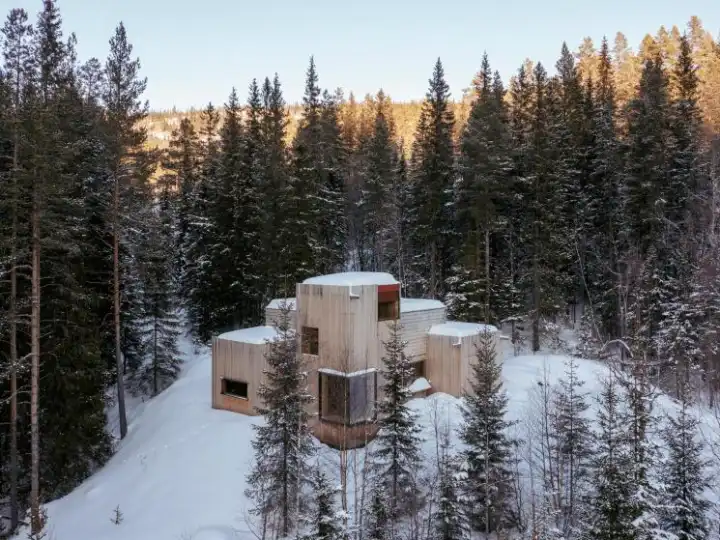
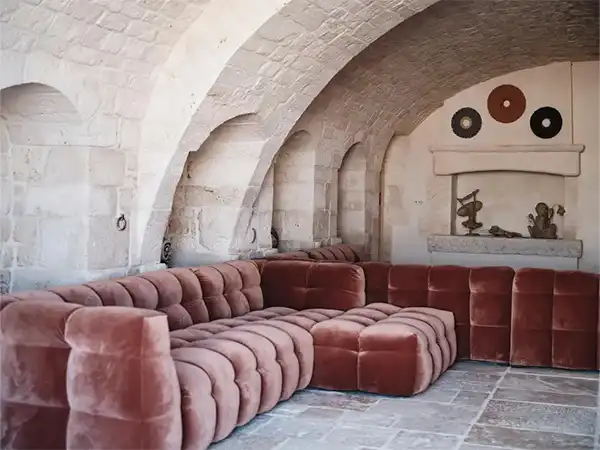
The US design studios turning to Amish and Mennonite artisans for traditional furniture production

The US design studios turning to Amish and Mennonite artisans for traditional furniture production

Dave Smoker, an Amish furniture maker, is intensely focused on staining a grand timber table. “I have always enjoyed art,” he says, sweeping his hair from his forehead and following the grain of the wood with long, meditative strokes of his brush. Smoker started work this morning at 05.45 and will not finish until 17.00, when he and his fellow Amish craftsmen will down tools and join their families at home for supper under the glow of battery-powered lights.The Amish are an Anabaptist religious community – a Christian movement that traces its roots to the 16th century – that eschew cars in favour of traditional carts. Their homes are typically cut off from the electrical grid and they prefer to live apart from wider American society, content with farming, worshipping and dressing in the plain way that their ancestors did when they first landed on these shores from Switzerland and Germany some 300 years ago.Yet the Amish and their less orthodox brethren, the Mennonites, are also some of the US’s best carpenters. They have made their own heavy-set utilitarian wares by hand for generations. Over the past few decades, Amish-made furniture has grown into a vast sector, with family-run factories and workshops dotted across the country and a whole industry dedicated to selling and shipping this work. As the owner of one US firm put it to Monocle, “These guys just know wood.”Michaele Simmering and Johannes Pauwen of Kalon StudiosCarpenter Mr HerrThis knowledge has seen the Anabaptist’s woodworking and joinery skills increasingly sought out by contemporary design studios across the country. Among them is Los Angeles-based Kalon Studios. Its contemporary chairs and tables have a crisp, functionalist simplicity and are designed to be timeless and sturdy enough to be passed down the generations. “The Amish and Mennonites have deep expertise about how each piece is built, which other workshops don’t always have,” says Michaele Simmering, who co-founded Kalon Studios with her partner, Johannes Pauwen, in 2007. “In Los Angeles, there is a large manufacturing industry but it’s a business of one-offs,” says Pauwen. “You can’t do sustained production.”The US market for collectable and limited-edition design is booming, with new fairs and galleries opening coast to coast. Yet the middle ground – aspirational but accessibly priced furniture – is dominated by a few brands. This is partly because the US’s woodworking industry shrank during the 2000s, as manufacturing moved to Asia. Much of what remains has either been swept up by larger firms or is specialist facilities producing goods that are too costly to make in large numbers. Amish and Mennonite makers strike the balance, helping emerging studios to scale up while keeping their products made locally. “It opened up our business,” says Simmering. “Our number-one struggle was finding reliable, high-quality, consistent furniture production.”California modernism might seem a far-cry from the lives of these country folk but, in the making of furniture, common ground has been found. Getting on the books of Anabaptist factories, however, is not so easy. Kalon Studios had to go through a rigorous vetting process by community elders before the craftsmen would agree to work with them, covering everything from the liquidity of their business to their “moral compass”. Indeed, monocle’s main concern reporting this story was that we could get all the way to rural Pennsylvania only to find a deserted workshop. “They might all just go home to avoid you,” said Kalon Studios before we headed there. These pious communities try to steer clear of anything that could be considered prideful.Nevertheless, after six months of making our case, Monocle is in Pennsylvania and driving through an American pastoral of sunlit hay fields, porch swings and strawberry stands that line the side of the road. You know you’re entering Amish country because the electricity poles and billboards that feature on most US roads start to peter out. We soon pass tiny hamlets with German bakeries and Victorian houses. When we see a woman in an ankle-length dress and bonnet, watering the weedy flowers beside her post box and a teenager riding a bicycle with no gears (such mechanisms are deemed to be too hi-tech), we know that we’re in the right place.Kalon works with several workshops in the small Pennsylvanian town of Lebanon (pronounced “Lib’nan” locally) to build some of its chairs and stools. It is a real family operation, with Earl Zimmerman – grandfather to no less than 53 children – at the head of the factory we visit, which has just celebrated its 50th year in business. When Monocle visits, a ripsaw is in action on the production floor, slicing through logs that will eventually be turned into seats. Raw slabs of Pennsylvania black-cherry wood from sustainably managed forests sit at one end of the workspace.The Zimmermans are Mennonites who, unlike most Amish, own modern technology such as cnc woodcutters, have mobile phones and even run a website for the business. “But the computer is a tool and not a toy,” says Earl’s son Nate, who walks us through operations on the factory floor. He explains that such technology must be used warily and only if it makes the community’s work more efficient, therefore allowing it to continue its way of life.Old-fashioned, hands-on skills are preferable and apprenticeships are a key part of the culture. Most children start learning a trade – whether that’s farming or joinery – while still in school. Nate’s son Trevor, aged 13 and on holidays, is at his father’s side. “We say that there’s a lot more caught than taught here,” says Nate. “Skills come from watching how the work is done.”  Young Trevor has already adopted the unofficial uniform of the Mennonite carpenter: tucked-in shirt, pencils in his top pocket and a tape measure clipped to his belt.Apprenticeships are common in Mennonite and Amish workshopsArchive of past projectsFor Kalon Studios, the Zimmermans are not just fabricators but collaborators, offering suggestions of how to hone their designs for greater longevity. The brand’s Bough stool was inspired by thesashimonowoodworking tradition, which uses complex, concealed joinery to give it strength. This was developed by Kalon Studios over the course of two years. “It fits together really snugly,” says Pauwen, admiring one of the products. “There’s beauty in these joints.”The scale and capacity of these firms have been steadily growing too. Mennonite factories in the US are  now competing with European manufacturers for contracts, especially for restaurant-chain fit-outs with large orders. The Zimmermans have a second facility on the other side of Lebanon, which makes 350 chairs every week. “We have a reputation for longevity, which serves us well,” says Wendel Zimmerman, who runs the factory with his three brothers and maintains a trusted workforce of smartly dressed carpenters with exacting standards. Notable design brands now produce their work with Zimmerman, though many prefer to remain discreet about it – in part because competition for craftsmen is so high. Monocle’s recent collaboration with Collect Studio on a series of chopping boards and bowls was made here.More than 350 chairs leave the Zimmermans’ factory every weekWendel says that Zimmerman is receiving more requests from the design world but the company remains selective about who it works with, prioritising brands with repeat orders and what Wendel calls “good values”. “We will end up taking on more high-end projects in the future,” he says. “I hear from larger manufacturers that this has become a significant amount of their output.”Case in point is US heritage brand Emeco, which has been working with Mennonite factories for 15 years. Best known for its all-aluminium Navy chair, Emeco joined forces with British designer Michael Young in 2010 to create its first-ever piece of wooden furniture, which was produced at Mennonite and Amish factories in Pennsylvania. “Finding these craftsmen was so important,” says Gregg Buchbinder, Emeco’s owner. “The Navy chair is made to last for 150 years, so the question was always how we could make a wooden chair with that kind of longevity too.”  Today many of Emeco’s wooden products are machined in Mennonite workshops. “A lot of makers have exported their production overseas but having complete control and oversight of the process means that we can communicate to the market why ours is a better product.”Stress-testing is part of the furniture-making processThis is a concern for many emerging US design firms that want the way they make their products to be in keeping with the ethos of their brand. That can be in terms of sustainability (US-made products, while more expensive, don’t have to be shipped from the other side of the world) or a level of finishing. With regards to the latter, brands are at the mercy of the manufacturers that they partner with and, as a result, designs can often be watered down to fit the capabilities of a factory. Mennonite and Amish factories are helping to bridge that gap. At another family-run, Mennonite-owned workshop in Lebanon with a row of buggies lined up out front, Monocle finds Amish men in boater hats and braces working silently and diligently on a batch of dressers for Kalon Studios. “Our single strongest asset is our work ethic,” says the factory’s owner, Kevin Martin. “This is our contribution to society: our work is what we pay for the space we take up.”With Mennonite factories, Monocle is told, you pay a little more for the service but can be assured that the work will be done on time – and that you aren’t getting ripped off. A popular psalm daubed on houses and mailboxes all over Amish country sets the tone: “The Lord does abhor the deceitful.”

Interview: Sou Fujimoto on restoring balance with nature

Interview: Sou Fujimoto on restoring balance with nature

“These are sketchbooks from the very beginning of my architecture-school days,” says Sou Fujimoto. “Each is numbered: year, date, book number.” The Japanese architect picks up a yellow one and starts looking through it. It’s dated 13 January 1993 – his third year as a student. “Of course, I still have a sketchbook but lately I’ve been doing digital sketches on an iPad because I can share them more easily with my team.”He could be forgiven for sacrificing the beauty of a hand-drawn sketch for convenience. After all, he’s been busy: he master-planned the Expo 2025 site in Osaka, which opened to the world in April, and is now preparing for his first major retrospective, to be held at Tokyo’s Mori Art Museum from July to November.Ahead of this showcase, which covers more than three decades, Monocle meets Fujimoto at his studio in Tokyo’s Koto City. He has de-archived every sketchbook and model from his career, laying them out on the studio floor. “We’re not just showing old models,” he says. “We are making new ones too. People will see that the thinking and the process are ongoing.”It’s a process that started at the University of Tokyo. “I wanted to study physics but I couldn’t understand anything,” says Fujimoto, laughing. “I finally chose architecture. The only architect I knew at that time was Antoni Gaudí. Then my classes introduced me to Le Corbusier and Mies van der Rohe.” On learning about these modernist masters, Fujimoto became hooked. “They not only created new shapes and spaces but also lifestyles. That was fascinating to me.” While the architect’s output looks very different to that of his early idols, there are parallels. Like Le Corbusier, Fujimoto believes that architecture should be in harmony with the natural world.“Early in my career I realised that I was creating boundaries between inside and out,” he says. “But I thought that they should disappear. And I am not just talking about physical architecture; I also mean social and philosophical boundaries. As an architect, the question for me is: how do we create beautiful relationships between human life and society, and the surrounding nature?”Some clues might lie in Fujimoto’s projects, such as House N (2008) – a home in Oita, Japan, that features layers of walls and windows that provide both privacy from neighbours and views to nature – or his 2013 Serpentine Pavilion in London, in which a semi transparent grid of white steel tubes offered views across the site in Hyde Park. Many of his other projects reference organic structures, such as birds’ nests, caves and forests. Despite the accolades that he has received for his approach, Fujimoto doesn’t think that his work is particularly groundbreaking. “In the past, our lives were closer to nature but we created boundaries to resist it in the hope of a more comfortable life within an artificial environment,” he says. “But over the past 150 years, we have found that it’s strange to be isolated from the wonder of nature.” So how can architects redress the balance? “By digging deeper and understanding locality in terms of nature and materials,” he says. “In doing so, we will find something unique, allowing the merging of boundaries and connecting people’s lives with the surrounding nature – and people with each other.”The CV1971:Born in Hokkaido, Japan.1994:Graduates from the University of Tokyo with a degree in architecture.2000:Establishes Sou Fujimoto Architects in Tokyo.2006:Wins gold in the house competition by the Tokyo Society of Architects&Building Engineers.2008:Wins the Japanese Institute of Architecture grand prize.2010:Completes Musashino Art University Museum&Library in Tokyo.2013:Creates the Serpentine Gallery Pavilion in London.2018:Builds L’Arbre Blanc, a village-like housing development inspired by trees in Montpellier, France.2020:Completes Forest of Music in Budapest, a museum in the Hungarian capital’s most famous park.2025:Master-plans Expo 2025 in Osaka, Japan.

Design agenda: A Shigeru Ban monograph, Buenos Aires’s colourful regeneration and more

Design agenda: A Shigeru Ban monograph, Buenos Aires’s colourful regeneration and more

Shigeru Ban: Complete Works 1985 – Today(published by Taschen) celebrates the work of one of Japan’s best-known contemporary architects. Ban studied in the US in the 1970s and 1980s, where he was influenced by American modernism. His first large-scale international work was the Centre Pompidou-Metz in northeast France, which opened in 2010 and was modelled on a Chinese bamboo-woven hat; others, such as the timber-clad Swatch/Omega Campus in Switzerland, soon followed. Remarkable is Ban’s ingenious exploration of materials, such as the use of rigid paper tubes as structural elements. He has employed them in the creation of emergency structures in times of ecological or manmade crises, from Fukushima to Ukraine. “Designing temporary housing for disaster relief has become as integral and meaningful to my work as creating museums or high-end residential projects,” says the architect, whose work was recognised with a Pritzker Prize in 2014. This hefty tome is appropriately sized for such an important living architect.taschen.comArchitecture: ParisQ&APast and presentPierre-Yves RochonArchitectFor more than 45 years, French designer Pierre-Yves Rochon has been bringing timeless elegance to the interiors of clients such as Waldorf Astoria and chef Alain Ducasse. At this year’s Salone del Mobile furniture fair in Milan, he is presenting “Villa Héritage”, an installation distilling his decades of experience and taste-making.How do you approach heritage in your designs?I try not to be influenced by trends, which are just moments when the majority thinks the same thing. But heritage is different. It’s not nostalgia. It allows you to choose influences that speak to your sensibility.Can you tell us about your installation, ‘Villa Héritage’?The idea is to show just how well different periods of Italian architecture and interior design, as represented by a selection of Salone’s exhibitors, can exist together. We combined their most beautiful creations with the goal of creating an experience in which light, texture and sound come together to create emotion.What do you hope visitors will take away from it?I hope that people will reflect on the idea of transmission, of how the past informs the present and allows us to imagine the future.For more news on Salone del Mobile, pick up a copy of Monocle’s dedicated newspaper, ‘Salone del Mobile Special’, available to purchase at The Monocle Shop or to read online here.Furniture: ParisRoom serviceInterior designers frequently design bespoke wares for clients but it’s rare that such pieces are put into industrial production. Thankfully, one of France’s most celebrated designers, Pierre Yovanovitch – whose work spans furniture, lighting and interiors – bucks the trend. Visitors to his Paris gallery are able to peruse his 2025 collection, with highlights including the Eze Chair, which has tapered legs and an earthy rattan seat; and the Daniel Armchair, with rounded arms that resemble gently worn river stones. To give visitors a sense of how the works might fit into their own home, the gallery-like space – a former fashion atelier, redesigned by architect Jean Nouvel – is filled with a selection of contemporary art lit by an overhead atrium.pierreyovanovitch.comUrbanism: Buenos AiresDistrict ChampionsPlayón de Chacarita, a neighbourhood in Buenos Aires, has been given a facelift at the behest and under the direction of its residents. Argentinian design firm Región Austral worked with the community to identify quick urbanism fixes as part of an initiative named Playón Red. “Urban design must always respond to the needs and aspirations of residents,” says Soledad Patiño, co-founder of Región Austral. “They hold invaluable knowledge about their territory, providing insights that external professionals could never fully grasp.” In Playón de Chacarita, those insights included a need for security, space for sports and cultural activities, and the addressing of environmental and sustainability concerns. To respond to this, the studio identified appropriate sites to create a passage-like courtyard between homes, a pocket park that doubles as a rain garden to offset flooding, and a sports court splashed with colour. According to fellow Región Austral co-founder Stefano Romagnoli, sometimes the simplest fixes are the ones to turn to. “In many of our projects, we have used vibrant hues to reinforce local identity and create visual landmarks,” says Romagnoli. “Colour goes beyond aesthetics; it fosters a sense of belonging.”regionaustral.com

Five of the world’s most peaceful buildings, where architecture soothes the soul

Five of the world’s most peaceful buildings, where architecture soothes the soul

For millennia people have sought out places to visit where they can get away from the bustle of everyday life. Architecture has the ability to create moments of calm – think of how you feel when you stop at the threshold of an awe-inspiring hall, pause for a moment of contemplation in a city cathedral or clamber into a sauna in the middle of a Scandinavian winter. The fast pace of modern life means that there’s a greater need for such places than ever. That’s why Monocle has journeyed across the globe to bring you this selection of outstanding buildings that offer somewhere for our thoughts to drift – and give us space to breathe.1.A place of meditationKohtei art pavilionFukuyama, JapanNothing quite prepares the first-time viewer for the sight of Kohtei. Set in lush green hills to the west of the Japanese city of Fukuyama, the Buddhist meditation pavilion has a mysterious air, appearing to hover above a sea of stones. That was exactly the intention of Kohei Nawa, the contemporary artist who created the design. “Kohtei was designed to resemble a ship floating in the mountains,” says Nawa, who worked on the pavilion with architects Yoshitaka Lee and Yuichi Kodai as part of an art collective, Sandwich. The maritime echoes were no accident. The 1960s Zen temple of Shinshoji, in whose grounds Kohtei was completed in 2016, was founded by the president of Tsuneishi, a shipbuilding company based nearby. But the subject also offered a gracefulness to the project. Drafting in craftsmen from the area, Nawa and the two architects had 590,000 pieces of Sawara cypress layered on top of each other using a traditional roofing technique calledkokera-buki. In spite of the building’s size, stretching to some 45 metres in length, the delicate wooden shingles give the hull-like structure a sense of lightness.Then there is the sensation of entering the pavilion: plunging into total darkness is an immediate shock to the visitor’s system. “The idea was to create a meditative experience by interpreting Zen through contemporary art,” says Nawa. “The interior expresses an ‘ocean of consciousness’ through installations of water and light. In the darkness, faint light and rippling waves flicker, allowing visitors to engage in a quiet sensory experience that sharpens their senses.” The duration of the installation is set to 25 minutes, the same length of time it takes for a meditation candle used in Zen practice to burn out. Visitors emerge discombobulated by what is an unexpectedly profound experience. Without trying, they have touched on the simplicity and impermanence that is at the heart of Zen. “This work emerges as a space where the external and the internal; the hard and the soft; and architecture and art resonate with each other in harmony,” says Nawa.While the surrounding Shinshoji temple and gardens open a door to Zen, Kohtei is perhaps the most effective route into the Buddhist meditation practice. And there is much it can offer in the modern world, not least a way to switch off from our busy, overstimulated lives.szmg.jp2.A place to respect the deadSexto Pantéon Buenos Aires, ArgentinaHidden in the underbelly of the vast, flat plain of the Chacarita neighbourhood cemetery in Buenos Aires, the subterranean Sexto Pantéon (Sixth Pantheon) is a quiet, contemplative place of burial. Designed by Ítala Fulvia Villa, one of Argentina’s first active female architects and a keen urbanist who helped to shape the capital, its structure is a radical departure from traditional expectations of funerary architecture.On the surface of the cemetery’s 95-hectare plot (which makes it one of the largest in the world) there is little indication of what lies beneath. Since construction was completed in 1958, it has been largely overlooked by those seeking an architectural pilgrimage due to the lack of visible structure. But those who do visit find themselves at first surrounded by angular lawns and an expanse of sky. Occasional monolithic concrete structures stem upwards, resembling familiar mausoleums. “When you approach the central stairway, however, a new curiosity is immediately fired up,” says Léa Namer, author of 2024’sChacarita Moderna– the first major written work to highlight the necropolis and chronicle Villa’s story. “From above, you begin to see strange elements that entice you to make the descent. You see the darkness, the shadows. You spot the full-sized trees growing underground.”Passing down into the necropolis via its labyrinthine stairway is a sensory experience. “You enter an intermediary world,” says Namer. “It’s suddenly cold. The light changes. All sound falls away.” With those shifts come bigger existential realisations: the scale of the resting place, home to more than 150,000 bodies, must be confronted. “The architect achieved something remarkable. Through her designs, spatial planning and choices of material, Villa makes the visitor ask themselves some really, really big questions.”Time spent under the earth is dedicated to silence, paying respects or gaining perspective. But what follows is what the Ancient Greeks calledanabasis– the return to the land of the living. In myth, this is an important act; one that distinguishes the person who has a choice to leave from those who are forced to stay. Visitors returning to the surface from Villa’s Sixth Pantheon might even bring back a greater appreciation for life itself.chacaritamoderna.com3.A place to switch off the city noiseLöyly saunaHelsinki, FinlandAccording to the latest UN World Happiness Report, published in March, the Finns are the happiest nation on Earth. Perhaps this has something to do with the country’s three-million-plus saunas. Not only do the heated rooms provide a space to cleanse and purge, but they also present the chance for a moment of solitude and reflection. The sensation of stepping away from the stresses of daily life isn’t confined to the countryside either, as evidenced by urban saunas such as Löyly, near the harbour in Helsinki’s Hernesaari neighbourhood. “When we set about creating Löyly, the goal was to offer residents a place to check out of the hectic pace of life,” its co-founder Jasper Pääkkönen tells monocle. “We are inundated in modern society and our phones are constantly buzzing. But once you’re in the sauna, it’s just you for an hour or two.” Opened in 2016,  Löyly’s design plays a key role in setting up the sauna as a sanctuary. Shielded from the outside world by a pinewood shell, the rooms are kept dim, even in summer. Like the best saunas, it feels spartan, with the focus centred on the heat –löylyis a Finnish word describing hot steam evaporating from sauna stones. The mysterious ambience is accentuated by the use of wood within.What might surprise some is that this space for solitary reflection has become one of Helsinki’s most popular attractions. As Pääkkönen points out, there’s something  refreshingly down-to-earth about spaces where people are stripped of clothes and accessories, as well as wealth and status. “There are no distractions in the sauna,” says Pääkkönen. Instead, the world outside fades and time passes at a different speed. “I can’t think of a setting better suited to contemplation,” he says.loylyhelsinki.fi4.A place for creative reflectionKimbell Art Museum Fort Worth, USAThe Kimbell Art Museum in Fort Worth, Texas, is the kind of place you could visit for the building alone. Though the collection is highly impressive, with some 375 works by artists including Claude Monet and Michelangelo, the Louis Kahn-designed building is the real masterpiece. Opened in 1972, it was the last project that the Estonian-born American architect completed before he died. According to museum director Eric Lee, it was also Kahn’s personal favourite. With concrete vaults bathed in the bright Texas sun, walls clad in travertine (the same as used in the Getty Museum) and elements of cork and white oak, it invites tranquillity. “It is a place of serenity,” says Lee. The feeling of calm washes over visitors from the moment they set foot on the 3.9-hectare property, which is dotted with tall elm and yaupon holly trees. “It starts outdoors on the grounds,” says Lee, identifying the gentle bubbling sound of water from the fountain as a source of peacefulness. Deeper within the building, the Texas light becomes more subdued. “It’s a blend of natural and artificial light, so both cold and warm,” says Lee. “It’s very inward looking.” Some might consider the concrete vaults to be brutalist in design but Lee says that this is not the case. “It was built at a time when brutalist architecture was the dominant mode but this is not a brutalist building,” he says, adding that Kahn’s prerogative was to make it welcoming. “It is human scale.”The structure has a modernist feel but it also strikes a balance between contemporary and classic styles. “Kahn was very much inspired by ancient architecture,” says Lee. Inside, the cool space calls for a natural hush. “I never hear people raising their voices,” he says. “You speak in a whisper because it feels like a holy space, in the non-religious sense. It’s very spiritual.” More than that, it invites visitors to slow down and immerse themselves in an entirely different world for a couple of hours. “It offers an opportunity for people to take a break from ordinary life,” says Lee. “It’s magical.”kimbellart.org5.A place to reflectChapelle du Rosaire à VenceVence, FranceFrench artist Henri Matisse designed the Chapelle du Rosaire à Vence in 1951 but its merit is more than purely ecclesiastical. Indeed, its atheist creator, who had limited experience working with religious art, became disillusioned by divinity after cancer confined him to a wheelchair. This sanctuary in Vence was actually a token of gratitude for Monique Bourgeois, the night nurse who dedicated herself to overseeing his convalescence before becoming a Dominican nun in a convent that lacked a chapel. It was an opportunity that the French artist found himself impossible to turn down despite the limitations of his health. “Matisse had carte blanche within the constraints of such a place of worship,” Gaëlle Teste de Sagey, manager of Matisse’s chapel, tells monocle. Fatigued and unwell, he was forced to work slowly and the project took four long years to complete. But the result is a remarkable alliance between faith and artistic endeavour.Regarded as Matisse’s architecturalchef-d’oeuvre, it was the first time that the artist had created a monument in its totality. “Matisse saw the relationship between the objects as little worlds that fit together,” says Teste de Sagey. From the altar and crucifix to the ceramic murals featuring the figures of the Madonna and Saint Dominique, as well as the colourful vestments of priests, Matisse dedicated his final years to this deeply personal and reflective work. Under the guidance of French architect Auguste Perret,  a master of reinforced concrete, Matisse designed the L-shaped chapel’s two narrow naves in modest proportions due to the steep terrain on which the chapel is perched. Just 15 metres long by six metres wide, the glory is in its artistic value rather than its size.But this doesn’t detract from the chapel’s grandeur. “Matisse made every effort to give an impression of elevation,” says Teste de Sagey. Opting for a pared-back colour palette for the chapel’s 15 stained-glass windows, Matisse used blue inspired by the surrounding Côte d’Azur, yellow for sunlight – a divine glow that reaches every corner of the chapel – and distinctive green palm-leaf motifs as a reminder of the lush nature of the Riviera, which he appreciated from his window during his recovery. “The organ-pipe shape of the windows is very significant in a chapel with no organ,” says Teste de Sagey. “It corresponds with Matisse’s idea that the musicality in his chapel would come from the luminosity.”The dappled Provençal rays that dance around the chapel’s white-tiled interior still offer a sense of hope. “Matisse found the silent rhythm of the reflections in the stained-glass windows immensely soothing,” says Teste de Sagey. And so will anyone visiting today.chapellematisse.fr
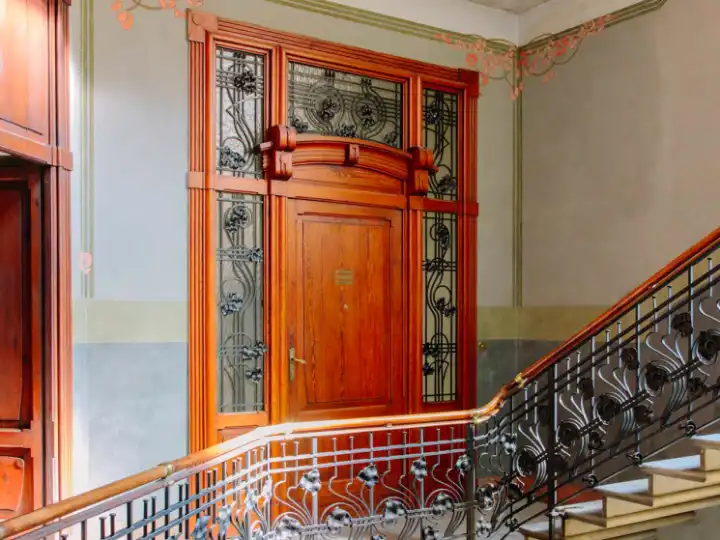
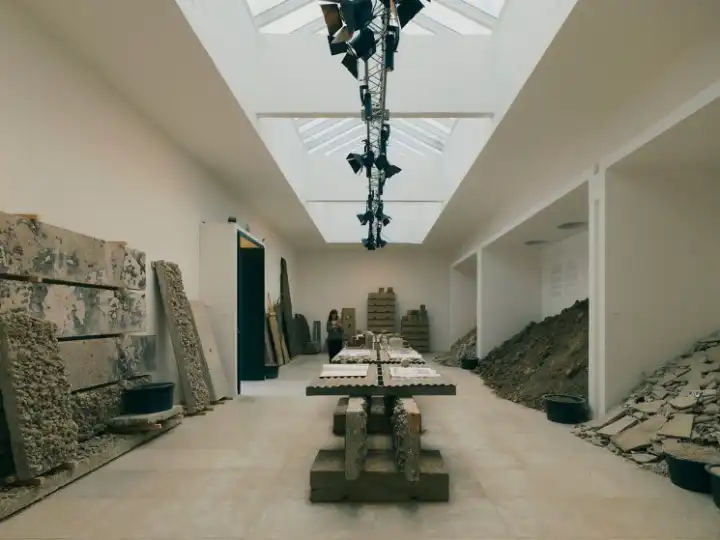
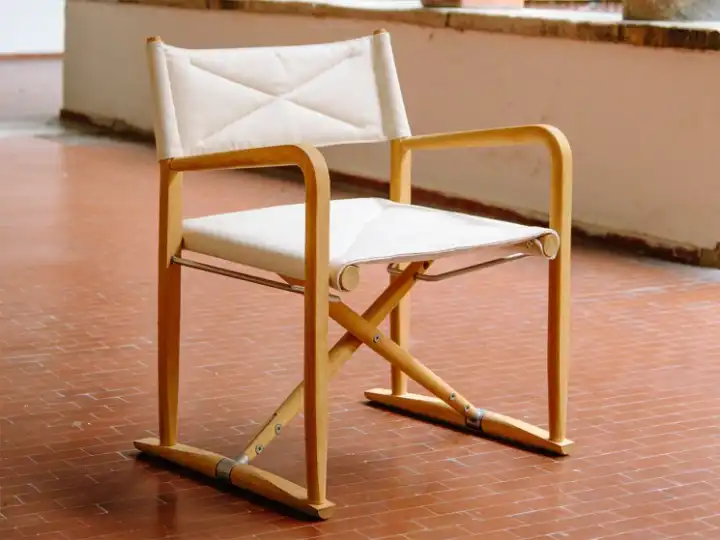
How singer-turned-architect Yarinda Bunnag turned a passion project into a thriving studio

How singer-turned-architect Yarinda Bunnag turned a passion project into a thriving studio

Yarinda Bunnag, a Thai architect, actor and singer, swapped the big smoke of Bangkok for the quiet beach town of Hua Hin, a three-hour drive south, during the pandemic. The change of location has been a success but, when it comes to her career, the 44-year-old polymath has by no means settled down. “I enjoy the creative process of making things within a wide range of disciplines, from music to acting and architecture,” Bunnag tells Monocle, while sitting on a plastic patio chair looking out to sea.In her latest Netflix show,Terror Tuesday, an eight-part horror series released in August 2024, Bunnag plays a haunted single mother. “I’m old enough now to accept the mum roles,” she says with a smile. It was the birth of her first child a decade ago that eventually ended her career as a recording artist: parenthood was incompatible with the songwriting process. Then, in 2018, Bunnag co-founded her own architecture studio, Imaginary Objects.Bunnag’s varied career can be traced back to a teenage deal she cut with her parents. While doing internships in West End London theatres and submitting a demo tape to Thai record labels, she would also apply to university. If she was accepted by a prestigious name, she would enrol.“At the time, I had no idea about architecture,” she says. Bunnag credits her father, a retired property developer, for suggesting architecture as a union of her many talents. Signed at 18 by a major label and accepted by an Ivy League university, she completed her first year of studies in upstate New York before taking a year out to go home and record, promote and tour her debut album,Yarinda. After returning to complete her undergraduate studies, she worked at several architecture practices in Bangkok while also releasing albums, lecturing at Thailand’s top university and completing a master’s degree at Harvard.Six years after co-founding Imaginary Objects with Roberto Requejo Belette – who had just left architectural firm OMA for a teaching job in Hong Kong – the pair can afford to be picky and prefer to take on fun projects over large paychecks. Last year also saw a move into products. A commission from a social enterprise to design a moveable playground for several children’s festivals led to Kitblox, a series of interlocking foam blocks that can be assembled into a variety of structures. The “Made in Thailand” kits have been bought by schools, libraries and daycare centres across Bangkok. Another career to add to the CV? “I’m not a good salesman and we’ve never sold products before, so we are horrible at marketing,” she says. It seems that simply doing what makes her happy is paying off.imaginaryobjects.coWant more stories like these in your inbox?Sign up to Monocle’s email newsletters to stay on top of news and opinion, plus the latest from the magazine, radio, film and shop.Your EmailSubscribe

Anticàmera, the scouting service that knows Milan’s most secret spots

Anticàmera, the scouting service that knows Milan’s most secret spots

Milan has a reputation for being a private city, with many of its most spectacular spaces hidden behind closed doors or inside internal courtyards. How much you get to see depends on your level of access. The idea of getting into restricted spaces appealed to Eléna Olavarria Dallo when she was growing up here. “I have always loved going into places that were closed,” she says. “I used to go with my mother to see houses for sale that were far beyond our reach to do just that.”Olavarria Dallo has turned her childhood fascination with unlocking the city into a job, co-founding location-scouting company Anticàmera in 2015. Every April during Milan Design Week, the city throws caution to the wind and opens its closely guarded spaces to the public, whether it’s the striking local government building Palazzo Isimbardi, used by Czech glass company Lasvit last year, or Brera’s San Simpliciano cloisters, which have been rented by Poliform and Saint Laurent in the past. Corps of location-scouting companies operate behind the scenes to secure the most unusual, stunning or best-positioned buildings for brands to use. Anticàmera, which currently has about 500 locations in Milan on its books, is leading the pack.Ceramics at the conventOlavarria Dallo“I was helping my future business partner, Rossana Passalacqua, to find a location for a fashion shoot in Paris,” says Olavarria Dallo, a former project manager at Milan’s Studio magazine. “We had such fun. So we said – with a third partner, Francesca Donnarumma – ‘Why don’t we do this for a living?’” Today the company’s work largely involves finding locations throughout Italy for fashion and design campaigns – but the intensity ramps up when it’s time for Milan’s springtime furniture shindig, with brands from across the design, fashion and lifestyle sectors seeking to outdo each other in the high-stakes game of finding the best Fuorisalone spot.Inside the Frati minori osservanti di San Francesco conventMonocle meets Olavarria Dallo just off Milan’s Via Monte Napoleone for a tour of the city to see some of the company’s mix of locations for rent in 2025. Down a side street, a custodian opens a grand iron gate and we enter a cloistered passageway with an inner courtyard featuring murals depicting regional landmarks, including the Certosa di Pavia monastery complex and Milan’s Castello Sforzesco. We’re opposite the city’s Bagatti Valsecchi Museum (which has been used by Prada in the past) in private residences that still belong to the Bagatti Valsecchi family. The courtyard that we’re standing in, alongside two at both ends of the passageway, can be rented for Design Week.Religious sites, some deconsecrated, are part of Milan Design WeekColin King and Robert Wright from Beni rugsThe private apartment block from the 1890s was built to resemble 16th-century noble residences and we glimpse what the apartments upstairs – which are still off-limits – must be like: discreet oases of peace in the heart of Milan’s Quadrilatero della Moda, complete with ample terraces. Olavarria Dallo established a relationship with the family through her extensive contacts. It’s all part of the game of gaining access, which requires equal doses of perseverance and diplomacy. “It’s about the network that you have,” she says. “Building trust is essential.” Olavarria Dallo says that she is constantly building Anticàmera’s portfolio by keeping her “eyes and ears open” all year.We spend the rest of the day visiting different sites around town – none of which is like any of the others. Take Piscina Romano, an outdoor swimming pool with vast, light-filled changing rooms (now out of use), or the Frati minori osservanti di San Francesco convent, a red-brick architectural gem built in the 1940s by one of Olavarria Dallo’s favourite architects, Giovanni Muzio. Its arched outdoor space can be rented. Olavarria Dallo started working with the convent after a call from a location manager with ties to the religious community.Changing room at Piscina RomanoCurved arches of Giovanni MuzzioOur final destination, in the Cinque Vie neighbourhood, is inside another internal courtyard. We have tagged along to a client meeting with Robert Wright, the US co-founder of Morocco-based rug-maker Beni, and the brand’s creative director, Colin King. Beni is returning to Milan Design Week for the first time since 2021, presenting a 10-rug collaboration with the Paris-based Studio KO called “Intersection”. The space that the brand has rented through Anticàmera is a ground-floor shopfront consisting of three connected rooms full of wooden shelving, which at various times functioned as a bank (there is still a safe in the wall), a button shop and a suit trimmings outlet. On the day that we visit, there’s an electricity connection to think about and unstuck floorboards to secure but it’s clear that the place exudes character.The open-air Piscina Romano“This collection is so strong and has such a point of view,” says Wright. “We were searching for a space with patina, marked by the passage of time. It’s about how we tell our stories. Stepping inside, you’re transported back.”Beni will transform the former shop into an experiential world of not just rugs but also lighting and sound, even featuring a bespoke fragrance made by London-based perfumer Azzi Glasser. It’s a hidden nugget of Milan that Beni would never have uncovered if it weren’t for the intrepid work of Anticàmera. “It feels as though so much of the city is hidden,” says Wright. “With Eléna, we get to peek behind the scenes.”

advertisement