advertisement

Recent Posts





Most Read

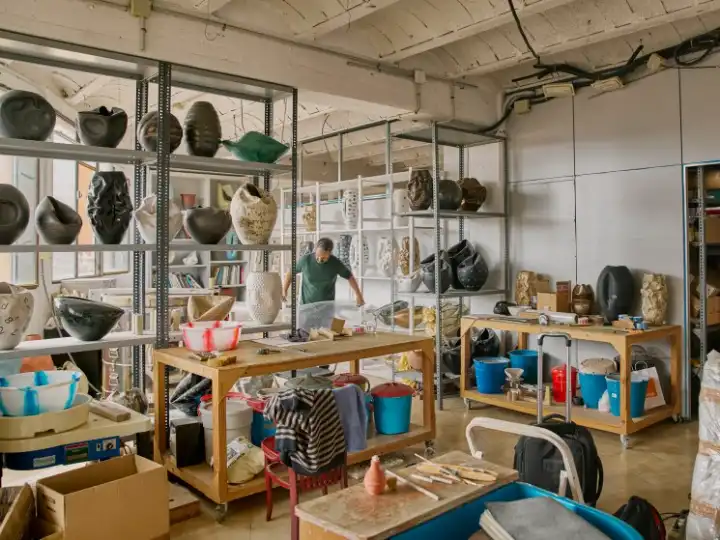
Spring clean: The pieces you need to refresh your wardrobe this season
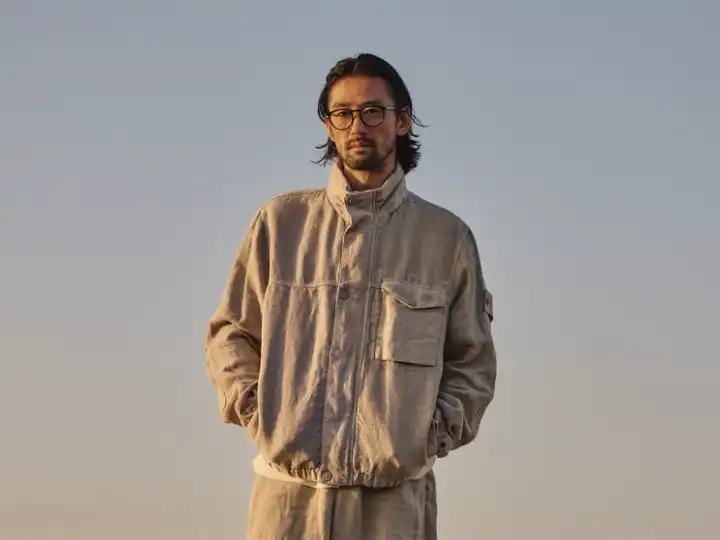
Jacket and shirt byZegnafromMytheresa, trousers byDe Bonne Facture, cap bySunspelJacket byOrslowfromSon of a Stag, shirt byZegnafromMytheresa, trousers byDe Bonne Facture, loafers byCrockett and JonesbyLoro Piana, sunglasses byLoro Piana, tie byDrake’s, belt byAnderson’sJacket byIncotexfromSlowear, polo shirt byCanali, RM 032 automatic flyback chronograph ultimate edition watch byRichard MilleTrainers byNew BalanceGilet byLavenham, exclusive toSon of a StagJacket byA Kind of Guise, shirt byKitonfromMytheresa, shorts byHevòJacket byStone Island, shorts byBaracuta, sunglasses byMoncJacket, shirt, trousers and bag byPradaShirt byStill by Hand from Couverture&The Garbstore, tie byDrake’sJacket and trousers byWhite Mountaineering, jumper byDe Bonne Facture, bag byMaison KitsunéXTopologieSweatshirt byAG Spalding & BrosfromClutch Café London, socks byFullcountfromSon of a StagSandals byJM WilsonAnorak and shorts byLoro PianaShoes byHereuJacket byMountain Research, T-shirt byHevò, trousers byPlan CSandals byRoaShirt byDe Bonne Facture, hat byHermèsT-shirt byFujitofromSunnysiders, trousers byStill by HandfromCouverture& The Garbstore, loafers byCrockett and Jones, bag byMountain ResearchSlip-ons byParabootfromCouverture & The GarbstoreShoes byYuketenfromSon of a StagJacket and shorts byHerno Laminar, trainers byNew BalanceJacket and shorts byAuralee, sweatshirt byAG Spalding & BrosfromClutch Café LondonBackpack byAble CarryfromMukamaCoat byDie Drei BergefromA Young Hiker, trousers byToogoodBag byGucciJacket byDie Drei BergefromA Young HikerHoliday hand-carry case byRimowaGardening set byGiorgio ArmaniTrainers byAltraXAnd WanderGilet byLavenham, exclusive toSon of a Stag, shirt bySunnysiders, trousers byDe Bonne Facture, loafers byCrockett and JonesJacket byIncotexfromSlowearScarf byWhite Mountaineering, sunglasses byMoncCarrera day-date watch byTag Heuer, overshirt byCanaliJacket byNorbitbyHiroshiNozawa
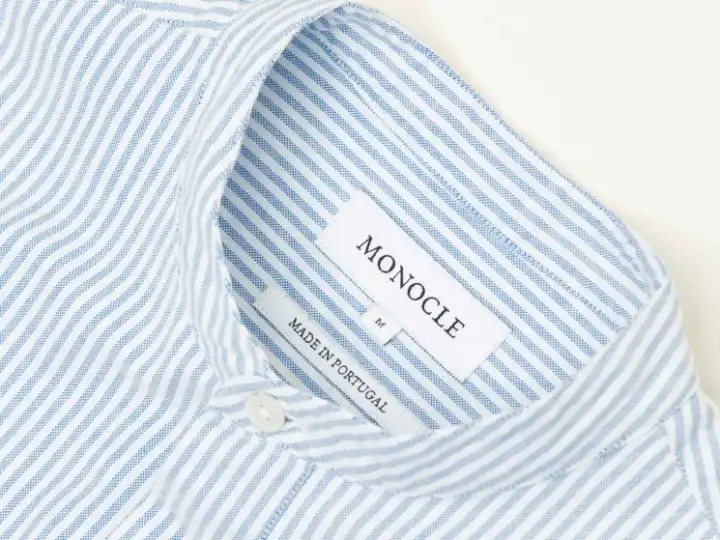
It’s time to embrace the season with new styles from the Monocle Shop
Summer camp-collar shirtThe Monocle summer camp-collar shirt is is washed to create a crinkled texture and a soft, timeworn feel, and it fastens with mother-of-pearl buttons. Made from organic cotton woven in Japan, this breathable style layers effortlessly for hot summer days.€175.00Colour:Ecru or oliveMaterial:100 per cent cottonMade in:PortugalOxford popover shirtA versatile addition to any wardrobe, this popover strikes a balance between the casual comfort of a polo and the refined look of a dress shirt. Tailored from the same fabric as Monocle’s oxford button-down, it has a sleek collar and mother-of-pearl buttons.€165.00Colour:Blue stripe or whiteMaterial:1oo per cent cottonMade in:PortugalCotton twill capTop off your look with this colourful, versatile cap. Made in California from 1oo per cent twill, this signature Monocle cap in gold, dark green or navy features an embroidered Monocle branding to the front and a tonal Monocle logo at the back. It’s perfect for walks through cities, a round of golf or simply masking a bad hair day.€70.00Colour:Gold, dark green or navyMaterial:1oo per cent cottonMadein:USASummer cotton overshirtTurn to Monocle’s take on this seasonal favourite. This overshirt delivers on both style and comfort. Made from organic cotton and woven in Japan’s Nishiwaki region, it has a natural washed finish, patch pockets and Corozo buttons.€245.00Colour:Olive or navyMaterial:1oo per cent cottonMade in:Portugal
How can we defend journalism in an age of declining press freedoms? One Berlin-based firm has the answer
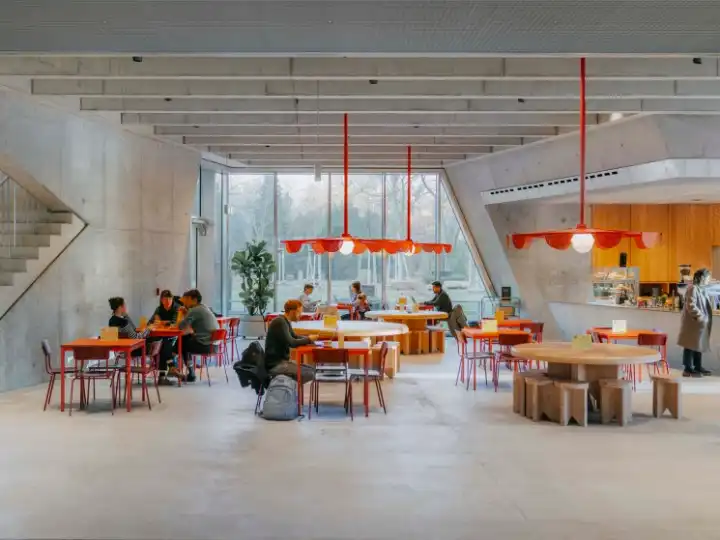
From media polarisation and falling subscriptions to fake news and the threat of artificial intelligence, the challenges facing journalism are a familiar topic to anyone who, well, follows the news. Even in Germany, where it is still common practice to flip through a broadsheet every morning, many major newsrooms are going through rounds of layoffs. But the country’s capital is also home to a new bastion of optimism named Publix. Located on Hermannstrasse, a hectic street in the Neukölln neighbourhood of Berlin, this hack’s haven is an institution entirely dedicated to journalists and pro-democracy organisations. “This is a kind of editorial utopia,” says Maria Exner, director of Publix, as she greets monocle on a sunny Monday morning. In the glass-walled foyer of the building, which opened last September, a barista is making espressos while tables are occupied by people tapping away on laptops. A wide wooden staircase, which doubles as a stage during panel talks and readings, leads to the upper floors. Here, a badge is needed to enter: the first floor is a co-working space for media professionals, with fees starting at €179 per month, while the four storeys above host permanent offices for organisations including Reporters Without Borders and investigative outletCorrectiv. Architect Ulrike DixJustus von Daniels, editor-in-chief at ‘Correctiv’Director Maria ExnerPublix is the initiative of the Lörrach-based Schöpflin Foundation, a low-profile but deep-pocketed philanthropic organisation. Founded by entrepreneur and investor Hans Schöpflin, it has long been a funder of local and start-up journalism in Germany. The idea for a physical space came from seeing how many Berlin-based organisations were struggling in the city’s tight property market. “Many would have to move offices every year, or even several times a year,” says Exner. When a partly disused cemetery on Hermannstrasse chose to sell a part of its land to the non-profit initiative, the idea grew in scope, expanding to co-working spaces and public programming.“We always said that this is a building without a model,” says Ulrike Dix, a partner at AFF, the architecture practice behind the design. Indeed, there are similar journalists’ houses elsewhere but none have the size or scope of Publix. To figure out the building’s needs, the team set up a panel with its future tenants to steer the planning process. But the board made few design demands, mostly stressing the need for secure computer systems and data storage. “Journalists are used to working anywhere,” says Dix. “They’re not used to thinking of their needs in terms of architecture.” Exner, who was previously editor-in-chief atZeit Magazin, chimes in. “When we started a podcast [before the Publix outpost was built], we set up our first studio in an old server room,” she says, laughing. Office of documentary producers Tell Me WhyDespite the relaxed brief, the architects delivered something remarkable. The six-storey building makes the most of its slim site: with a busy street on one side and a lush park on the other. There are floor-to-ceiling windows throughout that bathe the building in light. “We wanted to create a sense of transparency,” says Dix. Tenants have open-plan offices and plenty of meeting rooms – named after activists and journalists such as Alexei Navalny and Letizia Battaglia – all in a simple palette of raw concrete, galvanised steel and Douglas fir. “We didn’t look to co-working spaces that are furnished like a home,” says Dix. “We wanted this to feel like a workshop for journalism.” Naturally, there are audio and film studios that are used by tenants and can be rented. Cemetery entrance next to PublixTop-floor meeting roomInteriors are comfy but not too cosyThe safety demands of the tenants turned out to be no exaggeration. In January 2024, only a few months before moving into their new offices,Correctivpublished an exposé of a secret conference in Potsdam that plotted the “remigration” of people with foreign backgrounds. The bombshell report led to both protests in opposition to the rising far right in Germany and a wave of lawsuits and harassment againstCorrectiv. “There were people standing outside our offices, filming,” says co-editor-in-chief Justus von Daniels. Once they moved into Publix, that became more difficult: the offices are tucked away behind multiple locked doors. “Here, we had the fortune to decide what kind of offices we wanted.” The canteen at Publix is open to the publicPublix has opened to high demand. There are already more than 400 registered tenants, though, according to Exner, “nobody comes in every day”. The journalists have done far-reaching work: editor Tobias Haberkorn got a new magazine, theBerlin Review, off the ground thanks to the support of the Publix fellowship, while the first documentary partly filmed at the building, about the German pension system, aired in January on public-service broadcaster ZDF. Exner is now focused on establishing Publix as an international hub for the future of journalism and public discourse. “My hope is that the organisations inside this building take really novel, experimental approaches to editorial work,” she says. Exner lists AI-generated headlines, low media literacy and the fragmentation of news media as just some of the looming threats to journalism, though Germany has, so far, been less affected by these than other countries. “Luckily, Germany tends to be 10 years behind other countries,” says Exner. With Publix, it is suddenly setting an example.publix.de
Is the divisive New York fashion scene boring or brilliant?
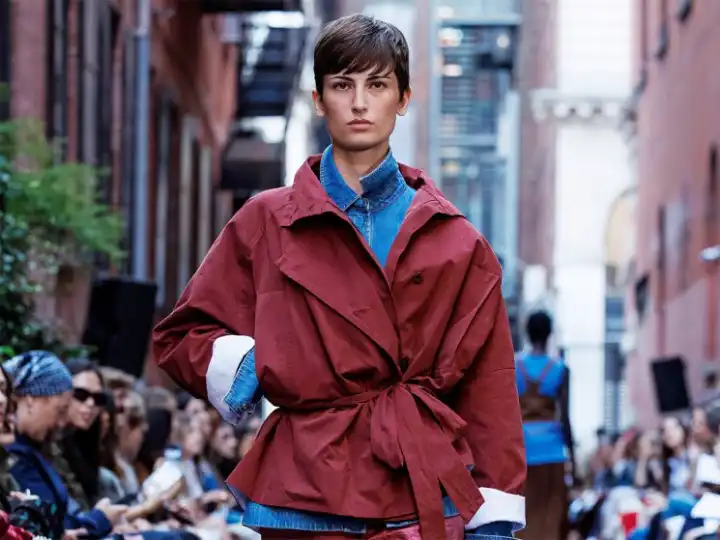
On the eve of New York Fashion Week (NYFW), Thom Browne, head of the Council of Fashion Designers of America, published an open letter to the city’s designers as they prepared to present their spring/summer 2026 collections. Browne told his colleagues to “remind everyone that true creativity still exists” and that “everything we do and say must be first for us… and then the world.” The note tacitly acknowledged the worrisome state of the US fashion industry. New York has always been the scrappy little sister of the more grown-up jamborees in Milan and Paris, and the city’s fledgling labels have been hit hard by tariffs and other events in the sector, including the recent bankruptcy of Canadian e-retailer Ssense. But the heartfelt letter was also proof of what sets NYFW apart. The world of fashion can feel overwhelming but New York’s scene is small enough to know that it is stronger when it bands together. However, reviews of this year’s NYFW were blunt, withThe Washington PostandThe Cutcomplaining that in their sobriety, tastefulness and stripped-back aesthetic, the clothes and the shows were nothing other than boring.Was Rachel Comey’s decision to unofficially kick off fashion week by presenting her collection in a Noho alleyway boring? Or was it brilliant? Guests sat on mismatched chairs and models applied their own makeup – they could have walked from the runway to Soho and looked right at home. Comey’s decision to eschew a large production was not only a good way to save money but also a way to strengthen the casual feel of her collection, which included relaxed suits and floor-skimming dresses worn with ballerina flats. Up your alley? Rachel Comey’s spring-summer 2026 runway show(Image: Alamy)Stepping out: Fforme’s fashion show during New York Fashion Week (Image: Jonas Gustavsson/Alamy)The easygoing aesthetic continued at Fforme, a young label led by Frances Howie, which was the fan-favourite of the week: models with loose hair walked down the runway in ankle-grazing trench coats, slinky strap dresses and flip-flops. New York-based Irish designer Maria McManus presented a small collection of handmade macramé dresses and light-washed baggy jeans, with coats carried under the arm or slung casually off one shoulder. Khaite was the top pick of Mytheresa chief buying officer Tiffany Hsu, who said that the brand translated “a sense of urban strength into silhouettes that remained wearable.” Expect to see Upper East Siders wearing hourglass-shaped ribbed tops and buttery leather jackets next spring. For these designers, perhaps being “boring” is the point – the concept lends itself to wearable items that New Yorkers want to take out of their closets.Global businesses such as Mytheresa continue to invest in the US – and in its high-spending New York clientele in particular. Shortly after the city’s fashion week, the retailer threw a bash at Philip Johnson’s Glass House in Connecticut to launch an exclusive capsule with Loewe, the LVMH-owned house now helmed by two of New York’s most beloved designers, Jack McCollough and Lazaro Hernandez. Despite the headlines, there are still people who want to shop, as long as there’s quality and genuine experience on offer. Critics might have sneered at the lack of pomp and ceremony but haute-couture spectacles and high-voltage runways have always been best left to Parisians and the Milanese. American brands that have made it big – Ralph Lauren and Calvin Klein chief among them – never had high-fashion pretensions. They succeeded by making clothes for the preppy, style-conscious everyman. US designers have also discovered that there is an upside to keeping things local. The tariffs that have thrown international shipping into chaos only apply to finished goods, so brands that have always sewn their clothes in New York – including Rachel Comey and William White – now have a major advantage. “There is so much talent in the Garment District,” said William White designer Will Cooper at the opening of his new shop on Canal Street, which is also equipped with a bespoke clothing service. “It’s about supporting this community.”To those expecting the theatrics of European shows, New York Fashion Week might have been a little boring. But today’s generation of designers is showing that sustainable production and wearable styles are the future of the city’s fashion industry.Read next:Why it’s time for fashion weeks to return to phone-banning policiesWant more stories like these in your inbox?Sign up to Monocle’s email newsletters to stay on top of news and opinion, plus the latest from the magazine, radio, film and shop.Your EmailSubscribe
Cultural bridges: Vatican-Saudi art exchange and Seoul’s immersive comics library
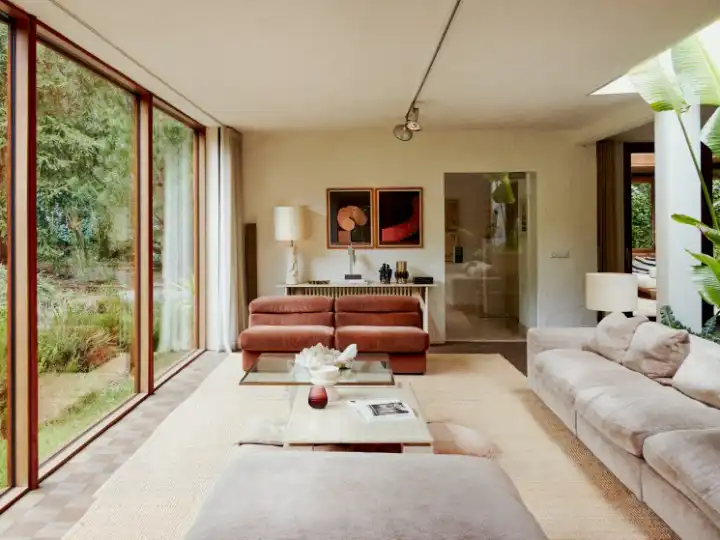
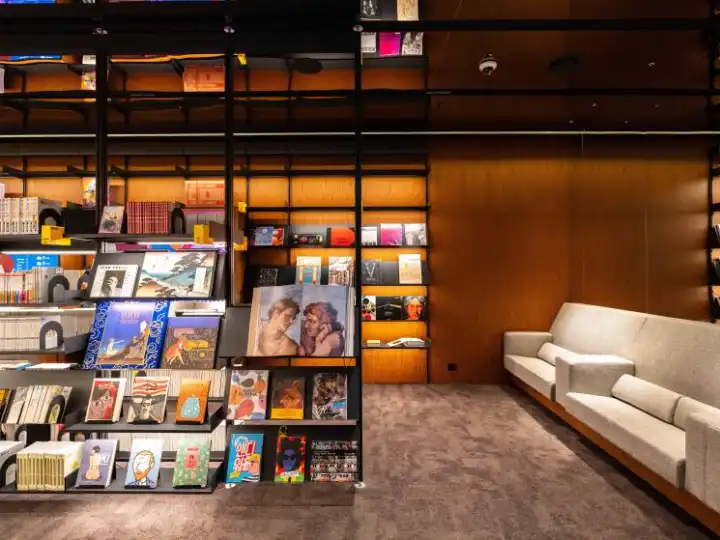
The Vatican and Saudi Arabia, home to the holiest sites of Catholicism and Islam, aren’t on the friendliest terms. As a result of past quibbles, the theocracies don’t even officially recognise each other. But on the long list of participants in the Islamic Arts Biennale (IAB), which runs from 25 January to 25 May, is a feat of diplomacy. In the event, which gathers masterpieces from across the Muslim world in Jeddah airport’s Hajj Terminal, there are 11 works shipped in straight from the Holy See.Delio Proverbio, a curator at theVatican Apostolic Library, says that this is a first both in terms of the recipient country and the size of the loan. “Even to an institution such as New York’s Metropolitan Museum of Art, we would lend a maximum of three works,” he tells Monocle But Proverbio was persuaded to collaborate by Abdul Rahman Azzam, one of the IAB’s artistic directors, and Aya Al-Bakree, the ceo of the Diriyah Biennale Foundation, the event’s organiser. It helped that the inaugural 2023 edition, which displayed ancient scientific instruments alongside newly commissioned artworks, had been a blockbuster success with more than 600,000 visitors. “The Pope himself said, ‘You have to join this exhibition,’” says Proverbio.Last spring the Saudis visited the Vatican to peruse its archives. The star item that they chose for the show is a six-metre-long 17th-century map of the Nile. It was made by Ottoman-Turkish explorer Evliya Celebi, the author of theSeyahatnametravelogue. “When I saw it, I was blown away,” says Al-Bakree. “We were all trying to see the little inscriptions.” The biennale agreed to fund a thorough restoration of the work.Is this collaboration a sign of thawing relations between the two states? “That’s beyond all our pay grades,” says Al-Bakree. Even so, it’s a prime example of how cultural institutions can make space for tolerance and co-operation even, and especially, where politics cannot.biennale.org.saSeoul’s Daeshin Wirye Center has a bookish new occupant with a distinctive mid-century style. Graphic, a library devoted to comics and art books, has opened its second branch here. The three-storey space is attracting crowds of people drawn by its immersive reading experience. For an entrance fee, visitors can peruse the collection and settle into any of its inviting nooks, cosy settees or veranda chairs, all while enjoying tasty snacks and drinks.The idea is to allow readers to lose themselves in books and stay as long as they want – at least, up to a point (the high demand has led to the introduction of a three-hour cap at peak times). Graphic’s popularity reflects a growing appreciation of print media in a city known for its “snack culture” – the tech-savvy population’s habit of scrolling content such as webtoons in bite-sized chunks. It’s the latest addition to Seoul’s expanding array of sit-down reading sanctuaries, from the expertly curated, genre-focused Hyundai Card Libraries to Cheongdam’s membership-based Sojeonseolim Library, which hosts book clubs and author visits.Whether it’s by encouraging readers to lounge on beanbags or by having a DJ set the mood, Seoul is reimagining how books are experienced. Pull up a chair and get stuck in.graphicbookstore.imweb.me
The art of a narrative: How Louise Courvoisier and Natasha Brown bring stories to life
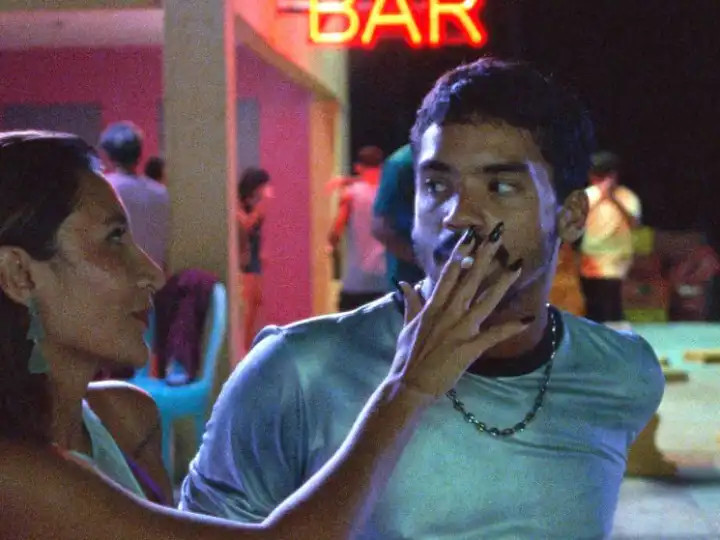
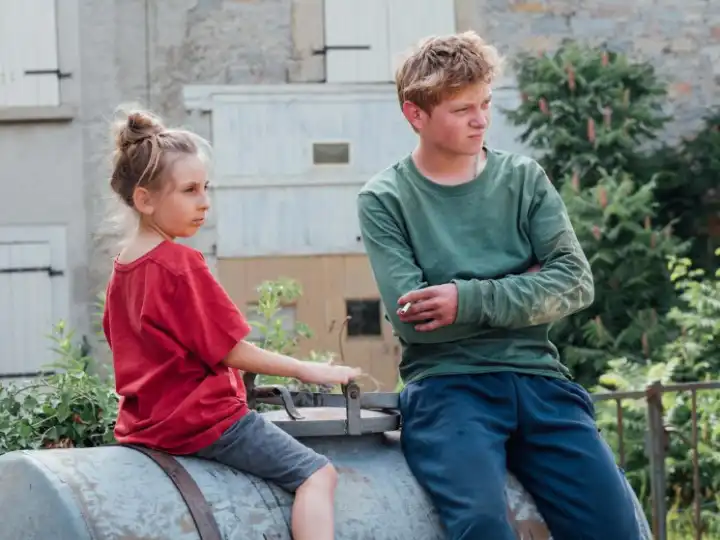
Slice of lifeLouise Courvoisier, directorThe process of making comté cheese isn’t something that has had much cinematic airtime. But director Louise Courvoisier puts the arduous task centre stage inHoly Cow. The new film follows 18-year-old Totone as he takes over his father’s dairy farm while wrestling with the travails of first relationships. Here, Courvoisier tells us about decentralising French cinema, casting non-professional actors, and why cheese is a worthy protagonist.How did you choose the film’s location?I grew up in the Jura, so that’s where I shot the film. I wanted to make a film about the young people who I grew up with and those that don’t have a choice to leave the countryside. In France, films are always set around Paris, so it was important for me to focus on my area.How did you cast the film?I wanted to work with non-professional actors who were from the area, but I didn’t know how to find them. It isn’t a documentary, so they had to be good at acting. Clément Faveau, who plays Totone, has fire and fragility in him.Why did you want to tell a story about comté?Only a small part of France is allowed to make this cheese. When you come from the area, it surrounds you in a way. It was a challenge to film, but I was confident about the idea because it’s interesting to capture a process that’s so physical. Totone grows up in the film, and making comté helps him to evolve.Holy Cowis in cinemas on 11 April.Novel techniquesNatasha Brown, authorFollowing the success of her debut,Assembly, in 2021, British novelist Natasha Brown returns withUniversality. In this comedy thriller, a journalist’s exposé raises questions about the power that language holds. Here, Brown tells us about her influences, writing dialogue and hooking readers.Is social analysis at the heart of ‘Universality’? Jane Austen is a huge influence. Her novels capture what life and people were like in her time; the little hypocrisies of those who take themselves too seriously. I wanted to do the same for what the world looks like today. How do you write such lifelike conversations? I write every scene from the perspective of every character, then go over it. After I’ve done that, I write from that scene’s narrative perspective and pick and choose from those different bits. Sometimes I have to be harsh and take away a character’s perfect line but I always need to believe that they’re real people and that their motivations are real. How do you balance the excitement with the ideas?I wouldn’t write novels if I wasn’t interested in these questions about language. The esoteric side is where I begin. But when I get into it, it’s about the characters, the story and the hook. These are key.‘Universality’ is published by Faber UK and Penguin US
Interview: Design Week South Africa curator Zanele Kumalo
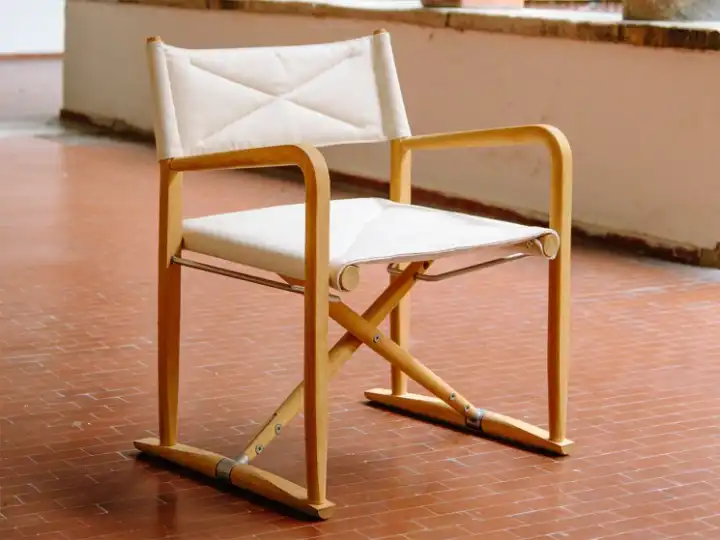
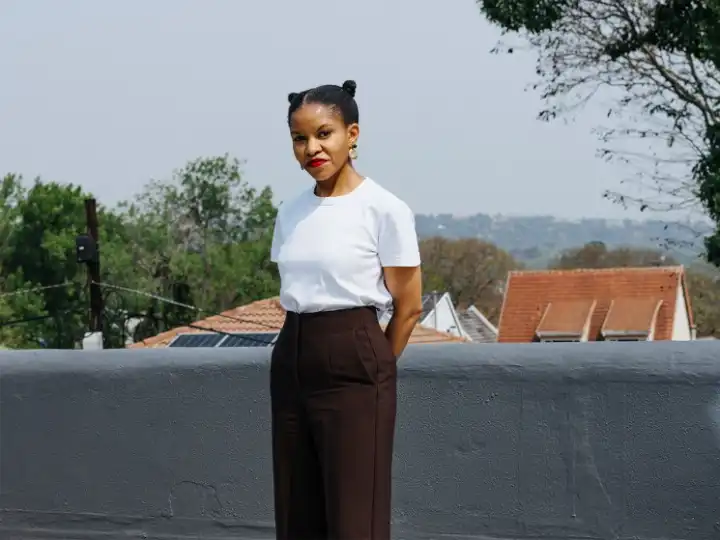
Zanele Kumalo is the curator of Design Week South Africa, a celebration of design that takes place every October across Johannesburg and Cape Town. Here, we talk to Kumalo about providing a platform for African creatives, increasing access and growing in influence.Why did you decide to get involved in Design Week South Africa?When I worked in magazines I always tried to amplify voices that weren’t given space. [Now] what drives me is helping young creatives find a firmer footing in places where they haven’t had access. There’s such a wealth of talent in this country, so highlighting creatives makes me happy. How will Design Week affect the design scene in South Africa?What’s interesting about this design week is that there’s no barrier to entry, [whereas other] expos usually ask exhibitors to outlay some money to exhibit in a booth. People can [also] enjoy design in a place that feels more accessible. Instead of walking into one space, it’s spread across the city, so it presents a different kind of opportunity for the regular person on the street – you might walk into a restaurant and there’s a pop-up or panel discussion. It’s also an opportunity to amplify and give [designers] a greater platform to share their brand internationally and create more sales. Tell us more about the curation and how you select designers.The first iteration of Design Week happened quite quickly, so it was a general call-out from myself, Margot Molyneux [founder] and Roland Postma [curator]. We leaned on established names but we also relied on some of the newer players to feed us inspiration. This year we want to be a little more transparent. We want to ensure that there’s no room for anyone to doubt how we are doing things and that we might be favouring certain entities. We also want to be a little more inclusive, so we are working out ways we can create a larger panel or board to help ensure that we cover all the bases and that our discovery is more broadly set.We want to be the authority on design and our point of difference will be the nurture aspect: supporting emerging talent, while still highlighting the bigger players. For our curation, it’s really important to bring new voices to the forefront. There are so many exciting ventures happening [around the country] and we want to give them the space to turn those ideas into sustainable projects. To do this, we also provide financial or project-management support. Other [design fairs] expect brands to pay fees that can be limiting and cut down access. There’s so much potential; we just need to highlight it. What do you think sets South African design apart?The biggest things are our points of view and philosophy of design, which I think [non-South Africans] are always on the lookout for. South Africa has multiple cultures and a lot of untold stories that have been buried, which are now being rediscovered through design. People from different cultures are also collaborating: they’re mixing a foreign design principle with things that are completely unique [to South Africa] and rediscovering what it means to be South African, which is layered and varied.Why is there such good design coming out of South Africa?Good design has always been coming out of the country but now there’s a greater spotlight on it, probably because of initiatives such as Cape Town Furniture Week and 100% Design. We’re also constantly discovering [new designers]. A lot of smaller design companies are underreported – it has taken growing initiatives and design platforms to spotlight these makers. Previously, South Africans always looked everywhere else for validation but we’re starting to appreciate what’s happening inside our own country. There’s a deeper pride in what we produce and we’re realising that it’s of the same quality as items being produced elsewhere. While we gain validation when our design is featured around the world, there’s a lot of internal validation happening too.What are your ambitions for the show?We don’t just want it to be an annual event. We’d like to keep it running over the course of the year, whether that means supporting smaller projects or highlighting what’s happening around the country. The event won’t be a thing that happens in isolation. I want to make sure that we have a panel of people who could take Design Week to a pan-African or even international level. It would be great to have that recognition. We don’t necessarily want to grow in scale but grow in impact. We’d also like to plug into the rest of Africa, such as Design Week in Lagos or Accra. While we still want to keep it local, we’d like to reach out to a more global network too. The opportunities are endless. Do you think it has the capacity to become an event that draws people from around the world, like Salone del Mobile?It would be interesting to see whether we could attract people from all over the world. But we’ll always make sure that, above all, we are supporting all of these South African voices.
advertisement