advertisement
Every object has a story to tell – and V&A London’s new storage facility is designed to serve as a museum

Every object has a story to tell – and V&A London’s new storage facility is designed to serve as a museum

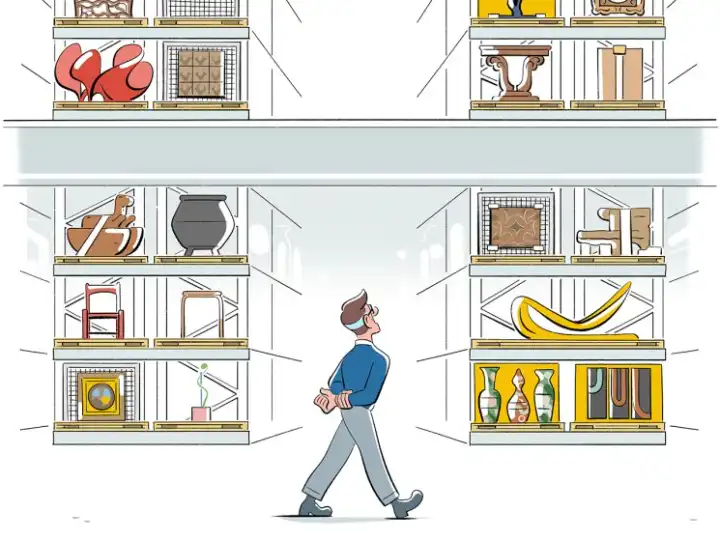
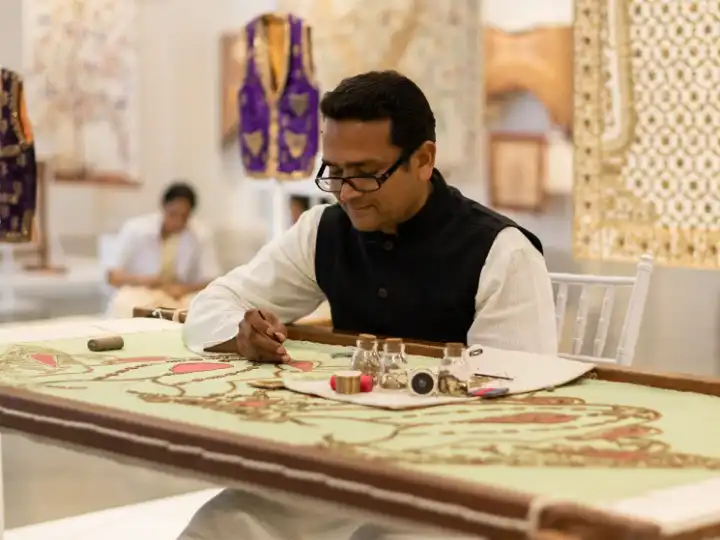
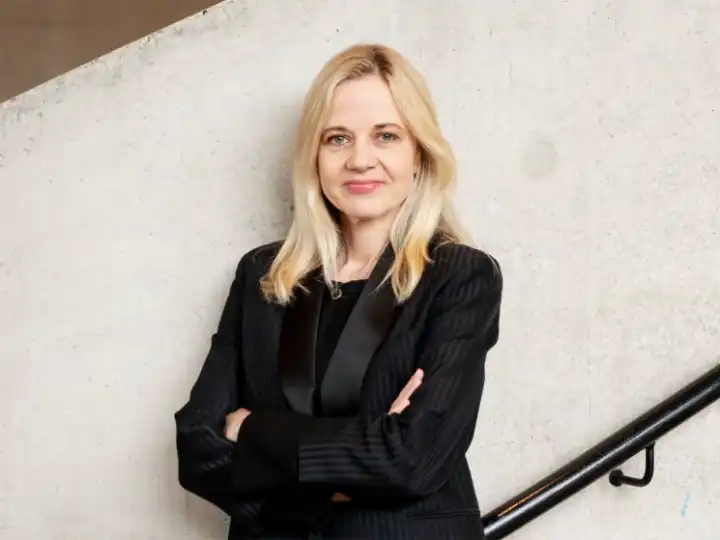
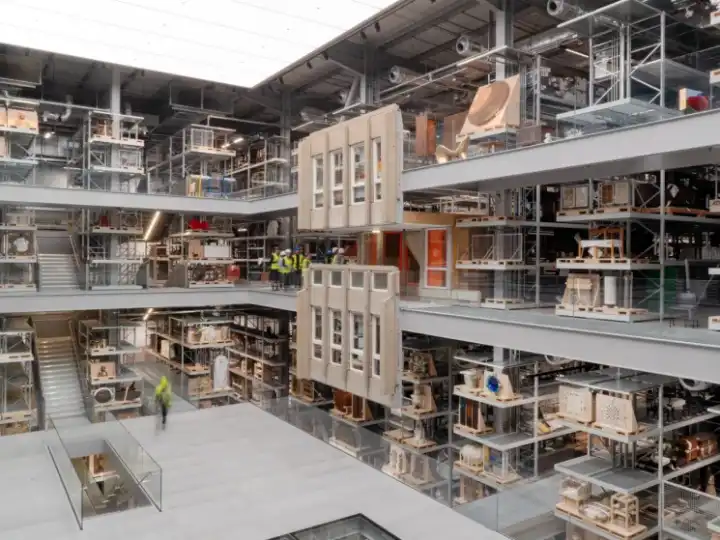
At one point during the installation of the Torrijos ceiling in V&A East Storehouse, 12 different parts of the carved wooden roof dangled from chain hoists. With painstaking care, a team of technicians clad in hi-vis and hard hats slowly tried to manipulate them into place.We don’t often look at ceilings, the sides of buildings or entire rooms, for that matter, and consider them “objects”. The meaning of the word, however, begins to expand as you wander through this new museum-cum-warehouse. V&A East Storehouse is the latest member of the V&A family, a storied British institution founded in 1852 and named after Queen Victoria and Prince Albert. Unlike its existing museums in London, Stoke-on-Trent and Dundee, V&A East Storehouse is more like a storage facility that has been designed to allow visitors inside. There are publicly accessible art storage facilities elsewhere, most notably the Depot of Museum Boijmans Van Beuningen in Rotterdam, but nothing on the scale of this new institution.George Barret’s oil painting ‘Italianate Landscape with Shephards’V&A East Storehouse was born, in part, out of necessity. In 2015 the UK government announced plans to sell off Blythe House, a government-owned London storage facility that has housed most of the V&A’s stored collection since the mid-1980s. About 600,000 objects, books and archival collections would have to be relocated; some larger objects, such as the Torrijos ceiling, were being kept in storage in Wiltshire and these were swept along into the plan. “You don’t move a collection of this size and scale very often,” says Tim Reeve, deputy director and chief operating officer of the V&A. “It made us think that we had to go as big and be as ambitious as we could.”That ambition eventually translated into unboxing the 500-year-old Torrijos ceiling to install its eight interlocking arches and corner pieces (or squinches) here. The ceiling was created in the Spain of Ferdinand and Isabella, for a palace near Toledo. Just before the palace was demolished, the ceiling – one of four – was acquired by a London art dealer and, in 1905, sold to the V&A. For more than 80 years, the Torrijos ceiling was installed in the museum until, in 1993, it was dismantled and packed into 40 large crates.The façade from Robin Hood Gardens overlooks the collection hall as the V&A team works on the installation When the ceiling was unboxed, some of the timber framework had warped and the pieces no longer matched up. “We had some sketchy old plans but there are about 150 pieces. It was just a massive jigsaw,” says museum technician Allen Irvine. “I’ve worked with the V&A for 21 years and that’s one of the most difficult installations we’ve ever had.” Completing the jigsaw – modelling how the octagonal dome fits together, building additional timber to support it, working with conservators and fixing the six-by-six metre ceiling in its tight space – took three months. “It’s an absolutely dazzling piece,” says Reeve. “Now we see it, I think we all feel guilty that it’s been off public display for so long.”The Torrijos ceiling is one of five “large objects” that have been incorporated into the architecture of this space. They are testament to the ambition of the building’s design as well as that of past V&A collectors. They include an office designed by Frank Lloyd Wright and an example of a fitted kitchen from 1920s Frankfurt. The section of the façade from Robin Hood Gardens, an iconic east London brutalist tower block that was demolished between 2017 and 2025, was the first thing installed here more than three years ago, when the museum was just a building site. Now that 12-tonne concrete façade fragment lives in the centre of V&A East Storehouse, looming over the stairs through which visitors climb to arrive at the collection hall.Hear four young people reflect on their experience telling the stories of Robin Hood Gardens alongside the V&A onThe Urbanist:Statue of a winged mythical creature from Tamil Nadu Buddha sculpture made between the 9th and 11th centuriesStacks of photographic portfolios Henry Howard’s oil painting strapped in placeIt’s a theatrical entrance amplified by the way the space seems suddenly flooded with natural light. But in fact this is provided by a lightbox created with a huge stretched Barrisol ceiling (“If size matters, this is the largest Barrisol ceiling certainly in Europe, maybe even the world,” says Reeve). It gives the perfect illusion of daylight without having to worry about capricious British weather. The museum’s hollowed-out core is the first space that visitors will experience, which makes V&A East Storehouse “a typical building inside-out,” says Elizabeth Diller, a partner at Diller Scofidio and Renfro, the New York-based architect firm behind the project. “In most public institutions, if one goes deeper and deeper into the footprint, one goes into more private spaces,” she says. Here, the further out you move, the less accessible it becomes. The inside-outness of the layout “gives the public a sense of trespass”, says Diller.As you arrive, it’s hard to know where to look. The publicly accessible galleys, which surround the central space, are lined with industrial shelving units whose rack ends hint at the variety within. Glance around the room and you’ll see an elaborate Dutch “giraffe piano”, a Memphis Milano lamp, a Venetian bust and a multicoloured rubbish bin extricated from Glastonbury Festival. “There is something for everyone,” says Reeve. Where the objects go and who they sit next to has been lightly curated but visitors will take themselves on a self-guided tour. There’s no exhibition per se, no one story to be learnt or single message to take away. “Part of the motivation of the project, and what gave us great joy, was to figure out a way of expressing the vastness and eclecticism of the collection in a way that could be sublime,” says Diller.Client project manager Hannah O’Connell stands next to part of Eduardo Paolozzi’s Krazy Kat Arkive of Twentieth Century Popular CultureCostume display conservator Stephanie Howell adjusts an ‘under kimono’ that has recently returned from an exhibition at V&A DundeeFor the displays, the architects “took as a model the eclecticism of a cabinet of curiosities”, says Diller. Made popular in Renaissance Europe, these were rooms in which collectors brought together their prized objects for the enlightenment and entertainment of others. At V&A East Storehouse, the simple, stripped-back appearance of the displays adds to the feeling that you’re drawing back a curtain and going behind the scenes. Objects are displayed in wooden crates and on specially designed palettes. Busts are strapped into place with criss-crossing cushioned seatbelts. Every object has a simple luggage tag tied to it with a code that can be looked up on the V&A’s digital database.The public experience of V&A East Storehouse as a museum exists side by side with its purpose as a working storage facility. A glass floor in the central area, which gives the illusion of being propped up by a vast and ornate Mughal-era colonnade, gives visitors a view of what’s happening below. There, forklifts and other machinery roam the lower labyrinths of the building (it took over two years, says technical manager Matthew Clarke, to find the necessary equipment to handle heavy objects in narrow aisles without a standard palette size). When Monocle visits, we watch a 19th-century French vase with detailed goat heads for handles being manoeuvred onto a forklift and lifted into place. Once the museum opens, visitors will continue to see the technical team at work as they rotate the displays and move objects for exhibitions or to go on loan.The 15th-century Torrijos ceiling hasn’t been on public view for three decadesV&A East Storehouse is both a museum and a working storage facility Hoarding poster from 1929 advertising D’Oyly Carte Opera Company productionsDeeper into the building, there are conservation studios, reading rooms and a cloth workers centre, all of which are publicly accessible. Overlooking the conservation studios is a window for visitors to peek at what’s going on inside. These studios are also equipped with headsets and cameras that conservators can use to give curious visitors more details about what they’re working on. Museum-goers might be used to seeing the work of curators but Reeve hopes to demystify other roles, such as conservators or technicians. “It’s getting visitors into all corners of what we do to care for a collection of this size and scale,” he says.As well as exposing the lesser-known activities of museums, V&A East Storehouse extends an open invitation to visitors to take a closer look at its collection through the Order an Object service. Kate Parsons, director of conservation, collections care and access at the V&A, describes a new part of her role as providing “meaningful and equitable access to every part of every object on this site”. Everything in the building has been logged and anyone can search through the digital catalogue, put up to five objects in a “virtual crate”, then choose a time and date to come in and have a look. “A booking is a booking,” says Parsons. “It’s not a request. You decide you’re going to see these five objects and we enable access.” What that means in practice depends on why an object has piqued your interest. If you’re a cabinetmaker, says Parsons, you might want to see the back of a drawer to find out how it’s been made. If you’re researching shoes for a television drama, you might want a face-to-face with one of the 3,500 pairs here. But you don’t have to be a cabinetmaker or researcher to use the service. “We are very clear that there’s no need for credentials or a reason to look at something,” says Parsons. “People can choose to see things just because it might make them happy.”Una Troubridge’s sculpture of ballet dancer Vaslav NijinskyEarthenware dating to the 19th century, from Sèvres, France A 10th-century figure from Karnataka, India Curatorial co-ordinator Miri Ahn with an ‘electric eye’ teddyParsons has just finished the recruitment process for the staff who will enable this access. Those who were chosen didn’t need to have experience in museums. Instead, prospective employees were asked to talk about an object they own that is precious to them and how they keep it safe. “That simple question was amazing in terms of the stories we heard,” says Parsons. Important, too, was recruiting from the local area. “We want people who are living and working in East London to feel like this can be part of their lives, as a hobby but also a profession,” says Reeve. Keeping things local, the museum café is run by East London bakery E5 Bakehouse. And V&A East Storehouse isn’t the only new institution here. Dance venue Sadler’s Wells East opened earlier this year, while the David Bowie Centre will be finished later in 2025 on the Storehouse site. Next year, V&A East Museum, a more traditional museum that will act as a sister venue to Storehouse, will open too. “East London has a great creative heritage,” says Reeve. “But research tells us that a large population in East London are not museum-goers. We want to make them feel welcome here.” Tim Reeve, deputy director and chief operating officer of the V&AAs Reeve walks past one corner of the collection hall, he throws his arms wide, encompassing a Piaggio scooter customised by architect Daniel Libeskind, a drum kit that belonged to Keith Moon and a vase with sphinx-shaped handles. Thousands of miles and hundreds of years of history swept up in one arm span. On show, too, are the straps, screws and supports that hold all these objects in place. “This is what it’s all about,” he says, beaming.It’s these objects that take centre stage here, and the hundreds of thousands of them at V&A East Storehouse tell us infinite stories. Stories that can’t be heard from outside the locked doors of a closed storage facility. Stories that aren’t just of the objects themselves but of all those who’ve had a hand in helping them along the way. The hands that sketched, stitched, carved, crafted, restored; that used an object, made it famous, threw it away, decided that it was worth keeping or, lovingly, winched it into place.Hear an audio version of this story with extra interviews onThe Urbanist:
Interview: Meet Martin Österdahl, the man behind Eurovision

Interview: Meet Martin Österdahl, the man behind Eurovision

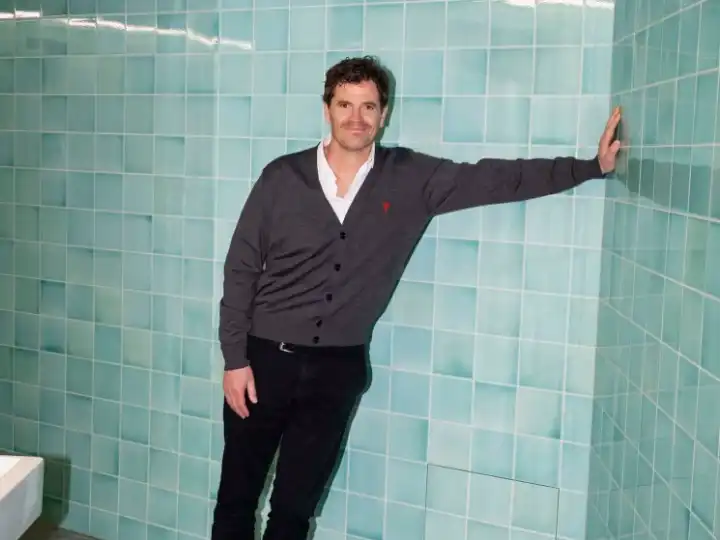
Martin ÖsterdahlIn many ways, Switzerland is the true home of the Eurovision Song Contest. It is co-ordinated by the Geneva-headquartered European Broadcasting Union (EBU) and Switzerland hosted (and won) the first edition in 1956. But at the helm of this rather Swiss enterprise is, in fact, a rather dapper Swede. You might recognise Eurovision’s executive supervisor, Martin Österdahl. On finals night, he announces when the votes have been counted. But this moment in the spotlight is the culmination of months of behind-the-scenes grunt work getting Eurovision – still the world’s most watched non-sporting TV event – shipshape and sparkling.Österdahl has been in the role since 2020 but last year he was booed on stage due to several flashpoints, including Israel’s presence at the event and the exclusion of the Dutch representative. Despite the bumps, the 2024 contest’s three live shows reached an audience of 163 million, making it one of the most successful so far. The 2025 competition will be held in Basel. And so on a crisp day in late January, monocle traversed the city’s cobblestone streets to witness the semi-final draw and city handover – two key moments ahead of the live shows in May. These took place in the new wing of the Kunstmuseum, in front of a brightly coloured Frank Stella artwork, which serves as a fitting backdrop for an event that is known for its vibrancy. After a record-breaking yet bruising period for the competition, we sit down with Österdahl to hear about how he keeps the show on the road, why contemporary culture is always political and the importance of events that unite not divide.Many people know about the Eurovision Song Contest but you technically work for the European Broadcasting Union (EBU). What is it?The EBU is an international member organisation of national broadcasters with 100 members across Europe and associate members all over the world. I only work on the Eurovision Song Contest and Junior Eurovision Song Contest, but the EBU does co-production and programme exchange within the membership across all genres, including news and sport.How long have you been a Eurovision fan?I grew up in a home where both my parents worked in the music industry. My father competed in Eurovision in 1967 as a songwriter on the Swedish entry. He was a hit maker in the 1960s and 1970s, and then he started managing his own recording studios in Sweden and the UK. The first one was in the basement of my family house; Abba recorded there. Later, we moved to the UK and my father recorded some of the biggest stars of the time, from Marvin Gaye to Iron Maiden and later the Spice Girls and Take That. It was a very special environment; I learned the ins and outs of recording music. That has been helpful in this job.“Eurovision is the Super Bowl on steroids”Sweden has a special relationship with Eurovision. When the show is hosted there, the level of excitement is palpable…That’s right. And our national competition to select our Eurovision representative, Melodifestivalen, is a massive event. It takes place over six consecutive Saturday nights with Eurovision-style production in arenas around Sweden. The whole country pretty much comes to a standstill. The final of that tour is in Stockholm with 35,000 people in attendance – more than we have for any Eurovision Song Contest. The secret to the success of Sweden in Eurovision and the Melodifestivalen format is the close collaboration between SVT [the national broadcaster] and the Swedish music industry. Does it feel particularly special to be hosting the competition in Switzerland this year? The first edition was in Lugano, so it is coming home in a way. There’s a growing fan base here and Switzerland is quite unique. It’s a country divided between three languages but united in being Swiss. Tell us more about your role and the complexities of hosting an event like this.A large part of what we do is the knowledge transfer from each year: sharing how to set up what is the world’s largest music event and arguably its most complex TV production. My team and I work on this every year, so we make sure that the new host broadcaster has all the information they need because of the unique hosting mode – if you win it, you host it. We take the Monday off after the grand final and then we start again on Tuesday. There is no time to lose. I used to be a commissioning editor of entertainment and sports programming at SVT. If you’re the host broadcaster for a ski world championship, you normally know that five years in advance. With Eurovision, you win it on a Saturday night, and the host broadcaster gets a letter on Monday saying, “Congratulations, you’ve won. Now you’re expected to put all this together a year from now, and it will go out live to hundreds of millions of people”. It’s quite a daunting task. Do you try to avoid capital cities when selecting the host location?The show employs more than 10,000 people, which is something that people at home perhaps do not realise. We need a lot of hotel rooms and an international airport. We also need an area near the arena with changing rooms for up to 26 delegations of 20 to 25 people. They need to have space for hair and make-up, and somewhere to organise their costumes. There needs to be a prop storage area. We also need a media centre for 1,000 members of the press and a press conference room. The logistics behind the stage are extraordinary. Cities such as Basel, Malmö and Liverpool are well equipped, but there’s the soft factor too. You want to have a city that embraces the values of the brand and wants to do something with it; that tends to be a country’s second or third city. The biggest cities have so much happening already. Österdahl takes centre-stageThis year’s semi-final drawThose logistics are comparable to the biggest international music tours, right?When we produced the Eurovision Song Contest in Malmö back in 2013, the last big show before us was Lady Gaga’s tour – at that time, the world’s biggest. Lady Gaga had something like 30 semi-trailers of technology and props. We had 97. And now, we have more than 200. I love when people talk about the Super Bowl; Eurovision is the Super Bowl on steroids. Let’s talk about the 2024 show, which was incredibly successful in terms of viewing numbers but also controversial. The truth is that the Eurovision Song Contest started in 1956 as an experiment in new technology but it also had that big idea of uniting people across borders at a time when Europe had become very divided. That’s one of the main reasons why it’s become so popular. Throughout the almost 70-year history – this is the longest-running show on television – lots has happened in Europe. Unfortunately, we live in a time of conflict and division but that just makes the Song Contest even more important. We believe that we have a higher purpose: for a few nights, we can imagine the world as we would like it to be, not necessarily as it is. That’s what gets us out of bed in the morning.“For a few nights, we can imagine the world as we would like it to be, not necessarily as it is”How do you manage the delicate question of artists expressing political views?The arrival of social media has changed things and artists who participate in this event suddenly have their own platform. Popular culture has always been opinionated – and it must be to be contemporary. It’s an expression of identity, of what’s going on in the world and what you think about it. We understand that but we also have a set of rules that say that you’re not supposed to use the Song Contest to express political views. And that does become more challenging when we’re in a divisive time. Unfortunately, over the past few years, we’ve had the Nagorno-Karabakh conflict between Armenia and Azerbaijan. They both participate. We’ve had the invasion of Ukraine. And now we have the conflict in the Middle East. It’s difficult to be that neutral space when things like this are going on.Some of those conflicts will be ongoing during this year’s show…We don’t expect anything else but it’s important that we find a way through it. In Malmö [the 2024 edition], the latest conflict in the Middle East was relatively new and we were the first big international event to come on stage with an Israeli delegation. I think we became a little bit too passive, a little bit too silent. And we’re not making those mistakes again. We’re going to be much more proactive. We’re going to be much more communicative. We’ve introduced new codes of conduct and duty-of-care protocols. But, ultimately, it’s about mutual respect. We are supposed to be a kind, gentle event. Hate, violence and toxicity have no place in the Eurovision Song Contest. And there have been some new additions to the team as well.One of the things that we realised in Malmö was that we were understaffed because the event has grown so much. We’re now a global entertainment superbrand with millions and millions of followers. We needed more support for the leadership, crisis communications and everything that has to do with managing an international brand. That’s why broadcast events leader Martin Green was recruited, which is great for us.Lots of fans would like to see Turkey back [after it withdrew over perceived bias]. Would it be welcome? We would love to have Turkey back because of the fanbase there. There’s a massive fanbase in Russia too. I’d love to be able to serve those fans with Eurovision. Unfortunately, in the case of Russia, that is looking difficult. But in 20 years from now, I would love to see Turkey and Russia participating.“Public service media is more important today than it has ever been”At the heart of Eurovision are public service broadcasters, which each fund and organise their country’s participation. Have attitudes toward those organisations changed?There are a lot of political voices who think that public service media is something that we no longer need but we believe that public service media is probably more important today than it has ever been. With all the new channels of communication and information, it’s harder to figure out what is going on in the world and what is true. What’s your favourite moment in the show? Right at the beginning when the clock starts and then it’s Eurovision time. It gives me goosebumps just thinking about it. I find the energy in the venue to be like nothing else.Finally, what music do you enjoy listening to in your spare time?I listen to the Eurovision songs until I’ve learned them completely. I also watch every single rehearsal. I have to learn every detail of every performance to be able to see if something goes wrong. So when Eurovision is over, I need something different. Most likely, classical music.Top 10 winnersFernando Augusto Pacheco’s favourite Eurovision victors.1956:Lys Assia’s “Refrain”(Switzerland)The first Eurovision winner was a classy strings affair. 1972:Vicky Leandros’ “Après Toi”(Luxembourg) The Greek singer represented Luxembourg with a ballad by her father.1974:Abba’s “Waterloo”(Sweden)One of Eurovision’s most recognisable tracks, spurring an international career.1988:Céline Dion’s “Ne partez pas sans moi”(Switzerland)A historic win for a young Canadian on the brink of stardom.1990:Toto Cutugno’s“Insieme: 1992”(Italy)This ballad in support of the European Union shows a political edge.1998:Dana International’s “Diva”(Israel)The victory of this trans artist showed how the contest can break boundaries. 2003:Sertab Erener’s “Everyway that I can”(Turkey)An energetic winning performance before Turkey withdrew from the contest in 2013.2014:Conchita Wurst’s “Rise like a Phoenix”(Austria)The bearded Austrian drag queen impressed with a song that sounded like a Bond theme.2021: Måneskin’s “Zitti e buoni”(Italy)Måneskin made leather trousers cool again, bringing a taste of rock’n’roll. 2022:Kalush Orchestra’s “Stefania”(Ukraine)An emotional victory for the Ukrainian group the year Russia invaded their country.

Ways of seeing: Six must-visit exhibition spaces from South Korea to Switzerland

Ways of seeing: Six must-visit exhibition spaces from South Korea to Switzerland

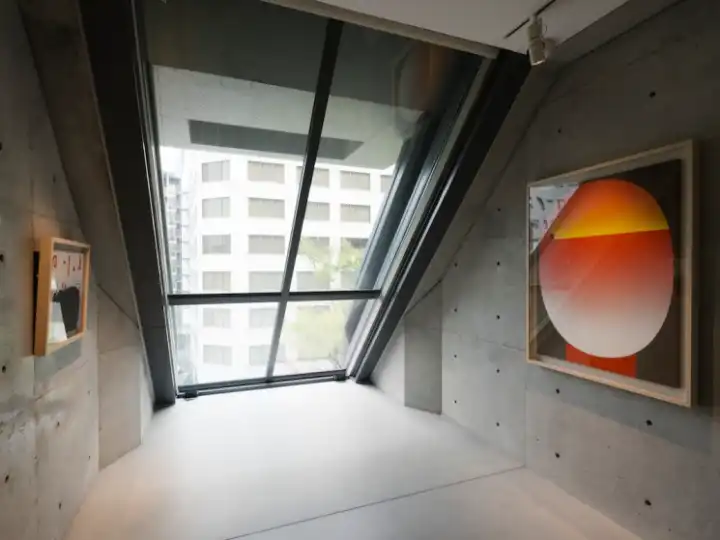
1.The conversation starterMACAALMorocco Othman Lazraq guides us under an arch made from mud bricks – part of a structure that sits below the central atrium of his family’s private museum. “Installing this was a mess,” he says. “Artist Salima Naji built it, brick by brick, one month before our reopening at the start of the year.” Touching the temple-like structure, which emulates ancient building techniques from places such as Mali or the Maghreb, Lazraq offers a clue to the museum’s mission. “This isn’t just heritage,” he says “It’s alive.”The Museum of African Contemporary Art Al Maaden (MACAAL) opened in 2016 as an extension of the Lazraq family’s art foundation (the family is one of Morocco’s largest property developers). The museum brings its extensive art collection, which now spans 2,500 works, into public view.Part of Lazraq’s job as both founder and director has been reconciling political and social sensitivities around history and gender with the collection’s occasionally transgressive content. “Every cultural institution is placed in the middle of social discourse,” he says. “But our approach is always deft and inclusive.” In Morocco, this attitude is vital as the majority of the population has never set foot inside a museum. Special attention has been paid to ensure that the audience’s questions and concerns are answered and assuaged by MACAAL’s friendly guides, and additional information has been designed to deepen dialogue.After seven years finding its footing, the museum was closed by Lazraq in 2023 as a chance for a structural and conceptual reset. Serendipitous timing meant that the entire collection was safely packaged and stored only two weeks before a magnitude-6.8 earthquake rocked the region. During the two-year hiatus, everything from the museum’s financial model to the curated programme was scrutinised. A scenographer was enlisted to redesign the layout to be more accessible and playful; display cases were lowered to child height and the museum’s artistic director, Meriem Berrada, commissioned video documentaries for each of the permanent collections’ seven sections to provide an additional layer of visual narration. The multidisciplinary and occasionally controversial works (one playful piece explores the taboo subject of folkloric witchcraft) challenge ingrained perceptions around African art but there’s a distinctly celebratory tone here too. “I’m a proud Moroccan but there’s a lot of missing context around who we are and where we’ve come from,” says Lazraq. “I want to make our museum as open as possible, to spark conversations and to stand out as a neutral, safe space for reflection and imagination.”On the edge of a golf course about 15 minutes’ drive from Marrakech’s medina, MACAAL’s setting is serene. Lazraq, who has led the family’s art foundation for over 15 years (since the age of 21) is always rethinking how the museum can work. Every Friday it hosts a family-style couscous lunch, inviting the community and anyone else who wants to experience culture through the disarming focus of food. “I never wanted to create a highbrow, exclusionary space,” he says, pointing to the employment of “cultural mediators” tasked with bringing groups from schools, women’s associations and social organisations for workshops and visits. “We’re creating a true social ecosystem. Hopefully we’re also becoming a source of inspiration for the next generation.”macaal.org2.The audio-visual spaceEfie GalleryDubai The Ghanaian director of Dubai’s Efie Gallery, Kwame Mintah, doesn’t like looking at art in silence. “Galleries tend to be managed by creative people but they can feel sterile without any music,” he says. Mintah grew up listening to genres such as highlife and Afrobeat and decided to weave those sounds into the artistic experience of his gallery. Founded in 2021 by Mintah with his mother, Valentina, and brother, Kobi, Efie Gallery has had a permanent space in Dubai since 2022. Now the family has moved its operations to a bigger outpost, which will provide more space for their 2,000 vinyl records and diverse roster of visual artists of African origin.“The commercial art world can be sceptical of unorthodox forms,” says Mintah. He initially wanted to downplay the listening concept but the enthusiastic reception received by a smaller version in the original venue means that it now takes centre stage in the new location. “Growing up in Ghana, art wasn’t contained in galleries,” says Mintah. “It was all around us.” The new space’s immersive listening room has five hi-fi speakers. Visitors will find shellac and vinyl records and cassettes, dating from the 1940s until the present day, including those by Ghanaian musician ET Mensah, a pioneer of the highlife genre. Originating in the 19th century, highlife laid the foundations for many popular genres, such as Afrobeat.Mintah hopes that the new gallery will bolster the underexplored cultural connections between the UAE and Africa. “Dubai is a blank canvas where you can construct your own narrative of African art,” he says. Efie is showing the likes of Ghanaian sculptor El Anatsui, Kenyan visual artist Maggie Otieno and Ethiopian photographer Aïda Muluneh. Each has curated ambient playlists to accompany their shows.“The Efie Gallery isn’t a satellite for the African diaspora,” says Mintah. “We want to engage directly with the region. With our unusual gallery concept, we leaned into the unknown. Ultimately we hope to add something fresh to the canon.”efiegallery.com3.The regional showcaseIchion ContemporaryJapan Sandwiched between an office building and a church, Ichion Contemporary’s slim, ambitious architecture celebrates the avant-garde spirit of Osaka. The new gallery, which opened in January, was founded by Ichion Jo, the 35-year-old vice-president of Jo’s Auctions. Originally dealing primarily in Chinese antiques, the Osaka-based auction house has become increasingly active in collecting and trading modern art in recent years, including that of the Gutai group and other works from Kansai.“We noticed that while Japanese postwar artists were becoming more highly valued, they were not so in the international market,” says Jo. “But after the Guggenheim exhibition in New York (Gutai: Splendid Playground, 2013) their prices jumped in an instant.” Sensing a shift in the market, Jo began researching and planning a gallery to showcase such works. And when a narrow patch of land, barely four metres in width, became available in Nozaki-cho, he approached renowned architect Tadao Ando to turn it into a reality.The distinctive concrete building offers a unique experience across six levels, placing viewers close to the works. The inaugural exhibition showcased the Gutai Art Association, while future exhibitions will focus on Kansai’s pioneering avant-garde artists, as well as the emerging talents building on their legacy. The gallery’s unconventional setting and innovative spirit promises new discoveries for artists and audiences alike.ichion-contemporary.com4.The photographic archivePhoto SeMASouth KoreaA building that mimics the contours of a camera aperture makes for a striking architectural statement – and a fitting venue for South Korea’s first public photography museum. Opening on 29 May, the Photography Seoul Museum of Art (Photo SeMA) encompasses about 7,000 sq m across three above-ground and two subterranean levels. The building was designed by Vienna-based architect Mladen Jadric and realised in collaboration with South Korean architect Yoon Geun-ju, director of 1990uao. Drawing inspiration from the mechanism of a camera aperture, the museum’s twisted monolithic form departs from conventional right angles, with walls and floors rising fluidly along a curve. Jadric says that there are more similarities between the practices of architecture and photography than you might expect. “Photography is an image drawn with light and architecture is a play of forms unfolding under light,” he tells Monocle.Photo SeMA’s director, Han Jung-hee, says that the museum’s mission is “to establish the 140-year history of Korean photographic art”. The institution identified more than 2,000 photographers active between 1880 and 1980 and acquired about 21,000 images and archival materials. “Our goal was to collect landscapes and portraits that offer a visual record of their era,” says curator Son Hyun-jung. Those procurements included the archive of Im In-sik, a photographer of the Korean War, and Park Young-sook, a pioneering figure in feminist photography. Photo SeMA will finally bring into focus the rich history of South Korean photography.sema.seoul.go.kr5.The Italian outpostThaddaeus RopacMilanThe neoclassical Palazzo Belgioioso is the sumptuous location for Austrian gallery Thaddaeus Ropac’s new Milan outpost. Elena Bonanno di Linguaglossa, its executive director, is brimming with excitement when she shows Monocle around the unfinished site. “I’ve never been able to hold a brush but I’ve always had a curiosity for contemporary art,” she says. “My grandmother worked as an assistant for Belgian painter Paul Delvaux. I was fascinated by the stories she told me.”For Bonanno di Linguaglossa, taking a role under Thaddaeus Ropac was an easy decision. “There’s no one like him in the industry,” she says. When Monocle visits, the space is still under renovation but the neoclassical crown mouldings and large bay windows overlooking the quiet courtyard give a taste of what’s to come. Works will be exhibited in two grand rooms on the first floor, and sculptures will be displayed in the public courtyard. Milan has a growing presence of international artists, buyers and gallerists tapping into the community of wealthy collectors who have chosen Italy’s financial capital as their home. “It’s the moment to be here,” says Bonanno di Linguaglossa.ropac.net6.The photographer’s homeStudio NaegeliGstaadOver the past century, the timber-hewn chalets that line Gstaad’s main promenade have slowly transformed into a string of luxury fashion maisons but Chalet Naegeli is a notable exception. Founded in 1914 as an Alpine photography repository, it’s the former studio-residence of photographer Jacques Naegeli, who documented Gstaad’s transition from humble farming village to glitzy ski resort. The premises became a bank in the 1970s but, last winter, Naegeli’s great-grandson, Christian Högl, and his wife, Anna, brought the chalet back to life as Studio Naegeli, a documentation project aimed at reviving the photographer’s archive. The Högls aren’t just looking to the past. The two-storey site will host programmes alongside a global roster of galleries focusing on modern art. When Monocle stops by, the debut collaboration with Galerie Mitterrand in Paris is preparing to open and 15 artworks have been shipped over. These include works by François-Xavier Lalanne, Jean Dubuffet, Günther Förg and Yayoi Kusama.There is momentum here to refocus Gstaad’s identity around its artistic heritage, and the town has buy-in from an international crowd of holidaymakers. Visitors from France, the US, Canada and Hong Kong pass by when Monocle visits Studio Naegeli. “A lot of visitors here have second homes in Gstaad, so the tourism feels more personal,” says Anna, who previously worked as international liaison for the Moscow Art Fair and as a curator in Bern. “Gstaad is home to a concentrated group of collectors, which encourages a friendly climate for purchasing art.” Just like Jacques once did, Christian and Anna live above their beloved chalet-gallery. “When Jacques lived here, the house was alive with creative spirit,” says Anna. “We hope to reconnect Chalet Naegeli with its artistic and cultural heritage.”studionaegeli.com

Inside the former home of Enver Hoxha, transformed into a vibrant artists’ residence

Inside the former home of Enver Hoxha, transformed into a vibrant artists’ residence

“This place was a ghost in the middle of the city,” says Nita Deda as she opens the metal gate of Vila 31. There are workers milling in the garden, putting finishing touches on the newly renovated space. A caravan belonging to one of the artists in residence is parked off to one side. “The atmosphere has shifted since the artists arrived; it’s like the air is lighter,” adds Deda, who heads up the property’s cultural programme. Once the home of dictator Enver Hoxha, who governed Albania from 1944 until his death in 1985, the house has been newly converted into an artists’ residence in partnership with French art foundation Art Explora. In January, seven artists arrived, who will each stay for a three-month spell. “This is one of the first artists’ residence in Tirana and really the first project of its kind in the Balkans,” says Vila 31’s head of development, Bisej Kapo. “We’re putting Albania on the international scene and creating a new and exciting artistic network.”Artist’s notesArt Explora’s Bruno Julliard and Blanche de LestrangeVila 31’s marble-floored hallways exude decadence, the walls painted in soft pastel hues. But the weight of history here is heavy. A Stalinist dictator, Hoxha’s legacy is defined by his paranoia and the violent state-of-siege isolation that he forced the country into. While in power, Hoxha banned religion, restricted travel and outlawed private property. Political assassinations and labour camp sentences were common. Forty years since his death, families continue to look for their loved ones among mass and unmarked graves. “It’s still so difficult to talk about. It’s hard to find the right words,” says Kapo.Vila 31’s entrance hallThe grand staircaseThe residence is in Tirana’s Blloku neighbourhood. As Hoxha ascended to power, he moved to the area, which was then known as New Tirana. By the end of the 1940s, the neighbourhood was made accessible only to high-ranking party members and was guarded by armed security, earning the name Blloku i udhëheqësve (the leaders’ block). Publicly, its inhabitants strove to convey the image of a tight-knit community of elites. In reality, double-crossing reigned and houses and plots of land regularly changed hands as different party members fell out of favour.So it was with Vila 31, built between 1972 and 1973. Hoxha brought in architects, engineers and technicians charged with getting the house, dubbed “Object X”, in a state fit to satisfy his exuberant and distinctly modernist taste. Supplies were covertly imported from Europe and Italian technicians were brought in to install fixtures unseen elsewhere in Albania. The result was a 2,500 sq m residence – complete with pool and home cinema – that mixed local and Western architecture. “The villa’s completion in 1973 coincided with a dark period in Albania’s cultural history,” says historian Elidor Mëhilli. “Hoxha launched a vicious attack on what he deemed liberalism in the arts and culture. As his designers sourced furnishings from Western catalogues and installed amenities at the pinnacle of luxury, he publicly condemned Western influence in music, art and architecture.”Vila 31 was inhabited by Hoxha, his wife, sister and the families of his grown children. They stayed after Hoxha’s death in 1985, only leaving the house at the fall of Albania’s communist regime in 1991. Since then, Vila 31 has been mostly off-limits, its windows obscured by dark curtains. The house became a monument to a painful period of history – a place that passers-by would avoid looking at. “This is a space that, until now, has meant censorship, darkness and the lack of freedom,” says Deda.Inspiring interiorsArtist’s studioBlloku has kept its name but the district is now a vibrant part of the city’s culture and nightlife. Around Vila 31, restaurants, bars and hotels are thriving. The whole city is in construction mode with cranes punctuating the skyline against the backdrop of the snowy Skanderbeg mountains. The authorities in Albania – as in many post-communist states – have been faced with the question of what to do with the period’s architectural heritage. In 2023 the Pyramid of Tirana, once a museum dedicated to Hoxha, reopened as a Youth IT centre.The idea for the Vila 31 artist residency was born in 2021 when Art Explora founder, Frédéric Jousset, met with Albania’s prime minister, Edi Rama. “They realised that they shared common values, in particular in regard to the importance of art as a bridge between people,” says Art Explora artistic director Blanche de Lestrange. Though based in Paris, the foundation is turned towards Europe at large. They brought in Lucie Niney and Thibault Macra, founders of nem Architects, for the renovation. The Paris-based studio restores heritage buildings and has completed significant cultural projects in France, including the Pinault Collection’s artists’ residence. “This building required extra humility on our part, not just in regard to the complex history but also our position as foreigners coming in to work on it,” says Niney.Though Vila 31 had been abandoned for decades, the architects were surprised to find a well-preserved time capsule of the 1970s inside, complete with wood-panelled walls and sculptural fireplaces. Once the utilities were updated, the floorplan was rearranged to accommodate the artists and the residence’s administrative team. “One of the changes we made was to turn Hoxha’s private bedroom, office and bathroom into the common dining and office areas for the residents. We felt that it was a way to avoid creating nostalgia and truly subvert them by turning them into places of community, joy and creativity,” says Niney. The original wall colours were kept, when possible, as well as the vast array of kitschy colourful tiles. The furniture found on site, including floral-wallpapered sound-proof doors and retro television sets, was restored.Office artModernist detailsEvery resident of Vila 31 is given a private apartment, comprising a bedroom, bathroom and a living and work area. The first to arrive from the inaugural cohort was the Ukrainian artist Stanislava Pinchuk. It was an experience she will remember forever. “I couldn’t sleep, so I just walked around the rooms and corridors in the dark, completely alone in this eerie house,” she says.Born in Kharkiv but now based in Sarajevo, Pinchuk’s work, which includes sculpture, video documentary and photography, focuses on the legacy of oppression. “Coming here was a way to find a missing puzzle piece for myself, especially now when, as a Ukrainian, there is so much reckoning with history and its effect on our present.” Here, Pinchuk has had to weigh the cruelty of Hoxha’s regime against the family life that coexisted within these walls. “I found Disney stickers on the tiles in the bathroom, which belonged to one of Hoxha’s grandchildren; it’s truly Hannah Arendt’s banality of evil,” she says, referring to the German philosopher’s famous phrase about the ordinariness of the people who committed the atrocities of the Holocaust. While here, Pinchuk will be examining the figure of the monster and one of her sources is Hoxha’s library, including books on French existentialism, science fiction and the supernatural. “I want to look through his banned books and the worldly pleasures that he allowed himself while punishing Albanians,” she says.Fellow resident Gerta Xhaferaj’s project is also intimately related to the house. “During my studies as an architect, I always heard about the tunnels built during the dictatorship which connect this villa with other spaces in the city,” she says. “I’m going to work with the architects to check their status and hopefully create temporary installations inside them.” Born and raised in Tirana, Xhaferaj hopes that the renovation of Vila 31 will be cathartic. “My goal is to convince my friends to come here and see the changes for themselves,” she says.Gerta Xhaferaj and Stanislava PinchukVila 31’s exteriorWhen Monocle visits the house in January, it feels eerily empty, with rows of bare shelves. As the programme evolves, the hope is that artists will fill Vila 31 with colour and objects that they’ve made during their stay. In April the first open studio will take place. “I would love to see this house explode with people and with ideas,” says Kapo. The ghosts of Vila 31 won’t be exorcised completely but its new residents will add more layers to the history of the building, painting a new – brighter – vision for the future of Albania.artexplora.org

How can we defend journalism in an age of declining press freedoms? One Berlin-based firm has the answer

How can we defend journalism in an age of declining press freedoms? One Berlin-based firm has the answer

From media polarisation and falling subscriptions to fake news and the threat of artificial intelligence, the challenges facing journalism are a familiar topic to anyone who, well, follows the news. Even in Germany, where it is still common practice to flip through a broadsheet every morning, many major newsrooms are going through rounds of layoffs. But the country’s capital is also home to a new bastion of optimism named Publix. Located on Hermannstrasse, a hectic street in the Neukölln neighbourhood of Berlin, this hack’s haven is an institution entirely dedicated to journalists and pro-democracy organisations. “This is a kind of editorial utopia,” says Maria Exner, director of Publix, as she greets monocle on a sunny Monday morning. In the glass-walled foyer of the building, which opened last September, a barista is making espressos while tables are occupied by people tapping away on laptops. A wide wooden staircase, which doubles as a stage during panel talks and readings, leads to the upper floors. Here, a badge is needed to enter: the first floor is a co-working space for media professionals, with fees starting at €179 per month, while the four storeys above host permanent offices for organisations including Reporters Without Borders and investigative outletCorrectiv. Architect Ulrike DixJustus von Daniels, editor-in-chief at ‘Correctiv’Director Maria ExnerPublix is the initiative of the Lörrach-based Schöpflin Foundation, a low-profile but deep-pocketed philanthropic organisation. Founded by entrepreneur and investor Hans Schöpflin, it has long been a funder of local and start-up journalism in Germany. The idea for a physical space came from seeing how many Berlin-based organisations were struggling in the city’s tight property market. “Many would have to move offices every year, or even several times a year,” says Exner. When a partly disused cemetery on Hermannstrasse chose to sell a part of its land to the non-profit initiative, the idea grew in scope, expanding to co-working spaces and public programming.“We always said that this is a building without a model,” says Ulrike Dix, a partner at AFF, the architecture practice behind the design. Indeed, there are similar journalists’ houses elsewhere but none have the size or scope of Publix. To figure out the building’s needs, the team set up a panel with its future tenants to steer the planning process. But the board made few design demands, mostly stressing the need for secure computer systems and data storage. “Journalists are used to working anywhere,” says Dix. “They’re not used to thinking of their needs in terms of architecture.” Exner, who was previously editor-in-chief atZeit Magazin, chimes in. “When we started a podcast [before the Publix outpost was built], we set up our first studio in an old server room,” she says, laughing. Office of documentary producers Tell Me WhyDespite the relaxed brief, the architects delivered something remarkable. The six-storey building makes the most of its slim site: with a busy street on one side and a lush park on the other. There are floor-to-ceiling windows throughout that bathe the building in light. “We wanted to create a sense of transparency,” says Dix. Tenants have open-plan offices and plenty of meeting rooms – named after activists and journalists such as Alexei Navalny and Letizia Battaglia – all in a simple palette of raw concrete, galvanised steel and Douglas fir. “We didn’t look to co-working spaces that are furnished like a home,” says Dix. “We wanted this to feel like a workshop for journalism.” Naturally, there are audio and film studios that are used by tenants and can be rented. Cemetery entrance next to PublixTop-floor meeting roomInteriors are comfy but not too cosyThe safety demands of the tenants turned out to be no exaggeration. In January 2024, only a few months before moving into their new offices,Correctivpublished an exposé of a secret conference in Potsdam that plotted the “remigration” of people with foreign backgrounds. The bombshell report led to both protests in opposition to the rising far right in Germany and a wave of lawsuits and harassment againstCorrectiv. “There were people standing outside our offices, filming,” says co-editor-in-chief Justus von Daniels. Once they moved into Publix, that became more difficult: the offices are tucked away behind multiple locked doors. “Here, we had the fortune to decide what kind of offices we wanted.” The canteen at Publix is open to the publicPublix has opened to high demand. There are already more than 400 registered tenants, though, according to Exner, “nobody comes in every day”. The journalists have done far-reaching work: editor Tobias Haberkorn got a new magazine, theBerlin Review, off the ground thanks to the support of the Publix fellowship, while the first documentary partly filmed at the building, about the German pension system, aired in January on public-service broadcaster ZDF. Exner is now focused on establishing Publix as an international hub for the future of journalism and public discourse. “My hope is that the organisations inside this building take really novel, experimental approaches to editorial work,” she says. Exner lists AI-generated headlines, low media literacy and the fragmentation of news media as just some of the looming threats to journalism, though Germany has, so far, been less affected by these than other countries. “Luckily, Germany tends to be 10 years behind other countries,” says Exner. With Publix, it is suddenly setting an example.publix.de
Cultural bridges: Vatican-Saudi art exchange and Seoul’s immersive comics library

Cultural bridges: Vatican-Saudi art exchange and Seoul’s immersive comics library

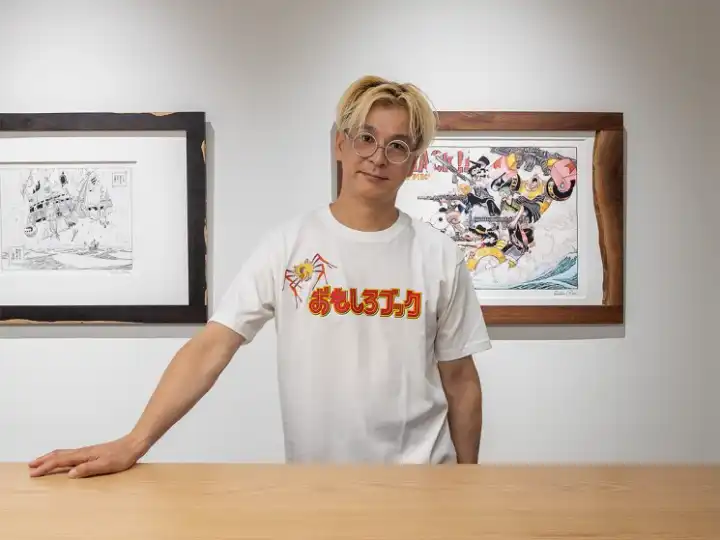
The Vatican and Saudi Arabia, home to the holiest sites of Catholicism and Islam, aren’t on the friendliest terms. As a result of past quibbles, the theocracies don’t even officially recognise each other. But on the long list of participants in the Islamic Arts Biennale (IAB), which runs from 25 January to 25 May, is a feat of diplomacy. In the event, which gathers masterpieces from across the Muslim world in Jeddah airport’s Hajj Terminal, there are 11 works shipped in straight from the Holy See.Delio Proverbio, a curator at theVatican Apostolic Library, says that this is a first both in terms of the recipient country and the size of the loan. “Even to an institution such as New York’s Metropolitan Museum of Art, we would lend a maximum of three works,” he tells Monocle But Proverbio was persuaded to collaborate by Abdul Rahman Azzam, one of the IAB’s artistic directors, and Aya Al-Bakree, the ceo of the Diriyah Biennale Foundation, the event’s organiser. It helped that the inaugural 2023 edition, which displayed ancient scientific instruments alongside newly commissioned artworks, had been a blockbuster success with more than 600,000 visitors. “The Pope himself said, ‘You have to join this exhibition,’” says Proverbio.Last spring the Saudis visited the Vatican to peruse its archives. The star item that they chose for the show is a six-metre-long 17th-century map of the Nile. It was made by Ottoman-Turkish explorer Evliya Celebi, the author of theSeyahatnametravelogue. “When I saw it, I was blown away,” says Al-Bakree. “We were all trying to see the little inscriptions.” The biennale agreed to fund a thorough restoration of the work.Is this collaboration a sign of thawing relations between the two states? “That’s beyond all our pay grades,” says Al-Bakree. Even so, it’s a prime example of how cultural institutions can make space for tolerance and co-operation even, and especially, where politics cannot.biennale.org.saSeoul’s Daeshin Wirye Center has a bookish new occupant with a distinctive mid-century style. Graphic, a library devoted to comics and art books, has opened its second branch here. The three-storey space is attracting crowds of people drawn by its immersive reading experience. For an entrance fee, visitors can peruse the collection and settle into any of its inviting nooks, cosy settees or veranda chairs, all while enjoying tasty snacks and drinks.The idea is to allow readers to lose themselves in books and stay as long as they want – at least, up to a point (the high demand has led to the introduction of a three-hour cap at peak times). Graphic’s popularity reflects a growing appreciation of print media in a city known for its “snack culture” – the tech-savvy population’s habit of scrolling content such as webtoons in bite-sized chunks. It’s the latest addition to Seoul’s expanding array of sit-down reading sanctuaries, from the expertly curated, genre-focused Hyundai Card Libraries to Cheongdam’s membership-based Sojeonseolim Library, which hosts book clubs and author visits.Whether it’s by encouraging readers to lounge on beanbags or by having a DJ set the mood, Seoul is reimagining how books are experienced. Pull up a chair and get stuck in.graphicbookstore.imweb.me

The art of a narrative: How Louise Courvoisier and Natasha Brown bring stories to life

The art of a narrative: How Louise Courvoisier and Natasha Brown bring stories to life

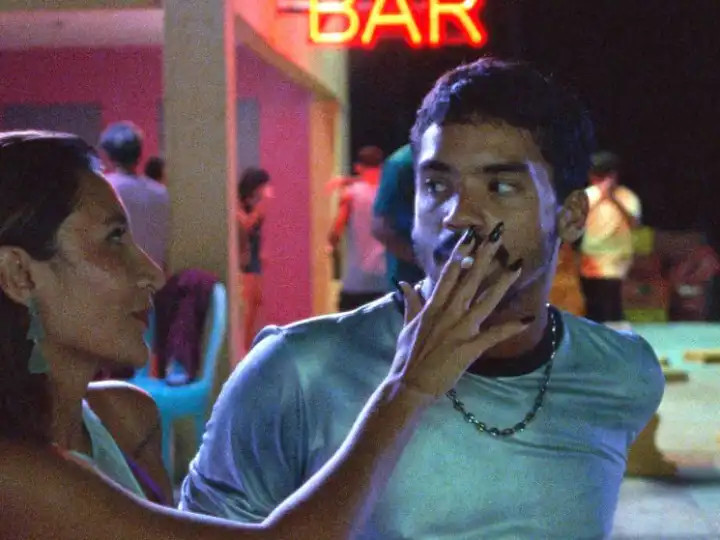
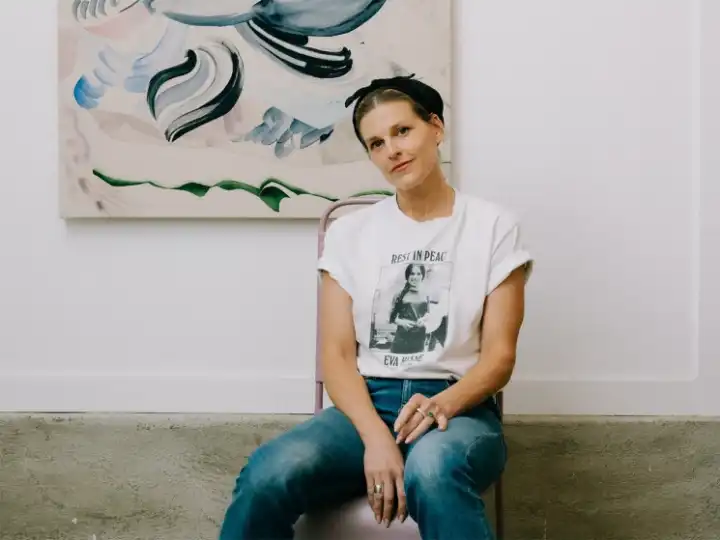
Slice of lifeLouise Courvoisier, directorThe process of making comté cheese isn’t something that has had much cinematic airtime. But director Louise Courvoisier puts the arduous task centre stage inHoly Cow. The new film follows 18-year-old Totone as he takes over his father’s dairy farm while wrestling with the travails of first relationships. Here, Courvoisier tells us about decentralising French cinema, casting non-professional actors, and why cheese is a worthy protagonist.How did you choose the film’s location?I grew up in the Jura, so that’s where I shot the film. I wanted to make a film about the young people who I grew up with and those that don’t have a choice to leave the countryside. In France, films are always set around Paris, so it was important for me to focus on my area.How did you cast the film?I wanted to work with non-professional actors who were from the area, but I didn’t know how to find them. It isn’t a documentary, so they had to be good at acting. Clément Faveau, who plays Totone, has fire and fragility in him.Why did you want to tell a story about comté?Only a small part of France is allowed to make this cheese. When you come from the area, it surrounds you in a way. It was a challenge to film, but I was confident about the idea because it’s interesting to capture a process that’s so physical. Totone grows up in the film, and making comté helps him to evolve.Holy Cowis in cinemas on 11 April.Novel techniquesNatasha Brown, authorFollowing the success of her debut,Assembly, in 2021, British novelist Natasha Brown returns withUniversality. In this comedy thriller, a journalist’s exposé raises questions about the power that language holds. Here, Brown tells us about her influences, writing dialogue and hooking readers.Is social analysis at the heart of ‘Universality’? Jane Austen is a huge influence. Her novels capture what life and people were like in her time; the little hypocrisies of those who take themselves too seriously. I wanted to do the same for what the world looks like today. How do you write such lifelike conversations? I write every scene from the perspective of every character, then go over it. After I’ve done that, I write from that scene’s narrative perspective and pick and choose from those different bits. Sometimes I have to be harsh and take away a character’s perfect line but I always need to believe that they’re real people and that their motivations are real. How do you balance the excitement with the ideas?I wouldn’t write novels if I wasn’t interested in these questions about language. The esoteric side is where I begin. But when I get into it, it’s about the characters, the story and the hook. These are key.‘Universality’ is published by Faber UK and Penguin US

Christie’s expands into Saudi Arabia under the helm of Nour Kelani

Christie’s expands into Saudi Arabia under the helm of Nour Kelani

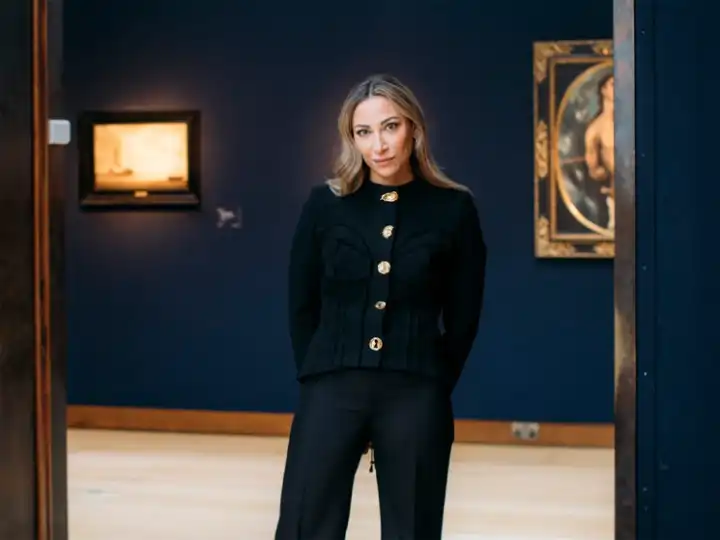
Christie’s cemented its interest in the Middle East when it opened an office in Riyadh’s Diplomatic Quarter last September. And Nour Kelani, a resident of the city, was tapped to oversee this new development for the London-based auction house as its managing director.“Christie’s already has a well-established client base in Saudi Arabia but having someone on the ground strengthens these relationships,” says Kelani. The auction house has been arranging sales in the Middle East since 2006 but this move suggests a long-term commitment.For Christie’s, hiring a local – and somebody embedded in the contemporary art scene – was important, particularly in a country that prizes in-person deals over phone calls or anonymous bidding. Though the art market uses “Middle East” as a sweeping term for the region, Saudi Arabia is distinct when it comes to culture and the rules of business. “It’s a different market here because when you say ‘luxury’, it’s very luxurious, very specific,” says Kelani. “Saudi Arabians don’t want another poster. They want the right artwork, the right artist, for the right reasons.”Kelani is a third-generation transplant to the Kingdom; her family is originally from Syria. After studying abroad, she returned to Saudi Arabia to work as a consultant for luxury brands before switching to the art world when she joined the now-closed Ayyam Gallery in Jeddah. Over the years, Kelani’s Rolodex of collectors and artists grew. An invaluable draw is her contacts at the Ministry of Culture as the government expands its artistic ambitions under Vision 2030, Crown Prince Mohammed bin Salman’s plan to invest about €1trn in the country’s society and culture.Nour KelaniAnother key consideration is Saudi Arabia’s young population: 63 per cent of its citizens are under 30. “A lot of my clients are millennials who are buying houses and looking to fill their walls with art,” says Kelani. “However, this generation is sophisticated. They want artwork they can relate to, so a lot of them want to start collecting Saudi artists and Middle Eastern artists.” For this generation, it’s more thrilling to be the first to support an emerging artist, rather than staying hung up on a Eurocentric view of art history. Kelani names Nasser al Salem, Dana Awartani and Ahmed Mater as some of her favourite artists for their ability to experiment with the heritage of Islamic art.“We’re so rich in culture, even if 50 new museums opened it wouldn’t be enough,” says Kelani. As the Saudi Arabian art market continues to expand rapidly, Kelani will be front and centre, representing Christie’s, championing local artists, connecting to new collectors and building on existing partnerships with a savvy Saudi Arabian clientele, government institutions and likeminded businesses.As Saudi Arabia ushers in a new era for culture, Christie’s strategic move into Riyadh – guided by Kelani’s local expertise – should prove a wise investment.The CV1988: Born in Syria. Raised in Saudi Arabia.2008: Worked as a consultant for luxury and fashion brands.2012: Appointed co-director at the Ayyam Gallery, Jeddah.2016: Worked as a luxury brand consultant in the Middle East before moving into fine-art consultancy.2024: Appointed managing director at Christie’s Saudi Arabia.

Beirut’s art scene is undergoing a revival. Here are 3 cultural institutions you should seek out

Beirut’s art scene is undergoing a revival. Here are 3 cultural institutions you should seek out

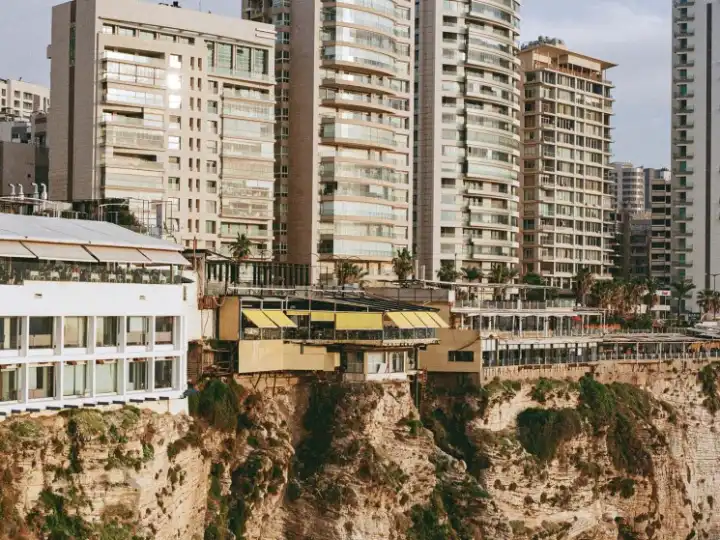
Lebanon’s cultural institutions have long existed in a hostile environment. Historically, the country’s weak state has hobbled public sector sponsorship of artistic production on the European model. Yet Beirut’s arts institutions persevere. Among the most robust are Metropolis, an arthouse cinema founded in 2006; the Arab Image Foundation (AIF), an artist-led photo-archiving project launched in 1997; and Metro al-Madina, a repertory theatre founded in 2012. These private initiatives have thrived despite state indifference and in defiance of Lebanon’s political, economic and security instability.The years since 2019 have been trying for the city: financial collapse, the 2020 port explosion, the coronavirus pandemic, political stagnation and war. The crises have reduced many to penury and emigration. Lebanon’s haemorrhage of artists, experienced administrators and other cultural labourers has undermined organisations’ capacities and institutional memory. The support of local and international donors is more uncertain, while those who have stayed have had less money and leisure time. View of the AUB (American University of Beirut) beachCentral BeirutYet, in stubborn optimism, Metropolis, AIF and Metro have each moved into new spaces during this time. When the ceasefire between Israel and Hezbollah ended the bombing of greater Beirut in November, their hopes were fuelled. Metropolis, AIF and Metro continue to face challenges but they share an unshakeable belief in the power of culture in times of crisis.1.The cinemaPutting arthouse film in the frameMetropolis“Metropolis is almost 19 years old but this is a new venue,” says Hania Mroué. “No matter how prepared you think you are, there are always things that you discover as you go.” Mroué started dancing professionally at 18, performing at the prestigious Caracalla Dance Theatre for 13 years. She later studied economics, then earned a diploma in cinema production. In 1999, Mroué co-founded a filmmaking co-operative and served as managing director of its Ayam Beirut al-Cinemaiyya (Beirut Cinema Days) festival. When asked how a dancer found herself running a film festival, she shrugs. “For the love of cinema.”Metropolis Art Cinema’s new venue in Mar MikhaelAfter five years without a proper location, thousands descended on the cinema’s new space on opening night in December last year. Among those to address the crowd were Hollywood star Cate Blanchett, French auteur Jacques Audiard and Lebanese director Nadine Labaki, who all sent video messages to express their support. Since then, Mroué’s 15-person team has been playing catch-up, hosting events programmed for a 2024 season severely truncated by the war. The reception has been strong, with mostly sold-out festival programmes. “It’s a diverse audience and very wide, age-wise,” says Mroué (pictured). “In general, the audience of arthouse cinemas across the world is ageing. That’s not the case in Beirut.”Metropolis’s story began in July 2006, in the basement theatre of the Saroulla, a cinematic institution of pre-civil war Beirut. Its debut event was a run of that year’s Cannes’ Semaine de la Critique programme. A few hours after a sold-out opening, Beirut Airport was bombed – the start of a month-long war with Israel. While European guests fled via Damascus, young people from displaced families now sheltering in the theatre came to watch Metropolis’s projections. Two years later the cinema migrated to a two-screen theatre and a business partnership with Empire, a Beirut-based regional cinema and distribution chain. “It allowed us to grow,” Mroué said in 2020. “It gave us access to a beautiful cinema and allowed us to release many Lebanese and Arab films in other commercial cinemas.”Metropolis also partnered with international film industry bodies to create workshops and training platforms for the region’s young film professionals and set up outreach programmes to bring cinema to students in Lebanon, including youngsters in refugee camps. It established Cinematheque Beirut – a Wikipedia-style online archive for the region’s neglected cinema heritage – and created an independent film distribution company.Hania Mroué, the cinema’s founding directorWhen political demonstrations erupted in October 2019, the cinema joined other Beirut arts institutions in expressing solidarity with a general strike. But when Metropolis wanted to resume programming, Empire shuttered the cinema in January 2020. Mroué’s team continued as much of its work as possible without a location. And, slowly, Mroué started gathering support for a purpose-built cinema from international, regional and domestic institutions including European embassies, cultural centres and film platforms, foundations and distributors.The newest iteration sits in Mar Mikhael, a two-hall structure with an outdoor projection area. In April, the venue will host a new festival focusing on the cinema of the Global South. “We’re gathering international filmmakers who work with the same constraints as the Arab world: censorship, lack of support and infrastructure,” says Mroué. “It’ll be interesting to see how they deal with these challenges and still manage to create wonderful films.”2.The archivePreserving the image of the Middle EastArab Image FoundationArab Image Foundation director Rana Nasser EddinRana Nasser Eddin is anxious to get back to normal operations. The Arab Image Foundation (AIF) director is awaiting the delivery from Kirkuk of Kurdish photographer Ramazan Zamdar’s collection of glass photographic plates dating from the 1930s to the 1980s. “In his studio photography, Zamdar used glass plate technology long after the film revolution,” says Nasser Eddin.Six months after AIF opened the doors to its new premises in March 2024, warplanes began targeting locations across greater Beirut, delaying the shipment of the collection. “Beirut airport was functional,” says Nasser Eddin.“But no art shipper was willing to transport 13,000 glass plates to a place that’s being bombed.” The foundation activated emergency protocols, which involved packing and securing its collections and paper archive while preparing evacuation plans.Documenting printsCo-founded by Akram Zaatari, Fouad Elkoury and Samer Modad, AIF is a unique project: a resource for the critical discussion of archival practices and a collection of photographic objects from the MENA region. With the Zamdar collection, the foundation will have approximately 600,000 objects from 308 collections, dating from the 1860s through to the 1990s and spanning 50 countries. Beirut’s port blast ruined the foundation’s previous offices – a cramped flat 300 metres from the explosion – but the collection emerged intact.The foundation now nests in a three-story suite of rooms in Beirut’s Aresco Center, a short stroll from Lebanon’s National Library and three universities. The workspaces (where AIF’s six-person technical team conserves, documents and digitises images and preserves them in climate-controlled storage), the library and 42-seat auditorium, which will soon house a Beirut filmmaking co-operative, occupy the basement. At ground level, gallery-style spaces with shopfront windows allow for exhibitions and workshops. Public Works, a critically minded research and design studio, operates from AIF’s mezzanine. In 2024, AIF’s library opened to the public. The stacks combine its specialist print library with Dawawine bookshop’s collections dedicated to cinema, sound and performance, and the library of Public Works. AIF launched its public programme in March with a series of screenings and talks about politics and film translation.3.The theatreInspiring future generations to take the stageMetro al-MadinaHisham Jaber’s flat overlooks Beirut’s derelict Holiday Inn, which was ruined during Lebanon’s civil war a few months after it opened in 1974. Through its gaping windows, the Mediterranean is clearly visible. “There will be peace, it seems,” says Jaber, glancing into his coffee. “We’ve faced many problems these past 13 years but now we have a clearer vision of what we should do.”The flat is a short walk away from the Metro al-Madina theatre, which Jaber co-founded. He is well known for his on-stage persona: cabaret emcee Roberto Kobrolsi, notable for his mop of black curls, spectacles and fondness for silver lamé. Since 2002, Jaber has written and directed more than a dozen plays, musicals, stand-up comedy routines and cabarets that have been staged around Lebanon and the wider region. While Jaber is invested in recent history, the performances he’s staged tend to favour the light-hearted and sardonic over the tragic. And when asked why he became an entertainer, it’s a simple answer. “I like people to be happy,” he says.The theatre’s co-founder Hisham JaberLike Metropolis cinema, Metro was born in Saroulla’s little theatre. But since July 2023 it has made its home at the theatre of the Aresco Center, next door to The Arab Image Foundation (AIF). “We moved during the biggest crisis of our generation,” says Jaber. “They said we were mad but it was a good move. You feel new energy in the hall.” Renovated and redesigned by architect Paul Kaloustian, Metro’s terraced hall can seat more than 700 guests at tables in front of the 14-metre-wide stage. The venue is “a bit trippy”, says Jaber. “It’s like something from a 1960s film about the future or outer space.”Currently headlining at Metro isAl-Souq al-Oumoumi(The Public Market), a musical comedy set in the early 20th century, in a thriving red-light district on Beirut’s Mutanabbi Street. Featuring 18 vocalists and musicians, the show was written and directed by Jaber, who created the music with composer Makram Aboul Hosn. During the recent war, Metro unveiled 3al-Qamar (On the Moon), a series of intimate Tuesday evening listening sessions. “We invite two or three solo musicians to try something new,” says Jaber. “It’s a lab for small gigs that could later develop into a main stage show.” Several new performers have also emerged from Mehaniya, a free, two-year performing-arts programme that the troupe created in 2022. Rather than soliciting donations, the theatre invites regular clients to become partners in the company, though some support comes from the Arab Fund for Arts and Culture (AFAC) and Unesco. AFAC and Culture Resource, another regional cultural support agency, also made a grant to Metro after the Beirut port blast.Al-Souq al-Oumoumi at Metro al-Madina Jaber says that peace will be a time for consolidation and experimentation, and it should bring younger artists with fresh ideas to the theatre. “Next year, we might start working with new technologies. With AI – sensors and suits – you can bring a new dimension to onstage visuals.” He sips his coffee. “And it’s cheaper. Thank god.”While much in Lebanon is still in ruins, Jaber echoes the sentiments of Mroué and Nasser Eddin, expressing relief and enthusiasm at the prospect of something resembling normality in Lebanon. Like Metropolis and AIF, Metro has come through the crises on firmer ground than before 2019. The contingency, though, never abates entirely. “We are still recovering from the extreme violence that we lived through in 2024,” says Mroué. “We’re happy, but cautious. We know how fragile this stability is.”

Cultural agenda: Johannesburg photography, media impartiality and author Katie Kitamura

Cultural agenda: Johannesburg photography, media impartiality and author Katie Kitamura

The week that I began to think about this column, Jeff Bezos announced that the opinion section ofThe Washington Post, which he owns through a holding company, would start focusing on articles about “personal liberties and free markets”. Pieces opposing those views, he suggested, would not be published.That’s a bad idea. A key part of my job as the editor in chief ofFolha de São Paulo, Brazil’s largest and most influential news outlet, is to ensure that articles opposing the paper’s views see the light of day. Our columnists, for example, are a team of about 200 writers whose political views span a broad spectrum.The role of newspapers such asFolhaorThe Washington Postis not to imitate the echo chambers of the big social-media platforms but rather to present a smorgasbord of ideas – think of it as wandering through the public square of professional journalism. Reasserting a narrow set of beliefs over and over can dull critical thinking and, in the worst cases, lead to radicalisation. My predecessor used to say half-jokingly thatFolhashouldn’t be “a newspaper for cardiac patients”, meaning that we should surprise our readers at least a couple of times per edition, taking them out of their comfort zone. That’s what we strive to do every day through nonpartisan, pluralistic journalism.As well as giving voice to all perspectives, we cover those in power with the same critical rigour whether they are from the right, centre or left. “Pau que bate em Chico bate em Francisco,” as the old Portuguese saying goes. That roughly translates as, “What’s good for the goose is good for the gander.” The slogan ofThe Washington Postis “Democracy dies in darkness” – but it can also die in the unison of thought.Dávila is the editor in chief of ‘Folha de São Paulo’, a 104-year-old Brazilian newspaper with more than 900,000 subscribers.Q&AKatie KitamuraAuthorNew York-based novelist, journalist and critic Katie Kitamura was longlisted for the National Book Award and the Pen/Faulkner Award for her 2021 novel,Intimacies. Kitamura’s fifth book,Audition, tells the story of an actress who meets a compelling yet troubling young man. Here, Kitamura discusses her favourite writers and moral ambiguity in fiction.The protagonist of ‘Audition’ is an actress. What drew you to this profession? I have always been interested in performance. She is someone who plays many roles in her life. That’s something that all of us can relate to.Your books often explore moral and narrative ambiguity. Why?I am very rarely drawn to stories in which things are cut and dried. I like books that are open to interpretation. In a lot of ways, the work of a novel is to make the reader a little uncomfortable. I wouldn’t want to write a book that I felt was cosy.Who are some of your favourite writers?I love Marguerite Duras and Javier Marías, a Spanish writer who sets up situations with impossible ethical questions and makes the reader live in those spaces. Kenzaburo Oe is also important to me.‘Audition’ is published by Riverhead Books.In the picturePhotographyJohannesburgWhile many publishers are looking for ways to scale back their operations, Trevor Stuurman, the Johannesburg-based founder and creative director of photography platform The Manor (and editor in chief of its magazine), is doubling down. Last year he expanded the brand by launching a new gallery; in February, The Manor was a media partner of the Investec Cape Town Art Fair, Africa’s biggest art event.“Africa is rich in stories and talent but there sadly aren’t enough platforms and spaces to showcase and archive them,” Stuurman tells Monocle. That’s where his gallery comes in. Visitors can stop by the permanent space to pick up a copy of his magazine, which highlights local talent such as singer Thandiswa Mazwai and actress Zoë Modiga.The gallery has shown pieces by creatives from across the continent, including artist Jakinda Mshindi Boya and photographer Lebogang Tlhako. “We have built a beautiful ecosystem here that promotes creativity, content and community,” says Stuurman. “Ultimately we would love to see The Manor as a long-lasting cultural institution and museum of art.”themanor.africa

Novel approach: Casa del Libro, the Spanish bookseller taking on Amazon overseas

Novel approach: Casa del Libro, the Spanish bookseller taking on Amazon overseas

“Whether you’re purchasing a luxury garment or a novel, it’s a personal, tactile experience,” says Javier Arrevola. The CEO of Spanish bookshop chain Casa del Libro is sitting behind his desk in the company’s headquarters on the outskirts of Madrid, dressed in a sharp grey jacket and navy chinos – appropriate attire for someone who strategised for luxury labels including Loewe for 25 years. Arrevola arrived at Casa del Libro in 2018, eager to apply his know-how from premium fashion to the books sector.In Spain, big chains such as Fnac, which sell everything from books to music, and department stores such as the El Corte Inglés group are fierce competitors. So Arrevola has focused on creating a more personal retail experience and uses staff recommendations to help move titles. “It’s part of what I call the bookseller’s prescription and it’s a lesson that I learnt in fashion showrooms,” he says. “Our team of 1,000 booksellers don’t just see books as products. They see literature as a vocation.” Despite being a chain, Casa del Libro has developed a service that’s more akin to an independent bookshop.But creating a more intimate experience for shoppers hasn’t limited Arrevola’s ambitions for the company. When he was appointed as CEO, Casa del Libro had 45 shops in Spain’s biggest cities, including Barcelona, Bilbao and Seville. Demand for physical shops has since risen: according to the Spanish publishers’ guild, bookshops generated nearly 55 per cent of the sector’s turnover in 2023. For all the talk of evolving consumer habits, bricks-and-mortar outposts remain crucial to the country’s book trade. Casa del Libro currently has 63 outlets, with seven more planned for 2025.But it’s not just a matter of expanding to generate profit, says Arrevola. It’s also about the company’s longstanding penchant for print in all of its forms. Basque pro-democracy journalist Nicolás María de Urgoiti launched Casa del Libro in 1923. “The company was established in an era when bookshops displayed their wares behind glass as though they were untouchable objects,” says Arrevola. “At the time, about half of the population was illiterate,” he adds, explaining that being able to touch, hold and flick through the pages before purchasing a book was a novelty for many. “We have always sought to democratise the reading experience.”Javier ArrevolaBut the meaning of democracy in Spain has shifted drastically over the chain’s decades of operation. In the dark days of Francisco Franco’s dictatorship, the bookshop stuck to its founding principles and continued to play host to intellectual gatherings at its headquarters at 29 Gran Vía in Madrid – though these had to be held in secret at a time of repression and strict censorship.Today the company’s dedication to democracy is reflected in Arrevola’s commitment to establishing outposts in Spain’s smaller cities. “We now reach Reus in Tarragona, Pontevedra in Galicia and Jerez de la Frontera in Andalusia and show that Madrid doesn’t have to be regarded as the epicentre of Spain’s literary prowess,” he says.Some of Casa del Libro’s shops have sizeable nooks dotted around that encourage customers to settle down and read their chosen books, just like in a public library. As the publishing industry continues to enjoy an uptick across Spain (there was a 5 per cent increase in the sector’s turnover between 2022 and 2023), it’s a reminder that everyone deserves equal access to literature – whether you’re buying a book or returning one to the shelf.Browsing the shelvesPicking up an Elena Ferrante novelBeyond Spain, in countries such as Peru, Colombia and Mexico, readers can consume Spain’s exported literary canon via the company’s dedicated Latin American website. “In that part of the world, the industry has succumbed less dramatically to Amazon than its European counterpart,” says Arrevola. Casa del Libro doesn’t have physical shops in Latin America – instead the focus is on online sales and virtual libraries. It’s a strategy that the brand committed to as early as 1996 and which Arrevola has implemented according to the demands of each individual market.In Spain, however, the Amazon effect is more keenly felt. The e-commerce giant can offer more competitive prices than domestic businesses, which are limited by a 5 per cent discount cap. Nevertheless, Casa del Libro, which Spain’s leading publishing group, Grupo Planeta, acquired in 1992, has a home-turf advantage that Arrevola believes will continue to give it a healthy market share in 2025.“We export to five continents but our DNA is Spanish,” he says, as he shows Monocle around the Gran Vía flagship. Arrevola points to books by the country’s writers of the moment – Julia Navarro, Eloy Moreno and Carmen Mola – who have tapped into Spain’s appetite for thrillers. “Coming to a Casa del Libro shop should feel as leisurely as going to the cinema,” says Arrevola. He believes that the experience of buying a book should be relaxed yet luxurious. Though much has shifted in Spain’s literary landscape since the shop was founded (even King Felipe VI attended the centenary celebrations in 2023), Casa del Libro’s commitment to a tangible reading experience remains resolute. The CEO’s enthusiasm for his retail empire is a reminder that books are more than just commodities – and that a bookshop can come with a happy ending.casadellibro.comCasa del Libro in numbers1923: Founded in Madrid12 bookshops in the Spanish capital5 continents to which Casa del Libro ships36 Spanish cities with a Casa del Libro bookshopAbout 75 per cent of sales are made in store

Saudi Arabia is high-techifying the Hajj – but does modernisation taint its sanctity?

Saudi Arabia is high-techifying the Hajj – but does modernisation taint its sanctity?

As more than 1.5 million pilgrims descend on Mecca for this year’s Hajj, Saudi Arabia is leaning heavily on technology to manage the world’s largest annual religious gathering. Overhead drones equipped with AI technology monitor crowds, assess potential risks and even deliver medicine. Underfoot, the marble floors of the Great Mosque are kept between a cool 22 to 24C by the largest air-conditioning system on the planet. Thousands of misting fans, shaded walkways and water stations are in position – all part of a vast logistical effort to protect pilgrims from the heat that claimed 1,300 lives during last year’s holy ritual.  Hajj fans: Pilgrims visit Mount Arafat(Image: Esra Hacioglu/Anadolu via Getty Images) On the surface these measures are sensible, even necessary. With climate change intensifying and the Hajj continuing to attract growing numbers, ensuring safety is no small feat. Saudi Arabia has also turned away more than 270,000 unregistered pilgrims to prevent overcrowding, a contentious but arguably vital move. This year sees the debut of the Falcon drone, developed by the General Directorate of Civil Defence. This isn’t just any surveillance tool – it’s a firefighting and rescue-ready machine that can fly for up to 12 hours, carry a 40kg payload, and beam thermal and live footage back to command centres. It’s designed for complex environments, from high-rises and dense crowds to industrial zones and hazardous sites, making it a handy addition to the world’s biggest crowd-control exercise. Always watching: A surveillance drone flies past a praying pilgrim(Image: Hazam Bader/Getty Images)But as someone who has lived in and covered the Middle East, as well as having taken the religious trip to Mecca myself, I can’t help but reflect on the change of atmosphere this creates. The spiritual essence of Hajj – its rituals of humility, stillness and submission – is now conducted against the backdrop of humming machinery and the mechanical whirr of surveillance drones. For many, this might feel like a dystopian layer superimposed on one of the world’s most sacred traditions. There’s something deeply moving about the sight of millions dressed in black and white, united in purpose. But how does that moment feel when it’s accompanied by the low buzz of a UAV or the artificial cool of an enormous HVAC system? That said, it’s important to recognise that this is Saudi Arabia’s attempt to future-proof an event that is both ancient and increasingly hard to manage. It’s also a glimpse into a new national identity – one that fuses religious heritage with technical prowess. Mecca and Medina host most of the kingdom’s hotel rooms, both existing and under construction, reflecting the importance of religious tourism in the broader Vision 2030 agenda. In fact, there might be a lesson here for other nations too. Whether managing religious festivals, cultural events or urban crowds, the blend of old and new is becoming a universal challenge. How do we preserve tradition while adapting to a warming world and growing populations? It’s a delicate balance. Faith can flourish in the future but perhaps it’s worth investing some of that wealth into quieter tech.  Want more stories like these in your inbox?Sign up to Monocle’s email newsletters to stay on top of news and opinion, plus the latest from the magazine, radio, film and shop.Your EmailSubscribe

The festival, record factory and app showing the music industry a world beyond streaming

The festival, record factory and app showing the music industry a world beyond streaming

How to start a music festivalPinkfish Music&Arts FestivalMalaysiaBefore Kuala Lumpur-based entrepreneur Kesavan “KC” Purusotman co-founded Pinkfish with Rohit Rampal, his childhood friend and business partner, the duo had spent more than 15 years organising music events and concerts. “There was a demand for live music after the coronavirus restrictions were lifted so we decided to realise our dream of putting on a music festival,” says Purusotman.The inaugural edition of the Pinkfish Music&Arts Festival in April 2023 featured international and regional headliners, from French producer DJ Snake to Malaysian rap star Joe Flizzow. In June 2024 the festival returned to the Sunway Lagoon theme park in Subang Jaya city, attracting some 15,000 attendees. “We wanted to focus on creating a unique atmosphere, one in which people could build a long-term relationship with the business and not just with the headline acts,” says Purusotman (pictured). “Music is the heart of every festival but it’s important to emphasise other elements too.” Purusotman also runs several satellite events under the Pinkfish umbrella, including Pinkfish Countdown on New Year’s Eve, indoor concerts and pop-up performances across Kuala Lumpur between its bigger calendar fixtures, from the Pinkfish Express (a party train featuring DJs playing in carriages) to artist sets in ice-cream shops.The sense of community generated by these events is a crucial part of what makes the brand unique. “It’s what music is all about,” says Purusotman. “If you go to almost any other concert, you’ll probably sit down with a few friends to enjoy the show and then go home. But there are no fixed seats at a music festival, so it’s easier to meet new people.”Large-scale events such as Pinkfish Music&Arts Festival are a boon for Malaysia’s tourism industry but strict government guidelines can make hosting them difficult. Earlier this year the Malaysian Islamic Party questioned why the Pinkfish Express event was allowed to take place on a state-owned train. Purusotman, however, believes that it’s possible to find common ground with the authorities. “There’s still a long way to go before we can realise our goals but the dialogue with officials is moving forward. I’m grateful for that.”pinkfishfestival.comThe fairer music appEvenNew York“I got lucky,” says Mag Rodriguez, reflecting on his 12-year career in the music industry. During his final year of high school, Rodriguez started managing a classmate who then broke onto the global rap scene. “We toured the world for six years,” he says.When you meet Rodriguez in person, you get a sense of why he did so well as a manager: he’s easy to warm to. That magnanimous spirit is at the heart of his latest venture, Even. Most artists make little money from sharing their music on services such as Spotify. Even seeks to address the issue by offering music creators a “direct-to-fan” model. “With the major streamers, you can get access to almost every song ever created through subscriptions for about $12 [€10] a month,” he says. “But you can only split that fee in so many ways and the platform also has to take a cut.” On average, artists make about a third of a cent per stream.Rodriguez says that Even isn’t seeking to replace the big streaming services. “I tell people to think of it like a cinema,” he says. “Artists release their album on the app seven to 30 days before it’s officially out everywhere else.” They can also encourage fans to buy their music by giving out rewards such as backstage passes.Recently an artist making $700 (€630) per month from streaming earned $40,000 (€36,000) in 30 hours on Even. But Rodriguez (pictured) is equally excited by musicians who have gone from never making money from their work to earning their first $25 (€19).Rodriguez is especially animated when he talks about the app’s community-building potential. Not long ago, he says, fans of one of Even’s artists planned to meet up before a gig. Tracking this through the app, the performer decided to make a surprise appearance. “Social media has created a false sense of how big fan bases are. But nothing beats realising that these are real people on the other side.”even.bizMaking vinyl payRecord IndustryHaarlem, NetherlandsAnouk Rijnders (on left) with Ton and Mieke VermeulenThe record manufacturing process demands deep concentrationFactory worker Jos van Wieren is carefully peeling a stamper negative from its “mother” disc when we meet him at Record Industry in Haarlem. The creation of stampers, which are used to press grooves into vinyl, is just one of the labour-intensive stages of making a record. “It’s likeCharlie and the Chocolate Factory,” says the company’s chief commercial officer, Anouk Rijnders, striding through the 6,000 sq m warehouse.Bubbling blue vats of solvent, sapphire and diamond cutting heads, and gleaming, direct metal mastering discs are all part of the process of turning PVC slabs (or “biscuits”) into records. From a special edition of Pink Floyd’sThe Dark Side of the Moonto the tunes of Dutch rock band The Vices, this factory presses as many as 10 million discs per year.Despite dire warnings over the decades that CDs, MP3s, online piracy and, more recently, streaming services would spell doom for the vinyl format, Record Industry has kept the decks spinning. “I have been working here for almost 25 years and this is probably the fourth time I have seen vinyl making a comeback,” says Rijnders. “It never really goes away.”Founded as Artone in 1958 and now run by husband-and-wife team Ton and Mieke Vermeulen, Record Industry is a place where historic machinery meets modern automation. As an artist manager and record-label owner, Ton was a long-term client of the press before 1998, when Sony Music decided to sell it. He admits that he had concerns about the future of the business when he bought the factory. “It felt as though a new record plant was closing  every month because of the decline in vinyl’s popularity at the time,” he says.Record Industry’s status as a family enterprise and its commercial flexibility have been crucial to its survival. It can press about 40,000 discs a day, in as many as 20 different colours (or a mixture of them), and make records using plant-based bioplastics. The building is also equipped with a direct-to-disc recording studio, which regularly attracts musicians. It’s an elaborately furnished space, containing everything from Rijnders’ grandmother’s rug to hi-tech cutting equipment.Mieke, who serves as Record Industry’s chief financial officer, says that the height of the coronavirus pandemic was a boom time for the company. “There were no festivals or concerts but people who liked music still wanted to spend their money on it,” she says. “A lot of people started cleaning up their house, starting with the attic, and found their record players. Putting on a record is not just listening to music; it’s quality time for yourself. If you listen to music on streaming services, you can go for hours without doing anything. But if you play a record, you have to stand up and turn it over. It’s mindful.”Though demand has dipped since then, many continue to buy records to support their favourite artists. Staff members also point out that, though vinyl is a form of plastic, it is far from a throwaway item. “We’ve made our production process as sustainable as possible,” says Ton. “Our electricity is solar- or wind-powered and the gas that we use for our boilers is co2 compensated. Plus, the cardboard used for packaging is fsc-controlled.” For the team at Record Industry, the business is as much about sharing an enthusiasm for the format as it is the bottom line. “It’s something to hold, admire and be proud of,” says Rijnders.recordindustry.com

From film to geopolitics, 10 sharp predictions for how the world will change before 2026

From film to geopolitics, 10 sharp predictions for how the world will change before 2026

1.Emerging markets will top the box officeCameron Bailey, CEO of Toronto International Film Festival, on the future of the global film industry and why audiences are looking beyond Hollywood.I’m hoping for balloons and cake when tiff celebrates its 50th edition in 2025. I’m excited to learn about new features and filmmakers this year. In 2024 many Cannes festivalgoers discovered Payal Kapadia through her arthouse hit,All We Imagine as Light, and Laura Carreira through her debut,On Falling. I can’t wait to see who’s next.I don’t believe the accepted wisdom that screen stories can only get shorter and more synthetic. For the film industry to remain inspiring, all that it needs to do is look for new voices and new regions, and trust in the infinite curiosity of filmgoers. I’ll be first in line to see the clunky attempts at mainstream movies built by artificial intelligence. Big moments in film history always tell you a lot about the art form. The introduction of colour, widescreen shots, 3D and computer animation to screens all spring to mind. When we begin to better understand artificial intelligence and its capabilities beyond simply imagining new stories, we’ll have more pressing things to worry about than what it has done to cinema.As technology continues to upend the film industry, the work of trailblazing filmmakers, such as India’s Rima Das, is more important than ever – and a powerful argument in favour small-scale craft. I’m keeping an eye on Winnipeg’s Matthew Rankin, who recently directedUniversal Language, one of the most original comedies that I have ever seen. There’s also American actor Danielle Deadwyler. I hope that we all get to see her do bigger and wilder roles on screen.The main challenge that the sector is facing is pessimism. Over the past decade, every corner of industry has been rattled by fast, disorienting change. The old business models are dead. Filmmakers might want to curl up in a corner next to newspaper publishers but, like journalism, screen storytelling can – and must – be reinvented. I draw optimism from audiences, especially young ones, who are as thrilled by seeing their first Edward Yang classic as they are by sexy new hits such asAnora. After coronavirus-pandemic restrictions lifted in Canada, we decided to make tiff’s year-round programming more accessible, particularly to those under 25. Now we have young people glued to Oscar contenders as well as classic films.If you like discovering new pop-culture trends, then my advice would be to keep an eye on Southeast Asia and Africa. The next great filmmaker could come from Vietnam, Malaysia, Nigeria or Indonesia. These countries will definitely produce some of the most influential future filmgoers as their young audiences grow.2.Physical retail is here to stayCape Town-based designer Sindiso Khumalo on the future of the global fashion industry, eco-conscious consumers and why in-person shopping is more important than ever.Today’s designers are creating for a generation that cares more about making environmentally conscious clothing choices. Big brands will have to relate to that customer, otherwise they risk losing market share. A lot of people can be cynical about sustainability but I think that it’s a fantastic thing; any change is a good change if it’s in the right direction. But it’s very expensive to be sustainable. Large fashion brands should work with smaller labels to create a better kind of fast fashion – one that isn’t destroying the planet.War and uncertainty have dominated the agenda in 2024. All of this has affected the economy, which had knock-on effects in the fashion industry. It has led to real concern among major brands. The last thing that people think about buying at a time of instability is a pretty dress.But I’m an optimist and I always say that nothing lasts for ever. Brands have the opportunity to re-evaluate how they speak to and understand their customers. People want the truth, whether it’s about leadership in governance or where their clothes are made. They want more transparency. Businesses need to take accountability and decide how they’re going to operate.The future of the fashion industry will hinge on brands having physical shops. I’m opening my first retail space in December 2024. Shopping well is a treat – and it’s an experience that should be honoured. I remember people telling me 10 years ago that it would all eventually be online. This is not the case. Most of us want a tactile experience – probably even more so now because almost everything we do is on screens. Physical shops aren’t going anywhere. If anything, more designers will open retail spaces over the coming years.There will also be geographical shifts in the fashion industry, with businesses pivoting to focus on growing markets in Asia or Africa. Brands will increasingly begin to think of themselves as part of a global community.3.Global power will shift to Asia – and Europe must adaptFormer Singapore permanent representative to the United Nations Kishore Mahbubani on Asia’s prospects on the world stage.The year to come marks the start of the next quarter of the 21st century – a quarter that I believe will be dominated by Asian politics and culture. The balance of world power is shifting from West to East. The most dangerous issue in Asia is the security of Taiwan, given that it could trigger a collision between the two biggest global powers: the US and China. But both countries understand that war would be disastrous. Even though they have conflicting perspectives on Taiwan, they will avoid entering into a direct confrontation.The US-China relationship will probably remain troubled for the next 10 years, regardless of who is in power. Geopolitics is driven by structural factors, not personalities. There will be challenges to navigate for at least two or three more presidential terms, until a new equilibrium develops.Southeast Asia is a politically underrated part of the world. Among the Asean group of nations, there are strong new leaders in Indonesia, Malaysia, Singapore and Vietnam. The bloc will continue to do well over the coming decade. As geopolitical tensions rise, it’s important for countries to find safe venues in which to talk to each other. Asean events have convening power – they’re one of the only places in which both the US and China feel comfortable communicating.Territorial disputes in the South China Sea will remain a challenge but I’m reasonably confident that there won’t be a war. There might be skirmishes and tensions but China knows that it has to be very careful in how it manages relations with its Asean neighbours. Relatively speaking, the bloc is friendly towards China, so it’s not in Beijing’s interest to alienate the countries within it.There are still many people in the West who believe that the G7 group of nations will continue to play the biggest and most significant role in the global arena. But I believe that it is in its sunset years. Its importance is diminishing. By contrast, Brics, which was founded by Brazil, Russia, India, China and South Africa, is being taken more seriously and has suddenly expanded to include new partner states such as Egypt and Ethiopia. The conventional wisdom in the West is that, one way or another, geopolitical power will remain with the West. I disagree. Over the next 25 years there will be a significant shift in power towards the Global South – and the West is completely unprepared.4.Despite rising tensions, nuclear threats are on track to fizzle outLondon-based Open Nuclear Network director Andreas Persbo on nuclear arms and the distant possibility of disarmament.It feels as though we’re nearing a threshold. The relationship between Iran and Israel is teetering on a razor’s edge. Israel is believed to possess nuclear weapons and Iran is closing in on them. The question of Iran’s nuclear ambitions is one of those persistent issues that no one really knows the answer to. But it has never felt more pressing than it does now, especially as the country’s recent tensions with Israel have pulled the topic of nuclear armament back into sharp focus. By most estimates, Iran would need about a year and a half to fully weaponise if it made that choice, though there are indications that it could compress that timeline. The country has already developed missiles and delivery systems to deploy such capabilities. A nuclear-armed Iran would fundamentally shift the region’s security landscape. It would amplify risk in ways that would ripple far beyond the Middle East.Hollywood has painted this picture of a nuclear explosion as a big bang, a shockwave after which the hero shakes off the dust and steps into a post-apocalyptic world. But that is far from the reality. Nuclear weapons don’t just destroy structures: they create a wasteland, unravelling every thread that civilisation is built on. In the event of a large-scale nuclear conflict, there’s no “starting over”. It’s cataclysmic. This isn’tMad Max. It’s an end with no second act.I would rather see humanity go through two conventional world wars in the next century than a single nuclear war. We can rebuild from conventional warfare. Yes, the suffering is terrible and the cost is unimaginable but it’s something that we can come back from. Introduce nuclear weapons, though, and the stakes change. Nuclear war is unwinnable and once it happens, there’s no going back. And yet, here we are, willing to gamble on that possibility.Striking a balance between deterrence and arms control has traditionally relied on bilateral efforts between the US and Russia. This has led to the largest reductions in global nuclear stockpiles and is still a method that holds promise. But for complete abolition? Multilateralism is the only viable route. For now, international disarmament is a vision for the future – and one that requires much patience and groundwork. We need to think strategically and in a way that respects the real security concerns of nuclear states. It’s about laying the foundations for a peaceful world order – step by step, consensus by consensus.Nuclear weapons will no longer be part of the global-security framework by the end of the century. By then these weapons will have held sway over international relations for more than 150 years–  and that’s a very long time. The world’s trajectory is marked by resource scarcity, climate crises, energy demands and mass migration and points to a new time with different challenges.5.Sustainability will be luxury hospitality’s number-one sellHo Ren Yung, deputy chief executive officer at global hospitality firm Banyan Group, on greenwashing and the death of the social-media aesthetic.Slow travel is something that will continue to grow in popularity in 2025. I would define the concept as a choice to travel more intentionally, with an increased focus on connection and wellbeing, culturally rich and authentic experiences, and environmentally conscious itineraries.The increased attention on regenerative tourism is a positive thing for the hospitality industry. The Banyan Group was built with this in mind. More and more businesses are beginning to combat decades-long issues stemming from over-tourism.One of the biggest challenges facing the hospitality sector over the coming year will be balancing growth with meaningful sustainability practices. The industry must go beyond surface-level “green” initiatives and embed eco-conscious practices deep into every aspect of its operating model, from construction and energy use to waste management and partnerships. This will require both substantial investment and innovation, especially when it comes to adapting properties to meet more stringent environmental standards.The growing presence of women in hospitality leadership is not only levelling the playing field but also changing how we operate and connect with guests. In traditionally male-dominated areas, such as operations, we’re seeing a new generation of female leaders bring diverse insights, empathy, and an exceptional focus on community and sustainability to the fore. More is being done to support women taking their first steps into the industry, as well train and equip them with the skills needed to advance their careers.There are significant growth opportunities in travel markets across Asia, the Middle East and, increasingly, North America. Asia is playing a pivotal role in the sector, with countries such as China and Japan experiencing a resurgence in luxury tourism, particularly among younger, affluent travellers seeking sustainable travel options. The Middle East market is also among the world’s fastest growing, fuelled by a robust surge in tourists interested in immersive, wellbeing-focused trips.What won’t survive in the new year? Places designed primarily for aesthetic appeal in photos rather than for meaningful guest experiences. The industry has long been captivated by photo-ready decor meant to drive social-media engagement. But this superficiality now feels increasingly out of touch with society. Hotels will move away from creating these picture-perfect spaces and instead focus on thoughtfully designed environments that encourage genuine interaction, comfort and respect for culture.6.Gene editing will eradicate rare diseasesBerkeley biochemist and winner of the 2020 Nobel Prize in Chemistry, Jennifer Doudna, on reducing greenhouses gases and genetic diseases through DNA modifications.Crispr-based genome editing is a field that’s moving very quickly. [Crispr is an acronym that stands for “clustered regularly interspaced short palindromic repeats”.] The technology allows scientists to change the genetic makeup of organisms by making targeted breaks in dna and then harnessing its natural repair processes to modify the gene in the desired manner. This means that we can now do things such as correct disease-causing genes and make changes in microbes that affect the way that crops are grown or help us to deal with climate change. Over the next year we’ll continue to see advances in all of these areas.In 2023 the US Food and Drug Administration approved the first Crispr-based gene therapy for sickle cell disease. I expect similar breakthroughs to come in future. I’m not sure whether this will happen in 2025 but it will certainly take place over the next two years. More Crispr-based therapies will be approved and a wider range of patients will able to access them. In agriculture, Crispr-made crops are already coming to market. I’m certain that we will see an increase in the number of these yields in the next year and beyond.On the healthcare side, there’s an ongoing debate about how to use Crispr in ways that will be most effective for patients. Up until now it has mostly been used as a tool with broad applications for the treatment of rare diseases. But I suspect that we’ll see an increased interest in using the technology to inform our approach to preventive medicine in the future. Due to the specific way in which Crispr targets dna, it might become possible to make changes in genes that cause hereditary illnesses, including cardiovascular and neurodegenerative diseases.An exciting project that we’re working on at the Innovative Genomics Institute is targeting the microbes in cows that produce methane. The exponential rise in global temperature is partly attributed to methane – one of the most powerful greenhouse gases. Agriculture contributes to a large fraction of the amount that is emitted around the world every year. Crispr could have a real effect on reducing these emissions in an accessible, cost-effective manner by making specific changes to the gut microbiomes that produce gas in the stomachs of cattle. We’re already at a point where we know that we can do it. So now we have to ask ourselves, “How do we scale it?”I don’t think that the gene editing of embryos will happen any time soon. But it’s a very real possibility in the future and something that we all need to be aware of as a potential use of Crispr.7.Trump will overcome domestic divisionGlenn Corn, senior director for geopolitics and global threat assessment at the Institute of Critical Infrastructure Technology, on US foreign policy under the next Trump administration.We’re probably going to see a tougher line on China under the next Trump administration. Trade will be one of the government’s main focal points. War in the Middle East is a contentious issue; it’s a tinderbox. The Israelis are probably breathing a sigh of relief right now. They were very concerned that the US was moving away from them. But my guess is that the relationship between Benjamin Netanyahu and Donald Trump is good. In more than a year of war between Israel and Hamas, US public opinion on the conflict has continuously shifted. The war has significantly altered the relationship between the US and one of its closest allies – and it’s unclear whether it will recover. Nevertheless, the Trump administration has to continue to work with the Israelis.Gulf states will welcome the return of a Trump administration. The US will hopefully be able overcome the obstacles that Iran has created in this area and continue to improve its relationship with the Middle East. In the long run this would also help the Palestinian people and ease some of the tensions in the US.I was just in Turkey and many people there were happy that Trump had been re-elected. They felt neglected by the Biden administration. With Trump in charge, the US now has the opportunity to revive its relationship with Turkey and review its policies. It will be interesting to see what Turkey’s position will be on Israel and Palestine. President Recep Tayyip Erdogan has adopted a strongly anti-Israel stance since the war in Gaza began. How will the US handle that, especially if it is going to try to improve relations with Tel Aviv?The new Trump administration was elected on domestic-policy promises. It will have to focus on the economy and other social issues that are important to voters. I don’t know whether it will be possible to address all of these problems at the start. But I’m hopeful that the new government will pay more attention to Africa and Central Asia, and be more culturally sensitive to the countries that it is trying to build relationships with. This means less lecturing and instead, more listening and more flexibility. There will be more action, not just words.8.Africa and Asia will become the centre of the world’s urban futureWong Mun Summ, the director of WOHA architects, on the how the changing climate is encouraging us to adapt the way that we design cities.I’m on the nominating committee for the Lee Kuan Yew World City Prize. We awarded the 2024 award to Mexico City. When I met its leadership team, I was convinced that it was somewhere I should keep an eye on. The Mexican capital isn’t starting from scratch; it’s a very old place with a long history. But it is implementing new policies and seeing good results from them.There is so much potential to design and plan metropolises in a different way to the past. Going forward, there will be two forces at play: at one end, commercialism, and at the other, responsible design and planning. They need to come together. Cities, at the end of the day, should be liveable, vibrant and beautiful so that they remain attractive to people. Urban environments compete against each another. We need to strike the right balance between economic growth and societal good.Our cities are big. But in the future they’ll be even bigger. Small cities will become large cities and large cities will become megacities. In places such as Africa and India, there will be a lot of urban growth. India is rapidly urbanising and will see similar growth to what China has experienced over the past 25 years. New cities are also going to appear in Southeast Asia. It’s important that they are designed in both a sustainable and regenerative manner.Existing metropolises are still viable and they will continue to make themselves more liveable. European cities have been doing well with implementing clean-energy policies. Climate change presents us with the opportunity to rethink architecture. We need to come up with innovative, responsible solutions for a better future.9.Putin will expect Trump’s support – but it might not be forthcomingCandace Rondeaux, head of the Future Frontlines programme at the New America think-tank, on the future of the Russia-Ukraine conflict.Vladimir Putin will see a partnership with Donald Trump as a victory for Russia in its war against Ukraine. Over the coming year there will be tremendous pressure on Volodymyr Zelensky to cut a deal with Moscow. But the problem is that it’s really not up to Zelensky. Some 48 million Ukrainians have already answered the question of their future by fighting this war. We shouldn’t expect to see rapid capitulation, even in the event that Trump delivers on his promise to drastically reduce aid to Ukraine.The challenge is now to reckon with this stark reality. Zelensky knows that there are serious military challenges. One possible solution would be to establish an accord on some sort of no man’s land. An armistice similar to that of the 38th parallel solution between South Korea and North Korea could provide Ukraine with a viable path to long-term security.We should be very worried about the prospect of North Korean troops [which are in Russia preparing for deployment] becoming a bulwark inside Ukraine. If the West has to strike those troops in order to save Ukraine or buffer the Polish border, then it will find itself in a situation where it is directly attacking a nuclear-power state that has zero motivation to co-operate, collaborate or capitulate in any kind of negotiated, high-stakes situation.The danger of Ukraine falling or failing cannot be overstated. It could affect everything from China’s stance on Taiwan and border security at the edge of Poland to nuclear proliferation. It also has long-term implications for the relationship between North Korea, Iran, Russia and China. There needs to be some sort of reckoning, with the idea that a loss for Ukraine will trigger the influx of millions of refugees into Europe and the collapse of a large economy that sits at the edge of the continent.In Moscow, Putin’s footing is not as firm as people would like to think. There are numerous reasons why this is the case, including sanctions against Russia, the president’s age and the constitutional limits that he will face in 2036. In addition to this, the cost of the war will have a widespread effect on the economy, even if Putin is able to declare some sort of victory.A Ukrainian invitation to join Nato would not only bolster morale but also shift conversations around everything from the country’s age of mobilisation to its ability to fund its own defence over the coming years. It would definitely change the outcome of the war and give Ukraine the strategic and military edge that it needs at the negotiating table.10.Restaurants will go back to basicsPichaya ‘Pam’ Soontornyanakij, chef and founder of Bangkok’s Potong, on fine dining returning to a traditional approach and the challenges facing the hospitality industry.I like to eat out when I travel for work and have noticed that the old ways of cooking have become fashionable again. A lot of classic recipes are popular right now. For the past 10 years chefs have been trying to create out-of-this-world molecular menus. But in reality, people just miss the classics.In Thailand, chefs are focusing more on local food, even if they have trained in France or the US. Diners have begun to pay more attention to the differences between northern and southern Thai cuisine. Five or 10 years ago, you wouldn’t see people paying highly for a Thai meal because they opted for cheaper street food instead. They thought that fine dining didn’t really make sense here. But now visitors and citizens alike are appreciating what Thai chefs have to offer.Forgotten ingredients are returning to plates and menus across the world. Central, a restaurant in Lima, Peru, is an expert in finding unusual local ingredients and presenting them in a unique way. Eco-friendly practices are also being adopted by many restaurants. Some chefs want to focus on sourcing ingredients from sustainable suppliers, while others want to produce less waste.The lack of manpower is the biggest challenge facing the hospitality industry right now. I have spoken to both restaurant and hotel managers, who are struggling to find enough workers to fill roles as chefs in kitchens and waiters in dining rooms. The economy isn’t strong enough to plug the gap in staff shortages.People don’t spend as much on eating out nowadays. This will sadly force many restaurants to close. But I’m excited about the new restaurants that will pop up and those that will stay. In this economic crisis, only the strong will survive. Emerging restaurants will have to offer something different. Their concept has to be a lot stronger; everything has to be better and more interesting in order to make it through. I’m really interested to see what will happen next.

Tray bien: Canteens make an upscale comeback as Londoners invest in lunchtime

Tray bien: Canteens make an upscale comeback as Londoners invest in lunchtime

It’s a truth universally acknowledged that a Londoner in possession of a lunch hour must be in want of a decent meal. And yet it’s not every lunchbreak that you can order a steak and hear it sizzling seconds later. Nor is it every day that you can walk away from a sturdy midday meal of meat and two veg feeling both satisfied and strangely smug. But change has come to the high street: canteen-style dining is back and this time it’s healthy, high-end and served at high-speed. Spots such as Farmer J and The Salad Kitchen have sprung up around the metropolis like wildflowers in a spring meadow and Londoners are frolicking among them. But perhaps this isn’t surprising. As the pace of our lives has picked up and al-desko dining became depressingly common, office workers have realised that a walk and a warm lunch counts as an act of self-care. As one health-conscious Canadian colleague noted over his Farmer J “fieldtray” of brown rice, cashew kale miso slaw, spiced-date sweet potatoes and amba chicken with green tahini: “If you’re not eating healthy on Tuesday lunch, when are you eating healthy?” In an age when we’re surrounded by “sometimes” foods, Brits are belatedly learning the feel-good properties of nutrients that aren’t sealed in fried batter or plastic triangles. Hence why Monday-to-Friday workers and the hybrid hordes alike are now looking to make the most of their days in the office. “When people come into town now, they’re willing to spend more on lunch,” says Simon Stenning, industry analyst and founder of Future Foodservice. “They want something more exciting, more nourishing – fewer meals out, but better ones. People know that they’re spending more but they also know what they’re getting.”For The Salad Kitchen, which opened its first outlet in 2014, the surge in popularity has seen its revenue double each year since 2021. Pass by any of its premises in the Square Mile during the lunch rush and you might confuse the queues for a Guinness World Record attempt at the largest gathering of gilets. But beware of pitying the hungry office workers mindlessly marching toward a square meal – Londoners love a queue, a lunch queue doubly so. For this isn’t just about the food so much as the strange mix of structure and escapism. There’s comfort in the choreography. You join the relative order and serenity of a London line made up of people who seem like they can keep their houseplants alive and didn’t scoff a block of chocolate before bed. There’s camaraderie in the collective pretence that any of us know what “amba” is. You shuffle along, answer questions with single-syllabic responses and semi-conscious nods. Mercifully, the decisions are so few that vacillation is easily avoided. Stenning notes that there is also a strong “pleasure principle” at play. In other words, the “treat yourself” syndrome – a chronic ailment for this writer. And Farmer J is surely playing to the pleasure seekers. It’s the kind of place where everything is “elevated”, including the price. But what’s a few extra quid here and there? The answer: a lot moretherethan here. Nevertheless, you’re back the next day. Concerningly, this newlunchscapecould spell trouble for industry leaders such as Pret a Manger and Itsu as they get lost between premium canteen offerings and the holy trinity of the supermarket meal-deal. Londoners are loath to give up the latter: the streets remain replete with people juggling a sandwich in one hand, crisps in the other and a drink lodged somewhere in between. It’s not just a meal, it’s a pastime. So why bother with an overpriced Pret baguette when you can get an inexpensive meal-deal or pay a few extra pounds for a rainbow salad so vivid that it could hang in a fauvist exhibition? It’s a small extra cost for a dish that someone actually put some effort into. At Farmer J they’ve even gone to the bother of giving every item a backstory: every chickpea comes with a CV, every roasted cauliflower boasts a robust provenance. I wouldn’t even be surprised if the ponzu sesame broccoli had a podcast – did you listen toFlorets of Wisdomthis week?It’s being called the quick-service restaurant revolution but canteen-style dining is hardly new – it’s just had a makeover. Many private businesses now have their own canteens, The River Café began in just such a fashion. And when Leon launched it pitched itself as healthy fast food in a similar vein. So perhaps we’re witnessing more than just the comeback of the canteen, we’re seeing the return of the lunch hour not just as a meal but a moment. An hour to slow down and check in with yourself, your community and your colleagues. It’s the office crowd’s small rebellion of individual sovereignty. If the system is going to occupy our minds, we might as well reclaim lunchtime for the body. And yes, I’ll probably go back tomorrow – because somewhere between the queue, the tray and the medium-rare steak, I’ve convinced myself that I’m making good life choices. And honestly, maybe I am.Matich is Monocle’s digital sub editor and a contributor.Want more stories like these in your inbox?Sign up to Monocle’s email newsletters to stay on top of news and opinion, plus the latest from the magazine, radio, film and shop.Your EmailSubscribe

Three film festivals transforming cities into open-air cinemas this summer

Three film festivals transforming cities into open-air cinemas this summer

A balmy evening and a picturesque setting provide the perfect backdrop to watch a film alfresco. Here we round up three upcoming cinematic events worth keeping on your radar this summer.  1.Il Cinema RitrovatoBolognaEvery June, Bologna becomes a must-visit destination for cinephiles as Cineteca di Bologna – a film library and foundation that plays a crucial role in the restoration and rediscovery of historic cinematic masterpieces – holds its annual film festival, Il Cinema Ritrovato. Piazza Maggiore(Image: Courtesy of Il Cinema Ritrovato)Three open-air venues in Bologna – Piazza Maggiore, Arena Puccini and Piazzetta Pasolini – along with eight theatres will be screening a programme of 454 films spanning every era of cinema. One of the highlights of the event are the all-day “cineconcerts”, which pair silent films with live musical performances. This year’s edition will feature works by pre-war Japanese filmmaker Mikio Naruse, a cinema retrospective by Austrian screenwriter Willi Forst and a selection from the Scandinavian norden noir film movement. There will also be a celebration of cherished Italian classics from Luigi Comencini.festival.ilcinemaritrovato.itIl Cinema Ritrovato runs between 21 and 29 June in Bologna, Italy.2.Film Noir au CanalMontreal Film Noir au Canal is a free, six-week film screening programme dedicated to cult crime classics and takes place every Sunday at 19.30 in Saint Patrick’s Square. Crowds of families, couples and lovers of old films attend to share the social experience. To ensure that the surroundings stay picture-perfect, the festival team has organised more than 60 clean-ups of the Lachine Canal area since 2008.To maintain the noir mystery, the programme is not released until a week before the festival, which also includes musical performances and impassioned talks from genre experts. Film Noir au Canal runs from 13 July to 17 August in Montreal, Canada.3.DokufestPrizren For more than two decades, international documentary and short-film festival Dokufest has been one of the most significant cultural events in the Balkans. There are eight screening locations around the city, ranging from the open-air Lumbardhi cinema to the walls of Prizren’s historic fortress. A screen is even set up on the Prizren Bistrica river. Dokufest’s opening event(Image: Agon Dana/Dokufest)More than 200 films will be presented during the week-long event, most of which will loosely share a central idea. Though the theme is yet to be announced, you can expect the selection to include some of the best in documentary and short film. Last year, five of the screened titles were later nominated for Academy Awards. This year the programme will also include a new short-film forum for the first time, in which cinema centres in Kosovo, Macedonia and Albania will be brought together to help encourage funding and co-production opportunities in the region. Dokufest also hosts panel discussions, masterclasses and musical performances, as well as workshops to introduce children to the art of filmmaking. “We strongly believe that the medium of documentary and short films are powerful,” executive director Linda Llulla Gashi tells Monocle. “They can change people and they can change politics.”dokufest.comDokufest runs from 1 to 9 August in Prizren, Kosovo.Want more stories like these in your inbox?Sign up to Monocle’s email newsletters to stay on top of news and opinion, plus the latest from the magazine, radio, film and shop.Your EmailSubscribe

After Carla Hayden’s abrupt firing, we look back at her vision for the Library of Congress

After Carla Hayden’s abrupt firing, we look back at her vision for the Library of Congress

Carla Hayden, librarian of Congress, was dismissed by the Trump administration on Thursday. No reason has been given. Appointed in 2016 by Barack Obama, she was the first woman and first African-American to hold the position as head of the world’s largest library. During her tenure, the Library of Congress had been seeking to further open its doors to the public, launching a major expansion of its welcome space, and inviting non-academics into the library’s beautiful “Main Reading Room” for the first time.Monocle’s Chris Cermak met with Carla Hayden when tours of the Main Reading Room were being launched in 2023.  Below is the article that featured in Monocle’s June 2023 issue. You can also listen to theBig Interviewwith Hayden on Monocle Radio, below.It is probably the grandest space in Washington but at any given moment, you would only find about 20 researchers in the Main Reading Room of the US capital’s Library of Congress, the world’s largest library. Without a research pass, its nearly two million annual visitors could only shuffle into a glass-enclosed mezzanine space and peer down at the room below. It has been that way for decades but such opaqueness isn’t really the style of Carla Hayden, the librarian of Congress. “It’s such an inspirational room. We want people to be able to walk in there,” she says, as streams of visitors line up for the unexpected pleasure of wandering into the heart of the library’s 125-year-old Thomas Jefferson Building. Since April, the public has been getting two one-hour slots each day to visit the Main Reading Room. The Thomas Jefferson Building, built in Italian renaissance style by architects John L Smithmeyer and Paul J Pelz, was the country’s first public building with electricity and was kept broadly accessible. Nowadays, visitors “walk away thinking, ‘Beautiful building’ but you see that they still don’t have that connection”, says Hayden. A $60m (€45m) overhaul of the building is designed to change that. An orientation centre directly below the Main Reading Room will offer a glimpse of the 1,349km of shelving, include interactive exhibits and a rotating gallery of its most prized possessions. Hayden has also been expanding public events in other spaces. “Live! At the Library” keeps the building’s Great Hall open for concerts, exhibits and drinks every Thursday evening. Hayden’s approach and the renovations haven’t been without controversy: preservationists have been up in arms about aspects of the plan that would have tampered with the room’s central reception desk. Those interventions were eventually abandoned but Hayden argues that they still provided a great opportunity for people to think what libraries should be about.Getting such attention is essential as libraries have taken on central roles in US cities in recent years. Here they can provide anything from community spaces and social safety nets to vaccines, mental health care, education and internet access in rural communities. Hayden chuckles at the thought of one library she visited that loans out sewing machines and traffic cones for learning drivers. The Library of Congress has been busy digitising its own collection (61 million items available for download and counting) and creating lesson plans for teachers and librarians around the country. “There are a lot of common issues with libraries,” she says. “And there’s a feeling that the national library, which is the Library of Congress, should be more involved.”

Change of art: The National Gallery Singapore aims the spotlight at Southeast Asia

Change of art: The National Gallery Singapore aims the spotlight at Southeast Asia

Eugene Tan, the National Gallery Singapore’s CEO and director, might seem like a quiet academic but he’s unequivocal about the place of Southeast Asian modern art in the global ecosystem. “Our understanding of art is largely derived from Western art history, which has led many to think of Southeast Asia as one territory defined by colonial borders,” he says. “But it’s actually a multi-faceted network of art worlds.”This summarises what the National Gallery Singapore, home to the world’s largest public collection of modern Southeast Asian art, set out to do when it opened in 2015. No other institution had tackled Southeast Asian art from a regional perspective. Accompanying this fresh approach was a mission to challenge Eurocentric narratives, prompting visitors to consider how Southeast Asian artists and movements intersect with dominant stories of art history.Reframing Modernism, jointly curated and developed with Paris’s Centre Pompidou in 2016, is one such seminal show, where works by significant regional artists, including Latiff Mohidin from Malaysia, were hung alongside iconic European names such as Henri Matisse for the first time.Marking its 10th anniversary this year, the gallery has only grown in confidence. “As we’ve deepened our understanding and research of Southeast Asian art, we’re bolder at expanding Western definitions of art and spotlighting artists who have previously been overlooked,” says Tan. He cites the gallery’s recent retrospective on Singapore-born British postwar artist Kim Lim: sidelined in a male-dominated domain, she has since been recast in a new light.The scale of their latest show,City of Others: Asian Artists in Paris, 1920s-1940s, illustrates Tan’s ambitions. It’s the first major comparative exhibition on Asian artists living in Paris during the vibrant yet challenging interwar period. With Southeast Asian art still heavily underrepresented on the global stage, the work of the National Gallery Singapore team is a major draw.Eugene Tan,CEO & DirectorAfter earning his phd from the University of Manchester, Tan held various roles in Singapore, from heading Sotheby’s Institute of Art to overseeing the development of the Gillman Barracks art district. He also curated the Singapore Pavilion at the 2005 Venice Biennale and the inaugural Singapore Biennale. In 2013 he was appointed as the National Gallery Singapore’s director and became Singapore Art Museum’s director six years later. Tan became CEO of both institutions in 2024.1.Chin Nian Choo, Creative headDesigns striking visual identities that bring exhibitions to life.2.Hisyam Nasser, Manager, learning&outreachChampions artistic appreciation in younger audiences.3.Bruce Quek, Assistant manager, library&archivesHelps visitors find what they’re after.4.Vygesh Mohan, Programme lead, Light to Night SingaporeCurates art for the gallery’s flagship festival.5.Aun Koh, Assistant chief executive, marketing&developmentBoosts the gallery’s presence around the world.6.Gracia Fei, Assistant manager, innovation&experience designReimagines the museum experience.7.Djasliana Binte Hussain, Assistant manager, digital infrastructureKeeps tech troubles at bay.8.Anasthasia Andika, Assistant director, registrationMoves priceless artworks safely across the world.9.Lucas Huang, Senior manager, international partnershipsWorks with international partner museums.10.Hafiz Bin Osman, Manager, collections managementWows visitors with impactful displays of artworks.11.Muhamad Wafa, Assistant manager, mount makingCreates mounts to display artworks swiftly and safely.12.Chloe Ang, Assistant manager, content publishingDevelops catalogues and audio tours for visitors.13.Mark Chee, Deputy director, facilities management&operationsWorks behind the scenes to keep visitors safe.14.Horikawa Lisa, Director, curatorial&collectionsShapes the gallery’s growing collection with collaborators across Southeast Asia.15.Aisyah Binte Johan Iskandar, Assistant conservatorRestores organic objects in artworks and artefacts.16.Koh Yishi, Manager, community&accessShapes inclusive programmes and manages volunteers.17.Patrick Flores, Chief curatorShapes the gallery’s artistic direction.18.Joleen Loh, CuratorDives into the artworks and archives to find and tell stories that will resonate with audiences.19.Chris Lee, Assistant chief executive, museum experience&operationsKeeps the gallery running without a hitch.

Sapporo Snow Festival is an icy display of best in snow

Sapporo Snow Festival is an icy display of best in snow

In Sapporo’s Odori Park, the wind is howling, the temperature is minus 7c and snow is blowing horizontally. The competitors preparing their intricate sculptures for the city’s annual week-long snow festival, held every February, couldn’t be happier – the 78 teams of amateur snow sculptors know that warmth is the enemy. Since 1965, this section of the competition has been dedicated to local entries and the winner is voted for by the public.It’s day five for the volunteer team from Toko Electrical Construction Co. Every day, two groups of 15 have been scraping and shaping a pile of snow into a giant image of Yubaba, the big-haired bathhouse proprietor from Studio Ghibli’s blockbusterSpirited Away. The team won in 2023 with the Catbus from another Ghibli film,My NeighbourTotoro, and are keen to do so again. Part-time snow sculptor Yasuko Kitada, armed with a clipboard, is in charge. “It’s warmer this year so it was quite difficult in the beginning but today is really cold – that’s what we want.”Nearby, a team of artists is hoping that its sculpture of Japanese baseball megastar Shohei Ohtani will be popular with the voting public. With only a couple of days to go, tensions are high. “If there’s any melting, we’re allowed to fix it only once during the week before the judging,” says Kitada. She says that climate change is having an effect. “It’s warmer during the day now, even if it’s still cold at night.” Snow has been trucked in from mountains outside the city.Sapporo Snow FestivalFurther up the park are the out-of-competition sculptures, so professionally executed that it wouldn’t be fair to pit them against the amateurs. The top draws are usually the building-sized efforts – from the Taj Mahal tokabukitheatres – by soldiers from Japan’s Self Defense Forces (SDF). Some 3,600 SDF personnel stationed at nearby Makomanai are working on two epic pieces: one is a huge profile of characters from the Hokkaido-set manga seriesGolden Kamuy; the other is a recreation of old Sapporo Station, which was in use until 1952. By night, the sculptures are illuminated as vast crowds descend on the festival, with food-and-drink stands supplying refreshment.The Snow Festival attracts visitors from all over the world, providing a welcome boost for the economy. This year there were 2.39 million attendees – numbers not seen since before the coronavirus pandemic. And the winner of the citizens’ competition? Yubaba, with Shohei Ohtani coming third. And with the top three teams gaining automatic entry to next year’s event, Kitada and her clipboard will be hoping for a third consecutive victory in 2025.

Interview: Mathieu Jaton on the secret sauce behind the Montreux Jazz Festival

Interview: Mathieu Jaton on the secret sauce behind the Montreux Jazz Festival

Every summer the shores of Lake Geneva come alive with the music of the Montreux Jazz Festival. Created in 1967 to put the small town of Montreux on the map, the festival has evolved into an event hosting some of the world’s best and biggest artists in an intimate, picturesque setting.Here the festival’s director, Mathieu Jaton, shares what makes Montreux a special place for a music event; who makes up the crowd; and the performer he’s most excited to see. Montreux Jazz Festival director Mathieu Jaton(Image: Valentin Flauraud/Shutterstock)You recently announced Grace Jones as an addition to this year’s line-up, joining the likes of Chaka Khan, Raye and Lionel Richie. How do you decide on the programme?We’re not like Glastonbury or Coachella, where you could have 100,000 people a day. The Lake Stage, which has a capacity of 5,000, provides an intimate experience with big-name acts. The goal is to create a line-up that merges the festival’s DNA with American soul legends. It’s something that we have achieved this year with Chaka Khan, Lionel Richie and Diana Ross. Quincy Jones, who co-produced the festival for three years, is essentially the godfather of the event. It is important for us to have Chaka Khan make a tribute to him. That said, it’s also crucial to have a range of music, from hip hop and rock to pop. Legends such as Neil Young and Santana star alongside Benson Boone, FKA Twigs and Noah Kahan. We want to lead the audience in the discovery of artists that they might not have heard of before, especially in Switzerland. What kind of experience are you creating for the artists?We are not an open-air festival with 20 stages. You need to buy a ticket for every concert, so it’s important to create a story behind each set and an opportunity for the artist to do something different. Chaka wanted to do something special for Quincy and that’s exactly what we love. Another very important feature on the line-up is the double bill. It’s not like an opening act or a headliner – it’s two main acts. The pairing isn’t obvious when you see the names together but when you dig deeper into their music, you understand. Take Hermanos Gutiérrez and The Black Keys. In terms of style, they have nothing to do with one another. But when you know that Dan  Auerbach [the vocalist of The Black Keys] has produced the last two Hermanos Gutiérrez albums, having both bands on the line-up makes more sense. I wouldn’t be surprised if Dan joins the brothers on stage for a song. Are you expecting a large number of attendees from abroad? The festival was created as a tourist tool, so attracting people from outside Switzerland has always been important. Between 30 and 40 per cent of our attendees come from abroad, which is a big number when you have a total of 250,000 visitors. It’s a significant amount for a small place like Montreux, which has about 20,000 residents. Our largest audience is from Germany, then the UK, the US and Japan. France is in fifth place, which is funny because it’s the closest country. You would have no chance of seeing Benson Boone and Sam Fender in the UK, other than in a stadium or arena. Here you can see them on a stage with a capacity of 5,000 – it’s a unique and exclusive experience. How important is the setting to the experience of Montreux Jazz Festival?You’re in Switzerland, on the shores of Lake Geneva and at the foot of the Alps, which offers beautiful sunsets. Montreux has a heritage of British architecture from the early 20th century, when all the big hotels in the town were built. You can feel the spirit ofThe Great Gatsbyhere. F Scott Fitzgerald wrote part of the novel in Montreux. Strauss lived here and so did Stravinsky. Freddie Mercury, The Rolling Stones composed and recorded at the legendary Mountain Studios. Raye on the 2024 festival stage(Image: Emilien Itim)Who are you most excited to have playing this year? There will be one big emotional moment for me — the Raye concert. Raye opened for Janelle Monáe at the festival last year and, at the time, she was just climbing the mountain. She is part Swiss and her grandfather lives here. Her performance was so emotional: she paid tribute to her grandfather and it was the first time that he had seen her on stage. Since then, she has become so big and we felt that we had to bring her back as a headliner on the Lake Stage. We normally don’t have artists perform two years in a row but we’ve made an exception for her because of her talent and her close ties to Montreux. 

How broadcaster Najwa Shihab became one of Indonesia’s most important voices

How broadcaster Najwa Shihab became one of Indonesia’s most important voices

As digital technology transforms the media landscape, more and more respected broadcasters are swapping major networks for Youtube shows, podcasts and newsletters. Southeast Asia is home to some of the boldest disruptors. Jakarta-based news anchor Najwa Shihab left news channel Metro TV in 2017 to set up her own media company, Narasi, with two former colleagues. Eight years later, this trio of women have turned one talk show and Shihab’s reputation for grilling the country’s top politicians into a nationwide news platform that employs 170 people. “The definition of mainstream media has shifted in Indonesia,” Shihab tells Monocle from Narasi’s headquarters inside Intiland Tower, a brutalist building in central Jakarta. “If I could turn back the clock, I wish I would have started [Narasi] earlier.” Born in South Sulawesi, Najwa Shihab is the host ofMata Najwa(Najwa’s Eye). The long-running current affairs programme began in 2009 on Indonesia’s first news channel, Metro TV. The show left with Shihab and, since then,Mata Najwahas millions of views on Youtube and filled football stadiums for live debates on issues such as female empowerment. One of the most infamous episodes featured an “empty chair” interview with Indonesia’s minister of health that highlighted his inaction during the coronavirus pandemic and led to him being replaced.Mata Najwa’s success has allowed Shihab to build up a newsroom of reporters trained in traditional journalism. Narasi’s head of news has full editorial control of the website and unlike many other stations in Indonesia, which are often controlled by tycoons with political ties, aims both barrels at the rich and powerful. In 2022 a cyber-attack brought down its website around the time when the news division was reporting on the investigation of a powerful two-star general accused of murdering his bodyguard. When computer screens came back on, a warning message appeared: “Be silent or die.” But that threat was water off a duck’s back for Shihab; her main concern is for the future of her industry. “One of the biggest challenges for professional journalists in the digital era is adhering to the code of ethics and the law, while content creators don’t have any restrictions,” she says. The CV1999:Completes internship at Indonesian broadcaster RCTI. 2000:Graduates with a law degree and becomes Metro TV’s first reporter.2004:Reports from Aceh on the Boxing Day tsunami. 2009:Mata Najwadebuts.2017:Establishes Narasi.2018:Records first series ofShihab & Shihab.2020:Conducts “empty chair” interview with Indonesia’s health minister about his response to coronavirus. 2024:Interviews all three candidates in the run-up to Indonesia’s presidential election – the only journalist to do so. When big names want to talk to Indonesia’s vast population of 285 million people,Mata Najwagets the exclusive. In February, Shihab conducted the only sit-down interview with Turkey’s president, Recep Tayyip Erdogan, during his first state visit to Indonesia in a decade. As Erdogan sat opposite her, calmly lambasting US president Donald Trump’s Gaza strategy, he was following in the footsteps of Coldplay’s Chris Martin and Nvidia CEO Jensen Huang. Dutch former footballer Patrick Kluivert gave his first interview to Shihab a day after landing in Jakarta to become manager of Indonesia’s national team. This year, Shihab is aiming for one big exclusive a month.Mata Najwawent out weekly for more than a decade, but the workload was taking its toll on the 47-year-old host, whose time is in demand. Events are Narasi’s second-biggest revenue stream after content and the busy programme includes university campus tours, courses on journalism, festivals and running clubs led by Shihab, a keen runner. An English-language version of Narasi is also in the pipeline, beginning later this year with reports co-produced with media companies from the region.The daughter of a well-known Muslim cleric, Shihab became a journalist by “accident”. Privately owned TV stations were springing up in Indonesia after the fall of the Suharto dictatorship in 1998 and a young law undergraduate looking for a distraction from writing her thesis applied for an internship. “Those three months changed the entire course of my life,” says Shihab, fondly recalling asking then UN secretary-general Kofi Annan a question at a press conference during that time. Her first full-time job was as a junior reporter at Metro TV. Shihab rose to national awareness for her emotional coverage of the 2004 tsunami, before going on to present the primetime news and getting her own talk show. She left television after 17 years to “be where the young people are” and have more editorial freedom in terms of formats and content. Episodes ofMata Najwain recent years have covered coal pollution in Jakarta and the tribespeople living near the new capital, Nusantara. “The beauty of digital is that I can do a story when I want,” says Shihab. In 2022 she spent six days filming a documentary on the 20th anniversary of Timor-Leste’s independence, which has been viewed 18 million times. “We were shocked to see the overwhelming response to that documentary,” she says. Fame is her main limitation now; millions of Indonesians watch Shihab on their phones and stop her on the streets for photographs. An “occupational hazard”, she says.Narasi has also given Shihab the space to show a different side of her.Shihab & Shihabis a series of conversations between Shihab and her father that airs every day during Ramadan, while families wait for the Iftar evening meal. “It’s a daughter asking her father about religious and contemporary issues from the point of view of the Qur’an and moderate Islam,” says Shihab, who comes under attacks online for not wearing a hijab, a personal choice which is increasingly uncommon as Indonesia becomes more conservative. “The key word here is moderate,” she says. Shihab ends every episode ofMata Najwaon a positive note. “It’s important to have optimism but I define optimism as being consistent and staying true to the process,” she says. “If we see something good, we will defend it. If we see something bad, we will fight it.”

Love loses out as corporate sponsors flee Pride in fear of the White House

Love loses out as corporate sponsors flee Pride in fear of the White House

It will be a very different LGBTQ Pride month this year in the US – the first since the return of Donald Trump to the White House and the implementation of his anti-diversity initiatives across every element of government and society. There’s no blueprint for celebrating a month acknowledging a minority group when diversity initiatives have essentially been outlawed. Grave consequences potentially await companies and institutions that support diversity, equity and inclusion programmes. But while the American public is still ready to fete the queer community throughout June, the private sector has become far less sanguine.According to Heritage of Pride, the organiser of New York’s annual pride parade, 25 per cent of corporate donors have cancelled or reduced sponsorship this year, which can run from $7,500 to $175,000 (€6,600 to €154,000). Long-time supporters such as PepsiCo, Nissan, Citi, Mastercard and PricewaterhouseCoopers are not returning to this year’s festivities. Other brands are trading marquee sponsorship deals for lower-profile parade booths and product placements. Splash without cash: The anti-corporate Queer Liberation March in New York’s Washington Square Park(Image: Cristina Matuozzi/Alamy)Brewing company Anheuser-Busch has ended its PrideFest sponsorship in St Louis, and the same goes for spirits giant Diageo in San Francisco. Such moves not only threaten to reduce the size of Pride events in June but also broader outreach efforts by festival organisers throughout the year. Perhaps most worrisome, nearly 40 per cent of companies plan to reduce internal Pride programming over fears of White House retribution. As Fabrice Houdart, executive director of the Association of LGBTQ+ Corporate Directors, recently toldThe New York Times, “there are a lot of companies saying ‘I won’t engage on anything LGBT-related because I don’t want to find myself being a target.’”While this year’s corporate retreat may feel regressive – if not foreboding – the shift does offer a much-needed reset for a Pride industry that many LGBTQ activists felt had become more concerned with celebrating capitalism than sexual liberation. Grassroots groups such as the Dyke March and Reclaim Pride Coalition have long held alternative, “protest” Pride events – the latter under the banner: “NO COPS, NO CORPS, NO BS”. Even if it’s possible, ending Pride’s reliance on private sector largesse won’t be simple. Nor will it be easy for Trump to ignore the millions of LGBTQ people and allies that are expected to pour into Washington as it holds the biannual WorldPride event over the next two weeks. Hilton, Delta and Amazon are all listed as sponsors, though the extent of their contributions remains unclear. Even skittish companies such as home-goods retailer Target – which faced a backlash over its Pride fashion collection in 2024 – are finding ways to support LGBTQ causes while still avoiding White House ire: Target will reduce its visible brand presence at New York’s Pride march while still contributing cash to the event. Ultimately, of course, the show will go on. And for all the backroom corporate tussling, there remain few shows with the scale and spectacle of Pride. 

Culture Cuts: Art shows, music and films to savour this month

Culture Cuts: Art shows, music and films to savour this month

ArtCity of Others: Asian Artists in Paris 1920s–1940sNational Gallery SingaporeBetween the two world wars, Paris was a playground for artists such as Picasso and Dalí. This group show reframes the era from an Asian perspective, spotlighting talented painters, such as Georgette Chen and Amrita Sher-Gil, and Paris-based designers and furniture makers from Asia. Often sidelined at the time, this overdue corrective explores their influence on Western art.‘City of Others’ runs from 2 April to 17 August 2025City of OthersPaula Rego and Adriana Varejão: Between Your TeethCentro de Arte Moderna Gulbenkian Varejão is one of Brazil’s leading contemporary artists, famed for using cracked Portuguese tiles as a visual metaphor for subjects such as colonialism and religion. She co-curates this two-hander, drawing parallels with the work of Paula Rego, who shared a desire to tackle taboos.‘Between Your Teeth’ runs from 11 April to 15 September 2025Paula Rego and Adriana VarejãoPhotographyKunié Sugiura: PhotopaintingSan Francisco Museum of Modern ArtA trained photographer, Sugiura’s first multimedia works happened by chance in 1967 when she moved to New York and couldn’t find a darkroom. Coating canvases in photo emulsion started a lifetime of experimentation. The artist has oscillated between the soft expressiveness of her brush and the focus of her lens ever since.‘Kunié Sugiura’ runs from 26 April to 14 September 2025BooksChildren of Radium Joe DunthorneIn this memoir, poet and novelist Joe Dunthorne investigates the life of his great-grandfather Siegfried, a Jewish scientist who worked in Germany between the wars developing, among other substances, radioactive toothpaste and poison gas. Siegfried wrote a near 2,000-page memoir, which Dunthorne’s father called “a bit of a slog”. By contrast,Children of Radiumis anything but: a funny and moving family history that troubles even as it entertains.‘Children of Radium’ is published on 3 AprilThe AccidentalsGuadalupe Nettel, translated by Rosalind HarveyNettel, one of Mexico’s most well-regarded authors, returns with a collection exploring the ways in which ordinary lives can turn upside down. Sometimes these changes, such as the one described in “The Pink Door”, are brought about by magic. Other stories, such as the brilliantly menacing “Playing with Fire”, suspend us in a space somewhere between realism and horror-tinged fantasy.‘The Accidentals’ is published on 10 AprilOn the Calculation ofVolume, Books I&IISolvej Balle, translated by Barbara J HavelandThe first two books of Danish writer Solvej Balle’sOn the Calculation ofVolumeare published simultaneously. They follow Tara, a bookseller, as she lives repeatedly through the same November day. If the conceit isn’t original, the beauty and philosophical heft that Balle brings to it is.‘On the Calculation ofVolume’ Books I & II are published on 10 AprilTVGovernment CheeseApple TV1David Oyelowo, alongside his wife and producing partner Jessica, signed a first-look deal with Apple TV+ after his work on their series Silo convinced him of the streamer’s commitment to originality and artistic integrity. Their collaboration, surrealist comedy Government Cheese, features Oyelowo as a 1960s family man intent on grabbing his slice of the American dream.‘Government Cheese’ is released on 16 AprilGovernment CheeseThe EternautNetflixOne of Argentina’s most celebrated literary works, The Eternaut is a dystopian comic series about the survivors of a mysterious, toxic snowfall, now left to battle new oppressors. It proved unexpectedly prescient for its writer, Héctor Germán Oesterheld, who was disappeared by the country’s military dictatorship in 1977. Now, a Spanish-language adaptation shot in Buenos Aires hopes to honour his legacy.‘The Eternaut’ is released on 30 AprilMusicSlipper Imp and ShakaeratorBabe RainbowListening to Babe Rainbow will immediately transport you to their native Rainbow Bay in East Australia. This album was recorded in a warehouse on a banana farm and is full of their trademark sunny acid-pop sounds. The breezy “Long Live the Wilderness” hides the track’s theme of the loss of innocence. Another highlight is “Like Cleopatra”, featuring fun synth-funk beats.‘Slipper Imp and Shakaerator’ is released on 4 April Jesucrista SuperstarRigoberta BandiniThis is Spanish singer Paula Ribó González’s follow-up to her successful 2022 recordLa Emperatriz. The 22-track album traverses from the danceable electro pop of “Kaiman”, which sounds like it could be a winning Eurovision entry, to the poignant single “Pamela Anderson”, a tribute to the American actress. A big summer tour across Spain is on the horizon.‘Jesucrista Superstar’ is out nowMusic Can Hear Us DJ KozeThe German DJ and music producer returns with an album released on his own label, Pampa Records. The cosmic-inspired record has an A-list set of contributors, including Damon Albarn on “Pure Love” and Ada and Sofia Kourtesis on “Tu Dime Cuando”. Progressive house track “Unbelievable” is a highlight, as is the otherworldly cover of the 1983 iconic summer hit “Vamos a la Playa” by Italian duo Righeira.‘Music Can Hear Us’ is released on 4 AprilFilmThe End Joshua Oppenheimer Having madeThe Act of Killing, one of the most inventive documentaries in memory, and followed it up with further acclaimed non-fiction work, it would have been easy for filmmaker Joshua Oppenheimer to remain in his comfort zone. Instead, he has defied expectations by returning to cinemas with an audacious post-apocalyptic musical starring Tilda Swinton and Michael Shannon as the heads of a family clinging to their privilege after an extinction-level event.‘The End’ is released on 28 March The EndThe Most Precious of CargoesMichel HazanaviciusThe first animated feature to compete for the Palme d’Or sinceWaltz with Bashirin 2008 takes on similar themes of war, dehumanisation and trauma. In this case, a fairy-tale retelling of the Holocaust centres around a baby abandoned just outside Auschwitz. It’s a lyrical fable that includes the perspective of those who enacted these horrors – and some who defied them.‘The Most Precious of Cargoes’ is released on 4 AprilThe AmateurJames HawesIn troubled times, escapism and familiarity can be attractive, so the timing ofThe Amateurcould not be more perfect. James Hawes’ spy thriller is based on the 1981 Robert Littell novel, which was previously adapted for the screen starring Christopher Plummer. It has now been reimagined with Rami Malek as a CIA operative who goes on a quest to avenge his wife’s death.‘The Amateur’ is released on 11 April 

Why we need to nurture children’s media literacy

Why we need to nurture children’s media literacy

In 2014, when I worked for Slovenian daily newspaperDeloin Ljubljana, we often hosted children and school groups on the editorial floor. During their visits, we would conduct a Q&A and I liked to ask whether the children’s parents were subscribers of any newspaper. Only a few hands would ever shoot up. This was a sign of a worrying trend. A 2024 Reuters Institute study with Oxford University put the proportion of people who pay for news online in France at 11 per cent and in the UK at 8 per cent. What example are we setting our children by abandoning traditional sources of information? And are we on the brink of losing a generation of discerning, intelligent current-affairs readers?We live in an increasingly fragmented and polarised world where many are shunning the news. The line between information and entertainment is becoming blurred, while the information systems vying for our attention are growing in sophistication. But old-fashioned media, for all its failings, still offers hope. Standing there on the editorial floor, I realised what had to be done if we wanted diligent, professional journalism to survive. Starting with trust and solution-driven storytelling, we had to teach children media literacy. Not all stories are equal. Instead, it is all about creating a balanced media diet.So, in 2015, I set up Casoris with a team of fellow journalists and editors. Buried within each story in my children’s news company is the idea that trustworthy journalism has value and a role to play in democracy that can connect people, communities and society. This is especially important given the media landscape that young people have to navigate today. Amid all the news junk food, we wanted to offer some nutrition – more a refreshing smoothie than online broccoli.Aimed at children between the ages of six and 15, Casoris caters to those who wouldn’t necessarily read the news on their own. An advantage for us (but also the difficult thing about social media) is that children are rather trusting souls, less cynical than you or I. If an adult who they respect – a teacher, say, or a parent – tells them that it’s important to read and engage with ideas, they will listen and often end up enjoying it. It’s my hope that if we work together to instil this habit early enough, the process of scrutinising what they are presented with and seeking credible information will be second nature for them by the time they are young adults.Every morning starts with a current-affairs story. We publish a short article (no longer than 300 words), accompanied by a glossary and some points for consideration delivered in a child-friendly but not patronising tone. Though we write about difficult topics, our articles try to be solution-oriented to avoid the doom and gloom so often present in the news (grown-up media companies – take note). We also aim to spark hope, reinforcing the idea that life is beautiful, and to prevent news avoidance and crisis fatigue by offering a range of stories. One week we covered a bomb scare in schools, a disinformation campaign, the importance of writing by hand and skills that you can develop by building with Lego.In the afternoon, we publish articles written by children to give them a voice. They deserve to be heard and this is part of creating a dialogue. Our research shows that they also prefer reading news written by their peers. By engaging with young readers directly through our mentorship programme, Casoris is more than just a news outlet for children. It’s a platform helping the next generation of informed citizens to read, think, write and share their thoughts – all without the risks associated with the scarier, anonymous and unpoliced world of social media.In the end, the news media might be divided, dissolute and have a bad reputation to shake off but I truly believe that it remains important in a world where positivity seems in fatally short supply. Think about it: as recently as 2020, the coronavirus pandemic taught us that people can still discern between cat memes, conspiracy theories and clear, impartial news. Of course, some parents might feel that they can get all the information that they need online for free. Perhaps they have even told their children so. But I’ll remind you of a handy adage: there’s no such thing as a free lunch.About the writer:Slovenian journalist and novelist Zdovc founded her award-winning online newspaper for children, Casoris, in 2015. She serves as its editor in chief.casoris.si

The art of collecting and why people do it

The art of collecting and why people do it

Artwork in a gallery or a booth of a fair can look very different once you get it home. We meet two collectors in New Delhi and New York to find out what decisions go into the acquisition of pieces and how they live alongside their purchases, from gilded Renoir paintings to sculptures made from car doors and plasterboard. Meanwhile, in Tallinn, we hear from a pop art aficionado about why serious collectors shouldn’t overlook the sometimes misunderstood movement. All offer advice worth heeding, whether you’re a seasoned pro or just starting out.The home curator Valeria NapoleoneNew York, USAWith its white walls and chevron parquet floors, the entrance hall of Valeria Napoleone’s Park Avenue apartment resembles a gallery. On display in the narrow space are two sculptures, both dating back to the late 1980s. Joan Wallace’s “The Frigidaire Painting (Like a Pariah)” is a refrigerator and video monitor sculpture, while Jessica Stockholder’s “The State of Things” consists of a car door, Sheetrock, wood, cloth and a light. Unlike the sorts of artwork that you might find in other people’s homes, which tend to blend in with their surroundings, these are impossible to ignore.Collector Valeria Napoleone in her New York home“Every piece in my collection surprises me,” says Napoleone, who has been buying pieces for the past 30 years. She focuses on the work of female artists and her collection is spread across her homes in London and New York. Some pieces are kept in storage; she periodically rotates the works on display. “When you change the installation, you change your relationship with the room, as well as the balance of the space,” she says.Born in Italy to parents who furnished their home with antiques, Napoleone has always been fascinated by materiality. “When I started collecting in the mid-1990s I felt so engaged and so attracted to the work of artists who were using alternative materials,” she says, adding that the contemporary-art market has expanded enormously for younger creatives. “Back then, I could buy a major piece for a few thousand dollars,” she says. “Now the entry price is at least 10 times that.”Joan Wallace’s “The Frigidaire Painting (Like a Pariah)”Sculpture by US artist Alake ShillingNapoleone has always bought what she loves. “I don’t look at art as an investment,” she says. “It’s my passion.” Within her otherwise neutral apartment are bold works such as Janet Olivia Henry’s blue and black Lego piece, displayed in a glass box, and Pae White’s Sunshine Chandelier that hangs in the dining room. “I love sculpture because it demands your attention,” she says. “It is not just a piece hanging on the wall. You have to acknowledge its presence.”One of her top tips for collectors is to ensure that they have the right space to accommodate their treasures. Another is to have patience. “You need to train your eye by looking at different things. Learn what your taste is and buy only what you like.”––Mary HollandThe talent spotterAparajita JainNew Delhi, India“How else do you understand humanity but through art?” asks Aparajita Jain, managingdirector of Indian contemporary art gallery Nature Morte. “This room encompasses years of human existence.” She’s referring to the works surrounding us at her palatial New Delhi home. Among them is a gilded Renoir, an Alberto Giacometti sketch, a Picasso, a Degas bust, a mobile by Polish-German artist Alicja Kwade and contemporary art by Indian artists Thukral and Tagra. It’s a lot to take in but Jain says that the collection has helped her to understand herself better. “I collect people’s ideas and their understanding of life, and hope that engaging with them will expand my horizons,” she says. Jain acquired much of the collection over the past decade but she has been buying pieces since she was 22 years old, encouraged by her grandmother, the matriarch of the Borosil glassware family. While she’s chosen much of the art here, her businessman husband, Gaurav, and, increasingly their daughter, Devashi, have picked recent purchases.Aparajita JainSculpture by Subodh GuptaIt’s a collector’s eye, she says, that makes her a successful gallerist and many of the artists who her gallery represents are also present in her personal collection. “Sagarika Sundaram’s mind is exceptional,” she says of an artist represented by Nature Morte. “I can’t think like her so I want to possess her work.” Jain’s career has been defined by her desire to promote young artists such as Sundaram. In 2005 she launched Seven Art gallery; in 2012 she started a non-profit that helped to launch Jaipur’s exceptional Sculpture Park. Six years later she created blockchain-based marketplaceterrain.art, with the objective of being a bridge between younger South Asian artists and collectors in the West. In 2025, though, she finds the Indian art market far more exciting. “I’ve been travelling extensively and find the mood in India is opposite to that in the West,” she says. “Western economies could be slipping into recession. In India we have a country that’s finally finding its voice, both in terms of aspirations and the quality of art being produced.” Is it time, then, for foreign galleries to set up shop in the country? “They will come eventually,” she says. “I’m sure of it.”––Prasad Ramamurthy The pop art connoisseur Linnar ViikTallinn, EstoniaThough Estonia wasn’t at the centre of the pop art movement, which emerged in the 1950s, Tallinn is now home to one of Europe’s largest museums dedicated to the genre. The PoCo Pop&Contemporary Art Museum showcases 340 artworks, including pieces by big hitters such as Roy Lichtenstein, Jean-Michel Basquiat and Jeff Koons. Here, its founder, Linnar Viik, tells us about the merits of buying pop art and shares some tips for prospective collectors.–– Petri BurtsoffLinnar ViikRoy Lichtenstein’s ‘Hopeless’ (centre)Which are your favourite works in your collection?My collection is extensive because I focus on the past, present and future of pop art. It includes several noteworthy pieces by famous people including Andy Warhol, Damien Hirst and Banksy but my favourite works are those in which an artist revisits one of their earlier pieces. For example, Estonian artist Raul Meel added new elements to “Singing Tree”, his 1970s “typewriter drawing”.Do you have any tips for budding collectors who are interested in pop art?The most important thing is to ensure that your collection makes you happy and speaks to you in some way. You should also have a specific place to display it. Pieces of pop art, like works from any movement, don’t belong in the cellar. I refuse to see art as an asset category that you collect for its monetary value. As a movement, pop art was born of the desire to make art more approachable and democratic. Following that ethos, I don’t think that budding collectors should focus all of their energies on looking for first-edition or limited-edition pieces.Why should people collect pop art?It’s so honest and courageous in how it reflects and interprets the world. It’s also an easy way to become an art collector because it’s widely available and affordable. It’s an art movement that speaks to people immediately, making it easier to approach. But the more that you collect, the more you will start to see the hidden layers and the deeper meanings in the artworks.poco.art

How screens have rewired our brains – and why putting pen to paper matters

How screens have rewired our brains – and why putting pen to paper matters

Experienced typists write more quickly and efficiently on digital devices than by hand. The technology also helps them to edit, structure, organise and distribute their work. That’s why tapping away on keyboards is usurping the act of putting pen to paper. Handwriting, some say, is withering as though it were a neglected plant or dying out like an endangered species. Its survival can only be ensured through care. But is it something that we must protect – and, if so, why? Even analogue nostalgists surely accept that cultural practices can lose their importance and value over time. We would all rather be operated on with a laser beam than a hand axe.Handwriting’s decline can be dated back to the mid-1870s, when US gun manufacturer Remington launched the first commercially successful mechanical typewriter. Its benefits were clear – it allowed people to write letters more quickly and legibly – but warnings about the decline of culture and morality followed almost immediately. One sceptic even criticised the technology for threatening masculinity by replacing the pen as a “symbol of male intellectual creation” with a machine. But progress marched on unhindered. “Today we write more for private and professional reasons than ever before,” says Zürich-based linguist Andi Gredig. “We just do it less often with pen and paper.” People still rely on pens, mainly for notes, to-do lists and greeting cards, “as well as for signatures, which are still necessary in many official and legal contexts”, says Gredig. However, they’re less often used for long, coherent texts.That is unlikely to change. In Switzerland, where I live, primary schools are paying less attention to handwriting than ever before. Calligraphy lessons have long been abandoned and handwriting is no longer assessed. Decoration has ceased to be a priority: the Swiss basic script, which can be written quickly and is designed for clarity, has replaced ornate cursive script in all German-speaking Swiss cantons. Their curriculum, meanwhile, simply requires that pupils “learn to write legibly and fluently in their own handwriting”.Beat Schwendimann, the head of education at an umbrella organisation of teachers in Switzerland, thinks that this is enough. “Teaching time is limited,” he says. “The range of subjects taught is broader than it used to be, when it consisted of reading, writing and mathematics.” When pupils write at school, it’s no longer exclusively in German or on paper. “They still write by hand but they mostly use a computer or a tablet, as will be the case in their professional lives.”Finland has received top marks from the Organisation for Economic Co-operation and Development’s Programme for International Student Assessment, which evaluates educational systems by measuring 15-year-olds’ scholastic performance. In 2016, the country caused a stir when it relegated handwriting in schools in favour of computer skills in order to prepare pupils for the digital world.“Writing is one of the most complex skills of the human hand,” says Heinz von Niederhäusern, a retired psychomotor therapist from Zürich. “Handwriting is as individual as a fingerprint and deeply personal.” Though its appearance can be greatly affected by the situation of the writer, Von Niederhäusern doubts that one can accurately assess a person’s character from it. In the 1970s, however, graphologists attempted to do just that, as part of the recruitment process for companies – even though graphological reports don’t meet scientific standards.“Writing is not only a product of cultural evolution but also its driving force,” says Von Niederhäusern. The Sumerians began using cuneiform script and the Egyptians came up with hieroglyphs more than 5,000 years ago. With the advent of the first writing systems, complex societies emerged that recorded their laws and rules. The Phoenicians developed an alphabet with 22 consonants in about 1200 bce. The Greeks adopted it, added vowels, improved its legibility and made writing more precise. This development expanded their communication options and promoted abstract thinking. The Romans then adapted the Greek alphabet and created the Latin one, and spread it throughout their vast empire. It still forms the basis of our writing today.Medieval monks copied religious and scientific texts, preserving knowledge and promoting intellectual development. Influenced by the ideas of the Enlightenment, public schools that systematically taught reading and writing emerged in Europe in the 18th and 19th centuries. “The extent to which writing and thinking are interrelated is shown by the fact that in some of these schools only reading was taught, not writing,” says Von Niederhäusern. “The authorities considered the latter to be too subversive.”With the invention of Gutenberg’s printing press in the mid-15th century, writing shifted to mechanical processes, which made it easier for people to access written material. Such developments didn’t diminish the magic of writing by hand – that is, until typewriters revolutionised everyday office life and, more recently, smartphones reimagined most other forms of communication.Von Niederhäusern’s thumb and index finger grasp a pen and hold it like tweezers. The middle finger acts as a support, while the ring and little fingers are slightly curled up to help hold the pen. Joints bend and stretch; a dance begins. With gentle pressure, the wrist performs a pendulum movement inwards, then outwards. The hand and forearm move to the right. Eighteen small and 15 long muscles, 16 joints from the wrist to the shoulder and 24 bones are involved in this seemingly simple task.“No other organ of movement is as finely tuned and versatile as the hand,” says Von Niederhäusern. With the slightest uncertainty in movement, a line can become wobbly, the letter might tilt or the image become unclear. By contrast, when someone types the letter A or Z on a computer, all it takes is a finger to press on the corresponding key. Even if you hit the key while you’re tipsy, a perfectly formed letter will appear. The typist’s state of mind leaves no trace on the display but this process won’t inspire an idea that might encourage a typing frenzy. That’s the crux of typing quickly on a keyboard. Your brain’s motor and cognitive processes remain inactive until you begin to type.Children who write letters by hand remember their appearance more easily. They associate the sound of letters or phonemes with the movement and feeling of the pen scratching on the paper. But even subtle things such as the smell of the cleaning product in their classroom become part of their memory. “This creates a fine-meshed neuronal network in the brain,” says Lutz Jäncke, a neuropsychologist at the University of Zürich. When we write with our right hand, it activates the left half of the brain, where motor skills and language are located. All of the information that is needed for writing converges here. “The communication channels are efficient and the brain processes it so quickly that it can link a lot of other information to it,” says Jäncke. When typing, however, the information has to switch between the two halves of the brain because both hands are involved. This is a process that is prone to disruption, in which a lot of information is lost and “fewer connections are made”.Jäncke compares the neural network in our brain to a fishing net. The tighter it is, the more it catches. This strengthens memory and enables more unexpected associations. Thus a scent of a cleaning product (or the taste of madeleines dipped in tea) can suddenly be linked to a thought. These fine details become anchored in the memory and encourage imaginative ideas. The slowness of writing by hand promotes this process and enhances our thinking, memory and creativity compared to the speed of typing. “Those who write by hand get more out of their lines and circles,” says Jäncke.All of this is supported by several studies. One of the best known is by two US psychologists, Pam Müller and Daniel Oppenheimer. In 2014 they investigated how students’ handwritten and digital notes affected their learning. When asked about pure factual knowledge, there was no difference between those who wrote by hand and those who typed. But there was a gap when it came to conceptual knowledge, such as the question of how Japan and Sweden differed in terms of social justice. Those who wrote by hand came out on top. This was because they summarised what they had heard in their own words instead of writing things down word for word. “Our lazy brains, which are reluctant to put in much effort, tempt us to do this when we type on the keyboard,” says Jäncke. Even when laptop users were instructed not to take word-for-word notes, they still did worse in terms of conceptual knowledge than those who wrote by hand. What they typed tended to resemble half-digested ideas – not so conducive to learning or independent thinking.Finns are no longer focusing solely on typing in schools. They have recognised the benefits of handwriting in class. Many schools now combine handwriting and digital writing to support balanced development. Swiss writer Martin Suter experienced something similar in the 1950s, when his school attempted to “correct” his left-handedness. His teacher gave up after the third lesson. Suter was left feeling unhappy about his handwriting. That’s why he almost exclusively used a keyboard from an early age. He wrote journalistic pieces on ball-head typewriters, advertising slogans on a machine with a correction key, a screenplay on an ibm computer and novels on Apple devices. He produced 13 books, all written in the Courier typeface, which resembles typewriter text. Then his wife was diagnosed with cancer. Accompanying her to her examinations, Suter decided that he wanted to carry less paper with him. So he began to revise the novel that he was working on,Melody, in waiting rooms on a hybrid device – a tablet that combines handwriting with the advantages of the digital world. It converts text written with a pen into type and creates, as Suter says, “a distanced typescript”. After readingMelody, his wife said that it was different from what he usually writes. “It was more relaxed, more like a handwritten letter,” he says. He also wrote crime novelAllmen and Mr Weynfeldtin this way.What’s special about his tablet is the writing surface, which imitates the feel of paper and can only be used to jot down and manage readable information. There’s no internet browser, freeing him from online distractions so he can concentrate fully on his text. He is currently using the device to finish his next novel,Anger and Love, which will be published in April.He calls his hybrid writing “unplugged”. Is this the future? If it is, it won’t entirely be about handwriting, typing on a keyboard or a hybrid device. Mixed forms will emerge. Artificial intelligence has already made it possible to dictate words straight into text form. This is even faster than typing but requires “an enormous amount of work from the brain”, says neuropsychologist Jäncke. “Everything that you want to say has to be thought out in advance and structured in its basic outline,” he adds. However, AI can also automatically polish or even complete sentences. And yet, though it’s much slower and more time-consuming to formulate your ideas by hand, anyone who forgoes that old-fashioned process altogether will miss out on the chance to capture those thoughts that flower only when you’re writing them down. — LA version of this article originally appeared in ‘Neue Zürcher Zeitung’. It was translated by Monocle.

Strength of character: How the Moomins grew to a €680m business with high-fashion collaborations

Strength of character: How the Moomins grew to a €680m business with high-fashion collaborations

Chances are that you’ve come across the Moomins. The white, hippo-like white trolls and the universe they inhabit, alongside a motley crew of other whimsical characters, are the creations of Swedish-speaking Finn Tove Jansson – and they celebrate their 80th anniversary this year. But did you know that the Moomins have grown into a €680m business that collaborates with the likes of Comme des Garçons, Rimowa, Starbucks and Bulgari, and has more than 800 licensees worldwide producing everything from toys to homeware, as well as TV shows in more than 120 countries and books published in 55 languages? Despite having grown into a global business, Moomin Characters Ltd is still family-run and has been for three generations.Moomintroll is the central figure in the Moomin stories“Irrespective of how amazing the body of work is, if you don’t introduce it to more people and find new ways to tell those stories, they will eventually be forgotten,” James Zambra, creative director of Moomin Characters, tells Monocle when we visit the Helsinki HQ. (Zambra’s mother, Sophia Jansson, is Tove’s niece, the company’s former CEO and current chairman of the board.) This kind of thinking defines the family’s approach to managing the Moomin brand and legacy. Instead of sitting on the property rights and protecting them from unauthorised use (the more traditional method of an IP rights holder, says Zambra), the company seeks out collaborations that engage new audiences with the Moomin universe. This includes everything from toys and books to fashion and homeware.“The wonderful thing about the Moomins is that they speak to adults and children alike,” says Thomas Zambra, director of business development, as we tour the seaside offices, dotted with Moomin memorabilia. “Tove was so incredibly perceptive about life and poured so much of that into the Moomin universe, with its eccentric characters, playfulness, harmony and sense of adventure.”  Despite their Finnish origins, the Moomins are popular on all continents, especially in Asia. Japan alone accounts for 40 per cent of the business – the same as Scandinavia. Other key markets include China, Poland and the UK.Thomas and James ZambraAs a visual artist and author living in the pre-digital age, Tove Jansson left behind a vast collection of writings and drawings. To keep her legacy alive and help people understand the Moomins’ origins, the company runs an extensive archive. “It’s impossible to put a precise number on everything that we have here but I would say that it is at least 10,000 items,” says Maria Andersin, who is in charge of the archive, as she shows monocle around the treasure trove. It features everything from the first hand-sewn Moomin figurines from the 1950s to early letters that Tove Jansson wrote to licensees, in which she meticulously details the characters’ features, including the shape of their ears and the position of their legs. Jansson’s earliest sketches and the subsequent drawings offer a perspective into how the characters were born and developed. “During the anniversary year, the focus is on the origins of the Moomins and their early days, and the archive plays a key role in that,” says James.Early figurine from the 1950sToo-tickyThe anniversary will be marked by events including concerts on several continents; special editions of original books as well as some new ones; exhibitions in Japan, the UK, Finland and Sweden; and collaborations with agencies such as the Red Cross, as well as notable brands. One such company is Artek, the Finnish heritage brand founded by architect and designer Alvar Aalto, which is turning 90 this year. When monocle visits the Moomin offices, Artek managing director Marianne Goebl and senior designer Satoshi Yoshida are visiting to plan a new collaboration set to be unveiled in March. “For us, it is natural to create something with Moomin Characters,” says Goebl. “Both Aalto and Jansson were luminaries whose creations share a universal, timeless appeal as well as a certain light-heartedness.”For both brands, working together is more than a simple marketing exercise. As the popularity of the Moomins grew over time, Tove Jansson was always particular about how the characters were portrayed and by whom. A key reason for launching the Moomin Characters company with her brother Lars in the 1950s was to protect the integrity of her creations as they gained popularity around the world. She went to great lengths to do this, even painting some of the earliest Moomin mugs produced by Finnish ceramics company Arabia. “With Artek we share a similar history and a heritage but it goes beyond that,” says James. “In the Moomin universe, home (the “Moominhouse”) is the centre of everything. Therefore, we see it as fitting to Tove’s legacy to collaborate with an interior design brand.”StinkyA Fillyjonk in the Moomin archiveA 1950s version of The Hemulen’s AuntThe Moomins’ global presence 80 years after their creation would not be possible if the message of the large-snouted creatures was not relevant today. In many ways, Jansson was ahead of her time in terms of her values and views, and her long life was marked by curiosity about the human condition and her surroundings. Many characters are at least partially based on people who she knew; they include Snufkin and Too-Ticky.This humane element to the characters and stories is key to their timeless appeal. “They are not superheroes,” says Thomas. “Every Moomin character is flawed in some way or another but despite their differences, they are happy together.” The stories also touch upon the most common traits found in most of us – curiosity, fear, and the need for safety and comfort. “Life in the Moominvalley is full of adventures, small everyday challenges and the joy of discovering new things,” says Thomas. “It is harmonious but in a very playful and human way.” The same playfulness guides much of what Moomin Characters does as the guardian of Tove Jansson’s legacy. Or, as James puts it, “We are a ‘roadmap to happiness’ brand.” — Lmoomin.com

Milan’s Palazzo Citterio boosts its cultural cachet with a new museum

Milan’s Palazzo Citterio boosts its cultural cachet with a new museum

Milan had to wait a long time for Palazzo Citterio to become a museum – about half a century, in fact. After the Italian Ministry of Culture purchased it in 1972, disagreements, red tape and the death of one of the project’s architects slowed progress towards that goal. But at the end of last year the “Grande Brera” project, uniting the palazzo with the nearby Pinacoteca and Braidense National Library under one cultural umbrella, finally took it over the line. The museum, which is currently open from Thursday to Sunday every week, was fitted out by Milan- and Bologna-based architect Mario Cucinella. His selection might have had something to do with his impressive work on another cultural institution, the Fondazione Luigi Rovati, on Milan’s Corso Venezia. Cucinella says that he found Palazzo Citterio in perfect condition; one of his jobs was to reinforce the floors to make them sturdy enough to take the expected footfall as part of works that lasted nine months. Mario Cucinella Architects’ hand can be seen in everything from the lighting to the glass cabinets and the two long, curved display tables that are designed to facilitate disabled access, allowing viewers to get close to the works. “There’s so much attention to detail here,” says the architect, speaking from his plant-filled Milan office. “When everything works, no one notices. But if you mess up, everyone does.”Model behaviourHis remit also extended to the entrance hall, which features a sculptural table that serves as a ticket office, information desk and mini-bookshop. The flowing space and integrated seating create a modern, welcoming experience for visitors, while respecting the history of the building. It presents a striking contrast between old and new, adding to Palazzo Citterio’s architectural mix. The basement, used for temporary exhibitions, is in a 1980s brutalist style, courtesy of UK architect James Stirling. The top floor, another temporary show space with exposed piping, has an industrial look, while thepiano nobile, the permanent exhibition floor, feels very much like a section of an 18th-century palazzo. On display are the Jesi and Vitali collections of 20th-century art, which didn’t have the room that they needed at the Pinacoteca. Palazzo Citterio’s 200 or so works include Picassos, Modiglianis and pieces by futurist painter Carlo Carrà.Temple-inspired pavilion at Palazzo Citterio designed by Mario CucinellaA Cucinella-designed wooden temple structure, donated to the museum by Salone del Mobile, sits inside an inner courtyard alongside various artistic masterpieces. This courtyard, inspired by a temple in Raphael’s painting “The Marriage of the Virgin”, will eventually be covered by a glass roof. Cucinella says that the aim was to create something contemporary, while also referencing history. It acts as both a functional gathering space and a symbolic meeting point at the heart of the wider Grande Brera complex. “It has become the image of the palazzo,” he says.palazzocitterio.org

Underrated pillars of the contemporary-art world

Underrated pillars of the contemporary-art world

The ArchivistSilvia OmedesBarcelonaWhile Spain’s Centro Nacional de Fotografía may be set to open in Soria in 2026, surprisingly, the country lacks a national museum dedicated to photography. In 2001, Silvia Omedes decided to do something to support documentary photographers and established her photojournalism archive and showroom, Fundació Photographic Social Vision, in Barcelona. “We think of our premises as a bubble of resistance because we’re defending important photography that would otherwise never see the light of day,” she says.The non-profit focuses on documentary work created between the 1960s and the 1980s, a period that encompassed Spain’s political transition from dictatorship to democracy. “Franco controlled culture to such an extent that we’re still undoing this oppression today,” says Omedes, who thinks that the art form is still not entirely respected in Spain. “At Arco Madrid, Spain’s international contemporary art fair, we still see very little photography,” she says, similarly bemoaning Spanish museums for not showcasing enough of the medium. “If we want to get home-grown photographers into private collections, they need visibility in the public ones first.”The foundation currently represents 10 archives. It owns the rights to the estate of Joana Biarnés, Spain’s first female photojournalist. Since 2013 the team has been preserving Biarnés’s vast archive by treating the negatives. The foundation is funded partly through its own services, projects and private sponsors, and partly by the Spanish and autonomous governments of Catalonia, and the grant bears Biarnés’s name in honour of her contributions to the canon.Looking ahead, the foundation’s focus is to digitise its archives so that they can be shared online. “We have had a presence at Anne Clergue Galerie and Les Rencontres d’Arles photography festival but our archives don’t have international visibility,” says Omedes. Lacking the capacity to represent more portfolios, the foundation teaches archive owners how to manage theirs independently. “The government doesn’t offer support so the heirs of large photography collections come to us for help with IP issues, grants and portfolios,” she says. “But we can’t help them all.”“Politicians are finally listening to us,” says Omedes, who hopes that the archive becomes a lens through which to better understand Spanish society. “Photography teaches us that there’s no future without visiting the past.”fundacionpsv.orgThe ConsultantEdward MitterrandGenevaThe Mitterrand name might be synonymous with French politics but Edward, a relative of late president François Mitterrand, chose commercial art instead. His art-dealer father, Jean-Gabriel, established Galerie Mitterrand in Paris’s Marais district in 1988, and together they founded the Domaine du Muy sculpture park in the south of France in 2014.Alongside these projects, Mitterrand began working on an advisory basis, drawing on his learnings as a gallerist. Mitterrand Art Advisory works with individuals, interior architects and financial institutions. “We’re not in the high-volume market,” he says. “I only advise four or five clients at a time because I continue to dedicate time to the Paris gallery.” Mitterrand took the helm of Galerie Mitterrand in 2021 from his father. He now works with clients who are curating for the walls of their office or home, ensuring that he develops a thorough understanding of their taste so that he can source works from private owners, dealers and auctions.Based in Geneva, Mitterrand has direct access to artworks because of his background as a gallerist but his services are independent. The real value of employing a consultant, he says, is in the mitigation of intellectual, shipping and tax risks. “Some buyers think that we should cut the middleman and go straight to the galleries,” he says. “But there’s an element of risk at every stage of the art-buying process.” And without the same overheads as galleries, advisors are relatively inexpensive. His best tip? “Take it slowly. There are only so many walls in your house and once they’re filled, there’s no going back.”advisory.artThe GuardianBen Jun SeoulSince the arrival of Frieze Seoul in 2022, the South Korean capital has been busy establishing its reputation on the international art scene. Now The FreePort, a new storage facility located within the Free Trade Zone, hopes to provide the cutting-edge infrastructure that’s needed to transform the city into a global art hub. Its vice-president, Ben Jun, tells us why now feels like a tipping point for Seoul’s artistic ambitions.What does The FreePort offer?We have one of the largest and most advanced art-storage facilities in Asia, covering 40,000 sq m. We’re located within the Incheon Free Trade Zone and directly connected to Incheon Airport, so we’re very convenient. There are biometric access controls, 24/7 surveillance, a climate-controlled environment and even a butler service for high-net-worth collectors and public institutions. Why does Seoul need this infrastructure?We are a family business and my father has been in the industry for more than 30 years. We found it hard to use the traditional art-logistics companies here when we needed them and they seemed to focus on their existing clients rather than new ones. We wanted to create a more friendly, personalised service. What are your long-term hopes for Seoul’s art scene?We hope to make the city a competitive art centre. We want it to be the next Hong Kong. But we also want to show that our collectors here are not just interested in investment; they’re also people who are really looking for cultural experiences.thefreeport.comThe Museum DirectorArturo Galansino FlorenceWhen contemporary artworks are buddied up with their historical ancestors, context is crucial. One of the sector’s evergreen questions is, “How do you show new art in an old place?” Among the museum directors who can be relied on to answer this wisely is Arturo Galansino, the director-general of Florence’s Fondazione Palazzo Strozzi. Galansino is currently presenting Tracey Emin’s wide-rangingSex and Solitudeexhibition within the walls of the Renaissance marvel. The British artist originally planned to “focus on her new output – a reborn passion for painting and sculpture”, says Galansino. “These are very traditional techniques, so it made sense to represent them in a historical environment.” Could the 16th-century Palazzo Strozzi, with its wealth of Renaissance history, encourage an artist to take the long view of their career? “In the end, her show includes more tapestry and embroidery, as well as her work as a poet,” says Galansino. “So the exhibition has become a way to look at her whole career in a thematic, rather than a chronological, way.”Since 2015, the Palazzo Strozzi has been staging a series of radical shows by titans of contemporary art, including China’s Ai Weiwei, Danish-born Olafur Eliasson and US painter and sculptor Jeff Koons (who visited Galansino the day before monocle speaks to him and is, according to the director-general, “a very good friend of Florence”).When the Palazzo Strozzi showedElectronic Renaissance– an exhibition by the late, great US video artist Bill Viola that explicitly celebrated the city and its art history – in 2017, the theme of new art in old places truly clicked for Galansino. “In Bill’s case, the Old Masters were so inspirational for him,” he says. “The dialogue between new and old was – and remains – so strong.”Next up, former enfant terrible Emin will give up the Fondazione Palazzo Strozzi to the 15th-century work of Fra Angelico, the early-Renaissance altarpiece maestro and Dominican friar. “What does Angelico offer us?” says Galansino. “Brilliant perspective.”‘Tracey Emin: Sex and Solitude’ runs at the Fondazione Palazzo Strozzi until 20 July. ‘Angelico’ opens on 26 September.palazzostrozzi.orgThe FramerFrame LondonLondonFrame London’s premises are tucked away in an unassuming corner of east London populated with building merchants, but its humble appearance belies the artistry within. Its founders, Harry Burden, Vicky Bulmer and Emily Taylor, craft wooden, acrylic and aluminium frames for some of the world’s most prestigious galleries and art fairs. “Creating a bespoke frame is as personal as tailoring a Savile Row suit,” says Burden, who, with Bulmer, trained and worked at the Royal Academy of Arts’ framing department until it was dissolved in 2014.Frame London came next. “After working for an institution, we wanted to have our own service that wouldn’t be driven by commercial targets,” says Bulmer. Their skills in carpentry, framing and mounting made for a successful start-up that has now grown to 12 employees and worked with the likes of New York’s Grimm and David Zwirner, Stevenson gallery in South Africa and Melbourne’s Anna Schwartz Gallery.Commissions have included a medieval altarpiece framed in situ at London’s V&A and wall paintings in the Houses of Parliament, plus some wacky challenges, such as a fossilised fish and a mummified cat. For artist Caroline Walker, the team made a 3.5-metre-long collapsible frame for a diptych that could travel in two pieces to New York and then be reassembled.“We want to encourage longevity,” says Taylor. Frame London makes bespoke wood mouldings, finishes and museum-grade conservation wheat-starch glue (for mounting works on paper) in-house. “It’s labour intensive and time consuming but clients know they’re investing in something that will age gracefully,” she says. It shows there’s a healthy appetite for craftmanship. “You might still choose a mass-produced Ikea frame but that’s a different proposition,” says Burden.framelondon.comTop tips for framing your art:1.Conservation-grade materials such as UV-protective glass will limit damageto the artworks by pollutants.2.Consult a framer when choosing the style. A good bespoke framer will help you to make decisions from a creative, practical and conservation perspective.3.Choose the frame for the art, not the space that it’s in. The frame should complement and enhance the artwork, not overpower it.

Editor’s letter: Andrew Tuck on crafting with intention

Editor’s letter: Andrew Tuck on crafting with intention

There are some words that, like a virile invasive plant, spring up in the most annoying of places. Often, just as you are busy removing an outbreak from one sentence, it will appear in another paragraph, out of place, an irksome addition to an otherwise fine clause. One of these words is “curate”. For me, the nadir came when someone sent us an email about a shop that offered a “curated collection of socks”. I recently read in another magazine about a cake shop where the buns and fondants had been “carefully curated” (these two words rarely make an appearance in text unless they can arrive arm-in-arm). In this issue of the magazine, however, which includes our annual art special, they are allowed free rein. This is its natural and proper home.How you collect and show works of art in a new and meaningful manner, or offer fresh ways to respond to cultural artefacts, is always fascinating. But in this issue we have access to a remarkable project where the curation is next level, even if this is not the sole reason for the endeavour. Monocle’s Sophie Monaghan-Coombs recently spent several days with the team at the V&A East Storehouse as they readied this epic project for launch. In what was the press centre for the 2012 Olympics in east London, the esteemed institution has created a vast new storage facility for tens of thousands of pieces held in its collections, from tiles and paintings to sculptures and an entire ceiling of a Spanish church. The building is open to the public and objects long hidden from view are now proudly on display. There is a also a system where anyone, not just academics, can become curators, choosing pieces that they’d like to see from the collections. Head over to our Expo to see the scale of the ambition.The V&A project is also part of a bigger story: an attempt to shift some of the city’s – the nation’s – most important cultural institutions into places where they can connect with people who might think such spaces were too aloof or precious for them. Sadler’s Wells Theatre has also opened an outpost here as part of the East Bank scheme. Together they’re responding to some big questions. How can culture, for example, reshape our cities as better places to live in? And how can you revive neighbourhoods and create hope?This theme of remaking cities is picked up in our business pages, where our executive editor, Christopher Lord, reports on what Jony Ive is up to in San Francisco. The UK-born industrial designer created many of Apple’s most important products, including the iPhone, before leaving the company in 2019. He is now an advocate for the remaking of the town from where he runs his new business, LoveFrom, with Marc Newson. Ive has been buying up property around Jackson Square, an area badly hit by post-pandemic office vacancies, to the tune of an estimated $100m (€88m). He aims to bring jobs and vitality back to the streets. It’s a great interview that reminds you how just one or two people can ignite the fuse of change.This issue also includes an interview with New Zealand’s prime minister, a tour of a remarkable house in the mountains outside Palma de Mallorca by Ohlab and a report on Indonesian beauty player Paragon. It’s what some would call “nicely curated”.On a different note, we now have a new website that looks handsome on laptop and mobile, where we offer a full digital version of our magazine stories, plus access to unique content, including a series of insider city guides written by our correspondents. Please, take a tour of this new world. As always, please send me any ideas, reflections or suggestions – you can write to me atat@monocle.com. Have a good month.

Hot tickets: The best of this month’s cultural releases

Hot tickets: The best of this month’s cultural releases

FilmMotel DestinoKarim AïnouzHaving made its debut at the 2024 Cannes Film Festival, this Brazilian erotic thriller from director Karim Aïnouz is finally getting a wide release. After a hit goes wrong, on-the-run low-level gangster Heraldo (Iago Xavier) arrives at the titular motel and finds himself caught up in a dreamy steamy love triangle with its married owners Dayana (Nataly Rocha) and Elias (Fábio Assunção).‘Motel Destino’ is released on 9 May RiefenstahlAndres VeielLeni Riefenstahl is best known for directingTriumph of the Will, a striking Nazi propaganda film. She has been endlessly debated since, questioning whether it’s possible to spin beauty out of evil. But what is not up for debate is her effect on cinema, creating an aesthetic of fascism that influenced everything fromStar Warsto The Lion King: a legacy explored in this incisive documentary.‘Riefenstahl’ is released on 9 May The Phoenician SchemeWes AndersonBeloved auteur Wes Anderson returns with this globe-trotting espionage thriller. Regular collaborators Benicio del Toro, Willem Dafoe and Bill Murray are in tow, along with some intriguing first-timers, including Michael Cera, Riz Ahmed and Mia Threapleton. The tone is darker than Anderson’s typical work but, as with all of his films, artful symmetry, cool costuming and deadpan humour are guaranteed.‘The Phoenician Scheme’ is released on 23 MayBooks Small BoatVincent Delecroix, translated by Helen StevensonBased on a real event, the sinking of a dinghy carrying migrants across the English Channel in 2021, which led to the loss of 27 lives,Small Boatimagines the subsequent questioning of a radio operator who fielded calls from the vessel at the Cap Gris-Nez marine rescue centre. Delecroix’s urgent novel examines her decision not to send help. It is a work of striking empathy.‘Small Boat’ is out nowThings in Nature Merely GrowYiyun Li“There is no good way to say this,” Li’s memoir begins. They are the words of a police detective bringing the news that Li’s son, James, has killed himself. This happened in 2024, seven years after James’s brother, Vincent, took his own life. Li does not offer uplift – “One should never evade facts,” she writes – but her meditation on death and grief is extraordinarily powerful.‘Things in Nature Merely Grow’ is published on 20 MaySuspicionSeicho Matsumoto, translated by Jesse KirkwoodAuthor and publisher Roberto Calasso once called Seicho Matsumoto, who is best known for crime fiction, “the Simenon of Japan”. In this new translation of a taut 1982 novella,a former Tokyo hostess seduces a businessman. After their wedding they are involved in a car crash; he drowns, she survives. The question is whether the defence lawyer who takes her case is helping an innocent woman or falling into a moral quagmire.‘Suspicion’ is published on 29 MayTV Carême Apple TV1Marie-Antoine Carême was history’s first celebrity chef. He baked Napoleon’s wedding cake, orchestrated feasts for the Russian tsar and for the British prince regent in Brighton. A luscious series directed by Martin Bourboulon explores the life of this impoverished orphan turned culinary genius and unexpected imperial spy.‘Carême’ is released on 30 April. For our interview with director Martin Bourboulon, turn to page 50PernilleNetflixHenriette Steenstrup’s comedic creation, middle-aged single mother Pernille, has become something of a national treasure in her native Norway. Also known by the titlePørni, Steenstrup’s series, now in its fifth season, serves up affable, down-to earth chaos.‘Pernille’ season 5 is released on 15 May MurderbotApple TV1Apple TV1’s wry adaptation of Martha Wells’s Nebula and Hugo Award-winning book series stars Alexander Skarsgård as a security android who hacks its own systems and achieves free will. Yet, as it turns out, it would much rather be left alone to watch its soap operas than turn on humanity.‘Murderbot’ is released on 16 May  Music Journey Through LifeFemi KutiFemi Kuti continues to release the kind of kinetic and jubilant protest music by which his father, Nigerian legend Fela, made his name. But on his latest album, Kuti is looking inward. During this up-tempo escapade through his 62 years of innocence and experience, the veteran saxophonist deals out life lessons amid his trademark Afrobeat.‘Journey Through Life’ is released on 25 April Lotus Little SimzOne of the UK’s biggest breakthroughs of recent years returns, having steadily sharpened her voice across five albums, secured a Mercury Music Prize in 2022 and performed triumphant at last year’s Glastonbury (as well as starring in Netflix dramaTop Boyand appearing as herself in aSpider-Manfilm). Her sixth album looks set to seal her superstar status, with an ambitious global genre stew, such as on the percussive lead single “Flood”, which features Nigerian singer Obongjayar and South African rapper Moonchild Sanelly.‘Lotus’ is released on 9 May PlaeygirlMØDanish singer MØ was at the forefront of Scandinavia’s glacial synth-pop wave of the 2010s. Her fourth album marks a career rebirth – complete with Alice Cooper-style face paint.Plaeygirlis full of expertly produced synths and big electro beats. It’s not unlike Charli xcx’sBratgone a bit goth.‘Plaeygirl’ is released on 16 MayArt Christian Marclay: The ClockNational Gallery of Iceland, ReykjavíkA 21st-century masterpiece,The Clockis a 24-hour supercut of 100 years of film and TV history. Every new minute is marked by a clip displaying or mentioning the exact time. Marclay spent three years scouring archives to find each one. For its Icelandic debut, the gallery will stay open all night twice, including on the summer solstice, so that visitors can immerse themselves in the rhythms of the work – or simply set their watches by it.‘The Clock’ runs 2 May to 22 JuneLorna Simpson: Source NotesThe Met Fifth Avenue, New YorkWhether working in painting and photography or text-based wall sculptures, Lorna Simpson always puts people at the heart of her examinations of race, gender, time and memory. This overview of her 40-year career also carries recent highlights from her Special Characters series. The “source notes” of the title are her found images, often cut from vintage magazines.‘Source Notes’ runs 19 May to 2 NovemberPhotographyThe Lure of the ImageFotomuseum Winterthur,WinterthurThe popular Swiss photography museum reopens after a two-year renovation. This group show draws on three years of online experimentation and dialogue between artists and researchers. ASMR videos and memes will be employed to make serious points about the seductive appeal of photography.‘The Lure of the Image’ runs from 17 May to 12 October

Interview: Canadian author Éric Chacour, a rising star on Québec’s literary scene

Interview: Canadian author Éric Chacour, a rising star on Québec’s literary scene

Canadian author Éric Chacour’s writing reads more like poetry than prose. In his award-winning debut novelWhat I Know About You, he reimagines the tragic tale of Romeo and Juliet through the character of Tarek, a Levantine Egyptian man living in 1980s Cairo whose life is turned upside down by a fateful encounter. For Chacour, writing is the medium he uses to translate a wide-ranging passion for the arts that also includes music and theatre. “I always say I wrote a novel because I couldn’t play the piano,” he says.Born in Montréal to Egyptian parents who migrated to Canada in the late 1960s, Chacour grew up hearing stories about the community they had left behind. “They were part of a small Syro-Lebanese community in Cairo. They were Christian and often learned French before learning Arabic. It was a bubble within Egyptian society.” Setting his novel in late 20th century Cairo allowed Chacour to dive deeper into his heritage. “Writing this book was a way to connect my parents’ Egypt with the very different Egypt I saw when I visited many years later for Christmas or summer holidays,” he says. His father’s job also took the family between Montréal and Paris. It was as a teenager that he discovered his passion for literature through writing song lyrics. The words of singer-songwriters such as French artist Jean-Jacques Goldman and Belgian poet Jacques Brel made their way into his novel. “I recently re-listened to ‘Le Coureur’, a Goldman song I hadn’t heard in a long time and stopped when I heard his lyric, ‘Je suis étranger partout’ [I’m a stranger everywhere],” he says. “It’s a central theme in my book and I realised that’s where I probably got the idea for it.”Originally written in French, his debut novel received accolades from the Francophone literary world, including the Prix des Libraires (awarded by booksellers), the Prix Femina des Lycéens (an accolade given by a jury comprising only adolescents) and most recently the Prix France-Québec, a Canadian literary award. The novel has been translated into 15 languages. For Chacour, collaborating with the translators was a process of rediscovering his own work. “It forced me to verbalise my intentions, some of which had been purely subconscious,” he says. “My English translator would pick two sentences from the original text and would notice similar structures such as the same number of syllables and rhyming words. There’s a distinctive poetic construction that I hadn’t fully realised existed.” The English version earning a shortlist nomination for the 2024 Giller Prize, a Canadian award for English language fiction, is a testament to the translator’s success in conveying not only the words but the melody of Chacour’s story. Most recently,What I Know AboutYouhas been picked up for a theatre adaptation in Québec with Canadian artistic director Olivier Arteau taking on the task of bringing the author’s words to the stage. For Chacour, this new translation is the occasion to explore another dimension of his novel, mixing different art forms to create an even more meaningful experience. It’s also an opportunity to settle back in Québec after a year touring the world to promote his book – and tackle his second novel. “I’m ready to go back to the solitude of my keyboard,” he says. “For a lot of authors, writing is a painful thing. For me, it’s a soothing process.”The CV1983:Born in Montréal.2007:Graduated from the Université de Montréal in applied economics and international relations.2013:Starts working on his first novel.2023:PublishesWhat I Know About You. Later that year, Chacour is warded the Prix des Libraires and the Prix Femina des Lycéens.2024:Awarded the Prix des cinq continents de la Francophonie. 2025:What I Know About Youis tapped for a theatre production.

Different strokes: the unique canvas works of Pol Taburet and Claire Oswalt

Different strokes: the unique canvas works of Pol Taburet and Claire Oswalt

The art of the eeriePol TaburetParisWhen Pol Taburet was a child, his mother would take him to look around museums. It was a natural choice of activity for her: she was a museum guard at Musée d’Art Moderne de Paris. “She wasn’t educated in art,” says Taburet. “But working all the time in those rooms, you become sensitive to the paintings.” That sensitivity, and an insatiable enthusiasm for the medium, has clearly trickled down.When Monocle visits Taburet’s studio on the outskirts of Paris, we catch the 28-year-old in the middle of a busy period. He’s just wrapped up a solo exhibition at Madrid’s Pabellón de los Hexágonos – huge paintings that were created specifically for the church-like space. Now he’s finalising the paintings and sculptures for a show at Schinkel Pavillon in Berlin. Next, he’ll be off to Brazil to spend two months creating work to display at the São Paulo Biennial from September.In his paintings, Taburet typically depicts ghostly figures. Sometimes they sit around the bright white of a tablecloth, in other works figures float and body parts freewheel across the canvas. For someone as warm and effervescent as Taburet, the works seem to have a dark underbelly. But he insists that it’s honesty, rather than darkness, on show. “I am trying to paint something real,” he says. Even if there is a sense of violence within the work, there’s a softness to it too. It’s “violence with gloss on top”, he says. “It makes it easier to look at.”Francis Bacon is an obvious comparison but Taburet has found more inspiration in the likes of Edvard Munch or Roberto Matta. Taburet is also influenced by what he finds in books such as 1993’sL’art Océanien, a doorstopper full of interesting shapes and faces. But if he had to pick one enduring influence, there’s little competition:South Park. “When you want to talk to children, you have to have this efficiency of information,” he says. “South Parkis the best for that, only using round, square and rectangle shapes. But so much is happening.” Taburet thinks that it’s this meeting of venerated art history and childish cartoons that has led to his individuality as an artist. He’s humbled by his success and how his work – “this dark humour, these freaky images”– seems to speak to so many people.Parts of a wholeClaire OswaltAustinTexan painter Claire Oswalt ascribes to the theory that all art is generated by the subconscious. “People often ask me where the inspiration for my colours comes from,” she says from her studio in Austin. “And I have absolutely no idea.” After long stints in Los Angeles and New York, the 46-year-old returned to her hometown. Though the Texan capital is an enclave of creativity and progressivism in a state not famed for such things, it is a very different environment from the two megacities that dominate America’s artistic output. Still, any attempts by Monocle to impose a geographical stamp on Oswalt’s work are politely rebuffed. “I don’t feel like my location has much to do with it,” she says. “There’s a quote from the Wim Wenders’ movieWings of Desire, in which a character says, ‘‘Behind closed eyes, close your eyes once more.’ And I feel like that’s the place from which I’m working.”Despite this, the colours of Oswalt’s recent output seem to be more informed by the natural than the interior world. And though the scale of the collaged paintings speaks to the western US tradition of grand vistas, their nature and construction are anything but brash or broad brushstroke. Indeed, each honours “that tiny moment of making that first mark on the paper”. This first mark comes after a painstaking process involving the accumulation of dozens, or even hundreds, of pieces of paper piled high on her studio floor. “It’s quite a live thing,” she says. “When I start to move them around, that’s when these abstract pieces emerge… And the edges of these collage papers become the seams of my work.”Oswalt attributes the methodical, even mathematical, way of producing work to her grandparents. Her grandfather was an engineer who made stained glass in his free time, while her grandmother was an oil painter. “And that kind of dichotomy of math and painterly aspects carried through for me.” She describes the final process of bringing all the components of her collages together as symphonic. “I’m fascinated by this idea that, especially in a symphony setting, you can have one instrument, one note, and then you put it all together and you’ve created an opera.”

Thailand’s Khao Yai Art Forest is uprooting contemporary art from galleries and planting it into nature

Thailand’s Khao Yai Art Forest is uprooting contemporary art from galleries and planting it into nature

Thailand’s newest cultural landmark, the Khao Yai Art Forest, is a far cry from a conventional sculpture park: there’s much more to it than just manicured lawns and geometric shapes. Instead, it offers what Stefano Rabolli Pansera, the institution’s founding director, calls “land art 2.0”. “Thailand requires a new museum model,” he says, as he shows Monocle around the hilly terrain in a golf cart. “We are trying to avoid the conventional paradigm, which has become obsolete.”The Italian architect-turned-curator, who curated Angola’s award-winning pavilion at the 2013 Venice Biennale, moved to Thailand two years ago to lead the project for Marisa Chearavanont – an art collector, philanthropist and member of one of the country’s wealthiest families. The pair met in 2019 when Pansera was working at the St Moritz outpost of Hauser & Wirth, where he oversaw the sale of 200 artworks once owned by collector Giuseppe Panza to Chearavanont. “Panza collected very minimalist works and I have a similar sensibility,” she says. When she acquired the pieces she had no idea what to do with them but, four years later, she returned to Pansera. Chearavanont had had an epiphany: she would start a museum on a former tapioca plantation three hours northeast of Bangkok, where she could share her collection with the public and exhibit new, site-specific works too.Marisa Chearavanont and Stefano Rabolli Pansera‘God’ by Francesco ArenaPansera packed his bags and was soon jetting around the world to commission works for the site. Among them is nonagenarian Japanese artist Fujiko Nakaya’s “Fog Forest”, which blankets a hillside at Khao Yai with a water-vapour mist created using nozzles in the ground. “Nakaya reveals latent forces that we don’t see, such as wind, pressure and temperature,” says Pansera, who takes delight in running in and out of the artificial fog.Pansera wants to add a major piece to the 85 hectare site every year or so; the next will be a giant work by Colombian artist Delcy Morelos, who is creating a 400-metre-long table and a floating roof for eating and meditation. “To commission is to learn from these artists,” says Pansera, who has taken the wheel of our golf car from a nervous colleague to drive through a muddy patch of ground.Until May visitors will be greeted by Louise Bourgeois’s nine-metre-tall bronze and steel spider sculpture “Maman”, which usually stalks the entrances of major art institutions across the globe. But from June most of the artworks and installations here will be more subtle and disguised. A video installation by Thai artist Araya Rasdjarmrearnsook, “Two Planet Series”, can be found in a clearing in the woods; viewers sit on logs to watch footage of a group of Thai villagers in a bamboo forest observing an Edouard Manet masterpiece. Meanwhile, a painting by German artist Martin Kippenberger is inside a bar created by Scandinavian duo Elmgreen & Dragset that opens only one day a month.‘Maman’ by Louise BourgeoisAs our golf cart arrives at Francesco Arena’s 40-tonne stone sculpture “God”, Pansera recalls how the Italian artist chose this clearing in the forest by tramping through the undergrowth, stripping off his Metallica T-shirt and tying it around a tree trunk to mark his preferred spot. “My greatest curatorial desire is that when people enter the forest, they are surrounded by art without even knowing it,” says Pansera.Though the Panza collection brought Pansera and Chearavanont together, only one piece from it is on display for the Art Forest’s opening: a stone sculpture by UK artist Richard Long, which occupies a sunny hilltop. Pavilions will eventually be built to house additional works that are less able to withstand the elements and others will be shown at the Bangkok Kunsthalle, the Art Forest’s sister venue in the Thai capital. It’s there that Monocle meets Chearavanont a day after our Khao Yai trip. Pansera convinced her of the need to have a base in the city to funnel visitors to the mountains, so she acquired a former printworks that is now being reshaped, with plans for an open-air cinema on the roof. The museum held its first show in January 2024.During our visit, Yoko Ono’s interactive artwork “Mend Piece” is on display and visitors are making their own sculptures out of glue, tape and broken crockery. Ono’s work was on loan from a South African foundation; this reflects Chearavanont’s move away from owning and acquiring to commissioning and displaying works held in storage. “Four or five years ago I started telling people that I’m not a collector any more,” she says.Originally from South Korea, the 60-year-old Chearavanont has been involved in several major museums across the globe, including M1 in Hong Kong, where she and her husband lived for more than 20 years. In the 1980s she married into the Chearavanont family, which controls the century-old Charoen Pokphand Group – Thailand’s largest private company, focused on farming and food production. After raising four children, Chearavanont concentrated her efforts on building schools and helping to feed the underprivileged. It was only after the coronavirus pandemic confined three generations of the Chearavanont clan to the family’s estate in Khao Yai that she landed on the idea of creating an outdoor destination where people could enjoy artworks from her collection.“I want to be an art sharer and invite artists here to be inspired and create something that I can share with all Thai people, as well as international visitors,” she says. Her investment in her adopted country seems to be working. “I used to travel back to Hong Kong a lot. But now, Hong Kong comes to me.”art-forest.orgCall of the wildFive cultural institutions set among nature that are worth tagging onto your next city trip.1. UCCA Dune, Beidaihe300km east of Beijingucca.org.cn2. Arario Museum, Jeju450km south of Seoularariomuseum.org3.Ju Ming Museum, New Taipei44km north of Taipeijuming.org.tw4.Las Casas Filipinas de Acuzar, Bataan147km west of Manilalascasasfilipinas.com5.NuArt Sculpture Park, Bandung148km southeast of Jakartanuartsculpturepark.com

Interview: ‘L’Express’ CEO Alain Weill on rebuilding France’s iconic news brand

Interview: ‘L’Express’ CEO Alain Weill on rebuilding France’s iconic news brand

“There is a fire at L’Express,” said French media mogul Alain Weill when he took the helm of the historic Paris-based news magazine in 2019. L’Express was in a deep financial crisis and one CEO after another had failed to turn around its fortunes. Before arriving at L’Express, Weill had played a key role in building up French radio giants nrj and rmc, and later founded BFMTV (France’s answer to CNN). Six years and several rounds of layoffs later, L’Express is back from the brink.In 2024 it turned a profit for the first time in years and now has ambitious plans for a European edition aimed at audiences beyond France’s borders. Monocle catches up with the softly spoken, quietly self-assured ceo in the newsroom, noting that his blazer’s red-stitched buttonhole discreetly reveals his status as a knight of France’s prestigious Ordre de La Légion d’Honneur.Is ‘L’Express’ out of the woods, financially?It’s not over. I would say that we are halfway there. Today the company’s books are balanced but we must reinvent the future of the magazine. It’s not a mission that is specific to L’Express; it’s an obligation for all titles around the world. AI is coming and free information is both plentiful and high quality.Tell us about your plans for a European edition.We already have an audience of subscribers, which is made up of opinion leaders, leaders of the economic world, scientists, teachers, politicians and professionals. This readership throughout Europe is similar: a German business leader has the same concerns as a French business leader and the same desire for information. We want to develop across Europe with talented journalists writing European stories and using technology to publish our content in all 24 languages of the European Union. This will also be a way to attract a younger audience as young people often know Europe better than their parents. They’ve had the opportunity to travel and European values appeal to them.What will this change look like in practice?We will have 30 per cent original content but will also develop a relationship with L’Express France. Of the French edition’s content, 70 per cent can be used for the European project, with a Europeanised translation using AI. The content that will come from L’Express France will already be very European and not France-centric analysis or Europe as seen from France. It will come from journalists representing all nationalities of the European Union. And we want to look for the best experiences in Europe. Why does education work in Finland? Why is healthcare better in Germany when per capita spending is not higher? We are already well positioned when it comes to coverage of Europe, liberalism, democracy, science, technology and climate. This is where we want to excel.Alain Weill’s CV1985: Becomes director of the NRJ FM radio station network at the age of 242000: Takes over radio station RMC2005: Founds BFMTV, France’s leading 24-hour news channel2017: Becomes the CEO of Dutch media company Altice2019: Takes over as majority shareholder of L’ExpressHow do you balance opinion and news?When I took over [French FM radio station] RMC, we made it a 100 per cent opinion radio station but it wasn’t partisan. rmc is still a radio station that gives a voice to all French people and allows all kinds of opinions. I think that this is necessary. It does not support one side over the other. Today if you think of [French TV channel] CNews, it is an opinion channel but it supports one political camp. Regulation needs to change because soon TV will be broadcast on digital platforms where there is less oversight. A publication like L’Express is liberal and pro-European; it defends democracy but that doesn’t mean that we can’t give a voice to people who think differently. To make up our own minds, it’s important to subject them to other ideas and other points of view.You were part of the earliest days of French FM radio. What did you learn from that time?Jean-Paul Baudecroux, who was the founder of NRJ and a visionary, understood how the radio market was going to evolve. He went looking for models in the US and it worked. NRJ has been a success from the start. And the adventure I had at nrj was exceptional because the whole team felt like we were changing the sector. In the media, and the audiovisual sector in particular, the models are often American because competition there has been tougher for longer. Private radio in the US existed even before the Second World War but in Europe it appeared in the 1980s. So NRJ is inspired by American music radio. And BFMTV was inspired by CNN. I’ve always liked drawing inspiration from models that work.‘L’Express’ timeline1953: L’Express is founded by Jean-Jacques Servan-Schreiber and Françoise Giroud1950s to 1960s: The magazine becomes known for its left-of-centre, anti-colonialist positioning and features writing by Albert Camus, Jean-Paul Sartre and Françoise Sagan1977: Founder Servan-Schreiber relinquishes control of the publication2015: L’Express is bought by Franco-Israeli media magnate Patrick Drahi2023: Alain Weill now owns all the company’s shares2024: Paid circulation is 139,652

How Bahrain is growing its art and design community

How Bahrain is growing its art and design community

Bahrainis see pearls as the flower of immortality. For thousands of years, divers plunged from dhows – with weights tied to their legs and baskets around their necks – into the waters framing the Gulf archipelago, scouring the seabed for the country’s renowned natural pearls. In the early 1930s the pearl market collapsed (around the time when oil was discovered). But the tradition of bringing to light the beauty of the land remained, and now it’s the country’s artists and architects who are tasked with continuing the search. Though not as flush as some of its more famous, go-big-or-go-home GCC (Gulf Co-operation Council) neighbours, Bahrain’s careful yet decentralised ecosystem of cultural interventions – fostered by the relentless vision of several key local figures – has created a rare paradigm in the region. Here is an art and design community marrying cosmopolitan ambitions with deference to its distinctive regional history as an ancient trading hub.The RAK Art Foundation Tiled geodesic domes“Artists here are showcasing work that touches us and represents us,” says Shaikha Latifa bint Abdulrahman Al Khalifa, director of The Art Station. “It is not the Middle East as depicted from the outside. It has to do with our memory, our past and our identity; that is why what’s happening now is so special.” Located in Muharraq, an island across an inlet from Bahrain’s capital, Manama, The Art Station is a six-month-old cultural complex housed in an ivory and sky-blue former shopping mall from the late 1970s. It is one of a clutch of new creative undertakings in Bahrain. It’s part of what Al Khalifa sees as a transformation marked by “a certain kind of authenticity,” she says. “It’s very palpable.” One of the main figures at the forefront of Bahrain’s cultural momentum is The Art Station’s founder, Shaikh Rashid bin Khalifa Al Khalifa, an artist, philanthropist, member of the royal family and a kind of godfather for all things contemporary art in Bahrain.Al Khalifa was one of the founding members of the Bahrain Arts Society when it was started in the 1980s. Since then, he has exhibited his artwork internationally; his pieces span landscapes through abstractions to brightly coloured aluminium optical art reliefs. He later opened the RAK Art Foundation, which includes among its initiatives his former family home-turned-museum. For him, The Art Station was designed to provide a means for artists to expand and reimagine different versions of their practice. This was something that was “just non­existent” when he was a young artist here, he says. “Back then, there were only self-taught artists, those who just started their own initiatives, painted local scenes and sold them to some of the few tourists who visited the island at the time.”A reminder to look up Noura Al Sayeh Holtrop and Anne HoltropBeneath the arched colonnades of The Art Station is a central courtyard shaded by palm trees wrapped in white lights and flanked split-level studios for artists that are subsidised by the organisation. At different stages of their careers, some focus on fine arts, while others explore ancient regional traditions such as basket weaving.Next to a café that abuts the compound, construction workers are hammering walls, expanding the non-profit’s footprint. In the few months since it opened, The Art Station has hosted workshops and supported international residents, collaborating with institutions, academics and artists from Bahrain, the US and Georgia, all aiming to create a talent pool in a country without a formal art school. “I think what they’re doing today with The Art Station – the tools it’s giving young artists – is so important and it was really missing,” says Anissa Touati, a transnational curator who has worked with a number of institutions, including the Musée d’Art et d’Histoire in Geneva, and is currently an advisor to the RAK Art Foundation.Over the bridge in Manama is the lush, gated compound of Al Riwaq Arts Space, one of the city’s earliest non-profits devoted to contemporary art. Founder Bayan Al Barrak Kanoo moved to Bahrain from Baghdad in the mid-1980s. Back then, the business of selling and exhibiting art in the country was more informal – there were a smattering of patrons, pop-ups in hotels and invitations for artists to show their work at international exhibitions. Kanoo started out by selling the work of Iraqi artists in Bahrain. The demand, she says, was insatiable and something clicked. A few years later, she expanded her scope, turned her focus to the nascent Bahraini art scene and started Al Riwaq Art Space. The name means “covered portico”, a design motif in traditional Islamic architecture.Interior architect Lolo Bittar at her desk Sculpture at the RAK Art FoundationCivil Architecture co-founders Hamed Bukhamseen and Ali Ismail Karimi Kanoo’s decision to pursue her ambition to champion art in Bahrain was impeccably timed. A few short years after Al Riwaq opened in 1998, a globalised art world started paying serious attention to the Middle East. The first auction by Christie’s in Dubai took place in 2006; Art Dubai debuted at about the same time and museum outposts including those of the Louvre and Guggenheim in Abu Dhabi were announced.Since opening Al Riwaq, Kanoo has launched a slate of cultural initiatives – including residency exchanges (which have hosted 40 artists to date), art fairs and festivals that work in tandem with Bahraini businesses. This has created the conditions for much-needed infrastructure. “The target is to always push the boundaries,” she says. “Don’t be scared.”Kanoo moved into her current location, thick with bougainvillea and towering palm trees, in 2022. The many buildings here reflect the extent of her drive: one houses a co-working space, café, library, concept shop and workshop space; another contains multiple exhibition rooms and offices for staff, including William Wells, founder of Cairo’s storied Townhouse Gallery, who is now responsible for curation and running the educational programme here. Behind the main building and the half-moon shaped lawn is a collection of studio spaces.Ammar Basheir’s interior design at Nuzul Guest HouseShaikha Mai bint Mohammed Al-Khalifa Works at the RAK Art FoundationOn the evening Monocle visits, there is an exhibition of work by Bahraini artist Waheeda Malullah. Encased in frames are photographs of chunks of charcoal brightly painted and laid out in a grid; the effect splits the difference between an architectural mosaic and modernist abstraction. Upstairs, Kanoo has gathered several of her past and current artist residents to discuss how Al Riwaq, together with rising cultural investment across the region – most notably neighbouring Saudi Arabia’s multibillion-dollar push that includes initiatives such as the Misk Art Institute – is creating a dynamic young laboratory for regional talent that can go on to participate in all aspects of the art industry. “The pipeline of artists, researchers, curators and writers –everyone you need for the art world to thrive and survive – is an ecosystem that needs to be created,” says photographer Khurram Salman, who was an artist-resident here last year. “Riwaq is one of the only places that has been pushing the boundary.”The next morning, on a balmy April day, Yasmin Sharabi, director of the RAK Art Foundation, takes us on a tour of the most ambitious project to date: the Daima Museum of Middle East and North African Art (Daima means continuity in Arabic). When it opens in December, it will be the country’s first contemporary art museum. Behind the towering aluminium doors, bubble-wrapped paintings are stored against white walls that have transformed the former villa into an expansive, ultra-modern gallery. Sharabi sees the museum as a space that will allow a younger generation “to re-envision their future through the arts and to bring Bahraini artists with prolific careers” into the conversation. Bahraini artists, she says, have hitherto been paid little attention but deserve to be included in the wider narrative of Middle Eastern art.Swiss architect Valerio Olgiati’s monumental grand concrete canopy that marks the start of Bahrain’s Pearling Path, a Unesco World Heritage Site in MuharraqOn the museum grounds, the final touches are being put on a pair of Buckminster Fuller-designed geodesic domes covered in shards of clay and sand-coloured stone. The effect is mesmerising, simultaneously futuristic and ancient. The tiling, like the land around it, is poised to absorb the heat here (summer temperatures can exceed 40c and months pass without rain). Once the interior is complete, it will house the Bahrain headquarters of the United Nations Industrial Development Organization, along with several cultural accelerator programmes. More wings are in the works, including one devoted to East Asian art. “In my view, there’s nothing better than visiting a museum,” says Rashid Al Khalifa. “If I had my way, I would have more museums per square metre in Bahrain than anywhere else.”Back in Muharraq, a brutalist concrete canopy floats over the southern tip of The Art Station. Designed in 2019 by Swiss architect Valerio Olgiati, the otherworldly intervention, with its open-air ceilings and cut-out light-wells, was designed to shade a former warehouse that stored timber logs for boats and the ruins of amadbasah, a structure that houses dates ready to be pressed into syrup. It is part of the Pearling Path, a 3.5km Unesco World Heritage Site, designated in 2012, that traces the history of Bahrain’s pearling industry from the centuries-old urban centre to the coastline.Shaikh Isa bin Salman CausewayBayan Al Barrak KanooOn the RAK Art Foundation’s groundsThe pathway meanders between some carefully restored traditional Bahraini architecture, interspersed with some arresting contemporary structures and renovations. One such building is the Siyadi Pearl Museum designed by Bahrain-based Dutch architect Anne Holtrop, which is filled with Cartier masterpieces and lustrous cracked-open winged oyster shells. The museum’s rugged walls are covered in silver leaf and the colours will shift with continued exposure to the salinity in the air. “It’s like photography; it’s recording the quality of the environment,” says Holtrop. Outside, light bulbs – designed to look like pearls and perched atop concrete columns flecked with mother-of-pearl – act as cairns for visitors making their way through narrow alleyways. The designs of the 17 public squares that form part of the Pearling Path – some feature pools of water, others semicircular benches surrounded by flame trees – give space for visitors and locals to rest. Meanwhile, ramshackle homes, renovated and open to the public, mindfully expose details of the people who called this quarter home: a medicinal garden and apothecary of a resident doctor; homes of divers and wealthy merchants; and a family’smajlis(meeting room).Like much of Muharraq’s transformation, the initiative, which was officially opened in February 2024, was helmed by Shaikha Mai bint Mohammed Al Khalifa, a member of the royal family. Over the years, she has held different ministerial positions, was the president of the Bahrain Authority for Culture and Antiquities (BACA), opened museums and helped inscribe all three of Bahrain’s Unesco Heritage Sites, including Qal’at al-Bahrain Fort and the Dilmun Burial Mounds.Shaikh Rashid bin Khalifa Al Khalifa and Yasmin SharabiPeaceful courtyardToday she runs the Shaikh Ebrahim bin Mohammed Al Khalifa Center for Culture and Research, which she founded in 2002. The Center has been responsible for renovating multiple spaces in Muharraq, including some that are part of the Pearling Path, and the House of Architectural Heritage. Designed by Leopold Banchini Architects and Bahrain-based Noura Al Sayeh Holtrop, this concrete cube with moveable glass walls hosts exhibitions and a small library.“What makes Bahrain really interesting in terms of the cultural development is that it never really happens in a void,” says Al Sayeh Holtrop, who joined the government as head of architectural affairs in 2009. The following year, she co-curated Bahrain’s pavilion at the Venice Biennale and won the coveted Golden Lion award. Later, she assumed the role of director of the Pearling Path. (She met Anne Holtrop during the competition to design the Bahrain pavilion for the Milan Expo in 2015 and the two later married after its opening.) “The end product and the end interest is culture itself, and not culture as a by-product or a means of achieving something else,” she says.1.Mai Buhendi, The Art Station’s cultural partnerships and programme manager2.Latifa bint Abdulrahman Al Khalifa, Director of The Art Station3.Nasim Javid, Contemporary jewellery designer4.Amer Bittar, Co-founder of design studio Bittarism5.Lolo Bittar, Interior architect and co-founder of Bittarism6.Karim Al Janobi, Digital artist at The Art StationThat ethos prioritising cultural integrity over commercial flash has had a marked effect on Ali Ismail Karimi, the 35-year-old Bahraini co-founder of Civil Architecture, a cultural practice with an emphasis on making buildings and writing about them. “For me, the sense is that you don’t have to be a large corporate firm to be doing interesting cultural projects in Bahrain,” he says, sitting in a café overlooking the coastal Qal’at al-Bahrain Fort, a Portuguese-era limestone citadel on the site of the Dilmun empire’s one-time capital. In the coming months, he will move one branch of his practice here into a new government-supported development that is transforming former homes into a café and offices for those working in the creative sector.In Bahrain, he says, “It’s easy to see how things change, how small interventions here can make a big difference.” As he talks, the tide begins to retreat and horseback riders gallop along the muddy seabed. “It’s almost a maquette of the world.”A brief history of Bahrain  2200-1750 BCEBahrain’s earliest pearls are harvested during the ancient Dilmun period. Pearling will soon become the heart of the economy.7th centuryUnder Islamic rule, Bahrain and its pearling industry connects to trade networks in and beyond the Arab world. 1521The Portuguese capture Bahrain and stay for the next eight decades.1783Control of Bahrain falls under Ahmed ibn Muhammad ibn Khalifa. 1861Bahrain becomes a British protectorate. 1912Jacques Cartier comes to Bahrain on a hunt for the world’s finest pearls. 1932Oil is discovered in Bahrain. Around the same time, the pearling industry sees a sharp decline as Japan, at the forefront of the production of cultured pearls, overtakes the market.  1947For Queen Elizabeth’s wedding, the ruler of Bahrain presents her witha selection of seven pearls, from which she made her famous Bahrain PearlDrop Earrings.1971Bahrain declares full independence.2012The Pearling Path is inscribed as a UnescoWorld Heritage Site.

Eurovision is back in Switzerland after 69 years: Monocle’s take on the big night

Eurovision is back in Switzerland after 69 years: Monocle’s take on the big night

It’s a homecoming party for the Eurovision Song Contest. This Saturday, the grand final of the 69th edition will be held in Switzerland, which hosted the first iteration in 1956 and won. Basel’s brasseries and bars are bustling ahead of the event, and there are rumours that Celine Dion will return to the stage (she recorded a video address played during Tuesday’s semi-final). But regardless of whether or not Dion makes an appearance, Saturday will draw a titanic crowd. Martin Österdahl, Eurovision’s executive supervisor, is keen to point out that last year’s viewing figures surpassed those of the Super Bowl by a healthy 40 million. “Eurovision is the Super Bowl on steroids,” he told us recently. Read our full interview with Martin Österdahlhere.Sweden is the favourite to win this year’s competition; its sauna-themed entry from comedy group KAJ already has Europeans bopping. But the other contesting countries shouldn’t be underestimated. Austria, for one, is going operatic with JJ’s “Wasted Love”. As Basel gears up for the big Eurovision final, here are the five songs that you need to hear this year.And if you’re looking for extra content, there’s been plenty more onMonocle Radiothis week.France has sent one of its biggest names in pop music, Louane, who is performing a touching ballad about her late mother. Finland’s entry, Erika Vikman’s unapologetically sensual “Ich Komme”, is my personal favourite. Here’s our interview with the Finnish singer, who tells us exactly what she means with the title of the song.Estonia is competing with “Espresso Macchiato”, performed by the humorous provocateur Tommy Cash. In our interview, he tells us why he decided to take part in the competition, even if it requires taming his music.Of course, Eurovision is just as much about the stage as it is about the performers – and German production designer Florian Wieder knows a thing or two about it. Basel is his eighth Eurovision, having also worked in Malmo last year. Having Swiss roots himself, Wieder drew inspiration from the host country’s mountain landscape and linguistic diversity. We met him in Basel, where he told us what the three key design elements are for this year’s stage.Eurovision’s delightful combination of extravagant pop and politically-charged performances offer something for everyone. Enjoy the show!

A fair to remember: Highlights from the upcoming Art Basel in Basel

A fair to remember: Highlights from the upcoming Art Basel in Basel

To differentiate it from its global spin-offs, the Swiss version of Art Basel was rechristened Art Basel in Basel in 2013. Despite the repetitive nature of the title, the fair, on from 19 to 22 June, remains the pre-eminent art event of the year. This year’s edition promises to live up to its reputation with 289 galleries from 42 countries and territories, new sections and a public reception for the first Art Basel Awards, which celebrate trailblazers across the sector. Outside of the fair, there’s a host of buzzy satellite events and museum shows that are worth a visit, including your last chance to see a major exhibition dedicated to the artist-architect Le Corbusier in Bern. Here, we pick the best of the bunch, take the temperature of the art market with the fair’s director and spill the best spots for a cocktail at the end of a long day in the halls of Messe Basel.Q&AMaike CruseDirector, Art Basel in BaselThis is the second edition of Art Basel in Basel with Maike Cruse in charge. The German-born director previously worked as communications director at Art Basel between 2008 and 2011. Here, Cruse reveals what she’s looking forward to this year, takes a view on the art market and offers her favourite place to go dancing in Basel. What are some of your highlights?Nine galleries are participating for the first time in the gallery sector, which is always exciting. I’m particularly looking forward to Galerie Le Minotaure from Paris, which will focus on 20th-century geometric abstraction and works by László Moholy-Nagy, as well as The Third Gallery Aya from Osaka, which is presenting pioneering Japanese female photographers. The new sector, Premiere, will see galleries showcase works from the past five years – ultra-contemporary pieces from emerging voices. There, the Gypsum Gallery from Cairo will bring together two artists whose work is inspired by volcanic landscapes. What else is new? This is the first Art Basel Awards, which is an all-year initiative that celebrates boundary-pushing artists, curators, museum patrons and others who are driving the future of contemporary art. In Basel, we will celebrate our 36 medallists and bring them together for public talks and presentations.How does Art Basel in Basel retain its top spot in the art calendar?It’s the quality of the fair. We have a rigorous selection process and it’s the Art Basel fair with the broadest programme. This includes galleries presenting modern art but also we have sectors, like Unlimited [dedicated to monumental and immersive works], which are unique in the world of art fairs. Another sector, Parcours, will again be curated by Stefanie Hessler and spread along Clarastrasse. These initiatives help to make the fair such a unique experience.Your view on the art market today?What we are seeing at the moment is cautious optimism. There has been a democratisation of the market: we are seeing new and younger buyers coming into it. Art fairs are still one of the main platforms for galleries to meet those new buyers, so they remain very important.Where do you go out in the city?My favourite is the Campari bar at the Kunsthalle restaurant. Head to Chez Donati for Italian food, Peng for dumplings or Chanthaburi for the best Asian food. And for dancing, nothing beats techno club Nordstern.  Three new galleries to visit at Art BaselArt Basel has a strong track record of championing emerging galleries (writes Rory Jones). This year there are 18 new galleries being thrown into the mix. Here, we pick three that are worth checking out. 1.Gallery ArtbeatTbilisiKeeping things close to home, Gallery Artbeat offers a solo exhibition by Georgian artist Nika Kutateladze. His contemplative paintings – typically darkly pigmented, otherworldly portraits – take inspiration from his time spent in small rural communities in the mountains of Georgia. The immersive presentation will be staged in a reconstructed living room typically found in a Gurian village. Find the gallery in the Statements section2.Polka GalerieParisItalian photographers Luigi Ghirri and Franco Fontana will be brought together at the booth of Paris’s Polka Galerie. The Ghirri prints examine landscapes as an extension of the people who inhabit them in his trademark naturalistic manner. In contrast, his contemporary Fontana takes his cue from stylistic movements such as minimalism and abstract expressionism. Find the gallery in the Feature section3.Galerie Eli KerrMontrealThe first gallery hailing from Montréal to exhibit at the fair in its 55-year history, Galerie Eli Kerr will show an intriguing installation by Lebanese video artist and writer Joyce Joumaa. Joumaa’s work explores Lebanon’s energy crisis through repurposed circuit-breaker boxes, which showcase photographs of quotidian urban scenes in Beirut and Tripoli.Find the gallery in the Statements sectionThree museum shows to catchThere is plenty to enjoy under the roof of Messe Basel but if you need a break from the hubbub, these are the museum shows to see while you’re in town. 1.‘Vija Celmins’ Fondation Beyeler, BaselA calming contrast to the fair is always to be found at Basel’s Fondation Beyeler, which has idyllic surroundings. During Art Basel, it will present a comprehensive retrospective of Latvian-born artist Vija Celmins. The show will bring together works from the 1960s to the present day and includes sculpture, painting and drawing. 15 June to 21 September 2.‘Midnight Zone’Museum Tinguely, Basel “Midnight Zone”, French-Swiss artist Julian Charrière’s solo show at Museum Tinguely, muses on how humans inhabit the world and how, in turn, the world inhabits us. Underwater ecologies are presented through photography, film and sculpture. All promise to envelop you in a kaleidoscope of blue and encourage reflection on our relationship with the natural world. 11 June to 2 November 3.‘Le Corbusier. The Order of Things’Zentrum Paul Klee, BernJust an hour’s train ride from Basel, the Zentrum Paul Klee in Bern has devoted a major exhibition to Le Corbusier. The show includes both iconic pieces and unseen works, and is a chance to revel in the sketches and original designs of this pioneer of modern architecture. Until 22 June Artist spotlightLonnie HolleyThe work of American septuagenarian artist and musician Lonnie Holley has gained well-deserved traction in recent years. At this year’s fair, London-based gallery Edel Assanti will present a solo show of his colourful paintings and unusual sculptures made from salvaged materials. Holley’s artistic practice also includes film and music so it’s worth visiting his installations in the Unlimited sector to grasp the diversity of his work. His art reflects his extraordinary life, which includes being incarcerated at the Alabama Industrial Home for Negro Children in his youth.“He is someone who has lived a life that few of us could possibly imagine,” says Charlie Fellowes, co-founder of Edel Assanti. “And he delves into these experiences to unpack them in a way which invites meaningful discourse on race, ancestral memory and our engagement with technology. That is something that we have to cherish.”Q&ALee CavaliereDirector,Volta Art FairAlternative art fair Volta is also known for promoting cutting-edge creativity (writes Millie McArthur). This year, the fair will expand into a new venue at Hall 4.U, Messeplatz 21 in Basel. We speak to artistic director Lee Cavaliere about the legacy and purpose of Volta, what visitors can look forward to at this year’s edition and his favourite restaurant in the city. How does Volta compare to other fairs?We don’t see ourselves as a satellite. This is our 20th year and it’s a testament to our agility and connectedness with the emerging and middle market. We’ve also got a lot of greenery, with trees in the aisles. It’s calming.We have some interesting models of galleries this year. Some started as artist-run spaces. Others are part of a foundation. Thereare all kinds of different stories.How has the fair changed?We’re now in a bigger venue and we have 70 galleries from 29 countries. It’s still a digestible size, which gives people time to meet the galleries and artists. What is your favourite spot in Basel?I love Basel because it’s walkable and you can easily discover things. I love to go to the river for a barbecue and a swim. Another option is Museum Bistro Rollerhof, which has seats on the square by Museum der Kulturen so that you can sit, eat and watch the world go by. Volta runs from 18 to 22 June; voltaartfairs.com

Comic relief: The artisans keeping the art of manga-making alive

Comic relief: The artisans keeping the art of manga-making alive

You might not have noticed the revolution that’s occurred in the world of Japanese manga in the past 15 years – unless you were looking closely. The comic-book art form that traces its roots back to the witty, whimsical images of the great Ukiyo-e woodblock print artists, has moved squarely into the digital world. Manga, once available only on paper, is moving unstoppably from print to mobile phones and tablets. Not only that but the manga that are still printed on paper have undergone their own technical transformation. In the blink of an eye, an army of skilled typesetters – the people who put the words into manga – has been replaced by digital technology.There’s no need to worry about the industry itself; the numbers are still huge. Manga sales generated a staggering ¥704.3bn (€4.3bn) in 2024 – the first time they had topped ¥700bn and up 1.5 per cent on the previous year. This accounted for 44.8 per cent of Japan’s entire publishing market. But to understand how the industry is changing, you need to dig into those numbers. Digital manga sales have nearly doubled since 2019, last year totalling ¥512.2bn (€3.2bn) or 72.7 per cent of the market, while sales of physical comic books and magazines dropped 8.6 per cent over the same 12-month period, coming in at ¥192.1bn (€1.17bn). Manga lovers are still eager to get their weekly fix but it’s more likely to be downloaded onto a device than read in the chunky paper comics that are sold in convenience stores and bookshops.One person closely following this shift has been Masashi Kinpachi Okamoto, who has worked for Shueisha, one of Japan’s most renowned manga publishers, since 1994. Shueisha has many hit titles, none more so than the juggernautOne Piece, which has sold 500 million volumes since it came out in 1997. It is the best-selling manga by a single author. As he was overseeing the transition to digital production and the creation of Shueisha’s vast digital archive, Okamoto realised that the move away from paper was closing the chapter not only on the printed product itself but on the skills required to make it. Even the artists have gone digital. “The number of manga artists who still draw on paper with pens has become increasingly rare,” says Okamoto. Like any true fan, he wanted to preserve those techniques for posterity and came up with the Shueisha Manga-Art Heritage project, which would use specialised printing techniques to make limited-edition versions of manga artworks, which are then made available to buy. A new genre, manga art, was born and Shueisha opened its own gallery in Azabudai Hills in Tokyo in 2023.Masashi Kinpachi Okamoto, director of the Shueisha Manga-Art Heritage project, in the Tokyo galleryShueisha, which was founded in the 1920s, has a rich back catalogue to draw from. It has been publishing manga since 1949, beginning with monthly magazineOmoshiro (Fun) Book for Boys and Girls, which included such titles asShonen Ojaand was a runaway success. Today, its titles include a manga anthology magazineWeekly Shonen Jump, which has been going since 1968 and is heading towards sales of eight billion copies. As part of one of Okamoto’s gallery projects, he created a newOmoshiro Bookwith artist Keiichi Tanaami, who remembered waiting every week for the original as a schoolboy.The Azabudai Hills gallery is divided in two, with one area for exhibitions and the other a small showroom for perusing available artworks. Drawers are filled with exquisite works by big-name manga artists such as Eiichiro Oda, Tite Kubo and Go Nagai. Regular manga printing is already unique in Japan – the cover ofOne Pieceuses five to seven colours, for example, more than any other country would even consider. But the works on display at the gallery are even more vibrant. Okamoto collaborates with the best paper suppliers in Japan and overseas to find the perfect backdrop for the pieces, whether that’s handmade Echizen washi from the Iwano Heizaburou paper mill or Velvet Fine Art Paper from Epson.Book about typesettingPhoto paperUnderstanding how the manga production process has altered at such a breakneck pace requires some sense of what it used to be.  “After the war, it was common to etch the original artwork onto a metal plate, cut out the speech bubble areas and then embed the letters,” says Okamoto. “After 1970, metal gave way to phototypesetting, which involved pasting the words into speech bubbles on the original artwork before the whole thing was turned into a prepress film that could then be printed.” In the mid-2000s, the skilled work of phototypesetting was gradually rendered redundant by the arrival of typesetting software and digital fonts. The final blow came circa 2010, when the whole convoluted process of making printing plates from film plates was no longer necessary; they can now simply be created directly from digital data.Though the printing of Shueisha’s big circulation manga continues much as it has since the 1970s (rotary printing for those who are interested), everything up to that stage has gone digital. “The typesetting and plate-making processes have been digitised, and companies that can do metal typesetting or phototypesetting don’t really exist anymore,” says Okamoto. An industry that employed tens of thousands and was key to manga production has all but disappeared.Yasuo Komai in his Tokyo studioYasuo Komai is the only phototypesetter still working in Tokyo. When Monocle visits him in his compact studio, a similar machine to the one he uses – a sprawling contraption from the 1980s made by once-dominant Japanese type foundry Shaken – is appearing in an exhibition about the history of printing in Japan. Komai has spent his 60-year career creating the words for everything from book covers to adverts and, from time to time, manga. “Phototypesetting was ideal for manga, where you don’t always have the same fonts or size of lettering and the words change in size depending on speech or emphasis,” he says.There is a strong sense that Komai is a living piece of a rapidly disappearing past, a man whose skills should be treasured as much as any more obvious traditional craft. Operating the sizeable machine is an impossibly laborious process for the novice – but Komai has decades of experience and works with deft precision, able to judge the precise font, size and spacing for any story or book cover. There’s no room for error since the characters are printed directly onto photographic paper but there’s a human touch and sensibility that he feels a computer can’t replicate.“Digital is certainly a simpler process but phototypesetting has a freedom that allows for creativity,” says Komai. “The designer will give us instructions but we can fix things that someone else might not even notice and make the whole design more coherent. I bring my own colour to the work. Some authors still specifically request typesetting for their book covers – they know that the quality and dimensions they want can’t be achieved with digital fonts. One problem is that it’s hard to get the materials now – film paper and so on.”Yasuo Komai’s phototypesetting fontsKomai’s 1980s phototypesetting machineSensing the near extinction of this skill, Okamoto called on Komai to fire up the phototypesetter to create the words for a new manga from the studio of legendary artist Fujio Akatsuka, which was then exhibited in the Shueisha gallery. Okamoto wanted this done the old-fashioned way. “We asked Komai-san to do the phototypesetting and asked the artist, Yoshi Katta, to use pen and paper,” he says.Okamoto is also working with a young Tokyo printer, Hiroshi Munakata, who has a 1969 Heidelberg letterpress machine that almost fills his studio in Kagurazaka. When he was setting up the heritage project, Okamoto looked for someone to print on a letterpress machine but could only find a firm, in Nagano, which subsequently closed. He searched again and met Munakata, who had just bought his old printer. “Nobody wanted it,” he says. “It’s a dying technology and most people thought it was too old-fashioned.” Not Okamoto, who has commissioned several pieces from him including a work fromOne Pieceand pages of Keiichi Tanaami’s vibrant Omoshiro Book.Metal plate used in letterpress printingLetterpress test prints Manga production is a collaborative process and the raw artwork is just one part of it. “Manga is ultimately created with the purpose of being printed,” says Okamoto. “But the original manuscript is an intermediate work, not the final form. Simply printing what is stored in a database wouldn’t have the power of a finished piece. By using advanced printing techniques to maximise the appeal of the original artwork, limiting the production quantity and enhancing its rarity – that’s when it becomes what we’re calling manga art.“Until now, discussions about manga have mostly focused on the author, the story or the images; the production process is rarely mentioned,” adds Okamoto. “By creating works with letterpress and other printing techniques, I hope that we’re preserving and showing off these techniques.” He’s thrilled that people from different walks of life buy pieces from the gallery; some works are so popular they’re sold by lottery. “Buyers come from Japan and overseas; not only manga fans but art collectors too,” he says. “It’s been interesting to see people who come in and say, ‘I’ve never readOne Piecebut I want to buy this because it’s a great piece of art.’”mangaart.jp

Interview: Zürich Art Weekend director previews 2025’s immersive showcase

Interview: Zürich Art Weekend director previews 2025’s immersive showcase

Zürich Art Weekend is a 3-day programme of exhibitions and events taking place across 71 venues in the city from 13 to 15 June. Visitors can walk through exhibitions with the artists, follow curators on guided tours or attend late-night gallery openings. There are also performances, book launches, DJ sets and more. Here, founding executive director, Charlotte von Stotzingen, talks about her goal of drawing back the curtain on a world that can feel exclusive, bringing together every level of Zürich’s art scene and why you should always plan a few surprises. “Apropositions”, a one-time only live-performance by Izidora I Lethe at Kunsthaus Zürich as part of the 2024 Art Weekend(Image: Urs Westermann/Courtesy of Zurich Art Weekend)What was the idea behind launching Zürich Art Weekend eight years ago?The idea was to create a platform in Zürich for discoveries and encounters. We wanted visitors not just to see great art in the best possible setting but also to give them the possibility to engage with artists, curators and thinkers in a direct way. That’s why, from the start, we not only set up exhibitions but also built up a programme of talks, behind-the-scenes guided tours and collection visits – opening doors that are normally not accessible.How are you engaging all levels of Zürich’s art scene?In Zürich we have major players with global reach – Kunsthalle Zürich – and on the other hand, independent spaces such as Stiftung Binz39, Tableau Zürich and Jevouspropose, which are hosting emerging and underrepresented voices. All of this is in the context of the deep-rooted trust in Swiss quality and rigour. We want people to feel welcome and intellectually engaged at the same time. What’s the importance of having an interdisciplinary element to the programme?Since 2018, we’ve been programming conversations and talks linking art and science, art and music, art and politics. This year we’ll again have our interdisciplinary talk series at the Luma Westbau and Schwarzescafé with Taloi Havini, a Papua New Guinean-Australian artist, who will be in conversation with curators Mario Schulze and Sarine Waltenspül. Another talk will be with the UK-Kenyan artist Grace Ndiritu together with Louise Benson fromArtReview. There are some secret exhibition venues that visitors can only find out about by texting a special number. Why did you include this element of mystery?I like surprises. And we collaborate a lot with the Offspace in Zürich, they’re the most creative people. Some locations will be revealed each day on the spot. There are other formats too, such as Spirit Music, which blends art, music and film in a huge space. It’s called Gallery House Zürich and will bring together exhibitors such as Fitzpatrick Gallery, Blue Velvet and Lovay Fine Arts, along with non-profit organisations such as Parkett, Studioli Roma and Sentiment. They will be presenting monumental installations and blending different exhibitors in one single space. What’s the VIP programme like?We’re launching community events whereby museum directors, curators, artists and collectors can interact with one another in closed sessions. They will then reunite for a big brunch on Sunday. The shared experience and exchange of ideas will hopefully enable them to continue their endeavours and address the challenges of the art ecosystem today, maybe with new approaches. How do you think Zürich’s art scene has changed since you’ve been running the event?Zürich has always been an art capital but it was somehow under the radar, and that’s what we wanted to crack. Over the course of the past eight years, we’ve really worked on bringing that whole ecosystem together. Zürich is small, so the connections between major global institutions and experimental, fiercely independent spaces can be created quickly. What we wanted to offer was giving people the possibility, within a few days, to exchange and discover the voices that are shaping contemporary art today. After a day spent at Zürich Art Weekend, where are your favourite places for a drink or dinner?The amazing restaurant Rosso has fresh produce and a not-too-long menu, which means that it’s easier to make up your mind. Also, because it’s central and just lovely with the Max Ernst fresco, I love hanging out at Kunsthaus Bar.To enjoy Monocle’s full city guide to Zürich (featuring more on Kunsthaus),click here.

Meet the creatives reinventing L’Hospitalet as Barcelona’s cultural epicentre

Meet the creatives reinventing L’Hospitalet as Barcelona’s cultural epicentre

Can Trinxet, a textile factory built in 1890, has laid empty in L’Hospitalet de Llobregat – a city to the southwest of Barcelona – for decades. Once the largest manufacturing complex in the area, it is now a vestige of Catalonia’s industrial heyday, when people from all over Spain came to the region in search of work. Today the former factory has been given a new lease of life by Barcelona-based architecture studio Self Office. The building’s roof has been restored, while the walls have been painted white to host an installation during the Manifesta Nomadic Biennial, an art and culture festival running throughout the autumn.Can TrinxetIn a bid to decentralise Barcelona’s art scene, the event’s 15th edition is taking place across the Catalan capital and 12 neighbouring cities, including L’Hospitalet. “The centre of Barcelona hosts most of the area’s cultural institutions but people live outside it because housing prices are too high,” says Hedwig Fijen, founder of Manifesta.Jose Manuel Álvarez, flamenco artist and founder of La Capitana dance schoolL’Hospitalet, a commuter town and one of the most densely populated places in the EU, is putting culture front and centre of its urban strategy. Over the past decade, the city council has been building a Cultural District in a bid to lure creatives to the area and revive its economy. According to officials, some 500 cultural entities – art galleries, architecture practices and dance studios – have moved here in recent years, attracted by spacious industrial buildings and low rents. Spanish singer Rosalía recently announced that she would be transforming an old office building into one of the best-equipped recording studios in Europe.Thriving arts sceneL’Hospitalet’s fragmented urban fabric consists of modern skyscrapers and warehouses, a medieval town centre and neighbourhoods with apartments built in the 1960s and 1970s. “I wanted a generous space to work in, which is hard to find in Barcelona,” says designer Jorge Suárez-Kilzi as he welcomes Monocle into his studio on the top floor of Edifici Freixas. The 1960s-era six-storey building was built for heavy industry and craftspeople. While it’s still home to a few carpenters and glassworkers, it now houses a growing number of artists. “Moving here came out of the necessity of finding an alternative to Poblenou,” says Suárez-Kilzi, referencing the trendy former industrial neighbourhood in Barcelona. That area is now “more established,” he says, as start-ups, technology companies and luxury hotels have moved in.Architect and designer Jorge Suárez-KilziThe former factor that now houses Industrial AkrollChair sketches at Kilzi design studioKilzi design studioUri Rivero and María Vázquez also considered setting up shop in Poblenou before stumbling across a 1970s factory near Edifici Freixas in L’Hospitalet. They have transformed the space into Industrial Akroll, a 2,000 sq m space dedicated to photography and film. The former manufacturing hub, which originally produced metal accessories, had been empty for 20 years. “The Cultural District project was a bit of a siren call for us,” says Rivero. “We knew that some art galleries had moved to the area. Plus, being here meant that we would have suppliers nearby.”Edifici FreixasIn the early 2010s, the city council created a team dedicated to helping new arrivals with paperwork and permits, as well as access to funding for projects. “We want to make people feel comfortable so that they stay,” says Mireia Mascarell, the council official responsible for L’Hospitalet Cultural District. The regional revival has attracted large, private projects too. Last December, La Caixa Foundation announced that it would convert a warehouse in L’Hospitalet into the Art Studio Caixa Forum, a new cultural facility that will host 1,039 pieces from its contemporary art collection. The Godó i Trias factory will also be turned into a centre for visual arts by Stoneweg Places and Experiences, with the help of Pritzker Prize-winning architecture studio RCR Arquitectes.Uri Rivero and María Vázquez“It’s good that visibility is being given to not just Barcelona but the entire region,” says Vázquez of Manifesta. Of the eight million tourists who visit Barcelona every year, only a few venture beyond its iconic Catalan modernism buildings and urban beaches to explore its outer limits. The biennial’s inclusive approach is therefore one that officials across Europe are watching closely.“Barcelona is attractive to tourists in a way that exceeds its capacity to welcome and respond,” says Xavier Marcé, city councillor for culture and creative industries, who was born in L’Hospitalet. “Because we have decided to crack down on short-term tourist rentals, we have to try to attract visitors in a different way. I believe that highlighting spaces across the metropolitan area and making the offering more cultural will appeal to the type of person that wants to experience the real Barcelona.”Manifesta’s beach hubThis cultural expansion, however, has led many to question the role that it is playing in the process of gentrification. According to a study by Spanish property portal Fotocasa, rental prices in L’Hospitalet – a largely working-class area – went up by 17.5 per cent in 2023. Mascarell says that “for now, there is no gentrification”. But that could change, with visual artists already outnumbered by advertising agencies, architecture practices and recording studios. Some fear that L’Hospitalet might end up drifting from its industrial roots in the same way as Poblenou.Ceramic artist Nicholas Arroyave-PortelaDespite these challenges, many are hopeful that the arrival of Manifesta and figures such as Rosalía will create a richer cultural landscape that supports newcomers and long-term residents. “It’s positive that people are moving here with new ideas,” says flamenco artist Jose Manuel Álvarez, who grew up in L’Hospitalet and returned to open dance studio La Capitana. His students, who come from towns in the metropolitan area, take classes in the same rooms where Rosalía choreographed dance routines for her 2018 albumEl Mal Querer. “If all these buildings are empty, why not bring them back to life?”

LA’s Bleak Week: Cinema of Despair goes international

LA’s Bleak Week: Cinema of Despair goes international

“Enter here all who welcome sitting in the dark without hope,” reads the sign. It may sound uninviting but it turns out that film lovers are happy to do just that. Los Angeles-based non-profit American Cinematheque has expanded its Bleak Week: Cinema of Despair series beyond Hollywood, where it began in 2022, to seven additional locations across the US and internationally to London.Bleak Week, which showcases films several shades right of noir (but left of horror) was born in the wake of the coronavirus pandemic. “We felt that there was a generation of children watching Marvel movies who wanted more,” says Grant Moninger, American Cinematheque’s artistic director. “There are so many films selling spectacle, beauty and fantasy. But when we put this out there, people got it. It touched on more universal truths.”More than 100 films will be shown across 10 theatres (American Cinematheque itself runs three across Los Angeles), ranging from the utterly brutal Behind the Door, a 1919 silent war drama from foundational Hollywood producer Thomas Ince and director Irvin Willat; to the plaintive, though less harrowing, Moneyball, starring Brad Pitt. The programme highlights great filmmaking that is raw – oftentimes ugly – and whose hard-to-watch nature means that its artistic merit is frequently overlooked. “There is something about an uncompromising approach to showing the dark side of human existence that becomes great art,” says Chris LeMaire, the organisation’s senior film programmer. “These are great films that resonate powerfully with audiences.”Brad Pitt stars in Moneyball(Image: Alamy)As part of the festival’s expansion, London’s Prince Charles Cinema will be taking part for the first time this year. “As filmgoers and cinephiles, we’re drawn to [darker themes] at some point,” says Paul Vickery, Prince Charles Cinema’s head of programming. “We get to step into a world that we never want to be in.” Guest hosts will include The Brutalist filmmakers, Brady Corbet and Mona Fastvold, who will be speaking before a showing of Lars Von Trier’s Melancholia; director John Hillcoat, who will present his gritty outback western, The Proposition; and The Northman auteur Robert Eggers, who will introduce Andrzej Zulawski’s The Devil. Bleak Week’s exploration of the underdog also includes animation and, of course, the classic heart wrencher, Watership Down. Each theatre is given free rein on which movies to show and the only rule is no documentaries.Spoiler alert: there are no happy endings in bleak cinema. “There are rarely happy beginnings or happy middles,” says Vickery. But as Bleak Week attests, that’s not always what we want. “Personally, I find it appealing to lock myself in a dark room with people and sit through a moment that I hope I never have to actually experience,” he says. If the art of cinema imitates life, then what does our eagerness to consume such grim tales say? Instead of looking for a fairytale outcome, the relentless brutality of Bleak Week is a reassuring wake-up call.bleakweek.com

The renaissance of artist residencies

The renaissance of artist residencies

Art is everywhere if you look for it and so too are art residencies. These have been a structural part of the art landscape for decades with renowned and selective institutions such as Yaddo in New York State and Rome’s Villa Medici, but their importance is burgeoning as they proliferate, often far from the customary capitals of art.What’s behind the art-residency boom? The support of artists once fell to patrons like those who funded the Renaissance. In the 20th century, galleries took on the role of den mother to their stable of artists. “As the gallery universe has become more about sales and less about support, residencies are stepping into the role of fostering artists,” says Duccio Maria Gambi, an artist and designer who was among the first guests at the Numeroventi art residence in Florence, arguablythecity of art patronage. “Everyone wants to be the new patrons of artists and residencies are creating community between artists in the way that galleries used to when the art world was less commercial.” Artists themselves are opening many of the new residencies – especially in Africa, where growing international interest has created a generation of successful artists, some of whom are giving back by bolstering infrastructure for the arts in places with little support. Kaloki Nyamai launched the Kamene Art Residency in Nairobi. In Ghana, Amoako Boafo inaugurated Dot Ateliers in Accra. Ibrahim Mahama opened the Savannah Centre for Contemporary Art in Tamale. Kehinde Wiley, the star American artist of Nigerian descent, launched his Black Rock residence in Dakar, Senegal.As the cities where artists concentrate have become more expensive to live in, residencies serve the function of providing time for creation, exchange with fellow artists and an escape from the demands of ordinary life. “These are experiences that help artists to rapidly grow their practice or explore a new direction and it’s exciting to be a part of that,” says Palazzo Monti’s Edoardo Monti. In the current property market, the days of converted factories in urban centres providing cheap homes and studios for artists have disappeared – as have galleries that can gamble on experiments. The new hubs of art creation are now spread all over the world, in family palazzos, rural cottages and other reinvented spaces.Now the trend is expanding from the art world to the design industry. In India, the Shakti design residence (pictured) launched last year with a mission to promote Indian craft and bolster the country’s artisans. Designers from abroad are selected by a panel that includes Milanese gallerist Nina Yashar. The chosen group then spends a month between Jaipur and New Delhi working with artisans to develop collectable design, mentored by the likes of Swiss designer Yves Béhar and Polish designer Marcin Rusak. Shalini Misra, the architect who founded Shakti, hopes that designers gain “insight into the breadth and depth of craft in India, and understand it through the lens of the contemporary design world.” Shakti is not, she says, designed to be a one-way street but “to create new design languages that inform both the work of the designers and of the Indian artisans and collaborators they work with”. A residency offers the unique chance to bring together both the creatives and the makers. “Time spent together is the best way to do that,” says Misra.

Editor’s letter: Andrew Tuck on what goes in to making Monocle

Editor’s letter: Andrew Tuck on what goes in to making Monocle

Many journalists reach a fork in the road where they have to decide whether to press on as a reporter or to start along the route of becoming an editor. (As you know, a fork has more than two prongs and there is another option: to just get the hell out of this ever-changing, always demanding profession.) Long ago I chose the editor route but with a nice side order of reporting whenever it made sense. For this month’s issue, for example, I dispatched myself to the Mipim property trade fair in Cannes. Early on in my career I saw how much fun and influence editors had and also how the good ones both played to their strengths and acknowledged their own weaknesses. There’s nothing worse than an editor who always thinks that they are the best person for any reporting mission: assigning is the watchword.As in most businesses, there’s a clear hierarchy at magazines, Monocle included. While Tyler is clearly the admiral of the fleet, my fancy position as editor in chief comes, at least, with some imaginary epaulettes and a jaunty hat. But when we are putting together an issue, it’s all about working as a team, listening to different perspectives, commissioning the best journalists and photographers, writing and rewriting headlines and fine-tuning the pace and rhythm of the magazine.To be a part of all of these decisions is why someone chooses to be an editor. Of course, Matt, our photography director, knows more about his domain than I do but, after years spent working together, he’ll hear me out if I think that the “select” from a shoot needs to change. Lewis, our rarely riled chief sub editor, will let me amend headlines and help nudge a story one way or the other in a final edit – though I would never do battle with him on rules of grammar. As we approach the deadline for sending an issue to press, hundreds of small choices are made at pace and hopefully we steer everything to a good place.Then, on the day that the magazine heads to the printers, editors and the leads in the commercial team gather for what we call “the flip”. On a large TV screen, we get to see a digital version of how the magazine will look with the ads now in place. It’s a final chance to check whether there are any strange adjacencies – whether an image on an advert too closely matches the one on the editorial page that it’s next to. And then it’s over to the production team and the editors have to sit back (or, rather, start another issue). After about 10 days, we get the first boxes from the printers and discover whether our ideas, decisions and conversations have delivered what we hoped for.In this issue you’ll find our Design Awards, organised by that section’s editor (and committed writer), Nic Monisse. There’s an interview with Femke Halsema, the mayor of Amsterdam, commissioned by our foreign editor, Alexis Self, that dives into debates about legalising drugs, sex work and over-tourism. There’s also a look at the future of the grocery shop, co-ordinated and corralled by executive editor Christopher Lord. Our fashion director, Natalie Theodosi, has commissioned a feature that looks at why couture houses are heading to the Chanakya School of Craft in Mumbai. And there’s an epic Expo that seems to have involved just about everyone, looking at places of contemplation and their role in these harried times.All are the outcome of numerous editorial meetings, story-list finessing by Josh, art direction by Rich and a-second-to-decide moments at the printers by Jackie. It’s the work of a group of people who see in magazines the chance to tell a story, to find the harmony between words and pictures, and to engage, entertain and inform you, our reader.

Interview: Celebrating 25-years of Tate Modern with Karin Hindsbo

Interview: Celebrating 25-years of Tate Modern with Karin Hindsbo

An eight-legged visitor has returned to London’s South Bank to join the birthday celebrations for a rather special institution. Louise Bourgeois’s “Maman”first stalked Tate Modern’s Turbine Hall in 2000 and is one of the most memorable artworks commissioned for the space. Tate Modern, which turns 25 this month, is regularly cited as the world’s most popular museum of modern and contemporary art. As well as bringing back renowned works like “Maman” for a new art trail, this week the museum is hosting a Birthday Weekender of art, music and performance. Amidst the preparation, Monocle sat down with the director of the London institution, Karin Hindsbo, to discuss how the museum has changed the city, her favourite places in the building and what’s in store for the next quarter century. Tate director Karin Hindsbo(Image: Tate Photography)You were formerly the director of the National Museum of Art, Architecture and Design in Oslo and joined as director here in 2023. What was your perception of Tate Modern before?Tate Modern has always been a majestic space for celebrating art and artists — and incredibly public. It’s always been a role model of how to transform millions of people into art lovers.Nothing like Tate Modern existed in London before 2000. How do you think it’s changed the city?It’s very hard to imagine London without Tate Modern. Obviously, the museum has transformed the city physically. Just look at the South Bank now and at pictures from 25-years ago. Moreover, before the museum opened, there were a significant number of art shows that, out of all European cities, would only show in Paris. That’s certainly not the case anymore. Tate Modern made London a global art capital.Before Tate Modern existed, modern and contemporary art in London mostly involved the commercial world. Is it fair to say that Tate Modern has allowed different people to be part of that world? I think it’s more than fair to say that it has made modern art more accessible. The museum is profoundly public – I think it is one of the most public spaces in the world and especially within the art sector. The Turbine Hall is a ramp that takes you down from the entrance into an exhibition space, where children are free to run around. I can’t think of many other museums that also have that.Are there particular parts of the space you like to spend time in?I love the Tanks because they’re just so unique. We have an amazing Giacometti exhibition showing in one of the spaces right now. If I need to take a breather, I will go down to the Turbine Hall, 10 minutes before we open. It’s complete silence. No one is there because everyone is being briefed. Once the staff arrive, the doors will open and visitors will begin to stream in. If I’m having a hard week, I do this and think “this is why we do it.”Louise Bourgeois’s“Maman”in 2000(Image: Tate Photography)The Turbine Hall is a pretty unique place to commission for – is there something about the space that makes people think differently?The space certainly is unique. The hall is very large so it can be a challenge to work with. Nevertheless, when artists take it on and succeed, it’s transformative. Think of Olafur Eliasson’s “The Weather Project” – it was an immersive work in a vast space that created a meditative vibe. People were lying down! You think of that as an art project now, but back then, there was no such thing. It was completely new and radical – both as an artwork, but also as an experience.What do you think about the future of Tate Modern? First and foremost, we will always be here to celebrate art and artists – that is what we do. It needs to be the most important thing we do. And then secondly, it’s about the people who visit; our friends. Those two things are still very central and they will be in the future too.

Interview: Lorenzo Zurzolo on preparing for international recognition

Interview: Lorenzo Zurzolo on preparing for international recognition

Lorenzo Zurzolo is optimistic that Italian cinema is entering a new golden age. The Rome-born actor has just come off the set of his latest TV series, which chronicles the early political career of Benito Mussolini. What has made him so hopeful isn’t his character in the show – after all, he portrays a fascist leader called Italo Balbo – but the time that he has spent filming at Rome’s Cinecittà, Europe’s largest and longest-operating film studio. The experience has left him with the sense that the country is finally reclaiming its status as a global filmmaking hub. “The place is buzzing with activity,” he says, noting that international stars such as Welsh actor Anthony Hopkins and US actor-producer Denzel Washington were working there at the same time.In the 20th century, Italy’s film industry gave the world masters such as Bernardo Bertolucci, Federico Fellini and Roberto Rossellini but it initially failed to carry this prestige into the 21st. The industry’s current moment of renewal can partially be attributed to state investment. The government recently allocated €300m to make Cinecittà a more appealing destination for both domestic and foreign projects. The plan, due for completion by 2026, includes upgrading infrastructure and building new studios to increase production capacity by 60 per cent.This coincides with recent films that have helped to put Italian cinema back on the map. “We are gaining more recognition,” says Zurzolo, citing homegrown talent such as Alice Rohrwacher, director of 2023’s acclaimedLa chimera, and the resurgence of Italian films receiving Academy Award nominations. Since the late 1990s, few Italian submissions for the best international feature film category had been accepted – a notable exception being the triumph of Paolo Sorrentino’sThe Great Beautyin 2013. But in recent years films such asIo capitanoby Rome-born director Matteo Garrone and Sorrentino’sThe Hand of Godhave been up for the prize.The CV2000: Born in Rome.2007: Makes first television appearance in a commercial.2008: Debut TV role in long-running crime series Don Matteo.2012: Zurzolo’s cinematic debut in director Paolo Genovese’s comedy drama Una famiglia perfetta (“A Perfect Family”).2018: Joins the cast of teen drama Baby, one of Italy’s first big Netflix productions. It is loosely based on the “Baby Squillo” underage prostitution scandal of 2014.2022: Plays the role of kindly priest Vito in Jerzy Skolimowski’s EO, which goes on to win the Jury Prize at the Cannes Film Festival.2024: Begins filming Joe Wright’s forthcoming TV series M: Il figlio del secolo in Rome’s Cinecittà.Despite his youth, Zurzolo already has plenty of experience. He discovered theatre as a child and made his on-screen debut at the age of seven in a Vodafone ad featuring footballer Francesco Totti. A year later he was cast inDon Matteo, a TV series about a crime-solving Catholic priest, one of Italy’s longest-running shows. It was there that he discovered his passion for being on set. “There’s this strong sense of community and togetherness that remains one of my favourite parts of the job,” he says.In 2018, Zurzolo joined the cast of one of Italy’s first big Netflix productions,Baby, loosely based on the 2014 “Baby Squillo” scandal involving underage prostitution in Rome.Its success led to more TV roles (as a working-class outcast inPrismaand an anarchic Jewish student who joins the Italian resistance movement inLa Storia) but a defining moment came in 2022 with Zurzolo’s international film debut. Polish director Jerzy Skolimowski approached him for a role inEO, which tells the story of a donkey that has been forcibly taken from its owner. “I never thought that I could play a 30-year-old with a monologue in English,” he says. The film won the Jury Prize at Cannes that year and was nominated for the best international picture Oscar.As his star rises, Zurzolo is spending some time this year in Los Angeles and taking a course to perfect his English. Meeting industry professionals in the US has confirmed his belief in Italian cinema’s status as a global player. “We tend to undervalue ourselves in Italy,” he says, reflecting on his childhood, when he looked up to Hollywood as the sole path to a successful acting career. “When I am abroad, I see so much respect for our cinema and actors. We have the talent to live up to our reputation. We just need to believe in ourselves a bit more.”

Why can’t young people dance?

Why can’t young people dance?

For years the media was obsessed with all the things that the millennial generation was supposedly killing, from fabric softener and home ownership to mayonnaise. But now their successors, Gen Z (those born between 1997 and 2012), have been handed an even graver charge: being unable to dance. In a series of videos that went viral on social media in April, incredulous observers filmed groups of young people standing completely still or glued to their screens on the dance floors of nightclubs. How is it that the so-called Tiktok generation – named for an app that owes much of its success to carefully choreographed dance challenges – is incapable of losing itself to the music?(Image: Alamy)Well, for one, outside of North Korea or a Texas rodeo, dance floors are not made for regimented routines.They’re a place to escape the lines of life, anonymous amid a mass of bodies and beats. This abandon is much more difficult if you’re under constant surveillance, of course. When you grow up under the all-seeing eye of social media, you develop a fear of being filmed doing something stupid. We used to dance like no one was watching; now we dance like everyone is. In Europe clubs are increasingly insisting on placing stickers over phone cameras so that nobody has to worry about ending up a laughing stock the next day.Then there’s the fact that clubbing is facing an existential crisis, in part fuelled by the younger generation’s general apathy towards nightlife. In the UK alone, some 400 night clubs have closed over the past five years, about a third of the country’s total. We can blame the pandemic for a chunk of that (and we can blame consequent lockdowns for the younger generation missing out on early clubbing experiences) but there are other factors at play. A major one is that young people can’t afford to go out like they used to: Danish nightlife conglomerate Rekom Group’s research suggests that over 77 per cent of British people have cut down on late nights out due to the cost-of-living crisis. Given that they came of age during successive lockdowns and were thrust into a world in which they can’t afford to go out, how can we expect Gen Z to know what to do in a club once they get there? Many, it seems, can’t even rely on the social lubricant that is alcohol. A recent survey of 18 to 24-year-olds by market-reserach firm Yougov highlighted this cohort as the most sober group among adults, with 39 per cent of respondents not drinking any alcohol at all. And when they are drinking, Gen Z are increasingly drawn to strange concoctions, such as Malibu and milk. I can’t imagine a worse time to throw your body around than after a big swig of any combination of milk and liquor. As for the other kind of white stuff, some reports claim that Gen Z are less likely to consume class A drugs than previous generations. Though some say otherwise, with anecdotal reports suggesting that younger people favour drugs such as hallucinogens and ketamine, both of which aren’t generally associated with the desire to dance. Ultimately, social media will never tell us the full story. “Every new generation has a subtly different relationship with club culture compared to those who came before them,” Ed Gillett, author of Party Lines: Dance Music and the Making of Modern Britain, tells Monocle. “There have always been boring, sterile clubs full of disinterested people and rubbish dancers.” That said, the current generation of aspiring party people does face a number of obstacles to throwing their hands in the air like they just don’t care. And if the dance floor can so easily be murdered, what chance does mayonnaise have?

Cultural roundup: Mubi moves into book publishing, a petrol station turned gallery in Germany and a Q&A with Martin Bourboulon

Cultural roundup: Mubi moves into book publishing, a petrol station turned gallery in Germany and a Q&A with Martin Bourboulon

Music: SingaporeLoud and proudSingaporean DJ and entrepreneur Kavan Spruyt found his calling in Berlin. While working for Ostgut Booking, the agency that secures resident artists for the city’s legendary nightclub Berghain, he noticed a lack of diversity in the global electronic-music scene. “There were barely any people of colour on the festival bills,” he tells Monocle.Spruyt decided to step up as an advocate for Southeast Asia’s electro musicians and opened Rasa in Singapore’s city centre. The 6,000 sq ft space comprises a dance floor, a lounge and a cocktail bar. “I saw the need for a brand that syncs with our identity and represents Southeast Asia to the rest of the world,” says Spruyt. To create a venue that’s worthy of his ambitions, he brought in Berlin-based architecture firm Studio Karhard – Berghain’s masterminds – to design the space. The top-notch fit-out includes Kvadrat acoustic curtains and speakers from TPI Sound that are hand-assembled in the UK.Two years in the making, Rasa finally opened its doors earlier this year. The stage has been set for Southeast Asian acts to showcase their region’s ever-evolving sound. Artists are increasingly putting cultural inflections into their music, from Thai percussion instruments in producer Sunju Hargun’s tracks to the tropical tinkles in the Midnight Runners’ Indonesian disco. “We know all the rules of the trade and have since learnt how to break them,” says Spruyt.rasaspace.comMedia: NorwayIn safe handsTrine Eilertsenon how Norway’s media has retained the public’s trust.Across much of the Western world, confidence in editorial media is declining – but not in the Nordics. In terms of trust, Norway’s media is among the highest-ranked worldwide; at the height of the coronavirus pandemic, when it fell elsewhere, we saw a significant rise. We’re a small society with low inequality, making our country a good breeding ground for this kind of trust. But are there lessons from Norway that could help other nations to increase positive attitudes to their own media?Politicians here view local media as a useful arena for disseminating information and increasing voter engagement. This understanding of its value ensures that public money – about the salary of one journalist per paper every year – is given to local media in areas too small to be able to support a full newsroom. As in other countries, the consolidation of individual brands into larger groups has saved many Norwegian news outlets. While consolidation might threaten the freedom of a newsroom elsewhere, the editor in chief’s independence is stated in Norwegian law. Decisions about content lie with the editor and the editor alone. Authorities, owners or other forces can’t influence what we publish.We were also early adopters of digital technology. This has enabled us to develop a more direct relationship with our audience. Our readers tend to come straight to our website, rather than through social media, which makes us less affected by platforms’ algorithms. Meanwhile, paid online subscriptions are popular; indeed, Norway’s audience has the world’s highest propensity to pay for news.All serious Norwegian editors abide by the national press’s code of conduct and anyone can make a complaint to the ethics commission. The members of the latter are other editors and ordinary people who discuss whether the code has been broken. If it has, editors are obliged to publish a correction. Like every media outlet, we still have to fight for our audience but these are some of the reasons why, when readers come to us, they can rely on what we say.Eilertsen is the editor in chief of ‘Aftenposten’, Norway’s leading printed newspaper interms of circulation.Publishing: UKPicture perfectFresh from a banner year in which Coralie Fargeat’s satireThe Substancetook the world by storm, London-based streaming platform, production company and film distributor Mubi is launching its latest venture: a publishing arm focusing on books about cinema and the visual arts.Mubi Editions’ first release,Read Frame Type Film, is a collaboration between film curator Enrico Camporesi, graphic-design historian Catherine de Smet and designer Philippe Millot. Drawing from a research project initiated at the Centre Pompidou in Paris, it explores the affinity between film and typography. “We are challenging ourselves to do something different and surprising for the audience,” says Daniel Kasman, Mubi’s vice-president of editorial content. “That means looking for the unexpected, for what is unusual and delightful. It’s hard to do but the surprise is the goal.”‘Read Frame Type Film’ is published on 22 May.Television: FranceQ&AFeast for the eyesMartin Bourboulon, directorMarie-Antoine Carême was arguably the world’s first celebrity chef: in the 19th century he served European royalty and some of the leading politicians of his era.Carême, a new drama on Apple TV1, brings his story to life. Its director, Martin Bourboulon, tells us about putting pâtisserie front and centre, and showing off Paris’s beauty.Why is Marie-Antoine Carême a good subject for a TV drama?I wanted to bring a modern vision to his story but was also excited to work on a show with a range of different themes: politics, food and sex. Carême is a chef but also a spy. It’s a French show for a global audience.How did you approach directing the kitchen scenes?You have to find a good rhythm between the plot and those precious moments in the kitchen. When we were showing Carême making the dishes, we took our time with a lot of close-ups.Paris is almost a character in the show. How crucial was it to immerse viewers in the city?It was important for us to show Paris, especially with wide shots, because it’s so recognisable to an international audience. But it was difficult because it’s 2025 and our story took place two centuries ago. In some of the beautiful wide shots, if the camera had turned a little to the left, the vision of an old Paris would have been spoiled.Art: GermanyLife’s a gasJust a stone’s throw from the Swiss Galerie Judin, which moved from Zürich to Berlin’s Potsdamer Strasse in 2008, is its striking new collaboration with the US-founded Pace Gallery. “It’s an urban oasis,” says Pay Matthis Karstens, co-owner of Galerie Judin.The exhibition space, café and bookshop is based in a converted 1950s petrol station in the buzzy Schöneberg district. Buildings of this kind were once a common sight across Berlin but many have fallen into disuse and disrepair. Indeed, the site that was chosen for this project was abandoned in 1986 but was renovated 20 years later; it served as an architect’s home and then a museum until late last year. Now, Pace Gallery and Galerie Judin are its proud custodians and the floor-to-ceiling windows that once looked out at fuel pumps and bmw Isettas instead frame a peaceful courtyard.“It has a certain meditative feeling,” says Karstens. “You have the sounds of chirping birds and the trickle of water. It’s not that the city totally disappears but it creates moments of calm.”The garden is framed by tall stalks of bamboo and a water feature putters in the centre. Inside the old filling station that used to sell petrol and cigarettes, Pace and Judin will take turns organising exhibitions. The mélange of businesses at this new spot encourages Berliners to slow down and take time to absorb the art – to sit, ponder and discuss what they have seen. It’s much more rewarding than just getting your fill and zooming off.The exhibition space opened to the public in May. For more details about what’s on, visit: pacegallery.com and galeriejudin.comMusic: New ZealandChaos theoryOn his new album,Te Whare Tiwekaweka, Marlon Williams sings in a language that he can’t quite speak. “In 2019 I had a melody floating around my head that I couldn’t shake,” he tells Monocle. “It suddenly became clear that it was a Maori melody – like the songs from my childhood.”Williams’ parents are from two Maori tribes. Though the musician went to a Maori language school at the age of five, he later stopped using the language. “My language skills are limited,” he says. “But I muddled my way through, adding lyrics, and the song was so pleasant to sing that it gave me the gumption to commit a whole record to the Maori language.”The project was inspired by Williams’ emotional homecoming after touring his 2022 album,My Boy. “When I came home I saw a charcoal drawing at my mother’s house depictinga tall, slender man in a top hat returning to a villa at night,” he says. “This man is approaching a ladder and carrying a suitcase full of money – British sterling. I identified strongly with the image of this rakish man coming home, returning with a bag of foreign currency. I asked my mother about the drawing and she said, ‘I was pregnant with you when I drew this.’ It immediately became a central part of the record.” The image is now the cover art forTeWhare Tiwekaweka. The album’s title comes from a Maori proverb that roughly translates as “messy house”. “I’m a bit of a messy person on the most fundamental level,” says Williams. “For me, it really speaks to the seed of creation and how new things come out of chaos. Nothing interesting ever comes out of something clean.”‘Te Whare Tiwekaweka’ is out now. 

Portugal is laudably promoting media literacy – but there’s more to be done

Portugal is laudably promoting media literacy – but there’s more to be done

When Lisbon experienced a 10-hour electricity blackout just over two weeks ago, rumours and conspiracy theories quickly filled the vacuum of official information. Wild speculation about the origin of the disruption spread through the streets. It was a timely reminder of how much we need reliable journalism. It also revealed a generational divide. Older people were the ones listening to their radios to hear updates from trusted voices. Getting more young people to engage with reliable news sources is a challenge that many countries are grappling with and Portugal might have an idea worth replicating. A new government programme offers teenagers aged between 15 and 18 a free two-year digital subscription to a range of vetted media outlets. Through a government portal, they can access respected newspapers and magazines, such as national daily Público, weekly Expresso and digital newcomers such as Observador, as well as financial and business titles. The goal is to combat disinformation with media and digital literacy, and while it is a considerable public investment – an estimated €5.9m – it’s a bargain when stacked against the social and democratic costs of fake news.Read all about it: Media literacy parses the noiseThe media industry puts vast amounts of effort and money into attracting younger audiences. Across the globe, we’re seeing fresh formats, with more audio, video and newsletter content to keep up with the changing times. All of that is welcome. But while it’s crucial that media organisations evolve to meet the moment, it’s also imperative that we can convey how journalism differs from social-media opinion. When I was growing up, we always had newspapers in the house and I had people around me who pointed me towards not only credible sources but to writers who made me think more deeply. That’s not the case for many young people in Portugal today, so any effort to encourage this is to be welcomed.Governments can and should play a role in fighting misinformation and initiatives that lift financial barriers to trustworthy sources are a good start. But perhaps more of us need to embrace the influencer within: we should show young adults the benefits of critical thinking and how longer, well-researched and deeply reported reads can be more rewarding. In Finland, information literacy is taught in kindergartens. Here in Portugal, Público recently launched an online resource for students and teachers with news written in more accessible language for classroom discussion. But good journalism cannot become homework. Suggest a subscription. Share an article. Recommend a columnist. Crucially, take the time to discuss ideas. A strong media landscape is essential to countering misinformation but it’s nothing without critical thinking.Gaia Lutz is Monocle’s Lisbon correspondent. For more opinion, analysis and insight, subscribe to Monocle today.This story originally appeared in The Monocle Minute…Monocle’s free-to-read daily newsletter. Sign up to get insight from Monocle in your inbox every day.Your EmailSubscribe

Do concert films still matter in the age of scrolling? ‘Cornucopia’ makes a dazzling case for them

Do concert films still matter in the age of scrolling? ‘Cornucopia’ makes a dazzling case for them

Directed by Ísold Uggadóttir and filmed live at Lisbon’s Altice Arena,Cornucopiais not simply a tour document – it’s a defiant act of orchestral storytelling. The film captures Björk’s performance from start to finish without behind-the-scenes interviews, which would have been fascinating but would have likely disturbed the flow. This is not a look backstage but rather an immersion into Björk’s theatrical subconscious. The visuals, which were designed by long-time collaborators Tobias Gremmler, come directly from the projections that were shown during the live performance, lending the film a hallucinatory coherence. Think of this less as documentation and more as a dreamscape: a multisensory, modernlanterna magicawith a set list spanning from “Isobel” to “Fossora”.In Björk’s cosmic universe, fashion functions as a narrative layer. For much of the show she floats in a tulle dress by Noir Kei Ninomiya that resembles an Arctic crustacean layered over a lace bodysuit by Sarah Regensburger. The musical ensemble wore Balmain couture with detours into pieces by Richard Malone and Kiko Kostadinov. The otherworldly masks are by James Merry. “All looks are always chosen by Björk,” says her long-time stylist, Edda Gudmundsdottir. “They have to resonate with her as they present the visual parts of her music.”(Photo: Santiago Felipe)But beyond the visuals lies something more urgent. Instead of endless costume changes,Cornucopiais punctuated by a stark spoken-word interlude on climate change, – underscoring Björk’s deep-rooted social consciousness and environmental urgency. This isn’t spectacle for spectacle’s sake but rather a poetic plea.The weight of it all was not lost on Uggadóttir. “Translating such a large work of art into film was daunting and, at times, quite humbling,” says the filmmaker. “But I was constantly moved and surprised by how exhilarating it was to make something so alive and singular.”Sonically,Cornucopiais a platform for Björk’s high-concept musicality and avant-garde vision. On stage, she orchestrates a rare convergence of classical rigour and experimental flair – pairing Viibra, a septet of ethereal flautists with the 50-strong Hamrahlíð Choir, an Icelandic institution she once belonged to. Add to that Grammy-nominated percussionist Manu Delago, who conjures rhythm from bowls and a tank of water during “Blissing Me”, and the result is as ambitious as it is transportive. “She wanted the audience to feel held,” says musical director Bergur Þórisson. “The sound had to be spacious, emotional and womb-like.” Translated from a 360-degree format into Dolby Atmos, the result is enveloping; each aluphone chime and flute phrase hangs in the air like fog.Visually, her collaborators deliver maximalist theatre. “It was about recapturing complexity without flattening it and keeping moments of intimacy too,” says James Merry, who serves as the artist’s co-creative director. “I was thinking about the fans who didn’t see the show in person and my hope was to give them as close an experience to the live audience as possible. To feel surrounded by the visuals and occasionally overwhelmed by them too,” he says. “Hopefully we did it justice.” The film quietly centres Björk’s lyrical brilliance. Often eclipsed by her aesthetic largesse, the singer’s songwriting finally takes the spotlight. Lines bloom across the screen in her own handwritten font. Standout missives include: “deadly demonic divorces demolished the idea”, “without love I feel the abyss”, and “hope is a muscle that allows us to connect”. To put it bluntly: Björk’s got bars.Despite our era’s fragmented attention spans,Cornucopiarequires full immersion. It asks the audience to look closer and listen with their whole self. And, in doing so, the film serves as a reminder that some art is too expansive to be trimmed into clips – it demands to be experienced in its entirety. DoesCornucopiabelong in a feed? No. But it just might reset your sense of what belongs on a screen.

advertisement