H5PROJECT
  • Home
  • Culture
  • Fashion
  • Design
  • Search
  • Home
  • About Us
  • Culture
  • Fashion
  • Design
  • Contact

Recent Posts

Every object has a story to tell – and V&A London’s new storage facility is designed to serve as a museum

Every object has a story to tell – and V&A London’s new storage facility is designed to serve as a museum

The fashion pieces and new openings you need to know about this spring

The fashion pieces and new openings you need to know about this spring

Interview: Meet Martin Österdahl, the man behind Eurovision

Interview: Meet Martin Österdahl, the man behind Eurovision

Search

advertisement
Every object has a story to tell – and V&A London’s new storage facility is designed to serve as a museum
Culture 2025-12-23 21:18:55

Every object has a story to tell – and V&A London’s new storage facility is designed to serve as a museum

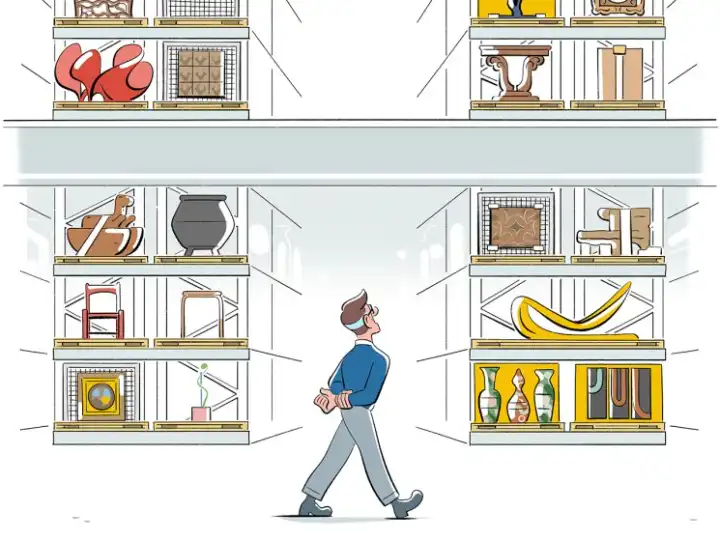
At one point during the installation of the Torrijos ceiling in V&A East Storehouse, 12 different parts of the carved wooden roof dangled from chain hoists. With painstaking care, a team of technicians clad in hi-vis and hard hats slowly tried to manipulate them into place.We don’t often look at ceilings, the sides of buildings or entire rooms, for that matter, and consider them “objects”. The meaning of the word, however, begins to expand as you wander through this new museum-cum-warehouse. V&A East Storehouse is the latest member of the V&A family, a storied British institution founded in 1852 and named after Queen Victoria and Prince Albert. Unlike its existing museums in London, Stoke-on-Trent and Dundee, V&A East Storehouse is more like a storage facility that has been designed to allow visitors inside. There are publicly accessible art storage facilities elsewhere, most notably the Depot of Museum Boijmans Van Beuningen in Rotterdam, but nothing on the scale of this new institution.George Barret’s oil painting ‘Italianate Landscape with Shephards’V&A East Storehouse was born, in part, out of necessity. In 2015 the UK government announced plans to sell off Blythe House, a government-owned London storage facility that has housed most of the V&A’s stored collection since the mid-1980s. About 600,000 objects, books and archival collections would have to be relocated; some larger objects, such as the Torrijos ceiling, were being kept in storage in Wiltshire and these were swept along into the plan. “You don’t move a collection of this size and scale very often,” says Tim Reeve, deputy director and chief operating officer of the V&A. “It made us think that we had to go as big and be as ambitious as we could.”That ambition eventually translated into unboxing the 500-year-old Torrijos ceiling to install its eight interlocking arches and corner pieces (or squinches) here. The ceiling was created in the Spain of Ferdinand and Isabella, for a palace near Toledo. Just before the palace was demolished, the ceiling – one of four – was acquired by a London art dealer and, in 1905, sold to the V&A. For more than 80 years, the Torrijos ceiling was installed in the museum until, in 1993, it was dismantled and packed into 40 large crates.The façade from Robin Hood Gardens overlooks the collection hall as the V&A team works on the installation When the ceiling was unboxed, some of the timber framework had warped and the pieces no longer matched up. “We had some sketchy old plans but there are about 150 pieces. It was just a massive jigsaw,” says museum technician Allen Irvine. “I’ve worked with the V&A for 21 years and that’s one of the most difficult installations we’ve ever had.” Completing the jigsaw – modelling how the octagonal dome fits together, building additional timber to support it, working with conservators and fixing the six-by-six metre ceiling in its tight space – took three months. “It’s an absolutely dazzling piece,” says Reeve. “Now we see it, I think we all feel guilty that it’s been off public display for so long.”The Torrijos ceiling is one of five “large objects” that have been incorporated into the architecture of this space. They are testament to the ambition of the building’s design as well as that of past V&A collectors. They include an office designed by Frank Lloyd Wright and an example of a fitted kitchen from 1920s Frankfurt. The section of the façade from Robin Hood Gardens, an iconic east London brutalist tower block that was demolished between 2017 and 2025, was the first thing installed here more than three years ago, when the museum was just a building site. Now that 12-tonne concrete façade fragment lives in the centre of V&A East Storehouse, looming over the stairs through which visitors climb to arrive at the collection hall.Hear four young people reflect on their experience telling the stories of Robin Hood Gardens alongside the V&A onThe Urbanist:Statue of a winged mythical creature from Tamil Nadu Buddha sculpture made between the 9th and 11th centuriesStacks of photographic portfolios Henry Howard’s oil painting strapped in placeIt’s a theatrical entrance amplified by the way the space seems suddenly flooded with natural light. But in fact this is provided by a lightbox created with a huge stretched Barrisol ceiling (“If size matters, this is the largest Barrisol ceiling certainly in Europe, maybe even the world,” says Reeve). It gives the perfect illusion of daylight without having to worry about capricious British weather. The museum’s hollowed-out core is the first space that visitors will experience, which makes V&A East Storehouse “a typical building inside-out,” says Elizabeth Diller, a partner at Diller Scofidio and Renfro, the New York-based architect firm behind the project. “In most public institutions, if one goes deeper and deeper into the footprint, one goes into more private spaces,” she says. Here, the further out you move, the less accessible it becomes. The inside-outness of the layout “gives the public a sense of trespass”, says Diller.As you arrive, it’s hard to know where to look. The publicly accessible galleys, which surround the central space, are lined with industrial shelving units whose rack ends hint at the variety within. Glance around the room and you’ll see an elaborate Dutch “giraffe piano”, a Memphis Milano lamp, a Venetian bust and a multicoloured rubbish bin extricated from Glastonbury Festival. “There is something for everyone,” says Reeve. Where the objects go and who they sit next to has been lightly curated but visitors will take themselves on a self-guided tour. There’s no exhibition per se, no one story to be learnt or single message to take away. “Part of the motivation of the project, and what gave us great joy, was to figure out a way of expressing the vastness and eclecticism of the collection in a way that could be sublime,” says Diller.Client project manager Hannah O’Connell stands next to part of Eduardo Paolozzi’s Krazy Kat Arkive of Twentieth Century Popular CultureCostume display conservator Stephanie Howell adjusts an ‘under kimono’ that has recently returned from an exhibition at V&A DundeeFor the displays, the architects “took as a model the eclecticism of a cabinet of curiosities”, says Diller. Made popular in Renaissance Europe, these were rooms in which collectors brought together their prized objects for the enlightenment and entertainment of others. At V&A East Storehouse, the simple, stripped-back appearance of the displays adds to the feeling that you’re drawing back a curtain and going behind the scenes. Objects are displayed in wooden crates and on specially designed palettes. Busts are strapped into place with criss-crossing cushioned seatbelts. Every object has a simple luggage tag tied to it with a code that can be looked up on the V&A’s digital database.The public experience of V&A East Storehouse as a museum exists side by side with its purpose as a working storage facility. A glass floor in the central area, which gives the illusion of being propped up by a vast and ornate Mughal-era colonnade, gives visitors a view of what’s happening below. There, forklifts and other machinery roam the lower labyrinths of the building (it took over two years, says technical manager Matthew Clarke, to find the necessary equipment to handle heavy objects in narrow aisles without a standard palette size). When Monocle visits, we watch a 19th-century French vase with detailed goat heads for handles being manoeuvred onto a forklift and lifted into place. Once the museum opens, visitors will continue to see the technical team at work as they rotate the displays and move objects for exhibitions or to go on loan.The 15th-century Torrijos ceiling hasn’t been on public view for three decadesV&A East Storehouse is both a museum and a working storage facility Hoarding poster from 1929 advertising D’Oyly Carte Opera Company productionsDeeper into the building, there are conservation studios, reading rooms and a cloth workers centre, all of which are publicly accessible. Overlooking the conservation studios is a window for visitors to peek at what’s going on inside. These studios are also equipped with headsets and cameras that conservators can use to give curious visitors more details about what they’re working on. Museum-goers might be used to seeing the work of curators but Reeve hopes to demystify other roles, such as conservators or technicians. “It’s getting visitors into all corners of what we do to care for a collection of this size and scale,” he says.As well as exposing the lesser-known activities of museums, V&A East Storehouse extends an open invitation to visitors to take a closer look at its collection through the Order an Object service. Kate Parsons, director of conservation, collections care and access at the V&A, describes a new part of her role as providing “meaningful and equitable access to every part of every object on this site”. Everything in the building has been logged and anyone can search through the digital catalogue, put up to five objects in a “virtual crate”, then choose a time and date to come in and have a look. “A booking is a booking,” says Parsons. “It’s not a request. You decide you’re going to see these five objects and we enable access.” What that means in practice depends on why an object has piqued your interest. If you’re a cabinetmaker, says Parsons, you might want to see the back of a drawer to find out how it’s been made. If you’re researching shoes for a television drama, you might want a face-to-face with one of the 3,500 pairs here. But you don’t have to be a cabinetmaker or researcher to use the service. “We are very clear that there’s no need for credentials or a reason to look at something,” says Parsons. “People can choose to see things just because it might make them happy.”Una Troubridge’s sculpture of ballet dancer Vaslav NijinskyEarthenware dating to the 19th century, from Sèvres, France A 10th-century figure from Karnataka, India Curatorial co-ordinator Miri Ahn with an ‘electric eye’ teddyParsons has just finished the recruitment process for the staff who will enable this access. Those who were chosen didn’t need to have experience in museums. Instead, prospective employees were asked to talk about an object they own that is precious to them and how they keep it safe. “That simple question was amazing in terms of the stories we heard,” says Parsons. Important, too, was recruiting from the local area. “We want people who are living and working in East London to feel like this can be part of their lives, as a hobby but also a profession,” says Reeve. Keeping things local, the museum café is run by East London bakery E5 Bakehouse. And V&A East Storehouse isn’t the only new institution here. Dance venue Sadler’s Wells East opened earlier this year, while the David Bowie Centre will be finished later in 2025 on the Storehouse site. Next year, V&A East Museum, a more traditional museum that will act as a sister venue to Storehouse, will open too. “East London has a great creative heritage,” says Reeve. “But research tells us that a large population in East London are not museum-goers. We want to make them feel welcome here.” Tim Reeve, deputy director and chief operating officer of the V&AAs Reeve walks past one corner of the collection hall, he throws his arms wide, encompassing a Piaggio scooter customised by architect Daniel Libeskind, a drum kit that belonged to Keith Moon and a vase with sphinx-shaped handles. Thousands of miles and hundreds of years of history swept up in one arm span. On show, too, are the straps, screws and supports that hold all these objects in place. “This is what it’s all about,” he says, beaming.It’s these objects that take centre stage here, and the hundreds of thousands of them at V&A East Storehouse tell us infinite stories. Stories that can’t be heard from outside the locked doors of a closed storage facility. Stories that aren’t just of the objects themselves but of all those who’ve had a hand in helping them along the way. The hands that sketched, stitched, carved, crafted, restored; that used an object, made it famous, threw it away, decided that it was worth keeping or, lovingly, winched it into place.Hear an audio version of this story with extra interviews onThe Urbanist:

The fashion pieces and new openings you need to know about this spring
Fashion 2026-01-16 15:13:06

The fashion pieces and new openings you need to know about this spring

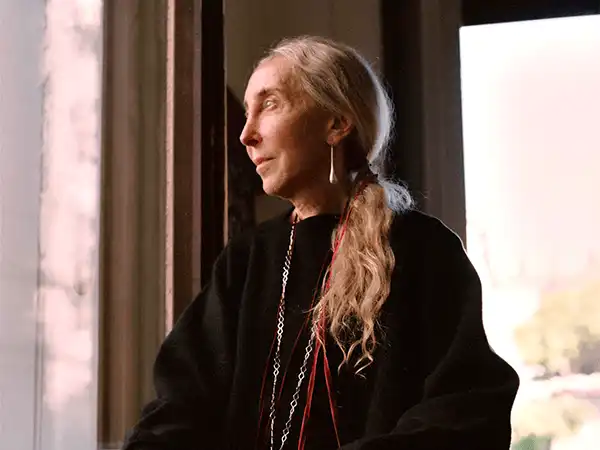
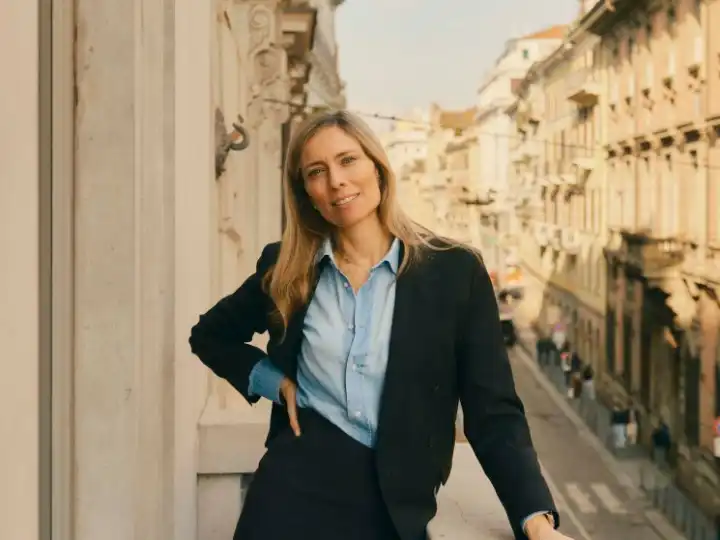
SS DaleyUKBritish designer Steven Stokey-Daley is becoming one of the most promising new names in fashion due to his ability to marry wardrobe classics, including plenty of suiting, with novel, humorous designs such as intarsia knits featuring playful illustrations. Stokey-Daley has a flair for “reinvestigating” wardrobe archetypes, such as duffel and trench coats, while experimenting with traditional fabrics.For spring, he debuted a womenswear range: an elegant line-up of checked suits, tailored Bermudas and beaded skirts, referencing British painter Gluck. “I’m having so much fun,” says Stokey-Daley. “It’s an exciting adventure and it feels as though there’s so much room to explore and develop new ideas.”ssdaley.comBodeParisBode is branching out of the US with an ambitious retail opening in Paris, a stone’s throw from the Palais-Royal. “France has played a significant role in Bode’s history and the search for a retail location in Paris started more than four years ago,” says founder Emily Adams Bode Aujla, who has built a reputation for her eclectic designs, made using upcycled fabrics.Working with her husband Aaron Aujla, one of the men behind New York-based interior design studio Green River Project, Emily drew inspiration for the boutique from the story of a French hotelier known for his love of fly fishing. The aim was to marry French and US tropes in the shop, which features antiques sourced from both sides of the Atlantic; sofas upholstered in silk; and stained glass. On the rails are the brand’s striped pyjamas, bold knits and embroidered shirts, as well as some Paris exclusives, including ties and shirting crafted from century-old French fabrics.bode.comSophie Bille BraheDenmark & USACopenhagen-based Sophie Bille Brahe is becoming a household name in the world of fine jewellery, having opened her first international outpost on New York’s Madison Avenue last year. “The history of the street made it feel like a natural home for my designs,” says Bille Brahe, who often takes inspiration from ancient Egyptian constellations and Venetian mythology. “The shop’s design is rooted in my heritage, blending Danish craftsmanship with understated luxury,” she says of the minimalist space and its Dinesen wooden floors, lace curtains, worktables by Danish artisan Poul Kjaerholm and Mats Theselius chairs that are a nod to Bille Brahe’s muse, Peggy Guggenheim. To mark the opening, the brand debuted Collier de Madison, a take on its Collier de Tennis Royal diamond necklace. “The Madison Avenue shop isn’t just about bringing Copenhagen to New York,” says Bille Brahe. “I wanted the space to welcome visitors by telling my story.”sophiebillebrahe.comPlan CItalyCarolina Castiglioni usually thinks about herself when designing her label’s biannual collections, so venturing into menswear didn’t come naturally. “It was a request, especially from Japan, where male customers kept coming in our boutiques to shop for themselves,” says Castiglioni, who realised that most of Plan C’s designs – slim tailoring, roomy cotton shirts, workwear-inspired parkas and denim jackets – could be translated for men. “There have always been menswear inspirations in my work, so we focused on unisex pieces that can be styled in different ways,” says the Milanese designer (pictured), who unveiled her first menswear range at last summer’s Pitti Uomo. Plan C’s successful formula from the get go has been high-quality wardrobe classics sprinkled with novelty and excitement via the right accessories. Come spring, you’ll find the label’s menswear designs at its standalone boutiques in Tokyo and Osaka, plus a handful of multibrand boutiques including Dallas’s Forty Five Ten.plan-c.comSans LimiteJapanYusuke Monden started his menswear label Sans Limite in 2012 after cutting his teeth in shirt design and production at Comme des Garçons. His concept is simple: wardrobe classics made well. Starting with a tight edit of six shirts, he has since expanded to ready-to-wear and accessories collections. “We don’t try to sell items for a specific season or drastically change fabrics for each collection either,” says Monden. Monden is committed to “Made in Japan” quality. “We do the patterning and planning internally, and then work with domestic factories,” he says. “When it comes to one-off items, such as patchwork shirts, hand-knit sweaters, or even rugs, we work on them in the studio and then send them off to the factories for completion.” Sans Limite’s Tokyo flagship is on a busy shopping street by the railway tracks that, post-Second World War, was home to a black market for US goods. It’s a world away from the neighbourhoods usually favoured by fashion brands.sans-limite.jp

Interview: Meet Martin Österdahl, the man behind Eurovision
Culture 2025-12-22 08:52:56

Interview: Meet Martin Österdahl, the man behind Eurovision

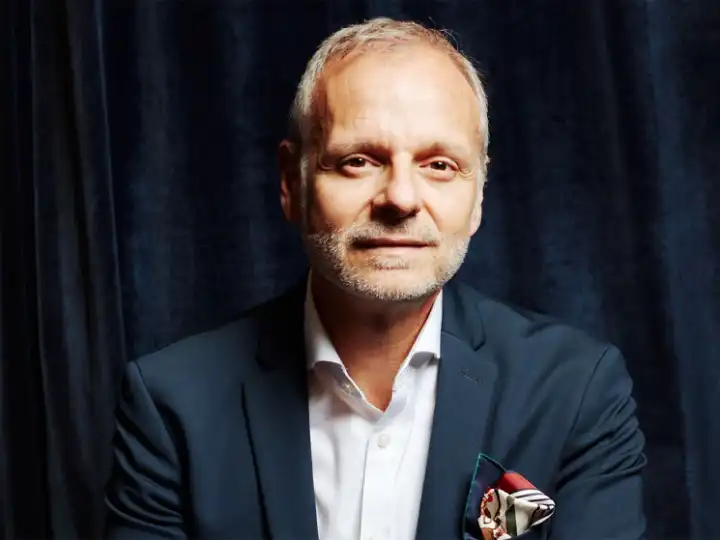
Martin ÖsterdahlIn many ways, Switzerland is the true home of the Eurovision Song Contest. It is co-ordinated by the Geneva-headquartered European Broadcasting Union (EBU) and Switzerland hosted (and won) the first edition in 1956. But at the helm of this rather Swiss enterprise is, in fact, a rather dapper Swede. You might recognise Eurovision’s executive supervisor, Martin Österdahl. On finals night, he announces when the votes have been counted. But this moment in the spotlight is the culmination of months of behind-the-scenes grunt work getting Eurovision – still the world’s most watched non-sporting TV event – shipshape and sparkling.Österdahl has been in the role since 2020 but last year he was booed on stage due to several flashpoints, including Israel’s presence at the event and the exclusion of the Dutch representative. Despite the bumps, the 2024 contest’s three live shows reached an audience of 163 million, making it one of the most successful so far. The 2025 competition will be held in Basel. And so on a crisp day in late January, monocle traversed the city’s cobblestone streets to witness the semi-final draw and city handover – two key moments ahead of the live shows in May. These took place in the new wing of the Kunstmuseum, in front of a brightly coloured Frank Stella artwork, which serves as a fitting backdrop for an event that is known for its vibrancy. After a record-breaking yet bruising period for the competition, we sit down with Österdahl to hear about how he keeps the show on the road, why contemporary culture is always political and the importance of events that unite not divide.Many people know about the Eurovision Song Contest but you technically work for the European Broadcasting Union (EBU). What is it?The EBU is an international member organisation of national broadcasters with 100 members across Europe and associate members all over the world. I only work on the Eurovision Song Contest and Junior Eurovision Song Contest, but the EBU does co-production and programme exchange within the membership across all genres, including news and sport.How long have you been a Eurovision fan?I grew up in a home where both my parents worked in the music industry. My father competed in Eurovision in 1967 as a songwriter on the Swedish entry. He was a hit maker in the 1960s and 1970s, and then he started managing his own recording studios in Sweden and the UK. The first one was in the basement of my family house; Abba recorded there. Later, we moved to the UK and my father recorded some of the biggest stars of the time, from Marvin Gaye to Iron Maiden and later the Spice Girls and Take That. It was a very special environment; I learned the ins and outs of recording music. That has been helpful in this job.“Eurovision is the Super Bowl on steroids”Sweden has a special relationship with Eurovision. When the show is hosted there, the level of excitement is palpable…That’s right. And our national competition to select our Eurovision representative, Melodifestivalen, is a massive event. It takes place over six consecutive Saturday nights with Eurovision-style production in arenas around Sweden. The whole country pretty much comes to a standstill. The final of that tour is in Stockholm with 35,000 people in attendance – more than we have for any Eurovision Song Contest. The secret to the success of Sweden in Eurovision and the Melodifestivalen format is the close collaboration between SVT [the national broadcaster] and the Swedish music industry. Does it feel particularly special to be hosting the competition in Switzerland this year? The first edition was in Lugano, so it is coming home in a way. There’s a growing fan base here and Switzerland is quite unique. It’s a country divided between three languages but united in being Swiss. Tell us more about your role and the complexities of hosting an event like this.A large part of what we do is the knowledge transfer from each year: sharing how to set up what is the world’s largest music event and arguably its most complex TV production. My team and I work on this every year, so we make sure that the new host broadcaster has all the information they need because of the unique hosting mode – if you win it, you host it. We take the Monday off after the grand final and then we start again on Tuesday. There is no time to lose. I used to be a commissioning editor of entertainment and sports programming at SVT. If you’re the host broadcaster for a ski world championship, you normally know that five years in advance. With Eurovision, you win it on a Saturday night, and the host broadcaster gets a letter on Monday saying, “Congratulations, you’ve won. Now you’re expected to put all this together a year from now, and it will go out live to hundreds of millions of people”. It’s quite a daunting task. Do you try to avoid capital cities when selecting the host location?The show employs more than 10,000 people, which is something that people at home perhaps do not realise. We need a lot of hotel rooms and an international airport. We also need an area near the arena with changing rooms for up to 26 delegations of 20 to 25 people. They need to have space for hair and make-up, and somewhere to organise their costumes. There needs to be a prop storage area. We also need a media centre for 1,000 members of the press and a press conference room. The logistics behind the stage are extraordinary. Cities such as Basel, Malmö and Liverpool are well equipped, but there’s the soft factor too. You want to have a city that embraces the values of the brand and wants to do something with it; that tends to be a country’s second or third city. The biggest cities have so much happening already. Österdahl takes centre-stageThis year’s semi-final drawThose logistics are comparable to the biggest international music tours, right?When we produced the Eurovision Song Contest in Malmö back in 2013, the last big show before us was Lady Gaga’s tour – at that time, the world’s biggest. Lady Gaga had something like 30 semi-trailers of technology and props. We had 97. And now, we have more than 200. I love when people talk about the Super Bowl; Eurovision is the Super Bowl on steroids. Let’s talk about the 2024 show, which was incredibly successful in terms of viewing numbers but also controversial. The truth is that the Eurovision Song Contest started in 1956 as an experiment in new technology but it also had that big idea of uniting people across borders at a time when Europe had become very divided. That’s one of the main reasons why it’s become so popular. Throughout the almost 70-year history – this is the longest-running show on television – lots has happened in Europe. Unfortunately, we live in a time of conflict and division but that just makes the Song Contest even more important. We believe that we have a higher purpose: for a few nights, we can imagine the world as we would like it to be, not necessarily as it is. That’s what gets us out of bed in the morning.“For a few nights, we can imagine the world as we would like it to be, not necessarily as it is”How do you manage the delicate question of artists expressing political views?The arrival of social media has changed things and artists who participate in this event suddenly have their own platform. Popular culture has always been opinionated – and it must be to be contemporary. It’s an expression of identity, of what’s going on in the world and what you think about it. We understand that but we also have a set of rules that say that you’re not supposed to use the Song Contest to express political views. And that does become more challenging when we’re in a divisive time. Unfortunately, over the past few years, we’ve had the Nagorno-Karabakh conflict between Armenia and Azerbaijan. They both participate. We’ve had the invasion of Ukraine. And now we have the conflict in the Middle East. It’s difficult to be that neutral space when things like this are going on.Some of those conflicts will be ongoing during this year’s show…We don’t expect anything else but it’s important that we find a way through it. In Malmö [the 2024 edition], the latest conflict in the Middle East was relatively new and we were the first big international event to come on stage with an Israeli delegation. I think we became a little bit too passive, a little bit too silent. And we’re not making those mistakes again. We’re going to be much more proactive. We’re going to be much more communicative. We’ve introduced new codes of conduct and duty-of-care protocols. But, ultimately, it’s about mutual respect. We are supposed to be a kind, gentle event. Hate, violence and toxicity have no place in the Eurovision Song Contest. And there have been some new additions to the team as well.One of the things that we realised in Malmö was that we were understaffed because the event has grown so much. We’re now a global entertainment superbrand with millions and millions of followers. We needed more support for the leadership, crisis communications and everything that has to do with managing an international brand. That’s why broadcast events leader Martin Green was recruited, which is great for us.Lots of fans would like to see Turkey back [after it withdrew over perceived bias]. Would it be welcome? We would love to have Turkey back because of the fanbase there. There’s a massive fanbase in Russia too. I’d love to be able to serve those fans with Eurovision. Unfortunately, in the case of Russia, that is looking difficult. But in 20 years from now, I would love to see Turkey and Russia participating.“Public service media is more important today than it has ever been”At the heart of Eurovision are public service broadcasters, which each fund and organise their country’s participation. Have attitudes toward those organisations changed?There are a lot of political voices who think that public service media is something that we no longer need but we believe that public service media is probably more important today than it has ever been. With all the new channels of communication and information, it’s harder to figure out what is going on in the world and what is true. What’s your favourite moment in the show? Right at the beginning when the clock starts and then it’s Eurovision time. It gives me goosebumps just thinking about it. I find the energy in the venue to be like nothing else.Finally, what music do you enjoy listening to in your spare time?I listen to the Eurovision songs until I’ve learned them completely. I also watch every single rehearsal. I have to learn every detail of every performance to be able to see if something goes wrong. So when Eurovision is over, I need something different. Most likely, classical music.Top 10 winnersFernando Augusto Pacheco’s favourite Eurovision victors.1956:Lys Assia’s “Refrain”(Switzerland)The first Eurovision winner was a classy strings affair. 1972:Vicky Leandros’ “Après Toi”(Luxembourg) The Greek singer represented Luxembourg with a ballad by her father.1974:Abba’s “Waterloo”(Sweden)One of Eurovision’s most recognisable tracks, spurring an international career.1988:Céline Dion’s “Ne partez pas sans moi”(Switzerland)A historic win for a young Canadian on the brink of stardom.1990:Toto Cutugno’s“Insieme: 1992”(Italy)This ballad in support of the European Union shows a political edge.1998:Dana International’s “Diva”(Israel)The victory of this trans artist showed how the contest can break boundaries. 2003:Sertab Erener’s “Everyway that I can”(Turkey)An energetic winning performance before Turkey withdrew from the contest in 2013.2014:Conchita Wurst’s “Rise like a Phoenix”(Austria)The bearded Austrian drag queen impressed with a song that sounded like a Bond theme.2021: Måneskin’s “Zitti e buoni”(Italy)Måneskin made leather trousers cool again, bringing a taste of rock’n’roll. 2022:Kalush Orchestra’s “Stefania”(Ukraine)An emotional victory for the Ukrainian group the year Russia invaded their country.

Cabin fever: Three stand-out holiday homes in Norway
Design 2026-01-09 20:04:54

Cabin fever: Three stand-out holiday homes in Norway

For centuries, Norwegians from all walks of life have been making their way to seasonal rural residences. Thesehytter(holiday homes) andårestuer(traditional huts) offer a base for favourite Norwegian pastimes of hunting, fishing, hiking and cross-country skiing.With some 450,000 of these structures spread across the country (and one in three families in Norway owning one), it’s no surprise that some of the country’s finest architects are turning a hand to their design. Across the next few pages, we visit three outstanding examples.1.The blended buildNorefjellOffice Kim LenschowCabin culture and the desire for a holiday in nature – whether a lengthy summer on the lake or cosy winter weekend – is not unique to Norway among northern European nations. But the development of thehytteis. This humble holiday cottage has its roots in the vacation habits of the country’s city dwellers and their desire to escape from urban areas, going off-grid in simple huts, so as to allow themselves to be immersed in Norway’s rugged landscapes. These forces are still present in thehytteof today.“These are places where you step out of your normal routines and live life differently, almost allowing yourself to be bored,” says Kim Lenschow of these countryside retreats. The Copenhagen-based Norwegian architect has recently finished one of these small, traditional timber holiday cabins in a rocky area northwest of Oslo.Three-metre high windows frame sweeping viewsLocated 800 metres above sea level in Norefjell, this cabin was commissioned by a friend of the architect, who discovered the plot while searching for the perfect spot to build his own country escape. “This project was about bringing traditional elements of ahytteto life through modern construction,” says Lenschow, whose approach to architecture is defined by a desire to create harmony between the built world and the natural environment.“The area surrounding Norefjell is beautiful,” says Lenschow. “You have this rocky terrain contrasted by spruce trees.” The architect adds that one of his guiding principles for the project was to ensure that the cabin complemented its surroundings. “We wanted to understand the relationship between architecture and nature.”To explore this relationship, Lenschow identified the need for the building’s colour and materials to work in harmony with the surroundings. “Architecture and nature are opposites in a way, because you’re adding something to a landscape with a specific logic in mind,” he says. “So the most effective approach was to emphasise simplicity and use colours that complemented the muted tones of the woodlands.” The resulting palette of primarily earthy tones allows the home to bleed visually into the background, and is particularly evident in the exterior surfaces, which feature two distinct elements.On one side, the façade is finished with a textured render applied over the underlying brick structure. This grooved, light-grey surface gives the exterior a unique character – and creates striking shadows on sunny days – without clashing with the rocky terrain on which it sits. “We wanted to add subtle details to make it clear that this wasn’t just part of the rock,” says Lenschow. “But it also could not be too bold.”On the opposite side, facing the sloping landscape and expansive woodland, is a façade made from spruce sourced from the local region. The timber is treated using iron vitriol, which speeds up the initial decay of the wood to create a protective surface that can endure harsh winters. Connection with the landscape is enhanced on this side of the building thanks to three-metre-high windows that frame sweeping views of the surrounding terrain. To further intensify this relationship with the natural world, Lenschow positioned the building in such a way that the boulders and natural elements block sightlines to the road. “The surrounding rocks almost become part of the furniture,” he says.Charred spruce façadeThe colour, material and windows have helped thishytteto blend into the landscape but Lenschow didn’t want to completely disguise the building, so he opted for a straightforward geometric design. “It wasn’t about coming up with clever shapes to camouflage the house,” says the architect. “I like it when a building is proudly a work of architecture but still resonates with the setting.”It’s a theme that continues inside, where thehytte’s floors belie the challenging terrain on which it sits. Rather than smoothing out the plot, Lenschow designed the structure so that the site’s varied grade define its rooms, utilising single steps to act as dividers between them. “We worked with the natural levels of the ground to section off different spaces,” he says. A bedroom sits on one level and a living room on another, with a separate kitchen level creating the sensation of walking on uneven terrain as you move through the house. “You almost feel like you’re outside.”Crisp weather, light and shadowsThe interiors are kept simple. Many of the rooms are clad in a light wood, which is bathed in natural light even during the darkest months of the year. There’s a sense of spaciousness too, with minimal furnishings – a mix of Nordic design classics and wooden pieces – complementing the building’s palette. “The furniture, like the building, is very simple,” says Lenschow. “It gives the space a cosy feel.”Key items include a rattan and teak cabinet by Danish homeware brand Nordal, and a modular L-shaped sofa in cream that defines the lounge area. Next to it, a step leads to the dining space, which features a long wooden table surrounded by Bambi 57/4 dining chairs – a 1955 design by Rastad&Relling now produced by Norwegian furniture brand Fjordfiesta. Behind this, floor-to-ceiling windows with light-hued semi-transparent curtains diffuse light throughout the space.Custom shelving divides the spaceA light palette is essential for dark winter monthsFor Lenschow, designing thishyttemeant creating a new structure equipped with modern amenities, while preserving the traditional essence of an off-grid retreat by way of simple construction and a deep connection with nature. “What the modern country escape looks like is an ongoing conversation in Norway,” says the architect. “It’s not about going back in time; it’s about each individual’s interpretation of what it means to be immersed in nature. For some, this means having a cabin in a remote spot, only accessible by skis. For others, it’s simply about being surrounded by stillness. What ahyttemeans to you is very personal.”kimlenschow.com2.The new visionÅrestuaGartnerfuglen Arkitekter“We believe that every building should have its own soul,” says architect Ole Larsen of Oslo’s Gartnerfuglen Arkitekter, a firm he co-founded with Astrid Wang and Olav Lunde Arneberg in 2014. “Our aim is to uncover the unique potential of every project, rather than applying a specific signature style to everything we do,” adds Wang.Case in point is Årestua, a newly finished holiday home for a family, inspired by the traditional design ofårestue: traditional wooden homes built around an open fireplace. Located in Telemark, a region southwest of Oslo, it has been built using traditional methods, with specialist carpenters carefully stacking timber logs to form walls. “This construction method was a beautiful way to connect architecture with its place,” says Wang.It’s an approach that also allowed the architects to explore how traditional architectural vernaculars, such as theårestue, can be reimagined for modern living. “Traditionally, this type of cabin is quite dark and enclosed, a place to retreat to after a long day outdoors,” says Larsen. “We wanted to preserve some traditional elements while also being innovative.”In response to this ambition, the house’s layout is organised into five distinct volumes that house the bedrooms and bathroom, all centred around a main living area fitted with a fireplace. Expansive windows frame sweeping views of the snowy woodlands, creating a seamless connection between indoors and the surrounding landscape. The furniture is carefully positioned to encourage connection around the central living area. “Using the space is about being together,” says Wang. “We’ve added large windows to bring in plenty of natural light. That transforms the space.”A window seat is a link to the outdoorsThere are also unexpected architectural interventions that respond to the habits of its inhabitants: a small outdoor staircase by one of the doors provides a cosy spot for the family to enjoy classic Norwegian clover-shaped waffles while taking in the view. Additionally, one of the connecting rooms, elevated above the others, includes a window specifically positioned for observing the eagles that soar around the cabin.“Building the right cabin is all about the small details,” says Larsen. “As an architect, it’s essential to keep an open mind when designing a cabin and to let the location and the inhabitants shape the space.”gartnerfuglen.com3.The simple spaceMyllaFjord ArkitekterOiled spruceDespite its proximity to the city, the landscape surrounding Oslo remains largely unspoilt, characterised by mountains, vast stretches of forest, occasional lakes and cross-country ski trails. And though the area is dotted with cabins to which those in the Norwegian capital retreat during the holidays, for the architects practising here, creating buildings that have a “light touch” is essential to preserving these environmental qualities.It’s something that Oslo-based studio Fjord Arkitekter has done with aplomb on a cabin project called Mylla. The design of this contemporaryhytteis rooted in simplicity and sustainability. “The construction is made simple and rational,” says Fjord Arkitekter partner Finn Magnus Rasmussen. “And the materials are durable and natural.”For proof, he points to the exterior, which is clad in pine treated in the Møre Royal style, a time-honoured Norwegian method that involves vacuum-cooking the wood in oil, creating a durable and weather-resistant surface that ages gracefully. This approach reduces the need for extensive ongoing maintenance or harmful chemical weatherproofing treatments. Thehyttealso uses a geothermal heating system. But, recognising that green credentials mean little without quality space, the architects have prioritised a calming interior. Oiled spruce walls and ceilings create a warm and inviting atmosphere, while a central sculptural staircase divides the space into zones.“The cabin is elongated and narrow for the best adaptation to the plot,” says Rasmussen. “It provides distance between the quiet and active parts of the cabin. It might have a sober exterior but when you get inside, it is rich in spatial qualities.”fjordarkitekter.noThe cabin works with the natural terrain of the siteThe layout of the cabin is defined by the staircase

From Puglia to the skies: Three innovations in hospitality and design
Design 2026-01-03 12:28:57

From Puglia to the skies: Three innovations in hospitality and design

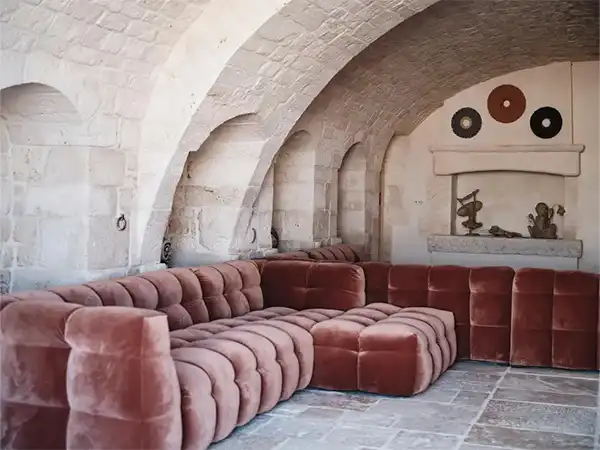
Growth strategyCasina Cinquepozzi, ItalyWhen Nigerian-born, London-based jewellery designer Thelma West and her partner, Stefano Liotta, first visited the Casina Cinquepozzi property in Puglia, they fell in love with it immediately. “Even from the driveway, I could tell that there was something special about it,” says West. Since then, the pair have been renovating the space to turn it into a guesthouse, which is expected to open in early 2025.Named after the five wells on the property, the Casina Cinquepozzi is an 18th-century manor house surrounded by more than 16 hectares of land. When the couple took on the restoration, they decided to retain everything that could be preserved. “We wanted to keep the magic that we felt when we first saw it,” says West. “It has been a beautiful process of getting to know the people of Puglia better and finding out what they can bring to the table in terms of craft.”There are 55 rooms spread over the three floors of the main manor house and attached buildings, where original tiles and frescoes mix with more modern elements inspired by one of Liotta’s favourite architects, Mario Bellini. “The ground floor held on to a lot of the originalmasseriafeatures so we only brought in a few additional colours,” he says.As well as the hotel, West and Liotta are preparing an artist’s residency programme, which will allow creatives to spend time in Puglia. Here, they will be able to take inspiration from the region and find moments of serenity.As the couple get ready to welcome their first guests, they aren’t too worried about achieving perfection right away. “This isn’t a hotel where everything is fixed for ever,” says Liotta. “The Casina Cinquepozzi is a home and it will change as we and the guests live and grow.”casinacinquepozzi.comExperimental jet setNoma Projects,CopenhagenThough Noma closed its doors at the end of 2024, the exploratory spirit of the three-Michelin-star restaurant lives on in Noma Projects. At this “food laboratory”, launched in 2022, chef René Redzepi and his team are busy experimenting with flavours and bottling up their findings for home cooks. Its most recent release consists of six products for the pantry – think pumpkin-seed praline with hints of pine oil and umami-rich mushroom garum. Here’s hoping that securing these goodies is easier than nabbing a table at the restaurant.nomaprojects.comSoft optionCaon Design Office, SydneyIllustrator:Steve ScottIt isn’t always easy to nod off when you’re hurtling through the sky at an altitude of 35,000 feet. Thankfully, two Australian companies have collaborated on a new concept that might help. Sydney-based practice Caon Design Office has teamed up with the Woolmark Company, the global authority on wool, to develop Modulo – a cocoon-like First Class seat consisting of merino wool wound around a light titanium and carbon-fibre frame.“Merino wool is a wonderful material when it comes to breathability and heat dissipation,” says David Caon, the lead industrial designer at Caon Design Office. “One of the big barriers to falling sleep onboard an aircraft is being too warm. Passengers often struggle to regulate temperature. The Modulo seat’s open-membrane structure will allow for better airflow and a unique, textured aesthetic.” Caon will also install backlighting and smart speakers in the seat’s meshed weave to help foster a calming atmosphere.Modulo’s benefits will extend to airlines that adopt the system too. The use of Australian merino wool as a primary material means that there’s no need to rely on bulky, unsustainable foam. Furthermore, merino will save on weight.Best of all, Modulo is – as its name suggests – modular, so airlines can easily strip the weave and replace it with another. “The concept’s flexibility allows airlines to evolve their cabins, brand them and keep things fresh,” says Caon. Sweet dreams.caondesignoffice.com; woolmark.com

Ways of seeing: Six must-visit exhibition spaces from South Korea to Switzerland
Culture 2025-12-31 08:42:45

Ways of seeing: Six must-visit exhibition spaces from South Korea to Switzerland

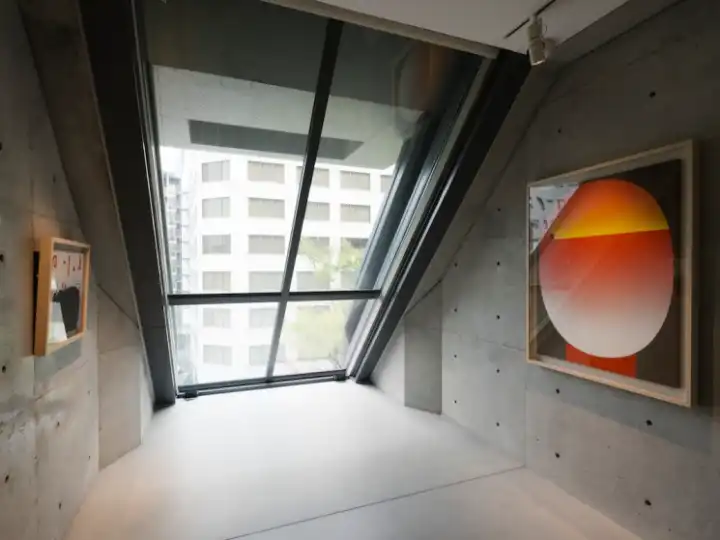
1.The conversation starterMACAALMorocco Othman Lazraq guides us under an arch made from mud bricks – part of a structure that sits below the central atrium of his family’s private museum. “Installing this was a mess,” he says. “Artist Salima Naji built it, brick by brick, one month before our reopening at the start of the year.” Touching the temple-like structure, which emulates ancient building techniques from places such as Mali or the Maghreb, Lazraq offers a clue to the museum’s mission. “This isn’t just heritage,” he says “It’s alive.”The Museum of African Contemporary Art Al Maaden (MACAAL) opened in 2016 as an extension of the Lazraq family’s art foundation (the family is one of Morocco’s largest property developers). The museum brings its extensive art collection, which now spans 2,500 works, into public view.Part of Lazraq’s job as both founder and director has been reconciling political and social sensitivities around history and gender with the collection’s occasionally transgressive content. “Every cultural institution is placed in the middle of social discourse,” he says. “But our approach is always deft and inclusive.” In Morocco, this attitude is vital as the majority of the population has never set foot inside a museum. Special attention has been paid to ensure that the audience’s questions and concerns are answered and assuaged by MACAAL’s friendly guides, and additional information has been designed to deepen dialogue.After seven years finding its footing, the museum was closed by Lazraq in 2023 as a chance for a structural and conceptual reset. Serendipitous timing meant that the entire collection was safely packaged and stored only two weeks before a magnitude-6.8 earthquake rocked the region. During the two-year hiatus, everything from the museum’s financial model to the curated programme was scrutinised. A scenographer was enlisted to redesign the layout to be more accessible and playful; display cases were lowered to child height and the museum’s artistic director, Meriem Berrada, commissioned video documentaries for each of the permanent collections’ seven sections to provide an additional layer of visual narration. The multidisciplinary and occasionally controversial works (one playful piece explores the taboo subject of folkloric witchcraft) challenge ingrained perceptions around African art but there’s a distinctly celebratory tone here too. “I’m a proud Moroccan but there’s a lot of missing context around who we are and where we’ve come from,” says Lazraq. “I want to make our museum as open as possible, to spark conversations and to stand out as a neutral, safe space for reflection and imagination.”On the edge of a golf course about 15 minutes’ drive from Marrakech’s medina, MACAAL’s setting is serene. Lazraq, who has led the family’s art foundation for over 15 years (since the age of 21) is always rethinking how the museum can work. Every Friday it hosts a family-style couscous lunch, inviting the community and anyone else who wants to experience culture through the disarming focus of food. “I never wanted to create a highbrow, exclusionary space,” he says, pointing to the employment of “cultural mediators” tasked with bringing groups from schools, women’s associations and social organisations for workshops and visits. “We’re creating a true social ecosystem. Hopefully we’re also becoming a source of inspiration for the next generation.”macaal.org2.The audio-visual spaceEfie GalleryDubai The Ghanaian director of Dubai’s Efie Gallery, Kwame Mintah, doesn’t like looking at art in silence. “Galleries tend to be managed by creative people but they can feel sterile without any music,” he says. Mintah grew up listening to genres such as highlife and Afrobeat and decided to weave those sounds into the artistic experience of his gallery. Founded in 2021 by Mintah with his mother, Valentina, and brother, Kobi, Efie Gallery has had a permanent space in Dubai since 2022. Now the family has moved its operations to a bigger outpost, which will provide more space for their 2,000 vinyl records and diverse roster of visual artists of African origin.“The commercial art world can be sceptical of unorthodox forms,” says Mintah. He initially wanted to downplay the listening concept but the enthusiastic reception received by a smaller version in the original venue means that it now takes centre stage in the new location. “Growing up in Ghana, art wasn’t contained in galleries,” says Mintah. “It was all around us.” The new space’s immersive listening room has five hi-fi speakers. Visitors will find shellac and vinyl records and cassettes, dating from the 1940s until the present day, including those by Ghanaian musician ET Mensah, a pioneer of the highlife genre. Originating in the 19th century, highlife laid the foundations for many popular genres, such as Afrobeat.Mintah hopes that the new gallery will bolster the underexplored cultural connections between the UAE and Africa. “Dubai is a blank canvas where you can construct your own narrative of African art,” he says. Efie is showing the likes of Ghanaian sculptor El Anatsui, Kenyan visual artist Maggie Otieno and Ethiopian photographer Aïda Muluneh. Each has curated ambient playlists to accompany their shows.“The Efie Gallery isn’t a satellite for the African diaspora,” says Mintah. “We want to engage directly with the region. With our unusual gallery concept, we leaned into the unknown. Ultimately we hope to add something fresh to the canon.”efiegallery.com3.The regional showcaseIchion ContemporaryJapan Sandwiched between an office building and a church, Ichion Contemporary’s slim, ambitious architecture celebrates the avant-garde spirit of Osaka. The new gallery, which opened in January, was founded by Ichion Jo, the 35-year-old vice-president of Jo’s Auctions. Originally dealing primarily in Chinese antiques, the Osaka-based auction house has become increasingly active in collecting and trading modern art in recent years, including that of the Gutai group and other works from Kansai.“We noticed that while Japanese postwar artists were becoming more highly valued, they were not so in the international market,” says Jo. “But after the Guggenheim exhibition in New York (Gutai: Splendid Playground, 2013) their prices jumped in an instant.” Sensing a shift in the market, Jo began researching and planning a gallery to showcase such works. And when a narrow patch of land, barely four metres in width, became available in Nozaki-cho, he approached renowned architect Tadao Ando to turn it into a reality.The distinctive concrete building offers a unique experience across six levels, placing viewers close to the works. The inaugural exhibition showcased the Gutai Art Association, while future exhibitions will focus on Kansai’s pioneering avant-garde artists, as well as the emerging talents building on their legacy. The gallery’s unconventional setting and innovative spirit promises new discoveries for artists and audiences alike.ichion-contemporary.com4.The photographic archivePhoto SeMASouth KoreaA building that mimics the contours of a camera aperture makes for a striking architectural statement – and a fitting venue for South Korea’s first public photography museum. Opening on 29 May, the Photography Seoul Museum of Art (Photo SeMA) encompasses about 7,000 sq m across three above-ground and two subterranean levels. The building was designed by Vienna-based architect Mladen Jadric and realised in collaboration with South Korean architect Yoon Geun-ju, director of 1990uao. Drawing inspiration from the mechanism of a camera aperture, the museum’s twisted monolithic form departs from conventional right angles, with walls and floors rising fluidly along a curve. Jadric says that there are more similarities between the practices of architecture and photography than you might expect. “Photography is an image drawn with light and architecture is a play of forms unfolding under light,” he tells Monocle.Photo SeMA’s director, Han Jung-hee, says that the museum’s mission is “to establish the 140-year history of Korean photographic art”. The institution identified more than 2,000 photographers active between 1880 and 1980 and acquired about 21,000 images and archival materials. “Our goal was to collect landscapes and portraits that offer a visual record of their era,” says curator Son Hyun-jung. Those procurements included the archive of Im In-sik, a photographer of the Korean War, and Park Young-sook, a pioneering figure in feminist photography. Photo SeMA will finally bring into focus the rich history of South Korean photography.sema.seoul.go.kr5.The Italian outpostThaddaeus RopacMilanThe neoclassical Palazzo Belgioioso is the sumptuous location for Austrian gallery Thaddaeus Ropac’s new Milan outpost. Elena Bonanno di Linguaglossa, its executive director, is brimming with excitement when she shows Monocle around the unfinished site. “I’ve never been able to hold a brush but I’ve always had a curiosity for contemporary art,” she says. “My grandmother worked as an assistant for Belgian painter Paul Delvaux. I was fascinated by the stories she told me.”For Bonanno di Linguaglossa, taking a role under Thaddaeus Ropac was an easy decision. “There’s no one like him in the industry,” she says. When Monocle visits, the space is still under renovation but the neoclassical crown mouldings and large bay windows overlooking the quiet courtyard give a taste of what’s to come. Works will be exhibited in two grand rooms on the first floor, and sculptures will be displayed in the public courtyard. Milan has a growing presence of international artists, buyers and gallerists tapping into the community of wealthy collectors who have chosen Italy’s financial capital as their home. “It’s the moment to be here,” says Bonanno di Linguaglossa.ropac.net6.The photographer’s homeStudio NaegeliGstaadOver the past century, the timber-hewn chalets that line Gstaad’s main promenade have slowly transformed into a string of luxury fashion maisons but Chalet Naegeli is a notable exception. Founded in 1914 as an Alpine photography repository, it’s the former studio-residence of photographer Jacques Naegeli, who documented Gstaad’s transition from humble farming village to glitzy ski resort. The premises became a bank in the 1970s but, last winter, Naegeli’s great-grandson, Christian Högl, and his wife, Anna, brought the chalet back to life as Studio Naegeli, a documentation project aimed at reviving the photographer’s archive. The Högls aren’t just looking to the past. The two-storey site will host programmes alongside a global roster of galleries focusing on modern art. When Monocle stops by, the debut collaboration with Galerie Mitterrand in Paris is preparing to open and 15 artworks have been shipped over. These include works by François-Xavier Lalanne, Jean Dubuffet, Günther Förg and Yayoi Kusama.There is momentum here to refocus Gstaad’s identity around its artistic heritage, and the town has buy-in from an international crowd of holidaymakers. Visitors from France, the US, Canada and Hong Kong pass by when Monocle visits Studio Naegeli. “A lot of visitors here have second homes in Gstaad, so the tourism feels more personal,” says Anna, who previously worked as international liaison for the Moscow Art Fair and as a curator in Bern. “Gstaad is home to a concentrated group of collectors, which encourages a friendly climate for purchasing art.” Just like Jacques once did, Christian and Anna live above their beloved chalet-gallery. “When Jacques lived here, the house was alive with creative spirit,” says Anna. “We hope to reconnect Chalet Naegeli with its artistic and cultural heritage.”studionaegeli.com

Monocle’s Style Top 25: The best designers, makers and retailers redefining luxury
Fashion 2026-01-15 17:19:54

Monocle’s Style Top 25: The best designers, makers and retailers redefining luxury

1.H-O-R-S-E, USAFit for purposeThe perfectly executed basics and minimal silhouettes of California-based activewear brand H-O-R-S-E are made with the gym in mind. Inspired by PE uniforms and vintage sports clothing, the kits – including shorts, matching sweatshirts and T-shirts – are made using 100 per cent cotton fabrics. The results are light, breathable and practical, harking back to a time when going to the gym was a straightforward affair.“Fitness has become increasingly regimented,” says the brand’s founder, Sue Williamson. “You might have to spend €35 on a class, schedule around it and commute. But real fitness is about moving your body, picking up something heavy, squatting and running. We’re making clothes for that.” In the future, Williamson hopes to launch new styles, explore other natural materials such as hemp and wool, and expand into accessories. For now, the brand is taking it slow. “We’re going at our own pace,” she says.h-o-r-s-e.net2.Nitty Gritty, SwedenBest in storeTucked away in Krukmakargatan, a quiet street south of central Stockholm, multi-brand boutique Nitty Gritty was among the first to put the city on the fashion map. “We always try to find the most interesting brands around the world to present to Stockholm – and, through our website, to the world,” says Marcus Söderlind, the shop’s owner. His approach to curation prioritises labels that pay attention to the details and aren’t distributed too widely. Silhouettes tend to be loose, with oversized shirts, parkas and barrel-leg trousers in the mix.For this autumn, Söderlind has picked up fellow Swedish label Salon C Lundman and Norlha, a yak khullu wool atelier from the Tibetan plateau. There’s also an in-house line, Nitty Gritty Worldwide, whose collections are built on a simple idea: every item should be made by the artisans with the most expertise, wherever they might be.Nitty Gritty’s success is also down to the sense of community that it fosters in-store – every visit is an experience and there’s always something new to discover, including art exhibitions of emerging and established talent. Music is just as central: DJs and musicians perform there most weeks, reinforcing the shop’s status as a cultural hub.nittygrittystore.com3.Nami, FranceNew to marketEvery season, Paris-based Philippine Namy looks to Scotland to inspire her label Nami’s collections. References can vary from the architecture of Charles Rennie Mackintosh to golf or the uniform of a lighthouse keeper. As a child, Namy spent many family holidays in the Highlands, where her grandfather owned a house. “I find the folklore of Scotland fascinating,” she tells Monocle. “Every collection tells a story of the country, though I avoid gimmicks such as kilts.”Instead, details carry a narrative. A side pocket on a pair of suit trousers is a reference to where golfers store their tees. A broderie-anglaise light cotton dress evokes Celtic tunics. The tailoring of wool trousers, flannel shirts and waterproof cotton-canvas jackets is kept sharp and a little oversized.With extensive experience in the fashion industry, notably at French label Isabel Marant, Namy was well placed to build a sustainable supply chain. She began by sourcing deadstock fabric from LVMH brands when she launched the business in 2024. When demand picked up, she forged partnerships with Italian and Scottish mills, where she sources materials such as silk-and-cashmere blends, herringbone twills and angora mohair wool. “I want Nami customers to feel like they’re wearing clothes that have been passed down through generations,” says Namy. “It’s a homage to my family and our time spent in Scotland.”namiofficiel.com4.Kiivu, JapanThe atelier brandTokyo might be Japan’s fashion capital but new brand Kiivu is making a name for itself in the small coastal town of Onomichi in Hiroshima prefecture. Its proposition is simple: unisex garments made with fabrics produced by Sanyo Senko, a century-old dyeing house from nearby Fukuyama, and sewn by a team of female seamstresses who migrated here from a nearby sewing factory that recently shut down. Sanyo Senko wanted to offer the women a space where they could continue their craft and the combination makes perfect sense – the women’s peerless sewing skills have been preserved and the dyeing factory can now produce fully fledged collections and show off its craft to the broader industry.Everything at Kiivu begins with the fabric and continues in-house, from textile development to dyeing and sewing. Clean lines allow the fabrics to shine in corduroy shirt-jackets, pigment-dyed chinos and the softest indigo denim – the kind that could only be produced by an atelier brand.kiivu.jpT-shirt bySunspelBelt byGiorgio ArmaniShoes byParabootXSunspelScarf byBigi Cravatte for Trunk5.Burberry, UKThe comebackFor autumn/winter, Burberry is returning to its roots: checks, rainwear and plenty of British charm. The brand’s creative director, Daniel Lee, has put particular emphasis on outerwear, including signature trenches (updated with embossed leather), intricate shearling and jacquard-weave floor-length coats – that he imagines Londoners slipping into before boarding the train and escaping to the countryside for the weekend.“It’s that Friday-night exodus from London – long, rainy walks in the great outdoors and day trips to stately homes,” says Lee. Alongside the CEO, Joshua Schulman, he has been helping to put Burberry back on the map by turning every collection and brand campaign into a celebration of the city of London and all things British. “We’ve been looking at tropes of classic British film and television and all their deeply layered social observations,” says the designer.burberry.comSocks byANT45Shoes byParaboot6.Fendi, ItalyFit for collectorsEdoardo and Adele Casagrande Fendi founded their eponymous brand a century ago. This year, Silvia Fendi pays homage to her family’s business with a collection that evokes Roman refinement: think A-line leather dresses, boiled-wool coats and oversized leather trenches. For her first womenswear collection, she wanted to relive her memories of growing up in the Fendi atelier and seeing Hollywood movie stars passing through.fendi.com7.Luca Ferreira, SwitzerlandMenswear maverickLuca Hasler established Luca Ferreira in his hometown of Zürich in 2022. “I wanted to show people that Switzerland can produce some amazing clothes,” says the founder and creative director.Before launching his label, Hasler worked in a bespoke-suit shop, where he developed a sharp eye for made-to-measure tailoring. Those influences have helped to shape his brand’s signature two-piece wool sets. Working primarily with Swiss mill Schoeller Textil, the label’s bestselling knits are crafted from fibres such as merino wool, cotton and silk blends. Other pieces are produced in small factories in Italy and Portugal, where Hasler frequently visits to delve into textile archives and gather inspiration for his designs. “I call my clients first movers,” says Hasler. “They’re willing to try new things and have an instinct for well-made clothes.”lucaferreira.com8.Olga Basha, USABest denimCeline Eriksen, the founder of New York denim brand Olga Basha, understands that there’s such a thing as having too much choice. It’s why her label offers jeans in two made-to-order unisex styles: low-rise and mid-rise, both straight cut with a button fly. “Our focus might seem narrow but we find joy in obsessing over the details,” says Eriksen.olga-basha.comJumper bySergej LaurentiusPocket square byBigi Cravatte for Trunk9.Bottega Veneta, ItalyMust-visitThis autumn is a pivotal season for Bottega Veneta. The Italian luxury label is celebrating the 50th anniversary of its signature intrecciato (interwoven) leather, while preparing to unveil the first collection by its new creative director, Louise Trotter. To celebrate this milestone, the house has launched the “Craft Is Our Language” campaign, paying homage to Italian graphic designer Bruno Munari and highlighting the house’s commitment to handwork: intrecciato clothing and accessories require the expertise of artisans who weave the leather by hand. “For 50 years, intrecciato has embodied Bottega Veneta’s craft and creativity,” Leo Rongone, the brand’s CEO, tells Monocle. “From the start, the house was defined by the softness of its leather and the excellence of its craftsmanship.”A pop-up space in London’s Harrods is in the works for September. The interiors will feature interlocking wood and concrete structures – another nod to the label’s signature style.bottegaveneta.com10.Aimé, UKLondon’s best-kept secretWhen French-Cambodian sisters Val and Vanda Heng-Vong moved to London from Paris in 1999, they found themselves missing the quintessential French brands that they knew back home. They took a big bet on Notting Hill’s Ledbury Road – there was little but antiques shops in the area at the time – and opened Aimé, stocking Parisian favourites from Repetto ballerina flats to APC denim and Isabel Marant’s breezy dresses. Twenty-five years later, the boutique is still in its original spot. It still stocks seasonal pieces by Isabel Marant, alongside elegant cotton shirts by Spain’s Masscob, woven Dragon Diffusion bags and tailored trousers by Los Angeles-based Jesse Kamm.The business’s focus is firmly on the boutique. It’s why the duo recently joined forces with a local architect to refresh its interiors. “We take it personally,” adds Vanda. “It’s almost like opening the door to our house.” The duo have also begun developing an in-house line of seasonless staples – cashmere jumpers, ruffled shirts, waterproof trench coats – following research trips to India, Italy and Scotland. “We’re not trying to reinvent the wheel,” says Val. “We want products that don’t need to change every season. It’s a project that we want to keep small, luxurious and authentic.”aimelondon.com11.Hitting the big timeIn the bagAutumn/winter is the season of the super-sized tote. Designers are leavingminaudièresand compact crossbody bags behind and replacing them with extra-large totes that can double as elegant weekender bags. Prada has oversized, vintage-inspired bowling bags on offer, while Celine’s new artistic director, Michael Rider, has relaunched the label’s roomy Phantom bags. Meanwhile, Véronique Nichanian, the artistic director of men’s fashion at Hermès, generated enthusiasm for her large Birkin bags on her autumn/winter 2025 runway. “People joke that, despite my height, I’m designing such big bags,” she says.From top:Hermès,PradaandCeline12.Sturlini, ItalyTuscan touch“I’m proud to be Tuscan,” says Alessio Sturlini, Florentine shoe brand Sturlini’s CEO. “We manufacture everything in Tuscany so that we can have control over every step.” Sturlini’s approach to dyeing leather consists of immersing shoes in tanning drums, using natural dyes and pigments. The result is a softer, more comfortable shoe that would befit a Florentine dandy.sturlini.com13.Colin Meredith, CanadaBest performanceHaving grown up on Vancouver Island and studied visual arts and technical apparel design in Montréal, Colin Meredith’s eponymous brand naturally takes its cues from the Canadian outdoors. “I also take inspiration from vintage sportswear and then combine it with newer technical fabrics,” he says. Since the brand launched in 2023, Meredith’s output has focused on base layers, insulated vests and sturdy shell jackets – ideal for cold-weather adventures.colinmeredith.com14.Chopard, SwitzerlandStirling ideaA passionate car enthusiast, Chopard’s co-president Karl-Friedrich Scheufele has forged a longstanding partnership between the Swiss watchmaker and the 1000 Miglia, the iconic Italian motor race first held in 1927. The eponymous collection of timepieces has become a cornerstone of Chopard’s expanding offering of men’s watches. Pictured here is a stainless-steel model with a brown calfskin strap, created in tribute to Stirling Moss, who set a record in the 1955 Mille Miglia by winning the race at an average speed of 158km/h – a feat that remains unmatched.chopard.comMille Miglia Classic Chronograph Tribute to Sir Stirling Moss watch byChopard, jacket byThe Decorum Continuum by Yasuto Kamoshita15.Celine, FranceBest debutCeline’s new artistic director, Michael Rider, presented his debut collection in July at the brand’s HQ, Vivienne. It was a masterclass of rebranding, a vision of modern-day dressing marrying past and present, reality and fantasy. “Celine stands for quality, timelessness and style – ideals that are difficult to grasp,” he says.celine.com16.Unlikely, JapanNew from JapanShinsuke Nakada joined Japanese fashion giant Beams straight from college: he started on the shop floor and worked his way up to creative director over a period of 22 years. “After years of collaborating with different companies and manufacturers, I felt a growing urge to challenge myself [and create] something that was truly my own,” he says. Nakada took the leap in 2023, starting menswear brand Unlikely, which he envisions as a blend of US and Japanese styles, old-school workwear and menswear staples, all woven into something fresh. Some of its most popular garments include reversible outerwear, patched sweatshirts and sweaters inspired by natural landscapes. Its autumn/winter offering is looking particularly sharp, with a corduroy-cuffed, washed-canvas hunter jacket and twill trousers in faded navy. Unlikely is stocked in Japanese shops including Beams Plus and, with growing interest from overseas, it is officially going international this autumn.17.Mohawk General Store, USABest curationBo and Kevin Carney’s Mohawk General Store in Los Angeles’ Silver Lake neighbourhood stocks seasonal ready-to-wear clothing, jewellery, home goods, books, apothecary items and its in-house menswear line, Smock. What these items have in common is that they evoke a sense of Californian cool, be it flax-coloured linen shirts or olive oil from the Big Sur.This is especially true of Smock, whose breezy trousers, Velcro back cap and canvas jackets look as though they were made for sauntering underneath palm trees. Mohawk has an event space nearby and also partners with brands to host gatherings at its stores – a strategy that serves as a good reminder that fashion is often at its best when it’s rooted in a sense of place.mohawkgeneralstore.com18.James Purdey&Sons, UKHeritage revivalUK brand James Purdey&Sons is starting a new chapter in its 200-year history. Now owned by Swiss luxury group Richemont, it has tapped London-based designer Giles Deacon as its new creative director. His first full collection makes its debut in autumn 2025 and introduces the Tom Purdey House Tweed, inspired by the family’s chief salesman, who carried the Purdey name across the UK and US from the 1920s to the 1950s. The tweed uses 21 yarns and 16 twists to capture the colours of the Highlands. “We want to make timeless, elegant countrywear – clothes that you’ll wear for life,” says Deacon.purdey.com19.Grey’s, USANew talentLos Angeles-born designer Emily Grey had spent a decade in London, studying fashion and planning the launch of her brand, Grey’s. But last February, New York came calling. From her Manhattan studio, she tells Monocle how being in England drew her attention to the singularity of US fashion. “It’s a little bit more real, designed for everyday life, without compromising on quality.”Grey imagines her customers wearing her designs to attend soirées but also to lounge around at home. Her shapes are voluminous and comforting: a knitted wool sack coat has a drawstring hem that can be pulled into a bubble shape or left to fall naturally, while a coat is cinched by internal ties. “It’s all about ease,” she says. “Those details make [every piece] more functional and less precious.”greys.studio20.Best in scentsAutumnal fragrancesThis season we’re adopting perfumes that offer complexity and freshness in equal measure. London-based perfumer Vyrao’s Verdant does exactly that, with notes of moss, Italian bergamot, frankincense and cyclamen that vibrate in unison. Meanwhile, New York- and Paris-based brand Régime des Fleurs’s Green Vanille eschews the cloying sweetness typically associated with vanilla perfumes by combining it with notes of coriander, sandalwood and vetiver – a compelling reinterpretation that might change your mind about what a vanilla scent can be. Bottega Veneta is expanding its range of perfumes with Mezzanotte, a collection of three new fragrances presented on marble bases. Our pick is Hinoki, a scent that harmoniously blends Japanese hinoki, fir and patchouli. Finally, US perfume house Maison d’Etto’s Noisette leaves lingering notes of French lavender, magnolia and orris wrapped in a grounding mix of musk and amber leaves.Clockwise from far left: Noisette byMaison d’Etto, Mezzanotte byBottega Veneta, Green Vanille byRégime des FleursfromLa Gent, Verdant byVyrao21.The Decorum, ThailandSharpest fitBangkok-based menswear retailer The Decorum has been growing its label. The third season of the Decorum Continuum Collection continues a collaboration with Yasuto Kamoshita, co-founder of Japan’s United Arrows, who has led all three collaborations. “The collection takes its name from the way that we like to evolve,” says Sirapol Ridhiprasart, co-founder of The Decorum. “Our styles evolve season by season but they stay true to their roots.” Highlights from the new autumn collection include a stripped-back Harrington jacket and corduroy suits in forest green. “Fabrics and textures take centre stage,” says Ridhiprasart.thedecorumbkk.comShirt bySalvatore Piccolo22.K-Way&Soeur, FranceCollaboration to knowIn this collaboration between French brands K-Way and Soeur, the former’s expertise in outerwear meets the latter’s Parisian flair. K-Way’s expansion plans have been turbo-charged by investment from private-equity firm Permira. “We believe that we sell products that are high quality and at a reasonable price,” says co-CEO Lorenzo Boglione. “And we have a strong narrative to tell.”k-way.com;soeur.fr23.Begg x Co, UKNew beginningsBuenos Aires-born and Paris-based designer Vanessa Seward is taking the reins as creative director of Scottish cashmere brand Begg x Co. As a preview, Seward – who has worked alongside Karl Lagerfeld at Chanel and Tom Ford at Yves Saint Laurent – launched a capsule collection. It features striped cardigans, elegant polo sweatshirts, a cape and marle jumpers, all made from cashmere.beggxco.comBegg x Co represents a slice of Scottish manufacturing history. What does it mean to become the new custodian of the brand?I have always admired Scottish culture and heritage from afar. So I can dare to go further in [highlighting] this Scottish identity: when you’re approaching it from the outside, you can bring freshness. As creative director, I want to help make Begg x Co the go-to Scottish cashmere brand.Where did you turn to for inspiration when creating your first capsule collection?I started with the idea of what my ideal cashmere wardrobe would look like. I designed staples for men and women, with a Scottish touch that comes through in the knits, particularly in the stitching. And the colours are to die for. We created a bespoke marle inspired by the moors.What’s your philosophy around clothing?Clothes have to enhance a personality. They need to be flattering and give you confidence. I never design something that can’t be worn – that’s absurd. I believe in clothes, rather than fashion.24.Morrow, AustraliaSydney’s finestAfter working for Sydney-based brands Jac + Jack and P Johnson, Ryan Morrow launched his own label in May. “I spent my weekends escaping from the city to the country to go camping and couldn’t find clothes that were able to seamlessly transition between the two,” says Morrow. “I realised that I needed to build this brand myself.” Colour palettes are usually neutral, allowing the construction of the garments to take centre stage. “Silhouette makes the difference between something looking sharp or falling completely flat,” he adds.morrowaustralia.comT-shirt byGood On25.Kilentar, NigeriaRethinking craftUp-and-coming designer Michelle Adepoju had no intention of working in fashion – let alone launching her own brand. After a year spent travelling around West Africa, from Senegal to Burkina Faso and Nigeria, she was captivated by the textiles that she discovered in markets and started asking more about how they were made. In Burkina Faso, for instance, she learnt aboutfaso dan fani, which translates to “woven cloth of the homeland” and is usually hand-woven on looms, while in Nigeria, she began building relationships with artisans weaving the region’s traditionalaso-okefabric. “I fell in love with the ways in which these fabrics are made and knew that I could use them to create styles that are more wearable for the women of today,” says Adepoju, who began to learn Mossi (Burkina Faso’s most widely spoken language) to convince local artisans to work with her. “It was through that sense of curiosity and experiencing the beauty of craftsmanship that I got inspired to start a fashion brand.”Kilentar – which translates to “What are you selling?” in Yoruba and is often heard in the markets of Nigeria) now offers one-of-a-kind garments that are hand-woven, hand-dyed and hand-finished, from tweed suiting to patchwork column dresses for the evening. “We only make two collections per year because of how time-consuming the process is,” adds Adepoju, pictured here wearing her brand’s clothes. “We want to respect the process and educate our audience about how each garment is made.” This involves holding workshops at which people can try their hand at weaving and meet artisans. “Craft is about more than just techniques,” says Adepoju. “It’s a language that unites communities.”kilentar.comStylist: Kyoko TamotoHair: Hiroki KojimaMake-up: Irina CajvaneanuModels: Amalie G, Antonio Pinto

Loose Ends, the community project turning unfinished projects into heirlooms
Design 2026-01-13 00:39:36

Loose Ends, the community project turning unfinished projects into heirlooms

There’s a secret digital map of London that even mi5 has never seen. On its glowing surface, hundreds of coloured lights dot the capital. Each represents someone who plays a crucial role in knitting the city together – or weaving, dyeing or crocheting it. That’s because this map shows volunteers from Loose Ends, the originator of the global phenomenon known as “legacy handicrafts”. Its mission is simple and stirring: to deliver the last mile of love.Loose Ends is registered in Seattle and unlike another local success story, launched by Bill Gates, this one really did start out micro and soft. Knitting is what brought Jennifer Simonic and Masey Kaplan together. From fumbling first attempts at baby blankets to choosing jumper designs for that last university-bound teen, their shared hobby was a constant. And so was a touching story that the two kept hearing in knitting circles.Charlotte Warshaw learned her needlework skills from her grandmotherWhenever their craft community lost a member to death or disability, that person’s knitting basket invariably contained a work in progress intended for loved ones. But for bereaved families, inheriting these unfinished handiworks could be its own sad challenge – what could they do with a confusing tangle of yarn, patterns and equipment? To the trained eyes of Kaplan and Simonic, however, something very different lay in those bundles: a handmade quilt, a cardigan or another poignant heirloom so close to being treasured.The two friends had an epiphany: that they could link these labours of love with “finishers”, volunteer craftspeople who are eager to complete them. Except for postage and the cost of materials, all work could be done for free. The Loose Ends motto reads, “Started with love by them. Finished with care by us.” Soon, word of the initiative spread. Requests and volunteers poured in. When the Loose Ends brochure appeared in yarn shops, volunteers offered to translate it into Spanish and Swedish, Hmong and Hebrew.Though Loose Ends began with a focus on knitting, families started asking for help completing everything from English tapestry to Tunisian crochet. Just months after launch, Loose Ends had to retire its original logo. Their original ball-of-yarn design no longer captured its worldwide network, busy not only with knitting needles but also with weaving looms, quilting frames andamigurumipatterns. Today, Loose Ends has 29,000 finishers spread across 70 countries – not bad for a homespun project started barely two years ago. “It doesn’t belong to me and Jen,” says Kaplan. “We co-founded it but we just set the table. Then all of these people started showing up.”Among them was Olympic diver Tom Daley. The UK athlete became a sensation at the Paris Games when the media caught him knitting between medal-winning dives. The scoop that those reporters missed? Daley had just become a Loose Ends finisher. He even planned to crochet his first assignment during the competition, returning from Paris carrying it in his arms. Instead, he brought home a silver medal. But completing his project soon after (a grandmother’s rainbow blanket, chewed in half by the family terrier), he sang the praises of Loose Ends to his million-plus social-media followers. “They’re a small team doing amazing things,” he wrote. A surge of new volunteers and projects inundated Kaplan and Simonic.On a recent morning, joining the queen bees of this global fibre-crafts movement, we assumed that we were sitting in the presence of knitting masters. We were mistaken. Simonic, needles flashing throughout our conversation, is asked to unveil her handiwork. “Oh, this?” she says, smirking and holding up the beginnings of a colourful jumper. “Had to rip apart the whole thing. Twice. Par for the course when I knit.”So which craft is their true speciality? “That’s easy,” says Kaplan. “Matchmaking.” Indeed, like a pair of knitted Sorting Hats, they have matched thousands of carefully chosen finishers with individual heirlooms. Pairing people with projects, they say, requires the right balance of “geography, skill level and druthers”. And perhaps add an abiding trust in human nature.“There’s a level of divisiveness everywhere these days,” says Kaplan. “Though we never ask about such things, participants who submit a project sometimes bring up their religion and their politics.”“And their pronouns,” adds Simonic.“We don’t take any of that into account when making a match,” says Kaplan. “So we’re connecting people who might, under other circumstances, be protesting against each other. But right now, right here? Each of them knows that this person has lost a loved one. So they just think, ‘I know how to knit. I can do this for them.’”What every crafter understands, they point out, and what cuts through this divide, is that there’s nothing quite like a handcrafted gift. Recipients often speak of a knit or woven present as an embrace, carrying the warmth of the person who started it. It’s little wonder that many crafters facing a health crisis will begin a handmade project for someone close, to comfort that person and themselves. Loose Ends’ mission is to ensure that every one of those gifts reaches the loved one for whom it was intended.Finishers often put in a duplicate stitch, sometimes easier to feel than see, as a subtle marker. It’s where the original crafter left off and the volunteer’s handiwork begins. Finishers relate how moving it can be, not just to receive a completed piece, but to work on one – transforming what is often an everyday hobby into a profound act.A finished jumperColourful bounty inherited by Elizabeth ClarkTapestry expertly completed by Murray LaneClark’s mother left wool and a colour keyCharlotte Warshaw, a London finisher, is carefully stitching another family’s heirloom tapestry. Its owner, who was never taught needlepoint, couldn’t finish her mother’s beautiful handiwork nor bear to part with it. So she carried its dangling threads for 25 years until she heard of Loose Ends.Vintage projects – and this one is far from the oldest – can pose challenges. In this case, neither the pattern nor the yarn colours needed to complete it are still being made. This led to the kind of treasure hunt that is a Loose Ends speciality.With Warshaw’s ingenuity (and this time without the help of the group’s online forum), yarn collections were rummaged through and matching colours sourced. “Speaking as a finisher, it’s a real honour to be trusted with something like this,” says Warshaw. “It’s not a burden. It’s a gift. This is not one more random scarf I’m knitting. It’s a project that means something.”Finishers are as varied as the projects that they take on. Meeting them dispels stereo­types about your typical handcrafter. Daley might be Loose Ends’ best-known millennial but he is far from the only one. Interest in fibre crafts, which was growing even before the coronavirus pandemic, became supercharged during lockdown. While other home-friendly activities also flourished, most lost steam once restrictions were lifted. But the boom in handicrafts just kept expanding. According to a study by the Association for Creative Industries, the global crafts market is, for the first time, expected to top $50bn (€47bn) this year. That’s an increase of more than 20 per cent since the height of the pandemic. In another recent study, it found that the largest group of crafters (41 per cent) are millennials.As many younger consumers question the effects of fast fashion – or just find handiwork cool – granny’s crafting skills are increasingly being embraced by her diy grandchildren. One of them, Elise Craft, more than lives up to her name. “I’m basically an old-time grandma in a Gen X body,” says Craft. From an early age, she picked up knitting, sewing, cross stitch and quilting, finally drawing the line at willow-basket making. But becoming a finisher has been its own kind of learning experience, she adds. “When I opened the email from Jen and read about this project, it struck me that this could have been my own grandmother leaving these quilting squares behind. The more you work on a project such as this, the more you feel a connection to this person who you’ve never met. You sort of form a kinship and feel a real responsibility to preserve the aspects of the original crafter that are in the piece.”In a rare case for Loose Ends, this quilt is being finished for a finisher. Expert knitter Lynn Richardson, volunteering to complete a complex jumper pattern, suddenly remembered that her family had its own partially done heirloom. It included notes, carefully chosen colours and quilting squares that her mother had started and her father had later saved from going to charity.The bonds linking project owners and finishers can run deep. “Doing something for someone else, who is grieving, doesn’t mean that the finisher doesn’t feel it too,” says Simonic. “The loss affects both sides.” And so, it seems, does the joy. The jumper that was keeping Richardson’s needles busy belongs to Hilary Krisman. Her mother had worked on it until she died recently, just shy of 100. “It has been transformational,” says Krisman of the richly coloured gift in her hands. “She was so determined that this would be ready for me but, as she got older, her hands became less and less able to continue.” Krisman, who doesn’t knit, remembers thinking at the time, “There must be other people like me in this situation, who don’t know how to get their legacy completed. But who do you turn to?” Then she heard about Loose Ends. Still too emotional to try on her jumper, she can’t stop admiring it. “This will be cherished,” she says. “It will be passed down through my family. This is so wonderful.”Finisher Georgeana GonzalezAs Loose Ends continues to grow, touching lives across the globe, is there anywhere for the organisation to go but up? Yes, as it turns out: sideways. New volunteers, asked to list the fibre crafts that they know, include other creative skills that they would like to share. The successful model that Loose Ends has pioneered seems ripe for helping more crafts. If two suburban knitters can quit their day jobs and nurture a global community, perhaps finishers can be found to complete works in other creative fields. Pushed to reveal whether they might expand beyond fibre crafts, the founders hesitate. Then both start talking at once. “Woodworking,” says Simonic. “We’re exploring that. I’m actually meeting a woodworker next week to talk about what it might look like. But we’re just tinkering.”“People are demanding it already,” says Kaplan, laughing. “Plenty of men tell us that they’re keen for us to begin offering woodworking. One guy says that it will finally let him buy that expensive tool that he could never justify before.”“But we’re not ready yet,” says Simonic. “We need to fund our technology first, so we can get all of this stuff into an app. But in two, three years? Check back.”As it passes its second anniversary, Loose Ends has been expanding into new countries – Armenia being the latest – and maybe new crafts. Looking back, which achievement stands out for the founders? The two old friends look at each other. Kaplan speaks first.“We have a local woman in her eighties, an amazing knitter and one of our earliest finishers,” she says. “At the beginning she completed one of our first pilot projects. Afterwards she came up to me and said, ‘I’ve been afraid to start a new project for my own grandkids because I didn’t know what would happen to me; I didn’t know if I’d be here to get it done. But what you’re doing has given me the courage to keep crafting.’ And she sent us pictures after she made her first new piece for the children.”Simonic nods. “The work we do lets older people, or people who may fall ill, continue to do something that means so much and that makes them happy,” she says. “With Loose Ends around, they no longer have to worry that the gift that they’re making will be thrown away or end up in some charity shop.”Connecting generations, cementing legacies and giving elder craftspeople the assurance to carry on – maybe these 28,000 volunteers shouldn’t be called finishers. Their achievements seem to warrant a new name: continuers.And perhaps the worldwide success of Loose Ends is a sign of something else as well. It shows that, even in today’s metaverse moment, not all of the important innovations are digital. Sometimes the best way to pass down a skill – and a gift – is still from hand to hand.

Inside the former home of Enver Hoxha, transformed into a vibrant artists’ residence
Culture 2025-12-29 10:15:10

Inside the former home of Enver Hoxha, transformed into a vibrant artists’ residence

“This place was a ghost in the middle of the city,” says Nita Deda as she opens the metal gate of Vila 31. There are workers milling in the garden, putting finishing touches on the newly renovated space. A caravan belonging to one of the artists in residence is parked off to one side. “The atmosphere has shifted since the artists arrived; it’s like the air is lighter,” adds Deda, who heads up the property’s cultural programme. Once the home of dictator Enver Hoxha, who governed Albania from 1944 until his death in 1985, the house has been newly converted into an artists’ residence in partnership with French art foundation Art Explora. In January, seven artists arrived, who will each stay for a three-month spell. “This is one of the first artists’ residence in Tirana and really the first project of its kind in the Balkans,” says Vila 31’s head of development, Bisej Kapo. “We’re putting Albania on the international scene and creating a new and exciting artistic network.”Artist’s notesArt Explora’s Bruno Julliard and Blanche de LestrangeVila 31’s marble-floored hallways exude decadence, the walls painted in soft pastel hues. But the weight of history here is heavy. A Stalinist dictator, Hoxha’s legacy is defined by his paranoia and the violent state-of-siege isolation that he forced the country into. While in power, Hoxha banned religion, restricted travel and outlawed private property. Political assassinations and labour camp sentences were common. Forty years since his death, families continue to look for their loved ones among mass and unmarked graves. “It’s still so difficult to talk about. It’s hard to find the right words,” says Kapo.Vila 31’s entrance hallThe grand staircaseThe residence is in Tirana’s Blloku neighbourhood. As Hoxha ascended to power, he moved to the area, which was then known as New Tirana. By the end of the 1940s, the neighbourhood was made accessible only to high-ranking party members and was guarded by armed security, earning the name Blloku i udhëheqësve (the leaders’ block). Publicly, its inhabitants strove to convey the image of a tight-knit community of elites. In reality, double-crossing reigned and houses and plots of land regularly changed hands as different party members fell out of favour.So it was with Vila 31, built between 1972 and 1973. Hoxha brought in architects, engineers and technicians charged with getting the house, dubbed “Object X”, in a state fit to satisfy his exuberant and distinctly modernist taste. Supplies were covertly imported from Europe and Italian technicians were brought in to install fixtures unseen elsewhere in Albania. The result was a 2,500 sq m residence – complete with pool and home cinema – that mixed local and Western architecture. “The villa’s completion in 1973 coincided with a dark period in Albania’s cultural history,” says historian Elidor Mëhilli. “Hoxha launched a vicious attack on what he deemed liberalism in the arts and culture. As his designers sourced furnishings from Western catalogues and installed amenities at the pinnacle of luxury, he publicly condemned Western influence in music, art and architecture.”Vila 31 was inhabited by Hoxha, his wife, sister and the families of his grown children. They stayed after Hoxha’s death in 1985, only leaving the house at the fall of Albania’s communist regime in 1991. Since then, Vila 31 has been mostly off-limits, its windows obscured by dark curtains. The house became a monument to a painful period of history – a place that passers-by would avoid looking at. “This is a space that, until now, has meant censorship, darkness and the lack of freedom,” says Deda.Inspiring interiorsArtist’s studioBlloku has kept its name but the district is now a vibrant part of the city’s culture and nightlife. Around Vila 31, restaurants, bars and hotels are thriving. The whole city is in construction mode with cranes punctuating the skyline against the backdrop of the snowy Skanderbeg mountains. The authorities in Albania – as in many post-communist states – have been faced with the question of what to do with the period’s architectural heritage. In 2023 the Pyramid of Tirana, once a museum dedicated to Hoxha, reopened as a Youth IT centre.The idea for the Vila 31 artist residency was born in 2021 when Art Explora founder, Frédéric Jousset, met with Albania’s prime minister, Edi Rama. “They realised that they shared common values, in particular in regard to the importance of art as a bridge between people,” says Art Explora artistic director Blanche de Lestrange. Though based in Paris, the foundation is turned towards Europe at large. They brought in Lucie Niney and Thibault Macra, founders of nem Architects, for the renovation. The Paris-based studio restores heritage buildings and has completed significant cultural projects in France, including the Pinault Collection’s artists’ residence. “This building required extra humility on our part, not just in regard to the complex history but also our position as foreigners coming in to work on it,” says Niney.Though Vila 31 had been abandoned for decades, the architects were surprised to find a well-preserved time capsule of the 1970s inside, complete with wood-panelled walls and sculptural fireplaces. Once the utilities were updated, the floorplan was rearranged to accommodate the artists and the residence’s administrative team. “One of the changes we made was to turn Hoxha’s private bedroom, office and bathroom into the common dining and office areas for the residents. We felt that it was a way to avoid creating nostalgia and truly subvert them by turning them into places of community, joy and creativity,” says Niney. The original wall colours were kept, when possible, as well as the vast array of kitschy colourful tiles. The furniture found on site, including floral-wallpapered sound-proof doors and retro television sets, was restored.Office artModernist detailsEvery resident of Vila 31 is given a private apartment, comprising a bedroom, bathroom and a living and work area. The first to arrive from the inaugural cohort was the Ukrainian artist Stanislava Pinchuk. It was an experience she will remember forever. “I couldn’t sleep, so I just walked around the rooms and corridors in the dark, completely alone in this eerie house,” she says.Born in Kharkiv but now based in Sarajevo, Pinchuk’s work, which includes sculpture, video documentary and photography, focuses on the legacy of oppression. “Coming here was a way to find a missing puzzle piece for myself, especially now when, as a Ukrainian, there is so much reckoning with history and its effect on our present.” Here, Pinchuk has had to weigh the cruelty of Hoxha’s regime against the family life that coexisted within these walls. “I found Disney stickers on the tiles in the bathroom, which belonged to one of Hoxha’s grandchildren; it’s truly Hannah Arendt’s banality of evil,” she says, referring to the German philosopher’s famous phrase about the ordinariness of the people who committed the atrocities of the Holocaust. While here, Pinchuk will be examining the figure of the monster and one of her sources is Hoxha’s library, including books on French existentialism, science fiction and the supernatural. “I want to look through his banned books and the worldly pleasures that he allowed himself while punishing Albanians,” she says.Fellow resident Gerta Xhaferaj’s project is also intimately related to the house. “During my studies as an architect, I always heard about the tunnels built during the dictatorship which connect this villa with other spaces in the city,” she says. “I’m going to work with the architects to check their status and hopefully create temporary installations inside them.” Born and raised in Tirana, Xhaferaj hopes that the renovation of Vila 31 will be cathartic. “My goal is to convince my friends to come here and see the changes for themselves,” she says.Gerta Xhaferaj and Stanislava PinchukVila 31’s exteriorWhen Monocle visits the house in January, it feels eerily empty, with rows of bare shelves. As the programme evolves, the hope is that artists will fill Vila 31 with colour and objects that they’ve made during their stay. In April the first open studio will take place. “I would love to see this house explode with people and with ideas,” says Kapo. The ghosts of Vila 31 won’t be exorcised completely but its new residents will add more layers to the history of the building, painting a new – brighter – vision for the future of Albania.artexplora.org

Layering winter fashion: Luxe pairings of leather, suede and wool
Fashion 2026-01-07 15:27:50

Layering winter fashion: Luxe pairings of leather, suede and wool

Pair darker, wintry shades with rich textures such as leather, suede and sumptuous wool for a layered and luxurious look.Coat byHerno, jacket byHeugn, rollneck jumper byHermès, Alpine Eagle 41 watch byChopard, glasses byLindbergCoat and trousers byKaptain Sunshine, cardigan byFilippo de Laurentiis, rollneck jumper byUniqlo, shoes byJM WestonOvershirt, rollneck jumper, trousers and shoes byBrioni, glasses byLindbergCoat byVisvim, rollneck jumper and trousers byPolo RalphLauren, shoes byJM Weston, glasses byLindberg, belt byAthisonCoat byYaeca Canvas Design, rollneck jumper and trousers byBatoner, boots byJM Weston, glasses byLindbergJacket byKaptain Sunshine, high-neck jumper byTod’s,Perpetual 1908 watch byRolexCoat byEngineered Garments, jacket byVisvim, rollneck jumper byUniqlo, trousers byBriglia 1949, boots byJM WestonCoat, rollneck jumper, trousers, socks and boots byLoroPiana, glasses byLindbergJumper byAspesi, jacket byCircolo 1901, shirt byAltea, rollneckjumper byUniqlo, trousers byKaptain Sunshine, shoes byJM Weston, glasses byLindberg, belt byHermèsCoat, jumper, trousers, boots and gloves byBurberry, glasses byLindbergCoat byMiu Miu, high-neck jumper byKaptain Sunshine, glasses byLindberg, Seamaster Railmaster watch byOmegaCoat byComoli, trousers byEngineered Garments, shirt byTakahiroMiyashitaTheSoloist, shoes byChurch’s,glasses byLindberg, scarf byContempoJumper and trousers byBeams Plus, coat byPrada, shirt byAspesi, rollneck jumper byUniqlo, socks byTabio, shoes byChurch’sJacket and trousers byEmporio Armani, rollneck jumper byUniqlo, shoes byJM Weston, glasses byLindbergCoat and trousers byEmporio Armani,jacket byStone IslandMarina, glasses byLindbergStylist: Akio HasegawaPhotography: Seishi ShirakawaModel: Ikken YamamotoGrooming: Kenichi YaguchiProducer: Ryo Komuta (Rhino Inc)

Spring clean: The pieces you need to refresh your wardrobe this season
Fashion 2025-12-20 23:09:23

Spring clean: The pieces you need to refresh your wardrobe this season

Jacket and shirt byZegnafromMytheresa, trousers byDe Bonne Facture, cap bySunspelJacket byOrslowfromSon of a Stag, shirt byZegnafromMytheresa, trousers byDe Bonne Facture, loafers byCrockett and JonesbyLoro Piana, sunglasses byLoro Piana, tie byDrake’s, belt byAnderson’sJacket byIncotexfromSlowear, polo shirt byCanali, RM 032 automatic flyback chronograph ultimate edition watch byRichard MilleTrainers byNew BalanceGilet byLavenham, exclusive toSon of a StagJacket byA Kind of Guise, shirt byKitonfromMytheresa, shorts byHevòJacket byStone Island, shorts byBaracuta, sunglasses byMoncJacket, shirt, trousers and bag byPradaShirt byStill by Hand from Couverture&The Garbstore, tie byDrake’sJacket and trousers byWhite Mountaineering, jumper byDe Bonne Facture, bag byMaison KitsunéXTopologieSweatshirt byAG Spalding & BrosfromClutch Café London, socks byFullcountfromSon of a StagSandals byJM WilsonAnorak and shorts byLoro PianaShoes byHereuJacket byMountain Research, T-shirt byHevò, trousers byPlan CSandals byRoaShirt byDe Bonne Facture, hat byHermèsT-shirt byFujitofromSunnysiders, trousers byStill by HandfromCouverture& The Garbstore, loafers byCrockett and Jones, bag byMountain ResearchSlip-ons byParabootfromCouverture & The GarbstoreShoes byYuketenfromSon of a StagJacket and shorts byHerno Laminar, trainers byNew BalanceJacket and shorts byAuralee, sweatshirt byAG Spalding & BrosfromClutch Café LondonBackpack byAble CarryfromMukamaCoat byDie Drei BergefromA Young Hiker, trousers byToogoodBag byGucciJacket byDie Drei BergefromA Young HikerHoliday hand-carry case byRimowaGardening set byGiorgio ArmaniTrainers byAltraXAnd WanderGilet byLavenham, exclusive toSon of a Stag, shirt bySunnysiders, trousers byDe Bonne Facture, loafers byCrockett and JonesJacket byIncotexfromSlowearScarf byWhite Mountaineering, sunglasses byMoncCarrera day-date watch byTag Heuer, overshirt byCanaliJacket byNorbitbyHiroshiNozawa

It’s time to embrace the season with new styles from the Monocle Shop
Fashion 2025-12-23 11:24:01

It’s time to embrace the season with new styles from the Monocle Shop

Summer camp-collar shirtThe Monocle summer camp-collar shirt is is washed to create a crinkled texture and a soft, timeworn feel, and it fastens with mother-of-pearl buttons. Made from organic cotton woven in Japan, this breathable style layers effortlessly for hot summer days.€175.00Colour:Ecru or oliveMaterial:100 per cent cottonMade in:PortugalOxford popover shirtA versatile addition to any wardrobe, this popover strikes a balance between the casual comfort of a polo and the refined look of a dress shirt. Tailored from the same fabric as Monocle’s oxford button-down, it has a sleek collar and mother-of-pearl buttons.€165.00Colour:Blue stripe or whiteMaterial:1oo per cent cottonMade in:PortugalCotton twill capTop off your look with this colourful, versatile cap. Made in California from 1oo per cent twill, this signature Monocle cap in gold, dark green or navy features an embroidered Monocle branding to the front and a tonal Monocle logo at the back. It’s perfect for walks through cities, a round of golf or simply masking a bad hair day.€70.00Colour:Gold, dark green or navyMaterial:1oo per cent cottonMadein:USASummer cotton overshirtTurn to Monocle’s take on this seasonal favourite. This overshirt delivers on both style and comfort. Made from organic cotton and woven in Japan’s Nishiwaki region, it has a natural washed finish, patch pockets and Corozo buttons.€245.00Colour:Olive or navyMaterial:1oo per cent cottonMade in:Portugal

How can we defend journalism in an age of declining press freedoms? One Berlin-based firm has the answer
Culture 2025-12-18 10:07:30

How can we defend journalism in an age of declining press freedoms? One Berlin-based firm has the answer

From media polarisation and falling subscriptions to fake news and the threat of artificial intelligence, the challenges facing journalism are a familiar topic to anyone who, well, follows the news. Even in Germany, where it is still common practice to flip through a broadsheet every morning, many major newsrooms are going through rounds of layoffs. But the country’s capital is also home to a new bastion of optimism named Publix. Located on Hermannstrasse, a hectic street in the Neukölln neighbourhood of Berlin, this hack’s haven is an institution entirely dedicated to journalists and pro-democracy organisations. “This is a kind of editorial utopia,” says Maria Exner, director of Publix, as she greets monocle on a sunny Monday morning. In the glass-walled foyer of the building, which opened last September, a barista is making espressos while tables are occupied by people tapping away on laptops. A wide wooden staircase, which doubles as a stage during panel talks and readings, leads to the upper floors. Here, a badge is needed to enter: the first floor is a co-working space for media professionals, with fees starting at €179 per month, while the four storeys above host permanent offices for organisations including Reporters Without Borders and investigative outletCorrectiv. Architect Ulrike DixJustus von Daniels, editor-in-chief at ‘Correctiv’Director Maria ExnerPublix is the initiative of the Lörrach-based Schöpflin Foundation, a low-profile but deep-pocketed philanthropic organisation. Founded by entrepreneur and investor Hans Schöpflin, it has long been a funder of local and start-up journalism in Germany. The idea for a physical space came from seeing how many Berlin-based organisations were struggling in the city’s tight property market. “Many would have to move offices every year, or even several times a year,” says Exner. When a partly disused cemetery on Hermannstrasse chose to sell a part of its land to the non-profit initiative, the idea grew in scope, expanding to co-working spaces and public programming.“We always said that this is a building without a model,” says Ulrike Dix, a partner at AFF, the architecture practice behind the design. Indeed, there are similar journalists’ houses elsewhere but none have the size or scope of Publix. To figure out the building’s needs, the team set up a panel with its future tenants to steer the planning process. But the board made few design demands, mostly stressing the need for secure computer systems and data storage. “Journalists are used to working anywhere,” says Dix. “They’re not used to thinking of their needs in terms of architecture.” Exner, who was previously editor-in-chief atZeit Magazin, chimes in. “When we started a podcast [before the Publix outpost was built], we set up our first studio in an old server room,” she says, laughing. Office of documentary producers Tell Me WhyDespite the relaxed brief, the architects delivered something remarkable. The six-storey building makes the most of its slim site: with a busy street on one side and a lush park on the other. There are floor-to-ceiling windows throughout that bathe the building in light. “We wanted to create a sense of transparency,” says Dix. Tenants have open-plan offices and plenty of meeting rooms – named after activists and journalists such as Alexei Navalny and Letizia Battaglia – all in a simple palette of raw concrete, galvanised steel and Douglas fir. “We didn’t look to co-working spaces that are furnished like a home,” says Dix. “We wanted this to feel like a workshop for journalism.” Naturally, there are audio and film studios that are used by tenants and can be rented. Cemetery entrance next to PublixTop-floor meeting roomInteriors are comfy but not too cosyThe safety demands of the tenants turned out to be no exaggeration. In January 2024, only a few months before moving into their new offices,Correctivpublished an exposé of a secret conference in Potsdam that plotted the “remigration” of people with foreign backgrounds. The bombshell report led to both protests in opposition to the rising far right in Germany and a wave of lawsuits and harassment againstCorrectiv. “There were people standing outside our offices, filming,” says co-editor-in-chief Justus von Daniels. Once they moved into Publix, that became more difficult: the offices are tucked away behind multiple locked doors. “Here, we had the fortune to decide what kind of offices we wanted.” The canteen at Publix is open to the publicPublix has opened to high demand. There are already more than 400 registered tenants, though, according to Exner, “nobody comes in every day”. The journalists have done far-reaching work: editor Tobias Haberkorn got a new magazine, theBerlin Review, off the ground thanks to the support of the Publix fellowship, while the first documentary partly filmed at the building, about the German pension system, aired in January on public-service broadcaster ZDF. Exner is now focused on establishing Publix as an international hub for the future of journalism and public discourse. “My hope is that the organisations inside this building take really novel, experimental approaches to editorial work,” she says. Exner lists AI-generated headlines, low media literacy and the fragmentation of news media as just some of the looming threats to journalism, though Germany has, so far, been less affected by these than other countries. “Luckily, Germany tends to be 10 years behind other countries,” says Exner. With Publix, it is suddenly setting an example.publix.de

Is the divisive New York fashion scene boring or brilliant?
Fashion 2025-12-17 10:39:20

Is the divisive New York fashion scene boring or brilliant?

On the eve of New York Fashion Week (NYFW), Thom Browne, head of the Council of Fashion Designers of America, published an open letter to the city’s designers as they prepared to present their spring/summer 2026 collections. Browne told his colleagues to “remind everyone that true creativity still exists” and that “everything we do and say must be first for us… and then the world.” The note tacitly acknowledged the worrisome state of the US fashion industry. New York has always been the scrappy little sister of the more grown-up jamborees in Milan and Paris, and the city’s fledgling labels have been hit hard by tariffs and other events in the sector, including the recent bankruptcy of Canadian e-retailer Ssense. But the heartfelt letter was also proof of what sets NYFW apart. The world of fashion can feel overwhelming but New York’s scene is small enough to know that it is stronger when it bands together. However, reviews of this year’s NYFW were blunt, withThe Washington PostandThe Cutcomplaining that in their sobriety, tastefulness and stripped-back aesthetic, the clothes and the shows were nothing other than boring.Was Rachel Comey’s decision to unofficially kick off fashion week by presenting her collection in a Noho alleyway boring? Or was it brilliant? Guests sat on mismatched chairs and models applied their own makeup – they could have walked from the runway to Soho and looked right at home. Comey’s decision to eschew a large production was not only a good way to save money but also a way to strengthen the casual feel of her collection, which included relaxed suits and floor-skimming dresses worn with ballerina flats. Up your alley? Rachel Comey’s spring-summer 2026 runway show(Image: Alamy)Stepping out: Fforme’s fashion show during New York Fashion Week (Image: Jonas Gustavsson/Alamy)The easygoing aesthetic continued at Fforme, a young label led by Frances Howie, which was the fan-favourite of the week: models with loose hair walked down the runway in ankle-grazing trench coats, slinky strap dresses and flip-flops. New York-based Irish designer Maria McManus presented a small collection of handmade macramé dresses and light-washed baggy jeans, with coats carried under the arm or slung casually off one shoulder. Khaite was the top pick of Mytheresa chief buying officer Tiffany Hsu, who said that the brand translated “a sense of urban strength into silhouettes that remained wearable.” Expect to see Upper East Siders wearing hourglass-shaped ribbed tops and buttery leather jackets next spring. For these designers, perhaps being “boring” is the point – the concept lends itself to wearable items that New Yorkers want to take out of their closets.Global businesses such as Mytheresa continue to invest in the US – and in its high-spending New York clientele in particular. Shortly after the city’s fashion week, the retailer threw a bash at Philip Johnson’s Glass House in Connecticut to launch an exclusive capsule with Loewe, the LVMH-owned house now helmed by  two of New York’s most beloved designers, Jack McCollough and Lazaro Hernandez. Despite the headlines, there are still people who want to shop, as long as there’s quality and genuine experience on offer. Critics might have sneered at the lack of pomp and ceremony but haute-couture spectacles and high-voltage runways have always been best left to Parisians and the Milanese. American brands that have made it big – Ralph Lauren and Calvin Klein chief among them – never had high-fashion pretensions. They succeeded by making clothes for the preppy, style-conscious everyman. US designers have also discovered that there is an upside to keeping things local. The tariffs that have thrown international shipping into chaos only apply to finished goods, so brands that have always sewn their clothes in New York – including Rachel Comey and William White – now have a major advantage. “There is so much talent in the Garment District,” said William White designer Will Cooper at the opening of his new shop on Canal Street, which is also equipped with a bespoke clothing service. “It’s about supporting this community.”To those expecting the theatrics of European shows, New York Fashion Week might have been a little boring. But today’s generation of designers is showing that sustainable production and wearable styles are the future of the city’s fashion industry.Read next:Why it’s time for fashion weeks to return to phone-banning policiesWant more stories like these in your inbox?Sign up to Monocle’s email newsletters to stay on top of news and opinion, plus the latest from the magazine, radio, film and shop.Your EmailSubscribe

Cultural bridges: Vatican-Saudi art exchange and Seoul’s immersive comics library
Culture 2026-01-01 12:19:25

Cultural bridges: Vatican-Saudi art exchange and Seoul’s immersive comics library

The Vatican and Saudi Arabia, home to the holiest sites of Catholicism and Islam, aren’t on the friendliest terms. As a result of past quibbles, the theocracies don’t even officially recognise each other. But on the long list of participants in the Islamic Arts Biennale (IAB), which runs from 25 January to 25 May, is a feat of diplomacy. In the event, which gathers masterpieces from across the Muslim world in Jeddah airport’s Hajj Terminal, there are 11 works shipped in straight from the Holy See.Delio Proverbio, a curator at theVatican Apostolic Library, says that this is a first both in terms of the recipient country and the size of the loan. “Even to an institution such as New York’s Metropolitan Museum of Art, we would lend a maximum of three works,” he tells Monocle But Proverbio was persuaded to collaborate by Abdul Rahman Azzam, one of the IAB’s artistic directors, and Aya Al-Bakree, the ceo of the Diriyah Biennale Foundation, the event’s organiser. It helped that the inaugural 2023 edition, which displayed ancient scientific instruments alongside newly commissioned artworks, had been a blockbuster success with more than 600,000 visitors. “The Pope himself said, ‘You have to join this exhibition,’” says Proverbio.Last spring the Saudis visited the Vatican to peruse its archives. The star item that they chose for the show is a six-metre-long 17th-century map of the Nile. It was made by Ottoman-Turkish explorer Evliya Celebi, the author of theSeyahatnametravelogue. “When I saw it, I was blown away,” says Al-Bakree. “We were all trying to see the little inscriptions.” The biennale agreed to fund a thorough restoration of the work.Is this collaboration a sign of thawing relations between the two states? “That’s beyond all our pay grades,” says Al-Bakree. Even so, it’s a prime example of how cultural institutions can make space for tolerance and co-operation even, and especially, where politics cannot.biennale.org.saSeoul’s Daeshin Wirye Center has a bookish new occupant with a distinctive mid-century style. Graphic, a library devoted to comics and art books, has opened its second branch here. The three-storey space is attracting crowds of people drawn by its immersive reading experience. For an entrance fee, visitors can peruse the collection and settle into any of its inviting nooks, cosy settees or veranda chairs, all while enjoying tasty snacks and drinks.The idea is to allow readers to lose themselves in books and stay as long as they want – at least, up to a point (the high demand has led to the introduction of a three-hour cap at peak times). Graphic’s popularity reflects a growing appreciation of print media in a city known for its “snack culture” – the tech-savvy population’s habit of scrolling content such as webtoons in bite-sized chunks. It’s the latest addition to Seoul’s expanding array of sit-down reading sanctuaries, from the expertly curated, genre-focused Hyundai Card Libraries to Cheongdam’s membership-based Sojeonseolim Library, which hosts book clubs and author visits.Whether it’s by encouraging readers to lounge on beanbags or by having a DJ set the mood, Seoul is reimagining how books are experienced. Pull up a chair and get stuck in.graphicbookstore.imweb.me

The art of a narrative: How Louise Courvoisier and Natasha Brown bring stories to life
Culture 2025-12-25 01:27:14

The art of a narrative: How Louise Courvoisier and Natasha Brown bring stories to life

Slice of lifeLouise Courvoisier, directorThe process of making comté cheese isn’t something that has had much cinematic airtime. But director Louise Courvoisier puts the arduous task centre stage inHoly Cow. The new film follows 18-year-old Totone as he takes over his father’s dairy farm while wrestling with the travails of first relationships. Here, Courvoisier tells us about decentralising French cinema, casting non-professional actors, and why cheese is a worthy protagonist.How did you choose the film’s location?I grew up in the Jura, so that’s where I shot the film. I wanted to make a film about the young people who I grew up with and those that don’t have a choice to leave the countryside. In France, films are always set around Paris, so it was important for me to focus on my area.How did you cast the film?I wanted to work with non-professional actors who were from the area, but I didn’t know how to find them. It isn’t a documentary, so they had to be good at acting. Clément Faveau, who plays Totone, has fire and fragility in him.Why did you want to tell a story about comté?Only a small part of France is allowed to make this cheese. When you come from the area, it surrounds you in a way. It was a challenge to film, but I was confident about the idea because it’s interesting to capture a process that’s so physical. Totone grows up in the film, and making comté helps him to evolve.Holy Cowis in cinemas on 11 April.Novel techniquesNatasha Brown, authorFollowing the success of her debut,Assembly, in 2021, British novelist Natasha Brown returns withUniversality. In this comedy thriller, a journalist’s exposé raises questions about the power that language holds. Here, Brown tells us about her influences, writing dialogue and hooking readers.Is social analysis at the heart of ‘Universality’? Jane Austen is a huge influence. Her novels capture what life and people were like in her time; the little hypocrisies of those who take themselves too seriously. I wanted to do the same for what the world looks like today. How do you write such lifelike conversations? I write every scene from the perspective of every character, then go over it. After I’ve done that, I write from that scene’s narrative perspective and pick and choose from those different bits. Sometimes I have to be harsh and take away a character’s perfect line but I always need to believe that they’re real people and that their motivations are real. How do you balance the excitement with the ideas?I wouldn’t write novels if I wasn’t interested in these questions about language. The esoteric side is where I begin. But when I get into it, it’s about the characters, the story and the hook. These are key.‘Universality’ is published by Faber UK and Penguin US

Interview: Design Week South Africa curator Zanele Kumalo
Design 2026-01-01 14:49:37

Interview: Design Week South Africa curator Zanele Kumalo

Zanele Kumalo is the curator of Design Week South Africa, a celebration of design that takes place every October across Johannesburg and Cape Town. Here, we talk to Kumalo about providing a platform for African creatives, increasing access and growing in influence.Why did you decide to get involved in Design Week South Africa?When I worked in magazines I always tried to amplify voices that weren’t given space. [Now] what drives me is helping young creatives find a firmer footing in places where they haven’t had access. There’s such a wealth of talent in this country, so highlighting creatives makes me happy. How will Design Week affect the design scene in South Africa?What’s interesting about this design week is that there’s no barrier to entry, [whereas other] expos usually ask exhibitors to outlay some money to exhibit in a booth. People can [also] enjoy design in a place that feels more accessible. Instead of walking into one space, it’s spread across the city, so it presents a different kind of opportunity for the regular person on the street – you might walk into a restaurant and there’s a pop-up or panel discussion. It’s also an opportunity to amplify and give [designers] a greater platform to share their brand internationally and create more sales. Tell us more about the curation and how you select designers.The first iteration of Design Week happened quite quickly, so it was a general call-out from myself, Margot Molyneux [founder] and Roland Postma [curator]. We leaned on established names but we also relied on some of the newer players to feed us inspiration. This year we want to be a little more transparent. We want to ensure that there’s no room for anyone to doubt how we are doing things and that we might be favouring certain entities. We also want to be a little more inclusive, so we are working out ways we can create a larger panel or board to help ensure that we cover all the bases and that our discovery is more broadly set.We want to be the authority on design and our point of difference will be the nurture aspect: supporting emerging talent, while still highlighting the bigger players. For our curation, it’s really important to bring new voices to the forefront. There are so many exciting ventures happening [around the country] and we want to give them the space to turn those ideas into sustainable projects. To do this, we also provide financial or project-management support. Other [design fairs] expect brands to pay fees that can be limiting and cut down access. There’s so much potential; we just need to highlight it. What do you think sets South African design apart?The biggest things are our points of view and philosophy of design, which I think [non-South Africans] are always on the lookout for. South Africa has multiple cultures and a lot of untold stories that have been buried, which are now being rediscovered through design. People from different cultures are also collaborating: they’re mixing a foreign design principle with things that are completely unique [to South Africa] and rediscovering what it means to be South African, which is layered and varied.Why is there such good design coming out of South Africa?Good design has always been coming out of the country but now there’s a greater spotlight on it, probably because of initiatives such as Cape Town Furniture Week and 100% Design. We’re also constantly discovering [new designers]. A lot of smaller design companies are underreported – it has taken growing initiatives and design platforms to spotlight these makers. Previously, South Africans always looked everywhere else for validation but we’re starting to appreciate what’s happening inside our own country. There’s a deeper pride in what we produce and we’re realising that it’s of the same quality as items being produced elsewhere. While we gain validation when our design is featured around the world, there’s a lot of internal validation happening too.What are your ambitions for the show?We don’t just want it to be an annual event. We’d like to keep it running over the course of the year, whether that means supporting smaller projects or highlighting what’s happening around the country. The event won’t be a thing that happens in isolation. I want to make sure that we have a panel of people who could take Design Week to a pan-African or even international level. It would be great to have that recognition. We don’t necessarily want to grow in scale but grow in impact. We’d also like to plug into the rest of Africa, such as Design Week in Lagos or Accra. While we still want to keep it local, we’d like to reach out to a more global network too. The opportunities are endless. Do you think it has the capacity to become an event that draws people from around the world, like Salone del Mobile?It would be interesting to see whether we could attract people from all over the world. But we’ll always make sure that, above all, we are supporting all of these South African voices.

A striking new restaurant in Aspen and Lisbon’s museum revival
Design 2025-12-29 23:25:38

A striking new restaurant in Aspen and Lisbon’s museum revival

Renovation: LisbonOpen armsFollowing a eight-year hiatus, Lisbon’s Museu do Design (MUDE) has finally reopened. The update has created space for a new long-term exhibition that displays more than 500 design and fashion pieces by Portuguese and international creatives. The renovation work, led by Bárbara Coutinho, director of MUDE, and Luis Miguel Saraiva, architect of the Lisbon City Council, focused on stabilising the eight-storey, 18th-century edifice. Critical anti-seismic reinforcements have allowed for existing materials such as brick, concrete and stone to be left exposed in a nod to the various renovation works that have taken place during the building’s 300-year history. The revitalised exhibition galleries occupy four floors and have no partitions, creating open spaces that can adapt to suit the needs of temporary shows.Perhaps the most significant change, however, is that this former headquarters of Banco Nacional Ultramarino (a financial institution with ties to Portugal’s 20th-century national dictatorship) is now fully open to the public for the first time in its history. Previously hidden spaces and floors – including a dedicated design library, which has been expanded over the past 10 years and is furnished with Portuguese-made wooden furniture – now welcomealfacinhas(people from Lisbon) and foreign visitors alike. “In the past the building was a closed, hierarchical and segregated space,” says Coutinho. “Now it has been transformed into an open, democratic and participative place.”mude.ptInteriors: USAHolding swayLooking for an unexpected spot for dinner before your après-ski moment? The US resort town of Aspen might just have the answer, in the form of a new Thai-fusion restaurant. The blend of influences, however, is more in the design of the space than its cuisine (which is straight-up modern Thai). Sway Aspen’s inviting interiors are the handiwork of the Texas-based Michael Hsu Office of Architecture (MHOA), which previously worked on Sway’s flagship restaurant in the state capital, Austin. The design takes its cues both from Thailand’s decorative traditions and from the aesthetics of the Rocky mountains, with plenty of teak fittings, gentle lighting and plush banquettes. It’s an ideal setting to sample the restaurant’s dinner and après menus, not to mention its fantastic cocktails.The interiors use warm materials and tones: think brass details, leather seats, clay plaster and lamps made from Thai mulberry paper. “It’s a carefully designed space but not too precious,” says MHOA founder Michael Hsu. “It’s intimate and the type of place you want to gather and relax with friends for a great meal after a day on the slopes.” Come winter, we’re sure that this new addition to Aspen will sway many.aspen.swaythai.com; hsuoffice.com

How Catherine Rénier is turning Van Cleef & Arpels into living art
Fashion 2026-01-11 02:47:33

How Catherine Rénier is turning Van Cleef & Arpels into living art

Luxury brands are always pursuing cultural relevance. Where many once focused their attention on pop culture and celebrity endorsements, today’s heritage fashion companies, jewellers and watchmakers seem more interested in forging partnerships with literary luminaries, choreographers, filmmakers and artists.Founded in 1906 by husband and wife Alfred Van Cleef and Estelle Arpels on Paris’s Place Vendôme, Van Cleef&Arpels has always immersed itself in culture. In the late 1960s, an encounter between Claude Arpels and choreog- rapher George Balanchine resulted in the creation ofJewels, a ballet dedicated to precious stones and presented at the NewYork State Theatre.(Image: Courtesy of Van Cleef & Arpels)Today the house plays a major role in supporting some of the world’s most important dance institutions, from The Royal Ballet in the UK to the Kanagawa Arts Theatre in Japan. It has also just introduced its own imprint with Italian publisher Franco Maria Ricci and runs L’École, a school of jewellery arts with campuses in Paris, Hong Kong, Dubai and Shanghai. There, people of all ages can sign up for courses in diamond grading, gemology or the history of art deco jewellery.All of this is part of the reason why Van Cleef&Arpels is now in a position of power, with a growing appetite both for the stories that it has to tell and for the products that it has to offer. Signature jewellery lines, including the Alhambra, have found a new generation of fans, while its watch business continues to expand, with one-of-a-kind automatons and complications produced in-house. Its jewellery watches are also growing in popularity among female collectors and soon the house will also be renewing its focus on men’s timepieces – Pierre Arpels designed the brand’s first men’s watch in 1949 for his own use.The brand’s new custodian is its CEO, Catherine Rénier, who spent 15 years in senior positions in the company before leaving to lead fellow Richemont house Jaeger-LeCoultre. Here, she tells Monocle about her homecoming and how she plans to maintain momentum.Why did you want to return to the brand as CEO?I spent 15 years at Van Cleef&Arpels in the beginning of my career so coming back felt very natural. The maison has remained true to its identity: it has always offered a very positive vision of life and that hasn’t changed. But everything is now on another scale and the initiatives are more impactful. L’École, for instance, now has four permanent addresses. When I was leaving in 2018, we had hardly opened one. Our festival Dance Reflections has also greatly developed. The project has taken on a life of its own and has a big impact on choreographers and the world of contemporary dance. My role is to continue that and, of course, make sure that the brand’s very old identity continues to blossom.Dance has long been a source of inspiration for the house. Is there power in consistency?Nature, dance, everything related to love or luck – all of these territories of expression are very clear within the maison. You know whether something belongs within the Van Cleef&Arpels’ world or not. Even when you look at nature through the eyes of the maison, it’s about colour, blossoming flowers and spring – it’s not an aggressive kind of nature. There isn’t only a territory of expression but also a specific view of that territory. Our strength is in being clear about our identity and being consistent over time in expressing it and fuelling our designs with it.The market constantly demands novelty. How do you find balance?Being consistent doesn’t prevent creativity. You don’t always have to change your source of inspiration. Take love – it’s a universal theme and we can express it in one way through the complications on traditional watches and in a completely different way in our automaton watches. There’s no need for us to perpetually look for new themes. We fuel ourselves from our patrimony.Speaking of your poetic complication, have you had to reconsider the purpose of the watch and even the way in which we tell time?Watches started as useful objects, which people used to tell the time or even help them as they travelled between time zones. They played some of the roles that our phones now play. For a house such as Van Cleef&Arpels, it’s now a lot more about the poetry of time or presenting another view on time. For another watchmaking maison, it might be more about technical expertise and the mechanical engineering that goes into the watch as an object of craft and complexity. For us, the mechanics will always come after the story – we do it the other way around. We are thinking about storytelling first and then put the mechanism at the service of it. Watches now have to play a different role – they’re less practical tools and much more art objects. This really is important when it comes to the way that the public looks at mechanical watches.With its signature padlock-shaped clasp, your Cadenas watch has stood out in the market this year. Why do you think that this design in particular appeals so much again?It’s a piece that dates back to the art deco period, which was an inspiring time for the maison and the art world in general. It has aged extremely well because it hasn’t changed – it has just improved. It’s a bold design but also remains discreet.You have to wear it to really understand it. I hope that it will take more of the spotlight this year. There is a love story that’s built around it [it was inspired by the duke and duchess of Windsor] and this year it’s clearly one of the stars of the show for us.Van Cleef&Arpels is primarily known as a jeweller. How did you go about developing your watch-making expertise?We started with a partnership and looked for experts who could assist the maison in expressing its vision of time. So the first poetic complications were done with watchmaking experts who brought in the solution. But over the years, our vision of time required new developments, new patterns and innovations. We began to integrate this know-how within the company so that the collaboration between the research and development teams, the design studio, the enamelling team and the watchmakers became more fluid. Now they’re all based in our workshop in Geneva. Since 2022 the development of all of the modules for the poetic complications has been done in-house to enable the story to go a step further.Is that why investing in education has been a focus?We spend time and effort talking about these jobs. What does it mean to be a jeweller? What type of career can you have? We educate people about this side of our world. It’s like apépinière[nursery], a breeding ground for young jewellers. Students are nurtured so that they can move on to take a role in one of our workshops. It’s a necessary effort because these jobs rarely come to mind when a young student is choosing their career path. You can’t just decide that you will go to an enamelling school – you have to find a spot in a workshop and be taught by a qualified enameller. So we have a role to play in creating more opportunities for older generations to share their experiences and convince younger people to join.Slowly but steadily, interest in craft jobs is increasing. Is that the result of technology fatigue?The world is always in search of balance. So traditional craftsmanship is serving as an answer to modern technology, to the very short life cycle of objects nowadays. You come to our world and you’re looking at timeless products.As your watch business grows, so does your presence atWatches andWonders in Geneva. Why is the fair worth the investment for you?It’s important for us to have a dedicated watchmaking moment to focus our attention on our watches, the novelties and the stories around them. More generally, the fair has risen to another level. It’s now a place where members of the public come at the weekend. Sales are not the objective; you have the boutiques for that. It’s more about education and bringing a new crowd into our world. I’ve seen young people and I’ve seen families with strollers – people are curious. It’s a rendezvous with watchmaking, like an art fair. It’s important for the industry at large because it shows how relevant watchmaking is today, even if you don’t need a timepiece to tell the time.vancleefarpels.com

Best boutiques in the world: Ven Space, Brooklyn
Fashion 2025-12-26 03:22:28

Best boutiques in the world: Ven Space, Brooklyn

When Chris Green opened the doors to Ven Space in Brooklyn’s Carroll Gardens, he knew exactly what kind of business he wanted to create: an intimate neighbourhood shop with a steadfast loyalty to the traditional bricks-and-mortar experience. The multibrand menswear boutique, which stocks a thoughtfully selected range of luxury clothing, shoes and accessories, does not offer any online shopping options – if you want access to its meticulous curation, you have to come in. Green is on the floor every day. “Retail has gotten away from the idea of the shopkeeper,” he says. Ven Space (venmeans “friend” in Danish) is open to the public from Wednesday to Sunday, while Mondays and Tuesdays are dedicated to private appointments.On the shop floor, you’ll find a mix of brands including Japan-based Auralee and Dutch label Camiel Fortgens. T-shirts from Our Legacy sit beside Dries Van Noten button-downs and even the shapely handcrafted ceramics dotted around the boutique are for sale. Green, who is a longtime resident of the leafy enclave that is Carroll Gardens, handpicks every item, guided by his personal taste rather than seasonal trends. “I don’t want to be everything for everybody, and I don’t think anybody can be – if you do, you lose the strength of your idea and your point of view,” he says. “So I started by thinking about what I would actually want to wear.” His commitment has paid off. Despite opening just nine months ago, Ven Space has already gained a devoted following, with regular customers popping in to snag new launches. “We pride ourselves on getting to know the people coming through the door,” says Green.ven.space.comYour next read is just a click away. Best boutiques in the world: Neighbour, Vancouver

How Chinese brands are moving from cheap knock-offs to global luxury contenders
Fashion 2026-01-08 01:34:20

How Chinese brands are moving from cheap knock-offs to global luxury contenders

Crowds lined up at the Iconsiam shopping centre in Bangkok this month not for Louis Vuitton or Prada but for a dopamine-fuelled buying frenzy at Pop Mart, the Beijing-based collectibles giant that opened its largest global flagship in the Thai capital. Across town at Centralworld, a pop-up from premium bag brand Songmont – a cult favourite in China – is enjoying a similarly warm welcome at its first overseas outpost. Its €500 “Gather” handbags aren’t in the same league as Hermès or Chanel but they’re a far cry from the fast fashion of Shein or Temu. For the mid-career professionals queueing up, the brand’s Beijing roots are part of the appeal.Not your average mum-and-pop: The Pop Mart flagship at the Iconsiam shopping centre, Bangkok(Images: Alamy)Though Songmont wears its Chinese heritage lightly, it is leaning into pan-Asian storytelling. The ancient silk road (rather than president Xi Jinping’s revival plan) features heavily in slick marketing campaigns pairing idyllic pastoral scenes with the products’ minimalist design. One video shows smiling seamstresses in colourful, artisanal clothing working on the sunny steppes of what could be Inner Mongolia. The arrival of Chinese retail brands with better products, richer narratives and accessible luxury pricing is happening both across Southeast Asia. What stylish women are carrying around Shanghai is now considered cool and covetable by their peers from Jakarta to Singapore. Meanwhile, men are opening their wallets for Chinese technical- and active-wear from the likes of Benlai and Beneunder. Both are strong on simple wardrobe staples – a potential concern for the Lululemons of the world. Even the mighty Uniqlo could need to limber up for a rare bit of competition. Chinese entrepreneurs and creatives now talk obsessively about intellectual property as a genuine asset to be developed and protected. Meanwhile consumers across Asia are fully aware that a lot of the international brands that they buy are made in Chinese factories, despite the lengths that some firms and industries go to disguise it. After decades of outsourcing to China, it’s hardly surprising that the best technical and manufacturing expertise is found there.Furry friends: Labubu figurines and plush toys on displayRetail therapy: A happy shopper at Pop MartOf course, only time will tell whether these Chinese brands have staying power. Songmont’s influencer-fuelled buzz might fade away along with the queues at Pop Mart. But there are hundreds of other brands in China queuing up to go global. Brand China is cresting and we’ve already seen this play out in social media, skincare, electric cars and even coffee. The only thing that has gone out of fashion this year is the daft talk about “peak China”. Frankly, it’s only a matter of time before US shopping malls and European high streets start to see a similar influx of new retail tenants from China and increased competition for prime real estate. For a sign of what’s coming down the track, watch out for the veteran Chinese sportswear label Anta – a classic case study of Brand China’s long march from ridicule to respectability. For the best part of this century Anta has built up a huge network of pretty lacklustre stores in second- and third-tier cities around China. Good business domestically but Chinese kids weren’t setting off for school or university in the US with a pair of Anta shoes packed proudly in their suitcases. Previously, China’s answer to Nike and Adidas had to buy global credibility the old-fashioned way – by acquiring Western brands such as Arc’teryx and Salomon. Not any more. Now Anta is launching shoes with famous US athletes and getting ready to open its first standalone US shop in, of all places, Beverly Hills.If Chinese basketball trainers and leather handbags do take off in the US, they will be a lot harder than Tiktok or BYD for the White House to ban or shut out on national security grounds.Want more stories like these in your inbox?Sign up to Monocle’s email newsletters to stay on top of news and opinion, plus the latest from the magazine, radio, film and shop.Your EmailSubscribe

Profile: Fabian and Liza Laserow Berglund, Nordic Knots
Design 2026-01-09 21:58:10

Profile: Fabian and Liza Laserow Berglund, Nordic Knots

When it comes to furnishing our spaces, buying a rug can be low on the list of exciting purchases when compared to armchairs, tables or even smaller items such as candle holders. The process of selecting a rug can feel somewhat flat. This is the reality that Stockholm-based couple Liza Laserow Berglund and Fabian Berglund faced when looking for options for their own home – leading them to co-found, along with Fabian’s brother Felix, rug and textile company Nordic Knots in 2016.“It was when we were buying a rug for our own apartment that we realised how difficult it is to navigate [the market],” says Fabian, who is Nordic Knot’s ceo and brand director, while Liza heads up the creative side. “There was a lot to choose from but not many appealing brands that you felt you could trust or know what they stand for. We felt a gap in the market.”The brand’s founders, Fabian Berglund and Liza Laserow BerglundRug by Nordic KnotsAt the time, the couple were living and working in New York – Liza in the field of interiors and Swedish antiques and Fabian in advertising. This combined background is a powerful combination: Nordic Knots’ campaigns are often shot in people’s homes and given context with the help of clever staging. A plush wool walnut rug might be paired with a Le Bambole sofa by Mario Bellini. The graphic pattern of a flatweave carpet will sit in dialogue with modernist armchairs by Alvar Aalto. “We like to convey an atmosphere,” says Liza. “It’s about creating our perfect world. How do we envision our dream home in New York, Paris or by the coast? That’s the fun part.”Today, Nordic Knots has something for everyone: wool, jute, shaggy styles, practical flatweaves, graphic patterns, solid colour, neutral, bold tones and collaborations with designers such as Giancarlo Valle, as well as a recent foray into the world of curtains. All of the company’s rugs are produced in India and the other textiles are made between Milan and Lake Como. This spring, Nordic Knots is adding new colourways to their bestselling Grand collection of wool (a standout is the pale-yellow Butter) and expanding their offerings of sheer curtains. When coming up with new collections, Liza and Fabian often find inspiration in their travels to cities such as Milan or Paris and design movements including Swedish Grace or Bauhaus. “There’s also a great heritage of weaving and textiles in Sweden because of the cold,” says Liza. “People would even hang rugs on the walls to insulate. So we don’t want to take away the functionality but we do want to add beauty – and it’s important to never compromise on quality. We want our customers to live with the product, so it should be able to take wear and tear.” Fabian agrees. “Everyone needs a rug.”nordicknots.com

Monocle’s menswear picks from Tokyo
Fashion 2026-01-13 05:38:02

Monocle’s menswear picks from Tokyo

Italian iconAt Zegna, creative director Alessandro Sartori aims for a quintessentially Italian look: relaxed silhouettes, dropped shoulders and artisanal quality, mastered at the company’s historic Piedmont factory. Left: Suit and shirt byZegna, glasses byMykita.Right: Jumper byBeams Plus,shirt and t-shirt byGraphpaper,shorts byHerno,sandals byJM Weston,glasses byMykitaFree and breezyKyoto-based Graphpaper, is best known for its boxy supima cotton shirts, selvedge denim and relaxed tapered trousers. The latter look best when rolled up and paired with leather sandals on sunny days. Left: Shirt byVisvim,t-shirt byEton, trousers byGraphpaper, sandals byJM Weston,glasses byMykitaRight: Jacket byMoncler, shorts byLoro Piana, glasses byMykitaScience convictionPolyploid is a Berlin-based label, founded by Isolde Auguste Richly, a designer known for the scientific precision with which he cuts patterns and sources fabric. The result is meticulously crafted wardrobe essentials, including shirts manufactured between Germany and Japan. Left: Hoodie byVisvim,shirt and shorts byBodhi,t-shirt byComoli, glasses byMykita,SBGW301 watch byGrand SeikoRight: Shirt byPolyploid, trousers byEmporio Armani, sandals byJM Weston, belt byHermès, glasses byMykitaClassics reimaginedSans Limite is the brainchild of Comme des Garçons veteran Yusuke Monden. He started with a sharp edit of six shirts and has since continued to perfect his concept: wardrobe classics made well. Left: Jacket and shorts byPrada, shirt bySans Limite, espadrilles byPolo Ralph Lauren,glasses byMykitaRight: Jacket byLoro Piana, shirt byGraphpaper, jumper byZanone,t-shirt byEton, trousers byBeams Plus,sandals byJM Weston,glasses byMykitaCome rain, come shineHerno is an authority in outerwear, having been created in 1948 in Lesa, Italy, to fulfil a growing demand for raincoats in the region. Today the family-owned business remains our go-to for waterproof essentials made with durable, innovative materials. Left: Coat, shirt and trousers byBrioni, sandals byJM Weston,glasses byMykitaRight: Coat byHerno,shirt by Polo Ralph Lauren,jumper byBeams Plus,thermalshirt byPolyploid,trousers byBlurhms,sandals byJM Weston,glasses byMykita Sight to beholdThe appetite for refinement in fashion has returned – and with it, accessories such as hats, gloves and optical glasses are rising in popularity. Mykita remains our go-to for sleek, metal frames, made at the label’s high-end manufacturing facility in Berlin. Left: Jacket byComoli, shirt byGlanshirt, trousers byEmporio Armani, boots byJM Weston,glasses byMykitaRight: Jacket byStone Island, thermal shirt byPolyploid,trousers byAton, sandals byHenderScheme,glasses byMykitaLeft: Coat byHevò,jacket byPorter Classic,t-shirt byComoli, trousers byDevorè Incipit, sandals byHender Scheme,glasses byMykitaRight: Jacket byVisvim, jumper byComoli, polo shirt and trousers byPolo RalphLauren, BVLGARI BVLGARI watch byBulgari, glasses byMykitaStyling:Akio HasegawaGrooming:Kenichi Yaguchi Producer:Shigeru NakagawaModel:Ikken Yamamoto

Christie’s expands into Saudi Arabia under the helm of Nour Kelani
Culture 2025-12-30 01:56:21

Christie’s expands into Saudi Arabia under the helm of Nour Kelani

Christie’s cemented its interest in the Middle East when it opened an office in Riyadh’s Diplomatic Quarter last September. And Nour Kelani, a resident of the city, was tapped to oversee this new development for the London-based auction house as its managing director.“Christie’s already has a well-established client base in Saudi Arabia but having someone on the ground strengthens these relationships,” says Kelani. The auction house has been arranging sales in the Middle East since 2006 but this move suggests a long-term commitment.For Christie’s, hiring a local – and somebody embedded in the contemporary art scene – was important, particularly in a country that prizes in-person deals over phone calls or anonymous bidding. Though the art market uses “Middle East” as a sweeping term for the region, Saudi Arabia is distinct when it comes to culture and the rules of business. “It’s a different market here because when you say ‘luxury’, it’s very luxurious, very specific,” says Kelani. “Saudi Arabians don’t want another poster. They want the right artwork, the right artist, for the right reasons.”Kelani is a third-generation transplant to the Kingdom; her family is originally from Syria. After studying abroad, she returned to Saudi Arabia to work as a consultant for luxury brands before switching to the art world when she joined the now-closed Ayyam Gallery in Jeddah. Over the years, Kelani’s Rolodex of collectors and artists grew. An invaluable draw is her contacts at the Ministry of Culture as the government expands its artistic ambitions under Vision 2030, Crown Prince Mohammed bin Salman’s plan to invest about €1trn in the country’s society and culture.Nour KelaniAnother key consideration is Saudi Arabia’s young population: 63 per cent of its citizens are under 30. “A lot of my clients are millennials who are buying houses and looking to fill their walls with art,” says Kelani. “However, this generation is sophisticated. They want artwork they can relate to, so a lot of them want to start collecting Saudi artists and Middle Eastern artists.” For this generation, it’s more thrilling to be the first to support an emerging artist, rather than staying hung up on a Eurocentric view of art history. Kelani names Nasser al Salem, Dana Awartani and Ahmed Mater as some of her favourite artists for their ability to experiment with the heritage of Islamic art.“We’re so rich in culture, even if 50 new museums opened it wouldn’t be enough,” says Kelani. As the Saudi Arabian art market continues to expand rapidly, Kelani will be front and centre, representing Christie’s, championing local artists, connecting to new collectors and building on existing partnerships with a savvy Saudi Arabian clientele, government institutions and likeminded businesses.As Saudi Arabia ushers in a new era for culture, Christie’s strategic move into Riyadh – guided by Kelani’s local expertise – should prove a wise investment.The CV1988: Born in Syria. Raised in Saudi Arabia.2008: Worked as a consultant for luxury and fashion brands.2012: Appointed co-director at the Ayyam Gallery, Jeddah.2016: Worked as a luxury brand consultant in the Middle East before moving into fine-art consultancy.2024: Appointed managing director at Christie’s Saudi Arabia.

Dressing the part: Five fashion brands at Salone del Mobile
Fashion 2026-01-14 16:27:15

Dressing the part: Five fashion brands at Salone del Mobile

1.A-Poc Able Issey MiyakexAtelier OïLight work Issey Miyake’s A-Poc Able line aims to experiment with new technologies and craft techniques to highlight “the limitless potential of a piece of cloth”. “[This project could] extend far beyond the realm of clothing,” says designer Yoshiyuki Miyamae. “Fabric holds infinite possibilities.” It’s why the label is now looking beyond clothing and partnering with Swiss-based architecture studio Atelier Oï. The joint project, dubbed Type-XIII, features two series, which explore the possibilities of dressing lighting features with the house’s signature pleated and knit fabrics. The O Series includes portable lighting wrapped in pleated cloth that gently diffuses light. Meanwhile, the A Series uses Issey Miyake’s signature seamless knit fabric on lampshades of varying shapes and sizes. “These two series are not merely lighting fixtures,” says Miyamae. “They are objects that invite people to engage with the interplay of light and fabric, creating unique narratives within their spaces.”isseymiyake.com2.Luca FalonixWinetageChairs and graces Menswear specialist Luca Faloni is joining Salone del Mobile this year in a collaboration with fellow Italian furniture firm Winetage. They have co-designed a chaise longue with oakwood staves from a wine barrel, dressed in Faloni’s signature brushed cotton. “It transforms the space by creating a warm, welcoming environment,” says Faloni. “There’s visual and tactile comfort at the same time.”lucafaloni.com3.Miu Miu Literary ClubStarting a new chapterMiu Miu has joined the €1bn club. Its sales have been soaring thanks to creative director Miuccia Prada’s witty clothing, smart styling and her ability to tap into the world of culture. Apart from intelligent runway shows, the Italian luxury label has also been investing in the work of female artists. Its ongoing film series, Women’s Tales, has funded the production of 29 films by directors such as Joanna Hogg, Agnès Varda and Ava DuVernay. Recently, Miu Miu has dipped its toes in the world of literature, with a popular Literary Club and book kiosks popping up in cities including London, Milan and Tokyo. The Literary Club is making a return at the Salone del Mobile. Over two days the brand will host a series of public talks and performances at the Circolo Filologico Milanese. On the agenda? Women’s education, explored through the works of Simone de Beauvoir and Fumiko Enchi. miumiu.com4.Hermès: Collection for the HomeHeart of glassFrench luxury house Hermès is taking over La Pelota, in the heart of the Brera design district, to present a new iteration of its popular home range. This year’s collection includes Casaque glasses and extra large blankets, featuring graphic shapes and bold primary colours.Much like its sought-after leather goods, these new home designs highlight the brand’s dedication to the highest levels of craftsmanship – glasses are mouth-blown, while the circular shapes on the new cashmere blankets are the result of delicate needlework. Art plays a role too: Sudanese artist Amer Musa was invited to oversee the design of the blanket, drawing inspiration from checkers games.hermes.com5.LoewePot luck Wang Shu’s “Huan Cui”Akio Niisato’s “Luminous Teapot”Spanish house Loewe is as committed to its yearly presentations at the Salone del Mobile as it is to Paris Fashion Week. In the past it has delighted the design community with exhibitions dedicated to the art of weaving or presentations of one-of-a-kind chairs, giving artists free creative license to reimagine antique chairs (dressing them in wool, strips of leather or even foil) and craft new designs. This year the house is turning its attention to a smaller design object: the teapot. It has enlisted 25 artists and architects to create their own interpretations through an array of materials, techniques – and plenty of humour. “Ajisai” by Naoto FukasawaMinsuk Cho’s “Boa Teapot”Two designs by Madoda FaniIn signature Loewe fashion, creativity runs high: artists such as Rose Wylie, Akio Niisato and Madoda Fani experimented with exaggerated scales, different glazing finishes and unconventional textures. London-based architect David Chipperfield opted for a copper-clad handle, made in collaboration with ceramic artist Paula Ojea and jewellers Antonio Ibáñez and Josefa Castro. Their aim: to question the conventions around what a teapot should look like. “Spending so much time in cultures where tea-making is important has made me aware of the significance of the teapot as a central and useful object of daily life,” says Chipperfield.South Korean artist Jane Yang D’Haene decorated her design with frayed ceramic ribbons. “Teapots bring warmth and comfort, often facilitating shared experiences and conversations,” she says. “This aligns with my focus on capturing human emotions and personal history.”The presentation is accompanied by a selection of Loewe homewares, including Earl Grey tea-scented candles, leather botanical charms and tin-plated tea caddies. “Exhibitions like Loewe Teapots are an important complement to Salone del Mobile,” says Chipperfield. “They invite public participation and elevates the week from an industry gathering to a city-wide celebration of design.”loewe.com

A photographic tribute to Milan’s sciure: Icons of style, power, and cultural legacy
Fashion 2026-01-06 09:01:30

A photographic tribute to Milan’s sciure: Icons of style, power, and cultural legacy

Fashion is often seen as the preserve of the young. But in arguably the most fashionable city of them all, Milan, ladies of a certain vintage are proving that dressing well is less about standing out, or having the latest ‘in’ logo emblazoned on a T-shirt, and more about cultivating a personal style that relies on sumptuous fabrics, elegance learned through experience and just the right amount of embellishment to turn the daily consumption of espressos and proseccos into a living lesson in how to present oneself. These ‘sciure’ have even become a modern style phenomenon. So who are they? We hit Via Montenapoleone to find out.Swaddled in furs and cashmere in the winter, linen dresses and silk jackets in the summer, and gold jewellery with permed coiffes all year, the figure of thesciuralooms large in the Milanese psyche. In kid-leather gloves, this high priestess of taste can be found sipping a cappuccino at Cova in the morning and an aperitivo at the Salumaio di Montenapoleone or Sant Ambroeus in the afternoon, alternating effortlessly between espresso and prosecco throughout the day. She has a box at La Scala and shops exclusively at independent boutiques, be it for Bottega Veneta leather goods at Antonia or pasta at Rossi&Grassi. She’s elderly, wealthy and rarely spotted beyond the confines of the upmarket neighbourhood of Brera (unless it’s the weekend, when she’s at her second or third home in Brescia). She’s a natural project manager, fluttering around her palazzo, organising elegant dinner parties and bossing around her housekeeper, butler and cook. She is a uniquely Milanese phenomenon, though it is unclear whether she belongs to the city or if the city belongs to her.She also, for better or for worse, no longer really exists – at least in such a codified form. This is partly because the type of wealth associated with asciura‘s rarified lifestyle belongs to a bygone era in European countries, even in aristocratic Milan. Today the Villa Necchi Campiglio is no longer a family home but open to the public as a relic of its time. Despite this, the legacy of Milan’s status as a city of nobility lives on through its distinguished residents and, in particular, its leading ladies. The term itself,sciura(pluralsciure), is part of the local dialect and derives from “sciur“, the Lombard word for “mister” or “sire”. Perhaps unsurprisingly, it implies its fair share of negative connotations – a self-entitled, snobbish attitude and an unashamedly elitist view of society – but calling someone asciuratoday is more of a hyperlocal joke than an insult. In recent years, the figure of thesciurahas even become a social media phenomenon and a kitschy marketing tool for Italian brands such as La Double J and The Attico, or the popular Milanese restaurant Sant Ambroeus. Ironically, this type of publicity is one that a truesciurawould shy away from, classifying the limelight as horrifically gauche.Regardless of the state of the veritable sciuratoday, it is undeniable that women in Milan above a certain age are particularly stylish, more so than in other Italian or other European cities. As the residents of a fashion and design capital, home to Prada, Armani, Marni and Salone del Mobile, the Milanese embrace the notion ofla bella figurato an extreme, taking immeasurable pride in putting their best foot forward and wearing their dignity on their sleeves (even when riding the tram or grocery shopping). “For some, it’s not just fashion, it’s a way of life,” says Giuliana d’Angeli, a Brera native. “It’s our culture and someone who is not from Milan can only attempt to replicate it.”It’s 09.30 on the Via Montenapoleone and Monocle is seekingsciure. We’ve come to Cova, a glitzy café that verges on the gimmicky; in any other city, it would be the preserve of tourists. But this is Italy and the gilded institution is actually frequented by well-heeled Milanese drinkingcappucciniserved by waiters in tuxedos. Regulars file in, designer bags and sunglasses in hand. They loudly greet each other between even louder phone calls.As we approach our first candidates forsciure, it transpires that it is a term that many women recoil from. That’s partly because it implies age but also a standardised look and a lack of sartorial originality. “I’m 73 and trying to dress for my age,” says d’Angeli. “But I could never be asciurabecause they follow a fashion rulebook whereas I rely on my own instinct. I don’t feel old enough to be considered asciura. I’ve lived in Milan for 40 years, and the city has disciplined me. I shower then moisturise and put lipstick on every day.” After further terminological discussion, other women will admit that it can be taken as a compliment (depending on tone and context) and it implies that you are exquisite, refined; you have a Milanese attitude and you, my dear, are looking particularly stylish today.We continue to comb the streets of Brera and find more manicured women in cream dresses, high heels and floral blazers. Some of them nonchalantly carry bouquets of flowers, the day’s copy ofLa Repubblicaor, in one case, a chihuahua named Amalia. Often, a well-heeled husband in Gucci loafers and with a silk pocket square waits patiently in tow as we initiate a discussion with their wives. A rigmarole almost inevitably ensues, wherein suspicion and reluctance to draw attention to oneself is eventually replaced – after considerable flattery by Monocle’s Venetian photographer Andrea Pugiotto – by five minutes of expert posing in front of the lens.“The only style icon I follow is myself,” says Bianca Fersini Mastelloni, chairman and CEO of communications agency Polytems. “And maybe Audrey Hepburn,” she adds, in her beige Valentino dress and gold doorknocker earrings. Being in the presence of these women is a lesson in perennial chicness and letting personal taste speak louder than any logo.Despite the fashion world’s obsession with youth and a fast-paced calendar of never-ending novelty, these women’s assurance in their own style and taste is one that younger generations should aspire to as an antidote to passing trends. If there is one thing that these women can uniformly agree on, it is the state of fashion today and how younger Italians dress too casually. “It’s changed for the worse!” “Everyone looks the same!” “Don’t get me started on ripped jeans!” (Nothing sends a shudder through these women like the thought of ripped jeans.) The truisms and advice given to us throughout the day range from paying attention to colour-coordinated details to the importance of wearing tights and jackets in formal settings, including restaurants. Ultimately, these women admit to mourning a loss of formality, where no rules also means no liberty. “What can I say?” one woman asks me with a sense of fatality. “You either have style or you don’t.” Marva GriffinVenezuelan-born Marva Griffin has called Milan home since the 1970s. In 1998, she founded Salone Satellite, a part of Milan Design Week that showcases emerging designers from around the world. When Monocle catches up with Griffin over a glass of wine in her Brera apartment, she can’t help but despair at fashion today. “Did you know that people pay to have rips in their jeans?” she says.Nina YasharNina Yashar is the founder of Nilufar, an influential gallery that has been bringing contemporary and historic design to Milan since 1979. When we meet her at Nilufar Depot, Yashar wears green Ferragamo shoes, a blue Prada shawl and one of her trademark headpieces.Rossana OrlandiRossana Orlandi left her job in fashion for the world of design in 2002. Monocle meets her at her gallery in the Magenta neighbourhood, where she greets us in a vintage Chanel coat and shoes from Milanese boutique Wait and See. “I keep everything – I have owned the same dresses since forever,” she says. “I follow my mood and feelings when I get dressed.”

Interview: Walpole’s CEO, Helen Brocklebank, on the need-to-know trends emerging in luxury
Fashion 2025-12-21 21:16:51

Interview: Walpole’s CEO, Helen Brocklebank, on the need-to-know trends emerging in luxury

Helen Brocklebank is the chief executive of Walpole, the official sector body for the UK’s luxury industry. As the wider industry faces economic uncertainty, there are still opportunities aplenty if you know where to look. Here, we talk to Brocklebank about emerging trends and Walpole’s role in supporting UK talent. What trends in the industry are you seeing emerge? From the customer’s point of view, the origin and personality of the product’s place of production is increasingly important. There are very interesting national characteristics in the premium market. French luxury is opulent and there is an element of art for art’s sake. The Italian economy is slightly broader with many entrepreneurs and founders of brands such as Prada and Armani. Then there are other sectors including design, hospitality and gastronomy. The UK industry is broad as well, with 12 sectors. There are the personal luxury brands, which include Burberry, Manolo Blahnik, Mulberry and Dunhill, all the Savile Row tailors, Church’s shoes, Boodles and Jessica McCormack among others. But the biggest sector is premium automotive: think world-class manufacturers such as Bentley, Rolls-Royce, Aston Martin and Land Rover. Then there’s food and drink (scotch whisky is the biggest UK export in that category), hospitality, beauty and fragrance. The idea of taking into consideration where something is made is a real theme in all of these categories. The market is much tighter this year for premium goods. Of course, there is an external context with geopolitical upheaval and financial turbulence. In the UK, of the £81bn (€96.2bn) value that the industry has, £56bn (€66.5bn) is destined for export. So international customers – particularly from the US, the Middle East and APAC – are hugely important. When one catches a cold, or all as they have recently, that causes disruption. During this global recalibration of the industry, there has been a period of complacency. The slowdown has been a shock but one that brands have leaned into very quickly. This is why we have seen numerous international labels change creative directors. It’s because creativity is the secret sauce of luxury.Constraint is the godmother of ingenuity. You have to focus on the true fundamentals of premium craft, which is creativity, extraordinary craftsmanship and quality that gives customers a reason to believe in provenance. Scarcity is a factor as well, a term rarely mentioned in the business recently. The UK’s luxury industry is uniquely placed to win in this market because of its unique entrepreneur-led brands that value new ideas. Which sectors do you see new opportunities in? Transformative luxury or the idea of transforming the self by optimising our bodies. At the extreme end, it’s about biohacking and extending lifespan. But how can we make sure that our life is as rich as possible in every way? It’s where medicine and premium care meet. When you’ve got everything you can own, luxury becomes what money can’t buy. In this slightly constricted market, we’re still seeing growth in the top end. About one per cent of the consumer base is responsible for 40 per cent of purchases. Every brand is looking to see how they can better understand the needs and passions of their very important customers (VICs) and how to deliver products in a way that feels meaningful. Personalisation of experience relies on knowing the buyer’s behaviour and how it changes according to geographic region. What a VIC wants in the US will be different to those in China.There are big opportunities despite the tariffs and the Chinese market. China accounts for 11 per cent of the UK’s luxury exports and it’s a rapidly developing economy that is growing by five per cent a year. There’s no systemic fault in China’s economy – it’s an 18-month to two-year problem. So how do we make better and meaningful inroads into their market? The consumer base is there, so it’s up to the brands to drive the beauty and message behind a product. How much more relevant will the ability to cross disciplines become?For any successful label, the starting point is the customer’s lifestyle. You must ask: how can we show up in as many places in their life as possible? Prada now creates tableware and Armani Casa has been around for a long time. Even Bentley has a design division. It will be interesting to see how that cross pollination continues. It’s good to know how you can become part of your customer’s world. With a manufacturing facility’s skills, you could be making a beautiful chair while also making a great pair of shoes. Johnstons of Elgin produce incredibly high-quality cashmere in Scotland for all the top-end international brands but they also do the most luscious interiors. It was able to translate its gorgeous cashmere blankets into an armchair, curtains and even wall coverings. There is a balance to preserve; a brand shouldn’t forget its core and try to do too many things. But you have to be playful. Luxury must not forget that it is about joy and fun. How does Walpole support the luxury industry in the UK? Walpole is the only sector body in the country that acts as a collective voice for the boutique market. We don’t have an LVMH or a Kering – we have lots of extraordinary independent brands. As a convening body, Walpole’s power to bring them together is incredibly important. At a time of great challenge, unity and knowing that you can win as a group is more important than ever. Our mission is to protect, promote and develop the business of luxury. Last year, the industry was valued at £81bn (€96bn). It will continue to develop but if we don’t work as an organisation, we can compromise that great growth trajectory. Politics really matters right now, so we have been focusing on the US tariffs – particularly in getting them reduced in the automotive sector.  We are also focused on what the government can do to mitigate the impact of those tariffs by getting tax-free shopping back so that we can compete with Europe by encouraging US customers to spend in the UK. Additionally, we hold events designed to feed the collective intelligence of this sector. We share with brands where the opportunities are, what the VICs are after and what the newest trends are.  We also have a programme called Brands of Tomorrow that nurtures up-and-coming labels and creates an organic pipeline for growth. It has been 18 years since we began the programme and 150 brands have come through it, 90 per cent of which are still in business. We’re bucking the trend of early-stage failure. The enthusiasm for new names is where the UK can win. If you’re a sophisticated customer, finding something new and interesting that is also beautifully designed is a form of luxury.Want more stories like these in your inbox?Sign up to Monocle’s email newsletters to stay on top of news and opinion, plus the latest from the magazine, radio, film and shop.Your EmailSubscribe

Inside Renzo Rosso’s bold strategy for OTB’s resilience and growth
Fashion 2026-01-13 18:59:17

Inside Renzo Rosso’s bold strategy for OTB’s resilience and growth

With his leonine features and all-black uniform, Italian-born Renzo Rosso cuts a distinctive figure in high-fashion circles. He is the founder and chairman of Vicenza’s OTB Group (short for Only the Brave), which owns a portfolio that includes Diesel, Jil Sander, Marni, Viktor&Rolf and Maison Margiela. In 2024 the group reported a turnover of €1.8bn, resisting the broader luxury slowdown and laying ambitious plans for an IPO and expansion in markets such as Mexico and the Middle East. Though he admits that luxury is “now in crisis”, Rosso remains optimistic.His recent hiring decisions and willingness to take risks have received much praise. From entrusting the up-and-coming Meryll Rogge with Marni to bringing experimental Belgian designer Glenn Martens to Maison Margiela and poaching Bally’s Simone Bellotti as Jil Sander’s new creative director, there’s plenty to look forward to at OTB.When Monocle meets Rosso at the Jil Sander HQ in Milan, he is deep in conversation with Bellotti about his debut spring/summer 2026 show. Racks of crisp shirts and overcoats are wheeled away as we sit down with him. In his black shirt and jeans, he personifies a certain ideal of a laidback CEO but, as the conversation veers towards retail strategy and supply-chain audits, it’s clear that he means business.It has been a tough year for the fashion industry. How have you been navigating the upheaval?Wars, political instability, taxes, duties – it’s complex. People are spending less and questioning whether they need more clothes when their wardrobes are already full. How do we come out of this? By fostering a better connection with the end consumer. Shop traffic is also falling. In China’s malls, it has decreased by 50 per cent; in Europe, it’s at minus 8 per cent. The US is at about minus 17 per cent. How can we pay our rent and employees? The answer is by relationship-building and convincing existing customers to increase their spend. To do so, we need to tell our clients the stories behind our products. [UK fashion designer and former creative director of Maison Margiela] John Galliano was the master: every dress had a story behind it. Storytelling sells a product. We’re well placed to do this because at OTB we have always promoted creativity. And through creativity, you gain respect.What is your approach to hiring talent?I’m very close to the hiring process of our creative directors. Before hiring John [Galliano], I met him every few months for two years. I would always tell him, “I want to work with you – when you’re ready, tell me.” One day after dinner in Paris, we went to Maison Margiela and I showed him the archive and what the house represents. That’s when he came on board.I’ve never designed a thing in my life. I’m just someone who knows the market and who has worked with incredible creative directors who taught me how to have an open mind. At the moment, brands are changing creative directors like soccer players, moving them from team to team. With OTB, I think in periods of 10 years.A decade is a good length of time for a person to be at the helm of a brand. The first few years should be about learning the DNA of a house and not necessarily succeeding. Once that’s established, a creative vision can be developed and market appeal grows. Then, after 10 years, you need to give a touch of modernity to a brand, a refresh. That’s what happened at Margiela and Marni.When we hire a new creative director, I’m not just looking for someone who ticks the boxes of working at Dior, Gucci or wherever. I’m looking for someone who can do ready-to-wear, jewellery, shoes and bags, interior design and cosmetics. With Jil Sander, we looked at 17 potential creative directors. Three of them were some of the biggest names in the industry. I told them to prepare a plan to turn the brand into a luxury house comparable to Hermès. I asked the same of Meryll [Rogge]. I was impressed by how much these designers loved the Marni brand. They knew the history of the house better thanI did. In the end, I chose Meryll because her vision was perfectly in line with how I wanted to drive the brand forward. And I was looking for a woman because, for me, Marni is a brand that appeals to a woman’s mind.What are the benefits of being a smaller group compared to bigger conglomerates such as LVMH?I don’t dream of having a gigantic company – we’re not LVMH but we can be cool and less bureaucratic. I want my team to work with fluidity and an emphasis on creativity and sustainability. I like being able to catch up with people over lunch or dinner and create relationships.OTB owns Italian leather goods maker Pelleteria Frassinetti and, last year, purchased shoe company Calzaturificio Stephen. Are you aiming to own your supply chain?The goal is to protect our manufacturing. We’re currently doing audits on everyone who works for us and you can’t stop at the first layer. You have to check if the suppliers that you have hired are outsourcing the work to others.There are many ways to do so: for example, if electricity is being used at night, it could be because work is being outsourced to people who are underpaid and doing night shifts. So you can check the electricity bills. The stricter you are, the less likely it is that these things will happen.Are you still planning on taking OTB public?Yes, I’m just waiting for the right moment. I don’t need money; we’re cash-flow positive. I want to do it for my successors and for transparency. My dream is for all of my employees to be my business partners, even if they own just a single share. I want us all to be able to say that OTB is “our company”.

Forest Home: A mid-century bungalow that was designed with R&R in mind
Design 2025-12-17 14:19:38

Forest Home: A mid-century bungalow that was designed with R&R in mind

When the founders and creative directors of Amsterdam-based interior design studio Nicemakers are off duty, you can find them in a residence so remote that locating it feels like a treasure hunt. “Google Maps tends to send you the wrong way,” Dax Roll warns Monocle before we arrive at his sprawling rural retreat in Veluwe, a lush nature reserve in the northeastern tip of the Gelderland province, an hour outside the Dutch capital. But our efforts are richly rewarded: the mid-century bungalow, set among fir trees and fields of heather, is an incentive to put down your phone and let nature guide the way.Dax Roll and Joyce UrbanusTable setting at the Forest Home bungalowTucked away in Veluwe“Since we completed The Hoxton in 2014 the phone has been ringing off the hook,” says Roll, while unpacking organic vegetables, fresh loaves and fragrant coriander picked up at a food market in nearby Zwolle. Following the unanticipated success of the studio they founded in 2011, Roll and Joyce Urbanus, his partner, created a house in which they could unwind, called the Forest Home. After they discovered the run-down property, they tapped their interior design and architect friends, and within six months the house had been opened up so that its surroundings were visible from all angles.The pair has designed a slew of smart hospitality spaces: Amsterdam’s renovated De L’Europe hotel in 2021; a country house in Ardennes in 2022; The Brecon, a revamped ski chalet in the Swiss Alps, completed last year; and De Plesman, a hotel in The Hague in the former KLM headquarters, which opened in March. The pair are now working on their Mediterranean residence in Menorca, a restaurant on a regenerative farm in Tuscany and a project in Abu Dhabi, their first foray into Emirati hospitality.Comfortable sitting areaDesigning for hospitality came particularly easy to Roll, who grew up working in restaurants and bars before going into fashion marketing. “I didn’t have experience in interior design like Joyce but I understood the practical requirements of designing a hospitality venue,” he says. “Warm lighting is imperative: designers tend to consider illumination as the last stage of the project but we begin with it and work backwards.” Urbanus agrees: “We want our interiors to feel unforced,” she says. “The best compliment we’ve received is that our designs feel timeless, like they’ve been like that forever.”Indeed, the Nicemakers duo create each of their spaces with longevity in mind. “A client recently invited us back to the penthouse we designed for them a few years ago and the place looked the same,” says Urbanus. It’s their barometer of success: “If something is well-designed, there should be no need to change it.” Three of Nicemakers’ recent refurbishments De Plesman, The Hague (2025)Originally built in 1939, Nicemakers’ most recent project was conceived in the art deco former headquarters of Dutch airline KLM. Now it’s a meeting point for visitors to the seat of the Dutch government. “The story was already in place,” says Urbanus. “We just had to bring it back to the fore.” deplesman.comThe Brecon, Adelboden (2024)This 22-key retreat in the Swiss Alpine village of Adelboden, in the Bernese Oberland and formerly known as Waldhaus (forest house), goes heavy on stone flooring, textured woollen upholstery and leather trims. Its decor has a pared-back palette that allows the eye to wander towards the natural beauty without veering too far from the comforts of a traditional timber-clad Swiss chalet. thebrecon.comDe L’Europe, Amsterdam (2021)Nicemakers refreshed this Heineken-owned seventh-century inn on the banks of the river Amstel. “After investigating the building’s illustrious history, we set about collecting one-off pieces from the 1900s,” says Roll. “We like to create collected interiors, so it doesn’t feel like a showroom.” The result is a tasteful redesign of the red-brick building in keeping with the Dutch neoclassical style and executed with aplomb. deleurope.com

How Nonna Lietta’s founder keeps the brand woven with love
Fashion 2025-12-24 11:51:08

How Nonna Lietta’s founder keeps the brand woven with love

“The first designs that I created for Nonna Lietta were all inspired by my grandmother,” says Greek-Italian designer Lietta Kasimati from her Athens studio. It’s on a cobbled street that hedges the National Archaeological Museum, right in the bustle of the city. You can imagine Kasimati’s grandmother – a 1960s aesthete with Roman origins – walking down these alleys wearing a swipe of red lipstick, a fine knit and a pair of heels (always).It’s the influence of grandmother Lietta – her granddaughter shares her name – that anchors the brand; its pieces have a handmade sensibility that’s classic and gentle, and are threaded with a little whimsy. “When my grandmother knitted, she liked to add small details,” says Kasimati. “If there wasn’t a pretty adornment, there was colour: bold splashes of it. She has passed down her love of knitwear to me.”Lietta KasimatiNonna Lietta’s genesis came when Kasimati was at a crossroads in her life. She was living in Belgium, working in fashion retail, and had to decide between a progress-marked career path that stretched comfortably ahead of her or a riskier, entrepreneurial adventure. She returned to her native Athens and launched Nonna Lietta in 2018, while Greece was still riding the stormy waves of the financial crisis. Design and daily operations took place in Athens, while production was outsourced to Barcelona.Eight years on, the brand has grown an international customer base (the US is its biggest market) and Kasimati has been able to turn her focus to Greek manufacturing, joining a growing group of young entrepreneurs who are helping to slowly revive the dormant sector. Nonna Lietta’s sheep yarn is sourced from high in the mountains of northern Greece, where the label’s current manufacturing partner works with shepherds from the area to source and spin wool exclusively for her. It’s raw, unprocessed and, says Kasimati, “as natural as it gets”. It’s then made into knitwear – slouchy vests, thick, woollen cardigans, delicately ruffled tops – in Athens.The rest of the yarn, a premium blend of eco wool and alpaca, is sourced in Italy and the pieces are produced in Spain. Kasimati describes Nonna Lietta as an essentially Mediterranean label, with its combination of Italian, Spanish and Greek yarns, craftsmanship and sensibilities.Inside the studioThe newest collection includes elegant navy and pastel “winter bloom” hues, as well as playful star intarsias. “I want our pieces to remind our customers of their childhood, to take them back to that old feeling of warmth,” she says. Nonna Lietta is only sold via the brand’s website and various pop-ups. Kasimati travels to New York every year, as well as occasionally to London, Amsterdam and Paris, to host pop-up shops but her time spent in large-scale retail confirmed to her that wholesale shouldn’t be part of her business model.She is also in the process of moving to a bigger studio to continue expanding the label’s production, slowly and steadily. “I never dreamed of a super-big brand,” she says. “My dream is really to keep being creative, to maintain our values, to keep it all sustainable.”Next, Kasimati plans to take on Asia, to bring the message of fine Greek production and craftsmanship to further-flung shores, plus expand and experiment with more yarns. “I want people to invest in our ethos,” she says. “And not just buy for the sake of buying.”nonnalietta.com

Beirut’s art scene is undergoing a revival. Here are 3 cultural institutions you should seek out
Culture 2025-12-27 00:50:31

Beirut’s art scene is undergoing a revival. Here are 3 cultural institutions you should seek out

Lebanon’s cultural institutions have long existed in a hostile environment. Historically, the country’s weak state has hobbled public sector sponsorship of artistic production on the European model. Yet Beirut’s arts institutions persevere. Among the most robust are Metropolis, an arthouse cinema founded in 2006; the Arab Image Foundation (AIF), an artist-led photo-archiving project launched in 1997; and Metro al-Madina, a repertory theatre founded in 2012. These private initiatives have thrived despite state indifference and in defiance of Lebanon’s political, economic and security instability.The years since 2019 have been trying for the city: financial collapse, the 2020 port explosion, the coronavirus pandemic, political stagnation and war. The crises have reduced many to penury and emigration. Lebanon’s haemorrhage of artists, experienced administrators and other cultural labourers has undermined organisations’ capacities and institutional memory. The support of local and international donors is more uncertain, while those who have stayed have had less money and leisure time. View of the AUB (American University of Beirut) beachCentral BeirutYet, in stubborn optimism, Metropolis, AIF and Metro have each moved into new spaces during this time. When the ceasefire between Israel and Hezbollah ended the bombing of greater Beirut in November, their hopes were fuelled. Metropolis, AIF and Metro continue to face challenges but they share an unshakeable belief in the power of culture in times of crisis.1.The cinemaPutting arthouse film in the frameMetropolis“Metropolis is almost 19 years old but this is a new venue,” says Hania Mroué. “No matter how prepared you think you are, there are always things that you discover as you go.” Mroué started dancing professionally at 18, performing at the prestigious Caracalla Dance Theatre for 13 years. She later studied economics, then earned a diploma in cinema production. In 1999, Mroué co-founded a filmmaking co-operative and served as managing director of its Ayam Beirut al-Cinemaiyya (Beirut Cinema Days) festival. When asked how a dancer found herself running a film festival, she shrugs. “For the love of cinema.”Metropolis Art Cinema’s new venue in Mar MikhaelAfter five years without a proper location, thousands descended on the cinema’s new space on opening night in December last year. Among those to address the crowd were Hollywood star Cate Blanchett, French auteur Jacques Audiard and Lebanese director Nadine Labaki, who all sent video messages to express their support. Since then, Mroué’s 15-person team has been playing catch-up, hosting events programmed for a 2024 season severely truncated by the war. The reception has been strong, with mostly sold-out festival programmes. “It’s a diverse audience and very wide, age-wise,” says Mroué (pictured). “In general, the audience of arthouse cinemas across the world is ageing. That’s not the case in Beirut.”Metropolis’s story began in July 2006, in the basement theatre of the Saroulla, a cinematic institution of pre-civil war Beirut. Its debut event was a run of that year’s Cannes’ Semaine de la Critique programme. A few hours after a sold-out opening, Beirut Airport was bombed – the start of a month-long war with Israel. While European guests fled via Damascus, young people from displaced families now sheltering in the theatre came to watch Metropolis’s projections. Two years later the cinema migrated to a two-screen theatre and a business partnership with Empire, a Beirut-based regional cinema and distribution chain. “It allowed us to grow,” Mroué said in 2020. “It gave us access to a beautiful cinema and allowed us to release many Lebanese and Arab films in other commercial cinemas.”Metropolis also partnered with international film industry bodies to create workshops and training platforms for the region’s young film professionals and set up outreach programmes to bring cinema to students in Lebanon, including youngsters in refugee camps. It established Cinematheque Beirut – a Wikipedia-style online archive for the region’s neglected cinema heritage – and created an independent film distribution company.Hania Mroué, the cinema’s founding directorWhen political demonstrations erupted in October 2019, the cinema joined other Beirut arts institutions in expressing solidarity with a general strike. But when Metropolis wanted to resume programming, Empire shuttered the cinema in January 2020. Mroué’s team continued as much of its work as possible without a location. And, slowly, Mroué started gathering support for a purpose-built cinema from international, regional and domestic institutions including European embassies, cultural centres and film platforms, foundations and distributors.The newest iteration sits in Mar Mikhael, a two-hall structure with an outdoor projection area. In April, the venue will host a new festival focusing on the cinema of the Global South. “We’re gathering international filmmakers who work with the same constraints as the Arab world: censorship, lack of support and infrastructure,” says Mroué. “It’ll be interesting to see how they deal with these challenges and still manage to create wonderful films.”2.The archivePreserving the image of the Middle EastArab Image FoundationArab Image Foundation director Rana Nasser EddinRana Nasser Eddin is anxious to get back to normal operations. The Arab Image Foundation (AIF) director is awaiting the delivery from Kirkuk of Kurdish photographer Ramazan Zamdar’s collection of glass photographic plates dating from the 1930s to the 1980s. “In his studio photography, Zamdar used glass plate technology long after the film revolution,” says Nasser Eddin.Six months after AIF opened the doors to its new premises in March 2024, warplanes began targeting locations across greater Beirut, delaying the shipment of the collection. “Beirut airport was functional,” says Nasser Eddin.“But no art shipper was willing to transport 13,000 glass plates to a place that’s being bombed.” The foundation activated emergency protocols, which involved packing and securing its collections and paper archive while preparing evacuation plans.Documenting printsCo-founded by Akram Zaatari, Fouad Elkoury and Samer Modad, AIF is a unique project: a resource for the critical discussion of archival practices and a collection of photographic objects from the MENA region. With the Zamdar collection, the foundation will have approximately 600,000 objects from 308 collections, dating from the 1860s through to the 1990s and spanning 50 countries. Beirut’s port blast ruined the foundation’s previous offices – a cramped flat 300 metres from the explosion – but the collection emerged intact.The foundation now nests in a three-story suite of rooms in Beirut’s Aresco Center, a short stroll from Lebanon’s National Library and three universities. The workspaces (where AIF’s six-person technical team conserves, documents and digitises images and preserves them in climate-controlled storage), the library and 42-seat auditorium, which will soon house a Beirut filmmaking co-operative, occupy the basement. At ground level, gallery-style spaces with shopfront windows allow for exhibitions and workshops. Public Works, a critically minded research and design studio, operates from AIF’s mezzanine. In 2024, AIF’s library opened to the public. The stacks combine its specialist print library with Dawawine bookshop’s collections dedicated to cinema, sound and performance, and the library of Public Works. AIF launched its public programme in March with a series of screenings and talks about politics and film translation.3.The theatreInspiring future generations to take the stageMetro al-MadinaHisham Jaber’s flat overlooks Beirut’s derelict Holiday Inn, which was ruined during Lebanon’s civil war a few months after it opened in 1974. Through its gaping windows, the Mediterranean is clearly visible. “There will be peace, it seems,” says Jaber, glancing into his coffee. “We’ve faced many problems these past 13 years but now we have a clearer vision of what we should do.”The flat is a short walk away from the Metro al-Madina theatre, which Jaber co-founded. He is well known for his on-stage persona: cabaret emcee Roberto Kobrolsi, notable for his mop of black curls, spectacles and fondness for silver lamé. Since 2002, Jaber has written and directed more than a dozen plays, musicals, stand-up comedy routines and cabarets that have been staged around Lebanon and the wider region. While Jaber is invested in recent history, the performances he’s staged tend to favour the light-hearted and sardonic over the tragic. And when asked why he became an entertainer, it’s a simple answer. “I like people to be happy,” he says.The theatre’s co-founder Hisham JaberLike Metropolis cinema, Metro was born in Saroulla’s little theatre. But since July 2023 it has made its home at the theatre of the Aresco Center, next door to The Arab Image Foundation (AIF). “We moved during the biggest crisis of our generation,” says Jaber. “They said we were mad but it was a good move. You feel new energy in the hall.” Renovated and redesigned by architect Paul Kaloustian, Metro’s terraced hall can seat more than 700 guests at tables in front of the 14-metre-wide stage. The venue is “a bit trippy”, says Jaber. “It’s like something from a 1960s film about the future or outer space.”Currently headlining at Metro isAl-Souq al-Oumoumi(The Public Market), a musical comedy set in the early 20th century, in a thriving red-light district on Beirut’s Mutanabbi Street. Featuring 18 vocalists and musicians, the show was written and directed by Jaber, who created the music with composer Makram Aboul Hosn. During the recent war, Metro unveiled 3al-Qamar (On the Moon), a series of intimate Tuesday evening listening sessions. “We invite two or three solo musicians to try something new,” says Jaber. “It’s a lab for small gigs that could later develop into a main stage show.” Several new performers have also emerged from Mehaniya, a free, two-year performing-arts programme that the troupe created in 2022. Rather than soliciting donations, the theatre invites regular clients to become partners in the company, though some support comes from the Arab Fund for Arts and Culture (AFAC) and Unesco. AFAC and Culture Resource, another regional cultural support agency, also made a grant to Metro after the Beirut port blast.Al-Souq al-Oumoumi at Metro al-Madina Jaber says that peace will be a time for consolidation and experimentation, and it should bring younger artists with fresh ideas to the theatre. “Next year, we might start working with new technologies. With AI – sensors and suits – you can bring a new dimension to onstage visuals.” He sips his coffee. “And it’s cheaper. Thank god.”While much in Lebanon is still in ruins, Jaber echoes the sentiments of Mroué and Nasser Eddin, expressing relief and enthusiasm at the prospect of something resembling normality in Lebanon. Like Metropolis and AIF, Metro has come through the crises on firmer ground than before 2019. The contingency, though, never abates entirely. “We are still recovering from the extreme violence that we lived through in 2024,” says Mroué. “We’re happy, but cautious. We know how fragile this stability is.”

Five days of fun at Salone del Mobile 2025
Design 2025-12-22 18:06:24

Five days of fun at Salone del Mobile 2025

Have you ever wondered how beds, desks and chairs land in an 800-room hotel? Or where major furniture brands spot new talent? Or how the likes of Jasper Morrison and Marc Newson became household names? Or even what trends mass-market furniture firms might try to follow? The answers can be found in Milan, every April, when the city’s design week, headlined by the vast furniture trade fair Salone del Mobile, takes place as the most influential industry gathering in the world.BBPR’s Torre VelascaOn the Sunday evening before the 2025 edition kicks off, Monocle finds itself at a party on the edge of the city’s Chinatown district. In the throng of people jostling for a spot outside the bar, a young New York-based designer is talking to the head of communications for a major Italian design firm, while a Seoul-based writer for an interiors magazine shares a drink with an Australian architect.The party hints at the activity that will take place over the next five days: there will be plenty of business but also moments when the industry’s brightest talents will rub shoulders with established stars, laying the foundations for new collaborations. It’s the week that sets the agenda for what our built environments will look and feel like in the coming decades, and Monocle is there for the duration.Monday: big brandsFor an Italian city, Milan can be secretive, with closed-off courtyards framed by wrought-iron gates. But for the duration of this week, the Milanese throw caution to the wind. The city’spalazziandcortileare taken over by design brands showing their latest work in the most dramatic settings: a multistorey building in Porta Monforte becomes a showroom for Milan- and New York-based design retailer Artemest; the cloisters of the Santa Maria degli Angeli church play host to Italian furniture powerhouse Flexform’s outdoor range. Neither is usually open to the public. The ambition is for these settings to underscore the ability of a chair, sofa or table to shift our emotional landscape. It’s a demonstration of how product and architecture come together to influence a space’s mood.Norwegian aluminium company Hydro’s showcase at Capsule PlazaImage: NO GA Projects’ Mirrors and Side Tables by Willo PerronA case in point is Dedar’s showcase at the refurbished Torre Velasca, built in the 1950s by the BBPR architecture partnership. It’s a structure that defines the city’s skyline. And it’s here that the Italian textile firm is showing a new fabric collection featuring the abstract weaving patterns of German artist and Bauhaus master Anni Albers, produced in collaboration with the Josef&Anni Albers Foundation.“Torre Velasca is a symbol of the city and it inspired the installation in terms of itsgenius loci,” says Raffaele Fabrizio, Dedar’s co-owner, as he points to the BBPR-designed furniture dotted across the space. His sister and fellow co-owner Caterina Fabrizio agrees. “It’s the perfect place to celebrate this series by Anni Albers,” she says. “We want to share the beauty of the fabrics and the beauty of Milan.” By combining Albers’ modernist work with the setting of the mid-century Torre Velasca, Dedar achieves a kind of Milanese Bauhaus effect, bringing art and design into contact with the everyday. Here, visitors to the exhibition take photos of the graphic and colourful fabrics as much as they do the city’s skyline, Duomo and all.Capsule Plaza founders Alessio Ascari (on left) and Paul Cournet Image:NO GA Projects’ Mirrors and Side Tables by Willo PerronBright colours in BreraIt’s proof that the showcases are as much about the products on display as the atmospheres created. No one knows this better than Emiliano Salci and Britt Moran, who co-founded Milan-based interiors firm Dimorestudio in 2003. Over the past decade the practice has hosted some dramatic showcases, including a rationalist retrospective in 2021 and art deco apartment installations. “For us, Milan Design Week is more than a fair, it’s a collective moment of reflection on contemporary living,” says Salci. “Spaces are no longer just to be seen – they are to be felt, experienced.” This year the duo have created a 33-piece collection of fabrics for Kyoto-based textile manufacturing company Hosoo. Additionally, under the guise of Dimoremilano, the studio’s homeware label, Salci and Moran staged a cinematic installation of furniture that they designed for luxury fashion brand Loro Piana. Through a corridor clad in red velvet, visitors are led to a 1970s-inspired apartment where a more sinister backstory is insinuated by plates left shattered on the ground, the sound of a bathtub running over and a ringing phone going unanswered. The duo explain that such an installation is part of the transformation of the city into what they call an open-air laboratory. “Design moves beyond function and aesthetics to become something deeper, more sensory, more narrative,” says Moran. “It’s an opportunity to redefine the relationship between individuals and the environments they occupy.”Fashionable attendeesLight by Tokyo-based firm Aatismo Inside the Rho FieraTuesday: fair playSalone del Mobile was born in 1961 when a group of furniture entrepreneurs decided to extol the values of Italian design. Cut to this year, at the fair’s 63rd edition, and more than 300,000 visitors are drawn to the Rho Fiera. More than 2,100 exhibitors from 37 countries welcome architects, developers and buyers looking for the latest products with which to furnish their projects. It is, in short, a business behemoth. “The numbers prove it,” says Maria Porro, the fair’s president. “A study we conducted with Politecnico di Milano showed Salone’s enormous economic and cultural impact.” She’s referencing a report that revealed the fair earned €275m for Milan in 2024. “It generates work and stimulates global creative industries.”Salone Satellite Despite this impressive bottom line, attendance is down by about 70,000 from the record-breaking numbers of 2024 and there are some absences in this year’s line-up of exhibitors, most notably a trio of Italian manufacturing stalwarts: Cassina, Flexform and Molteni stayed in the city. But other brands still see it as essential and new players are joining them. “It is important for us to be here to launch our outdoor collection – a new product category – and Salone helps you to tap into new and different distribution channels,” says Massimiliano Tosetto, director of Vicenza-based Lodes, which is participating in the fair for the first time since a rebrand in 2020. “Salone gives you international reach that you don’t get elsewhere.”But perhaps the main advantage of the fair is its density. Where else can you grab a casual five minutes to talk about a sofa with Italian architect and creative director Piero Lissoni? Or get to meet Marva Griffin, the godmother of emerging designers? Monocle spots her strolling through the stalls of SaloneSatellite, the section of the fair she founded to promote the work of designers under the age of 35. “We don’t charge designers to participate, and this is important,” says Griffin. “Many exhibitions ask young creatives to pay. Instead, we give them a platform because talent deserves to be seen.”Wednesday: emerging talentWednesday begins in the early hours of the morning at the celebrated Bar Basso. It’s a networking hotspot made famous in the 1990s by the likes of the young Jasper Morrison, Marc Newson and Konstantin Grcic, who caroused and conducted business here over negronis.Dedar’s co-owners, Caterina and Raffaele FabrizioMarimekko 3 Gohar WorldCitywide takeoverSo, some hours later, nursing a slight hangover, Monocle takes the opportunity to explore off-piste. A number of hybrid showcases here walk the line between miniature furniture fairs and collective exhibitions that are more about exploring potential rather than commercial deals (that can come later). Leading the pack this year are Deoron, Convey and Capsule Plaza. The latter was born from design annualCapsule, and its third outing this year brings together brands and designers that blur the lines between interiors, architecture, beauty and technology. “We created Capsule Plaza as a bridge between creative communities,” says Milan-based publisher and editor Alessio Ascari, who established the magazine and curates the plaza with Rotterdam-based architect Paul Cournet. “You can feel this in the curation. We have presentations from brands, institutions and designers from different fields.”Simone Farresin (on left) and Andrea Trimarchi of FormafantasmaAboard the ArlecchinoSignificantly, the showcase pairs lesser-known names with established players to great effect: Nike with musician-designer Bill Kouligas and creative director Niklas Bildstein Zaar; fashion brand Stone Island with bespoke hi-fi firm Friendly Pressure. “It’s a place of discovery and for looking at where creativity is going,” says Ascari. “This year we explored the future of the home. There’s food, with Georg Jensen running a gelato shop, and beauty and bathroom with Humanrace and USM, which is using its products for the first time to make a bathroom. It’s about beauty, craft and innovation.”Thursday: fashionable takesMonocle begins the morning by making a beeline for the press line ahead of a queue that stretches more than 100 metres around a block in the Porta Genova district. We’re outside a nightclub-like space but nobody is here to dance. Instead, we’ve pulled up to see an exhibition of an exclusive new collaboration between the archive of Charlotte Perriand and French fashion house Saint Laurent.Unlike the fashion world, the names behind the best sofas, chairs and glassware rarely adorn billboards or capture headlines. But the presence here of brands such as Dolce&Gabbana, Fendi, Armani, Loewe and Hermès, which all show their own furniture and homeware, suggests a changing narrative. The number of people prepared to queue for fashion-led showcases hints at the role luxury houses are playing in drawing new crowds. In line to see Saint Laurent’s Perriand-designed bookcase, coffee table, armchairs and room divider are not developers in suits nor architects dressed in black, but a fashionable set.Reflections at Capsule PlazaAfter party at Bar BassoRead all about itFashion brands are also helping to broaden the design discourse. Prada, in partnership with Italian design firm FormaFantasma, leads the way. Every year during Milan Design Week the luxury fashion house eschews releasing a design product in favour of hosting Prada Frames – a series of conversations about topics that relate to the wider design ecosystem, now in its fourth edition. This year the talks explored themes of infrastructure, mobility and global distribution. “Talking about infrastructure is about understanding the world we live in,” FormaFantasma’s co-founder Simone Farresin tells Monocle aboard Gio Ponti and Giulio Minoletti’s recently restored 1950s Arlecchino train, where the Prada Frames panels are held. “If we don’t talk, it means being unaware of why electricity or water runs through our homes.”But it’s not all one-way traffic. For Renzo Rosso, Italian entrepreneur and president of the OTB Group of labels that includes Diesel, Maison Margiela and Jil Sander, it’s the fashion world that could learn from Milan Design Week. “Salone del Mobile is the best because everybody gets involved, every single shop hosts an event,” he says. “We need to work to achieve something similar in fashion. If Milan Fashion Week had a more open mentality, we could be even better than Paris.”Friday: joy rideAs Monocle prepares to hit the road, it becomes apparent that car manufacturers are also in hot pursuit of the design industry. In 2025, Italian automobile manufacturer Maserati has joined forces with design company Giorgetti to unveil new vehicle interiors and a collection of low-slung armchairs, coffee tables and sofas that echo the sleek silhouettes of cars. Elsewhere, German automaker Audi presented its latest models in a Piazza Quadrilatero pavilion designed by Dutch firm Studio Drift.Range Rover’s Will Verity (centre) with Rodrigo Caula (on left) and Enrico Pietra of Nuova Making its Milan Design Week debut was British car maker Range Rover, which took over the Palazzo Belgioioso with an installation designed in collaboration with California-based Nuova. “Futurespective: Connected Worlds” offers small groups of people a time-bending journey to a car dealership in 1970 – the year the Range Rover was launched. Visitors are then guided through a door into the present, where the fifth and latest electric-hybrid iteration of the Range Rover is presented.“We love the 1970s because it’s an approachable decade with plenty of positivity and great art direction,” says Enrico Pietra, co-founder of Nuova. “We then use a cinematographic approach to set the mood.” Will Verity, Range Rover’s brand design chief, agrees. “We wanted to take people completely out of the fair and put them in a space where they can have time to reflect, which is also a reference to the calmness of moving through the world in a Range Rover,” he says. “For something like Milan Design Week, you can dial a concept up to 11.” What could have felt like a presentation at risk of choking on nostalgia, instead evokes a mood that is resolutely playful.This lightness of being has been a common thread at this year’s Milan Design Week. The streets of Brera, the city’s bona fide design neighbourhood, brimmed with people. Brands prioritised creating effective showcases within architecturally significant spots. Exciting collaborations nurtured new talent and unexpected industry adjacencies, from vehicles to fashion, complementing the business-like nature of the fair. Provocation and unease were kept to a minimum despite the implications of US tariffs and talks of a luxury slowdown. And it was all toasted at late-night watering holes across the city.Fine lines: Our picks of things to buy from Salone del MobileDevelopers, architects, buyers and gallerists descend on Milan Design Week to revel in novelty. All are on a mission to find the perfect chairs, tables, sofas and lamps to furnish their projects and showrooms with. Here’s our pick of the bunch.Woven bookshelf by VeroArche dining chair by SemN-ST03 side table by Karimoku CaseArctic lamp by ArtemideKumu chair by NikariMurano glassware by HermèsBiboni sofa by Knoll

How Loro Piana CEO Damien Bertrand is doubling down on a commitment to luxury
Design 2025-12-28 08:59:23

How Loro Piana CEO Damien Bertrand is doubling down on a commitment to luxury

“I’m a man of product,” says Damien Bertrand, the CEO of LVMH-owned luxury house Loro Piana. “Whether it’s haute couture, cosmetics or textiles, I love to feel exceptional quality.” Monocle meets Bertrand in his neutral-hued office in central Milan, which has been his base since he took up the post three years ago. It is filled with the kinds of well-crafted products that he is so fond of – Loro Piana’s signature Bale bucket bag, for example, and the men’s sharp Spagna jacket. We also spot the winning entry of this year’s Loro Piana Knit Design Award: a cashmere sweater inspired by knights’ armour, made by two students from the École Duperré in Paris.“I’m sorry that the winners ended up being French, OK?” he says with a smile. Bertrand grew up in the south of France. He went on to serve as managing director of Christian Dior Couture for five years, after a stint in the US working in the fast-moving world of cosmetics for L’Oréal Group. “Every morning, on my way to work, I would walk past the Loro Piana shop on Madison Avenue and find it so intriguing. I would go in to touch and feel the products, so I developed a sensory knowledge of the brand a long time ago.”That’s perhaps why Bertrand adjusted so quickly to life in Italy and dived headfirst into the CEO job, asking to visit all of the company’s factories in Piedmont, tour its global boutique network and speak to its clients to deepen his understanding of the brand, which was founded in 1924. “I remember ending up in a client’s dressing room until 02.00, looking at Loro Piana jackets that were more than 25 years old,” he says. “They were absolutely perfect. He knew exactly when he had bought them and how many times he had worn them, which was plenty.”It was clear to Bertrand that he had a gem in his hands but he also sensed that there were “a few things missing”. Loro Piana needed to modernise its campaign imagery, develop stronger womenswear and accessories businesses, and become a bigger part of the fashion zeitgeist. “We set out to create a vision that would position us at the pinnacle of luxury,” he says.A mere three years later, he is already well on his way to achieving his goal, with several sell-out handbag designs, new jewellery and sunglasses collections and a quickly expanding global clientele that has become “addicted” to Loro Piana’s feeling of quality – whether it’s the supple suede of the label’s boat shoes, the fine cashmere of its polo shirts or the ultra-soft Gift of Kings wool used to craft its sharp Traveller jackets, trench coats, lounge sets and more.A lot of work has also gone into adding a more contemporary flair. The Loro Piana team has always been obsessed with producing the best textiles but it has now become equally fixated with refining a new signature silhouette: relaxed, perfectly draped and designed to always hug the body of the wearer. “We’re a house of no logos, so how do you create a recognisable silhouette?” asks Bertrand. “We had beautiful products but not this type of modern silhouette. That was the hardest thing to do but it affects everything, including the brand image.”The CEO points out a photograph from a recent campaign that’s hanging on his wall. It shows a couple lounging in Scotland, wearing matching riding boots and tweed-and-wool ensembles. “It’s more contemporary but, at the same time, it’s very Loro Piana,” says Bertrand. “And you can tell the quality of the boots and the sweater jacket that he wears.” He adds that, since Loro Piana began to present its men’s and women’s collections together and establish a stronger dialogue between the two, the company, which had hitherto largely focused on menswear, has been able to attract a wider female clientele. Textile innovation is another key ingredient in his recipe for success. Under Bertrand’s watch, the business has introduced new textiles such as cash-denim, a mix of cashmere and Japanese denim that is used to create some of the world’s softest, most luxurious jeans, among other denim items. This summer, Loro Piana also debuted pieces featuring graphene, a heat-absorbent material obtained from graphite, mixed with wool to create durable performance wear. “Our clients love spending time outdoors so we created a new capsule,” says Bertrand. “The combination of natural fibres and performance is very rare but I wanted to enhance the brand’s reputation for innovation.” He stresses, however, that such developments require time and can only be rolled out in small quantities.That isn’t how fashion brands tend to do business today – especially if they are part of a publicly traded company such as lvmh with financial targets to hit every quarter. But the rules are clearly different for Loro Piana, which seeks to position itself at the highest echelons of luxury. “Today many companies use the 101 marketing playbook, where you appoint a famous creative director and then dress a star for the red carpet,” says Bertrand. “But that kind of thing isn’t always aligned with our dna. Loro Piana isn’t Dior and Dior isn’t Loro Piana. The ethos here is about discretion, subtlety and sophistication.”That’s why Bertrand has made a point of avoiding quick fixes, such as celebrity placements or runway shows, in favour of a longer-term view. “Our clients are connoisseurs,” he says. “There’s that famous saying: ‘If you know, you know.’ Though our brand name isn’t written anywhere, people recognise the quality and details.” All of this comes at a cost: €3,200 for a wool jacket, for example, or €16,000 for a shearling coat. What does he think of those who argue that the price tags are unreasonable? “They are not Loro Piana customers,” says Bertrand, who is perhaps the most knowledgeable customer of all and claims to be able to identify his brand’s cashmere in the dark just by feeling it. “They haven’t experienced the quality to understand it. We’re masters of fibres, so the idea is that you’re buying a piece that will carry you through a long stretch of your life. Some artists even tell me that they can only compose music in Loro Piana clothing, because of the feeling of confidence that it gives them.”Bertrand applies the same luxury mindset to his management style, taking time to execute projects to perfection, paying close attention to minuscule details and daring to place bold bets. It’s why he hasn’t tried to expand the business’s retail footprint too quickly, despite increased demand across the globe. “What we’re doing instead is making sure that we have our boutiques in the best locations – Rodeo Drive in Los Angeles, for instance, has just reopened,” he says. “If we are offering the crème de la crème of products, we need to offer the crème de la crème of experiences too. I’m not in a hurry. The beauty of my job is that I don’t have to rush to create beautiful things, such as our pop-up in Zermatt. That was a first for us but it became the talk of the town.”Bertrand’s approach is clearly working. “We’re seeing dynamic growth that’s quite balanced in every region,” he says. Luca Solca, a senior analyst at wealth-management firm Bernstein, tells Monocle that Loro Piana has been “one of the best brands in the lvmh group in recent years. It caters perfectly for high-end consumers who are veering towards casual wear, in the most elegant, sophisticated and expensive way possible.”The increased visibility of the company’s pieces on social media and hit television programmes such asSuccessionhas also played a part in the transformation of the business. This type of publicity often proves to be a double-edged sword, with the buzz dying down as quickly as it was generated and customers moving on. Can Loro Piana sustain the momentum at a time when fashion seems to be preparing for a return to maximalism?Bertrand is certain that the only way is up. He says that the leather-goods and accessories departments that barely existed three years ago will continue to grow and debut new hits. At the brand’s most recent presentation – at Milan’s Palazzo Belgioioso, where elegant tailoring was paired with pillbox hats, silk scarves and new iterations of the loafer – the CEO’s ambition to offer a head-to-toe Loro Piana look while growing in all accessories categories was clear.He is also confident that conversations taking place online and the direction of trends won’t affect his brand’s customer base, which has a different set of priorities. “Social media can sometimes create a sort of hyper-visibility all on its own,” says Bertrand. “You can be aware of it but you can’t control it.” He adds that Loro Piana products are limited by their nature and will never suffer from online oversaturation. “We don’t often work with influencers but, if people want to talk about our pieces, I welcome it because it’s interesting. We’re not loud but we don’t need to be silent.” This was the attitude that guided Bertrand’s decision to take over 36 windows at UK department store Harrods from 7 November to 2 January, to ring in the festive season and celebrate the brand’s centenary. This takeover at one of London’s busiest retail destinations is far from quiet; yet, in true Loro Piana fashion, the designs of the windows are elegant, logo-free and utterly charming. The idea was to create a “workshop of wonders” and tell the story of the company through wooden figurines, as though the pages of a children’s storybook had come to life. One window, for instance, showcases the journey of vicuña wool from animals to atelier and then finished product.“Loro Piana’s discreet, logo-free approach speaks to a clientele that values substance over spectacle,” says Simon Longland, fashion buying director at Harrods, who praises the label’s sense of precision. “It captures the magic of the season without relying on overt branding. The success of its accessories lines has set new standards in the industry and its influence on contemporary footwear design is evident. And these categories are just the beginning. There is substantial potential for continued growth, as the brand deepens its offering in soft accessories and other luxury lifestyle products.”The concept of an open book presented across the Harrods windows is particularly poignant; it is perhaps a subtle statement of Loro Piana’s confidence in its manufacturing practices, after allegations surfaced earlier this year that the company was sourcing vicuña wool for its garments from unfairly remunerated indigenous workers in Peru. The brand has since responded with statements of fair payments – between $300 (€277) and $400 (€370) per kilogramme of vicuña wool, according to a statement – and stressed its commitment to working in Peru, not only to refute the accusations but to honour the 30-year relationships that it has built with the country’s farmers.“Our aim is to limit our environmental impact and safeguard the future of the next generation,” says Bertrand. “We have been doing this for many years but our efforts are intensifying. For instance, in Aqueripa, we created water reserves in 2018 to protect the animals and help the communities [which were suffering from droughts]. At a time when people are spending more and more time on their phones and might think that the world is virtual, we want to emphasise the beauty of the artisan world.”It has been 100 years since Loro Piana started as a family business of wool traders and merchants. Both the brand and the fashion industry have completely transformed since then, with Loro Piana now owned by the world’s biggest luxury conglomerate and evolving well beyond its original textile business. Yet, for Bertrand, the label’s core values of family, quality and sophistication remain very much intact. The Arnaults, the powerful French family behind lvmh, have been long-time customers and fans, so they respect the company’s founding ethos and Bertrand’s signature strategy of evolution versus revolution.That’s why, for the year ahead, Bertrand is focusing on “consolidating the vision”, rather than trying to keep up with market changes. “That is a part of luxury: knowing where you want to go and not looking left and right,” he says.In many ways, Bertrand’s philosophy serves as a reminder of what luxury fashion should stand for at a time when too much attention is being paid to logos, seasonal hits and items that serve as status symbols. “Luxury is something with soul that you buy for yourself, not for others,” he says. “It’s like the private dinner that we hosted in Lake Como and didn’t communicate. Or, as Sergio Loro Piana would have said with his signature humour, we really should be talking more about quality and less about luxury.”loropiana.com

How Moda Operandi’s co-founder is changing the face of luxury ecommerc
Fashion 2025-12-22 11:33:23

How Moda Operandi’s co-founder is changing the face of luxury ecommerc

In the mid-1990s, Lauren Santo Domingo was one of those lucky New Yorkers who managed to secure a highly coveted assistant position at AmericanVogue. She could have easily continued climbing the masthead (she was later promoted to be an editor) and enjoying the perks of the job – access to fashion shows, Vogue’s famous samples closet and designers’ inner circles. But she had a different vision, fuelled by her passion for bringing people together. It has long been common knowledge in the fashion industry that her dinner parties – usually involving caviar, stiff martinis and relaxed smoking policies – are not to be missed.In 2011 she co-founded Moda Operandi, an online trunk show business that offers customers the kind of privileges previously only available to magazine editors: meeting the designers and ordering full looks straight from the runway. It’s a novel business model that was quickly embraced by luxury shoppers worldwide, allowing Santo Domingo to expand to new categories such as homeware and raise multiple rounds of funding.Like many e-commerce businesses, there have also been setbacks, from severe sales slowdowns to the closure of all physical showrooms during the pandemic. But unlike some of its competitors, Moda Operandi has been able to weather the storm, buying out its private equity investors, hiring a new executive team and continuing to offer some of the best curations in the market. Today the company “has never been stronger”, according to the ambitious entrepreneur. She has also been taking advantage of the renewed stability at Moda Operandi to take on more challenges, as artistic director of Tiffany&Co. Home and founder of a new fund, St. Dominique Capital. Her first venture? An investment in The Row, a label that is quickly becoming the pinnacle of American luxury. Here, she explains how she plans to keep up the momentum.Tell us about the initial idea for Moda Operandi.The fashion industry has really enriched my life, and it’s [an experience] I’m always happy to share. I wanted to give customers first choice because they enjoy fashion and want to be part of the beginning of the cycle. We’re still the only ones who are making the fashion runways accessible and letting people experience the head-to-toe runway look rather than just seeing a pair of trousers hanging on a rail.How important is meeting these customers in person? Are there any plans to reopen yourphysical showrooms?During the pandemic we weren’t doing anything in-person for more than two years, so we decided to pause that side of the business. But now, we’ll be focusing on opening in the US; New York, Los Angeles and Miami are definitely a priority. Following Brexit and the changes in Hong Kong, those markets have become less of a focus for us given the increasing difficulties in doing business there.What is your take on the broader luxury industry challenges at the moment? Is there an effect on Moda Operandi?When Moda launched, department stores had all the power but then there was a shift, with power being handed to the luxury conglomerates. Now they’re both really struggling [to cope] with their sizes. For us, there’s an advantage in being independent and more nimble. A lot of the struggles that the industry is having are also a result of [prioritising] hype versus quality and relying only on big names.You are just as passionate about homeware. Tell us about the business’s expansion into the category.We used to do these beautiful tablescapes to stand out from the typical fashion events and people were asking to buy the tablecloths and plates from our parties, so we launched our own capsule collections and built the category from there. Typically, entertaining has been attached to etiquette and a very traditional, old world. What we did wasn’t about formality or rules; it was focused on colour, great fabrics and creative expression.Is that what drew you to take on the artistic director role at Tiffany&Co Home?There’s a side of me that appreciates a real American sensibility – I’m a devotee of that world and Tiffany is such an iconic, heritage brand that’s embedded in the American psyche. This blue box has become synonymous with so many life milestones and there’s an opportunity to see this brand translated for the next generations.You’ve also been investing in some of the brands you’ve been working with. Why did you decide to also add investor to your CV?I don’t care where a venture capitalist sits, they’re never going to have the intel and the data on these brands that I do. I have a front-row seat and the ability to understand whether a brand is a one-hit wonder, or has some creative longevity. We are also looking at investing via Moda Operandi, as we have so much at our disposal to push these businesses, from a wholesale force, to merchandising and warehousing experience. Taking an equity stake just incentivises us to be a better partner.Do you think that fashion brands will be better off partnering with industry veterans rather than private equity investors? What was your experience with Moda?We were all drawn to the private equity boom for a while – and don’t get me wrong, it was fun while it lasted. Everyone thought that they could become a unicorn but there’s a reason why unicorns are so rare. At their core, our businesses need to be about customers and designers. We put our private equity days behind us at Moda and since then we’ve been able to really hit our stride. Private equity investors had some success with the grocery sector in Canada and they thought that they could apply the same logic to fashion, given the seasonality of the product. But our industry doesn’t work like that; this business is about instinct and relationships. We were lucky to get out alive.

Cultural agenda: Johannesburg photography, media impartiality and author Katie Kitamura
Culture 2025-12-25 14:09:06

Cultural agenda: Johannesburg photography, media impartiality and author Katie Kitamura

The week that I began to think about this column, Jeff Bezos announced that the opinion section ofThe Washington Post, which he owns through a holding company, would start focusing on articles about “personal liberties and free markets”. Pieces opposing those views, he suggested, would not be published.That’s a bad idea. A key part of my job as the editor in chief ofFolha de São Paulo, Brazil’s largest and most influential news outlet, is to ensure that articles opposing the paper’s views see the light of day. Our columnists, for example, are a team of about 200 writers whose political views span a broad spectrum.The role of newspapers such asFolhaorThe Washington Postis not to imitate the echo chambers of the big social-media platforms but rather to present a smorgasbord of ideas – think of it as wandering through the public square of professional journalism. Reasserting a narrow set of beliefs over and over can dull critical thinking and, in the worst cases, lead to radicalisation. My predecessor used to say half-jokingly thatFolhashouldn’t be “a newspaper for cardiac patients”, meaning that we should surprise our readers at least a couple of times per edition, taking them out of their comfort zone. That’s what we strive to do every day through nonpartisan, pluralistic journalism.As well as giving voice to all perspectives, we cover those in power with the same critical rigour whether they are from the right, centre or left. “Pau que bate em Chico bate em Francisco,” as the old Portuguese saying goes. That roughly translates as, “What’s good for the goose is good for the gander.” The slogan ofThe Washington Postis “Democracy dies in darkness” – but it can also die in the unison of thought.Dávila is the editor in chief of ‘Folha de São Paulo’, a 104-year-old Brazilian newspaper with more than 900,000 subscribers.Q&AKatie KitamuraAuthorNew York-based novelist, journalist and critic Katie Kitamura was longlisted for the National Book Award and the Pen/Faulkner Award for her 2021 novel,Intimacies. Kitamura’s fifth book,Audition, tells the story of an actress who meets a compelling yet troubling young man. Here, Kitamura discusses her favourite writers and moral ambiguity in fiction.The protagonist of ‘Audition’ is an actress. What drew you to this profession? I have always been interested in performance. She is someone who plays many roles in her life. That’s something that all of us can relate to.Your books often explore moral and narrative ambiguity. Why?I am very rarely drawn to stories in which things are cut and dried. I like books that are open to interpretation. In a lot of ways, the work of a novel is to make the reader a little uncomfortable. I wouldn’t want to write a book that I felt was cosy.Who are some of your favourite writers?I love Marguerite Duras and Javier Marías, a Spanish writer who sets up situations with impossible ethical questions and makes the reader live in those spaces. Kenzaburo Oe is also important to me.‘Audition’ is published by Riverhead Books.In the picturePhotographyJohannesburgWhile many publishers are looking for ways to scale back their operations, Trevor Stuurman, the Johannesburg-based founder and creative director of photography platform The Manor (and editor in chief of its magazine), is doubling down. Last year he expanded the brand by launching a new gallery; in February, The Manor was a media partner of the Investec Cape Town Art Fair, Africa’s biggest art event.“Africa is rich in stories and talent but there sadly aren’t enough platforms and spaces to showcase and archive them,” Stuurman tells Monocle. That’s where his gallery comes in. Visitors can stop by the permanent space to pick up a copy of his magazine, which highlights local talent such as singer Thandiswa Mazwai and actress Zoë Modiga.The gallery has shown pieces by creatives from across the continent, including artist Jakinda Mshindi Boya and photographer Lebogang Tlhako. “We have built a beautiful ecosystem here that promotes creativity, content and community,” says Stuurman. “Ultimately we would love to see The Manor as a long-lasting cultural institution and museum of art.”themanor.africa

Novel approach: Casa del Libro, the Spanish bookseller taking on Amazon overseas
Culture 2025-12-18 04:33:48

Novel approach: Casa del Libro, the Spanish bookseller taking on Amazon overseas

“Whether you’re purchasing a luxury garment or a novel, it’s a personal, tactile experience,” says Javier Arrevola. The CEO of Spanish bookshop chain Casa del Libro is sitting behind his desk in the company’s headquarters on the outskirts of Madrid, dressed in a sharp grey jacket and navy chinos – appropriate attire for someone who strategised for luxury labels including Loewe for 25 years. Arrevola arrived at Casa del Libro in 2018, eager to apply his know-how from premium fashion to the books sector.In Spain, big chains such as Fnac, which sell everything from books to music, and department stores such as the El Corte Inglés group are fierce competitors. So Arrevola has focused on creating a more personal retail experience and uses staff recommendations to help move titles. “It’s part of what I call the bookseller’s prescription and it’s a lesson that I learnt in fashion showrooms,” he says. “Our team of 1,000 booksellers don’t just see books as products. They see literature as a vocation.” Despite being a chain, Casa del Libro has developed a service that’s more akin to an independent bookshop.But creating a more intimate experience for shoppers hasn’t limited Arrevola’s ambitions for the company. When he was appointed as CEO, Casa del Libro had 45 shops in Spain’s biggest cities, including Barcelona, Bilbao and Seville. Demand for physical shops has since risen: according to the Spanish publishers’ guild, bookshops generated nearly 55 per cent of the sector’s turnover in 2023. For all the talk of evolving consumer habits, bricks-and-mortar outposts remain crucial to the country’s book trade. Casa del Libro currently has 63 outlets, with seven more planned for 2025.But it’s not just a matter of expanding to generate profit, says Arrevola. It’s also about the company’s longstanding penchant for print in all of its forms. Basque pro-democracy journalist Nicolás María de Urgoiti launched Casa del Libro in 1923. “The company was established in an era when bookshops displayed their wares behind glass as though they were untouchable objects,” says Arrevola. “At the time, about half of the population was illiterate,” he adds, explaining that being able to touch, hold and flick through the pages before purchasing a book was a novelty for many. “We have always sought to democratise the reading experience.”Javier ArrevolaBut the meaning of democracy in Spain has shifted drastically over the chain’s decades of operation. In the dark days of Francisco Franco’s dictatorship, the bookshop stuck to its founding principles and continued to play host to intellectual gatherings at its headquarters at 29 Gran Vía in Madrid – though these had to be held in secret at a time of repression and strict censorship.Today the company’s dedication to democracy is reflected in Arrevola’s commitment to establishing outposts in Spain’s smaller cities. “We now reach Reus in Tarragona, Pontevedra in Galicia and Jerez de la Frontera in Andalusia and show that Madrid doesn’t have to be regarded as the epicentre of Spain’s literary prowess,” he says.Some of Casa del Libro’s shops have sizeable nooks dotted around that encourage customers to settle down and read their chosen books, just like in a public library. As the publishing industry continues to enjoy an uptick across Spain (there was a 5 per cent increase in the sector’s turnover between 2022 and 2023), it’s a reminder that everyone deserves equal access to literature – whether you’re buying a book or returning one to the shelf.Browsing the shelvesPicking up an Elena Ferrante novelBeyond Spain, in countries such as Peru, Colombia and Mexico, readers can consume Spain’s exported literary canon via the company’s dedicated Latin American website. “In that part of the world, the industry has succumbed less dramatically to Amazon than its European counterpart,” says Arrevola. Casa del Libro doesn’t have physical shops in Latin America – instead the focus is on online sales and virtual libraries. It’s a strategy that the brand committed to as early as 1996 and which Arrevola has implemented according to the demands of each individual market.In Spain, however, the Amazon effect is more keenly felt. The e-commerce giant can offer more competitive prices than domestic businesses, which are limited by a 5 per cent discount cap. Nevertheless, Casa del Libro, which Spain’s leading publishing group, Grupo Planeta, acquired in 1992, has a home-turf advantage that Arrevola believes will continue to give it a healthy market share in 2025.“We export to five continents but our DNA is Spanish,” he says, as he shows Monocle around the Gran Vía flagship. Arrevola points to books by the country’s writers of the moment – Julia Navarro, Eloy Moreno and Carmen Mola – who have tapped into Spain’s appetite for thrillers. “Coming to a Casa del Libro shop should feel as leisurely as going to the cinema,” says Arrevola. He believes that the experience of buying a book should be relaxed yet luxurious. Though much has shifted in Spain’s literary landscape since the shop was founded (even King Felipe VI attended the centenary celebrations in 2023), Casa del Libro’s commitment to a tangible reading experience remains resolute. The CEO’s enthusiasm for his retail empire is a reminder that books are more than just commodities – and that a bookshop can come with a happy ending.casadellibro.comCasa del Libro in numbers1923: Founded in Madrid12 bookshops in the Spanish capital5 continents to which Casa del Libro ships36 Spanish cities with a Casa del Libro bookshopAbout 75 per cent of sales are made in store

Saudi Arabia is high-techifying the Hajj – but does modernisation taint its sanctity?
Culture 2026-01-06 09:43:02

Saudi Arabia is high-techifying the Hajj – but does modernisation taint its sanctity?

As more than 1.5 million pilgrims descend on Mecca for this year’s Hajj, Saudi Arabia is leaning heavily on technology to manage the world’s largest annual religious gathering. Overhead drones equipped with AI technology monitor crowds, assess potential risks and even deliver medicine. Underfoot, the marble floors of the Great Mosque are kept between a cool 22 to 24C by the largest air-conditioning system on the planet. Thousands of misting fans, shaded walkways and water stations are in position – all part of a vast logistical effort to protect pilgrims from the heat that claimed 1,300 lives during last year’s holy ritual.  Hajj fans: Pilgrims visit Mount Arafat(Image: Esra Hacioglu/Anadolu via Getty Images) On the surface these measures are sensible, even necessary. With climate change intensifying and the Hajj continuing to attract growing numbers, ensuring safety is no small feat. Saudi Arabia has also turned away more than 270,000 unregistered pilgrims to prevent overcrowding, a contentious but arguably vital move. This year sees the debut of the Falcon drone, developed by the General Directorate of Civil Defence. This isn’t just any surveillance tool – it’s a firefighting and rescue-ready machine that can fly for up to 12 hours, carry a 40kg payload, and beam thermal and live footage back to command centres. It’s designed for complex environments, from high-rises and dense crowds to industrial zones and hazardous sites, making it a handy addition to the world’s biggest crowd-control exercise. Always watching: A surveillance drone flies past a praying pilgrim(Image: Hazam Bader/Getty Images)But as someone who has lived in and covered the Middle East, as well as having taken the religious trip to Mecca myself, I can’t help but reflect on the change of atmosphere this creates. The spiritual essence of Hajj – its rituals of humility, stillness and submission – is now conducted against the backdrop of humming machinery and the mechanical whirr of surveillance drones. For many, this might feel like a dystopian layer superimposed on one of the world’s most sacred traditions. There’s something deeply moving about the sight of millions dressed in black and white, united in purpose. But how does that moment feel when it’s accompanied by the low buzz of a UAV or the artificial cool of an enormous HVAC system? That said, it’s important to recognise that this is Saudi Arabia’s attempt to future-proof an event that is both ancient and increasingly hard to manage. It’s also a glimpse into a new national identity – one that fuses religious heritage with technical prowess. Mecca and Medina host most of the kingdom’s hotel rooms, both existing and under construction, reflecting the importance of religious tourism in the broader Vision 2030 agenda. In fact, there might be a lesson here for other nations too. Whether managing religious festivals, cultural events or urban crowds, the blend of old and new is becoming a universal challenge. How do we preserve tradition while adapting to a warming world and growing populations? It’s a delicate balance. Faith can flourish in the future but perhaps it’s worth investing some of that wealth into quieter tech.  Want more stories like these in your inbox?Sign up to Monocle’s email newsletters to stay on top of news and opinion, plus the latest from the magazine, radio, film and shop.Your EmailSubscribe

The festival, record factory and app showing the music industry a world beyond streaming
Culture 2026-01-06 22:58:33

The festival, record factory and app showing the music industry a world beyond streaming

How to start a music festivalPinkfish Music&Arts FestivalMalaysiaBefore Kuala Lumpur-based entrepreneur Kesavan “KC” Purusotman co-founded Pinkfish with Rohit Rampal, his childhood friend and business partner, the duo had spent more than 15 years organising music events and concerts. “There was a demand for live music after the coronavirus restrictions were lifted so we decided to realise our dream of putting on a music festival,” says Purusotman.The inaugural edition of the Pinkfish Music&Arts Festival in April 2023 featured international and regional headliners, from French producer DJ Snake to Malaysian rap star Joe Flizzow. In June 2024 the festival returned to the Sunway Lagoon theme park in Subang Jaya city, attracting some 15,000 attendees. “We wanted to focus on creating a unique atmosphere, one in which people could build a long-term relationship with the business and not just with the headline acts,” says Purusotman (pictured). “Music is the heart of every festival but it’s important to emphasise other elements too.” Purusotman also runs several satellite events under the Pinkfish umbrella, including Pinkfish Countdown on New Year’s Eve, indoor concerts and pop-up performances across Kuala Lumpur between its bigger calendar fixtures, from the Pinkfish Express (a party train featuring DJs playing in carriages) to artist sets in ice-cream shops.The sense of community generated by these events is a crucial part of what makes the brand unique. “It’s what music is all about,” says Purusotman. “If you go to almost any other concert, you’ll probably sit down with a few friends to enjoy the show and then go home. But there are no fixed seats at a music festival, so it’s easier to meet new people.”Large-scale events such as Pinkfish Music&Arts Festival are a boon for Malaysia’s tourism industry but strict government guidelines can make hosting them difficult. Earlier this year the Malaysian Islamic Party questioned why the Pinkfish Express event was allowed to take place on a state-owned train. Purusotman, however, believes that it’s possible to find common ground with the authorities. “There’s still a long way to go before we can realise our goals but the dialogue with officials is moving forward. I’m grateful for that.”pinkfishfestival.comThe fairer music appEvenNew York“I got lucky,” says Mag Rodriguez, reflecting on his 12-year career in the music industry. During his final year of high school, Rodriguez started managing a classmate who then broke onto the global rap scene. “We toured the world for six years,” he says.When you meet Rodriguez in person, you get a sense of why he did so well as a manager: he’s easy to warm to. That magnanimous spirit is at the heart of his latest venture, Even. Most artists make little money from sharing their music on services such as Spotify. Even seeks to address the issue by offering music creators a “direct-to-fan” model. “With the major streamers, you can get access to almost every song ever created through subscriptions for about $12 [€10] a month,” he says. “But you can only split that fee in so many ways and the platform also has to take a cut.” On average, artists make about a third of a cent per stream.Rodriguez says that Even isn’t seeking to replace the big streaming services. “I tell people to think of it like a cinema,” he says. “Artists release their album on the app seven to 30 days before it’s officially out everywhere else.” They can also encourage fans to buy their music by giving out rewards such as backstage passes.Recently an artist making $700 (€630) per month from streaming earned $40,000 (€36,000) in 30 hours on Even. But Rodriguez (pictured) is equally excited by musicians who have gone from never making money from their work to earning their first $25 (€19).Rodriguez is especially animated when he talks about the app’s community-building potential. Not long ago, he says, fans of one of Even’s artists planned to meet up before a gig. Tracking this through the app, the performer decided to make a surprise appearance. “Social media has created a false sense of how big fan bases are. But nothing beats realising that these are real people on the other side.”even.bizMaking vinyl payRecord IndustryHaarlem, NetherlandsAnouk Rijnders (on left) with Ton and Mieke VermeulenThe record manufacturing process demands deep concentrationFactory worker Jos van Wieren is carefully peeling a stamper negative from its “mother” disc when we meet him at Record Industry in Haarlem. The creation of stampers, which are used to press grooves into vinyl, is just one of the labour-intensive stages of making a record. “It’s likeCharlie and the Chocolate Factory,” says the company’s chief commercial officer, Anouk Rijnders, striding through the 6,000 sq m warehouse.Bubbling blue vats of solvent, sapphire and diamond cutting heads, and gleaming, direct metal mastering discs are all part of the process of turning PVC slabs (or “biscuits”) into records. From a special edition of Pink Floyd’sThe Dark Side of the Moonto the tunes of Dutch rock band The Vices, this factory presses as many as 10 million discs per year.Despite dire warnings over the decades that CDs, MP3s, online piracy and, more recently, streaming services would spell doom for the vinyl format, Record Industry has kept the decks spinning. “I have been working here for almost 25 years and this is probably the fourth time I have seen vinyl making a comeback,” says Rijnders. “It never really goes away.”Founded as Artone in 1958 and now run by husband-and-wife team Ton and Mieke Vermeulen, Record Industry is a place where historic machinery meets modern automation. As an artist manager and record-label owner, Ton was a long-term client of the press before 1998, when Sony Music decided to sell it. He admits that he had concerns about the future of the business when he bought the factory. “It felt as though a new record plant was closing  every month because of the decline in vinyl’s popularity at the time,” he says.Record Industry’s status as a family enterprise and its commercial flexibility have been crucial to its survival. It can press about 40,000 discs a day, in as many as 20 different colours (or a mixture of them), and make records using plant-based bioplastics. The building is also equipped with a direct-to-disc recording studio, which regularly attracts musicians. It’s an elaborately furnished space, containing everything from Rijnders’ grandmother’s rug to hi-tech cutting equipment.Mieke, who serves as Record Industry’s chief financial officer, says that the height of the coronavirus pandemic was a boom time for the company. “There were no festivals or concerts but people who liked music still wanted to spend their money on it,” she says. “A lot of people started cleaning up their house, starting with the attic, and found their record players. Putting on a record is not just listening to music; it’s quality time for yourself. If you listen to music on streaming services, you can go for hours without doing anything. But if you play a record, you have to stand up and turn it over. It’s mindful.”Though demand has dipped since then, many continue to buy records to support their favourite artists. Staff members also point out that, though vinyl is a form of plastic, it is far from a throwaway item. “We’ve made our production process as sustainable as possible,” says Ton. “Our electricity is solar- or wind-powered and the gas that we use for our boilers is co2 compensated. Plus, the cardboard used for packaging is fsc-controlled.” For the team at Record Industry, the business is as much about sharing an enthusiasm for the format as it is the bottom line. “It’s something to hold, admire and be proud of,” says Rijnders.recordindustry.com

From film to geopolitics, 10 sharp predictions for how the world will change before 2026
Culture 2026-01-05 16:41:41

From film to geopolitics, 10 sharp predictions for how the world will change before 2026

1.Emerging markets will top the box officeCameron Bailey, CEO of Toronto International Film Festival, on the future of the global film industry and why audiences are looking beyond Hollywood.I’m hoping for balloons and cake when tiff celebrates its 50th edition in 2025. I’m excited to learn about new features and filmmakers this year. In 2024 many Cannes festivalgoers discovered Payal Kapadia through her arthouse hit,All We Imagine as Light, and Laura Carreira through her debut,On Falling. I can’t wait to see who’s next.I don’t believe the accepted wisdom that screen stories can only get shorter and more synthetic. For the film industry to remain inspiring, all that it needs to do is look for new voices and new regions, and trust in the infinite curiosity of filmgoers. I’ll be first in line to see the clunky attempts at mainstream movies built by artificial intelligence. Big moments in film history always tell you a lot about the art form. The introduction of colour, widescreen shots, 3D and computer animation to screens all spring to mind. When we begin to better understand artificial intelligence and its capabilities beyond simply imagining new stories, we’ll have more pressing things to worry about than what it has done to cinema.As technology continues to upend the film industry, the work of trailblazing filmmakers, such as India’s Rima Das, is more important than ever – and a powerful argument in favour small-scale craft. I’m keeping an eye on Winnipeg’s Matthew Rankin, who recently directedUniversal Language, one of the most original comedies that I have ever seen. There’s also American actor Danielle Deadwyler. I hope that we all get to see her do bigger and wilder roles on screen.The main challenge that the sector is facing is pessimism. Over the past decade, every corner of industry has been rattled by fast, disorienting change. The old business models are dead. Filmmakers might want to curl up in a corner next to newspaper publishers but, like journalism, screen storytelling can – and must – be reinvented. I draw optimism from audiences, especially young ones, who are as thrilled by seeing their first Edward Yang classic as they are by sexy new hits such asAnora. After coronavirus-pandemic restrictions lifted in Canada, we decided to make tiff’s year-round programming more accessible, particularly to those under 25. Now we have young people glued to Oscar contenders as well as classic films.If you like discovering new pop-culture trends, then my advice would be to keep an eye on Southeast Asia and Africa. The next great filmmaker could come from Vietnam, Malaysia, Nigeria or Indonesia. These countries will definitely produce some of the most influential future filmgoers as their young audiences grow.2.Physical retail is here to stayCape Town-based designer Sindiso Khumalo on the future of the global fashion industry, eco-conscious consumers and why in-person shopping is more important than ever.Today’s designers are creating for a generation that cares more about making environmentally conscious clothing choices. Big brands will have to relate to that customer, otherwise they risk losing market share. A lot of people can be cynical about sustainability but I think that it’s a fantastic thing; any change is a good change if it’s in the right direction. But it’s very expensive to be sustainable. Large fashion brands should work with smaller labels to create a better kind of fast fashion – one that isn’t destroying the planet.War and uncertainty have dominated the agenda in 2024. All of this has affected the economy, which had knock-on effects in the fashion industry. It has led to real concern among major brands. The last thing that people think about buying at a time of instability is a pretty dress.But I’m an optimist and I always say that nothing lasts for ever. Brands have the opportunity to re-evaluate how they speak to and understand their customers. People want the truth, whether it’s about leadership in governance or where their clothes are made. They want more transparency. Businesses need to take accountability and decide how they’re going to operate.The future of the fashion industry will hinge on brands having physical shops. I’m opening my first retail space in December 2024. Shopping well is a treat – and it’s an experience that should be honoured. I remember people telling me 10 years ago that it would all eventually be online. This is not the case. Most of us want a tactile experience – probably even more so now because almost everything we do is on screens. Physical shops aren’t going anywhere. If anything, more designers will open retail spaces over the coming years.There will also be geographical shifts in the fashion industry, with businesses pivoting to focus on growing markets in Asia or Africa. Brands will increasingly begin to think of themselves as part of a global community.3.Global power will shift to Asia – and Europe must adaptFormer Singapore permanent representative to the United Nations Kishore Mahbubani on Asia’s prospects on the world stage.The year to come marks the start of the next quarter of the 21st century – a quarter that I believe will be dominated by Asian politics and culture. The balance of world power is shifting from West to East. The most dangerous issue in Asia is the security of Taiwan, given that it could trigger a collision between the two biggest global powers: the US and China. But both countries understand that war would be disastrous. Even though they have conflicting perspectives on Taiwan, they will avoid entering into a direct confrontation.The US-China relationship will probably remain troubled for the next 10 years, regardless of who is in power. Geopolitics is driven by structural factors, not personalities. There will be challenges to navigate for at least two or three more presidential terms, until a new equilibrium develops.Southeast Asia is a politically underrated part of the world. Among the Asean group of nations, there are strong new leaders in Indonesia, Malaysia, Singapore and Vietnam. The bloc will continue to do well over the coming decade. As geopolitical tensions rise, it’s important for countries to find safe venues in which to talk to each other. Asean events have convening power – they’re one of the only places in which both the US and China feel comfortable communicating.Territorial disputes in the South China Sea will remain a challenge but I’m reasonably confident that there won’t be a war. There might be skirmishes and tensions but China knows that it has to be very careful in how it manages relations with its Asean neighbours. Relatively speaking, the bloc is friendly towards China, so it’s not in Beijing’s interest to alienate the countries within it.There are still many people in the West who believe that the G7 group of nations will continue to play the biggest and most significant role in the global arena. But I believe that it is in its sunset years. Its importance is diminishing. By contrast, Brics, which was founded by Brazil, Russia, India, China and South Africa, is being taken more seriously and has suddenly expanded to include new partner states such as Egypt and Ethiopia. The conventional wisdom in the West is that, one way or another, geopolitical power will remain with the West. I disagree. Over the next 25 years there will be a significant shift in power towards the Global South – and the West is completely unprepared.4.Despite rising tensions, nuclear threats are on track to fizzle outLondon-based Open Nuclear Network director Andreas Persbo on nuclear arms and the distant possibility of disarmament.It feels as though we’re nearing a threshold. The relationship between Iran and Israel is teetering on a razor’s edge. Israel is believed to possess nuclear weapons and Iran is closing in on them. The question of Iran’s nuclear ambitions is one of those persistent issues that no one really knows the answer to. But it has never felt more pressing than it does now, especially as the country’s recent tensions with Israel have pulled the topic of nuclear armament back into sharp focus. By most estimates, Iran would need about a year and a half to fully weaponise if it made that choice, though there are indications that it could compress that timeline. The country has already developed missiles and delivery systems to deploy such capabilities. A nuclear-armed Iran would fundamentally shift the region’s security landscape. It would amplify risk in ways that would ripple far beyond the Middle East.Hollywood has painted this picture of a nuclear explosion as a big bang, a shockwave after which the hero shakes off the dust and steps into a post-apocalyptic world. But that is far from the reality. Nuclear weapons don’t just destroy structures: they create a wasteland, unravelling every thread that civilisation is built on. In the event of a large-scale nuclear conflict, there’s no “starting over”. It’s cataclysmic. This isn’tMad Max. It’s an end with no second act.I would rather see humanity go through two conventional world wars in the next century than a single nuclear war. We can rebuild from conventional warfare. Yes, the suffering is terrible and the cost is unimaginable but it’s something that we can come back from. Introduce nuclear weapons, though, and the stakes change. Nuclear war is unwinnable and once it happens, there’s no going back. And yet, here we are, willing to gamble on that possibility.Striking a balance between deterrence and arms control has traditionally relied on bilateral efforts between the US and Russia. This has led to the largest reductions in global nuclear stockpiles and is still a method that holds promise. But for complete abolition? Multilateralism is the only viable route. For now, international disarmament is a vision for the future – and one that requires much patience and groundwork. We need to think strategically and in a way that respects the real security concerns of nuclear states. It’s about laying the foundations for a peaceful world order – step by step, consensus by consensus.Nuclear weapons will no longer be part of the global-security framework by the end of the century. By then these weapons will have held sway over international relations for more than 150 years–  and that’s a very long time. The world’s trajectory is marked by resource scarcity, climate crises, energy demands and mass migration and points to a new time with different challenges.5.Sustainability will be luxury hospitality’s number-one sellHo Ren Yung, deputy chief executive officer at global hospitality firm Banyan Group, on greenwashing and the death of the social-media aesthetic.Slow travel is something that will continue to grow in popularity in 2025. I would define the concept as a choice to travel more intentionally, with an increased focus on connection and wellbeing, culturally rich and authentic experiences, and environmentally conscious itineraries.The increased attention on regenerative tourism is a positive thing for the hospitality industry. The Banyan Group was built with this in mind. More and more businesses are beginning to combat decades-long issues stemming from over-tourism.One of the biggest challenges facing the hospitality sector over the coming year will be balancing growth with meaningful sustainability practices. The industry must go beyond surface-level “green” initiatives and embed eco-conscious practices deep into every aspect of its operating model, from construction and energy use to waste management and partnerships. This will require both substantial investment and innovation, especially when it comes to adapting properties to meet more stringent environmental standards.The growing presence of women in hospitality leadership is not only levelling the playing field but also changing how we operate and connect with guests. In traditionally male-dominated areas, such as operations, we’re seeing a new generation of female leaders bring diverse insights, empathy, and an exceptional focus on community and sustainability to the fore. More is being done to support women taking their first steps into the industry, as well train and equip them with the skills needed to advance their careers.There are significant growth opportunities in travel markets across Asia, the Middle East and, increasingly, North America. Asia is playing a pivotal role in the sector, with countries such as China and Japan experiencing a resurgence in luxury tourism, particularly among younger, affluent travellers seeking sustainable travel options. The Middle East market is also among the world’s fastest growing, fuelled by a robust surge in tourists interested in immersive, wellbeing-focused trips.What won’t survive in the new year? Places designed primarily for aesthetic appeal in photos rather than for meaningful guest experiences. The industry has long been captivated by photo-ready decor meant to drive social-media engagement. But this superficiality now feels increasingly out of touch with society. Hotels will move away from creating these picture-perfect spaces and instead focus on thoughtfully designed environments that encourage genuine interaction, comfort and respect for culture.6.Gene editing will eradicate rare diseasesBerkeley biochemist and winner of the 2020 Nobel Prize in Chemistry, Jennifer Doudna, on reducing greenhouses gases and genetic diseases through DNA modifications.Crispr-based genome editing is a field that’s moving very quickly. [Crispr is an acronym that stands for “clustered regularly interspaced short palindromic repeats”.] The technology allows scientists to change the genetic makeup of organisms by making targeted breaks in dna and then harnessing its natural repair processes to modify the gene in the desired manner. This means that we can now do things such as correct disease-causing genes and make changes in microbes that affect the way that crops are grown or help us to deal with climate change. Over the next year we’ll continue to see advances in all of these areas.In 2023 the US Food and Drug Administration approved the first Crispr-based gene therapy for sickle cell disease. I expect similar breakthroughs to come in future. I’m not sure whether this will happen in 2025 but it will certainly take place over the next two years. More Crispr-based therapies will be approved and a wider range of patients will able to access them. In agriculture, Crispr-made crops are already coming to market. I’m certain that we will see an increase in the number of these yields in the next year and beyond.On the healthcare side, there’s an ongoing debate about how to use Crispr in ways that will be most effective for patients. Up until now it has mostly been used as a tool with broad applications for the treatment of rare diseases. But I suspect that we’ll see an increased interest in using the technology to inform our approach to preventive medicine in the future. Due to the specific way in which Crispr targets dna, it might become possible to make changes in genes that cause hereditary illnesses, including cardiovascular and neurodegenerative diseases.An exciting project that we’re working on at the Innovative Genomics Institute is targeting the microbes in cows that produce methane. The exponential rise in global temperature is partly attributed to methane – one of the most powerful greenhouse gases. Agriculture contributes to a large fraction of the amount that is emitted around the world every year. Crispr could have a real effect on reducing these emissions in an accessible, cost-effective manner by making specific changes to the gut microbiomes that produce gas in the stomachs of cattle. We’re already at a point where we know that we can do it. So now we have to ask ourselves, “How do we scale it?”I don’t think that the gene editing of embryos will happen any time soon. But it’s a very real possibility in the future and something that we all need to be aware of as a potential use of Crispr.7.Trump will overcome domestic divisionGlenn Corn, senior director for geopolitics and global threat assessment at the Institute of Critical Infrastructure Technology, on US foreign policy under the next Trump administration.We’re probably going to see a tougher line on China under the next Trump administration. Trade will be one of the government’s main focal points. War in the Middle East is a contentious issue; it’s a tinderbox. The Israelis are probably breathing a sigh of relief right now. They were very concerned that the US was moving away from them. But my guess is that the relationship between Benjamin Netanyahu and Donald Trump is good. In more than a year of war between Israel and Hamas, US public opinion on the conflict has continuously shifted. The war has significantly altered the relationship between the US and one of its closest allies – and it’s unclear whether it will recover. Nevertheless, the Trump administration has to continue to work with the Israelis.Gulf states will welcome the return of a Trump administration. The US will hopefully be able overcome the obstacles that Iran has created in this area and continue to improve its relationship with the Middle East. In the long run this would also help the Palestinian people and ease some of the tensions in the US.I was just in Turkey and many people there were happy that Trump had been re-elected. They felt neglected by the Biden administration. With Trump in charge, the US now has the opportunity to revive its relationship with Turkey and review its policies. It will be interesting to see what Turkey’s position will be on Israel and Palestine. President Recep Tayyip Erdogan has adopted a strongly anti-Israel stance since the war in Gaza began. How will the US handle that, especially if it is going to try to improve relations with Tel Aviv?The new Trump administration was elected on domestic-policy promises. It will have to focus on the economy and other social issues that are important to voters. I don’t know whether it will be possible to address all of these problems at the start. But I’m hopeful that the new government will pay more attention to Africa and Central Asia, and be more culturally sensitive to the countries that it is trying to build relationships with. This means less lecturing and instead, more listening and more flexibility. There will be more action, not just words.8.Africa and Asia will become the centre of the world’s urban futureWong Mun Summ, the director of WOHA architects, on the how the changing climate is encouraging us to adapt the way that we design cities.I’m on the nominating committee for the Lee Kuan Yew World City Prize. We awarded the 2024 award to Mexico City. When I met its leadership team, I was convinced that it was somewhere I should keep an eye on. The Mexican capital isn’t starting from scratch; it’s a very old place with a long history. But it is implementing new policies and seeing good results from them.There is so much potential to design and plan metropolises in a different way to the past. Going forward, there will be two forces at play: at one end, commercialism, and at the other, responsible design and planning. They need to come together. Cities, at the end of the day, should be liveable, vibrant and beautiful so that they remain attractive to people. Urban environments compete against each another. We need to strike the right balance between economic growth and societal good.Our cities are big. But in the future they’ll be even bigger. Small cities will become large cities and large cities will become megacities. In places such as Africa and India, there will be a lot of urban growth. India is rapidly urbanising and will see similar growth to what China has experienced over the past 25 years. New cities are also going to appear in Southeast Asia. It’s important that they are designed in both a sustainable and regenerative manner.Existing metropolises are still viable and they will continue to make themselves more liveable. European cities have been doing well with implementing clean-energy policies. Climate change presents us with the opportunity to rethink architecture. We need to come up with innovative, responsible solutions for a better future.9.Putin will expect Trump’s support – but it might not be forthcomingCandace Rondeaux, head of the Future Frontlines programme at the New America think-tank, on the future of the Russia-Ukraine conflict.Vladimir Putin will see a partnership with Donald Trump as a victory for Russia in its war against Ukraine. Over the coming year there will be tremendous pressure on Volodymyr Zelensky to cut a deal with Moscow. But the problem is that it’s really not up to Zelensky. Some 48 million Ukrainians have already answered the question of their future by fighting this war. We shouldn’t expect to see rapid capitulation, even in the event that Trump delivers on his promise to drastically reduce aid to Ukraine.The challenge is now to reckon with this stark reality. Zelensky knows that there are serious military challenges. One possible solution would be to establish an accord on some sort of no man’s land. An armistice similar to that of the 38th parallel solution between South Korea and North Korea could provide Ukraine with a viable path to long-term security.We should be very worried about the prospect of North Korean troops [which are in Russia preparing for deployment] becoming a bulwark inside Ukraine. If the West has to strike those troops in order to save Ukraine or buffer the Polish border, then it will find itself in a situation where it is directly attacking a nuclear-power state that has zero motivation to co-operate, collaborate or capitulate in any kind of negotiated, high-stakes situation.The danger of Ukraine falling or failing cannot be overstated. It could affect everything from China’s stance on Taiwan and border security at the edge of Poland to nuclear proliferation. It also has long-term implications for the relationship between North Korea, Iran, Russia and China. There needs to be some sort of reckoning, with the idea that a loss for Ukraine will trigger the influx of millions of refugees into Europe and the collapse of a large economy that sits at the edge of the continent.In Moscow, Putin’s footing is not as firm as people would like to think. There are numerous reasons why this is the case, including sanctions against Russia, the president’s age and the constitutional limits that he will face in 2036. In addition to this, the cost of the war will have a widespread effect on the economy, even if Putin is able to declare some sort of victory.A Ukrainian invitation to join Nato would not only bolster morale but also shift conversations around everything from the country’s age of mobilisation to its ability to fund its own defence over the coming years. It would definitely change the outcome of the war and give Ukraine the strategic and military edge that it needs at the negotiating table.10.Restaurants will go back to basicsPichaya ‘Pam’ Soontornyanakij, chef and founder of Bangkok’s Potong, on fine dining returning to a traditional approach and the challenges facing the hospitality industry.I like to eat out when I travel for work and have noticed that the old ways of cooking have become fashionable again. A lot of classic recipes are popular right now. For the past 10 years chefs have been trying to create out-of-this-world molecular menus. But in reality, people just miss the classics.In Thailand, chefs are focusing more on local food, even if they have trained in France or the US. Diners have begun to pay more attention to the differences between northern and southern Thai cuisine. Five or 10 years ago, you wouldn’t see people paying highly for a Thai meal because they opted for cheaper street food instead. They thought that fine dining didn’t really make sense here. But now visitors and citizens alike are appreciating what Thai chefs have to offer.Forgotten ingredients are returning to plates and menus across the world. Central, a restaurant in Lima, Peru, is an expert in finding unusual local ingredients and presenting them in a unique way. Eco-friendly practices are also being adopted by many restaurants. Some chefs want to focus on sourcing ingredients from sustainable suppliers, while others want to produce less waste.The lack of manpower is the biggest challenge facing the hospitality industry right now. I have spoken to both restaurant and hotel managers, who are struggling to find enough workers to fill roles as chefs in kitchens and waiters in dining rooms. The economy isn’t strong enough to plug the gap in staff shortages.People don’t spend as much on eating out nowadays. This will sadly force many restaurants to close. But I’m excited about the new restaurants that will pop up and those that will stay. In this economic crisis, only the strong will survive. Emerging restaurants will have to offer something different. Their concept has to be a lot stronger; everything has to be better and more interesting in order to make it through. I’m really interested to see what will happen next.

Meet the founders of Sasuphi, the womenswear brand that’s equal parts professional and chic
Fashion 2026-01-04 22:52:00

Meet the founders of Sasuphi, the womenswear brand that’s equal parts professional and chic

“This is a new vision of power dressing,” says Sara Ferrero, pointing to lightweight cashmere cardigans, satin tube skirts and breezy crêpe-de-Chine shirts by Sasuphi, the womenswear label that she co-founded in Milan with Susanna Cucco in 2021. Ferrero and Cucco are widely known for their exceptional taste and stellar CVs, which include executive positions in some of the city’s most established fashion houses. Ferrero, a former investment banker and consultant, worked as CEO of Valextra and Joseph. She was also a general partner at Neo Investment Partners, leading the private equity firm’s investments in beauty and fashion; and remains a board member at Ferragamo. Cucco has spent decades working as an art director for companies such as Max Mara.Sasuphi founders Susanna Cucco and Sara FerreroSatin separatesEven after seeing the output of some of the biggest houses in the world, both Cucco and Ferrero felt that the luxury fashion market was missing a sense of pragmatism – bold designs that can still fit into day-to-day life. “Fashion designers create according to their vision, not according to what women want to wear to feel good,” says Cucco, also pointing to fashion’s perennial obsession with youth culture. “We thought that there was space for women like us who are not necessarily young; people who work, who have meetings in the day and events in the evening,” says Ferrero.That’s how Sasuphi was born – from a desire to offer well-made, adaptable clothes that won’t go out of style in just a few months. “The market is insulting the customer when it offers clothes that become irrelevant after one season,” says Ferrero. Instead, Sasuphi makes pieces that “you don’t want to let go”. Designs from previous seasons remain part of the collections, styled with new-season creations, the focus always being on clean-lined silhouettes inspired by architecture rather than fashion trends. “Living in Milan, you’re surrounded by buildings by some of the best talents of the 20th century, and that shapes how you think about design,” says Ferrero. “Architecture is also about functionality,” she adds, while sitting at the long conference table of Sasuphi’s showroom-cum-studio, which occupies the sunny first floor of one of Milan’sgenteel residential palazzos in Brera. “We bring the geometry of architecture to our clothes.”Brera palazzo that’s home to SasuphiJacket made for layeringStep on into SasuphiClose inspection of their pieces reveals outstanding Italian fabrics sourced from the country’s best textile makers: thick silks from Ratti in Como, finespun cashmere from Cariaggi, heavy cotton shirting from Albini and wool from Zegna’s famous facility in Piedmont. “As Italians, we want good ingredients,” says Cucco, who firmly believes that everyone deserves to wear natural materials. “They’re luxurious on the skin, plus they breathe in the summer and retain heat in the winter – the original tech materials.”Despite the pair’s industry connections, Sasuphi launched without investors and without a marketing team. “We needed independence in order to follow our values,” says Cucco. “And it’s working.” The brand is now available in more than 50 top outlets worldwide, from Net-a-Porter to Bergdorf Goodman, and sells out quickly.For spring the label’s collection focuses on a potent, mood-boosting colour palette, from poppy red and periwinkle blue to hyacinth pink. Colour is a form of “gentle power”, says Cucco, who wears pink-framed glasses.Cucco’s in-process outfit ideasThe line also includes lightweight, fuss-free styles, from silk trenches to voluminous knits and silk T-shirts, which can be easily layered, becoming the cornerstone of any spring wardrobe. As the two women pull items from the showroom racks – white trousers that button down the sides, a butter-yellow shirt dress, a silk khaki T-shirt – they restyle themselves as they go, creating various combinations with every garment. That’s the best way to wear Sasuphi.Ferrero and Cucco also demonstrate how adaptable their designs are by taking them on the road and hosting trunk shows around the world. “As a small company, this is the best way to generate interest,” says Ferrero, explaining that even the smallest in-person trunk show creates opportunities to connect with customers, share stories and showcase the garments’ artisanal quality. “You don’t need 100 million followers on social media. You don’t need followers, period. You need fans. You need 1,000 people who believe in you and buy your products.”sasuphi.com

Tray bien: Canteens make an upscale comeback as Londoners invest in lunchtime
Culture 2026-01-06 17:37:50

Tray bien: Canteens make an upscale comeback as Londoners invest in lunchtime

It’s a truth universally acknowledged that a Londoner in possession of a lunch hour must be in want of a decent meal. And yet it’s not every lunchbreak that you can order a steak and hear it sizzling seconds later. Nor is it every day that you can walk away from a sturdy midday meal of meat and two veg feeling both satisfied and strangely smug. But change has come to the high street: canteen-style dining is back and this time it’s healthy, high-end and served at high-speed. Spots such as Farmer J and The Salad Kitchen have sprung up around the metropolis like wildflowers in a spring meadow and Londoners are frolicking among them. But perhaps this isn’t surprising. As the pace of our lives has picked up and al-desko dining became depressingly common, office workers have realised that a walk and a warm lunch counts as an act of self-care. As one health-conscious Canadian colleague noted over his Farmer J “fieldtray” of brown rice, cashew kale miso slaw, spiced-date sweet potatoes and amba chicken with green tahini: “If you’re not eating healthy on Tuesday lunch, when are you eating healthy?” In an age when we’re surrounded by “sometimes” foods, Brits are belatedly learning the feel-good properties of nutrients that aren’t sealed in fried batter or plastic triangles. Hence why Monday-to-Friday workers and the hybrid hordes alike are now looking to make the most of their days in the office. “When people come into town now, they’re willing to spend more on lunch,” says Simon Stenning, industry analyst and founder of Future Foodservice. “They want something more exciting, more nourishing – fewer meals out, but better ones. People know that they’re spending more but they also know what they’re getting.”For The Salad Kitchen, which opened its first outlet in 2014, the surge in popularity has seen its revenue double each year since 2021. Pass by any of its premises in the Square Mile during the lunch rush and you might confuse the queues for a Guinness World Record attempt at the largest gathering of gilets. But beware of pitying the hungry office workers mindlessly marching toward a square meal – Londoners love a queue, a lunch queue doubly so. For this isn’t just about the food so much as the strange mix of structure and escapism. There’s comfort in the choreography. You join the relative order and serenity of a London line made up of people who seem like they can keep their houseplants alive and didn’t scoff a block of chocolate before bed. There’s camaraderie in the collective pretence that any of us know what “amba” is. You shuffle along, answer questions with single-syllabic responses and semi-conscious nods. Mercifully, the decisions are so few that vacillation is easily avoided. Stenning notes that there is also a strong “pleasure principle” at play. In other words, the “treat yourself” syndrome – a chronic ailment for this writer. And Farmer J is surely playing to the pleasure seekers. It’s the kind of place where everything is “elevated”, including the price. But what’s a few extra quid here and there? The answer: a lot moretherethan here. Nevertheless, you’re back the next day. Concerningly, this newlunchscapecould spell trouble for industry leaders such as Pret a Manger and Itsu as they get lost between premium canteen offerings and the holy trinity of the supermarket meal-deal. Londoners are loath to give up the latter: the streets remain replete with people juggling a sandwich in one hand, crisps in the other and a drink lodged somewhere in between. It’s not just a meal, it’s a pastime. So why bother with an overpriced Pret baguette when you can get an inexpensive meal-deal or pay a few extra pounds for a rainbow salad so vivid that it could hang in a fauvist exhibition? It’s a small extra cost for a dish that someone actually put some effort into. At Farmer J they’ve even gone to the bother of giving every item a backstory: every chickpea comes with a CV, every roasted cauliflower boasts a robust provenance. I wouldn’t even be surprised if the ponzu sesame broccoli had a podcast – did you listen toFlorets of Wisdomthis week?It’s being called the quick-service restaurant revolution but canteen-style dining is hardly new – it’s just had a makeover. Many private businesses now have their own canteens, The River Café began in just such a fashion. And when Leon launched it pitched itself as healthy fast food in a similar vein. So perhaps we’re witnessing more than just the comeback of the canteen, we’re seeing the return of the lunch hour not just as a meal but a moment. An hour to slow down and check in with yourself, your community and your colleagues. It’s the office crowd’s small rebellion of individual sovereignty. If the system is going to occupy our minds, we might as well reclaim lunchtime for the body. And yes, I’ll probably go back tomorrow – because somewhere between the queue, the tray and the medium-rare steak, I’ve convinced myself that I’m making good life choices. And honestly, maybe I am.Matich is Monocle’s digital sub editor and a contributor.Want more stories like these in your inbox?Sign up to Monocle’s email newsletters to stay on top of news and opinion, plus the latest from the magazine, radio, film and shop.Your EmailSubscribe

In conversation with Dan Thawley, creative director of Matter and Shape
Design 2025-12-24 04:34:48

In conversation with Dan Thawley, creative director of Matter and Shape

The design industry doesn’t usually have the pop-cultural power of fashion. You are unlikely to find the names of the best sofa, chair or glassware designers plastered across billboards or making headlines in weekend supplements after the Academy Awards. And that’s perhaps understandable: fashion seems more accessible because it feels more personal – our clothes are a big part of how we present ourselves to the world, an expression of who we are. It makes sense that the industry gets priority in terms of coverage and interest. But according to Dan Thawley, things are changing. “There has never been so much interest in design,” says the Paris-based artistic director. “If I had done this interview 10 years ago, I probably would have said to you that fashion has never been more fashionable. Now that’s true of design.”Monocle is speaking to Thawley following the second edition of Matter and Shape, an annual design salon for which Thawley is artistic director. The event, which coincides with Paris Fashion Week every March, is the brainchild of Matthieu Pinet, who established the brand as an online design platform before deciding to turn it into a physical event with Thawley’s assistance. “The idea was to create something that would disrupt Fashion Week a little bit and make people question why, where and when they show projects related to design,” says Thawley of the salon’s 2024 debut. “We didn’t want to graft Matter and Shape onto existing design world events but rather to reach new audiences and think about people that don’t have the opportunity to be [at those design events].”The initial fair featured 32 exhibitors and hosted a Jil Sander-backed series of design talks (which returned again this year). By the second edition, it had grown to host 60 exhibitors, with 8,000 visitors perusing works from a mix of emerging and established names, including Italian rug company Cc-Tapis, Bovezzo-based lighting firm Flos and Switzerland’s Vitra. “I want to tap into customers who are interested in both fashion and design,” says Abid Javed, founder of Objets Mito, an emerging London-based design studio that showed at this year’s salon. “There’s a nice crossover of sensibilities.” It was a crowd that also appealed to David Mahyari, the founder of Dutch natural stone company SolidNature. “Everybody was there – all of the architects and designers. And so was the fashion crowd, with all of the big names for Fashion Week,” Mahyari tells Monocle. “Paris makes sense as a place for this element of design to come together with fashion.”Lobmeyr ft. Gohar WorldThe shopIndeed, as Monocle wandered the halls of this year’s event, there were Italian greyhounds strutting about alongside young women perusing the salon in groups. It was a different demographic to those typically found at design fairs (there were very few old Italian men in suits and ties, for starters), with people clearly flitting between attending runway shows and walking around the salon.“It often feels as though designers and design brands are always speaking to the same people,” says Thawley. “What I enjoy about Matter and Shape is walking through it with a person who I respect but isn’t a design expert and hearing them say, ‘Oh, I really like that!’ and ‘Tell me more about this.’ There might be an aestheticised public that is attuned to fashion and culture but there’s still a long way to go when it comes to design.”NO GA StandThe shopMatter and Shape is on course to changing that narrative – and, at the very least, it’s giving design some pop-cultural relevance during Fashion Week.matterandshape.com

Style Directory: Our top 25 seasonal styles
Fashion 2026-01-02 15:54:52

Style Directory: Our top 25 seasonal styles

For our seasonal rundown of the best in spring style, we present the top designers, creatives, products and brands on our radar – from the irreverent bursts of colour on a new Prada trainer to Saint Laurent’s fresh take on double-breasted blazers. Plus: the luxury watches making us tick.1/25Tod’sItalyTod’s has been an authority in leather goods for decades but ready-to-wear has made up a smaller part of its business. Things are changing under Matteo Tamburini, its recently appointed creative director. For spring he is combining lightweight tailoring with breezy cotton shirts, draped dresses and pleated leather pieces. His sunny colour palette has also been a crowd-pleaser. Expect Tamburini’s star to rise even higher in his new role.tods.com2/25InformaleAustraliaMelburnian menswear label Informale is bringing Neapolitan flair to its home city. After working for luxury labels such as Zegna and Gucci, Steve Calder, the brand’s co-founder and creative director, decided to introduce a more relaxed suiting approach to Australia, chiming with the country’s sunny lifestyle. “Men here want to dress up but aren’t necessarily comfortable in a suit,” says Calder. “So we started to make linen trousers that can be worn with tailored blazers. And from there, we grew through word of mouth.” Informale’s core collection includes shirts, utility vests, knitwear and high-waisted tailored trousers that capture the smart-yet-breezy look that Australians do best.The brand’s main atelier is in Melbourne; it also works with specialists in the city, as well as shirt-makers in Naples. “We move at a slower pace but it works in our favour,” adds Calder. “I like a brand that has a romantic story behind it.”informale.com.au3/25Marie MarotFranceAfter several years working in the film and communications industries, Paris-based Marie Marot decided to launch a business based around shirts. Her label offers appealingly oversized pieces in versatile shades of blue, white and pink, as well as classic check patterns and bright-yellow stripes for the sunnier months.Marot is her own best customer. You might spot her cycling around the French capital in one of her classic blue garments, often worn under a gilet.Over a coffee on Place des Vosges, she tells Monocle that she is committed to perfecting her signature designs, which she sells through her online shop at competitive prices.Sometimes Marot updates her collections with new hues or adds details such as ruffled collars. Mostly, however, she ignores seasonal trends and shuns fashion’s endless search for novelty. “A lot of people bring on investors, expand their collections too quickly and work with hundreds of retailers,” she says. “I want to take it slow and enjoy my life. It’s a much more honest approach.”mariemarot.com4/25PradaItalyFor their spring/summer 2025 menswear range, Miuccia Prada and her co-creative director, Raf Simons, have added bright pops of colour to their usual dark-grey and chocolate-brown tailored trousers, slim cardigans and leather coats. What they’re seeking to capture is a sense of “optimism”, “freedom” and “fantasy”: monochrome looks are broken up by nylon and suede trainers in hues including sunny yellow and forest green. “It’s the opposite of grandness,” says Prada. “There’s too much of that around.”prada.com5/25A PresseJapanKazuma Shigematsu has been collecting mid-century furniture for decades: wooden chairs, decorative objects and cabinets from Scandinavia and Japan, as well as France, Brazil and the US. “I like to mix cultures and tastes but there’s always the same feeling,” he says from his Paris showroom, where a postmodern chair with leather cushions sits in the corner. Vintage furniture from the 1950s and 1960s also captures the spirit of Shigematsu’s fashion collections for A Presse, the label that he founded in Tokyo in 2021. “I spent years consulting for larger companies and I was tired,” he says, referring to the ever-increasing pace of the fashion industry.A Presse’s model is the antithesis of mass manufacturing, with limited-edition items designed to improve with age. Shigematsu believes that fashion shoppers should think of themselves as collectors. When it comes to quality, there’s little distinction between a handcrafted wooden chair and one of his leather jackets or workwear-inspired trousers. Silhouettes are executed to perfection, the stitching is done by hand and even the garments’ hangers are hand-carved. “The market has become too much about marketing and logos,” says the designer. “My concept is about understatement and not dressing for others. These clothes are for you.” While Japan is known for its commitment to craft, this level of artistry is still unusual. “There are many Japanese brands but most are in the middle range,” says Shigematsu. “That can be a good thing but there’s too much focus on price points, cost-saving and marketing.” In such a context, the vintage flair and limited nature of A Presse designs are a breath of fresh air. The label has attracted an international clientele of connoisseurs (the US is one of the brand’s strongest markets) and larger retailers are knocking on its door. But distribution remains limited. A Presse has a few global partners, including e-commerce site Mr Porter, but the best way to access its wares is to visit its Shibuya flagship, where concrete interiors meet thoughtfully selected furniture and meticulously crafted wardrobe classics.6/25SalomonFranceThink of Salomon and what comes to mind is technical outdoor gear. Recently, however, the Annecy-based sportswear brand, founded in 1947, has been gaining traction in fashion too. Thanks to collaborations with luxury labels such as MM6 Maison Margiela and New York’s Sandy Liang, Salomon’s trainers have become coveted accessories. The brand’s latest launch, the XT-Whisper, made its debut during Milan Fashion Week. An updated version of the XT Hawk trail style, it has been redesigned with slimmer soles for more urban environments.salomon.com7/25La CollectionBelgium“Minimalism is the very essence of well-made clothes,” Florence Cools, a co-founder of Antwerp-based brand La Collection, tells monocle. “Every stitch is visible when the overall look is clean so everything needs to be perfect.”To ensure that each item meets La Collection’s exacting standards, the brand prioritises natural fabrics, from fine Italian wool to raw silk spun on some of Japan’s oldest looms. These are fashioned into sculptural yet effortless-looking silhouettes – think column dresses in crepe silk, recycled-wool longline coats and linen hourglass blazers.To finish off the look, Cools has also been working on a new range of gold jewellery, made by hand in the Antwerp diamond district.  “We are doing things the old way but with a fresh design perspective,” says Cools, who often draws inspiration from the works of German-American architect Ludwig Mies van der Rohe and Italy’s Carlo Scarpa. “I can’t walk through a city without looking at the lines, the structures of buildings and colour palettes,” she adds.A passion for art has also made its way into La Collection’s universe. When you visit the label’s Antwerp flagship, expect to see Cools’ signature black-and-white creations alongside works of art by emerging UK-Belgian painter Eleanor Herbosch, Barcelona-based Aythamy Armas and Japanese artist Kiichiro Ogawa.lacollection.be8/25Marie Adam-LeenaerdtBelgiumAfter graduating from Brussels’ La Cambre art school in 2020, Marie Adam-Leenaerdt quickly found work at luxury houses such as Balenciaga. Three years later she debuted her namesake label and found almost immediate success, thanks in part to her experimental silhouettes, sharp tailoring and ability to put on a good show. Department stores including Bergdorf Goodman in New York and Stijl in Brussels bought her pieces; in 2024, LVMH nominated her for its annual design prize. Last year she presented her collection in Parisian brasserie Terminus Nord, serving her guestsoeufs mayonnaisewhile models walked down a makeshift runway. A recent show in March was held at the Galerie Paradis, where she lined up design and standard office chairs for people to sit on. “It raised interesting questions about the transience of fashion versus design,” says Adam-Leenaerdt. She hopes that her work will become collectable and transcend time. “I don’t want to reinvent things every six months,” says the designer. “I’d rather perfect a solid base. And I like dual structures: it’s about questioning how you can create two items in one. Having a Belgian heritage means prioritising ideas before aesthetics.”marieadamleenaerdt.com9/25Connor McKnightUSASince launching his eponymous brand in 2020, Connor McKnight has made a name for himself with his sharp suits and ability to combine references ranging from vintage sportswear to 1930s suits. He is intrigued by utilitarian aesthetics, technical details and experimental fabrics, including vintage sleeping bags and South Korean military canvas tents. “A lot of my work stems from everyday life and what I call ‘the times in between’,” he says. “There’s a lack of clothes that you want to put on, that will get you through your day and stand the test of time. Being able to have comfort and functionality is almost a luxury.” This combination is evident in the brand’s cashmere-and-merino sweaters and its double-breasted jackets, which walk the line between classic and modern. “A lot of things have been made before so my approach has been to refine and elevate.”connor-mcknight.com10/25Nikos KoulisGreeceJewellery designer Nikos Koulis has opened a new Athens flagship. “After a decade in the Kolonaki district, which has a bustling mix of shops, cafés and restaurants, relocating to Voukourestiou Street was both a strategic choice and an organic evolution,” says Koulis. The new space, designed with London studio Bureau de Change, reflects Koulis’s ambitions to work with design and jewellery connoisseurs; labels from Hermès to Prada and Cartier have long been based in the area.Koulis has built an international reputation for his unusual stones and art deco designs. The new flagship reflects his flair for contrast and artful interiors. “My jewellery caters to individuals who don’t feel the need to conform,” he says. “They know exactly what they want.”nikoskoulis.com11/25Ven SpaceUSAWhen Chris Green opened his multi-brand menswear boutique, Ven Space, in Brooklyn’s Carroll Gardens last year, he knew exactly what kind of business he wanted to run: an intimate neighbourhood shop with a steadfast loyalty to the bricks-and-mortar experience. Ven Space, which stocks a thoughtfully selected range of luxury clothing, shoes and accessories, doesn’t offer online shopping; if you want access to its meticulous curation, you have to come in. Green is on the floor every day. “Retail has drifted away from the idea of the shopkeeper,” he says. Ven Space (venmeans “friend” in Danish) is open to the public from Wednesday to Sunday, while Mondays and Tuesdays are dedicated to private appointments.On the shop floor, you’ll find a mix of brands, such as Japan-based Auralee or Dutch label Camiel Fortgens. T-shirts from Our Legacy sit beside Dries van Noten button-downs and even the shapely ceramics dotted around the boutique are for sale. Green, who is a longtime resident of Carroll Gardens, hand-picks every item, guided by his personal taste rather than seasonal trends. “I don’t want to be everything for everybody,” he says. “If you try, you lose the strength of your idea and your point of view. So I started by thinking about what I would actually want to wear.” His commitment has paid off. Despite opening just six months ago, Ven Space has already gained a devoted following, with regular customers popping in to snag new launches. “We pride ourselves on getting to know the people coming through the door,” says Green.ven.space12/25Q&A: Tolu CokerUKCoker is a British-Nigerian fashion designer who founded her brand in 2021. She draws inspiration from her Yoruba heritage while injecting a modern sensibility into tailoring. She is also among the semi-finalists for this year’s prestigious LVMH Prize. Here, she talks about the importance of putting emotion back into design and the art of tailoring.What is your design process?I lead with feeling. My research always starts with conversations and imagery but when I start creating, it becomes more instinctive. It’s similar to being in a state of meditation. I also consider the notion of value: the way we value clothes goes beyond the item itself. In fashion, this is usually equated to a high price point to create aspiration but there are also other factors to consider, such as our emotional connections to clothing. These are my starting points. How do you approach tailoring? Continuous fittings play a big part. I’m always thinking about form and how the body feels when it’s enclosed in something. When you’re designing it can be so conceptual that you forget that it’s about dressing people. Your process isn’t more important than the process of someone stepping into the garment. What are your tricks of the trade?There are zips or exaggerated sleeves that I often turn to. I’m always adding pockets to dresses. I love comfort and functionality.tolucoker.uk13/25Bambou Roger-KwongFrance“It’s all about the shape of a garment,” says Bambou Roger-Kwong, a former stylist who founded her eponymous label in 2022 in Paris. Her attention to detail, background in styling and mixed heritage (she was born in Paris to a Chinese mother and French father) inform her collections, which feature seemingly simple designs that can easily be transformed with a knot or a strategically placed button. “When you look at a piece on the hanger it can seem basic but it’s all about the styling,” says Roger-Kwong, pointing to her signature pieces such as apron dresses and button-embellished wrap skirts.They are all produced in a family-run factory in Portugal, using deadstock fabrics sourced from LVMH-owned facilities. Ceramic accessories, handcrafted at the designer’s Paris studio, add the perfect finishing touches.bambourogerkwong.com14/25GajirocSouth KoreaIn the world of luxury menswear, influence is quickly shifting from large-scale runways and globally recognisable names to under-the-radar specialists, technicians and craft obsessives. At Paris Fashion Week men’s, the most exciting moments took place away from the catwalks and celebrity front rows and inside intimate, often hard-to-find showrooms. South Korean designer Gi Tae Hong’s set-up in the 10th arrondissement, was one such space.In a compact, serene apartment, Hong invited editors and buyers to discover his chocolate-brown alpaca coats, left undyed to be extra soft; mud-dyed sweatshirts, handcrafted on Japan’s Amami island; and cashmere knits from Italy. “I aim for the best quality and best fabrics,” says the designer, who previously worked with San Francisco-based Evan Kinori. When he moved back home, he wanted to create an antidote to the mass-produced, commercial lines that had taken over South Korea. He dedicated his early training to craft, learning everything from shoemaking to pattern cutting and shirtmaking. “When I can’t find someone to craft my designs, I just do it myself,” he says.gajiroc.com15/25Convenience WearJapanConvenience stores, known askonbini, are an indispensable part of life in Japan, though they have mostly shunned fashion. This changed when Family Mart, the country’s second-largest chain in the sector, teamed up with designer Hiromichi Ochiai to launch Convenience Wear. The clothing line started small but rarely has a brand taken off so fast: its unisex crew socks flew off the shelves, with 1.4 million pairs being sold in a year. “In Japan, thekonbinirepresents a feeling of stability and safety so I wanted to express this very clean image,” says Ochiai, who worked with graphic designer Takahiro Yasuda and his team Cekai on the line’s sleek branding. “In many ways, thekonbiniis a difficult environment for selling clothes,” he says. “There’s so much going on and the 24-hour lighting is tough.” That’s why his designs focus on simplicity and functionality. You can now buy everything from Convenience Wear T-shirts to sandals and handkerchiefs.Ochiai, who has his own label, Facetasm, is already thinking of new categories, such as trainers. “We want products to be simple enough for people of all ages, occupations and nationalities to understand immediately,” he says. With Nigo, Kenzo’s celebrated artistic director, now also on board as the wider company’s creative director, expect to see more product collaborations, refreshed shop interiors and bold marketing campaigns from Family Mart.family.co.jp16/25LafaurieFranceLafaurie is a study in Parisian style. “It’s the art of standing out without going over the top,” says Théo Lafaurie, who co-owns the menswear label with his brother, Pablo. The brothers inherited the label from their father and have continued to build on its commitment to high-quality manufacturing by working with the family’s network of artisans and manufacturers in Europe. They have finessed relaxed blazers and trousers that provide an elegant alternative to formal tailoring. “We like to play with dress codes and provide suits that aren’t too tailored or formal,” says Théo.lafaurieparis.com17/25Saint LaurentFranceEven amid the slowdown in the luxury market, the desirability of Saint Laurent’s clothing hasn’t waned, mostly thanks to the way that the brand’s creative director, Anthony Vaccarello, constantly reinvents its codes. For spring he recreated the tailored uniform of founder Yves Saint Laurent: double-breasted blazers with broad shoulders and pleated trousers, paired with patterned ties and black-framed glasses. It’s a simple yet effective formula that makes a compelling case for a sharp jacket.ysl.com18/25WatchesGlobalBold or understated? There’s something for everyone in this timely spring selection of watches. Cartier’s Baignoire, with its sleek oval face, is a modern-day classic, while Longines’ Mini Dolcevita features an alligator strap that will bring a touch of restrained elegance to your wrist.Chronomaster Original Triple Calendar Watch by Zenithj12 Diamond Bezel Watch by ChanelMcubitus REF 5821/1AR-OO1 Watch by Patek PhilippeFiftysix Watch by Vacheron ConstantinPortugieser Automatic 42 Watch by IWC SchaffhausenMini Dolcevita Watch by LonginesSky-dweller Watch by RolexBig Bang Steel Diamonds Watch by HublotBaignoire de Cartier Watch by CartierCode 11.59 Watch by Audemars PiguetSeamaster Diver 300M Watch by OmegaPrevious NextIf you want diamonds, look to Chanel’s J12 Diamond Bezel watch, which marries highly resistant ceramic with precious stones. This dazzling combination can also be seen in Hublot’s aptly named Big Bang watch, which contrasts a steel base with diamond details.cartier.com; longines.com; chanel.com; hublot.com19/25NeighbourCanadaWhen Saager Dilawri founded multi-brand boutique Neighbour in Vancouver’s Gastown district in 2011, he sought to create a sartorial hub for people who were interested in craftsmanship without the pretension. “New York shops felt a little too cool for school,” he tells Monocle. “I wanted an approachable space, where someone could come in to talk to me about clothes and I could learn from them too.” At the time, there were only a handful of menswear boutiques in the area, focusing on streetwear or premium luxury. “I have always been more interested in Scandinavian design so I felt that I could offer [customers] a different option,” he adds. Since then, he has introduced numerous brands to Canada, including Swedish stalwart Our Legacy.His love for high-quality fabrics also led him to Japan, where he forged partnerships with labels such as Auralee and Comoli. For a business that operates locally, it has a decidedly global perspective – a reflection of Vancouver’s diverse make-up. His online shop, often featuring atmospheric imagery from Tokyo’syokochoalleys, has become a point of reference for menswear veterans across the globe. “When we started, most brands didn’t have an online shop, which gave us an opportunity,” he says. This combination of storytelling and craft is what keeps customers returning to Neighbour. “People want something different,” he says. “They want to know about the story behind the brand. That’s not going to go away.”shopneighbour.com20/25GucciItalyItalian label Gucci might be going through a period of transition following the exit of creative director Sabato de Sarno in February but its heritage continues to win over luxury audiences. This spring the brand is returning the spotlight to its Bamboo bag, a house classic that dates back to 1947. It is being reissued in a variety of new shades, from classic black and ancora red to a seasonally appropriate green.Silk scarves have also played a pivotal role in Gucci’s history. In the 1960s, Rodolfo Gucci commissioned the Flora silk scarf as a gift for actress Grace Kelly.The house’s new scarf collection, The Art of Silk, features illustrations by nine artists. Take a leaf out of Kelly’s book and tie one of the scarves loosely around your neck, pairing it with a white shirt.gucci.com21/25That’s So ArmaniItalyItalian fashion house Armani is enjoying something of a renaissance. The brand has recently celebrated the opening of its New York flagship, the renovation of its Via Manzoni outpost in Milan and a collaboration with US label Kith. Now a new line called That’s So Armani has made its debut. Featuring sleek, mostly monochromatic tailoring cut from high-quality materials such as vicuña wool and cashmere, the collection includes double-breasted blazers, trench coats and knitwear that will bring a touch of Milanese elegance to any wardrobe.armani.com22/25ChloéFranceGerman designer Chemena Kamali has breathed new life into Chloé, reinvigorating the brand with the free spirit and relaxed elegance that its founder, Gaby Aghion, was known for. The brand’s spring/summer collection consists of a range of easygoing crochet sets, maxi dresses and lightweight trench coats, which are paired with shell-shaped jewels and charming pillbox hats. These are looks to relax in while embracing carefree spring days.chloe.com23/25KLHGermanyWhen shoemaker Korbinian Ludwig Hess opened a workshop on Berlin’s leafy Hohenzollernplatz in 2017, he started hanging the shoe lasts that he made for his clients on the wall. Some eight years later more than 200 sets line three sides of the atelier. They represent the well-heeled clientele that come to klh for bespoke dress shoes, Chelsea boots and ballerina flats, all of which are made using old-school techniques and require a six month wait. “It’s more about quality and aesthetics than about tradition,” says Hess, who honed his craft by working for Austrian shoemaker Rudolf Scheer&Söhne. “Machines just can’t do things as well as we do.” Hess can make a welted Viennese dress shoe as well as anyone but has also carved out a niche with boots and loafers that have slightly pitched, Western-style heels. He wants to recreate the feeling that he had when he bought his first pair of cowboy boots at the age of 16. “I remember putting them on and suddenly walking differently,” he says. “[The right shoes] can change who you are.”klh-massschuhe.com24/25CristaseyaFranceCristina Casini always asks herself what she would want to buy if she were a customer at Cristaseya, the Paris-based ready-to-wear label that she founded in 2013. “When I started I looked at everything that I owned for the cut or fabric,” she says. “Then I set out to make pieces that you could wear all of the time – clothes that would make you feel powerful because they were both elegant and comfortable.” More than a decade later, this remains an accurate way of describing the brand’s largely unisex clothing, which consists of oversized shirts, tapered trousers and tailored jackets.To highlight the timelessness of the label’s designs, Casini works on only two editions per year, which feature a mix of new releases and reissues of existing designs. “Brands have to change so fast these days,” she says.“Our customers feel tired of the overconsumption of fashion today. We prefer to focus on quality.”The best way to shop for limited-edition Cristaseya designs is by appointment at the brand’s showroom-cum-boutique in Paris’s 9th arrondissement. It’s here, at the label’s industrial chic home, that Casini’s flair for intimate shopping and craftmanship becomes most evident. Signature fabrics, from Japanese washi-wool blends and denim from Marche to knits from Casini’s mother’s atelier in Reggio Emilia, can only be fully appreciated when seen in person.cristaseya.co25/25Bottega VenetaItalyBottega Veneta’s second collection of fine jewellery builds on last year’s debut. We have our eye on the label’s Alchemy set. The necklace holds 380 diamonds, as well as 19 black onyx and 19 green agate stones. It is handcrafted over a period of 15 days by the house’s expert artisans in Vicenza.bottegaveneta.com

In need of a distinct look for your staff? These designers have you covered
Fashion 2025-12-28 17:34:20

In need of a distinct look for your staff? These designers have you covered

In 2013, Letizia Caramia and Morten Thuesen are the co-founders of Older Studio, an Italian and Danish company specialising in uniforms for institutions such as Cassina and Tate Modern, as well as hotels including Chateau Marmont and The Hoxton. The couple have since carved out a sartorial niche, sourcing materials from Italy and keeping manufacturing in Europe. The studio also makes furniture.When Monocle meets Caramia and Thuesen at their Milan headquarters, both are wearing beige-and-black outfits incorporating prototypes made for the pool staff of Hotel Belvedere Bellagio in Como. “These shorts are my daily uniform at the moment,” says Caramia, who is pregnant, adding that Prada mules are her go-to choice for comfy shoes. She pairs these with an Aino gilet made from upcycled fabrics. Thuesen, meanwhile, wears pieces from Older Studio’s recent collaboration with Japan’s Facetasm. “At the moment, my head is in the Tokyo streetwear space,” he says. “I like to layer and play with big proportions.” Nike trainers lift the silhouette while keeping him comfortable.Caramia and ThuesenWhen it comes to their daily uniforms, Caramia and Thuesen prioritise utility but they choose jewellery for its sentimental value. Both wear rings that they designed themselves to symbolise different members of their family, made from Danish gold that has been melted down and crafted into shape in Tuscany. Caramia wears a bespoke necklace by Italy’s Panconesi, a gift from when she gave birth to their son. Rings with sentimental valuePendant necklace from PanconesiThe city of Milan, where the art ofla bella figurais taken to an extreme, also inspires the couple’s style. “I love how people here make an effort,” says Thuesen. “There is a level of dedication to a complete look that I admire. It’s often executed down to the socks.”olderstudio.com

Three film festivals transforming cities into open-air cinemas this summer
Culture 2026-01-16 15:42:52

Three film festivals transforming cities into open-air cinemas this summer

A balmy evening and a picturesque setting provide the perfect backdrop to watch a film alfresco. Here we round up three upcoming cinematic events worth keeping on your radar this summer.  1.Il Cinema RitrovatoBolognaEvery June, Bologna becomes a must-visit destination for cinephiles as Cineteca di Bologna – a film library and foundation that plays a crucial role in the restoration and rediscovery of historic cinematic masterpieces – holds its annual film festival, Il Cinema Ritrovato. Piazza Maggiore(Image: Courtesy of Il Cinema Ritrovato)Three open-air venues in Bologna – Piazza Maggiore, Arena Puccini and Piazzetta Pasolini – along with eight theatres will be screening a programme of 454 films spanning every era of cinema. One of the highlights of the event are the all-day “cineconcerts”, which pair silent films with live musical performances. This year’s edition will feature works by pre-war Japanese filmmaker Mikio Naruse, a cinema retrospective by Austrian screenwriter Willi Forst and a selection from the Scandinavian norden noir film movement. There will also be a celebration of cherished Italian classics from Luigi Comencini.festival.ilcinemaritrovato.itIl Cinema Ritrovato runs between 21 and 29 June in Bologna, Italy.2.Film Noir au CanalMontreal Film Noir au Canal is a free, six-week film screening programme dedicated to cult crime classics and takes place every Sunday at 19.30 in Saint Patrick’s Square. Crowds of families, couples and lovers of old films attend to share the social experience. To ensure that the surroundings stay picture-perfect, the festival team has organised more than 60 clean-ups of the Lachine Canal area since 2008.To maintain the noir mystery, the programme is not released until a week before the festival, which also includes musical performances and impassioned talks from genre experts. Film Noir au Canal runs from 13 July to 17 August in Montreal, Canada.3.DokufestPrizren For more than two decades, international documentary and short-film festival Dokufest has been one of the most significant cultural events in the Balkans. There are eight screening locations around the city, ranging from the open-air Lumbardhi cinema to the walls of Prizren’s historic fortress. A screen is even set up on the Prizren Bistrica river. Dokufest’s opening event(Image: Agon Dana/Dokufest)More than 200 films will be presented during the week-long event, most of which will loosely share a central idea. Though the theme is yet to be announced, you can expect the selection to include some of the best in documentary and short film. Last year, five of the screened titles were later nominated for Academy Awards. This year the programme will also include a new short-film forum for the first time, in which cinema centres in Kosovo, Macedonia and Albania will be brought together to help encourage funding and co-production opportunities in the region. Dokufest also hosts panel discussions, masterclasses and musical performances, as well as workshops to introduce children to the art of filmmaking. “We strongly believe that the medium of documentary and short films are powerful,” executive director Linda Llulla Gashi tells Monocle. “They can change people and they can change politics.”dokufest.comDokufest runs from 1 to 9 August in Prizren, Kosovo.Want more stories like these in your inbox?Sign up to Monocle’s email newsletters to stay on top of news and opinion, plus the latest from the magazine, radio, film and shop.Your EmailSubscribe

Five business leaders share their sartorial secrets for keeping a cool head in extreme heat
Fashion 2026-01-04 20:19:31

Five business leaders share their sartorial secrets for keeping a cool head in extreme heat

With summer in full swing in Asia, we asked five business leaders from across the region to open their closets and walk us through the choices that carry them from morning meetings to evening engagements. Here they share their go-to brands, daily uniforms and outfits that they reach for when the stakes – and temperatures – are high. From Tokyo and Hong Kong to Bangkok, Manila and Jakarta, dressing the part is about more than just appearances: the right fit, pleat or hem can convey subtle messages about the wearer’s style, spirit and respect for the occasion.(Illustration: Studio Pong)1.Carlos Granon, founder of accessory brand TopologieHome city: Bangkok, ThailandDescribe your everyday outfit.My vibe is “Tokyo utility meets mountain grit”. I usually wear Graphpaper’s oversized shirts, FreshService’s modular cargo pants and a Universal Works baker jacket for that high-altitude retro edge. I always reach for Unfeigned’s breathable travel jacket, white Norda trainers and I, of course, accessorise with a Topologie climbing-rope strap.Best shops?In Japan, I hunt for gems in Harajuku’s boutiques and Kyoto’s Sanjo concept shops – my secret weapon for rare finds. Graphpaper’s flagship locations can never be missed, wherever they are. In London, I go to Universal Works’ Soho shop and End Clothing. I also explore Brick Lane near Spitalfields Market for secondhand wares.Your favourite brands and new ones to watch?I like And Wander’s techy-trail vibe and FreshService’s utilitarian edge. Universal Works and Unfeigned keep their looks timeless. Service Works has perfected relaxed trousers and New Amsterdam’s oversized T-shirts are my latest go-to.And when things heat up?Ditch heavy shoes for Keen cord trainers. Topologie’s cross-body bags keep your gear sweat-free, while New Amsterdam’s sleek caps offer sun protection with a side of style.2. Paloma Urquijo Zobel de Ayala, creative director of property developer Ayala Land HospitalityHome city: Metro Manila, PhilippinesDo you have a daily uniform?My everyday look is a mix of structured and expressive pieces that reflect my personality. Tailored suit trousers paired with a patterned or architectural blouse, often from Filipino designers such as Carl Jan Cruz. Wearing homegrown pieces always sparks conversation in meetings with business partners; it’s a subtle way to champion local creativity and get a fun discussion going. My go-to item is a sturdy tote that’s big enough to carry my whole life.Where do you shop?I believe in investing in fewer, better pieces that can be worn in multiple ways. I usually shop when I travel. It’s how I discover new designers and tailors, and build a wardrobe with stories behind it.Some brands that you like?Carl Jan Cruz, Nili Lotan and Loulou de Saison. I wear Etro suits for all of my important meetings and events. When I need to get my hands dirty during site inspections, I opt for Wrangler or Ariat boots.Check-in or carry-on only?Always a carry-on. I pack a navy-blue suit that works across occasions, which I can dress up with a fun blouse or dress down with a T-shirt and a cap (this is particularly useful when I haven’t done my hair on the return journey).3.Betty Ng, founder of architecture-and-design firm Collective Home city: Hong Kong, ChinaDescribe your everyday workwear.I appreciate clothes that emphasise form, structure and material. I’m a fan of accessories – mainly earrings – and in the winter, a scarf. I love the label Sunnei and jewellery from Monies. My friend David Andersson makes the most beautiful chunky bracelets and Lama Hourani’s collection inspired by sculptor Eduardo Chillida is stunning. I tend to go for statement earrings – they add a fun accent to a wardrobe full of black and solid colours.Where do you shop?I’m 174cm tall and in Hong Kong it can be hard to find clothing and shoes that fit me well. I shop when I travel, particularly in Europe and, surprisingly, in Japan.What brands do you like? Any recent discoveries?I’ve started buying from Sacai and Prada’s nylon series. I enjoy their play on materiality and form, and I like pieces with a clear silhouette. I’ve been wearing Comme des Garçons for years and still love it. The brand also introduced me to Noir Kei Ninomiya. Uniqlo is a go-to for simple items. Dries Van Noten has also always been a hero of mine; I tend to look for special pieces that highlight his incredible textiles.Any tips for staying (and looking) cool during a hot and wet summer?I am a big fan of skirts and dresses – they’re a lifesaver during Hong Kong’s hot, humid summers.4.Hiroyuki Isobe, managing director of interior-design firm Wonderwall Home city: Tokyo, Japan Describe your daily workwear.A navy, grey, black, beige or olive colour palette, with either black or white leather shoes and striped socks. In formal settings, I’ll wear a three-piece suit, either in grey or navy, with a black tie. On more casual days, a work jacket with chinos or denim. I don’t wear accessories during business hours besides a watch and my wedding ring. What brands do you like? Engineered garments, DC White, Markaware, Uniqlo, Church’s, JM Weston, Chausser. Unionwear by Traditional Weatherwear is a new addition – I like the wide chinos.  Where do you like to shop? I usually buy directly from the brand’s shop, with the exception being Freeport – a boutique in Ueno, Tokyo. It sells a full range of pieces by DC White and the owner is very enthusiastic about the labels that his shop carries.Who makes the best white T-shirt? It’s between Uniqlo’s cotton Airism and 45RPM’s shirts.5.Arini Saraswati Subianto, president director of holding company Persada Capital InvestamaHome city: Jakarta, IndonesiaDescribe your overall look.Clean, monochromatic and mostly solid textiles. Non-fussy and non-restrictive. My go-to colours are white (I collect white tops), off-white, cream, navy, black and camel. I’m more of a trouser person but lately I’ve acquired quite a skirt collection, which includes some custom-made, pleated, midi-length batik pieces. I am petite so I avoid dresses – most need alterations due to my height. Favourite brands?United Arrows and Tomorrowland for jackets and trousers; Vince for tops; James Perse for T-shirts; and Loro Piana for sweaters. Theory covers a lot too. For dressier pieces I go for Dior and Michael Kors for A-line dresses. I also discovered a few Carolina Herrera pieces that fit me perfectly without alterations. Any jewellery or other accessories? I wear layered necklaces on a daily basis and I’m not afraid to mix silver and gold. I’ve recently been playing around with different gold-plated earrings that I’ve picked up from brands including J Crew, United Arrows and Alexis Bittar. There are times when I might add a vintage brooch but I usually just grab whatever is on the tray in my bathroom. How do you dress for the heat?It’s summer all year round in Jakarta but our offices are air-conditioned, so I usually layer my clothes and combine a sleeveless top with a structured jacket. I prefer cotton or silk button-down shirts when it gets particularly hot, styled with wide trousers and flats. For me, T-shirts are for life outside of work and I don’t wear open-toe shoes to work either. 

After Carla Hayden’s abrupt firing, we look back at her vision for the Library of Congress
Culture 2026-01-04 03:09:19

After Carla Hayden’s abrupt firing, we look back at her vision for the Library of Congress

Carla Hayden, librarian of Congress, was dismissed by the Trump administration on Thursday. No reason has been given. Appointed in 2016 by Barack Obama, she was the first woman and first African-American to hold the position as head of the world’s largest library. During her tenure, the Library of Congress had been seeking to further open its doors to the public, launching a major expansion of its welcome space, and inviting non-academics into the library’s beautiful “Main Reading Room” for the first time.Monocle’s Chris Cermak met with Carla Hayden when tours of the Main Reading Room were being launched in 2023.  Below is the article that featured in Monocle’s June 2023 issue. You can also listen to theBig Interviewwith Hayden on Monocle Radio, below.It is probably the grandest space in Washington but at any given moment, you would only find about 20 researchers in the Main Reading Room of the US capital’s Library of Congress, the world’s largest library. Without a research pass, its nearly two million annual visitors could only shuffle into a glass-enclosed mezzanine space and peer down at the room below. It has been that way for decades but such opaqueness isn’t really the style of Carla Hayden, the librarian of Congress. “It’s such an inspirational room. We want people to be able to walk in there,” she says, as streams of visitors line up for the unexpected pleasure of wandering into the heart of the library’s 125-year-old Thomas Jefferson Building. Since April, the public has been getting two one-hour slots each day to visit the Main Reading Room. The Thomas Jefferson Building, built in Italian renaissance style by architects John L Smithmeyer and Paul J Pelz, was the country’s first public building with electricity and was kept broadly accessible. Nowadays, visitors “walk away thinking, ‘Beautiful building’ but you see that they still don’t have that connection”, says Hayden. A $60m (€45m) overhaul of the building is designed to change that. An orientation centre directly below the Main Reading Room will offer a glimpse of the 1,349km of shelving, include interactive exhibits and a rotating gallery of its most prized possessions. Hayden has also been expanding public events in other spaces. “Live! At the Library” keeps the building’s Great Hall open for concerts, exhibits and drinks every Thursday evening. Hayden’s approach and the renovations haven’t been without controversy: preservationists have been up in arms about aspects of the plan that would have tampered with the room’s central reception desk. Those interventions were eventually abandoned but Hayden argues that they still provided a great opportunity for people to think what libraries should be about.Getting such attention is essential as libraries have taken on central roles in US cities in recent years. Here they can provide anything from community spaces and social safety nets to vaccines, mental health care, education and internet access in rural communities. Hayden chuckles at the thought of one library she visited that loans out sewing machines and traffic cones for learning drivers. The Library of Congress has been busy digitising its own collection (61 million items available for download and counting) and creating lesson plans for teachers and librarians around the country. “There are a lot of common issues with libraries,” she says. “And there’s a feeling that the national library, which is the Library of Congress, should be more involved.”

Five creative forces shaping the worlds of architecture and design
Design 2025-12-26 13:33:05

Five creative forces shaping the worlds of architecture and design

1.The architectCristina CelestinoMilanCristina Celestino is the founder of her namesake design studio, established in 2013. Known for work that is playful and practical, often referencing geometry and rooted in material innovation, the Milan-based architect has collaborated with a host of household names. Partners have included fragrance brand Diptyque, luxury fashion powerhouse Fendi, and, in 2025, outdoor furniture specialists Ethimo. She tells us how her style shines when working with different brands.How important is Milan to your work?It’s the starting point of my work and where I discovered my passion for interiors and design. Everything shifted for me when I moved to Milan. If you’re creative, everything in the city is about design. You end up meeting a lot of people involved in design, such as stylists and photographers. There is also the Triennale di Milano; they all of them make it easy to focus on your passion.You are launching a collaboration with lighting brand Moooi during Salone del Mobile. Tell us more…The lighting references the Venetian glass chandelier. The archetypal shape links to the geometrical shape of Luca Pacioli, who was a mathematician during the Renaissance period. It’s made out of methacrylate, a material that seems like glass at first glance and reflects the light in a special way.Is there a link that runs through all your projects?We don’t force our design to fit the brand we work with. Instead, we research and try to understand how to match the brand without changing our identity. We aim to come up with a new piece that, in some way, differs from the others on the market, is commercial and offers some personality.2.The designerNifemi Marcus-BelloLagosLagos-based Nifemi Marcus-Bello is a creative force, shaping Nigeria’s design narrative with his distinctive geometric and colourful creations. His design office, Nmbello Studio, focuses on craftsmanship: “I decided to start making handmade pieces as much as possible,” he tells Monocle. The designer’s talent lies in his ability to synthesise diverse influences. It’s an approach that manifests in a range of object typologies, garnering him recognition from the likes of the Hublot Design Prize, the Loewe Foundation Craft Prize and the Monocle Design Awards in 2023. In 2025, Milan Design Week is also high on his priority list. “Salone del Mobile is where like-minded people come together to discuss the future of design,” he says. As corny as that sounds, that’s what’s on everyone’s mind and they are all diving into that conversation.” We catch him prior to the event.Why is design a powerful way of telling stories?I always wanted to be an artist before becoming a designer. What I love about art is its narrative and the power of storytelling. In some cases, especially the way I was taught, storytelling is treated as an afterthought, or even as something that shouldn’t be part of the design process. But for me, design is a powerful medium precisely because objects are easier to digest. Everyone interacts with objects, but not everyone interacts with art. What is the temperament of design for you right now?It’s about understanding design from a cultural standpoint. We live in a global village, but people interact with their daily lives in completely different ways. I think it’s important to consider how we can design objects that enhance everyday experiences based on specific geographical spaces.How would you like to see this idea reflected across the design community?I’d like to see a stronger ethnographic approach to design, as it seems to be disappearing. Everything looks and feels the same, people are telling the same stories and trying to solve the same problems. But our problems are not the same. It’s about designing with that in mind.3.The galleristNina YasharMilanNina Yashar, one of Milan’s most revered design curators, founded Nilufar Gallery in 1979, pioneering a rediscovery of 20th-century Italian design. Through her gallery space on Via della Spiga and warehouse-like Nilufar Depot, she champions both established masters and emerging talents, creating a dialogue between vintage and contemporary pieces. Her exhibitions, renowned for their theatrical staging, have redefined our approach to presenting design. Here, she discusses the 10th anniversary of the Depot and what she dubs her “new gold”. What can you tell us aboutyour upcoming exhibition at Milan Design Week?Silver Liningis an exhibition based on metal. It was designed by Fosbury Architecture collective, a Milanese firm that is really aligned with the Nilufar philosophy: the relationship between heritage and contemporary. I have always been fascinated by the duality of metal; it’s something that balances strength and vulnerability. The raw material becomes different in the hands of the artisan. Over the past five or six years, the market has been dominated by brass and bronze. I wanted to define my new gold: silver. Nilufar Depot is celebrating its 10th year in Milan. How does it continue to inspire you?Looking back at all of the different exhibitions that I have worked on over the past 10 years, I realised that I treated Nilufar Depot as a platform for dialogue, experimentation, conversation and cross-generational exchange. At Milan Design Week, I will exhibit pieces by talented new creatives and people who I have worked with for many years. They are all inspired by 1970s styles. Take, for example, Italian architect Gio Ponti, French designer Audrey Large and Brussels and Antwerp-based studio Destroyers/Builders.How do industry events such as Salone del Mobile contribute to Milan’s creative life?For me, Salone is a platform where I can learn and discover, sometimes throughan object or a new designer. It’s a melting pot of different conversations, techniques and narratives. Over the past few years an increasing number of foreigners have moved to the city, which has given it another kind of power. Milan is now a cultural hub that connects the entire creative world, not only in design but also in fashion and art. Creativity is endless when all these different disciplines meet.4.The interior designerPierre-Yves RochonFranceFor more than 45 years, French interior designer and decorator Pierre-Yves Rochon has designed interiors for a variety of prestigious clients. These include hotels such as the Waldorf Astoria and the Ritz-Carlton, as well as the Michelin-starred restaurants of chefs Joël Robuchon and Alain Ducasse. Rochon is known for his work creating spaces that transcend trends, embodying a sense of timeless elegance and cultural depth. For this year’s edition of Salone del Mobile, he createdVilla Héritage, an installation celebrating his vast experience in luxury interior design.How do you approach heritage in your designs?I try not to be influenced by fads because I see them as a moment when the majority of people are thinking the same thing. Heritage is different. It’s not nostalgia – it allows you to pick and choose influences that speak to your sensitivity.Can you tell us about your installation, ‘Villa Héritage’, inside Salone del Mobile?At Salone, visitors don’t necessarily visit the so-called “classical-style” halls as much as those dedicated to contemporary pieces, which is a shame. The idea is to show how different periods of Italian architecture and interior design, as represented by Salone’s exhibitors, can coexist. In creatingVilla Héritage, we chose the most beautiful pieces, be it lighting or furnishings, and combined them with music and scents to create a more immersive experience. The goal was to design a space where light, texture and sound came together to elicit an emotional response from the viewer.What do you hope that visitors will take away from ‘Villa Héritage’?I hope that they will reflect on the idea of transmission, of how the past informs the present and allows us to imagine the future.5.The CEOGiovanni AnzaniBrianzaPoliform, under the stewardship of Giovanni Anzani and his cousins Alberto and Aldo Spinelli – the company’s second generation – is a brand renowned for its comprehensive range of custom-made systems and luxury furnishings. Established in 1942, the Brianza-based brand has retained a dedication to high-end craftsmanship while also exporting Italian quality to the world. Anzani tells us his ambitions for 2025.What are Poliform’s priorities for 2025?From an economic perspective, our presence in international markets continues to grow. In 2023, for instance, we recorded a 9 per cent increase in sales turnover, reaching a figure of approximately €256m. This success is the result of our constant dedication to innovation and quality, and we are determined to continue on this growth trajectory in the future. China is gradually recovering, Germany and France will find a new balance, and there is a wealth of products heading to the United States.How does Poliform balance its past and present?Our most valuable assets are its cultural heritage and technological know-how. With unlimited creativity and expertise inherited from the tradition of Brianza, the best furniture district in the world, combined with cutting-edge know-how, Poliform can meet the needs of an international audience while maintaining a typically artisanal approach. How will Poliform look to grow in the future?We’ll continue to focus on a design concept of “Poliform Home” in which each component [of our collection] is stylistically coherent. It’s a “global project” in which the versatility of our modular systems can be fashioned to suit any architectural situation.

How architect Jeanne Gang is reshaping cities through purposeful design
Design 2026-01-07 18:27:02

How architect Jeanne Gang is reshaping cities through purposeful design

US architect Jeanne Gang established Studio Gang in 1997 and has since built an expansive portfolio of parks, community centres and public institutions. She has also picked up numerous accolades – among them Monocle’s civic, commercial and cultural architect of the year award in 2025 – and is presenting work at the Venice Biennale’s 19th International Architecture exhibition. Key projects include Populus, a new hotel in Denver with a green roof and distinct white façade, and Verde, a residential tower that doubles as a social hub for a new San Francisco neighbourhood. Both are outstanding examples of Gang’s approach to practice, which seeks to connect people, their communities and the environment.Tell us about Studio Gang’s approach to architecture. Do you have a defined system that you apply to all of your work?Our core principles come through in how we approach every project, starting with context and what’s already on site. That doesn’t just involve the environment but also people, geology, history and existing buildings. The goal is to work resourcefully, reusing what’s available. It’s about making architecture less wasteful and more rooted in ideas that build on what already exists.Where do you see opportunities for architects to improve?Lowering carbon emissions is a huge priority. There’s always more that we can do by using fewer materials, working with existing structures and reducing reliance on concrete and steel. But it’s also about designing buildings that don’t become obsolete. At our Populus project in Denver, for instance, we rethought how it engages with its surroundings. Instead of a big underground parking garage, we focused on creating active street-level spaces.The aspen-inspired Populus hotel (on left) and the Verde residential tower.(Image: Jason O’Rear)How do you avoid banality in architecture?A big challenge in large-scale developments is uniformity. When everything is built at once, it can feel too homogeneous. A great neighbourhood develops over time, with layers of history, adaptation and evolution. But when you don’t have that advantage, you have to think about how to make a neighbourhood exciting and resilient in a short period of time. One way to do that is by balancing specificity and adaptability. A good example is our Verde tower in the Mission Rock neighbourhood of San Francisco, where we led a cohort of architects to ensure cohesiveness. We also worked with them to introduce small-scale interventions in the public spaces, such as seating, fountains and lending libraries, which make the area more engaging. If you design for the human scale – the things that don’t change, such as light, air and movement – you create something flexible and full of character.Do you see sustainability as designing buildings that serve multiple purposes?Yes, because good design should always do more than one thing well. It’s not about making a purely sculptural form, it’s about form doing work for the project. Take Populus, again. Many buildings today are entirely made of glass but we designed the windows on this tower differently. Inspired by aspen trees, these windows have a depth that directs light, reduces glare and sheds water. Some of the windows also function as built-in interior seating, making them an integral part of the indoor experience. Sustainability isn’t just about materials or energy use –  it’s also about how a building interacts with its surroundings. If a place is designed well, people will want to be there and they’ll develop a sense of care for it.Your projects always seem to consider the space around them, not just the buildings. Why?Even when designing a single building, we consider how it connects to the city and shapes movement through a place. That’s why I love working with landscape architects. They think in terms of time – how spaces will grow and change, how people will interact with them over decades. That perspective is valuable in architecture too. Designing for longevity isn’t just about durability, it’s about creating places that people want to return to.Monisse is Monocle’s design editor and a former landscape architect, a fact that he’ll seek to share with you at any opportunity.This story originally appeared in The Monocle Minute…Monocle’s free-to-read daily newsletter. Sign up to get insight from Monocle in your inbox every day.Your EmailSubscribe

Right up our street: Cities as design objects
Design 2026-01-07 01:51:57

Right up our street: Cities as design objects

1.New YorkUSAJapanese-American artist and designer Isamu Noguchi created this coffee table in 1947 for Herman Miller. At the time, Noguchi was living in New York – and we think the jazzy curves of this piece echo the modernist spirit of the city perfectly.2.MilanItalyPlush, wildly popular and a little bit sexy, the 1970 Camaleonda sofa system by Mario Bellini is Milanese design at its best. Proudly Italian in its roots – as well as an international bestseller – the Camaleonda could only come out of Milan.3.ParisFranceThis 1950s Nuage bookcase by Charlotte Perriand is decorative and complex, much like Paris. Imagine it in a Hausmannian apartment, displaying French literary classics and providing an elegant backdrop at Château Margaux-fuelled dinner parties.4.São PauloBrazilThis wooden stool by Italian-born Brazilian architect Lina Bo Bardi was produced in the 1980s for the SESC Pompéia in São Paulo, a vast sports-and-culture centre. Democratic in spirit and with a playful silhouette, this perch flies the flag for São Paulo.5.CopenhagenDenmarkCopenhagen is a design capital in its own right and is best captured by a true icon from the mind of a Danish luminary. The PH5 pendant lamp by Poul Henningsen for light-manufacturing stalwart Louis Poulsen, first produced in 1958, fits the bill.6.MelbourneAustraliaMelburnian manufacturer Companion is behind this compact Round-A-Bout gas barbecue, originally from 1975, that consists of a hard-wearing metal shell on three legs. What could be more Australian than firing up the barbie on a scorching summer’s day?7.DakarSenegalDesigned in 2009 by Birsel+Seck, the Madame Dakar chair is handwoven from plastic threads by the studio’s founders, Paris-born Senegalese Bibi Seck and Ayse Birsel from Turkey. It is an ode to the fishing nets found across Senegal’s capital.8.TokyoJapanShiro Kuramata’s futuristic and sleek How High the Moon armchair from the late 1980s is on the same wavelength as Tokyo. Made from a perforated nickel-plated steel mesh, there is a cool, enigmatic quality to this chair that leaves us wanting more.9.ZürichSwitzerlandIn the financial capital of Switzerland, time really is money. Since 1944 this Mondaine clock by Hans Hilfiker has been keeping Swiss trains (and residents) on time in the design-forward manner that we have come to associate with Zürich itself.10.Mexico CityMexicoThis chair and accompanying stool might be called Barcelona but the set is a resolutely Mexican take on Mies van der Rohe by local architect and designer Luis Barragán, who used it when furnishing Mexico City’s mid-century Casa Prieto López.

Where football and furniture collide: Orior
Design 2025-12-22 03:33:41

Where football and furniture collide: Orior

Breakfast, bright and early at Strandfield café and farm shop in Dundalk, a few kilometres from the Republic of Ireland’s border with Northern Ireland. Over the first cup of the day’s conveyor belt of milky tea, Monocle is being schooled in the improbable link between soccer and the isle’s high-end furniture design. Orior’s gregarious creative director, Ciarán McGuigan – dressed in a New York Mets cap, a neckerchief and a gilet – is explaining how the furniture brand’s current leadership all met on the football pitch at Savannah College of Art and Design in the US state of Georgia.Sports scholarship student McGuigan, a right-footed centre back, became close friends with Jean Morana, Orior’s current head of design, as well as Jordan Trinci-Lyne, a former semi-professional striker from Cheshire who is now managing director, and group coo Richard Langthorne. “I realised that my [sporting] career wasn’t going to go anywhere,” says McGuigan, who studied film and TV, and had a spell as a college soccer coach. “But I fell in love with Savannah.” The friends, mostly hailing from Europe, would go on to forge the ambitious mindset that Orior has today.McGuigan, now in his mid-thirties, left his football career behind when he took over the Orior family business from his parents, Brian and Rosie, in 2013 – though they remain heavily involved. The furniture company had been ticking along, servicing an Irish clientele, without setting the world alight. McGuigan knew that Orior had the potential to be much more and reoriented it, highlighting the craft of the Irish makers who work on its pieces, which range from sofas and credenzas to coffee tables and vases.The McGuigans (from left): Katie, Rosie, Brian, Ciarán and Uncle PeteOrior has a great origin story. Brian and Rosie, Irish Catholics born on different sides of the border, decided to leave in the 1970s during the worst years of sectarian violence, and moved to Copenhagen. They did multiple jobs, cleaning hotels as well as working at a fast-food restaurant opposite the Tivoli Gardens theme park. It was during their stay that Brian, who studied upholstery at school, fell in love with furniture.When the couple returned to Ireland, they were in no doubt about what to do with the money that they had saved during their stay in Denmark. “There were no jobs here back then so we had to create our own,” says Brian, when Monocle joins him for pizza and jet-black pints of Guinness at Dundalk’s Mo Chara pub, raising his voice to be heard over a pub quiz. Orior – named after the street that Brian grew up on – was established in 1979, with Brian at the helm designing and making pieces that had a mid-century feel. But it’s under his son’s leadership over the past decade that the business has thrived.Sofa frames in NewryInspired by the time that he had spent in Georgia, McGuigan decided that Orior needed to cross the pond. He moved its branding, design and sales leadership to New York, with manufacturing remaining in Ireland, and focused on selling Orior’s Irish heritage into the huge US consumer market. “When you think of furniture, Ireland doesn’t come to mind,” he says. “It’s pretty cool that Orior’s pieces are made here.” The US now accounts for 87 per cent of business, though the brand is now keen to start growing the Europeans side, which currently accounts for about 10 per cent of sales.Over the two days that Monocle spends with McGuigan and Trinci-Lyne, who are on one of their regular visits from New York to check in with the team, we delve into the brand’s dna, criss-crossing the fluid Irish borderlands in the sunshine from the Republic into Northern Ireland, as euros switch to pounds and mobile phone coverage bounces between providers. When not in the Big Apple, McGuigan, his wife Logann and their young son live in a converted fishing hut in Omeath, on the edge of Carlingford Lough, which is south of the border. At lunchtime, we sit down for fish and chips at a pretty ivy-clad stone cottage in Newry, north of the border, where Brian and Rosie first lived when they set up Orior. Today their daughter Katie, who has recently returned from working in fashion in London, lives and works here. She is part of the family firm, designing rugs and doing other creative work.Orior might have a fancy home in New York – including a showroom on Mercer Street in Soho, which opened in 2022 – but its soul is very much at the utilitarian headquarters and upholstery centre in Newry, where the bulk of Orior’s staff work. McGuigan has the business acumen and the confidence to focus on the US – and a raconteur’s ability to hold court – but this is where much of the brand’s hard graft takes place. When Monocle visits, apprentices are stapling the wooden frames of sofas. Upstairs, leather is being carefully wrapped onto Bembo credenza parts, a beautiful piece with brass feet and handles.Niamh Burgess, head of Orior’s leather departmentIt’s here, among the industry, that Brian comes every day, more comfortable putting his hands to work than being asked to articulate his backstory. He’s busy upholstering a low-backed, chunky leather Shanog sofa – his original design from 1979, brought back into the collection in 2019, the year that the brand relaunched. “Dad was in here at 07.00, dying to finish that sofa,” says Katie.You might think that there might be some friction between the new guard, with their US education and cosmopolitan ways, and the old timers. Instead, it plays out in plenty of banter and mickey-taking. For McGuigan it’s all about the craic, an Irish word that is never far from anyone’s lips, meaning to have a laugh or a good time. He tells a story of going back to the factory from New York once and saying that he was going to get something out of the “trunk”, a pin-drop moment that caused the whole factory to stop at his Americanism. “The juxtaposition of the showroom in Soho and seeing where it’s made; it’s like chalk and cheese,” he says. “It’s refreshing coming back and having the piss taken out of me.”Upholstery for the Shanog sofaArchive design, reimagined into a prototype outdoor chairMcGuigan calls Orior a “family-and-friends company” revolving around his father, who trains everyone who passes through the Newry doors and, according to his son, is still the brand’s “north star”. There are workers hailing from 12 families here, from a total of some 65, and trying to work out who is related to whom is a dizzying exercise. We bump into warm and welcoming Aunt Gertrude, a seamstress, in the warehouse’s kitchen and later Uncle Pete, who is head of Irish sales. Brian’s neighbour, Pedar Jackson, has worked in upholstery for more than 40 years and his son Neil has also joined the company.When an Orior delivery van arrives, McGuigan jumps up into the cab and starts bantering with driver Shane (whose brother, Harry, handles installations), a rolled-up cigarette dangling from his lips. The Newry complex is also home to Orior’s original showroom, where it’s possible to see the evolution of the brand. There are Brian’s mid-century-inspired archive pieces, which have been given a contemporary tweak, such as the Mozart chair that now has thicker wooden legs and a cross-stitch detail in the middle of the upholstery. And there are more recent releases, such as the Corca table – a combination of a three-legged cast-bronze body and a round crystal top – and the solid-stone Marmar coffee table. These newer pieces wouldn’t have been possible without a network of craftspeople from across the isle. McGuigan calls these makers “beyond important”.A case in point is Alan McConnell, who is based a short drive from the factory and walks out to meet us with his German shepherd, Layla, in tow. McConnell presides over a business started by his grandfather more than 60 years ago, which specialises in working with natural stone (there are huge cutting wheels with sharp teeth inside his factory). S McConnell & Sons’ normal fare is anything from building façades to headstones, so working with an Irish furniture brand has been somewhat of a departure. “There’s no room for error and it has to be top-notch,” he says. “When you see the finished product, there’s a certain amount of pride.” When Monocle visits McConnell’s factory, his colleagues are sanding down Orior’s curvaceous Umber tabletop and starting to cut the four tear-drop-like table legs for the Easca coffee table, a job that takes about eight hours. The coffee table comes in one of Orior’s signature stones: multi-hued Irish green marble that is extracted in Galway, on the Republic of Ireland’s western coast. “Carrara marble from Italy is 200 million years old,” says McGuigan. “But this stone is 850 million.”Prototype of the Reo tableShaping stone for the Reo tableEasca table top at the cottage in NewryMick Wilkins at his Cork foundryThere are also makers further afield. In Cork, a four-hour drive south of Newry, father and son Mick and Darragh Wilkins are part of a crew of makers who have been essential to Orior’s recent evolution. The duo are artisans in the truest sense of the word – they don’t have a website and rely on word of mouth. They work in a former farmstead in Kilnaglery, where they run a small bronze foundry out of an A-framed barn.“A lot of learning the craft was by trial and error,” says Darragh, as he pulls a visor down over his face. They are working on Orior’s Corca side table, which is cast in five parts. It’s a complicated process that involves a mould made from resin and sand, covered in graphite and alcohol to protect it from the orange molten bronze being carefully poured at a temperature of 1,150c. Darragh says that McGuigan just “showed up at the door one day” and that was the start of the relationship. In fact, Monocle fails to find anyone who is yet to be won over by the Orior creative director’s effervescence and enthusiasm; he’s clearly up for the craic but tenacious enough to not take no for an answer. Glass sculptor Eoin Turner, whose studio is located a short drive from the Wilkins’ workshop, confesses happily that the second time McGuigan came to try to convince him to work with the brand he brought “a very comfortable carrot” in the form of an Orior sofa.Nead armchairTurner, a colourful character who studied fine art and worked as a fisherman, marches around the studio he shares with his wife, Lorraine, as he shows us around. For Orior he makes the Easca and Corca tabletops using recycled Irish crystal that gets melted down, reformed and fired in a huge kiln. “It has unique air bubbles in it,” says Turner, running his hands over the Easca’s surface, which has a resin-like feel to it.Glass sculptor and Orior collaborator Eoin TurnerThe sculptor has recently started his own foundry and is clearly important to Orior’s future as the brand continues to push the boundaries of Irish craftmanship while preserving traditional techniques. McGuigan calls Turner a “mentor” and part of the firm’s ambition is to open a large new factory, by 2027 or 2028, in the hope of bringing makers like Turner in-house and have them train new talent. It will be a big investment and all part of Orior’s continued drive to make itself an established international brand and put Irish furniture on the map.Orior is in the lucky position of being part of a larger group, which means that some of its outgoings can be offset against the success of its less sexy contract-furniture operation. But as McGuigan says, Orior is “the jewel in the crown” that has the potential to grow its catalogue and move in new directions.Monocle stops with McGuigan and Trinci-Lyne for one last pint of Guinness and something to eat before heading to the airport. The 12 prototypes that the brand is set to work on this year are discussed, with talk of adding beds and mirrors to the line-up. “We’re in a good spot right now,” says Trinci-Lyne, taking a sip of his pint. It’s hard to disagree.oriorfurniture.com

Editor’s letter: Andrew Tuck on dressing for the times
Fashion 2026-01-15 01:06:10

Editor’s letter: Andrew Tuck on dressing for the times

The way we choose to dress reveals something of ourselves and also our priorities, while holding a mirror to the times that we live in, reflects our editor in chief, Andrew Tuck. As well as surveying the designers, brands and items that you should know this season, our fashion issue looks at how clothing can stitch us together as a people – whether we’re in Paris, Milan or the shattered cities of Syria.This is our fashion issue – which means that Natalie Theodosi has had a busy month. In between attending the season’s runway shows, our fashion director has been tracking down new talent, designers on the cusp and creators of products that will turn heads (and stand the test of time) for our Top 25. From a pair of polished Korbinian Ludwig Hess men’s shoes to Saint Laurent’s reinvention of the double-breasted suit, she has you covered.A good fashion director requires an eye for aesthetics and an ability to articulate how this dynamic, complex industry works. The role also involves understanding that fashion doesn’t stand apart from the world but stitches it together. How we dress reveals who we are and what we think matters, and reflects the times that we find ourselves living in. You’ll find evidence for this beyond the fashion section this month.In our business pages, Ed Stocker, our man in Milan, meets Morten Thuesen and Letizia Caramia, the founders of uniform company Older. The company started as a ready-to-wear fashion brand in Paris but the couple grew disillusioned with the scene. They changed tack when they spotted the need for good uniforms in kitchens, bars and shops run by people trying to add quality to every experience, to do things better than before. As Stocker reports, “You will see these uniforms in establishments all across Milan, from the bespoke all-black look of retailer 10 Corso Como to the beige aprons used at ceramics producer Officine Saffi Lab and the long-sleeved navy Rudo jackets, complete with woven logo labels, worn by staff at gourmet food shop Terroir.” Older’s looks have taken off with a younger generation of entrepreneurs who know that a uniform can help to make people feel part of a team and broadcast to customers the message, “I am here to help.” It’s such a great antidote to those establishments where you can hardly tell the staff from the customers and are at constant risk of mistakenly asking a fellow diner whether they could perhaps get you another bottle of the nice red. It’s all about showing that you care – and it’s why you will find our café teams looking the part too.Over the years we have returned again and again to the topic of Syria, a country and a people with so much potential. For this issue’s Expo, we sent our Istanbul correspondent, Hannah Lucinda Smith, and photographer Emin Özmen to Damascus to see how the nation is faring following the fall of Bashar al-Assad. As we went to press, there were reports of violence between the new government’s security forces and Alawite Assad loyalists, as well as civilian deaths – but money, especially from Turkey, is now coming into the country to help rebuild its shattered cities and the people we meet have hope. So far, the transitional president, Ahmed al-Sharaa, has managed to hold the disparate groups in his coalition together. Perhaps that all-black military uniform that we see in this Expo has also helped to present a unified front.Thank you for reading Monocle. If you want to send me an idea or share a story, please email me at at@monocle.comWant more stories like these in your inbox?Sign up to Monocle’s email newsletters to stay on top of news and opinion, plus the latest from the magazine, radio, film and shop.Your EmailSubscribe

Change of art: The National Gallery Singapore aims the spotlight at Southeast Asia
Culture 2025-12-20 18:31:01

Change of art: The National Gallery Singapore aims the spotlight at Southeast Asia

Eugene Tan, the National Gallery Singapore’s CEO and director, might seem like a quiet academic but he’s unequivocal about the place of Southeast Asian modern art in the global ecosystem. “Our understanding of art is largely derived from Western art history, which has led many to think of Southeast Asia as one territory defined by colonial borders,” he says. “But it’s actually a multi-faceted network of art worlds.”This summarises what the National Gallery Singapore, home to the world’s largest public collection of modern Southeast Asian art, set out to do when it opened in 2015. No other institution had tackled Southeast Asian art from a regional perspective. Accompanying this fresh approach was a mission to challenge Eurocentric narratives, prompting visitors to consider how Southeast Asian artists and movements intersect with dominant stories of art history.Reframing Modernism, jointly curated and developed with Paris’s Centre Pompidou in 2016, is one such seminal show, where works by significant regional artists, including Latiff Mohidin from Malaysia, were hung alongside iconic European names such as Henri Matisse for the first time.Marking its 10th anniversary this year, the gallery has only grown in confidence. “As we’ve deepened our understanding and research of Southeast Asian art, we’re bolder at expanding Western definitions of art and spotlighting artists who have previously been overlooked,” says Tan. He cites the gallery’s recent retrospective on Singapore-born British postwar artist Kim Lim: sidelined in a male-dominated domain, she has since been recast in a new light.The scale of their latest show,City of Others: Asian Artists in Paris, 1920s-1940s, illustrates Tan’s ambitions. It’s the first major comparative exhibition on Asian artists living in Paris during the vibrant yet challenging interwar period. With Southeast Asian art still heavily underrepresented on the global stage, the work of the National Gallery Singapore team is a major draw.Eugene Tan,CEO & DirectorAfter earning his phd from the University of Manchester, Tan held various roles in Singapore, from heading Sotheby’s Institute of Art to overseeing the development of the Gillman Barracks art district. He also curated the Singapore Pavilion at the 2005 Venice Biennale and the inaugural Singapore Biennale. In 2013 he was appointed as the National Gallery Singapore’s director and became Singapore Art Museum’s director six years later. Tan became CEO of both institutions in 2024.1.Chin Nian Choo, Creative headDesigns striking visual identities that bring exhibitions to life.2.Hisyam Nasser, Manager, learning&outreachChampions artistic appreciation in younger audiences.3.Bruce Quek, Assistant manager, library&archivesHelps visitors find what they’re after.4.Vygesh Mohan, Programme lead, Light to Night SingaporeCurates art for the gallery’s flagship festival.5.Aun Koh, Assistant chief executive, marketing&developmentBoosts the gallery’s presence around the world.6.Gracia Fei, Assistant manager, innovation&experience designReimagines the museum experience.7.Djasliana Binte Hussain, Assistant manager, digital infrastructureKeeps tech troubles at bay.8.Anasthasia Andika, Assistant director, registrationMoves priceless artworks safely across the world.9.Lucas Huang, Senior manager, international partnershipsWorks with international partner museums.10.Hafiz Bin Osman, Manager, collections managementWows visitors with impactful displays of artworks.11.Muhamad Wafa, Assistant manager, mount makingCreates mounts to display artworks swiftly and safely.12.Chloe Ang, Assistant manager, content publishingDevelops catalogues and audio tours for visitors.13.Mark Chee, Deputy director, facilities management&operationsWorks behind the scenes to keep visitors safe.14.Horikawa Lisa, Director, curatorial&collectionsShapes the gallery’s growing collection with collaborators across Southeast Asia.15.Aisyah Binte Johan Iskandar, Assistant conservatorRestores organic objects in artworks and artefacts.16.Koh Yishi, Manager, community&accessShapes inclusive programmes and manages volunteers.17.Patrick Flores, Chief curatorShapes the gallery’s artistic direction.18.Joleen Loh, CuratorDives into the artworks and archives to find and tell stories that will resonate with audiences.19.Chris Lee, Assistant chief executive, museum experience&operationsKeeps the gallery running without a hitch.

Printemps has arrived in New York – and CEO Jean-Marc Bellaiche is betting big on experience-led shopping
Fashion 2025-12-21 09:29:34

Printemps has arrived in New York – and CEO Jean-Marc Bellaiche is betting big on experience-led shopping

The future of the US department store is far from clear. Household names Saks Fifth Avenue and Neiman Marcus have consolidated, triggering nationwide closures and layoffs. Still, historic French retailer Printemps – best known for its imposing location on the Boulevard Haussmann – believes that there is still potential in the US market and made a bold bet this spring, opening its first New York pied-à-terre in One Wall Street, a soaring art deco skyscraper in downtown Manhattan. The new spot is only a fraction of the size of its Parisian flagship, yet the ambition is equally large: to turn the two-storey shop into New York’s best address for shopping, socialising and dining. Even as Donald Trump’s tariffs begin to affect the prices of luxury goods and threaten to slow down consumption, CEO Jean-Marc Bellaiche says that the company remains “deeply committed to the US market”. “We are building meaningful relationships with American clients with the goal of becoming a key player in the country’s retail landscape,” he adds.  To achieve this, Bellaiche has enlisted the expertise of designer Laura Gonzalez to transform the shop’s two floors. She created a whimsical and decadent space complete with mirrored walls, playful glass light fixtures, hand-painted frescoes and plush changing rooms, all of which has created an atmosphere that encourages escapism and indulgence. There’s even a champagne bar and a boudoir, where vintage haute-couture pieces by Jean Paul Gaultier are on display. The F&B department is helmed by French-speaking, Haitian-American chef Gregory Gourdet, who made sure that the shop offers an array of options, from fine dining at Maison Passerelle to a casual café serving Frenchviennoiserie. Shoppers can expect items from LVMH powerhouses Dior and Louis Vuitton, as well as from more niche brands such as trunkmaker Pinel Pinel and Saison 1865, the retailer’s in-house line. There are cult French pharmacy brands too, which are nearly impossible to snap up this side of the pond and certainly a big part of the reason why customer queues have been snaking around Wall Street since the shop’s opening. “We want people to spend a full day here,” says Bellaiche. He takes Monocle on a tour of the new space. Why have you chosen to expand beyond your home market? Why the US and why now?The US market is still under-penetrated when it comes to luxury goods. Compared to its GDP and to the number of millionaires, it’s not the number-one country in terms of luxury purchases. We know that the New York market is tough and that the city doesn’t need a new department store. But we also know that Barneys and Jeffrey have left a void in the market – a lot of my friends still reminisce about them. We intend to do something different with our concept, where French curation meets American hospitality. We’re bringing together shopping, food culture and experience – a bit like Barneys did.  Barneys might have been beloved by New Yorkers but it also closed its doors. Isn’t there a concern that if US retailers are facing these challenges, you might too?Printemps is a smaller concept, so the risk is also smaller. Still, we must provide an outstanding experience to draw visitors. That’s why we invested so much in the architecture and the ambience, with many new fashion brands and restaurants by chef Gourdet. Sometimes it’s all about timing – and we feel that the time is right. We are convinced that retail has beautiful days ahead because we’re all social animals: we like to shop with friends, chat with salespeople and feel the quality of products in person. How do you plan to make sure that people will keep coming through the door? I’m convinced that the future of retail is in experience, which we do well in Europe. The food offering is strong and there is always something going on in our shops. Our visitors want to learn something and leave feeling richer – maybe not in their wallets but in what they have discovered. Storytelling is so important. What are the differences between your American and French clients?One difference that I’ve noticed is that the French are more independent with their tastes, while trends tend to pick up faster in the US. By bringing new brands here, we hope that they will gain traction quickly and buyers will know that they can only find [these labels] at Printemps. As for pricing, there is a difference in the sense that Americans like a good deal – that’s why there are so many outlets here. In this country, it’s important to be fair with your pricing. Why does the US have one of the most robust markets when it comes to luxury consumption?In the US there is more money than luxury buyers and this is coupled with a sense of optimism. The European and Chinese markets are tougher – especially in the latter, where consumer confidence has decreased. Meanwhile, Americans have maintained a positive outlook for the future, despite facing potential economic headwinds such as inflation and supply-chain issues. This attitude influences their purchasing behavior; when consumers are hopeful, they are more inclined to spend rather than save. This mindset contributes to the sustained strength of the US market, reinforcing why it remains a promising space for long-term growth.How is the brand-retailer relationship evolving?In Paris we have very strong partnerships with various brands as it’s clear what we bring to the table. The labels themselves are very important because they provide the products and the brand value. But the multi-brand concept of a department store brings something different. We can identify VICs (very important customers) and provide a much easier one-stop shopping experience. We should continue to work in synergy with labels because although they may not be able to identify high-value clients, we know who the big spenders are.What is your ultimate ambition for the department store?We want this location to be highly praised. Client satisfaction will bring more brands and the more brands that want to work with us, the more we can curate what we think is the best of the best. We also want to understand the frequency of purchase and how much time a client spends with us. Once I’ve collected data on the client, I can then customise my approach. We need to deliver a business plan and there is an objective to make it work. 

Inside the seven-floor Valletta townhouse that sets a new standard for work-from-home spaces
Design 2026-01-09 11:51:32

Inside the seven-floor Valletta townhouse that sets a new standard for work-from-home spaces

Designed as though imprinted by a waffle iron, Valletta, Malta’s capital, is a 16th-century gridded city whose streets are bound by a perimeter of stone bastions. Here, like in many other southern European and Mediterranean cities, townhouses were once built to serve multiple purposes – commercial or production spaces could be found on the ground floor with living quarters above. These centuries-old homes provided the original mixed-use, live-work model that appeared to lose its sheen in Malta in the late 20th century, with light industry moving beyond the city centre and Valetta’s workers commuting to the capital from cosy conurbations, rather than from the upper floors of their homes. But there’s still merit in the model for the city’s residents (and those in similarly built metropolises across the globe) and it is something that architect Chris Briffa is intent on proving.Children’s mezzanine play space and custom stair-shelving systemBorn and raised in Birgu, a historic city on the south side of the Grand Harbour, Briffa now lives on Valetta’s St Paul’s Street, which is defined by timber-fronted shop façades and limestone townhouses. “When I told my mum that I was moving to Valletta in 2001 she cried for two days because it was so desolate at the time,” says Briffa as he welcomes Monocle to Casa Bottega, his studio and home, where he lives with his wife, Hanna, and three children, Elia, Mira and Finn. “But I saw potential here and I thought that it was only a matter of time before people recognised what we have.”And it’s this potential that has been realised at Casa Bottega, a once-abandoned townhouse that Briffa, with the help of his namesake design studio, has converted into seven floors of living and working space. Such a concept – of domesticity and creative labour under one roof – had been on the architect’s mind since arriving in the Maltese capital. Then, as a 25-year-old, he lived alone in an 80 sq m apartment with a bathtub in its living room.Chris Briffa“I guess I sincerely believed that you could set an intention with the kind of house you chose to live in,” he says. “If you want to be a bachelor, you live in a flat with a bath in the middle of the living room. But if you’re moving to a house with three bedrooms and space for a family [you might just start one]. In my case, it happened, even though I didn’t yet have a family or a clue that it would come.”Work on Casa Bottega began in 2014, with Briffa aiming to restore the original townhouse, which had been divided up, and then build upwards, creating space for growth. “That year was the craziest of my life,” he says. “I met Hanna, and Elia came soon after.”Briffa bought the house, which dates back to the late 1600s, at a court auction. In its former life, the ground floor was used for stabling horses, their muzzles poking into the internal courtyard. The brief for the building’s new iteration was simple: to host a live-work space in the heart of the city. Briffa quickly moved his studio into the structure’s first floor. “It was just a restored ruin then. The element of preserving the skin and bones of the house happened in phase one, while simultaneously planning, designing and dreaming about phase two,” he says. “The fact that we worked here before we lived here gave us a lot of insight into the building – how it functioned, how it didn’t.”Main living spaceThe result is a structure that transitions from working to living as one moves upwards through its floors. It begins with an entrance for both sets of occupants – family and studio – pulling people through a sparse hallway and then towards the building’s restored semi-outdoor stairwell or its new courtyard lift. On the first floor, Chris Briffa Architects still finds a home. Here, designers’ desks run in parallel with three balconies, which let shuttered light into the orderly room. On the second floor, asala nobileextends across the entire façade with a bespoke shelving system defining the back wall; this timber composition of black lines and subdivisions holds books, architecture models and Briffa’s swelling collection of design curios.The next level, entered via a staircase, marks the shift from Casa Bottega’s working area to the family home. In lieu of a physical gateway, the ritual of removing shoes as one enters the domestic space separates the live and work components. Footwear in a gamut of sizes – from toddler and child to adult – coalesces on concrete steps. A shared children’s bedroom comes first, with an ensuite bathroom whose marble offcuts recall the loggia tiling at St John’s Square in Valletta. This washroom is enclosed with glass-reeded timber doors, which reference one of Briffa’s earlier projects, an installation called Antiporta at Palazzo Mora in Venice. It was crafted as an ode to the negotiatory role of traditional Maltese interior porches, which are made from translucent glass panelling.Up another level and the master bedroom is spartan and blanketed by chalky light, which enters through a low-lying glazed strip. This runs along the room’s external-facing wall, leading onto a shallow glass terrace.Sala nobilewith custom-designed timber shelving systemThe fifth floor is the heart of the home, which can be accessed by stairs or the courtyard lift. The elevator skips the building’s work and sleeping levels, opening directly into this living area, where a semi-outdoor bathroom of weathered timber is the first space seen as its doors open, introducing Briffa’s fidelity to Japanese author Junichiro Tanizaki. “When we were laying out the building, I said to my team that we should make a folly at the entrance to the lift because it’s a dark space,” says Briffa. “So I took Tanizaki’s book,In Praise of Shadows, and literally transformed it into an interior.”Walking past the bathroom, you find an Arclinea kitchen tucked around a curved concrete corner, its stainless-steel configuration shimmering in the light that flows in through flanking glass-block walls. Above the kitchen, a solid-oak mezzanine, dubbed the “three-house”, was built for the children to climb up to and occupy, safe within a bordering netted lining. A timber-and-metal stair system – part rungs, part rails, part shelving – connects the two levels. Across the kitchen, a multi-directional sofa becomes the soft centrepiece of the room (Piero Lissoni’s Extrasoft for Living Divani, to be precise). Throughout the day, peachy rays of sunlight enter through breezy curtains that separate the space from the deep terrace that looks out onto the street.Briffa grew up in his father’s carpentry workshop before studying in Malta, at Virginia Tech in the US and the Politecnico di Milano. This early experience has informed his obsession with how things fit together, his concern for how they are used and the need to design elegance into every object or experience. Like the whole building itself, many of Casa Bottega’s features are intended to do, or be, more than one thing at once. Off the kitchen area, a timber bench serves as a seat for nightly family meals, before extending downwards to become a stairwell, which leads to a laundry room. Beyond that is a half-height den holding and hiding all of the building’s services.Reception area on the ground floorLiving level terrace shielded by foliageConcrete concertina beams denoting the building’s two new upper levelsHanna and ChrisTimber panelling conceals a laundry room and servicesPerhaps the most defining architectural feature of Casa Bottega is the most challenging to see, unless viewed from the upper levels of the building across the street. Its new floors in concertina concrete are held up by two nine-metre-long beams. They are made from precast concrete, produced off-site with factory precision to satisfy the sharp articulation that Briffa envisioned for their external profile; their folds are as crisp as bent paper. This is one of countless design decisions that he nursed tenaciously over the years. “You do become attached to places that you design, especially when you design them for yourself,” he says. “There’s a need, almost, to continue understanding oneself; it’s an introspective process.”The final levels of Casa Bottega – its terraces and roof – are what bring the building’s private world back into the city. Aside from extending interiors out into the beating sun, they intentionally added a garden to St Paul’s Street – a piece of the city otherwise dominated by limestone, a road and sky. It’s here, in this new green space, that the family spends days and balmy nights with friends; where the separate functions of city life, work and play merge inexorably, allowing Casa Bottega to set a new benchmark for live-work spaces in Valetta and beyond. — Lchrisbriffa.comProjects of noteSince opening his studio in Valetta in 2004, Chris Briffa has designed striking spaces in the city, including a public toilet, a restaurant encased in a fortification and his own home. Here are three projects that capture the architect’s ability to interpret local vernaculars in new, irreverent ways.1.Valletta vintageMaltaA collection of converted and curated Valletta apartments grew from one in 2012 to 10 spaces. All are studios that Briffa has furnished in partnership with his wife, Hanna, with hand-picked designer furniture and art collections from the region’s practitioners. The holiday homes demonstrate Valletta’s complex mingling of new and old and how best to live with it.2.Tanizaki’s shadowsGozoThe influence of Junichiro Tanizaki reappears in a sea-facing apartment once blighted by intense easterly sunlight. Just as Tanizaki celebrates the use of shade in In Praise of Shadows, Briffa’s design for this home mitigates the area’s brightness with shadow. Tanizaki’s premise translates into timber lattices, lightweight screens and a neutral palette.3. Seaside seclusionBahrainBriffa has an instinct for crafting spaces that either harness or temper the elements. At Reef Guesthouse a giant funnel directs northwestern winds away from the yard of the seaside property in Manama. Inspired by typical Bahraini residential layouts, a sparse selection of travertine, concrete, wood and glass define the space.

Can a clothing company survive without new products? Asket is betting on a yes
Fashion 2026-01-08 10:00:02

Can a clothing company survive without new products? Asket is betting on a yes

This autumn, independent Swedish menswear label Asket will release its 50th and final product for men: a pair of Italian merino-wool trousers. The move is part of the brand’s ambition to refine its collection into a permanent catalogue. Instead of chasing novelty for the sake of catching customer interest, it aims to perfect the manufacturing of each piece. In other words, Asket is eschewing a business model followed by pretty much every other fashion brand.“There’s talk about improvements needed to address sustainability in the fashion industry,” August Bard Bringéus, co-founder of Asket, tells Monocle. “But it all comes down to overconsumption and overproduction.” His business partner and fellow co-founder, Jakob Dworsky, agrees. “The industry hasn’t figured out how to make a business work by selling fewer but better products,” he adds. “There is short-term thinking in that sense. We put the product first because it’s what our customers come back for.”Jakob Dworsky and August Bard BringéusSince the brand’s founding in 2015, Asket has built a reputation for its European manufacturing, natural fibres and fair price point. The company’s 2024 turnover was SEK156m (€14.1m) and this year’s projected growth is conservatively pegged at 10 per cent. With a flagship in Stockholm and a new outpost in London, the brand is expanding its retail footprint, if not its inventory. Still, minimalism remains the order of the day, and the aesthetic – plain white T-shirts, straight-leg jeans and neutral knitwear – most definitely reflects the philosophy. “It’s easy to get distracted but we’ve stayed disciplined when it comes to sticking to what we said we’d do,” says Bringéus. “That’s part of the reason why we’re still around.”asket.comWant more stories like these in your inbox?Sign up to Monocle’s email newsletters to stay on top of news and opinion, plus the latest from the magazine, radio, film and shop.Your EmailSubscribe

Good architects need a DJ on their team – here’s why
Design 2026-01-06 01:59:49

Good architects need a DJ on their team – here’s why

Music and architecture are inextricably entwined. One can inform the other. As an architect, I have always felt more inspired by DJs and producers than master builders. While other creative industries, such as fashion, have far more confidence in their connection to music, the link with architecture is less defined.This might seem surprising when you consider the way that our eyes and ears work in tandem in physical spaces. It’s a relationship that means a room or building can shape your appreciation of a piece of music and, in return, influence the way that you appreciate design.At Soda, the architecture practice that I co-founded with Laura Sanjuan, many of our projects feature social spaces, particularly those geared around hospitality or work. These settings contain multiple ingredients that contribute to the atmosphere – and music is a key one.Take the Sessions Arts Club in London, a restaurant that I set up with painter Jonny Gent in an 18th-century courthouse. We curated a playlist with Rob Burn, from recording studio Ten87, which manifested our sonic ideas about the mutability of a building’s atmosphere.The restaurant has two distinct personalities, which are split between lunch and dinner service. The daytime is soundtracked by “9”, a delicate piano piece by the British multidisciplinary artist Duval Timothy. It works beautifully alongside the daylight streaming through the upper-level windows. By way of contrast, Steve Monite’s “Only You”, a 1980s Nigerian disco anthem, is perfect listening for a Friday night at a corner table. It has a smooth, flowing bassline that would easily back a romantic date or a more raucous night out with friends.We’ve found that some of the most moving pairings of architecture and music are those that don’t necessarily enhance the function of a space but contrast with it. For example, as part of the London Festival of Architecture in 2018, a choir piece was specially composed for the Silver Building at the city’s Royal Docks, a brutalist former beer factory that Soda converted into creative workspaces. It was organised by producer Luke Neve and composer Benjamin Tassie, taking a poem by Annie Freud that was sung by choral group Musarc, whose polished performance was unexpected in such rough, unfinished surroundings.The flexible workspaces that we created for The Office Group and MYO required a different approach again. Here, as part of an ongoing partnership, we thought about ways that we could use the soundtrack to strike a balance between communal and intimate spaces. We needed to ensure that the soft tones of the background music – essential for working environments – were in harmony with the material palette of natural timbers and warm colours.We found that the music of US singer-songwriter Erykah Badu worked perfectly. There is an elegant simplicity to many of her songs – including “Incense”, a celestial number featuring a theremin and harp – that was perfect for the space.Bearing all this in mind, it’s worth noting that there’s no formula for pairing architecture and music. Our latest office design was based on a mid-century modern aesthetic – but that doesn’t mean that you have to play jazz from the same era. No one wants that. As with most creative work, the expected can be boring. Rules are made to be broken.

Interview: Draga & Aurel on using resin to create multiple dimensions
Design 2026-01-07 10:27:44

Interview: Draga & Aurel on using resin to create multiple dimensions

Draga&Aurel, founded in Como in 2007, is a true multidisciplinary studio, working across design and art, with one field informing the other. This is thanks to the creative pedigree of the work-and-life partners behind the practice: Draga Obradovic, a former textile designer, and Aurel Basedow, an artist. We catch up with the duo at their studio to hear about their process ahead of Milan Design Week, where they will showcase new work, heavily rooted in the use of materials such as resin.Aurel Basedow and Draga ObradovicTell us how art and design intersect in your work.Aurel Basedow:We are both artists – that’s our starting point. So everything that we do is through the eyes of an artist. When we first exhibited our Transparency Matters collection, showcasing art alongside our design pieces, it was considered unconventional. But I believe that we were pioneers in this. Now, more galleries and fairs are embracing this crossover.Draga Obradovic: I initially studied painting but then I worked in textiles and fashion for 15 years. Now I have the freedom to explore the entire creative process, from shaping an idea to its final application. It allows me to fully engage with my skills and passions.AB: It’s similar for me too. For example, five years ago, my paintings were mostly monochrome. But as we explored transparency in our design work, my paintings became more colourful. The evolution happened intuitively, influenced by the materials that we were working with.Inside Draga & Aurel’s studioWhy is resin one of your favoured materials?DO:  At the beginning it was just the best material for giving a new life to the damaged surfaces of heritage furniture we were upcycling. Resin is flexible; it works with imperfections, allowing the scars of the past to become a pattern or expression. Explorations of transparencyWhat’s the appeal of transparency?AB: Resin has metaphorical, symbolic and mystical significance. It adds depth and volume. When people see my work in person, they’re often surprised: “Oh wow, I saw it online but this is completely different.” I tell them, “Yes, because you don’t see the third dimension in a photo.”draga-aurel.com

Addis Ababa’s recently renovated Africa Hall is a symbol of the continent’s unity
Design 2026-01-04 09:01:53

Addis Ababa’s recently renovated Africa Hall is a symbol of the continent’s unity

The world is filled with buildings erected primarily as symbols. Some are impressive; others are not. When Em­peror Haile Selassie of Ethiopia inaugurated Addis Ababa’s Africa Hall in 1961, it hit the sweet spot between symbolism, functionality and form. Designed by Italian architect Arturo Mezzèdimi, the HQ of the United Nations’ Economic Commission for Africa (ECA), whose mandate is to promote the economic and social development of its member states, became a beacon of architectural modernity for an entire continent, while heralding the transformation of Addis Ababa from, in the emperor’s words, a “great village” into a “truly great capital”, and acting as a lodestar for African political co-operation. That’s why the brief for the building’s renovation, issued in time for its 50th anniversary in 2011, was weighted with historical expectation; and why its subsequent transformation has lent it renewed symbolic value.In 2013 the commission for the work was awarded to a Brisbane-based team from Architectus Conrad Gargett. “It was a first for us to work in Africa,” project architect Simon Boundy tells Monocle. “But the UN being an equal-opportunity employer, we established that we were the most qualified and experienced for the job.”Africa Hall’s striking façadeOne of the first things that the firm did was hire Mewded Wolde, a fresh-faced architecture graduate from Addis Ababa, to be its point person on the ground. It then asked her to provide accurate measurements in order to build a scale model of the building. “Eleven years ago, we didn’t have all of the modelling software that we have today,” says Boundy. “A few years later, when we got a 3D-scanning machine, we overlaid our scan onto the model and it was remarkably accurate.” Accuracy became Architectus Conrad Gargett’s watchword. The hardest thing about renovating a protected building is the lack of freedom to make major alterations – a restriction compounded by the 21st century’s near-exhaustive list of health and safety regulations. “If you’re a heritage architect, you want to preserve and conserve the building,” says Boundy. “But on the other hand, you have still got to modernise it and keep it relevant by making it accessible and safe. Otherwise, it doesn’t get used.”Africa Hall in numbersYear completed:1961Original construction time:18 monthsOverall area:75,000sq mRe-inaugurated:October 2024Size of ‘Total Liberation of Africa’, a stained-glass artwork by Afewerk Tekle:150 sq mNumber of bespoke original furniture pieces created by Arturo Mezzèdimi:500Number of new mosaic tiles fabricated to replace the deteriorating façade:13,000,000When the building’s horseshoe-shaped plenary hall was built, 26 African countries were represented in the ECA. By 2011 this number had risen to 54. As a result, Mezzèdimi’s original wooden seating had to be sacrificed. “We designed new joinery using these old architectural drawings,” says Boundy. “This meant that we were able to make something contemporary that could house audiovisual conferencing and voting systems, while also ticking the box for accessibility.”Plenary hallOutside the plenary hallRedesigned seatingWell-lit lobbyAny additional box-ticking was concerned with preserving the space as much as possible, even if that required painstakingly producing like-for-like replacements of features that were deteriorating. The mosaic tiles on the exterior of the building had to be removed to address structural degradation, so 13 million new ones were fabricated using the original ceramic material and replicating their textured profile and brown, orange and off-white colour scheme. The building’s entire façade was then reglazed to improve its energy efficiency and structural integrity, while the landscape garden, and its fountains, garden beds and integrated stairs, were completely refreshed and reinstalled.Afewerk Tekle’s 150 sq m stained-glass triptych, ‘The Total Liberation of Africa’But the jewels in the building’s crown are its integrated artworks. The most famous of these is the 150 sq m stained-glass triptych “Total Liberation of Africa” by Ethiopian artist Afewerk Tekle. The dazzling work, which features scenes from the continent’s history, was made by Studio Atelier Thomas Vitraux in Valence, France. Architectus Conrad Gargett enlisted Emmanuel Thomas, the grandson of the original maker, to restore it.A mosaic artwork depicting fearsome African fauna, which was removed soon after the building was opened, was also recreated using archival drawings and photographs. Meanwhile, 500 pieces of bespoke modernist furniture, designed by Mezzèdimi, were spruced up and returned to their intended positions. “From the cafeteria to the rotunda, every space had a designed furniture piece and a specific colour palette,” says Wolde. “It’s very difficult to find a building these days with integrated artwork, let alone on this scale.”Glowing benchStepping upIt would not be hyperbolic to describe this building as the crucible of 20th-century African integration. Two years after its inauguration, the leaders of 33 states across the continent signed the Charter for the Organisation of African Unity (oau), while basking in the polychrome splendour of Tekle’s stained-glass window. The oau was the precursor to the African Union, which is also headquartered in Addis Ababa. Among the latter’s founding principles is a pledge to promote “unity, solidarity, cohesion and co-operation” among African countries. Such sentiment was born in the heady days of decolonisation, when nations pulsed with the optimism of splendid autonomy that Africa Hall represented. Unfortunately, much of the hope that powered the building’s construction has been tempered through the continuation of seemingly interminable strife across the continent, not least in Ethiopia, which continues to suffer from the aftermath of a bloody civil war in its Tigray province.Africa Hall in Addis AbabaBut Wolde believes that Africa Hall’s refurbished state, unveiled in October 2024, augurs some sunshine on the road ahead. “This building will be a symbol of what renovation can bring back to life – how we can look back at our history and reimagine our future,” she says. As symbolic buildings go, it doesn’t get much more potent than that. — LThree other unsung HQs1.International Seabed AuthorityKingston, JamaicaThe vast windows of this tropical modernist edifice gaze out on the sparkling Caribbean Sea. Its occupants moved here in 1994; since then, the importance of the intergovernmental body has grown, especially in recent years as deep-sea mining has become a hot topic across the globe.2.InterpolLyon, FranceSince French president François Mitterand inaugurated this glassy postmodern HQ in 1989, the membership of the world’s largest international police organisation has grown from 150 to 194 countries.3.Palace of NationsGeneva,SwitzerlandInaugurated in 1938 to house the League of Nations, this dazzling neoclassical building is now home to the United Nations Office at Geneva, where an array of the organisation’s agencies regularly meet. Among its many splendid spaces is the 754-seat Human Rights and Alliance of Civilizations Room, which features a ceiling sculpture by Spanish artist Miquel Barceló.

Interview: Jordi Canudas on the creation of Marset’s Dripping Light
Design 2026-01-11 15:59:37

Interview: Jordi Canudas on the creation of Marset’s Dripping Light

A visit to the headquarters and factory of Marset, in Terrassa near Barcelona, is an illuminating experience. Here, the lighting brand produces its impressive array of luminaires – often with bespoke machinery. One such example is the special “drill press-inspired” apparatus, which allows its operator to gently dip bulbs into paint to create the Dipping Light. Designed by Jordi Canudas, it has been manufactured by Marset since 2018. Its defining feature is a spherical glass body that is dipped into coloured paint to create a layered, gradient effect. This year at Euroluce, Marset is expanding the collection with three new colours: a cream that projects warmth, a chic chocolate and a burgundy number. We catch up with Canudas in Terrassa to reflect on the evolution of the lamp. Jordi CanudasHow did the Dipping Light come to be? I designed it for a restaurant in Barcelona that invites artists to create installations. I realised that a lamp is what you put around a bulb to control the light. I thought, “What if to make a lamp we just painted the light source?” I started dipping white, opaline bulbs into paint, adding layers until the light was dimmed, and paired it with a brass base. It started as a performance for this restaurant but then people wanted them, so I started producing them. It sounds like a very experimental process. I would never have been able to imagine this design on a drawing board. My studio has become a playground of filters, translucencies, fabrics, glasses, colours and light sources. Sometimes you start testing and it leads nowhere – but other times you keep finding things that are worth pursuing. Marset’s Dipping Light in productionFinished articlesMarset has developed a manually operated machine for dipping the Dipping Light. Why is the human touch important? It means that everyone gets a unique piece. The reality is that it’s so tricky to make the light. You need to be able to control the speed when the ball goes into the paint and the speed when it comes out. It needs to be checked to make sure that no bubbles develop. There are still small imperfections and that’s a good thing. Sometimes people buy an industrial product and they expect it to be the same as in the picture but I’m happy that the market can embrace the beauty of imperfection. Tell us about the new colours. The existing range is very colourful and has a very strong identity. These new colours can integrate better with an existing space; they’re less of a statement and more about cohesion, bringing the collection into a more mature place. 

Meet the designer bringing architecture to life with doll-sized models
Design 2026-01-13 15:12:53

Meet the designer bringing architecture to life with doll-sized models

At the back of American designer Giancarlo Valle’s New York studio, there’s a room that looks as though it could be a Wallace and Gromit film set. Shelves are lined with maquettes from architecture and interior-design projects, which include miniature furniture pieces such as thumb-sized lampshades and chairs no larger than hens’ eggs. For Valle, who trained as an architect, these small-scale buildings and furnishings are integral to his practice, which encompasses architecture, interiors and the decorative arts for residential and commercial projects. His studio has designed lofts in New York, villas in St Barths and residences in Mexico City. “We work on a lot of interior architecture, so using models is important,” says Valle. “They help you to understand the proportions or height of something – both essential when it comes to composition.” The team spends hours crafting and then rearranging the sculptures within the maquettes. The studio has acquired a 3D printer that renders products in materials such as aluminium and wood. But sculpting pieces by hand from clay is still a large part of the creative process. “It’s fun,” says Valle, picking up a hand-moulded chair.“As a creative person, one of the most rewarding things that you can achieve is an element of surprise,” he says. “There is a lot of planning in architecture, so you know what you’re going to get. But this process also allows you to do unexpected things,” he adds, holding up a green couch about the size of a deck of cards. He places it back on the shelf, next to a miniature coffee table. “Models force you to edit your work. With a computer, you can make objects as big or as small as you want. But with models, you actually have to make decisions.” The sculptures also act as a kind of visible archive that the team can tap in to at any point. “Having them in the space is a big part of the way we work,” says Valle, who often uses old models to inspire new projects. “We take ideas and repurpose them,” he adds, looking around the room at the various models, which resemble unfinished dolls’ houses. “There’s no formula to it. Sometimes we start on a computer and other times we start on a model but the idea is to keep things visible.”Monocle follows Valle to the main room, where an employee is painting a maquette with squiggles and half-moon shapes in shades of black and gold. We then travel downstairs to a studio with a long, crafting worktable. Creating models in this way ensures that the team comes up with innovative design ideas that haven’t been perpetuated online. “It’s our remedy for internet algorithms,” says Valle. “Everything is digital now and everyone sees the same things. There’s no way to break out of that cycle unless you create your own analogue algorithm,” he says, gesturing to the shelves lined with objects and tools. “A generation of work is being created that is just referential; a recycling of ideas,” he says. “You have to invent your own world.”Want more stories like these in your inbox?Sign up to Monocle’s email newsletters to stay on top of news and opinion, plus the latest from the magazine, radio, film and shop.Your EmailSubscribe

Best boutiques in the world: Neighbour, Vancouver
Fashion 2026-01-12 02:20:40

Best boutiques in the world: Neighbour, Vancouver

Saager Dilawri, founder of multibrand boutique Neighbour, first set foot in the Gastown district of Vancouver in 2011. He sought to create a sartorial hub for men who were interested in craftsmanship and design – only without the pretention. “Going into shops in New York, they felt a little too cool for school,” he tells Monocle. “I wanted an approachable shop, where someone could come in and talk to me about clothes and I could learn from them, too.” At the time, there were only a handful of menswear boutiques in the area, focusing on streetwear, premium luxury or Americana. “I’ve always been more into Scandinavian design and minimalism, and I could offer [customers] a different option,” he adds. He has since introduced numerous brands that had never previously been on Canadian shores, including Swedish stalwart Our Legacy. His obsession with high-quality fabrics also led him to Japan, where he forged partnerships with labels such as Auralee and Comoli. “Everything fits so well with Comoli. It’s all black and navy but still super interesting,” he says. “It always comes down to the fabric in the end.” Dilawri also highly rates brands closer to home, such as San Francisco-based label Evan Kinori. “I’m lways in awe of everything Evan does – whether it’s his dyeing process, learning about the weavers or where he’s sourcing the materials,” he adds. For a business that operates very much locally (Dilawri and his wife, Karyna Schultz, have gone on to open three more shops within a 100-metre radius of each other), it has a decidedly global perspective – a reflection of the diverse makeup of Vancouver and Dilawri’s own scope of influence. His e-commerce shop, often featuring atmospheric imagery from Tokyo’syokochoalleys, has become a point of reference for menswear veterans around the world. “I’ve always been interested in photography and, when we started, most brands didn’t have an online shop,” he says. “That gave us an opportunity.”There’s a renewed appreciation for the neighbourhood shop, for intimate retail experiences and brands that prioritise craft over scale. As far as Dilawri is concerned, this marriage of storytelling and artisanal goods is what keeps customers returning to Neighbour, and what drives the future of the broader menswear industry. “People want something just a little bit different but not out there,” he says. “They want to know why they are investing $500 (€437) in a shirt. They want to know the story behind the brand and the makers. That’s not going away.” shopneighbour.comWant more stories like these in your inbox?Sign up to Monocle’s email newsletters to stay on top of news and opinion, plus the latest from the magazine, radio, film and shop.Your EmailSubscribe

Japanese label Kaptain Sunshine settles down in Tokyo
Fashion 2026-01-02 03:32:26

Japanese label Kaptain Sunshine settles down in Tokyo

It has been a short two weeks after a lively opening party and business is brisk at Kaptain Sunshine’s new Tokyo flagship. Designer Shinsuke Kojima is on the shop floor as a trio of young South Korean tourists, a dapper Japanese gent and a pair of well-dressed Tokyo friends are all browsing and buying. Clearly the word is out that the brand has opened its first standalone shop. “We’re happy with how it’s going,” says Kojima, surveying the throng. “A third of the customers are coming from overseas.”Kaptain Sunshine designer Shinsuke KojimaGerman military repro trainersTo those in the know, Kaptain Sunshine is simply one of the best brands to have come out of Japan, having mastered the kind of smart-casual wardrobe that Tokyoites are always celebrated for. The label’s success is down to Kobe-born Kojima, who started the brand in 2013, to indulge his passion for vintage uniforms and relentless eye for detail. He manufactures everything in Japan and favours original fabrics made to his specifications. His most recent spring/summer collection, currently in store, includes garments such as field shirt-jackets in deliciously light cotton-polyester mixes, garment-dyed work jackets in hemp and cotton, and military trainers in white leather.The flagship was designed with architect Koichi FutatsumataEvery piece is connected to a different maker in Japan. Denim comes from Okayama and Hiroshima; leather purses and belts are made in Tokyo and Kamakura; and hand-finished silk squares are made with fabric from Yamanashi. The detail in the denim is something else: a 13.5oz selvedge, dyed with pure indigo and woven on an old-fashioned loom to give the uneven texture that Kojima likes. “We give the factories highly detailed sewing instructions to ensure a one-of-a-kind line-up that we take pride in,” he says.Spring/summer 2025 in the shopThere are stories woven into every piece – and fashion fans lap them up. But Kaptain Sunshine also happens to be the easiest brand to wear. “We’re using high-quality materials and precision sewing but this is everyday wear that can be washed without worry and dried in the sun,” says Kojima. “We’re thinking about comfort, even when travelling.” Some basic garments, such as the Okayama-made blue denim trousers and T-shirts, inspired by American vintage, appear every season. There are collaborations too, from nylon bucket hats co-designed with the brand Kijima Takayuki to suede shoes crafted with Paraboot.Kojima is equally passionate about vintage furniture, which becomes immediately evident in the shop’s interiors, designed alongside Fukuoka architect Koichi Futatsumata. The store is on a quiet street just off Kotto Dori in Aoyama and is filled with Kojima’s finds: French rope chairs from the 1950s, a 17th-century English chest, an Okinawan pot that’s several hundred years old. There’s a rare wall-mounted Dieter Rams for Braun hi-fi from the 1960s playing, when Monocle visits, some mellow jazz. Like the brand’s signature garments, the retail space’s overall look is relaxed rather than laboured.Women are wearing the brand tooVintage chairs from FranceThis laid-back approach appeals to the label’s core male clientele – and, increasingly, to a new crop of in-the-know female clients too. “We make clothes in four sizes so that anyone can wear them,” says Kojima. “We just want everyone with a sense of style to see our collection.” With the new Tokyo flagship and a twice-yearly trunk show in Paris, his message is certainly getting through.kaptainsunshine.com

UK design firm Future Facility is working to ensure that the next generation of devices always puts the consumer first
Design 2026-01-02 03:17:01

UK design firm Future Facility is working to ensure that the next generation of devices always puts the consumer first

In the 2010s the idea of the “internet of things” (IOT), in which physical devices are linked together via the web, began to take off. This was thanks to faster internet connections, the increasing affordability of digital sensors and growing computing power. “When IOT products came out and you could have your washing machine send your phone a notification telling you that it was finished, we realised that everything had got a bit loopy,” says Sam Hecht, who established creative studio Future Facility with Kim Colin in 2016. Sitting in the practice’s London studio, surrounded by working prototypes of security cameras and battery packs, Hecht tells monocle that both he and Colin felt that practical, human-centric product design had begun to give way to technology for its own sake. “It wasn’t that these were bad products – more that there wasn’t an understanding of the potential of what they were working with,” he says. “That’s where Future Facility came in.”Susa in actionThe Herman Miller OE1 Powerbox as part of the Power Eco-SystemThe company, which sits at the intersection of product design and technology, began as a complementary practice to Industrial Facility, a furniture-focused studio that Hecht and Colin founded in 2002 whose portfolio includes work for the likes of MillerKnoll, Mattiazzi, Santa&Cole, Muji and Emeco. By contrast, Future Facility set out to research, invent and prototype products that bring humanity to technology. “The way that engineers and industry experts imagine the potential for their products usually has very little to do with how we’re actually living with things,” says Colin. He adds that Future Facility’s way of addressing the aforementioned loopiness was to take technology off its pedestal and put it on level terms with a piece’s form and function.Leo Leitner, Sam Hecht and Kim ColinIt’s an approach that Leo Leitner helped to define when he joined Future Facility in 2021. The German-born designer is the firm’s creative director. “Big companies often try to make something that sounds technologically innovative but their products don’t actually bring a lot of benefits to the user,” he says. As an alternative, he points to an AI companion device that the firm developed with Taiwanese computer and electronics company Asus. Called Susa, it allows users to load maps, share photos, take phone calls and more. Its digital screen is hidden behind a perforated, tactile frontage made from Ceraluminum (fused ceramic and aluminium, specially developed by Asus), creating a deliberately low-resolution haptic surface. “This product was about saying, ‘You can do all of the things that you normally do on your phone but the screen is going to be lower resolution,’” says Hecht, explaining that the team wanted to reduce the appeal of glowing pixels and counter the overstimulating effect of a conventional screen, while also showcasing the beauty of the device’s materials.The project sums up Future Facility’s ambition – one that places users and their needs at the heart of its product and technology design. (In Susa’s case, one goal was to help people to cut back on screen time.) “In our everyday lives, we don’t think of a chair any differently to how we think about our phone – both are part of our environment and the way we live,” says Colin. “What we do at Future Facility is think across product design and technology, and integrate them.” — Lfuturefacility.co.uk

Neighbourhood enclave: Budapest’s Napraforgo Street
Design 2026-01-09 19:10:22

Neighbourhood enclave: Budapest’s Napraforgo Street

When the Napraforgo Street enclave was built in the space of a few months in 1931, it was revolutionary. Similar in spirit to the so-called Werkbund estates in Austria, Germany, Poland, Switzerland and Czechia, the idea behind the low-rise suburb was to create a new model for urban living. Building detached, single-family homes was hardly the norm at a time when Budapest, like the other great cities of Central Europe, was reeling from a profound housing shortage.Cyclist on NapraforgoAndrea Mari (centre) with her daughter, Nora Szeleczky, and architect Adam ReiszSitting on the quieter Buda side of the Hungarian capital, the neighbourhood is well served by tram and metro lines, meaning that the city’s fairytale-like parliament building is a mere 30 minutes’ walk away. And yet, Napraforgo still feels like a world unto itself. The houses are detachedLibrary in the home of Dora Groo and Gabor MegyeriThe 22 houses of Napraforgo – Hungarian for sunflower, a name chosen to highlight the houses’ airy design – vary in size but range from 140 to 250 sq m. They strech over two or three storeys and sit in a small plot of land, each flanked by a garden. Unlike its Werkbund counterparts, there is little rigid stylistic uniformity, though all the units adhere to the principles of modernism and, more narrowly, the Bauhaus school. Indeed, many of the architects involved – 18 firms – studied in Germany, including one at the Weimar school itself. Others, such as Alfred Hajos, had backgrounds as inventive as their creations. Before forging a career in architecture, Hajos was Hungary’s first Olympic swimming champion, a runner and footballer. In Napraforgo, he designed House No 19, now home to Dora Groo and her husband, Gabor Megyeri.Groo, a medical researcher before she retired, is the only descendant of an original owner family still living here. Her grandparents’ motivation for moving to Napraforgo sounds as relevant today as it did then. “My grandfather was a mid-level banking manager, and his wife and their children, including my mother, were living in the centre of Budapest but wanted to move somewhere green,” says Groo as she settles into the downstairs living room with her husband, a chemical engineer whom she met and married in the 1970s. Behind her, a swirling wooden staircase leads up to the first floor, where there is a bedroom and an office, complete with original beds and bookcases, as well as a sunny terrace. Yet to Groo, it doesn’t feel like living in a time capsule. “I have lived in this house since I was born so for me it’s not a museum. We raised our two children here. This street was created as a place to live.” And life has been plentiful. By the late 1930s, some of the original owners – mainly from the middle-class intelligentsia with the occasional aristocrat and military officer – moved out as war loomed. After 1945, as Hungary became communist, some buildings were requisitioned and subdivided to house multiple families, before another wave of selling and reselling reshaped the street.Throughout, the ensemble remained intact but some degree of protection was necessary and in 1999 (much too late for Groo’s liking) the street was finally given listed status. By then, however, many alterations had already been made to the original designs, a consequence of Hungary’s lax heritage rules and the upheaval – and rampant speculation – that followed the fall of the Iron Curtain.In 2017, Groo and Megyeri founded the Napraforgo Street Bauhaus Association, both to help secure the ensemble’s historic status and to establish a shared archive of materials while raising public awareness. The results are encouraging: there are now guided tours, as well as a strong interest in purchasing. Despite limited availability, the houses still come up for sale with some regularity. One two-storey house – designed by architect Ervin Quittner, who later built several factories in Budapest and served as president of Hungary’s touring club – recently sold for a little more than €1.1m.Resident Erno Muranyi collects paintings and postersOne of the larger houses on NapraforgoIn keeping with the homes’ original ethos, their new owners tend to come from the creative industries – a phrase that wouldn’t have existed in the 1930s. No 1 stands at the head of the street and forms a symbolic gateway with views over a football pitch. Lawyer, journalist and art collector Erno Muranyi lives here with his wife, who is also in the legal profession, and their teenage daughter. They moved a year ago into a property that had belonged to the dean of law faculty of the university they attended. The Muranyis had been living on a nearby street and would often walk through Napraforgo, wondering what it might be like to have a house here all to themselves. “We saw our dean many times here and greeted him,” says Muranyi. Then, the dean’s nephew – a family friend – asked whether they might be interested in taking over. “My wife said, ‘Call him immediately!’”Like most of the other houses, the Muranyi residence is furnished with antiques, though not necessarily all from the Bauhaus period. There are cupboards from the turn of the 20th century, heavy desks and bookcases from the 19th, and even furniture from the 18th century sofa. In this respect, the Napraforgo estate stood apart from similar projects elsewhere, where buildings typically came with furniture and fittings included as part of the package. But from the very start, Napraforgo owners had the freedom to choose their own decor so true modernist pieces, like those in the home of Groo and Megyeri, were comparatively rare.Church of St Anthony of PaduaInside Andrea Mari’s houseNevertheless, the 1930s interior design aesthetic remains strikingly modern – and many now aspire to it. Returning the original feel of her new house is the aim of another recent arrival, Andrea Mari. Mari runs a furniture showroom in Pest and owns three properties across Buda, including House No 11 (formerly 13) in Napraforgo. The house – an elegant corner building designed by architect Laszlo Vago, a member of the Congrès Internationaux d’Architecture Moderne group, which included Bauhaus founder Walter Gropius and celebrated Soviet constructivist Moisei Ginzburg – had been altered by its previous owners, who added a controversial extension.Budapest architecture firm Rapa is now planning a discreet overhaul (the extension – essentially a windowed winter garden – will remain), which will introduce thinly framed windows to allow even more light, while keeping amenities, such as the kitchen and bathrooms, up to modern standards. “We have to respect the past but also do something new with these buildings,” says Mari. Rapa co-founder Adam Reisz is still waiting on approval from heritage authorities. The Szepilona Bisztro evokes the atmosphere of French cafésStaircase in the home of Dora Groo and Gabor Megyeri“The biggest challenge is how to modify the exterior and interior in a way that reflects the original architect’s intentions but in a modern manner so we have had to find this connection between then and now,” says Reisz. But he is undaunted – not only because of his expertise in dealing with historic architecture but also because of the overarching spirit of the Bauhaus, which championed technical innovation.For Mari and her daughter, Nora Szeleczky, a recruitment expert who lives in the house, there is something else about Napraforgo that makes it special – the sense of community that they say has all but disappeared in Hungarian cities. “People are very individualistic now,” says Szeleczky, who lived in eight countries, including a seven-year stint in Vancouver, before returning to Hungary. She believes that this has prepared her for life here. “This street was built around the idea of community. It is unique in Budapest and anyone moving in should expect to be open with their surroundings – and with their neighbours.”Lunch at the Pasaret BisztroAt the Muranyi residenceIn the know: NapraforgoCost per sqm:Between 2m and 4m Hungarian forints, or €5,000 to €10,000.Best school: Pasareti Szabo Lorinc SchoolSet on a hill above a stream, just across a bridge from Napraforgo Street, this bilingual Hungarian-English primary and secondary school counts Groo and her two sons among its alumni.Amenities and cafés:The Pasareti roundabout hosts all the essential amenities, including a pharmacy with a natural cosmetics section, a medical centre and the much-loved Pasaret Bisztro, a favourite of locals for daily meals. A few streets away is the Szepilona Bisztro, offering an international menu that blends Hungarian and Austrian classics, such astafelspitz(boiled beef), with French and Italian dishes.Further info:Groo and Megyeri’s association can assist with any inquiries and can be contacted throughnapraforgoutca.hu

Sapporo Snow Festival is an icy display of best in snow
Culture 2026-01-12 05:43:06

Sapporo Snow Festival is an icy display of best in snow

In Sapporo’s Odori Park, the wind is howling, the temperature is minus 7c and snow is blowing horizontally. The competitors preparing their intricate sculptures for the city’s annual week-long snow festival, held every February, couldn’t be happier – the 78 teams of amateur snow sculptors know that warmth is the enemy. Since 1965, this section of the competition has been dedicated to local entries and the winner is voted for by the public.It’s day five for the volunteer team from Toko Electrical Construction Co. Every day, two groups of 15 have been scraping and shaping a pile of snow into a giant image of Yubaba, the big-haired bathhouse proprietor from Studio Ghibli’s blockbusterSpirited Away. The team won in 2023 with the Catbus from another Ghibli film,My NeighbourTotoro, and are keen to do so again. Part-time snow sculptor Yasuko Kitada, armed with a clipboard, is in charge. “It’s warmer this year so it was quite difficult in the beginning but today is really cold – that’s what we want.”Nearby, a team of artists is hoping that its sculpture of Japanese baseball megastar Shohei Ohtani will be popular with the voting public. With only a couple of days to go, tensions are high. “If there’s any melting, we’re allowed to fix it only once during the week before the judging,” says Kitada. She says that climate change is having an effect. “It’s warmer during the day now, even if it’s still cold at night.” Snow has been trucked in from mountains outside the city.Sapporo Snow FestivalFurther up the park are the out-of-competition sculptures, so professionally executed that it wouldn’t be fair to pit them against the amateurs. The top draws are usually the building-sized efforts – from the Taj Mahal tokabukitheatres – by soldiers from Japan’s Self Defense Forces (SDF). Some 3,600 SDF personnel stationed at nearby Makomanai are working on two epic pieces: one is a huge profile of characters from the Hokkaido-set manga seriesGolden Kamuy; the other is a recreation of old Sapporo Station, which was in use until 1952. By night, the sculptures are illuminated as vast crowds descend on the festival, with food-and-drink stands supplying refreshment.The Snow Festival attracts visitors from all over the world, providing a welcome boost for the economy. This year there were 2.39 million attendees – numbers not seen since before the coronavirus pandemic. And the winner of the citizens’ competition? Yubaba, with Shohei Ohtani coming third. And with the top three teams gaining automatic entry to next year’s event, Kitada and her clipboard will be hoping for a third consecutive victory in 2025.

Interview: Mathieu Jaton on the secret sauce behind the Montreux Jazz Festival
Culture 2025-12-26 04:41:34

Interview: Mathieu Jaton on the secret sauce behind the Montreux Jazz Festival

Every summer the shores of Lake Geneva come alive with the music of the Montreux Jazz Festival. Created in 1967 to put the small town of Montreux on the map, the festival has evolved into an event hosting some of the world’s best and biggest artists in an intimate, picturesque setting.Here the festival’s director, Mathieu Jaton, shares what makes Montreux a special place for a music event; who makes up the crowd; and the performer he’s most excited to see. Montreux Jazz Festival director Mathieu Jaton(Image: Valentin Flauraud/Shutterstock)You recently announced Grace Jones as an addition to this year’s line-up, joining the likes of Chaka Khan, Raye and Lionel Richie. How do you decide on the programme?We’re not like Glastonbury or Coachella, where you could have 100,000 people a day. The Lake Stage, which has a capacity of 5,000, provides an intimate experience with big-name acts. The goal is to create a line-up that merges the festival’s DNA with American soul legends. It’s something that we have achieved this year with Chaka Khan, Lionel Richie and Diana Ross. Quincy Jones, who co-produced the festival for three years, is essentially the godfather of the event. It is important for us to have Chaka Khan make a tribute to him. That said, it’s also crucial to have a range of music, from hip hop and rock to pop. Legends such as Neil Young and Santana star alongside Benson Boone, FKA Twigs and Noah Kahan. We want to lead the audience in the discovery of artists that they might not have heard of before, especially in Switzerland. What kind of experience are you creating for the artists?We are not an open-air festival with 20 stages. You need to buy a ticket for every concert, so it’s important to create a story behind each set and an opportunity for the artist to do something different. Chaka wanted to do something special for Quincy and that’s exactly what we love. Another very important feature on the line-up is the double bill. It’s not like an opening act or a headliner – it’s two main acts. The pairing isn’t obvious when you see the names together but when you dig deeper into their music, you understand. Take Hermanos Gutiérrez and The Black Keys. In terms of style, they have nothing to do with one another. But when you know that Dan  Auerbach [the vocalist of The Black Keys] has produced the last two Hermanos Gutiérrez albums, having both bands on the line-up makes more sense. I wouldn’t be surprised if Dan joins the brothers on stage for a song. Are you expecting a large number of attendees from abroad? The festival was created as a tourist tool, so attracting people from outside Switzerland has always been important. Between 30 and 40 per cent of our attendees come from abroad, which is a big number when you have a total of 250,000 visitors. It’s a significant amount for a small place like Montreux, which has about 20,000 residents. Our largest audience is from Germany, then the UK, the US and Japan. France is in fifth place, which is funny because it’s the closest country. You would have no chance of seeing Benson Boone and Sam Fender in the UK, other than in a stadium or arena. Here you can see them on a stage with a capacity of 5,000 – it’s a unique and exclusive experience. How important is the setting to the experience of Montreux Jazz Festival?You’re in Switzerland, on the shores of Lake Geneva and at the foot of the Alps, which offers beautiful sunsets. Montreux has a heritage of British architecture from the early 20th century, when all the big hotels in the town were built. You can feel the spirit ofThe Great Gatsbyhere. F Scott Fitzgerald wrote part of the novel in Montreux. Strauss lived here and so did Stravinsky. Freddie Mercury, The Rolling Stones composed and recorded at the legendary Mountain Studios. Raye on the 2024 festival stage(Image: Emilien Itim)Who are you most excited to have playing this year? There will be one big emotional moment for me — the Raye concert. Raye opened for Janelle Monáe at the festival last year and, at the time, she was just climbing the mountain. She is part Swiss and her grandfather lives here. Her performance was so emotional: she paid tribute to her grandfather and it was the first time that he had seen her on stage. Since then, she has become so big and we felt that we had to bring her back as a headliner on the Lake Stage. We normally don’t have artists perform two years in a row but we’ve made an exception for her because of her talent and her close ties to Montreux. 

How to get dressed: Atsushi Hasegawa, the head of creative at The Newt in Somerset
Fashion 2026-01-03 18:49:33

How to get dressed: Atsushi Hasegawa, the head of creative at The Newt in Somerset

Atsushi Hasegawa, the head of creative at luxury hotel The Newt in Somerset, can be spotted wandering around its verdant grounds in a straw boater, longline linen shirt or even a kimono-inspired work jacket that he designed for UK gardening brand Niwaki. Hasegawa was born in Japan and became fascinated with fashion in the late 1980s, when he worked at Vivienne Westwood’s Tokyo shop. A passion for fly fishing brought him to Paris, where he worked at Maison de la Mouche, a shop that caters to the outdoors hobby. After about 10 years in the city, where he also worked in textile design, Hasegawa crossed the Channel to become the head of creative concept at footwear brand Clarks. Today he oversees The Newt’s visual identity, marketing activities and cultural partnerships. He tells Monocle about his spontaneous approach to getting dressed and his many sartorial obsessions.How has your style evolved?In the 1980s I went to university in Tokyo, the same one that Kenzo Takada [the founder of Kenzo] and Yohji Yamamoto went to. I would read magazines such asThe Faceandi-D, and I was into hip-hop. These things weren’t mainstream in Japan at the time. Since then I have been addicted to fashion. In Tokyo at the time, there were codes. If you were a skater, you’d wear Stüssy. If you were into reggae, you wore Kangol hats. You were either a Yohji man or a Comme des Garçons lady. Nowadays fusion is completely normal but it wasn’t allowed back then. So when I moved to Paris I loved the freedom. Parisians wear anything naturally. Now I dress according to how I feel. Sometimes I’m more expressive; at others I’m more humble in how I present myself. My colleagues would probably describe me as a peacock.Do you mean that your style reflects your state of mind?When life gets stressful, I become almost punk and more expressive. When I’m more relaxed, it’s reflected in my laidback clothing. Clothes protect you so I’m serious about what I wear. As I get older, I know that what matters is what suits your body, your height, your posture. I’m quite obsessed with understanding what kind of hats suit me or how a T-shirt is made. I collect clothes and never throw anything away. I still have clothes that I bought when I was 18 because I don’t want to be a part of throwaway culture.How would you describe your everyday style?I’m a chameleon. I like the unexpected. Yesterday I wore an all-pink jumpsuit to the beach and my daughters said that it was cool. In some ways, hospitality is like show business, so as head of creative I want people to see my outfits and think, “Oh, wow.” When I left Japan, I slowly understood that there is unique craftsmanship there and I’ve since become obsessed with it. I might mix a kimono with European clothes. I look to 1920s and 1930s society fashion for inspiration: white trousers, a chain, a funny way of doing a tie. I’m now enjoying this phase of my life and being myself completely.Do you pre-plan your outfits?No, I wake up and start from there. I’m a DJ and only mix with seven-inch vinyls with the aim of seamlessly connecting everything without planning. I like to do the same with getting dressed, almost in a half-stressed state and with only 20 minutes to get ready. I start with one item and then co-ordinate from there. Fashion is where I find joy.

How broadcaster Najwa Shihab became one of Indonesia’s most important voices
Culture 2025-12-31 14:27:18

How broadcaster Najwa Shihab became one of Indonesia’s most important voices

As digital technology transforms the media landscape, more and more respected broadcasters are swapping major networks for Youtube shows, podcasts and newsletters. Southeast Asia is home to some of the boldest disruptors. Jakarta-based news anchor Najwa Shihab left news channel Metro TV in 2017 to set up her own media company, Narasi, with two former colleagues. Eight years later, this trio of women have turned one talk show and Shihab’s reputation for grilling the country’s top politicians into a nationwide news platform that employs 170 people. “The definition of mainstream media has shifted in Indonesia,” Shihab tells Monocle from Narasi’s headquarters inside Intiland Tower, a brutalist building in central Jakarta. “If I could turn back the clock, I wish I would have started [Narasi] earlier.” Born in South Sulawesi, Najwa Shihab is the host ofMata Najwa(Najwa’s Eye). The long-running current affairs programme began in 2009 on Indonesia’s first news channel, Metro TV. The show left with Shihab and, since then,Mata Najwahas millions of views on Youtube and filled football stadiums for live debates on issues such as female empowerment. One of the most infamous episodes featured an “empty chair” interview with Indonesia’s minister of health that highlighted his inaction during the coronavirus pandemic and led to him being replaced.Mata Najwa’s success has allowed Shihab to build up a newsroom of reporters trained in traditional journalism. Narasi’s head of news has full editorial control of the website and unlike many other stations in Indonesia, which are often controlled by tycoons with political ties, aims both barrels at the rich and powerful. In 2022 a cyber-attack brought down its website around the time when the news division was reporting on the investigation of a powerful two-star general accused of murdering his bodyguard. When computer screens came back on, a warning message appeared: “Be silent or die.” But that threat was water off a duck’s back for Shihab; her main concern is for the future of her industry. “One of the biggest challenges for professional journalists in the digital era is adhering to the code of ethics and the law, while content creators don’t have any restrictions,” she says. The CV1999:Completes internship at Indonesian broadcaster RCTI. 2000:Graduates with a law degree and becomes Metro TV’s first reporter.2004:Reports from Aceh on the Boxing Day tsunami. 2009:Mata Najwadebuts.2017:Establishes Narasi.2018:Records first series ofShihab & Shihab.2020:Conducts “empty chair” interview with Indonesia’s health minister about his response to coronavirus. 2024:Interviews all three candidates in the run-up to Indonesia’s presidential election – the only journalist to do so. When big names want to talk to Indonesia’s vast population of 285 million people,Mata Najwagets the exclusive. In February, Shihab conducted the only sit-down interview with Turkey’s president, Recep Tayyip Erdogan, during his first state visit to Indonesia in a decade. As Erdogan sat opposite her, calmly lambasting US president Donald Trump’s Gaza strategy, he was following in the footsteps of Coldplay’s Chris Martin and Nvidia CEO Jensen Huang. Dutch former footballer Patrick Kluivert gave his first interview to Shihab a day after landing in Jakarta to become manager of Indonesia’s national team. This year, Shihab is aiming for one big exclusive a month.Mata Najwawent out weekly for more than a decade, but the workload was taking its toll on the 47-year-old host, whose time is in demand. Events are Narasi’s second-biggest revenue stream after content and the busy programme includes university campus tours, courses on journalism, festivals and running clubs led by Shihab, a keen runner. An English-language version of Narasi is also in the pipeline, beginning later this year with reports co-produced with media companies from the region.The daughter of a well-known Muslim cleric, Shihab became a journalist by “accident”. Privately owned TV stations were springing up in Indonesia after the fall of the Suharto dictatorship in 1998 and a young law undergraduate looking for a distraction from writing her thesis applied for an internship. “Those three months changed the entire course of my life,” says Shihab, fondly recalling asking then UN secretary-general Kofi Annan a question at a press conference during that time. Her first full-time job was as a junior reporter at Metro TV. Shihab rose to national awareness for her emotional coverage of the 2004 tsunami, before going on to present the primetime news and getting her own talk show. She left television after 17 years to “be where the young people are” and have more editorial freedom in terms of formats and content. Episodes ofMata Najwain recent years have covered coal pollution in Jakarta and the tribespeople living near the new capital, Nusantara. “The beauty of digital is that I can do a story when I want,” says Shihab. In 2022 she spent six days filming a documentary on the 20th anniversary of Timor-Leste’s independence, which has been viewed 18 million times. “We were shocked to see the overwhelming response to that documentary,” she says. Fame is her main limitation now; millions of Indonesians watch Shihab on their phones and stop her on the streets for photographs. An “occupational hazard”, she says.Narasi has also given Shihab the space to show a different side of her.Shihab & Shihabis a series of conversations between Shihab and her father that airs every day during Ramadan, while families wait for the Iftar evening meal. “It’s a daughter asking her father about religious and contemporary issues from the point of view of the Qur’an and moderate Islam,” says Shihab, who comes under attacks online for not wearing a hijab, a personal choice which is increasingly uncommon as Indonesia becomes more conservative. “The key word here is moderate,” she says. Shihab ends every episode ofMata Najwaon a positive note. “It’s important to have optimism but I define optimism as being consistent and staying true to the process,” she says. “If we see something good, we will defend it. If we see something bad, we will fight it.”

How Vibram’s shoes are treading from hiking trails onto runways
Fashion 2025-12-26 13:53:32

How Vibram’s shoes are treading from hiking trails onto runways

Italian manufacturer Vibram produces more than 40 million shoe soles per year but now it’s trying its hand at design and broadening its appeal. Its client list ranges from sports giants to outdoor footwear makers and includes Nike, Canada’s Arc’teryx and Japanese sandal specialist Suicoke. Vibram’s bright, octagonal logo has become a signifier of quality for hikers, alpinists and trail runners, who seek that flash of yellow on their soles to ensure that their footwear will live up to performance standards. The company also makes its own shoes.As Vibram approaches its 90th anniversary, it is working hard to stay up to date by investing in a series of design and innovation hubs in Milan, Boston and Los Angeles. At these “Connection Labs”, the company wants its creative output to match its technical standards. Several unexpected collaborations have been spawned, ranging from those with high-fashion houses Bally and Balenciaga to a link-up with trainers specialist Hoka.The result? Vibram-soled shoes, including those in the brand’s five-toed neoprene style, are stepping into the fashion industry and appearing in streetwear looks as much as on slopes and hiking trails. The brand’s popularity has skyrocketed – there was a 110 per cent increase in online searches during the second quarter of 2025 (according to data platform Lyst), and its US business has doubled over the past four years. Vibram’s new credentials resulted in a first pop-up space at Paris Fashion Week in January, presenting specialist soles, as well as new footwear styles.As the fashion industry moves on from a fixation with the logos of huge brands, a bigger role will be played by utility and performance wear in setting the agenda this autumn. We will be seeing more Vibram shoes on the runway.Want more stories like these in your inbox?Sign up to Monocle’s email newsletters to stay on top of news and opinion, plus the latest from the magazine, radio, film and shop.Your EmailSubscribe

Love loses out as corporate sponsors flee Pride in fear of the White House
Culture 2026-01-03 20:16:11

Love loses out as corporate sponsors flee Pride in fear of the White House

It will be a very different LGBTQ Pride month this year in the US – the first since the return of Donald Trump to the White House and the implementation of his anti-diversity initiatives across every element of government and society. There’s no blueprint for celebrating a month acknowledging a minority group when diversity initiatives have essentially been outlawed. Grave consequences potentially await companies and institutions that support diversity, equity and inclusion programmes. But while the American public is still ready to fete the queer community throughout June, the private sector has become far less sanguine.According to Heritage of Pride, the organiser of New York’s annual pride parade, 25 per cent of corporate donors have cancelled or reduced sponsorship this year, which can run from $7,500 to $175,000 (€6,600 to €154,000). Long-time supporters such as PepsiCo, Nissan, Citi, Mastercard and PricewaterhouseCoopers are not returning to this year’s festivities. Other brands are trading marquee sponsorship deals for lower-profile parade booths and product placements. Splash without cash: The anti-corporate Queer Liberation March in New York’s Washington Square Park(Image: Cristina Matuozzi/Alamy)Brewing company Anheuser-Busch has ended its PrideFest sponsorship in St Louis, and the same goes for spirits giant Diageo in San Francisco. Such moves not only threaten to reduce the size of Pride events in June but also broader outreach efforts by festival organisers throughout the year. Perhaps most worrisome, nearly 40 per cent of companies plan to reduce internal Pride programming over fears of White House retribution. As Fabrice Houdart, executive director of the Association of LGBTQ+ Corporate Directors, recently toldThe New York Times, “there are a lot of companies saying ‘I won’t engage on anything LGBT-related because I don’t want to find myself being a target.’”While this year’s corporate retreat may feel regressive – if not foreboding – the shift does offer a much-needed reset for a Pride industry that many LGBTQ activists felt had become more concerned with celebrating capitalism than sexual liberation. Grassroots groups such as the Dyke March and Reclaim Pride Coalition have long held alternative, “protest” Pride events – the latter under the banner: “NO COPS, NO CORPS, NO BS”. Even if it’s possible, ending Pride’s reliance on private sector largesse won’t be simple. Nor will it be easy for Trump to ignore the millions of LGBTQ people and allies that are expected to pour into Washington as it holds the biannual WorldPride event over the next two weeks. Hilton, Delta and Amazon are all listed as sponsors, though the extent of their contributions remains unclear. Even skittish companies such as home-goods retailer Target – which faced a backlash over its Pride fashion collection in 2024 – are finding ways to support LGBTQ causes while still avoiding White House ire: Target will reduce its visible brand presence at New York’s Pride march while still contributing cash to the event. Ultimately, of course, the show will go on. And for all the backroom corporate tussling, there remain few shows with the scale and spectacle of Pride. 

Culture Cuts: Art shows, music and films to savour this month
Culture 2026-01-16 11:53:39

Culture Cuts: Art shows, music and films to savour this month

ArtCity of Others: Asian Artists in Paris 1920s–1940sNational Gallery SingaporeBetween the two world wars, Paris was a playground for artists such as Picasso and Dalí. This group show reframes the era from an Asian perspective, spotlighting talented painters, such as Georgette Chen and Amrita Sher-Gil, and Paris-based designers and furniture makers from Asia. Often sidelined at the time, this overdue corrective explores their influence on Western art.‘City of Others’ runs from 2 April to 17 August 2025City of OthersPaula Rego and Adriana Varejão: Between Your TeethCentro de Arte Moderna Gulbenkian Varejão is one of Brazil’s leading contemporary artists, famed for using cracked Portuguese tiles as a visual metaphor for subjects such as colonialism and religion. She co-curates this two-hander, drawing parallels with the work of Paula Rego, who shared a desire to tackle taboos.‘Between Your Teeth’ runs from 11 April to 15 September 2025Paula Rego and Adriana VarejãoPhotographyKunié Sugiura: PhotopaintingSan Francisco Museum of Modern ArtA trained photographer, Sugiura’s first multimedia works happened by chance in 1967 when she moved to New York and couldn’t find a darkroom. Coating canvases in photo emulsion started a lifetime of experimentation. The artist has oscillated between the soft expressiveness of her brush and the focus of her lens ever since.‘Kunié Sugiura’ runs from 26 April to 14 September 2025BooksChildren of Radium Joe DunthorneIn this memoir, poet and novelist Joe Dunthorne investigates the life of his great-grandfather Siegfried, a Jewish scientist who worked in Germany between the wars developing, among other substances, radioactive toothpaste and poison gas. Siegfried wrote a near 2,000-page memoir, which Dunthorne’s father called “a bit of a slog”. By contrast,Children of Radiumis anything but: a funny and moving family history that troubles even as it entertains.‘Children of Radium’ is published on 3 AprilThe AccidentalsGuadalupe Nettel, translated by Rosalind HarveyNettel, one of Mexico’s most well-regarded authors, returns with a collection exploring the ways in which ordinary lives can turn upside down. Sometimes these changes, such as the one described in “The Pink Door”, are brought about by magic. Other stories, such as the brilliantly menacing “Playing with Fire”, suspend us in a space somewhere between realism and horror-tinged fantasy.‘The Accidentals’ is published on 10 AprilOn the Calculation ofVolume, Books I&IISolvej Balle, translated by Barbara J HavelandThe first two books of Danish writer Solvej Balle’sOn the Calculation ofVolumeare published simultaneously. They follow Tara, a bookseller, as she lives repeatedly through the same November day. If the conceit isn’t original, the beauty and philosophical heft that Balle brings to it is.‘On the Calculation ofVolume’ Books I & II are published on 10 AprilTVGovernment CheeseApple TV1David Oyelowo, alongside his wife and producing partner Jessica, signed a first-look deal with Apple TV+ after his work on their series Silo convinced him of the streamer’s commitment to originality and artistic integrity. Their collaboration, surrealist comedy Government Cheese, features Oyelowo as a 1960s family man intent on grabbing his slice of the American dream.‘Government Cheese’ is released on 16 AprilGovernment CheeseThe EternautNetflixOne of Argentina’s most celebrated literary works, The Eternaut is a dystopian comic series about the survivors of a mysterious, toxic snowfall, now left to battle new oppressors. It proved unexpectedly prescient for its writer, Héctor Germán Oesterheld, who was disappeared by the country’s military dictatorship in 1977. Now, a Spanish-language adaptation shot in Buenos Aires hopes to honour his legacy.‘The Eternaut’ is released on 30 AprilMusicSlipper Imp and ShakaeratorBabe RainbowListening to Babe Rainbow will immediately transport you to their native Rainbow Bay in East Australia. This album was recorded in a warehouse on a banana farm and is full of their trademark sunny acid-pop sounds. The breezy “Long Live the Wilderness” hides the track’s theme of the loss of innocence. Another highlight is “Like Cleopatra”, featuring fun synth-funk beats.‘Slipper Imp and Shakaerator’ is released on 4 April Jesucrista SuperstarRigoberta BandiniThis is Spanish singer Paula Ribó González’s follow-up to her successful 2022 recordLa Emperatriz. The 22-track album traverses from the danceable electro pop of “Kaiman”, which sounds like it could be a winning Eurovision entry, to the poignant single “Pamela Anderson”, a tribute to the American actress. A big summer tour across Spain is on the horizon.‘Jesucrista Superstar’ is out nowMusic Can Hear Us DJ KozeThe German DJ and music producer returns with an album released on his own label, Pampa Records. The cosmic-inspired record has an A-list set of contributors, including Damon Albarn on “Pure Love” and Ada and Sofia Kourtesis on “Tu Dime Cuando”. Progressive house track “Unbelievable” is a highlight, as is the otherworldly cover of the 1983 iconic summer hit “Vamos a la Playa” by Italian duo Righeira.‘Music Can Hear Us’ is released on 4 AprilFilmThe End Joshua Oppenheimer Having madeThe Act of Killing, one of the most inventive documentaries in memory, and followed it up with further acclaimed non-fiction work, it would have been easy for filmmaker Joshua Oppenheimer to remain in his comfort zone. Instead, he has defied expectations by returning to cinemas with an audacious post-apocalyptic musical starring Tilda Swinton and Michael Shannon as the heads of a family clinging to their privilege after an extinction-level event.‘The End’ is released on 28 March The EndThe Most Precious of CargoesMichel HazanaviciusThe first animated feature to compete for the Palme d’Or sinceWaltz with Bashirin 2008 takes on similar themes of war, dehumanisation and trauma. In this case, a fairy-tale retelling of the Holocaust centres around a baby abandoned just outside Auschwitz. It’s a lyrical fable that includes the perspective of those who enacted these horrors – and some who defied them.‘The Most Precious of Cargoes’ is released on 4 AprilThe AmateurJames HawesIn troubled times, escapism and familiarity can be attractive, so the timing ofThe Amateurcould not be more perfect. James Hawes’ spy thriller is based on the 1981 Robert Littell novel, which was previously adapted for the screen starring Christopher Plummer. It has now been reimagined with Rami Malek as a CIA operative who goes on a quest to avenge his wife’s death.‘The Amateur’ is released on 11 April 

Ohlab’s House in the Mountains celebrates the overlooked beauty of Palma
Design 2025-12-29 08:58:27

Ohlab’s House in the Mountains celebrates the overlooked beauty of Palma

Take the winding road west out of Palma and you’ll soon find yourself in the low, craggy limestone mountains and pine-tree-lined valleys that frame the Mallorcan capital. Here, there are leafy suburbs with houses that sit prominently in the landscape, some boldly clinging to cliff-faces while others, three-storeys high, announce themselves from the road. Most enjoy east-facing views of the city and Mediterranean Sea. But House in the Mountains is different: it seeks to celebrate Mallorcan landscape and identity by turning its back to these trademark vistas and retreating from view altogether.“It’s very discreet,” says Paloma Hernaiz, the co-founder of Palma-based architecture studio Ohlab, established with her work and life partner Jaime Oliver in 2007. The duo walk Monocle through the project, which the studio has newly completed. “We’re still very close to Palma but we positioned the house so that it’s not visible from the road or neighbouring properties,” says Hernaiz. “It makes you feel like you are in the countryside.”View of the valley from the bedroomSkylight spotlights a La Pecera Robustsa loungeThe residence, despite being only a 20-minute drive from the city centre, does indeed feel remote. It sits on a site that is covered with rock carnations, fan palms and large boulders, and has views south across a forested valley rather than towards the city and the sea. “The first few times we came to this site, we would walk around with the client, discussing how much they loved its unspoiled nature,” adds Oliver, explaining the brief. “The client showed respect and care for the actual landscape, so there was a need to integrate it into the house.”The resulting floor plan embraces the area’s naturally askew topography. The architects worked with, not against the slope, creating a series of interconnected platforms that house a dining room, a kitchen, a living room, bedrooms and a studio, respectively, and gently cascade down the site. Most of these platforms – with the exception of the kitchen and studio – sit just off a south-facing courtyard that features garden beds planted with native species, mirroring the untouched landscape around the building. Thanks to an infinity edge, the elongated swimming pool, which sits to one side of the courtyard and is lined with pinewood sunloungers, blends in seamlessly with the vegetation beyond.Dining room featuring a custom limestone tablePool blending with the landscape beyondThis platform-led approach minimised the excavation work required, allowing the architecture to be positioned on the site in a way that left it mostly untouched. “We wanted to celebrate the rocks,” says Oliver. To do so, Ohlab transformed some of the rocky outcrops that existed on site into natural walls, which line a corridor leading to the bedrooms and support the carport.The architects also partnered with local manufacturer Huguet to develop a bespoke terrazzo cladding for additional artificial walls. Composed of recycled materials and aggregates, including some from the site’s limited excavation works, this custom product is naturally coloured to match the pigment of the local rock; each piece has saw-cut grooves in its surface, which have been roughed up by hammers, to create an irregular finish that references the rocky surroundings. “The aim with this cladding is not to imitate rock,” says Oliver. “It’s more abstract; it’s like we have domesticated it. It’s important because the rock is the narrative of the house.”This championing of the Mallorcan landscape and materiality continues inside: the dining table and kitchen counter are made from Binissalem limestone quarried nearby. The latter is sculpted from a single block, with the hard, grey-hued limestone providing a solid foundation for cooking and preparing meals. It’s enhanced by precision-built custom woodwork and untreated brass fixtures that introduce warmth and counterbalance the rugged nature of the stone.Snappy artwork selectionKitchen with a Binissalem bench and Contain light fixturesAdditionally, there’s lighting created by Palma-based firm Contain, which includes bespoke table lamps made from blackened natural brass. These are complemented by existing Contain products such as the Ohlab-designed H Pendant Lamp, a long overhead fixture with a H-shaped profile, which now hangs above the kitchen bench. Notable furniture pieces by La Pecera, a Mallorca-based furniture shop and brand, include the living room’s Robusta armchairs.Mallorcan identity is celebrated through the architect’s embrace of the microclimate too. Oliver and Hernaiz looked to enhance the local biodiversity by creating a green roof that functions as a thermal insulator for the house, which helps reduce energy demand and improve air quality. The duo also worked with the prevailing winds and natural light to ensure that the home would be in tune with the environment by orienting the majority of the building along a north-south axis. “This positioning means that the sun enters all the way into the house during winter, with awnings blocking it out in the summer, so it remains very fresh,” says Oliver.Cooling thermal breezes are harnessed thanks to this orientation too, with a sea-to-mountain breeze rolling south through the valley in the mornings and a mountain-to-sea coming from the north in the evenings. Windows on both façades also ensure there is plenty of cross-ventilation.All of this builds upon the initial move to orient the home north-south to provide both privacy and a verdant vista. “It purposefully gives its back to the sea and city, for privacy, light and energy efficiency,” says Oliver. “It feels like you’re in the middle of the mountain and part of the Mallorcan landscape.”Ohlab: On sustainabilityHouse in the Mountains is a prime example of Ohlab’s architectural ethos, which is defined by building strong relationships between their architecture and the local environment. It’s an approach that’s easy to classify as “green” or “sustainable” – but the duo are keen to dispel the notion that this doesn’t mean such architecture can be remarkable or fun.“We want to attract people not just because a project we do is sustainable but because the architecture is cool,” says Oliver. “We are tired of the discourse that ‘you have to like it because it is sustainable’. That’s a lazy argument. I want our architecture to feel a bit naughty – like having a really good, well-made burger.”Naughtiness aside, Oliver and Hernaiz are keen to stress that they still consider carbon footprint and energy efficiency in all their projects. “In general terms, we try to produce locally, benefit local communities and minimise the carbon footprint,” adds Oliver.

How Completedworks has made a name for itself using materials in unconventional ways
Design 2026-01-13 10:51:15

How Completedworks has made a name for itself using materials in unconventional ways

Anna Jewsbury’s London-based studio Completedworks offers up a world of colour, charm and inspired objects. These range from sculptural earrings to molten-looking glass jugs and puffy vases cinched with pearl necklaces. In her work, Jewsbury places a premium on the idea as opposed to the medium. Perhaps it’s that restless, searching energy that encouraged her to move the brand, which started with jewellery in 2013 before later taking on homeware and leather handbags, into the world of furniture, too. Completedworks’ latest jewellery collectionWall of inspirationJewsbury built her first piece of furniture when she was renovating her London home three years ago, using the scrap materials that had been left behind by her builders. Fashioning a tiered shelf out of polystyrene, she found that her design language translated well to a larger scale. “Jewellery is so small and intimate,” she says. “But it’s satisfying to work on something bigger.” Recycled glass candlestick featuring Jewsbury’s signature swirlsObjects for the homeShe is getting ready to present her first furniture collection at Alcova, the emerging designers’ showcase at Salone del Mobile. The five pieces will be on show in the grand Villa Borsani in Varedo, an hour’s drive from Milan. Like all Completedworks designs, each features fluid lines and a dose of humour. “There are elements here of things that we’ve done before, with materials imitating fabric and exploring folds and movement,” says Jewsbury, gesturing to the pieces on the ground floor of her London atelier. “It’s fun to see how my designs manifest in different ways, from an earring – which, in a way, is a tiny sculpture – to homeware, which becomes more functional. And now, furniture.” Completedworks founder Anna JewsburyOne piece in the collection, a patinated bronze chair, has a spine that’s made to look like tied rope. While it appears too delicate to sit on, a photograph on the studio wall shows a sturdy man “testing” it. The line also features a bench, a side table and a larger coffee table, which all, by contrast, look as though they’re made from heavy metal. Think again: bonded clay and silver nitrate coat lightweight polystyrene. “You don’t quite know whether it will be squishy or hard, light or strong,” says Jewsbury of her designs. She has only created prototypes so far, though she hopes for limited-run collections that will be sold alongside her jewellery and homeware. While moulds permit the bronze pieces to be replicated, the polystyrene-and-silver pieces will each have to be specially made.At this stage, jewellery still makes up about 80 per cent of Completedworks’ sales. Time will tell how furniture will fit in. “Customers now like to buy across different categories,” says Jewsbury. “They want to come back and discover something new.” For her, experimenting is also just part of the fun. “I just want to create pieces that make you do a double take – the kind of designs that you don’t understand until you slow down and look more closely.”completedworks.com

Danish brand Georg Jensen is reimagining classic items with a material twist
Design 2026-01-03 05:58:07

Danish brand Georg Jensen is reimagining classic items with a material twist

Sometimes all you need to elevate an old staple is a new material. For its celebratory Danish-style ice-cream shop, opening as part of the Capsule Plaza showcase, Georg Jensen has reimagined items such as the traditional paper cup in sterling silver with accompanying glassware.The Milanese are famous for indulging in the art of respite. Even during Salone del Mobile, one of the city’s busiest weeks, postprandialpasseggiateor gelato breaks are commonplace. In this spirit, heritage design house Georg Jensen is opening a gelateria danese(Danish ice-cream shop) as part of this year’s Capsule Plaza showcase at the Spazio Maiocchi gallery in Porta Venezia. To bring a Danish touch to proceedings, the brand has enlisted Chiara Barla from popular Copenhagen bakery Apotek 57 to devise the gelato flavours and the team behind Prolog Coffee (a favourite spot in the Danish capital’s Meatpacking District) to provide the beans, which will be served in Georg Jensen’s new line of silver coffee cups and glasses.  Ice-cream cupSilver scooper“It’s interesting to put silver into practice rather than keeping it on shelves, to be handled with white gloves on special occasions,” Paula Gerbase, Georg Jensen’s Brazilian-born creative director, tells Monocle. “We want to bring a little bit of lightness to a material that can sometimes be perceived as untouchable.” The ice-cream kiosk will be the launch pad for Gerbase’s first collection for the house. Since joining last year, she has focused on the reissuing of archival pieces and for her debut, she opted for light-hearted, witty designs: cups, glasses for affogatos, stirrers and more unexpected items, including an ashtray and a popsicle stick, have all been rendered in fine silver by Georg Jensen’s in-house silversmiths. “It’s a comment on the ability of objects to elevate any mundane moment,” says Gerbase. By upgrading the choice of material, the familiar idea of the disposable paper ice-cream cup is flipped on its head and turned into something to be cherished, to be reused again and again.Creative director Paula GerbaseFor the occasion, a longstanding Georg Jensen tradition of crafting an annual sterling-silver spoon was revived, with Gerbase putting forward a competition to design a coffee spoon. Two designs came out on top: one by a master who has been with Georg Jensen for 12 years and another by an apprentice who only joined the company a couple of months ago. “We wanted to open up the design process to those who know the material best,” says Gerbase.Prior to her appointment as creative director of Georg Jensen, Gerbase trained as a tailor on London’s Savile Row and went on to become artistic director at the British luxury shoe brand John Lobb. As a transplant from the fashion industry, she brings a fresh pair of eyes to a Danish house that boasts more than 120 years of history. “It felt like a natural transition. I’ve always been compelled by the tension between modernity and heritage,” she says. “[I like to] redefine the values of a house by finding elements of history that are actually rooted in moving forward and modernity.”Gerbase is not the only fashion insider making the move to design. Janni Vepsäläinen is now at the creative helm of Finnish company Iittala after working in-house at JW Anderson; while former Balmain executives Emmanuel Diemoz and Antoine Bejui are the new owners of French steel-furniture manufacturer Tolix. “What I’m taking with me from the fashion industry is a general curiosity, being inspired by different aspects and an ability to reinvent yourself,” says Gerbase. “It’s about being more fluid, never resting on your laurels. The ultimate compliment for me is seeing pieces that I’ve created in use – and with objects for the home, you have even more ability to be in people’s intimate spaces.”Georg Jensen’s affogato cupAs a non-Dane, Gerbase is also well placed to extol the virtues of Georg Jensen to an international audience that might not be familiar with the brand. In Denmark, the house is well-known and regarded as an institution. “If you speak to Danes, [Georg Jensen] is part of their culture,” she says. “Everyone has multiple items [from the brand] that are part of their celebrations and their day-to-day.” For a Danish creative director, this historical baggage might weigh down their ability to challenge the status quo. As an outsider, Gerbase is able to approach the house from a fresh perspective. Case in point, thisgelateria danesethat marks a new chapter for the storied brand, under a creative director who is, with an appropriate balance of respect and irreverence, doing away with the rulebook and bringing some levity to the house.We predict that this ice-cream kiosk will become a hot spot at which to cool off this Milan Design Week. “I would love for people to come and spend a moment with us,” says Gerbase. “I want to provide respite. To frame a solitary moment or coffee with a friend.” See you there, for a mid-afternoon affogato. georgjensen.com

Editor’s letter: Building better cities starts from the ground up
Design 2025-12-17 14:26:55

Editor’s letter: Building better cities starts from the ground up

If you start talking about architecture, design or urbanism, people will immediately be primed for an engaging conversation that involves big ideas, fresh thinking about how we want to live and introductions to folk trying to make the places where we reside better. They are all disciplines imbued with hope. But mention property developers – those who are charged with making all of these fantastic ideas come to fruition – and countenances will often turn stony. Now they’ll be steeling themselves for a discussion that will focus on cost and how so-called “value engineering” might turn ambitious proposals into humdrum ones, all in the name of driving up profits.One of the many reasons why we have always kept a weather eye on the property world is that this perspective is a false one. Across the globe there are developers, large and small, who want to turn a profit but also improve and invest in the cities where they do business.While this issue is on newsstands, Cannes will hosting the 2025 edition of Mipim, the world’s largest property event. Monocle will be on the ground to report on the plans and projects under way by companies in places from the Gulf and Portugal to Bavaria and the US. So, ahead of this epic gathering of investors, mayors, national leaders and hospitality chiefs, we have dedicated this issue’s business pages to the developers and buildings that are helping to revitalise communities.One of the most interesting reports is by writer Tom Vanderbilt, who visits a new neighbourhood outside Phoenix, Arizona, which has been created by a developer called Culdesac. What’s remarkable is that it’s car-free and walkable – and a success. Culdesac’s CEO, Ryan Johnson, describes it as “the first car-free neighbourhood built from scratch in the US”. It has proved so popular that two more large-scale projects are being lined up.The other wonderful thing about property – a building made right – is how it can shape the lives and perspectives of those who use it. That’s certainly the case with Monocle. I often wonder whether our business would have thrived so much if Midori House wasn’t our London home. The car-park-turned-garden provides a spot where we can sit and soak up the sun, the ample balconies offer a place to work come summer and the kitchen-cum-dining room is where we naturally catch up with colleagues and take time to break bread. It’s the same with our Zürich headquarters. When our set-up at Dufourstrasse 90 opened, it elevated our brand and also our ambitions. It’s a property that combines elegance with functionality, cosiness with some modest swagger. And now there’s Paris.A few days before this issue went to press, I nipped over to the French capital to see our team and have a planning lunch with Tyler. I also stopped by our new café-shop- radio outpost on Rue Bachaumont. I had visited the premises just before we signed the lease – they were being used for a flash fashion sale – so I knew the layout and scale. Well, sort of. Even though there were boxes of new products to unpack, a bar to stock and art to hang, I was blown away by how big and amazing it all looked.It is the most contemporary, on-point execution of everything that Monocle stands for – a place where we can take care of our guests, showcase all of the print products that we produce and offer a visual journey through our design and business ethos. Come and see it for yourself: the doors are open and we would love to welcome you.There are numerous more stories and buildings to discover in this issue but make sure that you check out our Expo. Editor Josh Fehnert has commissioned a story celebrating the establishments that take care of late-night diners, from lovers and party people to theatregoers who eschew that early-evening table in favour of a midnight feast and one or two more drinks. I am pleased to say that Paris has many such establishments (the city’s Le Grand Colbert makes an appearance), so there’s another reason to head to the City of Light (and dark).If you have ideas, suggestions or comments, feel free to drop me an email at at@monocle.com. And perhaps see you in Paris?

Why we need to nurture children’s media literacy
Culture 2025-12-25 08:12:24

Why we need to nurture children’s media literacy

In 2014, when I worked for Slovenian daily newspaperDeloin Ljubljana, we often hosted children and school groups on the editorial floor. During their visits, we would conduct a Q&A and I liked to ask whether the children’s parents were subscribers of any newspaper. Only a few hands would ever shoot up. This was a sign of a worrying trend. A 2024 Reuters Institute study with Oxford University put the proportion of people who pay for news online in France at 11 per cent and in the UK at 8 per cent. What example are we setting our children by abandoning traditional sources of information? And are we on the brink of losing a generation of discerning, intelligent current-affairs readers?We live in an increasingly fragmented and polarised world where many are shunning the news. The line between information and entertainment is becoming blurred, while the information systems vying for our attention are growing in sophistication. But old-fashioned media, for all its failings, still offers hope. Standing there on the editorial floor, I realised what had to be done if we wanted diligent, professional journalism to survive. Starting with trust and solution-driven storytelling, we had to teach children media literacy. Not all stories are equal. Instead, it is all about creating a balanced media diet.So, in 2015, I set up Casoris with a team of fellow journalists and editors. Buried within each story in my children’s news company is the idea that trustworthy journalism has value and a role to play in democracy that can connect people, communities and society. This is especially important given the media landscape that young people have to navigate today. Amid all the news junk food, we wanted to offer some nutrition – more a refreshing smoothie than online broccoli.Aimed at children between the ages of six and 15, Casoris caters to those who wouldn’t necessarily read the news on their own. An advantage for us (but also the difficult thing about social media) is that children are rather trusting souls, less cynical than you or I. If an adult who they respect – a teacher, say, or a parent – tells them that it’s important to read and engage with ideas, they will listen and often end up enjoying it. It’s my hope that if we work together to instil this habit early enough, the process of scrutinising what they are presented with and seeking credible information will be second nature for them by the time they are young adults.Every morning starts with a current-affairs story. We publish a short article (no longer than 300 words), accompanied by a glossary and some points for consideration delivered in a child-friendly but not patronising tone. Though we write about difficult topics, our articles try to be solution-oriented to avoid the doom and gloom so often present in the news (grown-up media companies – take note). We also aim to spark hope, reinforcing the idea that life is beautiful, and to prevent news avoidance and crisis fatigue by offering a range of stories. One week we covered a bomb scare in schools, a disinformation campaign, the importance of writing by hand and skills that you can develop by building with Lego.In the afternoon, we publish articles written by children to give them a voice. They deserve to be heard and this is part of creating a dialogue. Our research shows that they also prefer reading news written by their peers. By engaging with young readers directly through our mentorship programme, Casoris is more than just a news outlet for children. It’s a platform helping the next generation of informed citizens to read, think, write and share their thoughts – all without the risks associated with the scarier, anonymous and unpoliced world of social media.In the end, the news media might be divided, dissolute and have a bad reputation to shake off but I truly believe that it remains important in a world where positivity seems in fatally short supply. Think about it: as recently as 2020, the coronavirus pandemic taught us that people can still discern between cat memes, conspiracy theories and clear, impartial news. Of course, some parents might feel that they can get all the information that they need online for free. Perhaps they have even told their children so. But I’ll remind you of a handy adage: there’s no such thing as a free lunch.About the writer:Slovenian journalist and novelist Zdovc founded her award-winning online newspaper for children, Casoris, in 2015. She serves as its editor in chief.casoris.si

Rugs to riches: How carpet-making traditions form the backbone of communities from Japan to Sweden
Design 2025-12-31 05:59:08

Rugs to riches: How carpet-making traditions form the backbone of communities from Japan to Sweden

Here are three firms that show why we should care more about what lies beneath our feet.1.The heritage makerYamagata DantsuYamanobe, JapanYamagata Dantsu’s HQIf you happen to be strolling through the lobby of Kabukiza – Tokyo’s most famous kabuki theatre – or the main lobby of the Rihga Royal Hotel in Osaka, a hulking landmark in the centre of the city, look down. Beneath you are some of the most dynamic, colour-saturated carpets that you can find anywhere in the world. The swirling patterns feature phoenixes and giant maple leaves in vibrant, autumnal hues. Inspired by nature and crafted with exceptional skill, these incredible carpets are the work of one small company in the north of Japan: Yamagata Dantsu, officially known as Oriental Carpet Mills, which has been in business since 1935.Yamagata Dantsu’s factory in the rural town of Yamanobe is made up of a well-preserved cluster of pink wooden buildings from the late 1940s, which live on as though oblivious to the rollercoaster of Japan’s postwar economic period. When monocle visits, the mood is cheerful but hushed. A team of women, who make up 90 per cent of the workforce, concentrate on the detailed work that has earned them commissions to carpet Japanese government ministries, executive boardrooms, public buildings, hotels, embassies and palaces. When the Japanese cabinet meets today, ministers sit at a wooden table and rest their feet on a soft Yamagata Dantsu carpet.It’s appropriate that the firm’s name references its own prefecture, as concern for (and pride in) its community has been built into the business from day one. In the 1930s the area was hit by cold weather, poor harvests and a gruelling recession. Junnosuke Watanabe, the company’s founder, was running a cotton-weaving business and decided to take action to help the flailing local economy. In 1935 he invited seven Beijing-based craftsmen specialising in Chinese dantsu, an East Asian rug-weaving tradition, to come to his obscure corner of Tohoku to pass on their skills. Some two years later, the first Yamagata Dantsu rug emerged – and the path for Yamanobe and its people was set. Today the business is run by Hiroaki Watanabe, grandson-in-law of the founder, and his sons Atsushi, Takashi and Naoshi.Hiroaki’s sons are building on the legacy of a company that rose to fame off the back of two products. The first, hand-knotted dantsu, involves a technique that sees individuals painstakingly hand-tie individual threads of wool onto a cotton warp at a pace of about a few centimetres per day. The other, hand-tufted dantsu (also known as “Crafton”), has been produced by Yamagata Dantsu since 1965. This approach sees workers use a special tufting gun to insert wool threads into a stretched cotton cloth.The thread-making processPatterns are carved into the rug by handWhen Monocle visits, two women are knotting slender woollen threads together to make hand-woven dantsu. “These carpets are very, very dense,” says Takashi. “They require about 10 times the number of threads that you would normally expect. Though the technique originated in China, it was adapted to suit the Japanese lifestyle. Hand-woven dantsu are perfect for walking on without shoes as they’re soft in texture but firm underfoot.” The carpets are given their distinctive three-dimensional look and texture during the next stage of the rug-making process, when they are carved by hand with small knives and scissors. It’s a high-pressure procedure in which one mistake can ruin an entire rug. As Monocle passes through, workers are also cleaning a vintage rug, which eventually emerges as good as new.The restoration of this rug hints at the longevity and ubiquity of the brand across Japan. As the country’s postwar economy grew, the workshop’s brilliantly colourful carpets were installed everywhere from the foreign ministry to the prime minister’s residence. Yamagata Dantsu made rugs, carpets and wall hangings for all the big names in mid-century Japanese design and architecture, including Togo Murano, Kenzo Tange, Isamu Kenmochi and Yoshiro Taniguchi. Late French designer Charlotte Perriand visited the workshop on her first trip to Japan in 1940 and made an original, hand-woven rug the following year. Both the Vatican and Japanese royals have been important patrons too. When architect Junzo Yoshimura designed the new Imperial Palace in Tokyo, he commissioned Yamagata Dantsu to make large quantities of plain and patterned hand-knotted carpets.But it hasn’t always been smooth sailing for the company. During the period when Japan was under US occupation following the Second World War, materials were in short supply. But the firm discovered a way to weave the roots of the kudzu tree into thread and continued to make hand-woven carpets, some of which eventually graced the command room of General Douglas MacArthur’s headquarters in Tokyo’s Hibiya neighbourhood. Another 200 carpets were woven with wool taken from military uniforms and delivered to the Imperial Hotel in Tokyo. Those efforts paid off and the business was allocated a supply of imported wool. Exports boomed and the US market clamoured for “Fuji Imperial Rugs”, as the carpets were known overseas.Despite these successes, there have been recent tremors: in 2011 the Tohoku earthquake nearly forced the company to close. “The economy was hard and when times are tough great products like ours become luxuries,” says Hiroaki. “The craftsmen were getting older too, so I was thinking about shutting down the business.” Thankfully, the owner persisted. The workshop is training young people again, many of them locals.Wool is inserted into a cotton cloth with a tufting gunHiroaki’s sons have brought their own enthusiasm to the brand and there is now a showroom in Tokyo. Though the company still receives big commissions – it was called on to create rugs for the new Kyoto State Guesthouse – construction budgets are not what they used to be. The business has since had to look beyond its traditional customer base to appeal to a more global audience. “We wanted to create something that would interest more people in the interior-design world,” says Takashi. As such, the firm has been collaborating with designers and artists on special-edition rugs. The business recently launched New Crafton, a line that focuses on smaller, supersoft rugs made from fine-count wool in contemporary neutrals selected by Tokyo fashion label Yaeca.Rugs are made in all sizes and coloursFloral motifsThe refreshed approach has led to increased brand awareness among young Japanese creatives such as interior designer Teruhiro Yanagihara, who, in 2023, commissioned soft rugs for fashion label Mame Kurogouchi’s new shop dressing room in Aoyama. When the Rihga Royal Hotel lobby was refurbished in 2019, the workshop set about making the vast leaf-covered carpet that can be found there today. It’s a recreation of the same carpet that had been installed in the hotel decades before but with a design refresh by emerging Tokyo-based studio Torafu Architects. Yamagata Dantsu craftsmen also spent two and a half years making hand-embroidered carpets with a multi-coloured Phoenix pattern for architect Kengo Kuma’s Kabukiza theatre rebuild.In January the firm launched the Yamagata Dantsu Archives collection, a series of rugs that were originally co-created by the company and other designers, and have long been out of production. These include four carpets devised by designer Isamu Kenmochi for the lobby of the Keio Plaza Hotel, which opened in Tokyo in 1971. These retro revivals are helping to bridge the gap between Yamagata Dantsu’s heritage and its embrace of modernity.“I feel optimistic about the future”, says Hiroaki, surveying a room filled with memorabilia and photographs of the company’s history. These images document a success that stems not only from making unique carpets but also from a commitment to community, the preservation of traditional skills and constant innovation. Yamagata Dantsu continues to prove that by taking such an approach, creative firms can weather economic hardship, war and natural disasters – and still make beautiful products.yamagatadantsu.co.jp2.The perfect matchJaipur Rugs and Shyam AhujaJaipur, IndiaYogesh Chaudhary (on left) and Nand Kishore ChaudharyOn a sun-soaked rooftop on the outskirts of Jaipur, India, a young woman hums a folk tune as she sews the edges of a hand-knotted carpet. Around her, fellow artisans wash, stretch, and snip rugs in a multitude of shapes and colours. This frenzied activity seems apt for an employer whose star is on the rise. Jaipur Rugs has, since it was established by Nand Kishore Chaudhary in 1978, grown to become one of India’s largest handmade-carpet manufacturers. And it is now set for further expansion following the acquisition of fellow Indian rugmaker Shyam Ahuja.“Initially, we questioned the decision,” says Yogesh Chaudhary, the second-generation director of Jaipur Rugs. “Did we need another brand? But when I considered the business potential and the amazing legacy of Shyam Ahuja, I realised that it was a great opportunity for us to bring the company back to its former glory.” Shyam Ahuja was founded in 1963, long before India’s economic liberalisation in the late 1970s. It was then that the business and its late, namesake founder placed India on the international artisanal-carpet map. Ahuja’s unique approach to colour and design saw him transform the dhurrie, a flat-woven floor covering from northern India, into a collectible item, which was eventually owned by people such as Jacqueline Kennedy Onassis, Anna Wintour and Gianni Versace.All in handCarrying a dhurrieWhile this latest move will see Shyam Ahuja rely on Jaipur Rugs’s industry expertise, the two companies will operate independently from each other. Jaipur Rugs will balance its more antique and traditional carpets with a contemporary look, working with emerging designers to create bold forms and unexpected patterns. Though Shyam Ahuja is still determining its new direction, it will lean on its archive to craft rugs to pay tribute to the brand’s storied heritage.Bright coloursIn recent years, Jaipur Rugs has worked with the likes of multidisciplinary artist Lorenzo Vitturi, Chanel-owned yarn-maker Vimar 1991 and architect Hiren Patel. “Creative people are central to our innovation,” says Chaudhary. “Some of Lorenzo’s work weighed up to 100kg and had threads coming out of it that were a metre long. It pushed the dimensions of what our artisans are capable of. Back when Shyam Ahuja started, however, its focus was on timelessness. I have been told that Ahuja used to make ads without putting his brand name on them. He believed that if the right people saw them, they would know. That’s how strong his design language was.”Intricate patternsMeasuring upKasthall’s cool interiorsJaipur Rugs’ acquistion of Shyam Ahuja is a boon for the carpet-making industry in India. In a country that has become a manufacturing hub for international labels, it’s good to have makers that are based in the same communities as their workers. This community-minded approach plays into Jaipur Rugs’ longstanding brand outlook. Historically, Rajasthan carpet makers came from communities that were regarded lower down the caste hierarchy than that which Nand Kishore Chaudhary, Jaipur Rugs’ founder, came from. But he decided early on in his career that the business would go against caste norms and empower skilled artisans. “Back in the 1970s my own relatives would refuse to shake my hand or welcome me into their homes because I worked with these people,” says Chaudhary. “But I maintained that my artisans were human too. I decided to tell their stories to the people who wanted to buy the products that they made.”Outdoor workAs part of its business model, Jaipur Rugs’ philanthropic arm, the Jaipur Rugs Foundation, trains new recruits in carpet-making, helping hereditary artisans to improve their skills. It also provides financial support to those who want to set up looms in their own homes. Today almost 85 per cent of Jaipur Rugs’ workforce is made up of women, many of whom are financially independent – no mean feat in a society that is achingly patriarchal. “When I started Jaipur Rugs, I wanted to connect my passion to my business,” says Chaudhary. “I think that I have achieved that goal. And now with Shyam Ahuja on board, we will create history.” jaipurrugs.com; shyamahuja.com3.The changemakerKasthallKinna, SwedenSweden’s Kasthall has been crafting rugs of exceptional quality and design since 1889. The firm’s factory in Kinna – an hour’s drive southeast of Gothenburg – is a well-established hub of textile innovation. This year the company will celebrate its 136th anniversary with a new chapter. Mirkku Kullberg, an industry veteran who runs multidisciplinary design consultancy Glasshouse Helsinki, has stepped in as CEO, bringing a wealth of experience from previous leadership roles at Finland’s Artek, Switzerland’s Vitra and Italy’s Poltrona Frau.Kullberg’s appointment signals a renewed focus on international expansion for Kasthall, at a time when the global rug market is experiencing a renaissance. Following its 2023 acquisition by Network of Design – a Nordic furniture group that includes String Furniture and Grythyttan Stålmöbler, and on whose board Kullberg also serves – the company is looking to its newly minted ceo to tap in to its potential. Here, Kullberg tells Monocle that this will involve material innovation and an evolution of the brand’s identity.You come from a multi-disciplinary design background. Why take a role at a company that specialises in one product?I really like brands that have an archive and design legacy. But I thought that Kasthall’s legacy was becoming a burden: it didn’t know how to interpret its heritage for new generations. I’m not great at creating organic business growth. I’m better at shaking things up and bringing people along – and that’s what I want to do at Kasthall.What does ‘shaking things up’ look like at Kasthall?Kasthall didn’t know how to position itself. It is a luxury product. But we also need to redefine what luxury means for Kasthall. We talk about this in a way that invokes a sense of beauty and natural, high-quality materials, which I think are the biggest luxuries in the world. In the context of our rugs, this means that we have to be more innovative in terms of bringing in new materials. Though we’re already doing amazing work with wool, we need to be exploring the potential of different types of textiles. Our factory has the capacity to work on everything from the spinning to dyeing of yarns. Sharing this knowledge can help us to attract international designers from across the globe because creative people want to be close to manufacturing; they want to work with those who are making things.So keeping control of your production is key to ensuring the quality of your product while also attracting design talent?Logistics and supply chains have become incredibly important. During the coronavirus pandemic, this was the most vulnerable part of many industries. With the current geopolitical climate, I think that this will remain the case. There’s also something to be said about having your own specialists. Some people have worked in the factory for 25 to 30 years; one of them even has a Kasthall logo tattooed on his hand. These people understand how to treat the materials and machines, and combine technology with classic techniques in a contemporary way.What does innovation mean for rug-making today?Innovation is always related to material technology. But the way that we work with rugs in an interior-design setting is changing too. The industry has been focused on chairs for so long, which is super boring. But I believe that this hyperfixation is finally coming to an end and people are starting to look at the floor space again. Rooms need several framing elements. We need to think about bringing textiles back into our environments. Rugs do both of these things.kasthall.com

The art of collecting and why people do it
Culture 2025-12-22 04:07:59

The art of collecting and why people do it

Artwork in a gallery or a booth of a fair can look very different once you get it home. We meet two collectors in New Delhi and New York to find out what decisions go into the acquisition of pieces and how they live alongside their purchases, from gilded Renoir paintings to sculptures made from car doors and plasterboard. Meanwhile, in Tallinn, we hear from a pop art aficionado about why serious collectors shouldn’t overlook the sometimes misunderstood movement. All offer advice worth heeding, whether you’re a seasoned pro or just starting out.The home curator Valeria NapoleoneNew York, USAWith its white walls and chevron parquet floors, the entrance hall of Valeria Napoleone’s Park Avenue apartment resembles a gallery. On display in the narrow space are two sculptures, both dating back to the late 1980s. Joan Wallace’s “The Frigidaire Painting (Like a Pariah)” is a refrigerator and video monitor sculpture, while Jessica Stockholder’s “The State of Things” consists of a car door, Sheetrock, wood, cloth and a light. Unlike the sorts of artwork that you might find in other people’s homes, which tend to blend in with their surroundings, these are impossible to ignore.Collector Valeria Napoleone in her New York home“Every piece in my collection surprises me,” says Napoleone, who has been buying pieces for the past 30 years. She focuses on the work of female artists and her collection is spread across her homes in London and New York. Some pieces are kept in storage; she periodically rotates the works on display. “When you change the installation, you change your relationship with the room, as well as the balance of the space,” she says.Born in Italy to parents who furnished their home with antiques, Napoleone has always been fascinated by materiality. “When I started collecting in the mid-1990s I felt so engaged and so attracted to the work of artists who were using alternative materials,” she says, adding that the contemporary-art market has expanded enormously for younger creatives. “Back then, I could buy a major piece for a few thousand dollars,” she says. “Now the entry price is at least 10 times that.”Joan Wallace’s “The Frigidaire Painting (Like a Pariah)”Sculpture by US artist Alake ShillingNapoleone has always bought what she loves. “I don’t look at art as an investment,” she says. “It’s my passion.” Within her otherwise neutral apartment are bold works such as Janet Olivia Henry’s blue and black Lego piece, displayed in a glass box, and Pae White’s Sunshine Chandelier that hangs in the dining room. “I love sculpture because it demands your attention,” she says. “It is not just a piece hanging on the wall. You have to acknowledge its presence.”One of her top tips for collectors is to ensure that they have the right space to accommodate their treasures. Another is to have patience. “You need to train your eye by looking at different things. Learn what your taste is and buy only what you like.”––Mary HollandThe talent spotterAparajita JainNew Delhi, India“How else do you understand humanity but through art?” asks Aparajita Jain, managingdirector of Indian contemporary art gallery Nature Morte. “This room encompasses years of human existence.” She’s referring to the works surrounding us at her palatial New Delhi home. Among them is a gilded Renoir, an Alberto Giacometti sketch, a Picasso, a Degas bust, a mobile by Polish-German artist Alicja Kwade and contemporary art by Indian artists Thukral and Tagra. It’s a lot to take in but Jain says that the collection has helped her to understand herself better. “I collect people’s ideas and their understanding of life, and hope that engaging with them will expand my horizons,” she says. Jain acquired much of the collection over the past decade but she has been buying pieces since she was 22 years old, encouraged by her grandmother, the matriarch of the Borosil glassware family. While she’s chosen much of the art here, her businessman husband, Gaurav, and, increasingly their daughter, Devashi, have picked recent purchases.Aparajita JainSculpture by Subodh GuptaIt’s a collector’s eye, she says, that makes her a successful gallerist and many of the artists who her gallery represents are also present in her personal collection. “Sagarika Sundaram’s mind is exceptional,” she says of an artist represented by Nature Morte. “I can’t think like her so I want to possess her work.” Jain’s career has been defined by her desire to promote young artists such as Sundaram. In 2005 she launched Seven Art gallery; in 2012 she started a non-profit that helped to launch Jaipur’s exceptional Sculpture Park. Six years later she created blockchain-based marketplaceterrain.art, with the objective of being a bridge between younger South Asian artists and collectors in the West. In 2025, though, she finds the Indian art market far more exciting. “I’ve been travelling extensively and find the mood in India is opposite to that in the West,” she says. “Western economies could be slipping into recession. In India we have a country that’s finally finding its voice, both in terms of aspirations and the quality of art being produced.” Is it time, then, for foreign galleries to set up shop in the country? “They will come eventually,” she says. “I’m sure of it.”––Prasad Ramamurthy The pop art connoisseur Linnar ViikTallinn, EstoniaThough Estonia wasn’t at the centre of the pop art movement, which emerged in the 1950s, Tallinn is now home to one of Europe’s largest museums dedicated to the genre. The PoCo Pop&Contemporary Art Museum showcases 340 artworks, including pieces by big hitters such as Roy Lichtenstein, Jean-Michel Basquiat and Jeff Koons. Here, its founder, Linnar Viik, tells us about the merits of buying pop art and shares some tips for prospective collectors.–– Petri BurtsoffLinnar ViikRoy Lichtenstein’s ‘Hopeless’ (centre)Which are your favourite works in your collection?My collection is extensive because I focus on the past, present and future of pop art. It includes several noteworthy pieces by famous people including Andy Warhol, Damien Hirst and Banksy but my favourite works are those in which an artist revisits one of their earlier pieces. For example, Estonian artist Raul Meel added new elements to “Singing Tree”, his 1970s “typewriter drawing”.Do you have any tips for budding collectors who are interested in pop art?The most important thing is to ensure that your collection makes you happy and speaks to you in some way. You should also have a specific place to display it. Pieces of pop art, like works from any movement, don’t belong in the cellar. I refuse to see art as an asset category that you collect for its monetary value. As a movement, pop art was born of the desire to make art more approachable and democratic. Following that ethos, I don’t think that budding collectors should focus all of their energies on looking for first-edition or limited-edition pieces.Why should people collect pop art?It’s so honest and courageous in how it reflects and interprets the world. It’s also an easy way to become an art collector because it’s widely available and affordable. It’s an art movement that speaks to people immediately, making it easier to approach. But the more that you collect, the more you will start to see the hidden layers and the deeper meanings in the artworks.poco.art

How screens have rewired our brains – and why putting pen to paper matters
Culture 2025-12-30 23:51:16

How screens have rewired our brains – and why putting pen to paper matters

Experienced typists write more quickly and efficiently on digital devices than by hand. The technology also helps them to edit, structure, organise and distribute their work. That’s why tapping away on keyboards is usurping the act of putting pen to paper. Handwriting, some say, is withering as though it were a neglected plant or dying out like an endangered species. Its survival can only be ensured through care. But is it something that we must protect – and, if so, why? Even analogue nostalgists surely accept that cultural practices can lose their importance and value over time. We would all rather be operated on with a laser beam than a hand axe.Handwriting’s decline can be dated back to the mid-1870s, when US gun manufacturer Remington launched the first commercially successful mechanical typewriter. Its benefits were clear – it allowed people to write letters more quickly and legibly – but warnings about the decline of culture and morality followed almost immediately. One sceptic even criticised the technology for threatening masculinity by replacing the pen as a “symbol of male intellectual creation” with a machine. But progress marched on unhindered. “Today we write more for private and professional reasons than ever before,” says Zürich-based linguist Andi Gredig. “We just do it less often with pen and paper.” People still rely on pens, mainly for notes, to-do lists and greeting cards, “as well as for signatures, which are still necessary in many official and legal contexts”, says Gredig. However, they’re less often used for long, coherent texts.That is unlikely to change. In Switzerland, where I live, primary schools are paying less attention to handwriting than ever before. Calligraphy lessons have long been abandoned and handwriting is no longer assessed. Decoration has ceased to be a priority: the Swiss basic script, which can be written quickly and is designed for clarity, has replaced ornate cursive script in all German-speaking Swiss cantons. Their curriculum, meanwhile, simply requires that pupils “learn to write legibly and fluently in their own handwriting”.Beat Schwendimann, the head of education at an umbrella organisation of teachers in Switzerland, thinks that this is enough. “Teaching time is limited,” he says. “The range of subjects taught is broader than it used to be, when it consisted of reading, writing and mathematics.” When pupils write at school, it’s no longer exclusively in German or on paper. “They still write by hand but they mostly use a computer or a tablet, as will be the case in their professional lives.”Finland has received top marks from the Organisation for Economic Co-operation and Development’s Programme for International Student Assessment, which evaluates educational systems by measuring 15-year-olds’ scholastic performance. In 2016, the country caused a stir when it relegated handwriting in schools in favour of computer skills in order to prepare pupils for the digital world.“Writing is one of the most complex skills of the human hand,” says Heinz von Niederhäusern, a retired psychomotor therapist from Zürich. “Handwriting is as individual as a fingerprint and deeply personal.” Though its appearance can be greatly affected by the situation of the writer, Von Niederhäusern doubts that one can accurately assess a person’s character from it. In the 1970s, however, graphologists attempted to do just that, as part of the recruitment process for companies – even though graphological reports don’t meet scientific standards.“Writing is not only a product of cultural evolution but also its driving force,” says Von Niederhäusern. The Sumerians began using cuneiform script and the Egyptians came up with hieroglyphs more than 5,000 years ago. With the advent of the first writing systems, complex societies emerged that recorded their laws and rules. The Phoenicians developed an alphabet with 22 consonants in about 1200 bce. The Greeks adopted it, added vowels, improved its legibility and made writing more precise. This development expanded their communication options and promoted abstract thinking. The Romans then adapted the Greek alphabet and created the Latin one, and spread it throughout their vast empire. It still forms the basis of our writing today.Medieval monks copied religious and scientific texts, preserving knowledge and promoting intellectual development. Influenced by the ideas of the Enlightenment, public schools that systematically taught reading and writing emerged in Europe in the 18th and 19th centuries. “The extent to which writing and thinking are interrelated is shown by the fact that in some of these schools only reading was taught, not writing,” says Von Niederhäusern. “The authorities considered the latter to be too subversive.”With the invention of Gutenberg’s printing press in the mid-15th century, writing shifted to mechanical processes, which made it easier for people to access written material. Such developments didn’t diminish the magic of writing by hand – that is, until typewriters revolutionised everyday office life and, more recently, smartphones reimagined most other forms of communication.Von Niederhäusern’s thumb and index finger grasp a pen and hold it like tweezers. The middle finger acts as a support, while the ring and little fingers are slightly curled up to help hold the pen. Joints bend and stretch; a dance begins. With gentle pressure, the wrist performs a pendulum movement inwards, then outwards. The hand and forearm move to the right. Eighteen small and 15 long muscles, 16 joints from the wrist to the shoulder and 24 bones are involved in this seemingly simple task.“No other organ of movement is as finely tuned and versatile as the hand,” says Von Niederhäusern. With the slightest uncertainty in movement, a line can become wobbly, the letter might tilt or the image become unclear. By contrast, when someone types the letter A or Z on a computer, all it takes is a finger to press on the corresponding key. Even if you hit the key while you’re tipsy, a perfectly formed letter will appear. The typist’s state of mind leaves no trace on the display but this process won’t inspire an idea that might encourage a typing frenzy. That’s the crux of typing quickly on a keyboard. Your brain’s motor and cognitive processes remain inactive until you begin to type.Children who write letters by hand remember their appearance more easily. They associate the sound of letters or phonemes with the movement and feeling of the pen scratching on the paper. But even subtle things such as the smell of the cleaning product in their classroom become part of their memory. “This creates a fine-meshed neuronal network in the brain,” says Lutz Jäncke, a neuropsychologist at the University of Zürich. When we write with our right hand, it activates the left half of the brain, where motor skills and language are located. All of the information that is needed for writing converges here. “The communication channels are efficient and the brain processes it so quickly that it can link a lot of other information to it,” says Jäncke. When typing, however, the information has to switch between the two halves of the brain because both hands are involved. This is a process that is prone to disruption, in which a lot of information is lost and “fewer connections are made”.Jäncke compares the neural network in our brain to a fishing net. The tighter it is, the more it catches. This strengthens memory and enables more unexpected associations. Thus a scent of a cleaning product (or the taste of madeleines dipped in tea) can suddenly be linked to a thought. These fine details become anchored in the memory and encourage imaginative ideas. The slowness of writing by hand promotes this process and enhances our thinking, memory and creativity compared to the speed of typing. “Those who write by hand get more out of their lines and circles,” says Jäncke.All of this is supported by several studies. One of the best known is by two US psychologists, Pam Müller and Daniel Oppenheimer. In 2014 they investigated how students’ handwritten and digital notes affected their learning. When asked about pure factual knowledge, there was no difference between those who wrote by hand and those who typed. But there was a gap when it came to conceptual knowledge, such as the question of how Japan and Sweden differed in terms of social justice. Those who wrote by hand came out on top. This was because they summarised what they had heard in their own words instead of writing things down word for word. “Our lazy brains, which are reluctant to put in much effort, tempt us to do this when we type on the keyboard,” says Jäncke. Even when laptop users were instructed not to take word-for-word notes, they still did worse in terms of conceptual knowledge than those who wrote by hand. What they typed tended to resemble half-digested ideas – not so conducive to learning or independent thinking.Finns are no longer focusing solely on typing in schools. They have recognised the benefits of handwriting in class. Many schools now combine handwriting and digital writing to support balanced development. Swiss writer Martin Suter experienced something similar in the 1950s, when his school attempted to “correct” his left-handedness. His teacher gave up after the third lesson. Suter was left feeling unhappy about his handwriting. That’s why he almost exclusively used a keyboard from an early age. He wrote journalistic pieces on ball-head typewriters, advertising slogans on a machine with a correction key, a screenplay on an ibm computer and novels on Apple devices. He produced 13 books, all written in the Courier typeface, which resembles typewriter text. Then his wife was diagnosed with cancer. Accompanying her to her examinations, Suter decided that he wanted to carry less paper with him. So he began to revise the novel that he was working on,Melody, in waiting rooms on a hybrid device – a tablet that combines handwriting with the advantages of the digital world. It converts text written with a pen into type and creates, as Suter says, “a distanced typescript”. After readingMelody, his wife said that it was different from what he usually writes. “It was more relaxed, more like a handwritten letter,” he says. He also wrote crime novelAllmen and Mr Weynfeldtin this way.What’s special about his tablet is the writing surface, which imitates the feel of paper and can only be used to jot down and manage readable information. There’s no internet browser, freeing him from online distractions so he can concentrate fully on his text. He is currently using the device to finish his next novel,Anger and Love, which will be published in April.He calls his hybrid writing “unplugged”. Is this the future? If it is, it won’t entirely be about handwriting, typing on a keyboard or a hybrid device. Mixed forms will emerge. Artificial intelligence has already made it possible to dictate words straight into text form. This is even faster than typing but requires “an enormous amount of work from the brain”, says neuropsychologist Jäncke. “Everything that you want to say has to be thought out in advance and structured in its basic outline,” he adds. However, AI can also automatically polish or even complete sentences. And yet, though it’s much slower and more time-consuming to formulate your ideas by hand, anyone who forgoes that old-fashioned process altogether will miss out on the chance to capture those thoughts that flower only when you’re writing them down. — LA version of this article originally appeared in ‘Neue Zürcher Zeitung’. It was translated by Monocle.

Strength of character: How the Moomins grew to a €680m business with high-fashion collaborations
Culture 2026-01-04 00:43:40

Strength of character: How the Moomins grew to a €680m business with high-fashion collaborations

Chances are that you’ve come across the Moomins. The white, hippo-like white trolls and the universe they inhabit, alongside a motley crew of other whimsical characters, are the creations of Swedish-speaking Finn Tove Jansson – and they celebrate their 80th anniversary this year. But did you know that the Moomins have grown into a €680m business that collaborates with the likes of Comme des Garçons, Rimowa, Starbucks and Bulgari, and has more than 800 licensees worldwide producing everything from toys to homeware, as well as TV shows in more than 120 countries and books published in 55 languages? Despite having grown into a global business, Moomin Characters Ltd is still family-run and has been for three generations.Moomintroll is the central figure in the Moomin stories“Irrespective of how amazing the body of work is, if you don’t introduce it to more people and find new ways to tell those stories, they will eventually be forgotten,” James Zambra, creative director of Moomin Characters, tells Monocle when we visit the Helsinki HQ. (Zambra’s mother, Sophia Jansson, is Tove’s niece, the company’s former CEO and current chairman of the board.) This kind of thinking defines the family’s approach to managing the Moomin brand and legacy. Instead of sitting on the property rights and protecting them from unauthorised use (the more traditional method of an IP rights holder, says Zambra), the company seeks out collaborations that engage new audiences with the Moomin universe. This includes everything from toys and books to fashion and homeware.“The wonderful thing about the Moomins is that they speak to adults and children alike,” says Thomas Zambra, director of business development, as we tour the seaside offices, dotted with Moomin memorabilia. “Tove was so incredibly perceptive about life and poured so much of that into the Moomin universe, with its eccentric characters, playfulness, harmony and sense of adventure.”  Despite their Finnish origins, the Moomins are popular on all continents, especially in Asia. Japan alone accounts for 40 per cent of the business – the same as Scandinavia. Other key markets include China, Poland and the UK.Thomas and James ZambraAs a visual artist and author living in the pre-digital age, Tove Jansson left behind a vast collection of writings and drawings. To keep her legacy alive and help people understand the Moomins’ origins, the company runs an extensive archive. “It’s impossible to put a precise number on everything that we have here but I would say that it is at least 10,000 items,” says Maria Andersin, who is in charge of the archive, as she shows monocle around the treasure trove. It features everything from the first hand-sewn Moomin figurines from the 1950s to early letters that Tove Jansson wrote to licensees, in which she meticulously details the characters’ features, including the shape of their ears and the position of their legs. Jansson’s earliest sketches and the subsequent drawings offer a perspective into how the characters were born and developed. “During the anniversary year, the focus is on the origins of the Moomins and their early days, and the archive plays a key role in that,” says James.Early figurine from the 1950sToo-tickyThe anniversary will be marked by events including concerts on several continents; special editions of original books as well as some new ones; exhibitions in Japan, the UK, Finland and Sweden; and collaborations with agencies such as the Red Cross, as well as notable brands. One such company is Artek, the Finnish heritage brand founded by architect and designer Alvar Aalto, which is turning 90 this year. When monocle visits the Moomin offices, Artek managing director Marianne Goebl and senior designer Satoshi Yoshida are visiting to plan a new collaboration set to be unveiled in March. “For us, it is natural to create something with Moomin Characters,” says Goebl. “Both Aalto and Jansson were luminaries whose creations share a universal, timeless appeal as well as a certain light-heartedness.”For both brands, working together is more than a simple marketing exercise. As the popularity of the Moomins grew over time, Tove Jansson was always particular about how the characters were portrayed and by whom. A key reason for launching the Moomin Characters company with her brother Lars in the 1950s was to protect the integrity of her creations as they gained popularity around the world. She went to great lengths to do this, even painting some of the earliest Moomin mugs produced by Finnish ceramics company Arabia. “With Artek we share a similar history and a heritage but it goes beyond that,” says James. “In the Moomin universe, home (the “Moominhouse”) is the centre of everything. Therefore, we see it as fitting to Tove’s legacy to collaborate with an interior design brand.”StinkyA Fillyjonk in the Moomin archiveA 1950s version of The Hemulen’s AuntThe Moomins’ global presence 80 years after their creation would not be possible if the message of the large-snouted creatures was not relevant today. In many ways, Jansson was ahead of her time in terms of her values and views, and her long life was marked by curiosity about the human condition and her surroundings. Many characters are at least partially based on people who she knew; they include Snufkin and Too-Ticky.This humane element to the characters and stories is key to their timeless appeal. “They are not superheroes,” says Thomas. “Every Moomin character is flawed in some way or another but despite their differences, they are happy together.” The stories also touch upon the most common traits found in most of us – curiosity, fear, and the need for safety and comfort. “Life in the Moominvalley is full of adventures, small everyday challenges and the joy of discovering new things,” says Thomas. “It is harmonious but in a very playful and human way.” The same playfulness guides much of what Moomin Characters does as the guardian of Tove Jansson’s legacy. Or, as James puts it, “We are a ‘roadmap to happiness’ brand.” — Lmoomin.com

Where to repair clothes in Paris: The city’s five finest tailors and master cobblers
Fashion 2025-12-25 01:44:10

Where to repair clothes in Paris: The city’s five finest tailors and master cobblers

As the fashion capital of the world, Paris has always had a healthy supply of skilled tailors and cobblers. Preserving these businesses is a citywide effort: local authorities offer them lower rents and last autumn the government also introduced new legislation to incentivise Parisians to visit their local workshops more frequently. Since 2023, people have been able to claim back up to €25 of the cost of mending clothes and shoes in workshops that have joined a repair bonus scheme run by eco-organisation Refashion.All this is a reflection of the city’s commitment to preserving its craft traditions and many Parisians’ desire to keep the fast-fashion cycle that has plagued the industry at arm’s length. Here, Monocle meets some of Paris’s experts, both new and well-established, who can bring your clothes back to life.1.Veja General StoreAfter successfully launching repair services in Bordeaux, Berlin, Madrid, New York and London, trainer brand Veja recently added an outpost in Paris, the city where it was founded by Sebastien Kopp and François Ghislain Morillon. In line with its commitment to minimising fashion-industry waste, the label is now offering its customers the possibility to come into its new Rue de Marseille shop and have any trainers repaired (no matter the brand) instead of buying new ones.Billed as a trainer repair “temple”, Veja General Store is home to cobblers who are trained in the specific techniques required to mend trainers, as well as a tailor who can give a new lease of life to clothing. There’s also a selection of high-quality products to encourage customers to keep their favourite shoes in mint condition, from laces, brushes and shoe creams to polishes. This one-stop shop ensures a smooth retail experience.II Rue de Marseille, 75010 Paris2.Superstich MFGAfter developing an interest in denim as a teenager, Arthur Leclercq set out in search of rare sewing machines, which he salvaged from defunct factories across the city that operated between the r92os and r97os, a period considered to be a golden age for denim.One of the biggest highlights during his treasure hunt was getting his hands on a Singer 47w70, a vintage machine for repairing and reweaving denim, which can make any restitching almost invisible.“Every single machine you see here has been taken apart and put back together again,” says Leclercq, as he shows Monocle around Superstitch, his Left Bank shop on the Rue Racine.Superstitch started five years ago by offering to mend even the rarest vintage denim. Leclercq’s expertise has since led him to start creating his own designs, mostly oversized jackets and trousers inspired by I97os Levi’s designs and made with high-quality Japanese fabrics.He also stocks a special washing powder and denim detergent, ensuring that you can extend the lifecycle of your jeans.IJ Rue Racine, 750063.L’Atelier d’AntoineThe profession of cordonnier (cobbler) is still alive and well in Paris, and L’Atelier d’Antoine is a case in point.Nantes-born Antoine Rondeau’s passion for footwear has made him one of the most sought-after cobblers here. The loyal customers stepping through the door of his bright-yellow shopfront have included many famous Parisians committed to extending the lifespans of their footwear, former president Nicolas Sarkozy included.After training under a master bootmaker and then honing his craft in Spain and the UK – where he discovered that, unlike shoes, languages were not his forte – Rondeau returned to Paris and worked for renowned footwear labels John Lobb and Berluti.In 1996 he opened his own shop on Rue de Miromesnil and built a reputation as one of the city’s most skilled cobblers, particularly when it comes to reassembly. Rondeau can take shoes apart and restore them piece by piece.The bigger the challenge, he says, the better. “I’m quite meticulous, I like everything that involves finishing,” he says. “Precision is something I enjoy and people recognise that.”He also offers free postal delivery – a rare and valuable service that is appreciated by his busy clients.75 Rue de Miromesnil, 750084.Le Bon Marché Rive GaucheLe Bon Marche, the storied Left Bank deparnnent store, has dedicated much of its third floor to repair services.Here, a team of tailors work on bringing items back to life, from fixing a button to adjusting a suit or dress to fit perfectly. Simple fixes on items bought at Le Bon Marche are free for holders of the store’s sought-after membership card.Alongside the repair counter, Parisian shoemaker Malfroid, a specialist in shoe patination and care, offers cobbler services within the men’s fashion deparnnent, working on everything from boots and trainers to leather accessories.Meanwhile, L’Atelier Horloger takes care of watch repairs of all kinds, from adjusting a metal bracelet to a full restoration. It’s a bold statement from the LVMH-owned retailer, which chose to make the space a home for the city’s craftspeople and encourage its clients to shop more mindfully.24 Rue de Sevres, 750075.Frais PressingJocelyn Pracca launched his dry cleaning company, Colporteur, in 2ou. Demand for clothing care services had been growing exponentially, yet he noticed that family-run businesses in Paris were closing down as their owners retired.He launched Frais in 2020 to answer Parisians’ demand for repair services. It’s a one-stop shop for clothing care, with laundry services, a dry cleaner, cobbler and alterations services all under the same roof. Customers can bring sheets to be whitened a dress that needs adjusting or shoes in need of a polish.“Our mission is to extend the lifespan of clothes,” says Pracca.After the success of the first Frais outpost, located on the outskirts of Paris, he opened a second shop near the Canal Saint-Martin, which also stocks its own range of laundry products that are made in France using natural ingredients.50 Rue de Lancry 75o1oRead next:Monocle’s full city guide to Paris

Interview: We meet this year’s Pritzker Prize winner, to learn about his approach to architecture
Design 2026-01-12 08:27:04

Interview: We meet this year’s Pritzker Prize winner, to learn about his approach to architecture

Chengdu-based Liu Jiakun is the winner of this year’s Pritzker Architecture Prize. Since its inception in 1979, the annual award has been a barometer of where the architecture industry is heading. Naturally, designers worldwide are poring over the Chinese architect’s work. For many, it will be the first time that his work comes under their scrutiny. Liu tends to stay out of the limelight, mostly creating public works in his native Sichuan province.His commissions are focused on his community, reflecting its traditions and responding to its needs. It’s a theme that the prize’s jury, chaired by 2016 Pritzker Prize laureate Alejandro Aravena, picked up on. “Architecture should reveal something; it should distil and make visible the inherent qualities of local people,” says the jury’s citation. Here, Liu tells us about how his start in architecture is rooted in literature and how his hometown influences his work.(Photo: Tom Welsh for The Hyatt Foundation)Why did you spend your first two decades after graduation writing novels?During the 1980s and 1990s I was unsure which facets of architecture I wanted to pursue. Though I had completed a degree in architecture, I didn’t really understand the profession but I had always loved literature. Studying architecture actually helped me to write novels. It’s like riding a bicycle – it’s not something that you can forget.Given your buildings’ varying styles, is there such a thing as a typical Jiakun design?     It’s not my intention to change my style with every project but I also don’t want to limit myself. What I usually try to do is offer a creative approach to the problem presented to me with all the resources that I have available. I pride myself in my attention to detail and believe that there are distinct characteristics in my architecture.Can you give us an example of this approach?     Nature and architecture are always closely related in my projects. I like to limit the appearance of technology as much as possible and my work tends to have more of a meaning within society. Finding an ecological balance between a project and the buildings surrounding it is another one of my priorities. I want my work to assimilate to the space that it’s in. I also have a great respect for Chinese history, specifically in architecture. I want to preserve these traditions in our contemporary world.Has Chengdu influenced your architectural approach?     Definitely. It has somewhat of a subconscious influence on me and my work as I was born and raised in the city and I currently work here. Chengdu residents really enjoy recreation and leisure, and that certainly seeps into my work. Which of your buildings in Chengdu express the city’s character?West Village Basis Yard is surrounded by a lot of residential communities. The previous space wasn’t living up to its potential in terms of its interaction with residents. I wanted to turn it into a hub for the area, where people could congregate. As the site was a former green space, we had to incorporate recreational areas into the design. But we also wanted there to be commercial spaces that fed off the energy from the street. We created what the Chinese would call “a yard within a yard”. The rooftop running path was designed to bring people together, as well as fulfil recreational requirements. Back in the day, all you needed to have fun was space and maybe some trees. The village has elements of that naivety. I have heard people say, “This is very Chengdu.”

Milan’s Palazzo Citterio boosts its cultural cachet with a new museum
Culture 2026-01-05 07:57:42

Milan’s Palazzo Citterio boosts its cultural cachet with a new museum

Milan had to wait a long time for Palazzo Citterio to become a museum – about half a century, in fact. After the Italian Ministry of Culture purchased it in 1972, disagreements, red tape and the death of one of the project’s architects slowed progress towards that goal. But at the end of last year the “Grande Brera” project, uniting the palazzo with the nearby Pinacoteca and Braidense National Library under one cultural umbrella, finally took it over the line. The museum, which is currently open from Thursday to Sunday every week, was fitted out by Milan- and Bologna-based architect Mario Cucinella. His selection might have had something to do with his impressive work on another cultural institution, the Fondazione Luigi Rovati, on Milan’s Corso Venezia. Cucinella says that he found Palazzo Citterio in perfect condition; one of his jobs was to reinforce the floors to make them sturdy enough to take the expected footfall as part of works that lasted nine months. Mario Cucinella Architects’ hand can be seen in everything from the lighting to the glass cabinets and the two long, curved display tables that are designed to facilitate disabled access, allowing viewers to get close to the works. “There’s so much attention to detail here,” says the architect, speaking from his plant-filled Milan office. “When everything works, no one notices. But if you mess up, everyone does.”Model behaviourHis remit also extended to the entrance hall, which features a sculptural table that serves as a ticket office, information desk and mini-bookshop. The flowing space and integrated seating create a modern, welcoming experience for visitors, while respecting the history of the building. It presents a striking contrast between old and new, adding to Palazzo Citterio’s architectural mix. The basement, used for temporary exhibitions, is in a 1980s brutalist style, courtesy of UK architect James Stirling. The top floor, another temporary show space with exposed piping, has an industrial look, while thepiano nobile, the permanent exhibition floor, feels very much like a section of an 18th-century palazzo. On display are the Jesi and Vitali collections of 20th-century art, which didn’t have the room that they needed at the Pinacoteca. Palazzo Citterio’s 200 or so works include Picassos, Modiglianis and pieces by futurist painter Carlo Carrà.Temple-inspired pavilion at Palazzo Citterio designed by Mario CucinellaA Cucinella-designed wooden temple structure, donated to the museum by Salone del Mobile, sits inside an inner courtyard alongside various artistic masterpieces. This courtyard, inspired by a temple in Raphael’s painting “The Marriage of the Virgin”, will eventually be covered by a glass roof. Cucinella says that the aim was to create something contemporary, while also referencing history. It acts as both a functional gathering space and a symbolic meeting point at the heart of the wider Grande Brera complex. “It has become the image of the palazzo,” he says.palazzocitterio.org

We meet Milan design doyenne Carla Sozzani in the city that has shaped her career
Design 2026-01-01 23:42:14

We meet Milan design doyenne Carla Sozzani in the city that has shaped her career

Sunlight bathes a small table for two outside Pasticceria Cucchi. But a cool breeze is also blowing, so Carla Sozzani decides to take a seat inside the Milanese pastry shop in the Ticinese neighbourhood. We’re planning to stroll across Milan today, so Sozzani is wearing George Cox lace-up shoes with thick soles. A geometric silver pendant dangles from a long chain over her cashmere jumper – a piece from her partner Kris Ruhs’s jewellery collection. Sozzani orders a cappuccino. “Cucchi’s pastries are legendary,” she says as the waiter places an étagère with cannoli, pasticciotti, cornetti and amaretti on the table.There’s something natural about seeing Sozzani in Milan. The longtime resident has left her mark on the city. In 1990 she opened 10 Corso Como, a retail space that comprises a bookshop, a gallery, a café-cum-restaurant and an art foundation. “I wanted it to feel like a walk-in magazine,” says Sozzani. It has since spawned outposts in Seoul, Paris and Munich. And though Sozzani sold 10 Corso Como in 2017, she is still the president of her namesake cultural institution, Fondazione Sozzani.Carla SozzaniWe step out together onto Corso Genova and walk 15 minutes through narrow, shady one-way streets and onto the slightly wider Viale Papiniano to reach the Church of San Francesco d’Assisi al Fopponino, which Gio Ponti designed in 1958. Sozzani lingers outside the modernist building, which offers views of the steel-blue sky through window-like openings on its façade. “When we talk about the work of Gio Ponti, this is my favourite place in Milan,” she says. After a stroll through the city, it’s time to hop in a car to Bovisa and we alight in front of a metal gate, where a covered ramp leads to a terrace planted with lush potted and hanging plants. “Come in,” says Sozzani, who leads us through an impressive library into her office, an elongated room with a splendid collection of photographs, drawings, books and artefacts. We take a seat and begin to talk. Books and ephemera in Sozzani’s officeA refined interior inside 10 Corso ComoYour new foundation officially opens this spring with a show dedicated to Kris Ruhs. Why did you choose Bovisa?I have wanted to change the foundation’s location for years. Until recently, it was located at 10 Corso Como with the shop and café. But the neighbourhood has changed. The charm of old Milan, with its craftsmen and small shops, has been lost. I sold 10 Corso Como in 2020 but stayed there for three more years with my foundation and bookshop. Then my partner, Kris Ruhs, found this former tile factory when he was looking for a new studio. Over the course of our 35-year relationship, we have never worked in the same place, so we were excited about the idea. We share the kitchen and garden, and invite friends to see the space.Your shop has long been regarded as one of the world’s most beautiful. What are your plans for the new location?I would like to open a new chapter, with exhibitions, events, lectures, scholarships, courses and special projects. I don’t want to compete with the former bookshop here. We have built a library consisting of books on fashion, photography, design and art. A few steps from the library lies the exhibition archive. I would like to make these places accessible for students. I’m interested in cultural education. We collaborate with five tutors at the foundation and offer scholarships and residencies in fashion and photography. Students can take courses in theory and practice – and we support themin working experimentally. You’ve worked with some of the most important photographers of the late 20th century. Which exhibition do you particularly remember?The first exhibition that I recall having a crazy reception was by Helmut Newton. The queue went round the block. The police came. At the beginning of the 1990s, our approach was unique in Milan. We showed photographers such as Paolo Roversi, Sarah Moon and Bruce Weber.Which contemporary photographers do you have your eye on?So many. Alex Prager, Loretta Lux, Frauke Eigen and Carlo Valsecchi, to name a few.After 50 years in the business, what drives you?I don’t see why I should stop. As long as I’m well, I see no reason to.Your late sister, Franca Sozzani, was the editor in chief of ‘Vogue Italia’. What moulded you both creatively?My parents often took us to museums and churches. We learned about the old Italian masters at an early age. Italy was divided into many kingdoms, so there were many palaces and places of worship. We grew up surrounded by beauty. This probably fuelled our desire to seek beauty later in life.

Underrated pillars of the contemporary-art world
Culture 2026-01-11 13:48:15

Underrated pillars of the contemporary-art world

The ArchivistSilvia OmedesBarcelonaWhile Spain’s Centro Nacional de Fotografía may be set to open in Soria in 2026, surprisingly, the country lacks a national museum dedicated to photography. In 2001, Silvia Omedes decided to do something to support documentary photographers and established her photojournalism archive and showroom, Fundació Photographic Social Vision, in Barcelona. “We think of our premises as a bubble of resistance because we’re defending important photography that would otherwise never see the light of day,” she says.The non-profit focuses on documentary work created between the 1960s and the 1980s, a period that encompassed Spain’s political transition from dictatorship to democracy. “Franco controlled culture to such an extent that we’re still undoing this oppression today,” says Omedes, who thinks that the art form is still not entirely respected in Spain. “At Arco Madrid, Spain’s international contemporary art fair, we still see very little photography,” she says, similarly bemoaning Spanish museums for not showcasing enough of the medium. “If we want to get home-grown photographers into private collections, they need visibility in the public ones first.”The foundation currently represents 10 archives. It owns the rights to the estate of Joana Biarnés, Spain’s first female photojournalist. Since 2013 the team has been preserving Biarnés’s vast archive by treating the negatives. The foundation is funded partly through its own services, projects and private sponsors, and partly by the Spanish and autonomous governments of Catalonia, and the grant bears Biarnés’s name in honour of her contributions to the canon.Looking ahead, the foundation’s focus is to digitise its archives so that they can be shared online. “We have had a presence at Anne Clergue Galerie and Les Rencontres d’Arles photography festival but our archives don’t have international visibility,” says Omedes. Lacking the capacity to represent more portfolios, the foundation teaches archive owners how to manage theirs independently. “The government doesn’t offer support so the heirs of large photography collections come to us for help with IP issues, grants and portfolios,” she says. “But we can’t help them all.”“Politicians are finally listening to us,” says Omedes, who hopes that the archive becomes a lens through which to better understand Spanish society. “Photography teaches us that there’s no future without visiting the past.”fundacionpsv.orgThe ConsultantEdward MitterrandGenevaThe Mitterrand name might be synonymous with French politics but Edward, a relative of late president François Mitterrand, chose commercial art instead. His art-dealer father, Jean-Gabriel, established Galerie Mitterrand in Paris’s Marais district in 1988, and together they founded the Domaine du Muy sculpture park in the south of France in 2014.Alongside these projects, Mitterrand began working on an advisory basis, drawing on his learnings as a gallerist. Mitterrand Art Advisory works with individuals, interior architects and financial institutions. “We’re not in the high-volume market,” he says. “I only advise four or five clients at a time because I continue to dedicate time to the Paris gallery.” Mitterrand took the helm of Galerie Mitterrand in 2021 from his father. He now works with clients who are curating for the walls of their office or home, ensuring that he develops a thorough understanding of their taste so that he can source works from private owners, dealers and auctions.Based in Geneva, Mitterrand has direct access to artworks because of his background as a gallerist but his services are independent. The real value of employing a consultant, he says, is in the mitigation of intellectual, shipping and tax risks. “Some buyers think that we should cut the middleman and go straight to the galleries,” he says. “But there’s an element of risk at every stage of the art-buying process.” And without the same overheads as galleries, advisors are relatively inexpensive. His best tip? “Take it slowly. There are only so many walls in your house and once they’re filled, there’s no going back.”advisory.artThe GuardianBen Jun SeoulSince the arrival of Frieze Seoul in 2022, the South Korean capital has been busy establishing its reputation on the international art scene. Now The FreePort, a new storage facility located within the Free Trade Zone, hopes to provide the cutting-edge infrastructure that’s needed to transform the city into a global art hub. Its vice-president, Ben Jun, tells us why now feels like a tipping point for Seoul’s artistic ambitions.What does The FreePort offer?We have one of the largest and most advanced art-storage facilities in Asia, covering 40,000 sq m. We’re located within the Incheon Free Trade Zone and directly connected to Incheon Airport, so we’re very convenient. There are biometric access controls, 24/7 surveillance, a climate-controlled environment and even a butler service for high-net-worth collectors and public institutions. Why does Seoul need this infrastructure?We are a family business and my father has been in the industry for more than 30 years. We found it hard to use the traditional art-logistics companies here when we needed them and they seemed to focus on their existing clients rather than new ones. We wanted to create a more friendly, personalised service. What are your long-term hopes for Seoul’s art scene?We hope to make the city a competitive art centre. We want it to be the next Hong Kong. But we also want to show that our collectors here are not just interested in investment; they’re also people who are really looking for cultural experiences.thefreeport.comThe Museum DirectorArturo Galansino FlorenceWhen contemporary artworks are buddied up with their historical ancestors, context is crucial. One of the sector’s evergreen questions is, “How do you show new art in an old place?” Among the museum directors who can be relied on to answer this wisely is Arturo Galansino, the director-general of Florence’s Fondazione Palazzo Strozzi. Galansino is currently presenting Tracey Emin’s wide-rangingSex and Solitudeexhibition within the walls of the Renaissance marvel. The British artist originally planned to “focus on her new output – a reborn passion for painting and sculpture”, says Galansino. “These are very traditional techniques, so it made sense to represent them in a historical environment.” Could the 16th-century Palazzo Strozzi, with its wealth of Renaissance history, encourage an artist to take the long view of their career? “In the end, her show includes more tapestry and embroidery, as well as her work as a poet,” says Galansino. “So the exhibition has become a way to look at her whole career in a thematic, rather than a chronological, way.”Since 2015, the Palazzo Strozzi has been staging a series of radical shows by titans of contemporary art, including China’s Ai Weiwei, Danish-born Olafur Eliasson and US painter and sculptor Jeff Koons (who visited Galansino the day before monocle speaks to him and is, according to the director-general, “a very good friend of Florence”).When the Palazzo Strozzi showedElectronic Renaissance– an exhibition by the late, great US video artist Bill Viola that explicitly celebrated the city and its art history – in 2017, the theme of new art in old places truly clicked for Galansino. “In Bill’s case, the Old Masters were so inspirational for him,” he says. “The dialogue between new and old was – and remains – so strong.”Next up, former enfant terrible Emin will give up the Fondazione Palazzo Strozzi to the 15th-century work of Fra Angelico, the early-Renaissance altarpiece maestro and Dominican friar. “What does Angelico offer us?” says Galansino. “Brilliant perspective.”‘Tracey Emin: Sex and Solitude’ runs at the Fondazione Palazzo Strozzi until 20 July. ‘Angelico’ opens on 26 September.palazzostrozzi.orgThe FramerFrame LondonLondonFrame London’s premises are tucked away in an unassuming corner of east London populated with building merchants, but its humble appearance belies the artistry within. Its founders, Harry Burden, Vicky Bulmer and Emily Taylor, craft wooden, acrylic and aluminium frames for some of the world’s most prestigious galleries and art fairs. “Creating a bespoke frame is as personal as tailoring a Savile Row suit,” says Burden, who, with Bulmer, trained and worked at the Royal Academy of Arts’ framing department until it was dissolved in 2014.Frame London came next. “After working for an institution, we wanted to have our own service that wouldn’t be driven by commercial targets,” says Bulmer. Their skills in carpentry, framing and mounting made for a successful start-up that has now grown to 12 employees and worked with the likes of New York’s Grimm and David Zwirner, Stevenson gallery in South Africa and Melbourne’s Anna Schwartz Gallery.Commissions have included a medieval altarpiece framed in situ at London’s V&A and wall paintings in the Houses of Parliament, plus some wacky challenges, such as a fossilised fish and a mummified cat. For artist Caroline Walker, the team made a 3.5-metre-long collapsible frame for a diptych that could travel in two pieces to New York and then be reassembled.“We want to encourage longevity,” says Taylor. Frame London makes bespoke wood mouldings, finishes and museum-grade conservation wheat-starch glue (for mounting works on paper) in-house. “It’s labour intensive and time consuming but clients know they’re investing in something that will age gracefully,” she says. It shows there’s a healthy appetite for craftmanship. “You might still choose a mass-produced Ikea frame but that’s a different proposition,” says Burden.framelondon.comTop tips for framing your art:1.Conservation-grade materials such as UV-protective glass will limit damageto the artworks by pollutants.2.Consult a framer when choosing the style. A good bespoke framer will help you to make decisions from a creative, practical and conservation perspective.3.Choose the frame for the art, not the space that it’s in. The frame should complement and enhance the artwork, not overpower it.

A long overdue spotlight on Goossens, the jewellery maker beloved by Coco Chanel
Fashion 2025-12-19 10:24:19

A long overdue spotlight on Goossens, the jewellery maker beloved by Coco Chanel

“Look at the details on this,” says Caroline Gauthier, the creative director of Goossens, holding up a golden hydrangea leaf, its delicate veins just visible in the workshop’s stark light. Moulded from a real plant, the challenge was to capture the leaf’s fine details in brass – the main material used to craft Goossens’ jewellery collections. This is then dipped in 24-carat gold to create a delicate replica.The same technique was used to mould a hazelnut, half a walnut shell and a poppy, all foraged during a forest stroll and brought back to the atelier to be transformed into jewellery. “Goossens is about craftsmanship, of course, but it’s also a question of seeing,” says Gauthier. The 44-year-old designer, who wears the golden hazelnut on a simple red thread around her neck, is only just audible over the drilling, buzzing and hammering that echo through the workshop, which is in Paris’s 19th arrondissement. “Our artisans work with their hands but always with an eye for beauty. That’s what gives a piece of jewellery its soul.”Caroline Gauthier, creative director of GoossensThe making of a Fleur de Pavot cuffGauthier, who has some 20 years’ experience in the world of accessory design, is Goossens’ first creative director since the death of its founder, Robert Goossens, in 2016. The appointment is a sign of the house’s ambition to expand. Goossens has long been the go-to for fashion houses seeking a partner to help them develop jewellery collections – but with Gauthier at the helm, there’s a new opportunity to be more creative, step into the spotlight andbecome equally known for its in-house designs.A graduate of École Duperré Paris, Gauthier started her career at Maison Michel and Chanel before moving on to Marc Jacobs’ studio at Louis Vuitton and spending 10 years as the head of design for fashion accessories at Hermès. It was at Louis Vuitton that she first collaborated with Goossens. “At the time, I was struck by the fact that there were no limits to its creativity,” she says. “Together with Nathalie Abscheidt, Goossens’ atelier manager, we brought so many exciting projects to life.”Founded in the 1950s, the atelier is known for its signature style that blends fine jewellery making with the creative freedom of creating costume pieces. Precious metals are embellished with freshwater pearls, rock crystals, semi-precious stones or glass-paste inserts, mirroring the founder’s obsession with Byzantine and Egyptian antiques. His creative flair caught the eye of Gabrielle Chanel in 1954, who entrusted him with designing the fashion house’s jewellery collections. That first endorsement initiated a long line of fashion collaborations. The house made jewellery for Yves Saint Laurent for more than 30 years, working closely with Loulou de la Falaise, but also for 1990s icons such as John Galliano, Alexander McQueen and Thierry Mugler. More recently, Goossens helped to create the bejewelled plastron spotted on Sarah Burton’s first runway for Givenchy.In a full-circle moment, Chanel bought Goossens in 2005 and the latter became the main jewellery manufacturer for the brand. In the atelier, now inside Le19m – Chanel’s home for the Métiers d’Arts – Abscheidt’s workbench, decorated with dried flowers and colourful crystals, proudly bears Karl Lagerfeld’s signature.Hand-finishing a piece at Goossens’ atelierA leaf charm necklaceWalking into the Goossens workshop, you’re immediately greeted by many rows of beaten-up tools that line the walls and weathered workbenches littered with pearls, crystals and twisted pieces of precious metal. “I feel incredibly lucky to be in such close contact with the atelier,” says Gauthier. “When I arrived, I made sure to spend time with every artisan to understand their technique and see what’s possible. We’re in constant dialogue. Witnessing a piece of jewellery being born in real time is very exciting.”At the beginning of every collection, Gauthier brings her ideas and sketches to the atelier. After visiting the Arte Povera exhibition at the Bourse de Commerce last winter, she became obsessed with the idea of creating jewellery inspired by Giuseppe Penone’s tree sculptures. She headed straight to what the Goossens team calls the “foundry”, a small room where two artisans ladle bubbling pewter into lost-wax casting, an ancient technique used to create jewellery moulds. Many different versions were made until the right shape and texture were obtained, and the result became part of the Balade line, a segment of the autumn/winter 2025 collection: a brooch, a cuff bracelet, a torque and an oversized pendant shaped like a sinewy tree branch.Gauthier’s ambition for Goossens is to help it reach new audiences by bringing back archival designs with a contemporary twist. “I ensure that our collections have something for everyone, from an ear cuff or small animal charm to more show-stopping pieces,” she says. “Going through the archives is like opening a treasure trove. You never know what you’ll find when you open a drawer.” Her personal collection has significantly grown since joining. Her first pick was the house’s signature astrology necklace. Her star sign? “I’m a Leo, just like Coco Chanel,” she says.goossens-paris.com

Editor’s letter: Andrew Tuck on crafting with intention
Culture 2026-01-16 02:56:27

Editor’s letter: Andrew Tuck on crafting with intention

There are some words that, like a virile invasive plant, spring up in the most annoying of places. Often, just as you are busy removing an outbreak from one sentence, it will appear in another paragraph, out of place, an irksome addition to an otherwise fine clause. One of these words is “curate”. For me, the nadir came when someone sent us an email about a shop that offered a “curated collection of socks”. I recently read in another magazine about a cake shop where the buns and fondants had been “carefully curated” (these two words rarely make an appearance in text unless they can arrive arm-in-arm). In this issue of the magazine, however, which includes our annual art special, they are allowed free rein. This is its natural and proper home.How you collect and show works of art in a new and meaningful manner, or offer fresh ways to respond to cultural artefacts, is always fascinating. But in this issue we have access to a remarkable project where the curation is next level, even if this is not the sole reason for the endeavour. Monocle’s Sophie Monaghan-Coombs recently spent several days with the team at the V&A East Storehouse as they readied this epic project for launch. In what was the press centre for the 2012 Olympics in east London, the esteemed institution has created a vast new storage facility for tens of thousands of pieces held in its collections, from tiles and paintings to sculptures and an entire ceiling of a Spanish church. The building is open to the public and objects long hidden from view are now proudly on display. There is a also a system where anyone, not just academics, can become curators, choosing pieces that they’d like to see from the collections. Head over to our Expo to see the scale of the ambition.The V&A project is also part of a bigger story: an attempt to shift some of the city’s – the nation’s – most important cultural institutions into places where they can connect with people who might think such spaces were too aloof or precious for them. Sadler’s Wells Theatre has also opened an outpost here as part of the East Bank scheme. Together they’re responding to some big questions. How can culture, for example, reshape our cities as better places to live in? And how can you revive neighbourhoods and create hope?This theme of remaking cities is picked up in our business pages, where our executive editor, Christopher Lord, reports on what Jony Ive is up to in San Francisco. The UK-born industrial designer created many of Apple’s most important products, including the iPhone, before leaving the company in 2019. He is now an advocate for the remaking of the town from where he runs his new business, LoveFrom, with Marc Newson. Ive has been buying up property around Jackson Square, an area badly hit by post-pandemic office vacancies, to the tune of an estimated $100m (€88m). He aims to bring jobs and vitality back to the streets. It’s a great interview that reminds you how just one or two people can ignite the fuse of change.This issue also includes an interview with New Zealand’s prime minister, a tour of a remarkable house in the mountains outside Palma de Mallorca by Ohlab and a report on Indonesian beauty player Paragon. It’s what some would call “nicely curated”.On a different note, we now have a new website that looks handsome on laptop and mobile, where we offer a full digital version of our magazine stories, plus access to unique content, including a series of insider city guides written by our correspondents. Please, take a tour of this new world. As always, please send me any ideas, reflections or suggestions – you can write to me atat@monocle.com. Have a good month.

Hot tickets: The best of this month’s cultural releases
Culture 2026-01-15 10:36:34

Hot tickets: The best of this month’s cultural releases

FilmMotel DestinoKarim AïnouzHaving made its debut at the 2024 Cannes Film Festival, this Brazilian erotic thriller from director Karim Aïnouz is finally getting a wide release. After a hit goes wrong, on-the-run low-level gangster Heraldo (Iago Xavier) arrives at the titular motel and finds himself caught up in a dreamy steamy love triangle with its married owners Dayana (Nataly Rocha) and Elias (Fábio Assunção).‘Motel Destino’ is released on 9 May RiefenstahlAndres VeielLeni Riefenstahl is best known for directingTriumph of the Will, a striking Nazi propaganda film. She has been endlessly debated since, questioning whether it’s possible to spin beauty out of evil. But what is not up for debate is her effect on cinema, creating an aesthetic of fascism that influenced everything fromStar Warsto The Lion King: a legacy explored in this incisive documentary.‘Riefenstahl’ is released on 9 May The Phoenician SchemeWes AndersonBeloved auteur Wes Anderson returns with this globe-trotting espionage thriller. Regular collaborators Benicio del Toro, Willem Dafoe and Bill Murray are in tow, along with some intriguing first-timers, including Michael Cera, Riz Ahmed and Mia Threapleton. The tone is darker than Anderson’s typical work but, as with all of his films, artful symmetry, cool costuming and deadpan humour are guaranteed.‘The Phoenician Scheme’ is released on 23 MayBooks Small BoatVincent Delecroix, translated by Helen StevensonBased on a real event, the sinking of a dinghy carrying migrants across the English Channel in 2021, which led to the loss of 27 lives,Small Boatimagines the subsequent questioning of a radio operator who fielded calls from the vessel at the Cap Gris-Nez marine rescue centre. Delecroix’s urgent novel examines her decision not to send help. It is a work of striking empathy.‘Small Boat’ is out nowThings in Nature Merely GrowYiyun Li“There is no good way to say this,” Li’s memoir begins. They are the words of a police detective bringing the news that Li’s son, James, has killed himself. This happened in 2024, seven years after James’s brother, Vincent, took his own life. Li does not offer uplift – “One should never evade facts,” she writes – but her meditation on death and grief is extraordinarily powerful.‘Things in Nature Merely Grow’ is published on 20 MaySuspicionSeicho Matsumoto, translated by Jesse KirkwoodAuthor and publisher Roberto Calasso once called Seicho Matsumoto, who is best known for crime fiction, “the Simenon of Japan”. In this new translation of a taut 1982 novella,a former Tokyo hostess seduces a businessman. After their wedding they are involved in a car crash; he drowns, she survives. The question is whether the defence lawyer who takes her case is helping an innocent woman or falling into a moral quagmire.‘Suspicion’ is published on 29 MayTV Carême Apple TV1Marie-Antoine Carême was history’s first celebrity chef. He baked Napoleon’s wedding cake, orchestrated feasts for the Russian tsar and for the British prince regent in Brighton. A luscious series directed by Martin Bourboulon explores the life of this impoverished orphan turned culinary genius and unexpected imperial spy.‘Carême’ is released on 30 April. For our interview with director Martin Bourboulon, turn to page 50PernilleNetflixHenriette Steenstrup’s comedic creation, middle-aged single mother Pernille, has become something of a national treasure in her native Norway. Also known by the titlePørni, Steenstrup’s series, now in its fifth season, serves up affable, down-to earth chaos.‘Pernille’ season 5 is released on 15 May MurderbotApple TV1Apple TV1’s wry adaptation of Martha Wells’s Nebula and Hugo Award-winning book series stars Alexander Skarsgård as a security android who hacks its own systems and achieves free will. Yet, as it turns out, it would much rather be left alone to watch its soap operas than turn on humanity.‘Murderbot’ is released on 16 May  Music Journey Through LifeFemi KutiFemi Kuti continues to release the kind of kinetic and jubilant protest music by which his father, Nigerian legend Fela, made his name. But on his latest album, Kuti is looking inward. During this up-tempo escapade through his 62 years of innocence and experience, the veteran saxophonist deals out life lessons amid his trademark Afrobeat.‘Journey Through Life’ is released on 25 April Lotus Little SimzOne of the UK’s biggest breakthroughs of recent years returns, having steadily sharpened her voice across five albums, secured a Mercury Music Prize in 2022 and performed triumphant at last year’s Glastonbury (as well as starring in Netflix dramaTop Boyand appearing as herself in aSpider-Manfilm). Her sixth album looks set to seal her superstar status, with an ambitious global genre stew, such as on the percussive lead single “Flood”, which features Nigerian singer Obongjayar and South African rapper Moonchild Sanelly.‘Lotus’ is released on 9 May PlaeygirlMØDanish singer MØ was at the forefront of Scandinavia’s glacial synth-pop wave of the 2010s. Her fourth album marks a career rebirth – complete with Alice Cooper-style face paint.Plaeygirlis full of expertly produced synths and big electro beats. It’s not unlike Charli xcx’sBratgone a bit goth.‘Plaeygirl’ is released on 16 MayArt Christian Marclay: The ClockNational Gallery of Iceland, ReykjavíkA 21st-century masterpiece,The Clockis a 24-hour supercut of 100 years of film and TV history. Every new minute is marked by a clip displaying or mentioning the exact time. Marclay spent three years scouring archives to find each one. For its Icelandic debut, the gallery will stay open all night twice, including on the summer solstice, so that visitors can immerse themselves in the rhythms of the work – or simply set their watches by it.‘The Clock’ runs 2 May to 22 JuneLorna Simpson: Source NotesThe Met Fifth Avenue, New YorkWhether working in painting and photography or text-based wall sculptures, Lorna Simpson always puts people at the heart of her examinations of race, gender, time and memory. This overview of her 40-year career also carries recent highlights from her Special Characters series. The “source notes” of the title are her found images, often cut from vintage magazines.‘Source Notes’ runs 19 May to 2 NovemberPhotographyThe Lure of the ImageFotomuseum Winterthur,WinterthurThe popular Swiss photography museum reopens after a two-year renovation. This group show draws on three years of online experimentation and dialogue between artists and researchers. ASMR videos and memes will be employed to make serious points about the seductive appeal of photography.‘The Lure of the Image’ runs from 17 May to 12 October

Interview: Canadian author Éric Chacour, a rising star on Québec’s literary scene
Culture 2026-01-13 22:57:09

Interview: Canadian author Éric Chacour, a rising star on Québec’s literary scene

Canadian author Éric Chacour’s writing reads more like poetry than prose. In his award-winning debut novelWhat I Know About You, he reimagines the tragic tale of Romeo and Juliet through the character of Tarek, a Levantine Egyptian man living in 1980s Cairo whose life is turned upside down by a fateful encounter. For Chacour, writing is the medium he uses to translate a wide-ranging passion for the arts that also includes music and theatre. “I always say I wrote a novel because I couldn’t play the piano,” he says.Born in Montréal to Egyptian parents who migrated to Canada in the late 1960s, Chacour grew up hearing stories about the community they had left behind. “They were part of a small Syro-Lebanese community in Cairo. They were Christian and often learned French before learning Arabic. It was a bubble within Egyptian society.” Setting his novel in late 20th century Cairo allowed Chacour to dive deeper into his heritage. “Writing this book was a way to connect my parents’ Egypt with the very different Egypt I saw when I visited many years later for Christmas or summer holidays,” he says. His father’s job also took the family between Montréal and Paris. It was as a teenager that he discovered his passion for literature through writing song lyrics. The words of singer-songwriters such as French artist Jean-Jacques Goldman and Belgian poet Jacques Brel made their way into his novel. “I recently re-listened to ‘Le Coureur’, a Goldman song I hadn’t heard in a long time and stopped when I heard his lyric, ‘Je suis étranger partout’ [I’m a stranger everywhere],” he says. “It’s a central theme in my book and I realised that’s where I probably got the idea for it.”Originally written in French, his debut novel received accolades from the Francophone literary world, including the Prix des Libraires (awarded by booksellers), the Prix Femina des Lycéens (an accolade given by a jury comprising only adolescents) and most recently the Prix France-Québec, a Canadian literary award. The novel has been translated into 15 languages. For Chacour, collaborating with the translators was a process of rediscovering his own work. “It forced me to verbalise my intentions, some of which had been purely subconscious,” he says. “My English translator would pick two sentences from the original text and would notice similar structures such as the same number of syllables and rhyming words. There’s a distinctive poetic construction that I hadn’t fully realised existed.” The English version earning a shortlist nomination for the 2024 Giller Prize, a Canadian award for English language fiction, is a testament to the translator’s success in conveying not only the words but the melody of Chacour’s story. Most recently,What I Know AboutYouhas been picked up for a theatre adaptation in Québec with Canadian artistic director Olivier Arteau taking on the task of bringing the author’s words to the stage. For Chacour, this new translation is the occasion to explore another dimension of his novel, mixing different art forms to create an even more meaningful experience. It’s also an opportunity to settle back in Québec after a year touring the world to promote his book – and tackle his second novel. “I’m ready to go back to the solitude of my keyboard,” he says. “For a lot of authors, writing is a painful thing. For me, it’s a soothing process.”The CV1983:Born in Montréal.2007:Graduated from the Université de Montréal in applied economics and international relations.2013:Starts working on his first novel.2023:PublishesWhat I Know About You. Later that year, Chacour is warded the Prix des Libraires and the Prix Femina des Lycéens.2024:Awarded the Prix des cinq continents de la Francophonie. 2025:What I Know About Youis tapped for a theatre production.

Interview: US playwright Robert Wilson
Design 2025-12-24 21:20:31

Interview: US playwright Robert Wilson

US playwright and stage director Robert Wilson’s CV also includes sound design, choreography and visual art. So it shouldn’t come as a surprise to find Wilson in a mutual embrace with the design world. At Salone del Mobile he will present a light installation, “Mother”. The 30-minute sequence of music, light and imagery will cycle continuously in the same space as Michelangelo’s “Pietà Rondanini”, an unfinished sculpture the artist worked on from 1552 until his death in February 1564. ‘Mother’ exists in dialogue with an unfinished sculpture by one of the most highly regarded artists ever. What challenges does that context present? You have to respect the master – especially someone like Michelangelo. I also have to respect Arvo Pärt, the composer whose music is part of the piece. At the same time, you have to be careful not to become a slave to the work. You have to find a balance that enables you to do something as yourself. What can visitors to ‘Mother’ expect to encounter when they arrive?The works by Pärt and Michelangelo aren’t timeless; they’re full of time. In response, I’m trying to create a space that’s full of time. What role does The Watermill Center play in your work? It’s a laboratory for creative thinking that’s open to everyone. The Center testifies to the fact that one of the few things that remains throughout time is art. If you look back 5,000 years, what do you see? You see artefacts – of the Mayans, the Egyptians and the Romans. Five thousand years from now, if anything from our time remains, it will be artefacts. The most pressing current affairs right now will be small footnotes in history. But art and culture are things that last.In your mind, is there a meaningful distinction between art and design? I see no difference between art and design. A line is a line. Space is space. If you’re Matisse, you’re drawing a line; if you’re Michelangelo, you’re drawing a line; if you’re designing a dress, you’re drawing a line. And there are only two kinds of lines in the entire universe: straight and curved. You have to decide how you want to arrange them.Want more stories like these in your inbox?Sign up to Monocle’s email newsletters to stay on top of news and opinion, plus the latest from the magazine, radio, film and shop.Your EmailSubscribe

Different strokes: the unique canvas works of Pol Taburet and Claire Oswalt
Culture 2025-12-17 20:30:40

Different strokes: the unique canvas works of Pol Taburet and Claire Oswalt

The art of the eeriePol TaburetParisWhen Pol Taburet was a child, his mother would take him to look around museums. It was a natural choice of activity for her: she was a museum guard at Musée d’Art Moderne de Paris. “She wasn’t educated in art,” says Taburet. “But working all the time in those rooms, you become sensitive to the paintings.” That sensitivity, and an insatiable enthusiasm for the medium, has clearly trickled down.When Monocle visits Taburet’s studio on the outskirts of Paris, we catch the 28-year-old in the middle of a busy period. He’s just wrapped up a solo exhibition at Madrid’s Pabellón de los Hexágonos – huge paintings that were created specifically for the church-like space. Now he’s finalising the paintings and sculptures for a show at Schinkel Pavillon in Berlin. Next, he’ll be off to Brazil to spend two months creating work to display at the São Paulo Biennial from September.In his paintings, Taburet typically depicts ghostly figures. Sometimes they sit around the bright white of a tablecloth, in other works figures float and body parts freewheel across the canvas. For someone as warm and effervescent as Taburet, the works seem to have a dark underbelly. But he insists that it’s honesty, rather than darkness, on show. “I am trying to paint something real,” he says. Even if there is a sense of violence within the work, there’s a softness to it too. It’s “violence with gloss on top”, he says. “It makes it easier to look at.”Francis Bacon is an obvious comparison but Taburet has found more inspiration in the likes of Edvard Munch or Roberto Matta. Taburet is also influenced by what he finds in books such as 1993’sL’art Océanien, a doorstopper full of interesting shapes and faces. But if he had to pick one enduring influence, there’s little competition:South Park. “When you want to talk to children, you have to have this efficiency of information,” he says. “South Parkis the best for that, only using round, square and rectangle shapes. But so much is happening.” Taburet thinks that it’s this meeting of venerated art history and childish cartoons that has led to his individuality as an artist. He’s humbled by his success and how his work – “this dark humour, these freaky images”– seems to speak to so many people.Parts of a wholeClaire OswaltAustinTexan painter Claire Oswalt ascribes to the theory that all art is generated by the subconscious. “People often ask me where the inspiration for my colours comes from,” she says from her studio in Austin. “And I have absolutely no idea.” After long stints in Los Angeles and New York, the 46-year-old returned to her hometown. Though the Texan capital is an enclave of creativity and progressivism in a state not famed for such things, it is a very different environment from the two megacities that dominate America’s artistic output. Still, any attempts by Monocle to impose a geographical stamp on Oswalt’s work are politely rebuffed. “I don’t feel like my location has much to do with it,” she says. “There’s a quote from the Wim Wenders’ movieWings of Desire, in which a character says, ‘‘Behind closed eyes, close your eyes once more.’ And I feel like that’s the place from which I’m working.”Despite this, the colours of Oswalt’s recent output seem to be more informed by the natural than the interior world. And though the scale of the collaged paintings speaks to the western US tradition of grand vistas, their nature and construction are anything but brash or broad brushstroke. Indeed, each honours “that tiny moment of making that first mark on the paper”. This first mark comes after a painstaking process involving the accumulation of dozens, or even hundreds, of pieces of paper piled high on her studio floor. “It’s quite a live thing,” she says. “When I start to move them around, that’s when these abstract pieces emerge… And the edges of these collage papers become the seams of my work.”Oswalt attributes the methodical, even mathematical, way of producing work to her grandparents. Her grandfather was an engineer who made stained glass in his free time, while her grandmother was an oil painter. “And that kind of dichotomy of math and painterly aspects carried through for me.” She describes the final process of bringing all the components of her collages together as symphonic. “I’m fascinated by this idea that, especially in a symphony setting, you can have one instrument, one note, and then you put it all together and you’ve created an opera.”

Thailand’s Khao Yai Art Forest is uprooting contemporary art from galleries and planting it into nature
Culture 2025-12-17 13:35:43

Thailand’s Khao Yai Art Forest is uprooting contemporary art from galleries and planting it into nature

Thailand’s newest cultural landmark, the Khao Yai Art Forest, is a far cry from a conventional sculpture park: there’s much more to it than just manicured lawns and geometric shapes. Instead, it offers what Stefano Rabolli Pansera, the institution’s founding director, calls “land art 2.0”. “Thailand requires a new museum model,” he says, as he shows Monocle around the hilly terrain in a golf cart. “We are trying to avoid the conventional paradigm, which has become obsolete.”The Italian architect-turned-curator, who curated Angola’s award-winning pavilion at the 2013 Venice Biennale, moved to Thailand two years ago to lead the project for Marisa Chearavanont – an art collector, philanthropist and member of one of the country’s wealthiest families. The pair met in 2019 when Pansera was working at the St Moritz outpost of Hauser & Wirth, where he oversaw the sale of 200 artworks once owned by collector Giuseppe Panza to Chearavanont. “Panza collected very minimalist works and I have a similar sensibility,” she says. When she acquired the pieces she had no idea what to do with them but, four years later, she returned to Pansera. Chearavanont had had an epiphany: she would start a museum on a former tapioca plantation three hours northeast of Bangkok, where she could share her collection with the public and exhibit new, site-specific works too.Marisa Chearavanont and Stefano Rabolli Pansera‘God’ by Francesco ArenaPansera packed his bags and was soon jetting around the world to commission works for the site. Among them is nonagenarian Japanese artist Fujiko Nakaya’s “Fog Forest”, which blankets a hillside at Khao Yai with a water-vapour mist created using nozzles in the ground. “Nakaya reveals latent forces that we don’t see, such as wind, pressure and temperature,” says Pansera, who takes delight in running in and out of the artificial fog.Pansera wants to add a major piece to the 85 hectare site every year or so; the next will be a giant work by Colombian artist Delcy Morelos, who is creating a 400-metre-long table and a floating roof for eating and meditation. “To commission is to learn from these artists,” says Pansera, who has taken the wheel of our golf car from a nervous colleague to drive through a muddy patch of ground.Until May visitors will be greeted by Louise Bourgeois’s nine-metre-tall bronze and steel spider sculpture “Maman”, which usually stalks the entrances of major art institutions across the globe. But from June most of the artworks and installations here will be more subtle and disguised. A video installation by Thai artist Araya Rasdjarmrearnsook, “Two Planet Series”, can be found in a clearing in the woods; viewers sit on logs to watch footage of a group of Thai villagers in a bamboo forest observing an Edouard Manet masterpiece. Meanwhile, a painting by German artist Martin Kippenberger is inside a bar created by Scandinavian duo Elmgreen & Dragset that opens only one day a month.‘Maman’ by Louise BourgeoisAs our golf cart arrives at Francesco Arena’s 40-tonne stone sculpture “God”, Pansera recalls how the Italian artist chose this clearing in the forest by tramping through the undergrowth, stripping off his Metallica T-shirt and tying it around a tree trunk to mark his preferred spot. “My greatest curatorial desire is that when people enter the forest, they are surrounded by art without even knowing it,” says Pansera.Though the Panza collection brought Pansera and Chearavanont together, only one piece from it is on display for the Art Forest’s opening: a stone sculpture by UK artist Richard Long, which occupies a sunny hilltop. Pavilions will eventually be built to house additional works that are less able to withstand the elements and others will be shown at the Bangkok Kunsthalle, the Art Forest’s sister venue in the Thai capital. It’s there that Monocle meets Chearavanont a day after our Khao Yai trip. Pansera convinced her of the need to have a base in the city to funnel visitors to the mountains, so she acquired a former printworks that is now being reshaped, with plans for an open-air cinema on the roof. The museum held its first show in January 2024.During our visit, Yoko Ono’s interactive artwork “Mend Piece” is on display and visitors are making their own sculptures out of glue, tape and broken crockery. Ono’s work was on loan from a South African foundation; this reflects Chearavanont’s move away from owning and acquiring to commissioning and displaying works held in storage. “Four or five years ago I started telling people that I’m not a collector any more,” she says.Originally from South Korea, the 60-year-old Chearavanont has been involved in several major museums across the globe, including M1 in Hong Kong, where she and her husband lived for more than 20 years. In the 1980s she married into the Chearavanont family, which controls the century-old Charoen Pokphand Group – Thailand’s largest private company, focused on farming and food production. After raising four children, Chearavanont concentrated her efforts on building schools and helping to feed the underprivileged. It was only after the coronavirus pandemic confined three generations of the Chearavanont clan to the family’s estate in Khao Yai that she landed on the idea of creating an outdoor destination where people could enjoy artworks from her collection.“I want to be an art sharer and invite artists here to be inspired and create something that I can share with all Thai people, as well as international visitors,” she says. Her investment in her adopted country seems to be working. “I used to travel back to Hong Kong a lot. But now, Hong Kong comes to me.”art-forest.orgCall of the wildFive cultural institutions set among nature that are worth tagging onto your next city trip.1. UCCA Dune, Beidaihe300km east of Beijingucca.org.cn2. Arario Museum, Jeju450km south of Seoularariomuseum.org3.Ju Ming Museum, New Taipei44km north of Taipeijuming.org.tw4.Las Casas Filipinas de Acuzar, Bataan147km west of Manilalascasasfilipinas.com5.NuArt Sculpture Park, Bandung148km southeast of Jakartanuartsculpturepark.com

Interview: Future Impact curator Hunn Wai on showcasing Singaporean design in Milan
Design 2025-12-30 19:58:02

Interview: Future Impact curator Hunn Wai on showcasing Singaporean design in Milan

At its best, Milan Design Week serves as a forum for championing the best design from many countries. A case in point isFuture Impact 3: Design Nation, backed by the DesignSingapore Council, which showcases works by Singaporean designers who have dreamt up forward-looking solutions to pressing global challenges. Its third edition, co-curated by designer Hunn Wai of Singaporean studio Lanzavecchia + Wai, is being presented during Salone del Mobile. Here, Wai tells us about the two complementary showcases within the exhibition.How does it feel to beFuture Impact’s first Singaporean co-curator?Twenty years ago, I was in the first batch of designers to be awarded an overseas scholarship by the DesignSingapore Council, which enabled me to pursue a master’s degree at Design Academy Eindhoven. Having established a career between Singapore and Milan, this is my opportunity to present the Lion City’s brilliance to the world—not just as an observer of how its design has evolved but as an active contributor. It’s a profound, full-circle moment for me.Tell us about the two showcases. Why is their inclusion important?Both speak of design as a force of transformation, where we have a chance to shape the world.Little Island of Brave Ideasshows how design has played a critical role in the tiny country.Virtuoso Visionariesgives an international stage to young design graduates. While this nation has tended towards practical solutions, these rising designers are today exploring notions of post-pragmatic design.Why is Milan Design Week important to Singapore?It has expanded beyond a commercial fair and become an epicentre where global design conversations happen. It’s both a stage and a testing ground for Singapore, where we get a chance to tell others about our distinct design voice but also stand up to the scrutiny of the world’s most discerning audience. While Singaporean design might not have a recognisable style, like the Japanese or Scandinavians, the next wave of local designers are hyper-connected talents who embrace complexity and aren’t afraid to challenge conventions. We’re entering into an era when Singaporean design isn’t just functional but thoughtful, poetic, and global in outlook.Want more stories like these in your inbox?Sign up to Monocle’s email newsletters to stay on top of news and opinion, plus the latest from the magazine, radio, film and shop.Your EmailSubscribe

Interview: ‘L’Express’ CEO Alain Weill on rebuilding France’s iconic news brand
Culture 2025-12-18 06:21:34

Interview: ‘L’Express’ CEO Alain Weill on rebuilding France’s iconic news brand

“There is a fire at L’Express,” said French media mogul Alain Weill when he took the helm of the historic Paris-based news magazine in 2019. L’Express was in a deep financial crisis and one CEO after another had failed to turn around its fortunes. Before arriving at L’Express, Weill had played a key role in building up French radio giants nrj and rmc, and later founded BFMTV (France’s answer to CNN). Six years and several rounds of layoffs later, L’Express is back from the brink.In 2024 it turned a profit for the first time in years and now has ambitious plans for a European edition aimed at audiences beyond France’s borders. Monocle catches up with the softly spoken, quietly self-assured ceo in the newsroom, noting that his blazer’s red-stitched buttonhole discreetly reveals his status as a knight of France’s prestigious Ordre de La Légion d’Honneur.Is ‘L’Express’ out of the woods, financially?It’s not over. I would say that we are halfway there. Today the company’s books are balanced but we must reinvent the future of the magazine. It’s not a mission that is specific to L’Express; it’s an obligation for all titles around the world. AI is coming and free information is both plentiful and high quality.Tell us about your plans for a European edition.We already have an audience of subscribers, which is made up of opinion leaders, leaders of the economic world, scientists, teachers, politicians and professionals. This readership throughout Europe is similar: a German business leader has the same concerns as a French business leader and the same desire for information. We want to develop across Europe with talented journalists writing European stories and using technology to publish our content in all 24 languages of the European Union. This will also be a way to attract a younger audience as young people often know Europe better than their parents. They’ve had the opportunity to travel and European values appeal to them.What will this change look like in practice?We will have 30 per cent original content but will also develop a relationship with L’Express France. Of the French edition’s content, 70 per cent can be used for the European project, with a Europeanised translation using AI. The content that will come from L’Express France will already be very European and not France-centric analysis or Europe as seen from France. It will come from journalists representing all nationalities of the European Union. And we want to look for the best experiences in Europe. Why does education work in Finland? Why is healthcare better in Germany when per capita spending is not higher? We are already well positioned when it comes to coverage of Europe, liberalism, democracy, science, technology and climate. This is where we want to excel.Alain Weill’s CV1985: Becomes director of the NRJ FM radio station network at the age of 242000: Takes over radio station RMC2005: Founds BFMTV, France’s leading 24-hour news channel2017: Becomes the CEO of Dutch media company Altice2019: Takes over as majority shareholder of L’ExpressHow do you balance opinion and news?When I took over [French FM radio station] RMC, we made it a 100 per cent opinion radio station but it wasn’t partisan. rmc is still a radio station that gives a voice to all French people and allows all kinds of opinions. I think that this is necessary. It does not support one side over the other. Today if you think of [French TV channel] CNews, it is an opinion channel but it supports one political camp. Regulation needs to change because soon TV will be broadcast on digital platforms where there is less oversight. A publication like L’Express is liberal and pro-European; it defends democracy but that doesn’t mean that we can’t give a voice to people who think differently. To make up our own minds, it’s important to subject them to other ideas and other points of view.You were part of the earliest days of French FM radio. What did you learn from that time?Jean-Paul Baudecroux, who was the founder of NRJ and a visionary, understood how the radio market was going to evolve. He went looking for models in the US and it worked. NRJ has been a success from the start. And the adventure I had at nrj was exceptional because the whole team felt like we were changing the sector. In the media, and the audiovisual sector in particular, the models are often American because competition there has been tougher for longer. Private radio in the US existed even before the Second World War but in Europe it appeared in the 1980s. So NRJ is inspired by American music radio. And BFMTV was inspired by CNN. I’ve always liked drawing inspiration from models that work.‘L’Express’ timeline1953: L’Express is founded by Jean-Jacques Servan-Schreiber and Françoise Giroud1950s to 1960s: The magazine becomes known for its left-of-centre, anti-colonialist positioning and features writing by Albert Camus, Jean-Paul Sartre and Françoise Sagan1977: Founder Servan-Schreiber relinquishes control of the publication2015: L’Express is bought by Franco-Israeli media magnate Patrick Drahi2023: Alain Weill now owns all the company’s shares2024: Paid circulation is 139,652

How three family-run French labels found new relevance in a crowded market
Fashion 2026-01-14 16:56:06

How three family-run French labels found new relevance in a crowded market

In France, the idea ofpatrimoineruns deep: the belief that knowledge and craft can sustain a business as it’s passed down generations. The small or medium-sized businesses associated with this notion are often inextricable from their communities, buoying local livelihoods while pulling in profit. But many heritage businesses have folded after decades of struggling against cheaper overseas competitors. Here, we meet three historic or family-run French brands that turned things around in choppy waters, leaning into their values to find new success.1.HeschungShoes“This is the house where my grandfather lived,” says Pierre Heschung, the CEO of the Alsatian shoemaker that bears his family name, as he walks with Monocle past a building in his company’s compound. “My mother still lives here today.” Pierre’s daughter Salomé, who heads the company’s marketing and communications, introduces us to her grandmother, Suzanne, who is taking in the sun in a deckchair between the house and the factory entrance.Pierre’s grandfather Eugène started Heschung – which now employs 35 workers nationwide, including 20 artisans at its headquarters – in 1934. After years spent working in a shoe factory, Eugène struck out on his own and began making the water-resistant boots that his brand has become famous for, using a special technique known as Norwegian welting. This involves sewing the shoe together using threads soaked in a special pitch; once the sole is stitched to the upper, the pitch hardens and seals the needle holes for extra water protection. The technique remains Heschung’s speciality.Salomé and Pierre HeschungHeschung’s signature Norwegian welting on its gingko bootThe brand shot to national prominence in the 1970s after manufacturing the French Olympic team’s ski boots. In the 1990s it transformed into a fashion brand selling dress shoes and ginkgo calfskin footwear. In recent years, however, it has faced significant challenges. Sales were hit hard by thegilets jaunesprotest movement, which forced shop closures as thousands took to the streets in Paris. The coronavirus pandemic followed soon afterwards and Pierre had to seek outside investors to rescue his now-endangered family firm.The idea of merging the company with another shoe brand was briefly floated, with an eye towards exporting to China and the US. Some investors pressured Pierre to move production away from Alsace to cut costs but he fought back. The company eventually found a more like-minded partner in Philippe Catteau, the owner of the One Nation shopping mall in Paris’s affluent western suburbs, which pays special attention to showcasing premium French brands.Labels at Heschung’s Alsatian HQThe factory store in Steinbourg“I couldn’t let nearly 100 years of crafts- manship disappear,” says Catteau. He acquired 75 per cent of Heschung and invested €2m in machinery. A further €2m went towards estab- lishing new shops in Paris, the latest of which can be found on Rue des Saints Pères, a stone’s throw from Le Bon Marché. “Lowering the quality for short-term profits would have doomed the business,” says Catteau.Heschung shoe trees and polishWith Pierre nearing retirement, Salomé is preparing to succeed him as CEO. This allows the family’s partners to better plan for the future. “We’re thinking 20 or 30 years ahead,” says Catteau. “Naturally, it’s all about quality and being present in the market.” A young workforce and new cutting-edge equipment means that Heschung’s manufacturing operation is ready. “I hope to one day open the doors of our factory to our clients,” says Salomé. “I want them to be able to see for themselves how passionate we are about preserving our know-how.”Heschung’s recipe for longevity:1.Finding like-minded investors who saw the value of keeping manufacturing local.2.Not rushing to export and returning the focus to the domestic market, while waiting for the right moment for global expansion.3.Investing in old-school craftsmanship while upgrading tools will pay off, combining proven techniques with new technology.2.DuralexTablewareDuralex’s general manager, François Marciano, is showing off one of the French tableware maker’s classic Picardie glasses. As he turns it in his hand, he fumbles, causing the dark-blue glass to fall and Monocle to scramble to stop it from smashing. When it happens a second and third time – the glass bounces harmlessly against the showroom floor on each occasion – it becomes clear that this is a party trick to demonstrate how durable Duralex is. “We’re the only glass-maker doing tempered glass like this,” says Marciano, explaining that the brand’s glass is several times more solid than the conventional stuff.With its enduring design and almost unbreakable product, Duralex – a global household name – is a staple of school canteens and domestic kitchens. Established in 1945 near Orléans, its factory HQ is the sort of place that politicians visit during their campaigns to herald a titan of French industry. But the company’s recent history makes for less auspicious reading. It was sold by its then-owner in 2021 to the International Cookware group, the parent company of Pyrex; at times, the leadership seemed more interested in shareholders than safeguarding Duralex’s future. It has experienced six insolvencies since 1996.An old Duralex fire truck near the HQ entranceNearing the end of the production line in Chapelle-Saint-MesminWhen the company was placed into receivership last year, Duralex’s employees decided that enough was enough – it was time to return the brand to its former glory. They put forward a plan for co-operative ownership, known in French as asociété coopérative et participative(Scop). Their proposal was accepted in court. Of the brand’s 236 employees, 64 per cent opted into becoming owners, which required a minimum investment of €500.Drafted in at the time of the co-operative takeover, Vincent Vallin has spent a career at multinationals, including a stint in the UK. The cool-headed director of strategy and development is realistic about the task at hand. Talking to Monocle in a slightly old-fashioned boardroom with brand photos hanging on the walls, he is keen to point out that Duralex’s new ownership isn’t interested in austerity or cuts. There’s a clear plan in place. “The project is based on generating more cashflow by selling more and better, increasing the top line and the margin,” he says. “We also need to streamline the product assortment.”Because banks won’t lend to Duralex as a result of its financial record, the company has generated funds by selling its HQ to the local municipality and leasing it back. These liquid assets should buy Duralex three years to turn things around, which Vallin believes is time enough. He intends to emphasise the brand’s simplicity and good design, as well as the fact that almost everything that goes into making the glass is French, including sand from Fontainebleau. The team must “extract more value out of the market and make Duralex more premium”, says Vallin. In short, it needs to be seen as more than just a basic tableware staple. It’s also becoming more entrepreneurial. “When I came in, there were only three sales and marketing employees,” says Vallin. “I hired three more for sales in France, five for export and five marketeers.”Coloured Picardie glasses in the showroomThe blue Duralex workers’ jacketOn the factory floor, orange molten glass zips around the production line as automated arms hiss and thud. Even to non-expert eyes, it’s clear that the facilities need an update. But Duralex has one thing in abundance: heart. “I’ve given my life to this job,” says Stéphane Lefevre, a team leader who, like everyone else on the factory floor, is dressed in blue work overalls. “The co-operative wasn’t a choice. It was an obligation.” Lefevre has spent more than 24 years at the company and isn’t ready to give up on it yet.There’s clearly a feeling that Duralex is finally in the right hands and it is ambitious about the future. Back in the showroom, Marciano is hovering around the glassware and food containers on display and enthusing about new items, from the recently released black espresso cups to premium pint glasses that are set for release next year. A new website launched in June, while in May, Duralex opened Café Duralex, its first bricks-and-mortar outlet in the French capital, collaborating with grocery shop l’Épicerie de Loïc B. (Another opened at the end of last year in Orléans.) There are also plans for a factory shop and a museum in La Chapelle-Saint-Mesmin in the next few years.Duralex might be hitting the gas after its years of torpor but a slow-and-steady approach is still the order of the day. Marciano, the glass-dropping joker, turns serious for a moment. “With a brand like ours,” he says, “you can’t make mistakes.”How Duralex is turning it around:1.Since going into employee ownership, the brand has been investing in both people and product.2.Leveraging its “Made in France” legacy.3.Getting closer to the buyer by recognising regional nuance and the need for new physical shops.3.Fournival AltesseBrushesThe Oise department is best known for its chateaux and peaceful villages but this leafy enclave an hour north of Paris is also the last stronghold of a vanishing craft. Oise was once France’s brush-making capital, where artisans specialised in crafting elegant tools fit for the vanity tables of royalty. “At the peak of the industry, there were almost 100 companies making hairbrushes here,” says Julia Tissot-Gaillard, the CEO of Fournival Altesse, as she 1 welcomes Monocle to her company’s historic factory. “We are the only ones left.”Styling and shine brushReady for their bristlesAntique Altesse piecesIn a light-filled meeting room, rows of glass cabinets display Fournival Altesse’s detangling brushes, beard combs and more. Tissot-Gaillard picks up a wooden hairbrush made from boar hair, running her thumb across the bristles so they make a dry, satisfying sound. “It has to be stiff,” she says. “If you get one of these under your nail, it hurts – and that’s how it should be. If it’s too soft, it’s useless.”Julia Tissot-GaillardFounded in 1875 by Léon Étienne Fournival, Fournival Altesse originally fashioned toothbrushes using ox bone, horse 2 bone or ivory. The business later expanded into hairbrushes, which became popular in Parisian pharmacies, perfumeries and salons.It remained in the family for five generations until the early 2000s, when cheap imports began replacing the more labour-intensive French products. By the time Tissot-Gaillard stepped in to take over in 2016 (when she was just 28 years old), the company had been losing money for a decade. Her stepfather, Jacques Gaillard, a former owner of La Brosseet Dupont group and a third-generation brush-maker, bought it in 2005 when it was about to go under. “He said to me, ‘Close the 3 company if you think that there’s no hope or bring it back to life,’” says Tissot-Gaillard. “It was a challenge but that’s exactly what I did.”Tissot-Gaillard immersed herself in the manufacturing process, learning from the craftspeople. She soon realised that she had to raise prices. “We were making amazing, high-quality products, with so much skill and passion, but we were undervaluing them,” she says. “I told our clients that we were increasing prices by 100 to 150 per cent. Either that, or we closed. Thankfully, most of them stayed.”Bundle of boar bristlesMade with precisionToday, Fournival Altesse makes hairbrushes for brands such as Dior, Kérastase and La Bonne Brosse. “Almost all French-made hairbrushes of this kind in the world, no matter the brand, come from our company,” says Tissot-Gaillard. But the company also has its own flagship brand, Altesse Studio, to showcase its ancestral know-how. “For purists like us, a brush has to be made from wood and boar bristle is the only fibre that brings genuine benefits to your hair,” says Tissot-Gaillard. “A good brush will massage your scalp, stimulate blood flow and help nutrients reach the tips of your hair. It’s the most important haircare tool.”In 2017, Altesse Studio earned the Living Heritage Company label, a mark of distinction from the French government for excellence in traditional skills. The factory, still on its original site, employs 50 people and most of the production is still done by hand, from shaping the handles to tipping the bristles. The only mechanised step – inserting the bristles into the brush – is done by 1950s machines, though the owners recently invested in modern models. “They’re the first machines that the company has bought in 30 years,” says Tissot-Gaillard with pride.In the Altesse factoryAs consumers seek personalised, lasting tools that suit their hair types, consumer appetite for artisanal brushes is rising. Luxury haircare, which boomed during the coronavirus pandemic, continues to grow as a sector and is expected to be worth €28.58bn globally by 2032, according to Fortune Business Insights.Nylon pinsTortoiseshell brushesTo satisfy this growing demand, Altesse Studio has a ‘Prestige’ collection, consisting of brushes made entirely by hand with olive wood and boar bristles of the highest quality, using a 19th-century hand-tufting technique. Costing €350, each brush takes six to seven hours to produce and is numbered, repairable and crafted to last. “We have adjusted the tufting technique and the bristles to suit any hair type, so a grandmother could pass it down to her granddaughter,” she says.With those difficult years now behind it and a 150th anniversary on the horizon, Fournival Altesse’s future looks bright. The business is not just preserving heritage but proving that it still has worth. “Human values are important to us. If people are happy, they’ll do their best,” says Tissot-Gaillard, as laughter peals from the canteen nextdoor. “At lunch, we play cards. That’s part of it too.”How Fournival Altesse brushed away its challenges:1.Tissot-Gaillard approached her role as ceo with humility and spent time learning from artisans2.She raised prices to better reflect the brand’s craftsmanship; clients recognised the value and stayed.3.She then launched a luxury range to emphasise Altesse Studio’s heritage and know-how.

What to expect from Salone del Mobile 2025
Design 2025-12-20 12:51:23

What to expect from Salone del Mobile 2025

Perhaps unsurprisingly, Salone del Mobile has an outsized effect on its host city. According toMilan Design (Eco) System, a study published last year by the furniture fair with Politecnico di Milano, the event generated €275m in income for the city in 2024. The report examined factors beyond the trade fair, incorporating all of the ancillary events that take place during the week of Salone del Mobile and help to make the city a global capital for the design industry.Castello SforzescoMilanese detailNone of this is happenstance. “The fair itself is about business but it’s supported by our cultural events that are about contextualising design,” says Maria Porro, Salone del Mobile’s president, when Monocle meets her outside Milan’s Castello Sforzesco. We are here to discuss the cultural events that Salone del Mobile is commissioning and curating around this year’s trade fair. “It’s a very long-lasting project – this idea of hosting cultural events and special exhibitions in the city.”Indeed, Salone del Mobile has been venturing beyond the trade hall almost since its inception in 1961. In 1965 it commissioned a showcase calledRetrospective Exhibition on Furniture Design in Italy from 1945 to the Present, a museum-like display exploring 20 years of Italian design. But the momentum of its cultural programme picked up in earnest in 1987, and almost every year since, there have been major design-minded exhibitions.Maria PorroMarva GriffinThere have been partnerships with the Triennale di Milano design museum, which held a retrospective on the work of Marva Griffin, the head of Salone Satellite, last year. (“We give young designers a platform because talent deserves to be seen,” says Griffin.) There have also been collaborations with established filmmakers such as David Lynch and, this year, Paolo Sorrentino.The headline act of 2025, however, is an installation called “Mother”, created in collaboration with Milan Municipality’s culture department. Located in Castello Sforzesco, at the Museo della Pietà Rondanini (a space dedicated to Michelangelo’s unfinished final statue), it’s a 30-minute sequence of music, lights, and images. Created by prominent US playwright and stage director Robert Wilson, it’s supported by a soundtrack of music by Estonian composer Arvo Pärt. “The ‘Rondanini Pietà’ is one of Milan’s most important artworks,” says Porro. “Can lighting and architecture enhance its accessibility? Yes. That’s why we called upon Robert Wilson to explore this.”‘La grande bellezza’Wilson’s multisensory work will be repeated on loop and be kept open to the public until 18 May, in an attempt to entice both visitors and locals to the space. “We want to show that [the right companies] can help people to discover this masterpiece,” says Porro. “We are underlining the role of design firms in creating good projects that can attract visitors to a public museum.”Aside from using one of the US’s best-known playwrights to attract people to a museum in the city, Porro is also concerned about the legacy that such initiatives leave. Salone del Mobile has also commissioned a work by UK contemporary artist and designer Es Devlin at the Pinacoteca di Brera, a university, library, and observatory in central Milan. Called the “Library of Light”, it consists of a revolving cylindrical sculpture that functions as a bookcase at the heart of the 17th-century Cortile d’Onore. Measuring 18 metres in diameter, it will contain 2,000 books exploring our humanity. As well as being an impressive undertaking intended to offer a place to stop and read during Milan Design Week, it’s also part of an effort to create a legacy.Castle courtyard“We’re gifting the city the installation because we believe that a creative city needs long-term projects and we don’t just want to be using the space as a location,” says Porro. “Salone has been shaping Milan for more than 60 years and we want every cultural initiative that we undertake to give back, leave a legacy, and start discussions on the question, ‘What is good design?’”For Salone del Mobile, this isn’t just about financial returns or even generating interest: it’s also about nourishing the cultural life of the city.

How Bahrain is growing its art and design community
Culture 2025-12-23 00:37:33

How Bahrain is growing its art and design community

Bahrainis see pearls as the flower of immortality. For thousands of years, divers plunged from dhows – with weights tied to their legs and baskets around their necks – into the waters framing the Gulf archipelago, scouring the seabed for the country’s renowned natural pearls. In the early 1930s the pearl market collapsed (around the time when oil was discovered). But the tradition of bringing to light the beauty of the land remained, and now it’s the country’s artists and architects who are tasked with continuing the search. Though not as flush as some of its more famous, go-big-or-go-home GCC (Gulf Co-operation Council) neighbours, Bahrain’s careful yet decentralised ecosystem of cultural interventions – fostered by the relentless vision of several key local figures – has created a rare paradigm in the region. Here is an art and design community marrying cosmopolitan ambitions with deference to its distinctive regional history as an ancient trading hub.The RAK Art Foundation Tiled geodesic domes“Artists here are showcasing work that touches us and represents us,” says Shaikha Latifa bint Abdulrahman Al Khalifa, director of The Art Station. “It is not the Middle East as depicted from the outside. It has to do with our memory, our past and our identity; that is why what’s happening now is so special.” Located in Muharraq, an island across an inlet from Bahrain’s capital, Manama, The Art Station is a six-month-old cultural complex housed in an ivory and sky-blue former shopping mall from the late 1970s. It is one of a clutch of new creative undertakings in Bahrain. It’s part of what Al Khalifa sees as a transformation marked by “a certain kind of authenticity,” she says. “It’s very palpable.” One of the main figures at the forefront of Bahrain’s cultural momentum is The Art Station’s founder, Shaikh Rashid bin Khalifa Al Khalifa, an artist, philanthropist, member of the royal family and a kind of godfather for all things contemporary art in Bahrain.Al Khalifa was one of the founding members of the Bahrain Arts Society when it was started in the 1980s. Since then, he has exhibited his artwork internationally; his pieces span landscapes through abstractions to brightly coloured aluminium optical art reliefs. He later opened the RAK Art Foundation, which includes among its initiatives his former family home-turned-museum. For him, The Art Station was designed to provide a means for artists to expand and reimagine different versions of their practice. This was something that was “just non­existent” when he was a young artist here, he says. “Back then, there were only self-taught artists, those who just started their own initiatives, painted local scenes and sold them to some of the few tourists who visited the island at the time.”A reminder to look up Noura Al Sayeh Holtrop and Anne HoltropBeneath the arched colonnades of The Art Station is a central courtyard shaded by palm trees wrapped in white lights and flanked split-level studios for artists that are subsidised by the organisation. At different stages of their careers, some focus on fine arts, while others explore ancient regional traditions such as basket weaving.Next to a café that abuts the compound, construction workers are hammering walls, expanding the non-profit’s footprint. In the few months since it opened, The Art Station has hosted workshops and supported international residents, collaborating with institutions, academics and artists from Bahrain, the US and Georgia, all aiming to create a talent pool in a country without a formal art school. “I think what they’re doing today with The Art Station – the tools it’s giving young artists – is so important and it was really missing,” says Anissa Touati, a transnational curator who has worked with a number of institutions, including the Musée d’Art et d’Histoire in Geneva, and is currently an advisor to the RAK Art Foundation.Over the bridge in Manama is the lush, gated compound of Al Riwaq Arts Space, one of the city’s earliest non-profits devoted to contemporary art. Founder Bayan Al Barrak Kanoo moved to Bahrain from Baghdad in the mid-1980s. Back then, the business of selling and exhibiting art in the country was more informal – there were a smattering of patrons, pop-ups in hotels and invitations for artists to show their work at international exhibitions. Kanoo started out by selling the work of Iraqi artists in Bahrain. The demand, she says, was insatiable and something clicked. A few years later, she expanded her scope, turned her focus to the nascent Bahraini art scene and started Al Riwaq Art Space. The name means “covered portico”, a design motif in traditional Islamic architecture.Interior architect Lolo Bittar at her desk Sculpture at the RAK Art FoundationCivil Architecture co-founders Hamed Bukhamseen and Ali Ismail Karimi Kanoo’s decision to pursue her ambition to champion art in Bahrain was impeccably timed. A few short years after Al Riwaq opened in 1998, a globalised art world started paying serious attention to the Middle East. The first auction by Christie’s in Dubai took place in 2006; Art Dubai debuted at about the same time and museum outposts including those of the Louvre and Guggenheim in Abu Dhabi were announced.Since opening Al Riwaq, Kanoo has launched a slate of cultural initiatives – including residency exchanges (which have hosted 40 artists to date), art fairs and festivals that work in tandem with Bahraini businesses. This has created the conditions for much-needed infrastructure. “The target is to always push the boundaries,” she says. “Don’t be scared.”Kanoo moved into her current location, thick with bougainvillea and towering palm trees, in 2022. The many buildings here reflect the extent of her drive: one houses a co-working space, café, library, concept shop and workshop space; another contains multiple exhibition rooms and offices for staff, including William Wells, founder of Cairo’s storied Townhouse Gallery, who is now responsible for curation and running the educational programme here. Behind the main building and the half-moon shaped lawn is a collection of studio spaces.Ammar Basheir’s interior design at Nuzul Guest HouseShaikha Mai bint Mohammed Al-Khalifa Works at the RAK Art FoundationOn the evening Monocle visits, there is an exhibition of work by Bahraini artist Waheeda Malullah. Encased in frames are photographs of chunks of charcoal brightly painted and laid out in a grid; the effect splits the difference between an architectural mosaic and modernist abstraction. Upstairs, Kanoo has gathered several of her past and current artist residents to discuss how Al Riwaq, together with rising cultural investment across the region – most notably neighbouring Saudi Arabia’s multibillion-dollar push that includes initiatives such as the Misk Art Institute – is creating a dynamic young laboratory for regional talent that can go on to participate in all aspects of the art industry. “The pipeline of artists, researchers, curators and writers –everyone you need for the art world to thrive and survive – is an ecosystem that needs to be created,” says photographer Khurram Salman, who was an artist-resident here last year. “Riwaq is one of the only places that has been pushing the boundary.”The next morning, on a balmy April day, Yasmin Sharabi, director of the RAK Art Foundation, takes us on a tour of the most ambitious project to date: the Daima Museum of Middle East and North African Art (Daima means continuity in Arabic). When it opens in December, it will be the country’s first contemporary art museum. Behind the towering aluminium doors, bubble-wrapped paintings are stored against white walls that have transformed the former villa into an expansive, ultra-modern gallery. Sharabi sees the museum as a space that will allow a younger generation “to re-envision their future through the arts and to bring Bahraini artists with prolific careers” into the conversation. Bahraini artists, she says, have hitherto been paid little attention but deserve to be included in the wider narrative of Middle Eastern art.Swiss architect Valerio Olgiati’s monumental grand concrete canopy that marks the start of Bahrain’s Pearling Path, a Unesco World Heritage Site in MuharraqOn the museum grounds, the final touches are being put on a pair of Buckminster Fuller-designed geodesic domes covered in shards of clay and sand-coloured stone. The effect is mesmerising, simultaneously futuristic and ancient. The tiling, like the land around it, is poised to absorb the heat here (summer temperatures can exceed 40c and months pass without rain). Once the interior is complete, it will house the Bahrain headquarters of the United Nations Industrial Development Organization, along with several cultural accelerator programmes. More wings are in the works, including one devoted to East Asian art. “In my view, there’s nothing better than visiting a museum,” says Rashid Al Khalifa. “If I had my way, I would have more museums per square metre in Bahrain than anywhere else.”Back in Muharraq, a brutalist concrete canopy floats over the southern tip of The Art Station. Designed in 2019 by Swiss architect Valerio Olgiati, the otherworldly intervention, with its open-air ceilings and cut-out light-wells, was designed to shade a former warehouse that stored timber logs for boats and the ruins of amadbasah, a structure that houses dates ready to be pressed into syrup. It is part of the Pearling Path, a 3.5km Unesco World Heritage Site, designated in 2012, that traces the history of Bahrain’s pearling industry from the centuries-old urban centre to the coastline.Shaikh Isa bin Salman CausewayBayan Al Barrak KanooOn the RAK Art Foundation’s groundsThe pathway meanders between some carefully restored traditional Bahraini architecture, interspersed with some arresting contemporary structures and renovations. One such building is the Siyadi Pearl Museum designed by Bahrain-based Dutch architect Anne Holtrop, which is filled with Cartier masterpieces and lustrous cracked-open winged oyster shells. The museum’s rugged walls are covered in silver leaf and the colours will shift with continued exposure to the salinity in the air. “It’s like photography; it’s recording the quality of the environment,” says Holtrop. Outside, light bulbs – designed to look like pearls and perched atop concrete columns flecked with mother-of-pearl – act as cairns for visitors making their way through narrow alleyways. The designs of the 17 public squares that form part of the Pearling Path – some feature pools of water, others semicircular benches surrounded by flame trees – give space for visitors and locals to rest. Meanwhile, ramshackle homes, renovated and open to the public, mindfully expose details of the people who called this quarter home: a medicinal garden and apothecary of a resident doctor; homes of divers and wealthy merchants; and a family’smajlis(meeting room).Like much of Muharraq’s transformation, the initiative, which was officially opened in February 2024, was helmed by Shaikha Mai bint Mohammed Al Khalifa, a member of the royal family. Over the years, she has held different ministerial positions, was the president of the Bahrain Authority for Culture and Antiquities (BACA), opened museums and helped inscribe all three of Bahrain’s Unesco Heritage Sites, including Qal’at al-Bahrain Fort and the Dilmun Burial Mounds.Shaikh Rashid bin Khalifa Al Khalifa and Yasmin SharabiPeaceful courtyardToday she runs the Shaikh Ebrahim bin Mohammed Al Khalifa Center for Culture and Research, which she founded in 2002. The Center has been responsible for renovating multiple spaces in Muharraq, including some that are part of the Pearling Path, and the House of Architectural Heritage. Designed by Leopold Banchini Architects and Bahrain-based Noura Al Sayeh Holtrop, this concrete cube with moveable glass walls hosts exhibitions and a small library.“What makes Bahrain really interesting in terms of the cultural development is that it never really happens in a void,” says Al Sayeh Holtrop, who joined the government as head of architectural affairs in 2009. The following year, she co-curated Bahrain’s pavilion at the Venice Biennale and won the coveted Golden Lion award. Later, she assumed the role of director of the Pearling Path. (She met Anne Holtrop during the competition to design the Bahrain pavilion for the Milan Expo in 2015 and the two later married after its opening.) “The end product and the end interest is culture itself, and not culture as a by-product or a means of achieving something else,” she says.1.Mai Buhendi, The Art Station’s cultural partnerships and programme manager2.Latifa bint Abdulrahman Al Khalifa, Director of The Art Station3.Nasim Javid, Contemporary jewellery designer4.Amer Bittar, Co-founder of design studio Bittarism5.Lolo Bittar, Interior architect and co-founder of Bittarism6.Karim Al Janobi, Digital artist at The Art StationThat ethos prioritising cultural integrity over commercial flash has had a marked effect on Ali Ismail Karimi, the 35-year-old Bahraini co-founder of Civil Architecture, a cultural practice with an emphasis on making buildings and writing about them. “For me, the sense is that you don’t have to be a large corporate firm to be doing interesting cultural projects in Bahrain,” he says, sitting in a café overlooking the coastal Qal’at al-Bahrain Fort, a Portuguese-era limestone citadel on the site of the Dilmun empire’s one-time capital. In the coming months, he will move one branch of his practice here into a new government-supported development that is transforming former homes into a café and offices for those working in the creative sector.In Bahrain, he says, “It’s easy to see how things change, how small interventions here can make a big difference.” As he talks, the tide begins to retreat and horseback riders gallop along the muddy seabed. “It’s almost a maquette of the world.”A brief history of Bahrain  2200-1750 BCEBahrain’s earliest pearls are harvested during the ancient Dilmun period. Pearling will soon become the heart of the economy.7th centuryUnder Islamic rule, Bahrain and its pearling industry connects to trade networks in and beyond the Arab world. 1521The Portuguese capture Bahrain and stay for the next eight decades.1783Control of Bahrain falls under Ahmed ibn Muhammad ibn Khalifa. 1861Bahrain becomes a British protectorate. 1912Jacques Cartier comes to Bahrain on a hunt for the world’s finest pearls. 1932Oil is discovered in Bahrain. Around the same time, the pearling industry sees a sharp decline as Japan, at the forefront of the production of cultured pearls, overtakes the market.  1947For Queen Elizabeth’s wedding, the ruler of Bahrain presents her witha selection of seven pearls, from which she made her famous Bahrain PearlDrop Earrings.1971Bahrain declares full independence.2012The Pearling Path is inscribed as a UnescoWorld Heritage Site.

Matthieu Blazy’s dazzling Chanel debut signals a bold new era
Fashion 2025-12-21 19:32:06

Matthieu Blazy’s dazzling Chanel debut signals a bold new era

I always marvel at the cathedral-like hush at the start of every fashion show. Silence descends, necks crane to see the first glimpse of something new and desire is palpable. This is the true essence of spectacle.On Monday night in Paris, after months of secrecy and speculation, a crowd of more than 2,000 waited in a state of poised suspense for Matthieu Blazy’s Chanel debut. Sofia Coppola sprinted to her seat beneath a galaxy-inspired set at the Grand Palais as the first look emerged from 41-year-old designer Blazy: a simple, square-shouldered grey trouser suit.(Image: Victor Virgile/Getty Images)(Image: Stephane Cardinale/Getty Images)(Image: Peter White/Getty Images)The show crescendoed an unprecedented season of new artistic directors (about a dozen in total), who debuted collections – and their visions – for spring 2026. As Blazy’s solar-system set suggested, the fashion planets have realigned as a younger, millennial cohort steps forward to steer the fate of luxury houses, most of which came into being in the mid-20th century.Blazy’s appointment last year to the helm of a brand with almost €20bn in annual revenue represents a profound leap for Chanel. For the first time since the early 1980s – when Karl Lagerfeld began his 36-year tenure as Chanel’s creative director – the house faces a major creative transition. Though her vision was distinct, Blazy’s predecessor, Virginie Viard, spent nearly three decades at Lagerfeld’s side before assuming the role of artistic director.Paris-born Blazy is celebrated as a maestro of texture, a designer who understands the value of the artisan’s touch – a passion shaped by his tenure at Bottega Veneta. His debut collection for Chanel was a masterclass in tactile bouclé, finer-than-fine tweeds, artfully frayed hems and supple leather, all reinterpreting the codes of Coco Chanel. Iconic elements such as camellias, pearls and even wheat-sheaf motifs (Chanel kept bundles in her apartment that she considered good luck) emerged with a fresh, modern and sculptural sensibility. Modern, cap-toe heels also featured, alongside reimagined versions of iconic bags, softened and with pared-back branding, tucked under shoulders. Having spent time in the ateliers of le19M, Chanel’s temple to craftsmanship just outside Paris, I can only imagine Blazy’s excitement at having such skilled artisans at his fingertips. Whether it’s the plumassiers at Lemarié or the embroidery masters at Lesage, Chanel’s strength in the fashion world goes beyond its iconic mystique – it’s rooted in decades of dedicated investment inmétiers d’art. Lagerfeld’s visionary project to preserve fading crafts and integrate them into the house has gifted Blazy with an unparalleled network.The human hand – and thousands of hours of work – were on full display. Wild textures appeared in spiky knitwear in Martian-red hues, embroidered organza and a knitted suit glimmering in bouclé gold. Blazy has been enveloped in the archives, drawing on the life and vision of Mademoiselle Chanel. A photo of her dressed in flamenco garb cued one of the collection’s most dramatic looks – billowing skirts made from multi-coloured feathers with a sports-inspired waistband. Paired with silk tees and shirts made by Coco’s favourite, Charvet, each piece exuded an easy, modern elegance. Fashion has always had a way of expressing – and even ushering in – new eras. Coco Chanel forged her brand at a moment of societal change and was committed to movement, comfort, humble materials and throwing out the sartorial rules. Monday night was a handing over of the baton. With so many ardent fans of the brand and its sacred codes in the room, it was a poignant and unforgettable moment as Blazy took his bow to a standing ovation and a riot of cheers. Admittedly, it is just the beginning. At times, the collection felt like a trans-seasonal mood board of what’s to come. But the bold energy and dynamic beauty of this first act bodes very well for the next one.Sophie Grove is the editor in chief of Konfekt. Read more from Sophie in Konfekt magazine, and in the fortnightly newsletter, Konfekt Kompakt.Read next:Bruno Pavlovsky on Chanel’s enduring success recipe: ‘It’s brand first’

Liberty architecture: Italy’s take on art nouveau
Design 2026-01-02 15:16:02

Liberty architecture: Italy’s take on art nouveau

When Palazzo Castiglioni was completed in 1903 it was, quite literally, the butt of several jokes. The priggish aristocrats along Milan’s Corso Venezia were up in arms over two scantily clad female figurines located around the grandiose doorway who seemed to be pointing their bottoms towards the street. The cheeky ladies quickly earned thepalazzothe nickname Ca’ de Ciapp, Milanese dialect for “House of the Bottom”. With now-defunct satirical weeklyIl Guerrin Meschinojoining in with jokes at the building’s expense in its pages, the furore became such that the offending curves were removed and replaced with safer floral motifs; the ladies now reside on the Villa Romeo, relegated from the building’s centrefold to its side. Palazzo CastiglioniDoor handle at Palazzo CastiglioniOffending derrières aside, Giuseppe Somarruga’s Palazzo Castiglioni is a masterpiece of Liberty, Italy’s take on the art nouveau style known asmodernismoin Spain andJugendstilin the German-speaking world. In a Milan that is often celebrated for its contemporary architecture – and the prolific work of postwar figures such as Gio Ponti – Liberty points to another chapter in the city’s lifespan, during which artisanal skill and new techniques mixed in equal parts. Sometimes unfairly derided as an ugly city, Milan has one of Italy’s most significant bodies of Liberty buildings, along with Turin and Palermo. A mixture of Renaissance-inspired figurines, stained glass, floral imagery and the swirling shapes known ascolpo di frusta, Milan’s Liberty dominates neighbourhoods such as Porta Venezia and Risorgimento. Here, to appreciate Liberty in its full splendour, you need to get off the street, which in the case of Castiglioni involves passing a gate from renowned Liberty ironworker Alessandro Mazzucotelli. To do so, Monocle has commandeered the help of architect and Liberty guide Marta Candiani, who has the contacts to get us inside the building, which is no longer a luxurious residence; instead it is now occupied by trade organisation Confcommercio. “When you look at the building, it’s not like any of the others on the street,” says Candiani. “Those are from the 1700s and 1800s and are very neoclassical.” Nothing, however, quite prepares for the jaw-dropping interiors that Candiani says capture a specific moment in time “between art as a singular piece and industrialisation”. We wander up a vast central staircase, marvelling at the work that must have been required to bash the swirling wrought iron into shape. There are more decorative concrete moulds of figurines, beautiful branch-like lights, tiny animal heads and stained glass in orange, pink and green. Candiani then takes us to nearby Casa Campanini, which is on a par with Castiglioni and is named after the architect who designed it. Again, it’s all about the details, from the marble powder added to the concrete columns to the floral staircase designs and the intricate entrance gate (another work probably by Mazzucotelli), which has a mechanised opening-and-closing system that would have been avant garde for the time. Thecasaalso has an example of one of the first Stigler lifts in Milan, complete with an art nouveau-style logo. Stained glass at Casa CampaniniIf gazing at these details makes your heart soar, then the design is doing its job, according to Andrea Speziali. Based in Riccione and a self-declared Liberty obsessive, Speziali discovered the style at school, writing a thesis on his hometown’s Villa Antolini. He hasn’t looked back since. In 2011 he founded the Italy Liberty cultural organisation and in 2019 it became a non-profit that started to organise July’s Art Nouveau Week, which Candiani takes part in from Milan. “Remember that Liberty was born during a moment of economic crisis in Italy – an unhappy moment,” says Speziali. “And so artists and artisans tried to give a happy interpretation to work withcolpo di frustalines that were lively, colourful and sculpted.” Courtyard on Via PisacaneIt took a certain amount of guts to finance and build in the Liberty style – a movement that also spread to art, literature and poetry. And yet not all of the structures were designed for rich family clans. Most of the Liberty houses standing today in Milan are less flashypalazzi, many of them built as investments to let to tenants. Michele Sacerdoti, a resident of Via Malpighi’s Casa Guazzoni, resides in such a building. He has lived in the apartment for decades with his American wife and is proudly shows off his Liberty furniture pieces, from lamps to credenzas (not easy to find now, given that tastes have shifted to mid-century modernism), which he has collected from relatives and during trips to antiques shops. Staircase in Casa Guazzoni‘Colpo di frusta’ work at Casa Guazzoni While the building’s design flourishes are more muted than what we’ve previously seen, the quality of the materials, the playful light in the stairwell and the craft on display makes it an equal standout. Indeed, as the hordes descend on Milan for Salone del Mobile, making a beeline for Brera and the trade fair, they could do worse than pause for a moment to ponder Milan’s Liberty legacy – the product of a slower, more considered time in a city that has often been in a rush to move forward. As Speziali says, “Life had a different rhythm back then.” 

Ready for summer: Wardrobe essentials for the season
Fashion 2025-12-24 19:12:38

Ready for summer: Wardrobe essentials for the season

Shirt and trousers byHackett, sunglasses byMontblanc, Montblanc 1858 Iced Sea Automatic Date watch byMontblancJumper and shorts byDunhillSwim shorts byPolo Ralph Lauren, sunglasses byGucci, flip flops byHavaianasSwim shorts byOAS, sandals byBirkenstock, beach towel byCDLPT-shirt byLaPaz, shorts byBenibeca, hat byMühlbauerfromTrunk, bag byLoewefromMytheresaSwim shorts byPier Sicilia, beach mat byOriginal Madras Trading Company, sunglasses byLindbergSacoche bag byEpperson MountaineeringTrainers byDe Bonne Facture3NovestaSunglasses byBottega VenetaBag byPleasingSwim shorts byVilebrequinShirt and shorts byOliver Spencer, sunglasses byRay-BanJacket byOrcival, jumper byIncotexfromSlowear, trousers byAltea, bag byBenibecaPolo shirt byFrescobol CariocafromMytheresa, sunglasses byJacques Marie MageJacket byValstar, jumper byBatonerfromTrunk, shorts byArpenteur, Le Club Sport Worldtimer watch byNomos GlashütteShirt byBaeMa T Boa, trousers byAlteaStylist:Kyoko TamotoHair&make-up:Milla De WetModel:Kilean Isaak

A peek into a Hector Barroso-designed house made from locally sourced materials in Valle de Bravo, Mexico
Design 2025-12-26 15:27:49

A peek into a Hector Barroso-designed house made from locally sourced materials in Valle de Bravo, Mexico

“You feel like you are right there. It’s the light that draws you in.” Hector Barroso is describing the work of French impressionist artist Claude Monet, who has cast a long shadow on him. The Mexican architect, who leads his namesake studio in Mexico City, could well be describing his own work, which draws heavily on art and literature for inspiration. “As you enter, the first room you come to is a living room,” he says of Casa Catarina, a newly finished residential project by his studio. “It’s quite dark, almost like a cave, but light from the garden encourages you to go out and have a dip in the pool.”A weekend retreat set in Valle de Bravo, a rural enclave for the well-heeled just a few hours’ drive from Mexico City, Casa Catarina sits on a plot of land the size of two soccer pitches and comes with its own reservoir. Water, therefore, features prominently in the project: a swimming pool runs parallel to the house and a reflective pool sits perpendicular to the building.Seen from above, the residence is arranged in a V-shape, pointing down a gentle slope towards the reservoir. One wing contains bedrooms for the client’s family, while the other – at the request of the client – is a self-contained guest wing that can easily be closed off when not in use.These wings spread out elegantly, recalling the shoin-zukuri building complex at Katsura Imperial Villa in Kyoto, which follows the same layout (lyrically dubbed “the flying geese formation” in Japan). And it’s this comparison, when Monocle visits, that prompts Barroso to enthuse over another source of artistic inspiration: In Praise of Shadows by Japanese author Tanizaki Junichiro. “The book changed my life,” says Barroso. Published in 1933, Tanizaki critiques the rapid changes sweeping through the country at the time and laments the old Japan, which was in touch with, in his mind, a subtler and more refined aesthetic taste. Such an outlook is reflected in Barroso’s work, which is rooted in simplicity and a return to basics.For proof of such an approach, one only has to look at the building’s layout: rooms are successively set back from one another, appearing as a series of interconnected cubes. These are pierced with light and greenery, with each communal space facing the garden, which is carefully arranged with endemic plants and shrubs.  To enhance natural light further, the architect has incorporated an enclosed garden next to each bedroom’s en suite. Numerous corners exposed by the house’s staggered plan are finished with floor-to-ceiling glazing, some perfectly framing views of the magnificent rocky cliff beyond the garden, known as El Peñon. This move ensures that both the gardens and landscape become parts of the architecture.Glimpse of greenGlazed corner of one of the bedroomsSimplicity is also embedded in Casa Catarina’s structural form. The building hugs the ground closely, only rising at the edge of one of the wings – where a sitting room has been added on top of the principal bedroom for the client to enjoy tranquil moments – and at the centre of the structure, where two double-height communal living rooms can be found. “[Having side-by-side living space] is very Mexican,” says Barroso, explaining that the living room closer to the garden acts as “an in-between space”, half-way indoors and half-way out. “It’s because we have a brilliant climate here, so people want to spend a lot of time outdoors.” Throughout the year the sunlight, reflected by the pool, bounces off the deep recesses framing the wall-to-wall windows, and is gently directed back into the communal rooms.Enhancing this straightforward design ethos are the home’s sparsely decorated interiors. Walls are finished with cream-coloured stucco, while wood features prominently throughout – pine for the ceiling beams and oak for the doors, shutters, window frames, bespoke shelves, cabinets and flooring.  Barroso engaged Renzo, an 85-year-old Italian carpenter who normally lives in Oaxaca, for his precise woodwork. “In Mexico, there is no industrial standardisation, so we rely on craftsmen like Renzo to work flexibly,” says Barroso. “He is amazing. He would keep on tweaking the wood until suddenly – bang – the glass fits perfectly into the frame.” Despite the balmy climate, a stove has been inserted into the corner of the living room to fend off any winter chill. The Santo Tomás marble used for the kitchen worktop is the only feature that stands out. It is dark grey, with white veins like a flash of lightning in the night sky.Barroso says that with this project, in addition to simplicity, he began to think more about sustainability too. The façade incorporates rammed earth, oak and stone sourced nearby, “mimicking” the landscape. The concrete, essential for structural support and used in the roof slab to shield the rammed earth from rain and erosion, has been locally pigmented to match the colour of the earthen walls.But Barroso’s love affair with soil is not new. The architect has previously built an entire stadium with rammed earth in the Mexican state of Baja California Sur. “The soil in Valle de Bravo is very different from Baja California Sur. The colour of soil here is richer due to the different climate,” says Barroso. “I employed a local construction company, Taller AF, to work on Casa Caterina, because of their knowledge of the soil. That was important.”Cosy living roomThe resulting material, with its crisp, sharp edges, rivals the allure of exposed concrete and has a smaller carbon footprint. Rammed earth is labour-intensive but fire-resistant and seismically strong. Temporary frames must be set up, then soil is poured in and compacted until it is as hard as stone. After each layer dries, the process is repeated until the desired height is achieved, leaving lines on the façade that tell the story of this meticulous process. “The Great Wall of China was built with rammed earth,” says Barroso enthusiastically. “Once built, such structures are very strong. They last for ever. I want my buildings to be around for a long time and acquire patina.”This might explain why Casa Catarina, despite being brand new, feels as though it has always been there. The knots in the pine and the roughness of the stone, incorporated into the façade, terrace and pools, all add to its timeless quality. Transplanted elsewhere, however, would the architect’s buildings retain the simplicity, material honesty and openness of Casa Catarina? “It’s about understanding the land first,” says Barroso.Indeed, sketches produced by Barroso for this project reflect the essence of his thinking. They are made with pencil, sometimes with a hint of colour – yellow to indicate sunlight, green to indicate vegetation – and are simple in nature, appearing as a cluster of dark black lines. Appropriately, and perhaps as expected, they share visual similarities with drawings made by Claude Monet. In Casa Catarina, this source of artistic inspiration and an embrace of a simple, sustainable outlook has resulted in a house that feels both fresh and as though it has always been there – a rare feat in contemporary architecture.tallerhectorbarroso.com

Your autumn style edit: Weather-proof picks and smart layers
Fashion 2025-12-19 11:59:12

Your autumn style edit: Weather-proof picks and smart layers

Jumper bySebago, jacket and trousers byMeta Campania Collective, shirt byAltea, cap byHender Scheme, bag byGucciGilet and shirt byYves Salomon, anorak bySedan All-PurposefromCouverture & The Garbstore, trousers byPolyploid, bag byRatsey & LapthornJacket bySebago, sweatshirt byDrei BergefromA Young Hiker, T-shirt byGood On, trousers byArpenteur, key pack byPorter, bag byTen CShirt byDigawelxPorter, T-shirt byGood On, trousers byBarena Venezia, cap byJohn Simons, pen byLamy, glasses byMykitaJacket byAspesi, polo shirt byBarena Venezia, trousers byIncotex, sunglasses byDunhill, pocket square byLoro Piana, laptop case byL/UniformCoat byDrei BergefromA Young Hiker, trousers byLoro Piana, shoes byJohn Lobb, seamaster railmaster watch byOmega, umbrella byMaehara Kouei ShoutenxPorter, bag byMontblancShoe byParabootforArpenteurGlasses (top) byDunhill, glasses (below) byMykitaSocks byIvy EllisxJohn SimonsBag byFound PocketfromCouverture & The GarbstoreBoot byChurch’sJacket, mock-neck sweatshirt and trousers byStone Island Raw Beauty, beanie byAndersen-Andersen, backpack byHender SchemeJacket byLaminar, gilet byArpenteur, shirt byGitman Vintage, trousers byHerno, glasses byJacques Marie MageJacket byPrada, jumper byMaison DouilletJacket and trousers byArpenteur, backpack byNorrønaCoat and hat byConnolly, jacket byBlue Blue, T-shirt and trousers byHollywood Ranch Market, socks byBerluti, sandals byTeva, bag byPorter, mini pouch byValextraJacket byHevò, jumper bySebago, trousers byIncotex, Tank Louis Watch byCartier, bag byMétier, suitcase byRimowaJacket byMaison Douillet, jumper byAndersen-Andersen, T-shirt byGood On, trousers byMoncler, bag byHermèsJacket and trousers byPolyploid, jacket byHollywood Ranch Market, T-shirt byGood OnStylist: Kyoko TamotoHair&makeup: Hiroshi MatsushitaModel: Frederico Takahashi

Villa Volman: The restoration of a Czech modernist home into an expansive museum
Design 2025-12-30 04:39:51

Villa Volman: The restoration of a Czech modernist home into an expansive museum

What to do with a culturally significant home that’s too expensive to maintain but too precious to abandon? That was the conundrum facing Zuzana Kadleckova, whose family owns Villa Volman, a 1930s masterpiece of Czech modernism. “Can you imagine living here today?” says Kadleckova with a laugh. The former marketing consultant turned full-time curator is on hand to meet Monocle to explain her answer to our original question: under her direction, the renovated villa has been transformed into a museum. “The villa is breathtaking but the scale is something else entirely,” she says. “Every walk from the bedroom to the kitchen would make you think twice.”Razor-sharp lines and intersecting surfacesLocated down a long drive in the small town of Celakovice, a journey of about 30 minutes from Prague, Villa Volman is a striking work of architecture with a chequered past. Across four storeys, it has a grand dining room, games room, an enormous open- plan living space, stately bedrooms and grand bathrooms, as well as staff quarters and a sweeping rooftop belvedere, all enclosed in architecture defined by crisp lines and intersecting planes.Designed by Jiri Stursa and Karel Janu, two radical young architects whose Marxist principles saw them typically work on social housing rather than private villas, it was commissioned by industrialist Josef Volman in 1937. He ran a machine-tool factory and built the home on an estate next to a public park used by his employees for leisure pursuits. The house, intended for the widower and his daughter, Ludmila, reflected the ambitions of both its owner and what was then Czechoslovakia, as the man and the country enjoyed newfound prosperity that required striking modern architecture to reflect their progress, prowess and contemporary tastes.This ambition was short-lived, however. Volman died four years after moving in and Ludmilla fled to France following the communist revolution in 1948, which resulted in the nationalisation of the villa. It was used as a kindergarten for decades before being abandoned in the 1990s. “The new chapter starts in 1996 with a set of new owners that included my father,” says Kadleckova. “My family is from Celakovice, and we are entrepreneurs producing machine tools, much like the Volmans. So you could say our family company is a natural successor.”Mid-century homewareKadleckova’s father, with the help of tak Architects’ founder Marek Tichy, spent the better part of 15 years renovating the home, which had decayed dramatically – rusted steel protruded from fractured concrete, windowpanes were shattered and the travertine cladding lay in fragmented ruin. “Tichy is one of the best-known Czech architects specialising in the restoration of the architecture of the first Czechoslovak republic,” says Kadleckova of the decision to work with the Prague-based creative, who matched the original material and colour palette of the villa in his restoration.The villa was built for entertainingUnder Tichy’s guidance, the travertine cladding and terracotta tiles were replaced or restored and bold splashes of colour were reinstated. Details and bespoke fittings, such as an oak staircase with a balustrade perforated with circular openings, were returned to their original and rightful majesty. Attention was also paid to the exterior spaces and façades, with the garden beds surrounding the rooftop belvedere replanted and the grandporte cochère(covered porch) given a lick of paint.Zuzana KadleckovaClassic Czech furniture found throughoutThe villa has been finished with classic modern furniture – the perfect backdrop for the activities selected by Kadleckova that invite life to continue in the building. “There’s no better way to tell the stories of modern architecture and design than within the walls that lived through the 20th century,” says Kadleckova of the decision to open the space to the public with considered programming.Form meets functionStriking balustrade with circular openings“When we welcome you as though it were your own home, you’re immersed and captivated with all your senses. It’s a completely different level of engagement compared with learning about it from books or attending lectures.”The museum is open for guided tours and one-off events, such as rooftop yoga. But there are also opportunities to stay overnight; guests can contact Kadleckova and join the waiting list. The highlights, however, are moments when the spirit of the original architecture is brought into harmony with other creative industries, including live music and performance art. “We can host intimate concerts,” says Kadleckova. “Artists absolutely love performing here. After all, who else has a 170 sq metre living room? It brings fresh energy to the villa while still respecting its original character.” — Lvilavolman.czVilla Volman timeline1937 Industrialist Josef Volman commissions Jiri Stursa and Karel Janu to design a grand home1939 Villa Volman is completed to Stursa and Janu’s exacting modernist design1948 The Volman family flees Czechoslovakia following the communist revolution1952 The villa is nationalised and converted into a kindergarten1979 It’s added to the Czech Central List of Immovable Cultural Monuments1990 The villa is abandoned following the fall of the communist regime in Czechoslovakia1996 Zuzana Kadleckova’s family become part owners of the villa2003 Renovation works begin under the direction of Marek Tichy2018 Restoration work is completed2022 Villa Volman opens to the public as a house-museum

Eurovision is back in Switzerland after 69 years: Monocle’s take on the big night
Culture 2026-01-15 01:33:33

Eurovision is back in Switzerland after 69 years: Monocle’s take on the big night

It’s a homecoming party for the Eurovision Song Contest. This Saturday, the grand final of the 69th edition will be held in Switzerland, which hosted the first iteration in 1956 and won. Basel’s brasseries and bars are bustling ahead of the event, and there are rumours that Celine Dion will return to the stage (she recorded a video address played during Tuesday’s semi-final). But regardless of whether or not Dion makes an appearance, Saturday will draw a titanic crowd. Martin Österdahl, Eurovision’s executive supervisor, is keen to point out that last year’s viewing figures surpassed those of the Super Bowl by a healthy 40 million. “Eurovision is the Super Bowl on steroids,” he told us recently. Read our full interview with Martin Österdahlhere.Sweden is the favourite to win this year’s competition; its sauna-themed entry from comedy group KAJ already has Europeans bopping. But the other contesting countries shouldn’t be underestimated. Austria, for one, is going operatic with JJ’s “Wasted Love”. As Basel gears up for the big Eurovision final, here are the five songs that you need to hear this year.And if you’re looking for extra content, there’s been plenty more onMonocle Radiothis week.France has sent one of its biggest names in pop music, Louane, who is performing a touching ballad about her late mother. Finland’s entry, Erika Vikman’s unapologetically sensual “Ich Komme”, is my personal favourite. Here’s our interview with the Finnish singer, who tells us exactly what she means with the title of the song.Estonia is competing with “Espresso Macchiato”, performed by the humorous provocateur Tommy Cash. In our interview, he tells us why he decided to take part in the competition, even if it requires taming his music.Of course, Eurovision is just as much about the stage as it is about the performers – and German production designer Florian Wieder knows a thing or two about it. Basel is his eighth Eurovision, having also worked in Malmo last year. Having Swiss roots himself, Wieder drew inspiration from the host country’s mountain landscape and linguistic diversity. We met him in Basel, where he told us what the three key design elements are for this year’s stage.Eurovision’s delightful combination of extravagant pop and politically-charged performances offer something for everyone. Enjoy the show!

Three makers providing a stepping stone to working with marble
Design 2026-01-13 20:13:06

Three makers providing a stepping stone to working with marble

“Our participation [in Milan Design Week] has a romantic origin,” says Eleni Petaloti, one half of New York and Athens-based Objects of Common Interest. “I always complain about us Greeks not being able to be ambitious together. So it was very important for me, psychologically, to be a part of this.” The Thessaloniki-born architect and designer, who runs the studio with her husband, Leonidas Trampoukis, is talking about the pair’s project in Milan this year at Alcova’s Pasino Glasshouses, entitled “Soft Horizons”. Featuring Greek marble from seven different companies with quarries around the country, from Athens to Thassos, the immersive installation features nine marble sculptures made by the designers using off-cuts, as well as some seating installations.Matching patternsRaw materialsPetaloti jokes that Italy has always been good at selling itself, from furniture to olive oil, whereas Greece has been “very introverted”. Which is why Objects of Common Interest jumped at the chance to be involved in a collaboration with the Greek Marble Association. Greece has been realising that its stone trade, which can trace its history back to the Parthenon, has something to say. In fact, at the end of 2022 the association, with the backing of Enterprise Greece investment entity, created a brand name to help bring it to the world: “Greek Marble: Then. Now. Forever”.The Alcova installation is an important step. “We haven’t worked on our branding and storytelling [until now],” says Irini Papagiannouli, the third-generation family member of John Papagiannoulis Bros, one of the companies that has supplied stone this year. “But the history is there.” Irini has been instrumental in helping to turn the Design Week show into a reality. Kinetic totems for AlcovaCutting to shapeObjects of Common Interest’s Petaloti admits that she didn’t always like marble growing up. “It was everywhere,” she says. “A plaza, a church, people’s houses if they wanted to be fancy in the 1980s and 1990s.” But she has come to fall in love with the fact that it is part of Greece’s “cultural DNA”, witnessing it first-hand working with a seventh-generation marble maker from Tinos. In fact, Objects of Common Interest’s first design, the Bent Stool from 2016, was made from the material. Nonetheless, the concept behind “Soft Horizons” has been to get away from the imposing and sometimes overwhelming way in which marble is often presented and instead go for something “ethereal”, as Petaloti puts it. Working on a slab in the factoryLifting a slabThe “Soft Horizons” objects, which the studio calls totems due to the way they are assembled, each use several different pieces of marble that have names as diverse as Thassos Silver stream and Arabescato Kasta, and sit on top of a water pond, while two of the pieces will react to motion and move as a visitor approaches (“It’s a comment on how marble and humans have the same link to nature,” says Petaloti). A red, disc-like speaker from New York’s Oda hangs above the installation, playing sounds from the production process. While all the focus has been on the Alcova show, Objects of Common Interest say that this is the starting point for taking Greek marble around the world. “This isn’t about impressing because it doesn’t have that scale,” adds the designer. “Instead, it’s a personal dialogue with a material.”objectsofcommoninterest.com

A fair to remember: Highlights from the upcoming Art Basel in Basel
Culture 2025-12-31 12:50:14

A fair to remember: Highlights from the upcoming Art Basel in Basel

To differentiate it from its global spin-offs, the Swiss version of Art Basel was rechristened Art Basel in Basel in 2013. Despite the repetitive nature of the title, the fair, on from 19 to 22 June, remains the pre-eminent art event of the year. This year’s edition promises to live up to its reputation with 289 galleries from 42 countries and territories, new sections and a public reception for the first Art Basel Awards, which celebrate trailblazers across the sector. Outside of the fair, there’s a host of buzzy satellite events and museum shows that are worth a visit, including your last chance to see a major exhibition dedicated to the artist-architect Le Corbusier in Bern. Here, we pick the best of the bunch, take the temperature of the art market with the fair’s director and spill the best spots for a cocktail at the end of a long day in the halls of Messe Basel.Q&AMaike CruseDirector, Art Basel in BaselThis is the second edition of Art Basel in Basel with Maike Cruse in charge. The German-born director previously worked as communications director at Art Basel between 2008 and 2011. Here, Cruse reveals what she’s looking forward to this year, takes a view on the art market and offers her favourite place to go dancing in Basel. What are some of your highlights?Nine galleries are participating for the first time in the gallery sector, which is always exciting. I’m particularly looking forward to Galerie Le Minotaure from Paris, which will focus on 20th-century geometric abstraction and works by László Moholy-Nagy, as well as The Third Gallery Aya from Osaka, which is presenting pioneering Japanese female photographers. The new sector, Premiere, will see galleries showcase works from the past five years – ultra-contemporary pieces from emerging voices. There, the Gypsum Gallery from Cairo will bring together two artists whose work is inspired by volcanic landscapes. What else is new? This is the first Art Basel Awards, which is an all-year initiative that celebrates boundary-pushing artists, curators, museum patrons and others who are driving the future of contemporary art. In Basel, we will celebrate our 36 medallists and bring them together for public talks and presentations.How does Art Basel in Basel retain its top spot in the art calendar?It’s the quality of the fair. We have a rigorous selection process and it’s the Art Basel fair with the broadest programme. This includes galleries presenting modern art but also we have sectors, like Unlimited [dedicated to monumental and immersive works], which are unique in the world of art fairs. Another sector, Parcours, will again be curated by Stefanie Hessler and spread along Clarastrasse. These initiatives help to make the fair such a unique experience.Your view on the art market today?What we are seeing at the moment is cautious optimism. There has been a democratisation of the market: we are seeing new and younger buyers coming into it. Art fairs are still one of the main platforms for galleries to meet those new buyers, so they remain very important.Where do you go out in the city?My favourite is the Campari bar at the Kunsthalle restaurant. Head to Chez Donati for Italian food, Peng for dumplings or Chanthaburi for the best Asian food. And for dancing, nothing beats techno club Nordstern.  Three new galleries to visit at Art BaselArt Basel has a strong track record of championing emerging galleries (writes Rory Jones). This year there are 18 new galleries being thrown into the mix. Here, we pick three that are worth checking out. 1.Gallery ArtbeatTbilisiKeeping things close to home, Gallery Artbeat offers a solo exhibition by Georgian artist Nika Kutateladze. His contemplative paintings – typically darkly pigmented, otherworldly portraits – take inspiration from his time spent in small rural communities in the mountains of Georgia. The immersive presentation will be staged in a reconstructed living room typically found in a Gurian village. Find the gallery in the Statements section2.Polka GalerieParisItalian photographers Luigi Ghirri and Franco Fontana will be brought together at the booth of Paris’s Polka Galerie. The Ghirri prints examine landscapes as an extension of the people who inhabit them in his trademark naturalistic manner. In contrast, his contemporary Fontana takes his cue from stylistic movements such as minimalism and abstract expressionism. Find the gallery in the Feature section3.Galerie Eli KerrMontrealThe first gallery hailing from Montréal to exhibit at the fair in its 55-year history, Galerie Eli Kerr will show an intriguing installation by Lebanese video artist and writer Joyce Joumaa. Joumaa’s work explores Lebanon’s energy crisis through repurposed circuit-breaker boxes, which showcase photographs of quotidian urban scenes in Beirut and Tripoli.Find the gallery in the Statements sectionThree museum shows to catchThere is plenty to enjoy under the roof of Messe Basel but if you need a break from the hubbub, these are the museum shows to see while you’re in town. 1.‘Vija Celmins’ Fondation Beyeler, BaselA calming contrast to the fair is always to be found at Basel’s Fondation Beyeler, which has idyllic surroundings. During Art Basel, it will present a comprehensive retrospective of Latvian-born artist Vija Celmins. The show will bring together works from the 1960s to the present day and includes sculpture, painting and drawing. 15 June to 21 September 2.‘Midnight Zone’Museum Tinguely, Basel “Midnight Zone”, French-Swiss artist Julian Charrière’s solo show at Museum Tinguely, muses on how humans inhabit the world and how, in turn, the world inhabits us. Underwater ecologies are presented through photography, film and sculpture. All promise to envelop you in a kaleidoscope of blue and encourage reflection on our relationship with the natural world. 11 June to 2 November 3.‘Le Corbusier. The Order of Things’Zentrum Paul Klee, BernJust an hour’s train ride from Basel, the Zentrum Paul Klee in Bern has devoted a major exhibition to Le Corbusier. The show includes both iconic pieces and unseen works, and is a chance to revel in the sketches and original designs of this pioneer of modern architecture. Until 22 June Artist spotlightLonnie HolleyThe work of American septuagenarian artist and musician Lonnie Holley has gained well-deserved traction in recent years. At this year’s fair, London-based gallery Edel Assanti will present a solo show of his colourful paintings and unusual sculptures made from salvaged materials. Holley’s artistic practice also includes film and music so it’s worth visiting his installations in the Unlimited sector to grasp the diversity of his work. His art reflects his extraordinary life, which includes being incarcerated at the Alabama Industrial Home for Negro Children in his youth.“He is someone who has lived a life that few of us could possibly imagine,” says Charlie Fellowes, co-founder of Edel Assanti. “And he delves into these experiences to unpack them in a way which invites meaningful discourse on race, ancestral memory and our engagement with technology. That is something that we have to cherish.”Q&ALee CavaliereDirector,Volta Art FairAlternative art fair Volta is also known for promoting cutting-edge creativity (writes Millie McArthur). This year, the fair will expand into a new venue at Hall 4.U, Messeplatz 21 in Basel. We speak to artistic director Lee Cavaliere about the legacy and purpose of Volta, what visitors can look forward to at this year’s edition and his favourite restaurant in the city. How does Volta compare to other fairs?We don’t see ourselves as a satellite. This is our 20th year and it’s a testament to our agility and connectedness with the emerging and middle market. We’ve also got a lot of greenery, with trees in the aisles. It’s calming.We have some interesting models of galleries this year. Some started as artist-run spaces. Others are part of a foundation. Thereare all kinds of different stories.How has the fair changed?We’re now in a bigger venue and we have 70 galleries from 29 countries. It’s still a digestible size, which gives people time to meet the galleries and artists. What is your favourite spot in Basel?I love Basel because it’s walkable and you can easily discover things. I love to go to the river for a barbecue and a swim. Another option is Museum Bistro Rollerhof, which has seats on the square by Museum der Kulturen so that you can sit, eat and watch the world go by. Volta runs from 18 to 22 June; voltaartfairs.com

Comic relief: The artisans keeping the art of manga-making alive
Culture 2026-01-03 21:44:37

Comic relief: The artisans keeping the art of manga-making alive

You might not have noticed the revolution that’s occurred in the world of Japanese manga in the past 15 years – unless you were looking closely. The comic-book art form that traces its roots back to the witty, whimsical images of the great Ukiyo-e woodblock print artists, has moved squarely into the digital world. Manga, once available only on paper, is moving unstoppably from print to mobile phones and tablets. Not only that but the manga that are still printed on paper have undergone their own technical transformation. In the blink of an eye, an army of skilled typesetters – the people who put the words into manga – has been replaced by digital technology.There’s no need to worry about the industry itself; the numbers are still huge. Manga sales generated a staggering ¥704.3bn (€4.3bn) in 2024 – the first time they had topped ¥700bn and up 1.5 per cent on the previous year. This accounted for 44.8 per cent of Japan’s entire publishing market. But to understand how the industry is changing, you need to dig into those numbers. Digital manga sales have nearly doubled since 2019, last year totalling ¥512.2bn (€3.2bn) or 72.7 per cent of the market, while sales of physical comic books and magazines dropped 8.6 per cent over the same 12-month period, coming in at ¥192.1bn (€1.17bn). Manga lovers are still eager to get their weekly fix but it’s more likely to be downloaded onto a device than read in the chunky paper comics that are sold in convenience stores and bookshops.One person closely following this shift has been Masashi Kinpachi Okamoto, who has worked for Shueisha, one of Japan’s most renowned manga publishers, since 1994. Shueisha has many hit titles, none more so than the juggernautOne Piece, which has sold 500 million volumes since it came out in 1997. It is the best-selling manga by a single author. As he was overseeing the transition to digital production and the creation of Shueisha’s vast digital archive, Okamoto realised that the move away from paper was closing the chapter not only on the printed product itself but on the skills required to make it. Even the artists have gone digital. “The number of manga artists who still draw on paper with pens has become increasingly rare,” says Okamoto. Like any true fan, he wanted to preserve those techniques for posterity and came up with the Shueisha Manga-Art Heritage project, which would use specialised printing techniques to make limited-edition versions of manga artworks, which are then made available to buy. A new genre, manga art, was born and Shueisha opened its own gallery in Azabudai Hills in Tokyo in 2023.Masashi Kinpachi Okamoto, director of the Shueisha Manga-Art Heritage project, in the Tokyo galleryShueisha, which was founded in the 1920s, has a rich back catalogue to draw from. It has been publishing manga since 1949, beginning with monthly magazineOmoshiro (Fun) Book for Boys and Girls, which included such titles asShonen Ojaand was a runaway success. Today, its titles include a manga anthology magazineWeekly Shonen Jump, which has been going since 1968 and is heading towards sales of eight billion copies. As part of one of Okamoto’s gallery projects, he created a newOmoshiro Bookwith artist Keiichi Tanaami, who remembered waiting every week for the original as a schoolboy.The Azabudai Hills gallery is divided in two, with one area for exhibitions and the other a small showroom for perusing available artworks. Drawers are filled with exquisite works by big-name manga artists such as Eiichiro Oda, Tite Kubo and Go Nagai. Regular manga printing is already unique in Japan – the cover ofOne Pieceuses five to seven colours, for example, more than any other country would even consider. But the works on display at the gallery are even more vibrant. Okamoto collaborates with the best paper suppliers in Japan and overseas to find the perfect backdrop for the pieces, whether that’s handmade Echizen washi from the Iwano Heizaburou paper mill or Velvet Fine Art Paper from Epson.Book about typesettingPhoto paperUnderstanding how the manga production process has altered at such a breakneck pace requires some sense of what it used to be.  “After the war, it was common to etch the original artwork onto a metal plate, cut out the speech bubble areas and then embed the letters,” says Okamoto. “After 1970, metal gave way to phototypesetting, which involved pasting the words into speech bubbles on the original artwork before the whole thing was turned into a prepress film that could then be printed.” In the mid-2000s, the skilled work of phototypesetting was gradually rendered redundant by the arrival of typesetting software and digital fonts. The final blow came circa 2010, when the whole convoluted process of making printing plates from film plates was no longer necessary; they can now simply be created directly from digital data.Though the printing of Shueisha’s big circulation manga continues much as it has since the 1970s (rotary printing for those who are interested), everything up to that stage has gone digital. “The typesetting and plate-making processes have been digitised, and companies that can do metal typesetting or phototypesetting don’t really exist anymore,” says Okamoto. An industry that employed tens of thousands and was key to manga production has all but disappeared.Yasuo Komai in his Tokyo studioYasuo Komai is the only phototypesetter still working in Tokyo. When Monocle visits him in his compact studio, a similar machine to the one he uses – a sprawling contraption from the 1980s made by once-dominant Japanese type foundry Shaken – is appearing in an exhibition about the history of printing in Japan. Komai has spent his 60-year career creating the words for everything from book covers to adverts and, from time to time, manga. “Phototypesetting was ideal for manga, where you don’t always have the same fonts or size of lettering and the words change in size depending on speech or emphasis,” he says.There is a strong sense that Komai is a living piece of a rapidly disappearing past, a man whose skills should be treasured as much as any more obvious traditional craft. Operating the sizeable machine is an impossibly laborious process for the novice – but Komai has decades of experience and works with deft precision, able to judge the precise font, size and spacing for any story or book cover. There’s no room for error since the characters are printed directly onto photographic paper but there’s a human touch and sensibility that he feels a computer can’t replicate.“Digital is certainly a simpler process but phototypesetting has a freedom that allows for creativity,” says Komai. “The designer will give us instructions but we can fix things that someone else might not even notice and make the whole design more coherent. I bring my own colour to the work. Some authors still specifically request typesetting for their book covers – they know that the quality and dimensions they want can’t be achieved with digital fonts. One problem is that it’s hard to get the materials now – film paper and so on.”Yasuo Komai’s phototypesetting fontsKomai’s 1980s phototypesetting machineSensing the near extinction of this skill, Okamoto called on Komai to fire up the phototypesetter to create the words for a new manga from the studio of legendary artist Fujio Akatsuka, which was then exhibited in the Shueisha gallery. Okamoto wanted this done the old-fashioned way. “We asked Komai-san to do the phototypesetting and asked the artist, Yoshi Katta, to use pen and paper,” he says.Okamoto is also working with a young Tokyo printer, Hiroshi Munakata, who has a 1969 Heidelberg letterpress machine that almost fills his studio in Kagurazaka. When he was setting up the heritage project, Okamoto looked for someone to print on a letterpress machine but could only find a firm, in Nagano, which subsequently closed. He searched again and met Munakata, who had just bought his old printer. “Nobody wanted it,” he says. “It’s a dying technology and most people thought it was too old-fashioned.” Not Okamoto, who has commissioned several pieces from him including a work fromOne Pieceand pages of Keiichi Tanaami’s vibrant Omoshiro Book.Metal plate used in letterpress printingLetterpress test prints Manga production is a collaborative process and the raw artwork is just one part of it. “Manga is ultimately created with the purpose of being printed,” says Okamoto. “But the original manuscript is an intermediate work, not the final form. Simply printing what is stored in a database wouldn’t have the power of a finished piece. By using advanced printing techniques to maximise the appeal of the original artwork, limiting the production quantity and enhancing its rarity – that’s when it becomes what we’re calling manga art.“Until now, discussions about manga have mostly focused on the author, the story or the images; the production process is rarely mentioned,” adds Okamoto. “By creating works with letterpress and other printing techniques, I hope that we’re preserving and showing off these techniques.” He’s thrilled that people from different walks of life buy pieces from the gallery; some works are so popular they’re sold by lottery. “Buyers come from Japan and overseas; not only manga fans but art collectors too,” he says. “It’s been interesting to see people who come in and say, ‘I’ve never readOne Piecebut I want to buy this because it’s a great piece of art.’”mangaart.jp

Interview: Iittala creative director Janni Vepsäläinen on rethinking Finnish glassware
Design 2026-01-04 08:16:11

Interview: Iittala creative director Janni Vepsäläinen on rethinking Finnish glassware

Since 1881, Iittala has been a pioneering force in artistic and artisanal glassmaking. It’s a legacy that the Finnish heritage brand is continuing under the creative direction of Janni Vepsäläinen. After working abroad and in fashion for more than a decade (most recently as London-based JW Anderson’s senior knitwear designer), Vepsäläinen returned to Helsinki in 2023, trading knitting machines for glassware kilns. In her first year in the hot seat, she imbued Iittala with renewed creative vigour and she aims to keep up the momentum this year. We caught up with her to hear about her plans for the year ahead and the company’s home event, Helsinki Design Week.Where can we expect to find Iittala in 2025?We are heading to Tokyo for the first major retrospective of acclaimed Finnish designer Tapio Wirkkala. This exhibition, calledTapio Wirkkala: The Sculptor of Ultima, will mark Wirkkala’s 110th birthday. Held at Tokyo Station Gallery in April 2025, it will feature 300 of the designer’s works, including Wirkkala’s revolutionary Ultima Thule glass collection, originally created for Iittala in the 1960s. There will be an installation of more than 400 Ultima Thule glasses, showcasing Wirkkala’s iconic design inspired by the melting ice of Lapland.How will you continue to evolve your vision, bridging the gap between respecting the past and innovation?Our vision is deeply rooted in Iittala’s rich history and core values. From the beginning, the brand has aspired to be a pioneer of modern design and that spirit remains at the heart of everything we do. The glassworks in Iittala village are still the beating heart of the company, where design innovation is born on the factory floor. Our products emerge from the fusion of forward-thinking creativity and traditional craftsmanship. As we move forward, we are committed to reigniting Iittala’s legacy while embracing transformation. This vision is our guiding principle, shaping not just our designs but also the experiences that we create – whether through product innovation, events or artist collaborations.Why is Helsinki Design Week, held in September, still important to you as a brand?Helsinki is our home base. We take great pride in our legacy as a Finnish pioneer in premium glassmaking and design. Iittala has shaped the modernist Scandinavian design movement, empowering visionary designers. But our mission is to challenge conventions in Finnish design, fostering an inclusive approach to luxury in home décor. See some of Iittala’s archive at ‘Tapio Wirkkala: The Sculptor of Ultima’ at Tokyo Station Gallery in Tokyo, Japan.Want more stories like these in your inbox?Sign up to Monocle’s email newsletters to stay on top of news and opinion, plus the latest from the magazine, radio, film and shop.Your EmailSubscribe

Five unmissable pavilions at the 19th Venice Architecture Biennale
Design 2025-12-21 11:08:07

Five unmissable pavilions at the 19th Venice Architecture Biennale

As the doors to the Venice Architecture Biennale swing open this weekend, Monocle offers a glimpse inside the national pavilions set within the historic Biennale Gardens. Also known as the Giardini della Biennale, these gardens house permanent pavilions in which countries from across the globe present architectural innovations and ideas that respond to pressing industry concerns. Here, we preview some of the must-see contributions for 2025.1.‘Build of Site’, DenmarkOne means of addressing carbon emissions from new construction projects is by reusing existing resources. It’s an appropriate notion for the Danish Pavilion to explore, given that it is currently undergoing renovation. The Scandinavian nation’s curators have jumped on the opportunity withBuild of Site, an exhibition that mimics a paused construction site, making use of materials that have been sourced from the scene itself to provide temporary walls, furniture and flooring. “Everything you see was in the building already,” says curator Søren Pihlmann. “I want people to understand that this is a method that you can use universally. There’s a huge potential with reuse that we aren’t exploring.”2.‘Home’, AustraliaThe Australian Pavilion draws inspiration from the storytelling traditions of its Aboriginal people, known as “yarning”. Featuring a curved earth-and-plaster wall and bench – a physical form that encourages dialogue – the space invites visitors to look at ways in which an Indigenous understanding of landscape can be shared with Western approaches to architecture. “It’s about coming together and telling stories about who you are and what’s important to you,” says Michael Mossman, one of the exhibition’s seven First Nation co-curators. “And then it’s about listening very deeply and carefully to what the people around you are saying.”3.‘GBR – Geology of Britannic Repair’, UKThe British Pavilion has been radically reimagined by a UK-Kenyan curatorial team consisting of British writer Owen Hopkins, professor Kathryn Yusoff and Nairobi-based Cave Bureau’s co-founders Karanja and Stella Mutegi. Under the titleGBR – Geology of Britannic Repair, the exhibition looks to reconcile the pavilion’s colonial past. To do so, it presents architecture as an “earth practice” that has the potential to rebuild connections between people, ecology and land. Inside, visitors encounter six installations, including a woven rattan structure, which is a life-size replica of a section within Kenya’s Shimoni Slave Caves.4.‘STRESSTEST’, GermanyThe German Pavilion tackles urban climate change head-on with contrasting “stress” and “de-stress” rooms. In the “stress” room, a sweaty, claustrophobic atmosphere is created by artificially heated, ceiling-mounted mats, replicating the unpleasant nature of an urban heat wave. Directly across from this, the curators offer respite in a bright “de-stress” room with three common hornbeam trees standing in large white pots as a reminder of simple strategies that are available for urban cooling. “We wanted to create an uncomfortable atmosphere to remind people that there is a real threat,” says co-curator Nicola Borgmann. “But we don’t want them to just be shocked. They should be motivated and inspired because we also show the solutions too.”5.‘Little Toad, Little Toad: Unbuilding Pavilion’, South Korea“Little Toad, Little Toad”is both the name of a Korean folk song for children and the title of the exhibition at South Korea’s national pavilion. Commemorating 30 years since the building’s construction, the curation takes a self-reflective approach and looks at the structure’s footing in the Biennale Gardens. With the “toad” as an unseen guide of the space, visitors walk through several small displays celebrating the pavilion and nature. Highlights include a large bed dedicated to its resident cat and an installation that casts shadows on the floor, mimicking the dappled light that comes through the trees surrounding the building.You can visit the Venice Biennale’s 19th International Architecture Exhibition at the Giardini della Biennale, Calle Giazzo, Venice. The showcase opens to the public on Saturday 10 May and runs until 23 November 2025. 

How Flexform has funded the renovation of a cloister in a former convent
Design 2025-12-19 18:34:30

How Flexform has funded the renovation of a cloister in a former convent

Milan’s Via della Moscova is home to many elegant retailers, including Italian luxury furniture brand Flexform. But walk further down the road and you will come across the Santa Maria degli Angeli church, a hidden jewel in the heart of town – and it’s here, in a place not typically open to the public, that the brand will also be present during Milan Design Week.The site, first built in the 1500s as a Franciscan convent, has experienced multiple transformations over the years, including being a military courthouse in the 19th century. After the main building was almost completely demolished during the First World War, the complex was redesigned by Milanese architect Giovanni Muzio in 1939. Part of thenovecentoartistic movement, Muzio was inspired by simple lines, which were in harmony with the changing landscape of the city in the middle of the 20th century. As a result of this outlook, the architect created a single courtyard framed by two old  cloisters (which survived bombings). Today greenery grows freely over the columns. It’s this unique architectural story that attracted Flexform to the location. “It is precisely in this balance between simplicity and the sophisticated construction of space that Flexform finds its own reflection,” explains Saul Galimberti, director of the Flexform Design Center, as he walks Monocle along the brick-clad galleries of the cloister. “As in the architecture of Muzio, in Flexform furniture there is nothing in excess, nothing that does not serve a specific purpose. Every line, every material is designed for long-lasting durability, to move through trends and fashions without being subjected to them.”The brand has helped to renovate Santa Maria degli Angeli Flexform chairMuzio’s style also speaks closely to the design philosophy of architect Antonio Citterio, who drew Flexform’s latest outdoor collection. This includes two outdoor armchairs and a daybed for the Oasis collection, made with woven cord-and-metal combinations and mesh-like patterns. “Antonio Citterio knows how to make the most of our know-how and pushes us towards making the most of the high level of craftsmanship we are capable of, whether it is for indoor or outdoor products,” adds Galimberti. “All of the new outdoor designs show this marriage between tradition and innovation.”Citterio has had several of his pieces photographed in spaces designed by Muzio in the past, including Flexform’s Max sofa in the Palazzo dell’Arte, making this collaboration a seemingly perfect match. But the poor current conditions of the cloisters (it seems it’s always in the wars) meant that it was a challenging proposition for Flexform to use it as a setting to welcome guests during Milan Design Week. And so the firm took on the challenge of funding the renovations of the Santa Maria degli Angeli cloister, which will soon allow visitors.For Galimberti, this was part of the brand’s social responsibility and a way to give back to a city that inspires them. “We aim to leave the cloister in better condition compared to our first visit,” he says. “We feel a responsibility as entrepreneurs to take practical steps to contribute to the welfare of the city.”Piazza Sant’ Angelo, 2; flexform.it

Interview: Zürich Art Weekend director previews 2025’s immersive showcase
Culture 2026-01-12 00:06:29

Interview: Zürich Art Weekend director previews 2025’s immersive showcase

Zürich Art Weekend is a 3-day programme of exhibitions and events taking place across 71 venues in the city from 13 to 15 June. Visitors can walk through exhibitions with the artists, follow curators on guided tours or attend late-night gallery openings. There are also performances, book launches, DJ sets and more. Here, founding executive director, Charlotte von Stotzingen, talks about her goal of drawing back the curtain on a world that can feel exclusive, bringing together every level of Zürich’s art scene and why you should always plan a few surprises. “Apropositions”, a one-time only live-performance by Izidora I Lethe at Kunsthaus Zürich as part of the 2024 Art Weekend(Image: Urs Westermann/Courtesy of Zurich Art Weekend)What was the idea behind launching Zürich Art Weekend eight years ago?The idea was to create a platform in Zürich for discoveries and encounters. We wanted visitors not just to see great art in the best possible setting but also to give them the possibility to engage with artists, curators and thinkers in a direct way. That’s why, from the start, we not only set up exhibitions but also built up a programme of talks, behind-the-scenes guided tours and collection visits – opening doors that are normally not accessible.How are you engaging all levels of Zürich’s art scene?In Zürich we have major players with global reach – Kunsthalle Zürich – and on the other hand, independent spaces such as Stiftung Binz39, Tableau Zürich and Jevouspropose, which are hosting emerging and underrepresented voices. All of this is in the context of the deep-rooted trust in Swiss quality and rigour. We want people to feel welcome and intellectually engaged at the same time. What’s the importance of having an interdisciplinary element to the programme?Since 2018, we’ve been programming conversations and talks linking art and science, art and music, art and politics. This year we’ll again have our interdisciplinary talk series at the Luma Westbau and Schwarzescafé with Taloi Havini, a Papua New Guinean-Australian artist, who will be in conversation with curators Mario Schulze and Sarine Waltenspül. Another talk will be with the UK-Kenyan artist Grace Ndiritu together with Louise Benson fromArtReview. There are some secret exhibition venues that visitors can only find out about by texting a special number. Why did you include this element of mystery?I like surprises. And we collaborate a lot with the Offspace in Zürich, they’re the most creative people. Some locations will be revealed each day on the spot. There are other formats too, such as Spirit Music, which blends art, music and film in a huge space. It’s called Gallery House Zürich and will bring together exhibitors such as Fitzpatrick Gallery, Blue Velvet and Lovay Fine Arts, along with non-profit organisations such as Parkett, Studioli Roma and Sentiment. They will be presenting monumental installations and blending different exhibitors in one single space. What’s the VIP programme like?We’re launching community events whereby museum directors, curators, artists and collectors can interact with one another in closed sessions. They will then reunite for a big brunch on Sunday. The shared experience and exchange of ideas will hopefully enable them to continue their endeavours and address the challenges of the art ecosystem today, maybe with new approaches. How do you think Zürich’s art scene has changed since you’ve been running the event?Zürich has always been an art capital but it was somehow under the radar, and that’s what we wanted to crack. Over the course of the past eight years, we’ve really worked on bringing that whole ecosystem together. Zürich is small, so the connections between major global institutions and experimental, fiercely independent spaces can be created quickly. What we wanted to offer was giving people the possibility, within a few days, to exchange and discover the voices that are shaping contemporary art today. After a day spent at Zürich Art Weekend, where are your favourite places for a drink or dinner?The amazing restaurant Rosso has fresh produce and a not-too-long menu, which means that it’s easier to make up your mind. Also, because it’s central and just lovely with the Max Ernst fresco, I love hanging out at Kunsthaus Bar.To enjoy Monocle’s full city guide to Zürich (featuring more on Kunsthaus),click here.

Meet the creatives reinventing L’Hospitalet as Barcelona’s cultural epicentre
Culture 2025-12-31 12:08:34

Meet the creatives reinventing L’Hospitalet as Barcelona’s cultural epicentre

Can Trinxet, a textile factory built in 1890, has laid empty in L’Hospitalet de Llobregat – a city to the southwest of Barcelona – for decades. Once the largest manufacturing complex in the area, it is now a vestige of Catalonia’s industrial heyday, when people from all over Spain came to the region in search of work. Today the former factory has been given a new lease of life by Barcelona-based architecture studio Self Office. The building’s roof has been restored, while the walls have been painted white to host an installation during the Manifesta Nomadic Biennial, an art and culture festival running throughout the autumn.Can TrinxetIn a bid to decentralise Barcelona’s art scene, the event’s 15th edition is taking place across the Catalan capital and 12 neighbouring cities, including L’Hospitalet. “The centre of Barcelona hosts most of the area’s cultural institutions but people live outside it because housing prices are too high,” says Hedwig Fijen, founder of Manifesta.Jose Manuel Álvarez, flamenco artist and founder of La Capitana dance schoolL’Hospitalet, a commuter town and one of the most densely populated places in the EU, is putting culture front and centre of its urban strategy. Over the past decade, the city council has been building a Cultural District in a bid to lure creatives to the area and revive its economy. According to officials, some 500 cultural entities – art galleries, architecture practices and dance studios – have moved here in recent years, attracted by spacious industrial buildings and low rents. Spanish singer Rosalía recently announced that she would be transforming an old office building into one of the best-equipped recording studios in Europe.Thriving arts sceneL’Hospitalet’s fragmented urban fabric consists of modern skyscrapers and warehouses, a medieval town centre and neighbourhoods with apartments built in the 1960s and 1970s. “I wanted a generous space to work in, which is hard to find in Barcelona,” says designer Jorge Suárez-Kilzi as he welcomes Monocle into his studio on the top floor of Edifici Freixas. The 1960s-era six-storey building was built for heavy industry and craftspeople. While it’s still home to a few carpenters and glassworkers, it now houses a growing number of artists. “Moving here came out of the necessity of finding an alternative to Poblenou,” says Suárez-Kilzi, referencing the trendy former industrial neighbourhood in Barcelona. That area is now “more established,” he says, as start-ups, technology companies and luxury hotels have moved in.Architect and designer Jorge Suárez-KilziThe former factor that now houses Industrial AkrollChair sketches at Kilzi design studioKilzi design studioUri Rivero and María Vázquez also considered setting up shop in Poblenou before stumbling across a 1970s factory near Edifici Freixas in L’Hospitalet. They have transformed the space into Industrial Akroll, a 2,000 sq m space dedicated to photography and film. The former manufacturing hub, which originally produced metal accessories, had been empty for 20 years. “The Cultural District project was a bit of a siren call for us,” says Rivero. “We knew that some art galleries had moved to the area. Plus, being here meant that we would have suppliers nearby.”Edifici FreixasIn the early 2010s, the city council created a team dedicated to helping new arrivals with paperwork and permits, as well as access to funding for projects. “We want to make people feel comfortable so that they stay,” says Mireia Mascarell, the council official responsible for L’Hospitalet Cultural District. The regional revival has attracted large, private projects too. Last December, La Caixa Foundation announced that it would convert a warehouse in L’Hospitalet into the Art Studio Caixa Forum, a new cultural facility that will host 1,039 pieces from its contemporary art collection. The Godó i Trias factory will also be turned into a centre for visual arts by Stoneweg Places and Experiences, with the help of Pritzker Prize-winning architecture studio RCR Arquitectes.Uri Rivero and María Vázquez“It’s good that visibility is being given to not just Barcelona but the entire region,” says Vázquez of Manifesta. Of the eight million tourists who visit Barcelona every year, only a few venture beyond its iconic Catalan modernism buildings and urban beaches to explore its outer limits. The biennial’s inclusive approach is therefore one that officials across Europe are watching closely.“Barcelona is attractive to tourists in a way that exceeds its capacity to welcome and respond,” says Xavier Marcé, city councillor for culture and creative industries, who was born in L’Hospitalet. “Because we have decided to crack down on short-term tourist rentals, we have to try to attract visitors in a different way. I believe that highlighting spaces across the metropolitan area and making the offering more cultural will appeal to the type of person that wants to experience the real Barcelona.”Manifesta’s beach hubThis cultural expansion, however, has led many to question the role that it is playing in the process of gentrification. According to a study by Spanish property portal Fotocasa, rental prices in L’Hospitalet – a largely working-class area – went up by 17.5 per cent in 2023. Mascarell says that “for now, there is no gentrification”. But that could change, with visual artists already outnumbered by advertising agencies, architecture practices and recording studios. Some fear that L’Hospitalet might end up drifting from its industrial roots in the same way as Poblenou.Ceramic artist Nicholas Arroyave-PortelaDespite these challenges, many are hopeful that the arrival of Manifesta and figures such as Rosalía will create a richer cultural landscape that supports newcomers and long-term residents. “It’s positive that people are moving here with new ideas,” says flamenco artist Jose Manuel Álvarez, who grew up in L’Hospitalet and returned to open dance studio La Capitana. His students, who come from towns in the metropolitan area, take classes in the same rooms where Rosalía choreographed dance routines for her 2018 albumEl Mal Querer. “If all these buildings are empty, why not bring them back to life?”

LA’s Bleak Week: Cinema of Despair goes international
Culture 2025-12-19 09:08:34

LA’s Bleak Week: Cinema of Despair goes international

“Enter here all who welcome sitting in the dark without hope,” reads the sign. It may sound uninviting but it turns out that film lovers are happy to do just that. Los Angeles-based non-profit American Cinematheque has expanded its Bleak Week: Cinema of Despair series beyond Hollywood, where it began in 2022, to seven additional locations across the US and internationally to London.Bleak Week, which showcases films several shades right of noir (but left of horror) was born in the wake of the coronavirus pandemic. “We felt that there was a generation of children watching Marvel movies who wanted more,” says Grant Moninger, American Cinematheque’s artistic director. “There are so many films selling spectacle, beauty and fantasy. But when we put this out there, people got it. It touched on more universal truths.”More than 100 films will be shown across 10 theatres (American Cinematheque itself runs three across Los Angeles), ranging from the utterly brutal Behind the Door, a 1919 silent war drama from foundational Hollywood producer Thomas Ince and director Irvin Willat; to the plaintive, though less harrowing, Moneyball, starring Brad Pitt. The programme highlights great filmmaking that is raw – oftentimes ugly – and whose hard-to-watch nature means that its artistic merit is frequently overlooked. “There is something about an uncompromising approach to showing the dark side of human existence that becomes great art,” says Chris LeMaire, the organisation’s senior film programmer. “These are great films that resonate powerfully with audiences.”Brad Pitt stars in Moneyball(Image: Alamy)As part of the festival’s expansion, London’s Prince Charles Cinema will be taking part for the first time this year. “As filmgoers and cinephiles, we’re drawn to [darker themes] at some point,” says Paul Vickery, Prince Charles Cinema’s head of programming. “We get to step into a world that we never want to be in.” Guest hosts will include The Brutalist filmmakers, Brady Corbet and Mona Fastvold, who will be speaking before a showing of Lars Von Trier’s Melancholia; director John Hillcoat, who will present his gritty outback western, The Proposition; and The Northman auteur Robert Eggers, who will introduce Andrzej Zulawski’s The Devil. Bleak Week’s exploration of the underdog also includes animation and, of course, the classic heart wrencher, Watership Down. Each theatre is given free rein on which movies to show and the only rule is no documentaries.Spoiler alert: there are no happy endings in bleak cinema. “There are rarely happy beginnings or happy middles,” says Vickery. But as Bleak Week attests, that’s not always what we want. “Personally, I find it appealing to lock myself in a dark room with people and sit through a moment that I hope I never have to actually experience,” he says. If the art of cinema imitates life, then what does our eagerness to consume such grim tales say? Instead of looking for a fairytale outcome, the relentless brutality of Bleak Week is a reassuring wake-up call.bleakweek.com

Artist Patrick van Riemsdijk on the daybed that turns people using it into art
Design 2025-12-20 20:14:41

Artist Patrick van Riemsdijk on the daybed that turns people using it into art

Creatives often talk about the blurring of boundaries between art and design. Patrick van Riemsdijk eloquently articulates the link between the two by referencing his partnership with Maxalto. “A daybed is an item of furniture that can be a piece of living art,” says the Dutch artist of the custom Lilum Dormeuse chaise longue that he has worked on with the Italian brand. “By sitting on it, you become part of the artwork.” The Mallorca-based painter was tapped by Maxalto to create a design for a limited run of 50 daybeds. It’s a collaboration that marks the Italian brand’s 50th anniversary – and its 30th under the artistic direction of Antonio Citterio. “We didn’t want to do a new product but a special version of an existing one,” says Citterio. “The concept was specific: we weren’t designing fabric first and upholstering it later. Instead the artist had to paint directly onto a beige daybed.”And so, Van Riemsdijk did; first he draped pieces of fabric over a Lilum Dormeuse to hone his approach before finally painting broad strokes across a couch. Colour development was key. “At first I considered black but it felt too harsh,” says Van Riemsdijk. “Maxalto has a lot of earthy tones, so I shifted to a dark brown that contrasts well with the beige fabric.” The final painted daybed was then transported back to Italy, where it was used to develop a fabric that replicated the colour and stroke-weight of this base model, which has been applied to the pieces.Broad strokesColour samplesThe result are daybeds that invite their user to engage with Van Riemsdijk’s reflection on the intersection of art and design: if one follows the brush strokes of the artist’s brush, they would find themselves in either a well-supported upright position or a leisurely laying-down pose – appropriate postures for becoming, in Van Riemsdijk’s words, a part of the art.maxalto.compatrickvanriemsdijk.comWant more stories like these in your inbox?Sign up to Monocle’s email newsletters to stay on top of news and opinion, plus the latest from the magazine, radio, film and shop.Your EmailSubscribe

The designers bringing slow fashion to New York’s rapid retail scene
Fashion 2025-12-18 01:48:18

The designers bringing slow fashion to New York’s rapid retail scene

In late 1960s and 1970s New York, it was possible for a young Ralph Lauren to turn a fledgling neckwear business into a multi-billion-dollar fashion and lifestyle empire; or Belgian-born Diane von Furstenberg to transform a single jersey dress design into a global luxury label – all while partying at Studio 54 with Andy Warhol every other night. The Garment District was buzzing with designers’ orders, while fashion-magazine editors operated with unlimited budgets and American department stores from Bergdorf Goodman to Barneys were widely recognised as luxury temples, where well-heeled city dwellers returned on a nearly daily basis to restock their favourite perfumes, place made-to-measure orders for Oscar de la Renta gowns or pick up fresh flowers. Most will agree that this version of the American dream – where growth happens at lightning speed, volumes are always high and margins even higher – is well behind us. Today the city’s creative scene paints a different picture: Barneys has shut up shop, while the likes of Saks Fifth Avenue and Neiman Marcus are undergoing major consolidation. Designers are trying to come to terms with New York’s rising costs of living and the effect of potential import tariffs under the Trump administration. The Garment District has been dramatically downsized and many creatives seem to have swapped Manhattan for the city’s suburbs. The growing obstacles are impossible to ignore – as is the sense of tension on New York’s streets and subways. Swapping swatches of Blluemade’s corduroyBreezy jacket by BlluemadeStill, amid the challenges a new creative wave of designers and retailers is emerging – and working together to redefine the American dream. They might no longer aspire – or be in a position – to roll out their concepts globally, like their predecessors, but they are fostering intimate connections with customers closer to home, while setting ambitious quality and manufacturing standards for themselves and shifting the focus back to the needs of their clientele. In other words, it’s back to basics for the fashion community of New York. “We aren’t looking to reinvent the wheel, because it wasn’t broken,” says Margaret Austin, a Brooklynite and fashion buyer, who learned her trade at boutiques such as Opening Ceremony. “We want to bring back the neighbourhood shop and service the women in the surrounding areas.” In 2022 she joined forces with her friend and neighbour Hannah Rieke to open Outline Brooklyn, an elegant boutique on Atlantic Avenue, a short walk from both their homes. The shop carries some of the world’s most in-demand luxury brands, from The Row to Maison Margiela and Dries Van Noten, alongside up-and-coming names such as Beirut’s Super Yaya and London’s Kiko Kostadinov. “It’s a mix of brands that feel very special but they’re also wearable and make sense for the women who live in this neighbourhood,” says Austin, explaining that there is always a sense of ease in the items she picks up for the shop. “These are clothes for people who walk the dog before work, who commute and go to dinner straight from the office,” she adds.Piece from Outline’s editDespite the impressive designer line-up, the shop maintains a laid-back feel with its minimalist wooden furniture and cosy terrace, and the Rieke’s bike parked casually in a corner. “It was really important to create a warm space where people feel comfortable; some luxury shops are so pristine that they feel untouchable, almost like museums,” says Rieke, stressing that this space will remain the heart of the business. “We just wanted to create one excellent shop,” adds Austin. “Aside from a pop-up here and there, we don’t have huge ambitions to grow and open a million new doors. We’ve seen what aggressive growth can do to a retail business. So many great shops that worked well on a regional level have had to close down.” Maria MacManus’s New York living room-cum-design studio in TribecaThis hyper-localised approach is Austin and Rieke’s answer to the traditional fashion business model, which tends to prioritise scaling up above anything else. It has also proven to be an antidote to the fatigue surrounding online shopping. “We’re tired of doomscrolling,” says Rieke. “There is way too much product out there; it’s almost like going grocery shopping. But it seems that the pendulum is now swinging.” To that end, success for the Outline team isn’t equated to acquiring thousands of new customers but ensuring that locals keep coming back. “When a new person comes in, there’s a 95 per cent chance that they’ll become a returning customer,” adds Rieke. “We’re fortunate to have this type of response and it allowed us to keep going – [in 2024] sales were up nearly 40 per cent.” Rieke and Austin aren’t alone: a short walk from Atlantic Avenue, you’ll find Ven Space in leafy Carroll Gardens, a meticulously put-together menswear boutique that carries best-in class names from Lemaire and Auralee to Comme des Garçons. Just like Outline, the boutique has little online presence. Instead, founder Chris Green is investing his time into getting to know local customers on a first-name basis, offering one-on-one styling appointments and reintroducing intimacy to the shopping experience. New York’s designers, both new and established, have also been rethinking what a successful business model looks like and returning to basics. “We’ve become so provincial; our lives are really rooted here,” says Lilly Lampe, a former art critic who moved to New York from Georgia and co-founded Blluemade with her partner, Alex Robins, in 2015. After some experimentation, their label has become a go-to for corduroy and velvet “Made in New York” garments. “The proximity to the expertise of the Garment District is what keeps us creatively stimulated,” says Robins. He explains that despite rising production costs, “little city support” for the Garment District and countless attempts to move it from its historic Midtown Manhattan neighbourhood, committing to local manufacturing has allowed the brand to maintain its high standards and stand out in the crowded market. “Textile has always been the most important tool we use. Whatever we’re doing, we’re choosing the best fabrics and that’s something that retailers, such as United Arrows, have always appreciated,” adds Lampe. Their workwear-inspired silhouettes, from double-pleated trousers to artists’ overshirts and sharp corduroy jackets, also eschew the concepts of seasonal trends in favour of a slower design approach. “It should feel as though you’re opening your grandfather’s wardrobe and picking an item,” says Robins. “You don’t know which decade it’s from; you just know that it’s a great design and you want to pick it up.” Austin and Rieke’s OutlineBags of styleTheir limited-edition collections might seem a world away from those of uptown designers who host runway shows, partner with department stores and produce their designs in larger quantities in Portugal or Italy. Yet even some of New York’s most recognisable names have gone back to thinking locally, in order to survive the tougher market conditions. Take Marc Jacobs, former creative director of the world’s largest brand, Louis Vuitton. After many trials and tribulations attempting to scale his namesake label, Jacobs decided to focus his premium line on his home market, presenting two small collections a year and selling them exclusively at Bergdorf Goodman in limited quantities. The new generation of designers are following in his footsteps. Jac Cameron for instance, a former designer at labels such as Calvin Klein and Madewell, launched her label Rùadh last year with the ambition of offering the most considered, sustainably made denim in the luxury market. Operating out of her chic Tribeca loft, filled with mid-century furniture and romantic mood boards of her native Scotland, she has been working on perfecting her label’s signature silhouettes (straight leg trousers with subtle pleats running down the middle and curved jackets featuring recycled hardware) and producing them in small batches in specialist factories in Los Angeles. It’s a far cry from the previous generation of American denim brands, which outsourced manufacturing to China and targeted the mass market. “I have spent some time thinking about how to craft a brand relevant to the current moment,” says Cameron. “There’s so much out there at every level of the market, every price point. So you have to create products that are made sustainably and have lasting power in terms of the way they are structured, washed and designed. My first collection was made up of 11 pieces, made in a high-end factory in Los Angeles using less water, fewer chemicals and recycled hardware. Every element is considered and I’m very intentional about how to grow the brand.” Even if opportunities for growth are slower than they used to be, Cameron (who moved to New York for an internship with Marc Jacobs 20 years ago and never left) thinks that the city still has plenty  to offer for creative entrepreneurs. “The talent you have access to is unmatched,” she says, pointing to a network of creative New Yorkers from writers, to models and stylists who started supporting Rùadh from early on. “There’s a return to more niche companies that focus on gathering smaller groups of people and building communities. New York is still a great place for this: if you think of the footprint of Manhattan, it’s actually quite small, so you always have chances to make new connections here.”Jac CameronMaria McManusRùadh has been seizing these chances and finding ways to grow in a more sustainable manner. For the latest edition of New York Fashion Week in February, Cameron partnered with luxury retailer Moda Operandi (its only wholesale partner) to introduce a handful of new items, including workwear-inspired jackets, skirts and “Made in Scotland” knits. “I’m not trying to produce 5,000 units of each item,” she says. “It’s all about small batches, the right partnerships and a return to craft,” she adds. “I want to meet skilled artisans doing interesting things in an industry that hasn’t been disrupted in a very long time.” A few minutes down the road, Maria McManus, another up-and-coming name, is building her own slow-fashion operation based on near-identical values. Her eponymous label is best known for fully fledged ready-to-wear collections, ranging from breezy shirts made with organic cotton sourced in Japan to suits made from Portuguese linen and wool blazers featuring biodegradable corozo nut buttons. “The 21st century needs to be about collaborating with nature, rather than using and abusing it,” says the designer. “I would never have done this if it wasn’t about sustainable manufacturing – nobody needs another brand. People are talking about issues with inventory, synthetic micro-fibres and so forth. But few designers are actually doing anything about it.” Minimalist interiors inside Jac Cameron’s chic New York loftAlex Robins and Lilly LampeTo that end, McManus has carved a niche for herself by developing a network of specialist boutiques from around the world that now carry her collections. Online retailer Net-a-Porter has also come on board this year as the brand’s only larger-scale partner. But even as McManus gains more global recognition via tie-ins with such platforms, she is staying focused on keeping production runs small and operating as locally as possible. In fact, much of her production still happens in New York, while her creative process, operations meetings and client appointments take place in her living room-cum-studio in Tribeca. “There’s so much happening on our doorsteps, so many New Yorkers focusing on mindful design,” she says. “It’s refreshing, after that long period [before the coronavirus pandemic] when the city went through an influx of venture-capital money and local brands expanded too quickly, becoming soulless.” She now sources furniture from a French antique dealer who lives in the same building, buys her groceries from the local farmer’s market and invests in art from a nearby gallery. Venture-capital investments might be drying out but New Yorkers like McManus and Cameron are ready to usher in a new era, where less is more. McManus recently hosted customers at her loft for an evening of drinks, clothing try-on sessions and basket-weaving tutorials with bag designer Erin Pollard – an event that captured local designers’ renewed focus on privacy and one-on-one connections. “We’ve all become bored of big brands, big restaurant groups and mass homeware shops,” says McManus. “We’re at a point where we want to be more thoughtful about every aspect of our lifestyles: what we wear, what we read, what we put in our homes.” It might finally be time to slow down and take stock, before forging on with the path ahead. Even for New York’s fashion-forward, high-speed urbanites.blluemade.com; outlinebrooklyn.com; ruadh.com; mariamcmanus.comAddress book:Menswear haven:Ven Space369 Court St, Brooklyn, NY 11231Best curation:Outline Brooklyn365 Atlantic Ave, Brooklyn, NY 11217For modern-day Americana:Wythe59 Orchard St, New York, NY 10002Post-shopping lunch:Fanelli Café94 Prince St, New York, NY 10012Designers’ favourite watering hole:Clemente Bar11 Madison Ave, New York, NY 10010All-time classic:The Odeon145 W Broadway,New York, NY 10013 Best interior design:Khaite828 Madison Ave,New York, NY 10021New in town:Destree837 Madison Ave,New York, NY 10021By appointment:The Future Perfect8 St Lukes Pl, New York, NY 10014

Interview: Giulia Molteni, Molteni&C
Design 2026-01-12 03:37:54

Interview: Giulia Molteni, Molteni&C

Molteni&C is internationally recognised for its outstanding designs. But despite the Brianza-based company’s global reach, Lombardy is still home. And it’s here, in Milan on Via Manzoni, that it has opened its most impressive offering yet: Palazzo Molteni. Set in a former 19th-century family residence, this seven-floor flagship was renovated under the direction of the brand’s creative director, Vincent van Duysen. Here, Giulia Molteni, head of marketing and communication, tells Monocle all about the brand’s newest outpost.Giulia MolteniWhat was your ambition with Palazzo Molteni?Palazzo Molteni isn’t simply a place to showcase furniture – it’s a home, a cultural destination and a Milanese residence. The idea was to create the house of a collector, where design, art and architecture all come together. Walking in, you step into an elegant private residence, where every piece has been chosen with intention.Every floor is designed like an apartmentHow is this vision reflected?Each floor is designed as a distinct apartment, showing how our collections adapt to different styles of living. The ground floor is more formal, while upper levels are softer and more intimate. Vincent played with natural materials and layered textures, using light to define the atmosphere in a way that evolves throughout the day. Characterful interiorPalazzo MolteniWhy was celebrating culture and design important?Design is never isolated – it sits at the intersection of architecture, art and craftsmanship. Palazzo Molteni reflects that by fostering connections between them. We partnered with Galleria Massimo De Carlo, one of Italy’s leading contemporary art galleries, to curate works that engage with the space. And we launched a new Gio Ponti collection, celebrating his legacy and close relationship with Molteni&C. The Palazzo also houses a library of architecture, design and Milanese history – as a home isn’t just about furniture, it’s about ideas.9 Via Manzoni, Milanmolteni.it

The renaissance of artist residencies
Culture 2026-01-05 01:33:45

The renaissance of artist residencies

Art is everywhere if you look for it and so too are art residencies. These have been a structural part of the art landscape for decades with renowned and selective institutions such as Yaddo in New York State and Rome’s Villa Medici, but their importance is burgeoning as they proliferate, often far from the customary capitals of art.What’s behind the art-residency boom? The support of artists once fell to patrons like those who funded the Renaissance. In the 20th century, galleries took on the role of den mother to their stable of artists. “As the gallery universe has become more about sales and less about support, residencies are stepping into the role of fostering artists,” says Duccio Maria Gambi, an artist and designer who was among the first guests at the Numeroventi art residence in Florence, arguablythecity of art patronage. “Everyone wants to be the new patrons of artists and residencies are creating community between artists in the way that galleries used to when the art world was less commercial.” Artists themselves are opening many of the new residencies – especially in Africa, where growing international interest has created a generation of successful artists, some of whom are giving back by bolstering infrastructure for the arts in places with little support. Kaloki Nyamai launched the Kamene Art Residency in Nairobi. In Ghana, Amoako Boafo inaugurated Dot Ateliers in Accra. Ibrahim Mahama opened the Savannah Centre for Contemporary Art in Tamale. Kehinde Wiley, the star American artist of Nigerian descent, launched his Black Rock residence in Dakar, Senegal.As the cities where artists concentrate have become more expensive to live in, residencies serve the function of providing time for creation, exchange with fellow artists and an escape from the demands of ordinary life. “These are experiences that help artists to rapidly grow their practice or explore a new direction and it’s exciting to be a part of that,” says Palazzo Monti’s Edoardo Monti. In the current property market, the days of converted factories in urban centres providing cheap homes and studios for artists have disappeared – as have galleries that can gamble on experiments. The new hubs of art creation are now spread all over the world, in family palazzos, rural cottages and other reinvented spaces.Now the trend is expanding from the art world to the design industry. In India, the Shakti design residence (pictured) launched last year with a mission to promote Indian craft and bolster the country’s artisans. Designers from abroad are selected by a panel that includes Milanese gallerist Nina Yashar. The chosen group then spends a month between Jaipur and New Delhi working with artisans to develop collectable design, mentored by the likes of Swiss designer Yves Béhar and Polish designer Marcin Rusak. Shalini Misra, the architect who founded Shakti, hopes that designers gain “insight into the breadth and depth of craft in India, and understand it through the lens of the contemporary design world.” Shakti is not, she says, designed to be a one-way street but “to create new design languages that inform both the work of the designers and of the Indian artisans and collaborators they work with”. A residency offers the unique chance to bring together both the creatives and the makers. “Time spent together is the best way to do that,” says Misra.

Zürich children’s hospital shows that thoughtful architecture can help patients to recover
Design 2026-01-16 13:15:23

Zürich children’s hospital shows that thoughtful architecture can help patients to recover

In a residential district on the outskirts of Switzerland’s biggest city is the newly opened University Children’s Hospital Zürich. Among the site’s high-rise buildings and classically inspired, stone-clad medical- research facilities, the building stands out – not just because of its atypically low height but also as a result of its timber and concrete exterior. Nicknamed Kispi, it was designed by Swiss architecture firm Herzog&de Meuron as an alternative to sterile medical facilities.Covered timber walkwayConcrete façade“Wherever possible, we wanted to use wood,” says Christine Binswanger, a senior partner at Herzog&de Meuron and the person in charge of the project. Timber’s ability to support healing is well documented; studies have shown that simply looking at wood cladding can ease the strain on your sympathetic nervous system. However, using the material in a clinical setting with strict hygiene requirements isn’t easy. By working closely with the Eleonorenstiftung, the healthcare foundation responsible for operating the hospital, the architects found a solution that beautifully balances practicality and design.“The foundation was convinced that architecture could help to make the stay of young patients and their relatives easier,” says Binswanger, who explains that convincing the Eleonorenstiftung to go against the grain wasn’t a challenge, even if conforming to strict medical regulations was. “It was with this goal in mind that it supported us in finding a way to design the Kispi differently.”Spacious entrance framed by oversized wooden doorsAnd different it is. It’s set apart not only by its low-slung, mostly wood-based structure but by its innovative interior floor plan. Binswanger and her team took inspiration from the layout of a typical Swiss city district’s street grid. Every floor is organised along a central artery, which branches into smaller “lanes” that front open-air courtyards. The latter, which are filled with native plants, introduce natural light, which has been shown to reduce patient recovery time, into the centre of the building. These courtyards offer moments of respite, allowing children and their carers to pause and feel the sun on their skin.Light-filled treatment room with warm wooden accentsBy integrating pockets of greenery wherever they could, the architects sought to foster a calming, uplifting atmosphere. “The courtyards ensure daylight and access to what’s outside,” says Binswanger, who adds that the interior windows on every floor also offer calming views of these verdant spaces. “And the overall use of natural materials such as wood gives patients a sense of connection to the outside world. The differently planted courtyards help to make orientation for those inside the building easier too.”This thoughtful, city-like organisation takes the needs of both patients and staff into account. A clear hierarchy of pathways allows medical teams to move easily between treatment areas, offices and patient rooms. The architects carefully planned the layout so that distances between key locations – such as a pre-surgery waiting room and an operating table – would be short, making transitions smooth and reassuring for children. “Places have their own identity along the ‘main streets’ of every level,” says Binswanger.Every storey of the building is dedicated to a different function. Emergency and ambulatory rooms are on the ground floor; offices on the second; and patient rooms for overnight stays, along with dedicated rooms for specialised medical care. are on the third floor, where wooden finishes and views of nature create a soothing environment. The rooms are made to feel like a self-contained wooden cottage, complete with small nooks that provide moments of escape for children, creating a space that feels safe, inviting and tailored just for them.Sculptural staircase“Each of the patient’s rooms is like a cosy house,” says Binswanger. “They feel private. Last week a mother told us that she came here and felt safe. That, perhaps, tells you more than any description. We tried to create an inviting atmosphere for young people, reflected in details such as the round windows in the lift cabins, which are at a child’s height, so that the little ones can see something that the adults might not even notice. At the same time, there are places where adolescents can retreat and find privacy when they are not in therapy.”In designing the Kispi in a way that embraces nature, puts children first and keeps practicality in mind, Herzog&de Meuron created not only a place for treatment but a sanctuary for children, their families and staff. The building feels like a warm embrace – a hospital that saves lives while improving people’s life quality. It sets a new benchmark for what a children’s hospital should be: a place where architecture helps to support the care and wellbeing of everyone inside.herzogdemeuron.comFive considerations for building betterMany factors that make an office or a home appealing can apply to hospital environments and aid people at difficult moments of recovery.1.GreeneryStudies have shown that exposure to plants can help to improve mental health and reduce anxiety. It has also been linked to faster recovery from illness or surgery; a recent US study found that users of hospital gardens in California had improved health outcomes.2.Natural lightFlooding hospital spaces with natural light, whether through internal courtyards, light wells or big windows, aids patient recovery as daylight helps to regulate circadian rhythms and enhance rest. It also counters depression and weariness.3.MaterialsSoft and tactile finishes create an inviting atmosphere that can reduce stress levels. Natural fibres are important too. Their use in interior environments is reportedly linked with reductions in post-operative recuperation times.4.AcousticsSound-absorbing materials can improve patient comfort by creating quiet spaces for recovery. They can also enhance staff effectiveness by eliminating noisy distractions.5.VentilationThe consistent flow of fresh air through interior environments lowers the spread of infectious illness and reduces stress.

Interview: Junyin Gibson, brand and creative manager at Drake’s
Fashion 2025-12-22 04:16:55

Interview: Junyin Gibson, brand and creative manager at Drake’s

Junyin Gibson is the brand and creative manager for UK menswear outfitters Drake’s. Unsurprisingly, he’s a great dresser. “I like to think of my style as practical, considered and reflective of my life; there’s a blend of Hong Kong, my birthplace, and British styles,” says Gibson, who is now based in London.Gibson oversees collaborations for Drake’s, which include collections with celebrated London restaurant St John and Maine-based boat-shoe specialist Sebago, as well as the making of its lookbooks. Over a drink at Leo’s, his favourite east London spot, Gibson tells us about his sartorial choices and sources of inspiration.When did you begin to develop an understanding of style?When I moved to the UK [from Hong Kong] aged 17. Being able to don wax jackets and caps was an exciting change of scene. I became passionate about layering these styles and playing with more colours and textures than before. While I love traditional Eastern styles, Hong Kong is a financial city – and a hot one too – so there’s a limit to which fabrics you can wear.Who influences what you wear?First, Drake’s creative director, Michael Hill. The consistency of his styling is what inspired me to adopt more of a uniform and focus on timeless styles rather than reacting to what others wear. When we travel together, he makes sure that we put time aside for exploring – some of my best finds have come from scouring Koenji’s vintage markets in Tokyo. Elsewhere, films such asIn the Mood for Loveand actors including Tony Leung and Toshiro Mifune have all had an effect on me from early on.Are there items that you consider to be must-haves?JM Weston’s 180 loafer is my staple shoe. I never wear lace-up shoes like Oxfords, only loafers. I like the way a good pair of trousers falls above them and they truly make an outfit. You’re always on the move. How do you dress while travelling? You have to be logical and prioritise utility but that’s what some of the best design does. In that regard, a utility vest is perfect for the airport: it’s light, everything you need is on-hand and you can layer it over anything.How do you weave Eastern styles into your wardrobe while representing such a British brand?Drake’s travels all over the world and takes inspiration from Japan, the US and beyond. For my own wardrobe, I love to pick up Lee Kung Man’s Henley tees – even Bruce Lee wore them.Should we all adopt a uniform of sorts?It makes mornings easier. The majority of my wardrobe works together because I’m always collecting timeless styles and similar silhouettes. When you have a good base of neutrals that work well, you can then throw in pops of colour. I always recommend a jumper or scarf wrapped over the neck.

Editor’s letter: Andrew Tuck on what goes in to making Monocle
Culture 2026-01-07 23:52:41

Editor’s letter: Andrew Tuck on what goes in to making Monocle

Many journalists reach a fork in the road where they have to decide whether to press on as a reporter or to start along the route of becoming an editor. (As you know, a fork has more than two prongs and there is another option: to just get the hell out of this ever-changing, always demanding profession.) Long ago I chose the editor route but with a nice side order of reporting whenever it made sense. For this month’s issue, for example, I dispatched myself to the Mipim property trade fair in Cannes. Early on in my career I saw how much fun and influence editors had and also how the good ones both played to their strengths and acknowledged their own weaknesses. There’s nothing worse than an editor who always thinks that they are the best person for any reporting mission: assigning is the watchword.As in most businesses, there’s a clear hierarchy at magazines, Monocle included. While Tyler is clearly the admiral of the fleet, my fancy position as editor in chief comes, at least, with some imaginary epaulettes and a jaunty hat. But when we are putting together an issue, it’s all about working as a team, listening to different perspectives, commissioning the best journalists and photographers, writing and rewriting headlines and fine-tuning the pace and rhythm of the magazine.To be a part of all of these decisions is why someone chooses to be an editor. Of course, Matt, our photography director, knows more about his domain than I do but, after years spent working together, he’ll hear me out if I think that the “select” from a shoot needs to change. Lewis, our rarely riled chief sub editor, will let me amend headlines and help nudge a story one way or the other in a final edit – though I would never do battle with him on rules of grammar. As we approach the deadline for sending an issue to press, hundreds of small choices are made at pace and hopefully we steer everything to a good place.Then, on the day that the magazine heads to the printers, editors and the leads in the commercial team gather for what we call “the flip”. On a large TV screen, we get to see a digital version of how the magazine will look with the ads now in place. It’s a final chance to check whether there are any strange adjacencies – whether an image on an advert too closely matches the one on the editorial page that it’s next to. And then it’s over to the production team and the editors have to sit back (or, rather, start another issue). After about 10 days, we get the first boxes from the printers and discover whether our ideas, decisions and conversations have delivered what we hoped for.In this issue you’ll find our Design Awards, organised by that section’s editor (and committed writer), Nic Monisse. There’s an interview with Femke Halsema, the mayor of Amsterdam, commissioned by our foreign editor, Alexis Self, that dives into debates about legalising drugs, sex work and over-tourism. There’s also a look at the future of the grocery shop, co-ordinated and corralled by executive editor Christopher Lord. Our fashion director, Natalie Theodosi, has commissioned a feature that looks at why couture houses are heading to the Chanakya School of Craft in Mumbai. And there’s an epic Expo that seems to have involved just about everyone, looking at places of contemplation and their role in these harried times.All are the outcome of numerous editorial meetings, story-list finessing by Josh, art direction by Rich and a-second-to-decide moments at the printers by Jackie. It’s the work of a group of people who see in magazines the chance to tell a story, to find the harmony between words and pictures, and to engage, entertain and inform you, our reader.

Common thread: The school training India’s next generation of women weavers
Fashion 2026-01-12 22:27:52

Common thread: The school training India’s next generation of women weavers

On the fifth floor of a corporate tower in the centre of Mumbai, sandwiched between IT and accounting firms, women sit around a spanking white table, diligently weaving golden thread through cotton. These are the students of the Chanakya School of Craft and they are practisingzari, an embroidery style favoured by the ostentatious rulers of the Mughal era. When Monocle visits, the sun is falling over the airy classrooms, lending a milky glow to the skyline. An aura of quiet concentration pervades the space: the women are at the tail of their day, their fingers stitching and folding for hours already.Neelam Bhujbal is a graduate of the second cohort to pass through the Chanakya School of Craft, which was established in 2016 by textile and embroidery house Chanakya International. She tells Monocle thatzariandzardozi– a similar style, which uses metal bullion thread rather than gold – are her favourite of the 300 stitches and techniques learned during her studies. It’s the style, she says, of kings.Students in sessionBhujbal’s is a typical story: she was a housewife and stay-at-home mother before starting at the school, which she heard about through a neighbour. In fact, most women in the room discovered the craft training opportunity through a friend, sister-in-law or neighbour’s cousin. Word of mouth is the only recruitment strategy that matters here – and younger students are not the only target.Bhujbal thrived during the 18-month course, whose teachings are contextualised with important women in history, including Frida Kahlo and Indian poet Sarojini Naidu. Now she works full-time at the Chanakya International atelier, which regularly collaborates with fashion houses such as Lanvin, Fendi, Valentino and Dior. The French house’s long-time creative director Maria Grazia Chiuri regularly commissions the Chanakya atelier to create tapestries for its runway show sets and hand embroidered gowns for couture collections. She was the first to suggest that the school open up to female students from underserved communities. “She has been instrumental in looking at craft through an expansive lens,” says Karishma Swali, artistic director of Chanakya International. She has developed a friendship with Chiuri over the past 30 years, born out of their mutual love of craft. The pair met in Rome in the mid-1990s, when Chiuri was still head of accessories at Fendi, and Swali was showcasing Chanakya’s designs to Italian fashion houses. The relationship has deepened since then, and Chiuri chairs the advisory board for the foundation and collaborates with Swali and the Chanakya School of Craft for artistic projects.Artisan working with golden threadWomen of ChanakyaHanif Jamader, master artisan“We try to absorb as many graduates as possible in our atelier,” says Swali, referencing the 1,300 women who have passed through its programme since its inception. Others have gone on to start their own small businesses or work at different ateliers as seamstresses and artisans. Chanakya is SA8000 certified, meaning that its artisans are paid a “living wage” rather than minimum wage. This also means that it’s easier for students to balance multigenerational caregiving responsibilities with the hours required to receive certification. Students are given small honorariums to travel to and from their classes, which are free and can be taken either in the morning or the afternoon.Chanakya’s walls are covered in artSwali funds the school using revenue from the design and manufacturing arms of the Chanakya International business. This is a worthwhile investment, as the training courses also double as talent incubators. She is adamant that these courses aren’t just intended to churn out technically proficient workers; they also form creatives who go on to build careers within the Chanakya atelier. “The way these women feel about themselves, once they see what they can make, once they see their work on a global stage – they really are artists,” she says. “They become custodians of these crafts. It’s incredible to see the change in them.”Completed dress for DiorThe Chanakya atelier and corporate headquarters are a 30-minute drive from the company’s school, even with Mumbai’s notorious traffic. This is the engine room of the business, employing more than 1,000 artisans to execute commissions from the world’s top luxury fashion houses. “My role has been about creating a new language,” says Swali. “Balancing the skill of an artisan, with the DNA of a house. That’s really what I’ve been doing for the past two and a half decades.”Chanakya HQ houses an archive gallery behind a heavy wooden door; this is a fashion enthusiast’s dream setting. Here is a pink netted Lanvin dress, fresh from the runway; a spangled Gucci gown that dances even in situ; a Dior frock that Natalie Portman once wore on the red carpet. Couture sits alongside retrieved historical artefacts, from mirror-worked petticoats (common to the northern states of Rajasthan and Haryana), to double-ikat weaves from Andhra Pradesh. The works are handled with deep precision and care, so even one stitch askew is noticeable. This is why the artisans of the past always included a single mistake in their work: perfection was said to be reserved for the gods.A corseted gown, in what looks like, from afar, a pure silver thread, is one of the most intriguing pieces in Chanakya’s archives. On closer inspection, it is constructed entirely by an intricate network of filigree lace, woven by hand using a technique called chaand jaal. The gown demonstrates the unparalleled expertise of the school’s artisans, made using the precise geometry of the traditional Indo-Islamic style, though using a lighter and more durable alloy thread than the original 18th-century designs. These innovations are the work of Chanakya’s substantial merchandising and research teams, who travel the country studying craft traditions and reinterpreting them for modern wear.Precision is keyChanakya Atelier director Anisha ShettyThis unique creation first took to the runway as part of Dior’s pre-autumn 2023 show, which was held in front of Mumbai’s Gateway of India. The show marked the first at this historic location, thrusting the city into the collective global fashion consciousness. Local and global fashion luminaries were welcomed by a vast toran, the typical fabric door hanging in Hindu households across India, enlarged by Chanakya to reach 14 metres tall. Hundreds of students and master artisans were given creative license to experiment with patchwork creation’s design. “All of them used their own symbols of good luck,” says Swali. “We just let them create – and we ended up with this masterpiece.”Chanakya’s work has also infiltrated the art world thanks to this increased visibility. Women at the School of Craft were commissioned to weave large multi-textile maps for En Route, an art show at the Vatican’s library until 2025 that celebrates women who have made incredible voyages through history. In 2024, Chanakya collaborated with painters Manu and Madhvi Parekh for a piece at the 60th Venice Biennale titled “Cosmic Garden”, which renders the Parekh’s watercolour designs in layered thread work on canvas. Most recently, Dior Couture dressed the set of its spring-summer 2025 runway show with a series of awe-inducing Chanakya-made tapestries, depicting the artworks of Rithika Merchant.But fashion remains Chanakya’s bread and butter, with its atelier working to the beat of the global fashion calendar. The school doesn’t tend to cater to Indian luxury houses, most of which have their own in-houseateliers. Instead, its business comes from the West, with European brands increasingly looking to Chanakya’s ability to marry Indian craftsmanship with modern luxury aesthetics.Master artisans at work in front of Dior creationsThe team makes eight or nine collections a year, presenting swatches of new fabric designs to fashion houses in countries such as Italy, France, the UK and the US. Sometimes houses will come to Chanakya with mood-boards for their forthcoming shows. The process also works in reverse. “I was searching for ‘best in field’ for hand embroidery,” says Amber Keating, the founder of Common Hours, an Australian label known for its bold designs that are printed and embroidered onto heavy silk. At Chanakya, she found makers who were able to meet her vision for an “extreme abundance of detail”, employing a combination of Indian and Western techniques – including knots, macramé ties and layered embroidery – to create pieces that are tactile and full of movement. “Every piece is unique,” she says.Collaboration and collectivism is certainly at the heart of the school. Swali wasn’t just handed the keys to the family business: before she started at Chanakya, she undertook a craft documentation at her father’s behest, tracking craft traditions in polar points of the coun- try. It was a lesson in understanding the interreliance of communities. “In Hinduism, there’s the idea of ‘purusha’,” says Swali. “It’s about being a small part of a whole, of the inherent interconnection of everything. That’s what I wanted to bring to Chanakya.”Suvarna Mahale and Neelam Bhujbal, Chanakya School of Craft graduates and now artisansIt’s an unusual way to approach craftsmanship, particularly in India, where creative contributions of the artisans themselves are often overlooked, considered instead as the technical arms that manifest the vision of a designer. But here, there’s a heavy emphasis on creativity and vision – not least in the work of the women at the School of Craft. “They’re very impressive,” says Hanif Jamader, master artisan at Chanakya, who has been trained in craft since he was eight years old. “We try to teach them what we know but they’re creative in unusual ways. We learn from them too.” Jamader is an expert at drawn thread work, a particularly finicky embroidery style where threads are pulled from the warp and weft of the fabric to create mathematically precise designs that collapse if just one thread is pulled incorrectly.This level of expertise, along with a taste for adventure and creative experimentation, has turned Chanakya into one of the luxury industry’s most sought-after manufacturing partners; its delicate, hand-embroidered creations fly from Milan to Paris to New York for season after season. “I haven’t travelled,” says Jamader. “But seeing the pictures of our designs around the globe, I feel like the world is coming to Chanakya.”

Birkenstock taps Louis Vuitton designer Thibo Denis for its most stylish collaboration yet
Fashion 2025-12-23 06:25:25

Birkenstock taps Louis Vuitton designer Thibo Denis for its most stylish collaboration yet

Paris-based designer Thibo Denis knows his way around a well-constructed shoe. From shaping the footwear vision for both haute couture and ready-to-wear collections at Christian Dior (under former menswear creative director Kim Jones) to his current role designing shoes and accessories for Louis Vuitton menswear, Denis is an instrumental figure in the world of fashion. He is now stepping into the spotlight to debut a collection under his own name as part of a partnership with Birkenstock. The German footwear giant has tapped Denis as the inaugural guest designer for Ensemble 1774, a new initiative inviting fashion talent to collaborate with the brand’s creative studio. The release includes three models, each available in bold colourways and finished with Birkenstock’s signature bone-pattern outsole. Here, Denis tells Monocle about his design inspirations, how he interpreted Birkenstock’s heritage and, crucially, what trousers he would pair with each of the shoe styles.Best foot forward: Thibo DenisCould you walk us through your design process for this project, from concept to final silhouette?I’m a longtime fan of Birkenstock, so this project carries a lot of personal significance. The starting point was the brand’s core elements: the cork midsole, the iconic bone pattern and of course, the black outsole. I wanted to amplify these signature details and bring them to the forefront. As a designer, I always think about the silhouette: not just of the shoe itself but also the story and visual language that led to it. For this collection, I drew inspiration from a group of rock climbers known for their bold ascents in Yosemite during the 1970s. That spirit of freedom reminds me of Birkenstock’s DNA. I really like the idea of ‘climbing’ the city.What was the challenge in balancing trainer-style silhouettes with Birkenstock’s orthopaedic heritage?Everything comes down to the first impression that a shoe makes. I wanted people to recognise that they are Birkenstocks but with lines that feel more dynamic. When you think of a classic Boston, the profile is quite square. So I worked with the team to soften and round out the lines to create the feeling of movement, as if the shoe is made for walking faster.How do you see these shoes fitting into someone’s everyday wardrobe?They are versatile pieces. This is especially true for the mule, which I imagine carrying someone through the day. It’s all about the socks that they’re paired with – think thick wool for daytime and a finer gauge for the evening. I even like the idea of wearing it with a smoking jacket. Each silhouette was designed with a particular style of trousers in mind. The mule works well with chinos, the one-strap trainer can be styled nicely with vintage jeans and the chunky double-strap model looks great with shorts.Read next:Bruno Pavlovsky on Chanel’s Matthieu Blazy chapter: ‘The brand is back’

The Danish churches putting faith in yoga, jazz and modern design
Design 2026-01-15 00:45:34

The Danish churches putting faith in yoga, jazz and modern design

The Danes are among the least religiously observant people in the world, with just 2.4 per cent of the population attending church on a weekly basis. Across the country, rural churches are empty, making a recent church-building boom seem all the more improbable. More churches have been built in the past 10 years than have been deconsecrated and two more are under construction in Copenhagen.One of them is in Ørestad, on the island of Amager, which is adjacent to the city centre. “We are building new churches because the demographics are always changing,” says Eva Ravnborg, a partner at Henning Larsen architects. The firm designed the new DKK78m (€10.45m) building, which broke ground in October, as well as other churches, including Højvangen in Skanderborg, in southern Jutland.Previously, community events took place in a separate hall or basement but if a church is to be used for yoga classes and jazz concerts, the main space must be as flexible enough to allow for improvisation. “There will be no fixed furniture in Ørestad – not even the pulpit,” says Ravnborg. “The priest can preach from any corner and they will do it at eye level, not raised above the congregation.” The hope is that this approach will enable churches to remain full. “They need to be relevant for another 50 years,” she says.Ørestad is among the most culturally diverse districts in Copenhagen so, while churches used to be designed to inspire awe, this one, built from timber, has a different remit. “Traditionally, churches had a very closed exterior. If you want to keep churches alive, you need to open the doors wider. You still have that sense of being connected to something bigger than you; the changing light during the day keeps you in contact with the natural world.” Churches may not be the biggest earners for architecture studios but in terms of job satisfaction they offer a fulfilling project. “Churches have a complexity and purpose. It’s very rewarding to work on a space that touches people,” says Ravnborg. “It’s a building that shows how much atmosphere and emotion a space can evoke.”Devotional architecture: new and notable places of worship1. Djamaa el DjazaïrAlgiers, AlgeriaInaugurated in 2024, the Great Mosque of Algiers was designed by German architects KSP Jürgen Engel Architekten and Krebs und Kiefer. It has the world’s tallest minaret (265 metres) and has space for 120,000 worshippers.2. Saemoonan ChurchSeoul, South KoreaSouth Korea’s strong Protestant tradition has seen several extraordinary churches consecrated in recent years: look out across Seoul at night and you will see a constellation of neon crucifixes. This 13-storey, twin-towered church opened in 2019. Its curving frontage is supposed to evoke welcoming arms but achieves the look of a shopping mall.3. Temple in Stone and LightBarmer, IndiaThe religion most associated with architectural flamboyance is Bahá’í (one thinks of the lotus-shaped House of Worship in New Delhi) but elsewhere in India, SpaceMatters’ Temple in Stone and Light, dedicated to Lord Shiva, brilliantly modernises the Hindu temple vernacular with its warm sandstone and austere simplicity.

London’s most pointless event is also its best dressed
Fashion 2026-01-03 21:29:06

London’s most pointless event is also its best dressed

“Where are we headed?” asked a moustached man in a Saville Row suit so sharp that it would have made Tom Wolfe feel underdressed. “Haven’t the foggiest,” said a tall gent in a pith helmet. “But someone’s in charge, surely?” No one was. Yet that was precisely the point of this saunter sans purpose. And so the accidental leaders of some 100 dandies ambled off – perhaps by muscle memory – in the direction of Soho.Granted, the intrepid duo didn’t have far to go. The Grand Flaneur Walk, organised byChapmagazineand now in its fifth year, starts at the statue of Beau Brummell in St James’s and has no set destination. Brummell, the quintessential 19th-century dandy who spent a mere five hours getting dressed each day, once said that “to be truly elegant one should not be noticed.” By that logic, this writer was among the event’s most elegantly invisible participants. It’s hard to stand out when the person next to you is wearing a floral-patterned Gucci suit with a straw boater and the serene expression of someone who has never heard of cargo pants. Another attendee was dressed like an 18th-century corsair after a particularly lucrative raid: period buckle shoes, velvet dress breeches to the knees, a waistcoat that looked incomplete without a pair of flintlock pistols and a cravat accessorised by – wait for it – another cravat. Even London made an effort with a day adorned in clement May sunshine.Gustav Temple, editor of Chap, was busy distributing lapel pins and posing for photographs. “It’s getting bigger each year,” said Temple. Indeed, the 100-strong crowd was big and bright enough to have been Instagrammed from orbit. “But the interesting thing is that people are dressing better too, every year they’re raising the bar.” That bar was somewhere between Soul Train and an Edwardian séance. Floating through London like a flotilla on the Thames, the procession of flâneurs had come from far and wide to kick it with their kin. An American woman flew in from Munich just for the stroll, so too a contingent from Italy. “There has to be some way for us to parade,” Temple added. “I just wish we hadn’t gone down Shaftesbury Avenue. But a true dandy accepts.” Soho, however, was a fitting backdrop. The district’s dandified history was close at hand as the procession drifted past Meard Street, once home to Sebastian Horsley, whose unauthorised autobiography, Dandy in the Underworld, shows the lengths some will go to stand out from the crowd (Horsley had himself crucified in 2000). One is reminded that dandyism isn’t just about dressing up. It’s a reaction against tired trends and feed-filling algorithmic conformity, a refusal to be boring or – God forbid – generic. The dandy, once presumed drowned under a high-street tsunami of lycra, puffer jackets and sweatshop-made sneakers, is today sauntering toward a 21st-century comeback, albeit at a suitably meandering pace. From museum exhibitions to last week’s Met Gala theme of black dandyism, the figure’s 21st-century incarnation is reasserting the right to overdress for absolutely everything.Beneath the panama hats and parasols there was something sincere. At one point in the limbo between pub pit stops, someone produced a clutch of scotch eggs and distributed them among the crowd. The cry went round: “One should never saunter on an empty stomach!” Nothing is too high nor too low for dandies, all the world’s their stage – or in this case, their snack. Far from snobbish, the event’s overarching mood was supportive and celebratory – individuals enjoying a rare jaunt together as a tribe. One exquisitely dressed dandy, whom Monocle was assured had never been seen without a waistcoat, was saying his goodbyes when someone entreated him to fix a small frill of leather that was starting to fray from the handle of his vintage cane. “Oh goodness me,” he said. “I’ve let the side down.” He hadn’t. Next year, the tribe will return – lapels pressed and cravats aplenty, sauntering proudly without purpose. Matich is Monocle’s digital sub editor and a contributor.Want more stories like these in your inbox?Sign up to Monocle’s email newsletters to stay on top of news and opinion, plus the latest from the magazine, radio, film and shop.Your EmailSubscribe

Interview: Joaquín Trías on the reinvention of Delpozo
Fashion 2025-12-24 18:16:17

Interview: Joaquín Trías on the reinvention of Delpozo

Spain’s fashion heritage might be associated with the likes of Cristóbal Balenciaga and Enrique Loewe Roessberg, but those in the know will also recognise the name Jesús del Pozo. The Spanish couturier founded Delpozo in Madrid in 1974 and helped to shape the country’s fashion history.After his death in 2011, the label was acquired by Spanish conglomerate Perfumes y Diseño. But after a few years the group decided to cease operations, turning Delpozo into a sleeping beauty brand.  Joaquín Trías, a former economist and self-taught designer, came in last year as creative director with a plan to revive it. Applying the lessons he learned from running his own fashion label, he attracted new investors, adjusted the label’s pricing and began refining the Delpozo look – together with stylist Kate Young, Trías has toned down the embellishment and introduced a lightness and ease to the label’s collections. A chance encounter with actress Tilda Swinton resulted in the creation ofObertura, the brand’s debut film, set in a blossoming garden and starring Swinton in Delpozo’s sharp pant suits.  Trías has also been adamant about centring the brand in its home city of Madrid. At a time when Spain is enjoying economic growth well above the eurozone average, he couldn’t have chosen a better time. Here, he tells Monocle about his ambitions to turn Delpozo into the country’s flagship luxury brand.What challenges has Delpozo faced in the past? Delpozo always had this magical aura that everybody recognised. But the price point was wrong: the products were in a niche of a niche, with prices sometimes being even higher than those by the most established luxury brands. The designs also felt quite stiff, with too much volume and embellishment. They couldn’t be worn day-to-day, meaning it was impossible to create the right volumes to survive. I faced a lot of these challenges when I was running my own label and it taught me that the product comes before communications and glamour. Given these issues, how did you then convince investors to come on board?  Here in Spain there’s a culture of investment in construction and tourism but not so much in luxury fashion. Trying to convince investors took two and a half years. It’s important to consider who you partner with: it’s not just about money but also about the sensibilities of your partners and whether they’ll let you develop your vision. Perfumes y Diseño still owns a minority stake and the perfume licence.  Was rebuilding an atelier in Madrid and a network of artisans a big part of your process? Delpozo was always known for incredible craftsmanship; – everything was created to couture standards. I started approaching the artisans in Granada, in Toledo and in Galicia who used to work for the brand. It can sometimes be difficult to recover those teams but when they heard that Delpozo was back, everybody was so excited.When the team was back in place, how did you go about redesigning the collections?  Delpozo can be identified by two clear characteristics: beauty and colour. There’s so much room for creativity within that. We’re not [limited by] a specific silhouette, a specific volume, or concept; it’s just about impact. We have an opportunity to change evening dressing. I’m obsessed with designing separates; I love seeing women like Tilda [Swinton] wearing a jacket and trousers at galas where everyone else is wearing big gowns. Does the brand’s Spanish heritage play a role in the new strategy?It’s something that we’re really focusing on as a team. We want to make Madrid our territory, we want to own the city and export it to the world, [particularly now] that everybody is talking about our city and it has become so much more international. We’re always trying to introduce a certain Spanish flair to both our product and our imagery. There’s this concept I love in Madrid and Barcelona about “the extraordinary everyday”. Spanish women really love fashion but there’s always an element of reality and practicality in the way they get dressed. It’s never too dressy or too dramatic, yet they always look pristine. That’s the Delpozo woman. 

Interview: Celebrating 25-years of Tate Modern with Karin Hindsbo
Culture 2026-01-05 02:54:00

Interview: Celebrating 25-years of Tate Modern with Karin Hindsbo

An eight-legged visitor has returned to London’s South Bank to join the birthday celebrations for a rather special institution. Louise Bourgeois’s “Maman”first stalked Tate Modern’s Turbine Hall in 2000 and is one of the most memorable artworks commissioned for the space. Tate Modern, which turns 25 this month, is regularly cited as the world’s most popular museum of modern and contemporary art. As well as bringing back renowned works like “Maman” for a new art trail, this week the museum is hosting a Birthday Weekender of art, music and performance. Amidst the preparation, Monocle sat down with the director of the London institution, Karin Hindsbo, to discuss how the museum has changed the city, her favourite places in the building and what’s in store for the next quarter century. Tate director Karin Hindsbo(Image: Tate Photography)You were formerly the director of the National Museum of Art, Architecture and Design in Oslo and joined as director here in 2023. What was your perception of Tate Modern before?Tate Modern has always been a majestic space for celebrating art and artists — and incredibly public. It’s always been a role model of how to transform millions of people into art lovers.Nothing like Tate Modern existed in London before 2000. How do you think it’s changed the city?It’s very hard to imagine London without Tate Modern. Obviously, the museum has transformed the city physically. Just look at the South Bank now and at pictures from 25-years ago. Moreover, before the museum opened, there were a significant number of art shows that, out of all European cities, would only show in Paris. That’s certainly not the case anymore. Tate Modern made London a global art capital.Before Tate Modern existed, modern and contemporary art in London mostly involved the commercial world. Is it fair to say that Tate Modern has allowed different people to be part of that world? I think it’s more than fair to say that it has made modern art more accessible. The museum is profoundly public – I think it is one of the most public spaces in the world and especially within the art sector. The Turbine Hall is a ramp that takes you down from the entrance into an exhibition space, where children are free to run around. I can’t think of many other museums that also have that.Are there particular parts of the space you like to spend time in?I love the Tanks because they’re just so unique. We have an amazing Giacometti exhibition showing in one of the spaces right now. If I need to take a breather, I will go down to the Turbine Hall, 10 minutes before we open. It’s complete silence. No one is there because everyone is being briefed. Once the staff arrive, the doors will open and visitors will begin to stream in. If I’m having a hard week, I do this and think “this is why we do it.”Louise Bourgeois’s“Maman”in 2000(Image: Tate Photography)The Turbine Hall is a pretty unique place to commission for – is there something about the space that makes people think differently?The space certainly is unique. The hall is very large so it can be a challenge to work with. Nevertheless, when artists take it on and succeed, it’s transformative. Think of Olafur Eliasson’s “The Weather Project” – it was an immersive work in a vast space that created a meditative vibe. People were lying down! You think of that as an art project now, but back then, there was no such thing. It was completely new and radical – both as an artwork, but also as an experience.What do you think about the future of Tate Modern? First and foremost, we will always be here to celebrate art and artists – that is what we do. It needs to be the most important thing we do. And then secondly, it’s about the people who visit; our friends. Those two things are still very central and they will be in the future too.

Interview: Lorenzo Zurzolo on preparing for international recognition
Culture 2025-12-17 10:23:06

Interview: Lorenzo Zurzolo on preparing for international recognition

Lorenzo Zurzolo is optimistic that Italian cinema is entering a new golden age. The Rome-born actor has just come off the set of his latest TV series, which chronicles the early political career of Benito Mussolini. What has made him so hopeful isn’t his character in the show – after all, he portrays a fascist leader called Italo Balbo – but the time that he has spent filming at Rome’s Cinecittà, Europe’s largest and longest-operating film studio. The experience has left him with the sense that the country is finally reclaiming its status as a global filmmaking hub. “The place is buzzing with activity,” he says, noting that international stars such as Welsh actor Anthony Hopkins and US actor-producer Denzel Washington were working there at the same time.In the 20th century, Italy’s film industry gave the world masters such as Bernardo Bertolucci, Federico Fellini and Roberto Rossellini but it initially failed to carry this prestige into the 21st. The industry’s current moment of renewal can partially be attributed to state investment. The government recently allocated €300m to make Cinecittà a more appealing destination for both domestic and foreign projects. The plan, due for completion by 2026, includes upgrading infrastructure and building new studios to increase production capacity by 60 per cent.This coincides with recent films that have helped to put Italian cinema back on the map. “We are gaining more recognition,” says Zurzolo, citing homegrown talent such as Alice Rohrwacher, director of 2023’s acclaimedLa chimera, and the resurgence of Italian films receiving Academy Award nominations. Since the late 1990s, few Italian submissions for the best international feature film category had been accepted – a notable exception being the triumph of Paolo Sorrentino’sThe Great Beautyin 2013. But in recent years films such asIo capitanoby Rome-born director Matteo Garrone and Sorrentino’sThe Hand of Godhave been up for the prize.The CV2000: Born in Rome.2007: Makes first television appearance in a commercial.2008: Debut TV role in long-running crime series Don Matteo.2012: Zurzolo’s cinematic debut in director Paolo Genovese’s comedy drama Una famiglia perfetta (“A Perfect Family”).2018: Joins the cast of teen drama Baby, one of Italy’s first big Netflix productions. It is loosely based on the “Baby Squillo” underage prostitution scandal of 2014.2022: Plays the role of kindly priest Vito in Jerzy Skolimowski’s EO, which goes on to win the Jury Prize at the Cannes Film Festival.2024: Begins filming Joe Wright’s forthcoming TV series M: Il figlio del secolo in Rome’s Cinecittà.Despite his youth, Zurzolo already has plenty of experience. He discovered theatre as a child and made his on-screen debut at the age of seven in a Vodafone ad featuring footballer Francesco Totti. A year later he was cast inDon Matteo, a TV series about a crime-solving Catholic priest, one of Italy’s longest-running shows. It was there that he discovered his passion for being on set. “There’s this strong sense of community and togetherness that remains one of my favourite parts of the job,” he says.In 2018, Zurzolo joined the cast of one of Italy’s first big Netflix productions,Baby, loosely based on the 2014 “Baby Squillo” scandal involving underage prostitution in Rome.Its success led to more TV roles (as a working-class outcast inPrismaand an anarchic Jewish student who joins the Italian resistance movement inLa Storia) but a defining moment came in 2022 with Zurzolo’s international film debut. Polish director Jerzy Skolimowski approached him for a role inEO, which tells the story of a donkey that has been forcibly taken from its owner. “I never thought that I could play a 30-year-old with a monologue in English,” he says. The film won the Jury Prize at Cannes that year and was nominated for the best international picture Oscar.As his star rises, Zurzolo is spending some time this year in Los Angeles and taking a course to perfect his English. Meeting industry professionals in the US has confirmed his belief in Italian cinema’s status as a global player. “We tend to undervalue ourselves in Italy,” he says, reflecting on his childhood, when he looked up to Hollywood as the sole path to a successful acting career. “When I am abroad, I see so much respect for our cinema and actors. We have the talent to live up to our reputation. We just need to believe in ourselves a bit more.”

An Athenian outing: ‘Konfekt’, Le Monde Béryl and Mouki Mou celebrate summer
Fashion 2026-01-03 10:15:34

An Athenian outing: ‘Konfekt’, Le Monde Béryl and Mouki Mou celebrate summer

In the past few years, a new generation of creatives has been flocking to Athens to discover its rich heritage – but also hoping to add a more contemporary flavour to its cultural landscape. Every corner of the city now offers the promise of discovery: a newly opened gallery, an elegant boutique, a buzzy bar offering the best of Greek wine. But what does a perfect afternoon in Athens look like? To celebrate the launch ofKonfekt’s new summer issue – a sunny edition that delves deep into travel, Greek craft and slow Mediterranean living – I recently experienced the city’s creative momentum first-hand with Lily Hanbury, co-founder of luxury footwear brand Le Monde Beryl. The classical ideal: Mouki Mou’s rooftop terrace looks up at the Acropolis(Image: Courtesy of Mouki Mou)Raising a glass: Preparing to toastKonfekt’s summer issueAfternoon delight: Issue 19 launch party in full swingAfter a challenging climb up the steep marble steps of the Panathenaic stadium (Konfekt’s editor, Sophie Grove, and I were the only ones brave enough to ascend the staircase in the Athenian heat), we stopped for ice-coldfreddoespressos at the Foyer Espresso Bar before moving onto the Cycladic Museum, where painter Marlene Dumas’s works were on display next to the permanent collection. The museum’s art historian, Deligina Prifti, explained that this was one of the first archaeological museums to develop such an ambitious contemporary-art programme; Louise Bourgeois and Ai Wei Wei are among those who have exhibited their works here over the years. Dumas was instantly drawn to the simple forms of the Cycladic figurines, as well as their lack of embellishment. By placing them next to her works, she sought to explore themes such as age, sexuality, the passage of time and the complexity of human relationships. “She believes in being part of a collective,” said Prifti.A short walk away, the modernist work of Ron Nagle, one of Hanbury’s earliest sources of inspiration, was on display at the Melas Martinos Gallery. It felt as though there was a citywide conversation between the contemporary and the archaeological, the local and the international. This made Athens fertile ground for design inspiration.Inside and out: Even Athenian rooftop parties spill indoors sometimes“The colours and the stories behind these works become a huge reference point for each collection, season after season,” Hanbury told me between our gallery visits. “But it’s also this idea of living a life of travelling and learning as much as possible. We create shoes that accompany you on that journey.”A pair of Le Monde Beryl’s buttery-soft leather shoes are currently on display at Mouki Mou Athens, another recent addition to the city’s creative scene. Thanks to Mouki Mou’s founder Maria Lemos, a wider array of independent fashion labels, including Niccolo Pasqualetti and Los Angeles-based Dosa, is now more readily available in Greece.Aside from a beautifully curated shop floor, Mouki Mou also offers one of the city’s best roof terraces, with panoramic views of the Acropolis. This was where we finished our day, with golden-hour drinks from the nearby Wine Is Fine bar and restaurant.As the sun set over Athens, we toasted the new issue ofKonfektand celebrated with readers and friends: hoteliers shared news of their next projects; fashion designers spoke of plans to host summer pop-ups (make sure to catch Harilaos Kourtinos’s artisanal designs at The Rooster in Antiparos); and foodies shared tips (Goldie restaurant is the new name to know).All smiles: Flicking throughKonfekt’s summer issuePerfect pairing: Sundowners and a summer read as twilight takes over the Greek capitalIt’s time for Greece to be celebrated for all that it has to offer but, as the country steps further into the international spotlight, it will be up to this generation of creatives to sustain the momentum and manage the pace of growth.See the Le Monde Beryl summer collection and read more about Athens in thenew summer issue of ‘Konfekt’.To read Monocle’s full City Guide to Athens, click here.

Away from the runways, Milanese fashion brands have perfected the art of entertaining
Fashion 2025-12-22 05:38:08

Away from the runways, Milanese fashion brands have perfected the art of entertaining

Mangia bene, ridi spesso, ama molto: of all the events on the annual fashion calendar, the famous Italian adage meaning “eat well, laugh often, love a lot” is never better encapsulated than at Milan’s Menswear Fashion Weeks. The biannual showcase is a week of serious work for brands, buyers, journalists and stylists alike but that doesn’t stop some seriously thoughtful entertaining. After all, in Italy, working hard and enjoying oneself are not mutually exclusive.Given the show-to-presentation ratio during the city’s menswear weeks, Milanese brands have ample opportunity to flex their hospitality muscles. At the most recent spring/summer 2026 showcase, there were no fewer than 39 presentations compared to only 13 physical runway shows. The key difference? Presentations provide the chance to make an impression for longer than a 10-minute runway outing, letting Italy’s seductive approach to hosting shine.Tod’s, for example, took over its regular haunt, Piero Portaluppi’s 1930’s masterpiece Villa Necchi Campiglio, and transformed it into the Gommino Club (named after the iconic Tod’s driving shoe). Here, the pattern-cutting demonstrations came with cocktails and generous chunks of parmesan. Meanwhile, at Montblanc’s space, train carriages designed by director Wes Anderson were filled with the brand’s leather goods and guests were invited to take a closer look while sipping fizz cooled with Montblanc-shaped ice cubes.Cut above: Tod’s pattern-cutting demonstrationBest foot forward: Tod’s Gommino Club showcaseOutside perspective: Tod’s men’s spring/summer 2026 presentation at Villa Necchi Campiglio(Images: Courtesy of Tod’s)At Ralph Lauren, a Milanese palazzo was complete with a silver-service cocktail bar, where Ridgway margaritas and Spiga spritzes were shaken up for guests as they mingled their way around the collection. Brunello Cuccinelli did the usual and kept attendees fueled with bowls of its legendary tomato paccheri pasta as they perused the pantsuits on show.Designers in Paris tend to favour a lighter menu. Glasses of champagne are available at any time of day but the fashion crowd will often be drinking on an empty stomach – or chasing a waiter to grab the last of the miniature caviar canapés. It’s only recently that brands have begun introducing some very welcome dégustation alongside their designs. By turning industry events into social soirées, Italy’s menswear veterans offer their guests extra motivation to linger and fully absorb the experience and collections. Invitees have the opportunity to get up close to the clothes, watch them being made, pick the brains of designers and network with industry colleagues – all the while savouring the best of Italian cuisine. Clearly, good nourishment is the way to an editor’s heart – contrary to popular belief, fashion editors love to eat – so this is an approach that’s as efficient as it is effective. More fashion week regulars would do well to embrace it.

The Monocle Design Awards 2025: All 50 winners
Design 2025-12-26 04:45:01

The Monocle Design Awards 2025: All 50 winners

Best armchairFlair O’ Maxi by B&B ItaliaItalyThe Flair O’ Maxi is a new iteration of B&B Italia’s 2021 Flair O’ chair – and the rightful winner of our best armchair award. We love it for its simplicity: its stately plinth and swivel combined with comfortable padding. “The key idea for this particular form was ‘lounging’,” Monica Armani, the chair’s designer, tells Monocle. “But that’s a very broad notion. Last year, suddenly inspired by Italian dresses from the 1960s, I decided to change the proportions of the seat.” bebitalia.comBest barBar Vitrine by FramaDenmarkDesigned and run by furniture brand Frama, and with a menu devised by a former Noma chef, Bar Vitrine occupies a 1960s-era brutalist building. “We loved the space’s uniqueness,” says Frama founder Niels Strøyer Christophersen. “We wanted it to feel warm, like entering someone’s home or kitchen.” Dark and light wood interiors balance the exterior’s metal and stone. A communal birch table is at the bar’s centre, while tables along the windows are complemented by Frama’s 01 chairs. barvitrine.dk; framacph.comBest portable lightSnowman 15 Portable by ILKWSouth KoreaThe Snowman15 Portable marks South Korean lighting brand ILKW’s wireless debut. This design features a polycarbonate resin shade, giving it a balloon-like, join-free silhouette. Kwon Sunman, creative director of ILKW, says he developed the portable light for adaptable and outdoor use. “The body, shade and integrated led, which is capable of producing a wide range of colour temperatures, all come together,” he says. The lamp not only replicates natural light but can evoke different atmospheres according to its owner’s mood. ilkwdesign.comBest in the kitchenExpressive series oven by GaggenauGermanyGerman home-appliances manufacturer Gaggenau’s latest is a sleek oven from the Expressive Series. “The kitchen is now often part of the living room,” says Gaggenau industrial designer Alexander Stuhler. “That means you might have a view of it from your sofa. So it’s important to design appliances that you want to look at.” Here, that means a simplified user interface, smooth joints and a floating control ring – a combination that lets you show off your cooking skills and your taste.  gaggenau.comBest for versatility Studie chair by FermobFranceFermob’s versatile oak-and-metal Studie chair is the perfect stackable number. It was created by French designer Tristan Lohner as a seat that’s fit for the dining room but just as easily used in other situations. “When I pick up a pencil, I aim to get closer to the concept of service,” says Lohner. The concept of service is wonderfully broad. We can see this chair in a French bistro, an auditorium or piled up five-high after a party. bebitalia.comBest bookshop Good Company Bookshop PortugalGood Company Books is a newcomer to Lisbon’s bookshop scene, focusing on English-language titles and serving coffee, baked goods and wine. “We missed the kind of space where you can sit down, read a book, work or meet a friend over coffee,” says American-born Samuel Miller, who opened the bookshop last November with his Brazilian partner, Giovanna Centeno.goodcompanybooks.comBest train fit-out TGV InOui by Nendo and Arep FranceFrench state-owned rail service SNCF’s soon-to-launch TGV InOui trains have a new look, courtesy of France’s Arep and Japan’s Nendo. This is principal Oki Sato’s first transportation design and it features curved surfaces, a modular layout, warm lighting and a muted palette – its understated elegance a welcome departure from other trains’ utilitarian monotony. Our favourite detail? The lemon-yellow lamp from TGV’s prior design remains, but with a bulbous shade typical of Nendo’s playful style.sncf-voyageurs.comBest camera Sigma BF JapanFor its combination of austere beauty, technical prowess and ease of use, we salute the Sigma BF, a digital camera from the iconic Japanese lens maker. Sigma CEO Kazuto Yamaki had a very specific aim in mind: a return to the beginnings of photography, when a camera was no more than a lens and a black box. “For a lens manufacturer like us, the lens is the true star,” says Yamaki. “We felt that the camera body should be as simple as possible, much like the camera obscura.”sigma-global.comBest hospitality fit-out Finlandia Hall by Fyra FinlandThough a central part of Helsinki’s cityscape, Alvar Aalto’s 1971 Finlandia Hall always felt remote to the city’s residents, who knew it only as a conference centre – until now. Finnish design studio Fyra has opened it up to the public with a new bistro, café and shop. The bistro features original Aalto chairs and lighting, complemented by marble tables and an oak bar. The café and shop are bathed in natural light. “When you design for a protected building – and an Aalto one, no less – you’re a custodian of heritage,” says Eva-Marie Eriksson, Fyra’s co-founder. “But this building isn’t a museum. Ensuring that it’s used is the best way of honouring Aalto’s legacy.”fyra.fiBest retail installation ‘Je t’aime comme un chien’ by Le Bon Marché FranceLe Bon Marché’s retail installation “Je t’aime comme un chien” was a love letter to dogs of all shapes and sizes. The pedigreed Paris department store was given a fetching makeover recently, featuring cutouts of hounds, mastiffs, retrievers and poodles gazing longingly towards the treats on offer. The commercial team unleashed its creativity, assembling an impressive assortment of items for dogs and their owners from more than 200 brands. These ranged from Barbour raincoats to a poodle-motif necktie from Cinabre. “It was the exhibition that generated the most enthusiasm among both our staff and our customers,” says Elodie Abrial, Le Bon Marché’s commercial director.lebonmarche.comBest in production Kasthall SwedenFounded in 1889 in Kinna, a historic textile hub in southern Sweden, Kasthall continues to operate from the same factory and design studio where skilled artisans and designers bring every rug to life.“Our factory in Kinna is the heart of our brand,” says CEO Mirkku Kullberg. “The artisanal pride and generational expertise in our team define us. Without them, we would lose not just our legacy but our identity.” kasthall.comBest retail addition Alaïa’s London café and bookshop UKA new café and bookshop on the top floor of French fashion house Alaïa’s London flagship is a welcome development in the retail landscape. An aluminium table occupies the centre of the café, which serves flat whites and matcha lattes with pastries from London bakery Violet. The bookshop is curated by the team behind Claire de Rouen, a popular east London spot for titles on art, photography and fashion.maison-alaia.comBest playground Yirran muru playspace AustraliaWhen Shellharbour’s town council planned an educational space to recount the local Dharawal Aboriginal people’s history, they tapped landscape architect Fiona Robbé for a playground design. “You should experience a good playground for its own sake but a deeper didactic meaning is there if you want it,” says Robbé of the project, whose design functions as a miniature map of the Dharawal people’s region. Blue zones represent the nearby ocean and lake, sandpits symbolise the beach and coast, and a large stone semicircle represents the Illawara escarpment.architectsofarcadia.com.au Most democratic design Mofalla Easy chair by Ikea SwedenSwedish furniture company Ikea has built an archive of accessible, democratic design since 1943 – and from this, back by popular demand, is the Mofalla chair. First made to the design of Denmark’s Niels Gammelgaard in 1978, this foldable number features a simple, appealing combination of canvas and chrome.“It’s also very practical,” says Karin Gustavsson, the project’s creative lead. “I believe that there’s always a need for lightweight, easy-to-use furniture for extra seating.” And thanks to Ikea, this example is available to everyone.ikea.comBest branding27/4 by Yorgo&CoFranceGraphic designer Yorgo Tloupas’s branding work on entrepreneur Paul Dupuy’s 27/4 building in Paris creates a sense of cohesion across the drinking-and-dining hub’s three floors. Tloupas developed bespoke signage and typography for everything including customised fire-safety notices and alcohol-licence information. “The overall effect works on a subconscious level,” says Tloupas. This impressive attention to detail sets a benchmark.27quatre.com; yorgo.coBest artistic installation‘On Weaving’ pavilionSaudi Arabia“It’s a given that places of worship are spiritual and ethereal,” says Charles Kettaneh, co-founder of East Architecture, referring to the practice’s modularmusalla– an open area used for prayer in Islam. Titled “On Weaving”, it’s an exploration of the idea of transience, adds Kettaneh’s fellow co-founder, Nicolas Fayad. “Musallashave never been studied as architectural typologies,” he says.eastarchitecture.net; akt-uk.comBest incubatorUAE Designer ExhibitionUAECities such as Abu Dhabi and Dubai have long imported star architects and designers from across the globe for major works. But the UAE Designer Exhibition, which took place during last November’s Dubai Design Week, is shifting the narrative. “We want people to know that design’s potential here is quite large,” says Omar Al Gurg (pictured), who curated the most recent exhibition, spotlighting 30 local talents. About 22,500 visitors saw the show, helping to change the Gulf’s design narrative. dubaidesignweek.aeBest hi-fiRA03 by Rudy AudioDenmarkMonocle spotted Rudy Audio when it debuted at last year’s 3 Days of Design festival in Copenhagen: we were taken by its gorgeous speakers, amps and turntables with chiselled surfacing and exquisite joinery. A collaboration between Søren Rose Studio, furniture maker Københavns Møbelsnedkeri and a Danish technician, this hi-fi features speakers hand-made in Denmark by Scan-speak. “We went the road less travelled,” says Søren Rose, the founder of his eponymous studio.rudyaudio.com; sorenrose.comLifetime achievementMarva GriffinItalyFor more than 25 years, Venezuelan-born, Milan-based curator Marva Griffin has been helping to develop design talent from across the globe. In 1999 she founded Salone Satellite, an exhibition within Milan’s Salone del Mobile trade show that spotlights projects by young practitioners under the age of 35. It has nurtured the careers of designers such as Cristina Celestino, Sebastian Herkner and Oki Sato – an on-going achievement that’s worthy of celebration. Best bedframeMC-1 by ReFramedDenmarkIt pays to be flexible in the bedroom. Copenhagen-based practice ReFramed’s sleek and modern MC-1 bedframe is a case in point. Created in collaboration with Swiss industrial designer Michel Charlot, it features a chunky steel frame that holds the mattress and four simple cylindrical legs. There are two powder-coated finish options (ivory or moss green) and sprung slats that are supportive and remain flexible for added comfort. reframedbrand.comMost playful designAço collection by GhomePortugal“I don’t think about products but rather what they can do to the spaces that they inhabit,” says Gonçalo Prudêncio, founder of Portuguese design firm Ghome. Case in point: Aço, which exudes playfulness through bold shapes and colours.ghome.ptResidential architect of the yearManuel CervantesMexicoIt’s appropriate that we’re meeting Manuel Cervantes, our residential architect of the year (though his practice encompasses much more), in his studio. “I live next door, so it’s an extension of my home,” says Cervantes. His residence and studio is filled with books, artwork and objects that “shape the way that we discuss projects”, says the architect. “It’s a space for thinking and connection, not just work. Sometimes it’s easier to communicate an idea with a painting or a material sample than through a drawing.”Best retail displayTojiro Knife GalleryJapanAt Tojiro Knife Gallery in Osaka, every detail is a celebration of traditional Japanese craft. In particular, the design riffs onyoroi-baricladding, a method of construction inspired by samurai armour that involves weaving metal plates with silk or leather cords. The knives are lined up on magnetic shelves, held up by clever notches. “If a product is exceptional, the space must be equally refined,” says the shop’s designer, Katata Yoshihito.tojiro-japan.comBest exhibition designGallery of the KingsItalyMuseums of ancient history can sometimes feel a little dusty and stale. That’s why the bold and unconventional Gallery of the Kings at Turin’s Museo Egizio caught our eye. David Gianotten and Andreas Karavanas – Partner and Project Architect, respectively, at the Dutch architecture firm OMA – designed the layout in collaboration with Andrea Tabocchini Architecture. “These statues hold a lot of importance and we didn’t want to keep them in the dark,” says Gianotten.oma.com; andreatabocchini.comBest glasswareFit by Aldo Bakker for J Hill’s StandardIrelandDutch designer Aldo Bakker’s on-going collaboration with J Hill’s Standard, an Irish maker of contemporary cut crystal, is underpinned by their shared admiration for form and the use of glass. Their cup-and-carafe combination, named Fit, can be stacked and comes in three colours: grey, clear and opaque ochre. “We want to re-establish the glass industry in Ireland,” says Anike Tyrrell, the founder of J Hill’s Standard. “We’re not interested in revisiting what’s already been done a thousand times.”jhillsstandard.com; aldobakker.com Best gadgetTP-7 field recorder by Teenage EngineeringSwedenTeenage Engineering’s palm-sized TP-7 audio recorder has us wondering how we ever went without it. Its centrepiece is a motorised “tape reel” that allows you to pause recordings, control the menu navigation and more. This highly intuitive device is making waves.teenage.engineeringBest project evolution Rita Lee Park by Ecomimesis BrazilAll too often the Olympic Games leave host cities an urban legacy of white elephants. Not so in western Rio de Janeiro, where the landscape architects at Ecomimesis Soluções Ecológicas transformed the grey pedestrian thoroughfare that was the Olympic Way into a fun and colourful park named after the late Brazilian queen of rock, Rita Lee.  ecomimesis.com.brBest storage solution Util PortugalWhen it comes to steel storage solutions, options tend to fall into two extremes – either industrial-grade efficiency or uninspired, budget-friendly office staples. Enter Util, a Portuguese brand striking a balance between functionality and elegance with a thoughtfully curated and design-conscious collection. thisisutil.comBest design partnership Holder Objects Chile & GermanyBerlin-based design store and gallery Holder Objects brings new and archival Latin American design to Europe. This exchange stems from the Chilean duo behind it, Trinidad Davanzo and Camilo Palma. “Latin America’s unique geographical position is a bridge between European, indigenous and African influences,” says Davanzo. Eminent talents on the duo’s radar include Venezuelan architect and designer Jorge Suárez-Kilzi and Italian-Uruguayan maker Matteo Fogale.holder-objects.comBest lamp Bellhop Glass T by Barber Osgerby for FlosItalyThe familiar shape of UK studio Barber Osgerby’s Bellhop Glass T throws a warm, uniform light wherever it sits thanks to its layers of opaline glass. The new iteration of the lamp is also dimmable: when turned down low, the glow it gives is almost ethereal. “I wanted to concentrate on a light that can act as a central focal point in a space, that enhances an environment rather than just illuminating it,” says Osgerby.flos.comCurator to watch Zanele Kumalo South Africa Zanele Kumalo is an invaluable member of South Africa’s design scene, platforming the work of local creatives through her work as curator of Design Week South Africa – a new fair that took place for the first time last October across Johannesburg and Cape Town. “What drives me is helping young creatives find a firmer footing in places where they haven’t had access,” she says. “There’s such a wealth of talent in this country.” Design Week South Africa’s strength lies in Kumalo’s curation that includes emerging talent as well as bigger players. Although in its early days, the fair has already garnered international attention – and it has also fostered domestic pride.designweeksouthafrica.comBest sports facility Gerland Aquatic and Sports Centre FranceWhen Lyon-based 4_32 Architecte was tasked with updating a 1930s outdoor pool in their hometown’s Gerland sport complex, the architecture firm was guided by a desire to enhance the experience of sport for people of all abilities and ages. The scope of the project involved retaining the 10-metre diving tower and the 33-metre pool as well as building offices and training facilities for the city’s professional rugby club. “What made this project interesting is that we needed to accommodate a wide spectrum of people, from young swimmers to high-profile athletes, all in one place,” says the practice’s co-founder Claire Bertrand. “The result aligns with the vision of Tony Garnier, the site’s original architect, who believed sport was part of a healthy lifestyle and should be accessible to all.” 432.archiBest first-class cabin La Première by Air France FranceWhen Air France unveiled its new first-class cabin, La Première, in March, expectations were sky high. They were met. We’re most impressed by the airline’s ability to design a new seating solution that feels spacious. The muted tones, red accents and curtains remain but a full 3.5 sq m of space – 25 per cent more than before – has been added. “It’s very elegant and fits the brand,” says Benjamin Smith, Air France-KLM’s CEO. “We are quite confident that we can remain at the top of the European space in first class.” Air France spent three years refining the suite, which features a chaise longue that can transform into a two-metre-long bed. La Première’s new cabins take flight from Paris to New York this spring.airfrance.comBest civic building Siège du Conseil de la Concurrence Morocco Reflecting centuries-old heritage in the design of a new building is a tough brief. But Rabat-based Prism Architectes have found a way to meld traditional details with contemporary requirements in its design of new headquarters for Morocco’s Conseil de la Concurrence, an institution that aims to ensure transparency in the country’s economic relations. Key architectural features include améchouar(a central area inspired by traditional pathways), courtyards and shading devices. These features are enhanced by the use of stone, wood and intricate metalwork that reference Morocco’s traditional vernacular. prismarchitectes.comBest barbecue Phil by Ethimo ItalyItalian design brand Ethimo and Maltese-born designer Gordon Guillaumier’s concept for an outdoor kitchen just made your next summer barbecue significantly better. Part of the Phil collection, which includes a sink and induction-hob option, this sizeable, cylindrical grill-on-wheels is available in an olive green or a sepia black, with pleasing teak details. We think that Phil is the perfect summer party guest – free enough to go where the evening takes him but decorous enough to know exactly what is needed and when. Phil has us longing for a hot day when we can sizzle some steaks and throw back an ice-cold spritz. This is outdoor design at its best: uncomplicated, efficient and tailored to improving people’s lives. Bring on the summer. ethimo.comBest material innovation Sungai Design IndonesiaSince Gary Bencheghib and his siblings co-founded the river clean-up nonprofit Sungai Watch in Bali in 2020, they have collected more than 2,000,000kg of plastic waste. Rather than sending it to landfill, they have been transforming it into chairs. The manufacturing process involves cleaning each plastic bag and melting them into uniform sheets that can then be sliced and layered to build furniture. “We launched a product that was 100 per cent made from recycled plastic, to carry as much weight as possible,” says Bencheghib. “It’s a symbol of how much plastic we’re collecting from rivers.” sungaidesign.comBest community initiative Casa Ria by David Chipperfield Architects SpainChipperfield’s Fundación Ria, a contribution to his adopted city of Santiago de Compostela in northwest Spain, has a new headquarters in what was once a sanatorium. Casa Ria is intended for use by the non-profit to contribute to sustainability initiatives and quality of life in Galicia. It’s also a base for David Chipperfield Architects Santiago.fundacionria.orgBest emergency facility Jircany Fire Station by SOA Architekti Czechia Czech studio soa Architekti’s redesign of Jircany Fire Station has turned what could have been an isolated storage space for vehicles and hoses into a place where essential workers and the community overlap. Located in Psáry, a town that’s a 30-minute drive south of Prague, it’s a luminous polycarbonate-façade structure. s-o-a.czEmerging designer Minjae Kim  South Korea & USA Minjae Kim works across interiors, furniture, sculpture and art, in Seoul and New York. His work straddles the line between the practical and the artistic. “I favour objects that reveal the layers of their creation, permitting one to discern their formation, in contrast to those flawless products that merely inspire admiration,” he says. “I contend that the presence of imperfections, rather than a pristine finish, cultivates an aura of ‘breathing space’.” minjae.kimBest imprint Park Books Switzerland Zürich-based architecture and design imprint Park Books makes publications that are both sources of knowledge and beautiful objects. “Inspired by Swiss craftsmanship, we pay close attention to the materiality of every book while engaging with the topical issues of design,” says Julie Cirelli, its Stockholm-based director. Established in 2012 as an affiliate of Scheidegger&Spiess, Park encourages an exchange of ideas between authors, architects and readers that continues long after the publication date. park-books.comGraduate to watchChanghwi Kim South Korea Driven by empathy and an insatiable curiosity, Changhwi Kim creates products that go well beyond what is expected. Fresh from design school, Kim is a nuanced observer of people and everyday objects, and he aspires to build a better, more playful world. We meet him to discuss his graduation project, “Ed!t”, in his collaborative workspace, Creative Group 297. Best for seniorsLittle Tokyo Towers by OWIU USAHome to 301 one-bedroom apartments for seniors, Little Tokyo Towers in Los Angeles shows how assisted living spaces can be uplifting. Design studio OWIU renovated communal areas, making simple adjustments, such as custom seating, homely lighting and space-defining shoji screens. owiu-design.comBest modernisation  Astep Model 262 DenmarkAccording to Alessandro Sarfatti, the third-generation owner of Danish-Italian design company Astep, his grandfather Gino was a “purist”. Sarfatti is modernising his family firm’s mid-century designs, including Gino’s Model 262, a striking light fixture in which the light bulb sits cradled in the curve of a sleek aluminium disc. Originally created in 1971, the design has been updated to meet 21st-century needs and conform to Astep’s exacting standards as a certified B Corp. It’s chic, functional and energy-efficient – and shows that the past can be both celebrated and modernised. astep.designBest new hotel Stadthotel Kleiner Löwe Austria A celebrated Swiss practice,Bregenzerwäldercraftsmen and a couple seeking a lifelong investment came together to convert a 17th-century brewery into the Stadthotel Kleiner Löwe, an elegant eight-room guesthouse. Lisa Rümmele and her partner, Johannes Glatz, convinced Herzog&de Meuron to take on the renovation. The building’s centuries-old façade has been preserved but a modern annexe has been added on top. It’s a fine hospitality addition to the Austrian stretch of Lake Constance. kleinerloewe.at; herzogdemeuron.comBest public space Pier 22 by Mostlikely Architecture  AustriaVienna’s Danube Island is an artificial stretch of land created in the 1970s and 1980s as a flood protection measure. “When they built it, they didn’t have any idea of what else it should be,” says Mark Neuner, the founder of Viennese architecture firm Mostlikely. Last year the practice completed the first phase of its Pier 22 project on the island. Facing Vienna’s tallest building, the DC Tower 1, it’s the recreation space that the city has long needed, despite its strong tradition of bathing beaches and swimming pools. mostlikely.atBest for contemplation Raj Sabhagruh India The Raj Sabhagruh in Gujarat is a meditation complex designed by Serie Architects, a firm based in Mumbai, Singapore and London. Built for Jains, the vast construction is dedicated to providing the optimal conditions forsamayika, one of Jainism’s key tenets, meaning the pursuit of spirituality through 48 minutes of concentrated silence. serie.co.ukCivic architect of the year Jeanne Gang USAJeanne Gang established Studio Gang in 1997 and has since become renowned for spaces that connect people, their communities and the environment. “Our core principles come through in how we approach every project, starting with what’s already there,” says Gang, who recently expanded the California College of the Arts. “That doesn’t just mean context in a traditional sense. It also means people, geology, history or existing buildings. With the Verde tower in San Francisco, for instance, we considered how the building contributes to the public realm. If a place is designed well, people will want to be there.” studiogang.comBest cutlery Concorde by Christofle France The Place de la Concorde in Paris is symbolic of French fraternity. So it’s a fitting source of inspiration for Christofle’s well-established Concorde silverware collections, designed for use at parties. Housed in a white-oak-and-steel case, the cutlery draws deeply from the brand’s heritage. Amilleraiespattern lining the utensils’ handles provides a contrast between gloss and matte finishes. These knives, forks and spoons are a pleasure to hold.christofle.comBest for coffee Linea Micra by La Marzocco ItalyThis compact version of La Marzocco’s barista-approved coffee machines allows you to make café-level flat whites at home. “The Linea Micra is designed to offer the same performance as our commercial machines, scaled for home use,” says Stefano Della Pietra, La Marzocco’s head designer. The coffee machine’s clean-lined aesthetic reflects the manufacturer’s Florentine roots, particularly the architectural legacy of the Renaissance – making the Linea Micra an elegant and eye-catching addition to your kitchen countertop. lamarzocco.comBest renovation Lunetta by Acme Australia With its panoramic views of Canberra, the 12-sided restaurant building at 60 Red Hill Drive has been a city landmark since its completion in 1963. Originally designed by Czech architect Miles Jakl, it was reimagined in 1981 by Italian-born Enrico Taglietti, who added futuristic convex bay windows. Now, after three years of closure, the building has reopened as the home of two dining spots: Lunetta and Lunetta Trattoria. lunetta.au; acme-co.com.auWhat the winners receiveThe award by Harry Thaler Merano Harry Thaler has crafted the trophy for the Monocle Design Awards since its debut in 2021, working with the Tscherms-based workshop of Martin Klotz to refine its curved timber form. For the 2025 iteration, Thaler opted for plywood as the primary material, reflecting human ingenuity; the laminating of several layers of timber veneer make a product that is lighter than solid wood. The trophy, which can be used as a paperweight, is a testament to thoughtful design that is celebrated by these awards, which this year are supported by Cupra Design House. A note from Cupra Design House:Design has always been at the heart of everything that we do at CUPRA. It shapes our identity, defines our language and runs through every innovation and experience that we create. For us, design isn’t just about form; it’s about emotion, energy and defying convention. Every line, texture and detail in our cars is an expression of our rebellious spirit. Inspired by collaborations with like-minded brands who also see design as a space to inspire the future, we push further into new, unexplored territories.From the materials that shape our cars’ interiors to the bold ethos that inspires our sportswear collection, every step that we take is a testament to our passion for design – a passion that transcends the automotive world and speaks to ingenuity, innovation and human connection.
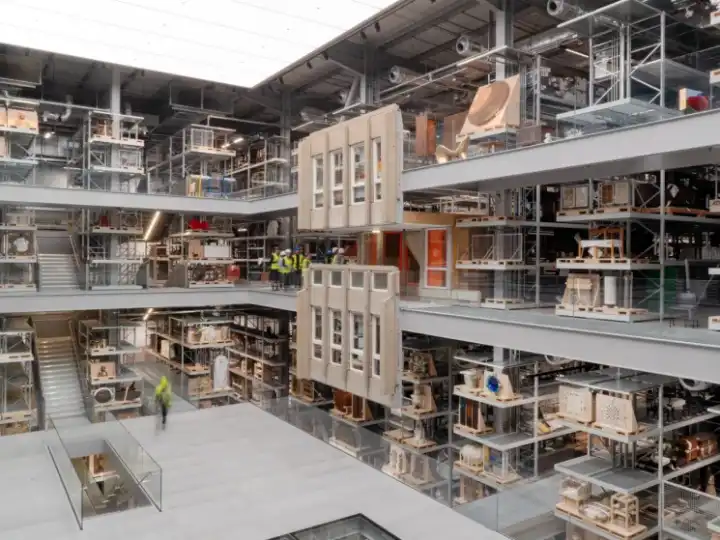
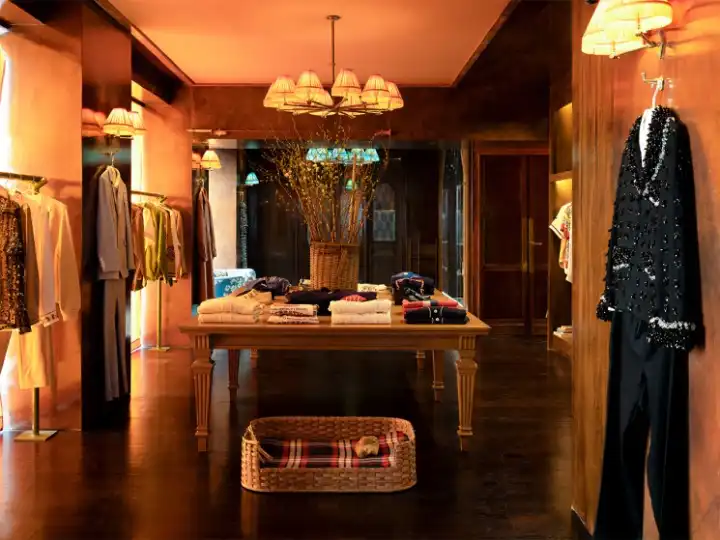
Threads of power: How global leaders’ style shapes their influence
Fashion 2026-01-10 12:24:52

Threads of power: How global leaders’ style shapes their influence

1.Pope Leo XIVHead of the Catholic ChurchLeo’s predecessor, Pope Francis, made a virtue of simplicity: think plain cream cassocks and sensible black shoes. Since his election in May, the first American pope has re-embraced the gold, ermine and velvet adornments of previous pontiffs, suggesting a more traditionalist bent. As well as anamitto(a lacy neckerchief ), he wears a white tunic known as the alb and a braided belt called a cingulum. He has also displayed more whimsical tendencies. During an audience in the Vatican in June, a honeymooning American couple presented the Chicago-born pope with a White Sox baseball cap, which he briefly wore – and blessed – before returning.2.Ibrahim TraoréPresident of Burkina FasoA military dictator has two fashion choices. The first is to ditch the fatigues and throw on a suit. The other is to go all in on the martial-tyrant shtick. Burkina Faso’s Ibrahim Traoré has chosen the latter, both sartorially and politically. Attending the inauguration of Ghana’s president, John Mahama, in January, Traoré wore not only his favourite orange-green camouflage but an ostentatious pistol in a holster too. He also appreciates a red beret. The scarlet hat has domestic resonance – it was the choice of 1980s Burkinabe leader Thomas Sankara – and it has also helped Traoré foster a global online cult proclaiming him a 21st-century Che Guevara.3.Kristrún FrostadóttirPrime minister of IcelandAn ascent to national leadership usually takes a few decades, which is why the fashion sensibilities of those in such roles tend towards the middle-aged. Kristrún Frostadóttir was 36 when she became Iceland’s prime minister in December 2024 and so is able to take the (relative) liberties associated with (relative) youth. But she generally doesn’t, instead favouring the up-market end of the high street. Election night was spent in a sequined Ralph Lauren blouse; when she was sworn in, she wore a viscose dress by Italian label MSGM. As one Icelandic columnist noted, apparently approvingly, Frostadóttir “disproves the theory that Social Democratic Party women prefer to wear loose dresses with plunging necklines”.4.Claudia SheinbaumPresident of MexicoThere are wretchedly few advantages to being a woman in politics but one is a licence to operate beyond the confinements of a suit and tie. Claudia Sheinbaum has seized upon this opportunity – and upon her country’s distinctive and admired Indigenous textiles. The visual signature of her 2024 election campaign was purple dresses, including one decorated with a spectacular floral breastplate on the day she won. When she was inaugurated last October, she wore an ivory dress with embroidered floral embroidery by Oaxacan designer Claudia Vásquez Aquino. Pairing stylish and stately isn’t easy but Mexico’s first female president has achieved it.5.Friedrich MerzChancellor of GermanyFriedrich Merz’s predecessor, Olaf Scholz, was an oddity among modern leaders for being boldly balding. Though clinging to a reasonable thatch for a man nudging 70, the incumbent cultivates a small frontal tuft to complement the wraparound. Merz is unusual in leading a government in glasses; Die Zeit newspaper believes that the chancellor sports a pair of Tom Fords bought at Rottler, an optician in his hometown of Arnsberg. They’re a daring (-ish) choice, perhaps signifying someone straining at the traditional strictures of his role. The same might be said for Merz’s selection of whimsical ties that feature turtles, flamingos or penguins.Keen for a nuanced and knowing view of the world? Our global-affairs show ‘The Foreign Desk’ features expert guests, in-depth analysis and sharp commentary.

The US design studios turning to Amish and Mennonite artisans for traditional furniture production
Design 2026-01-06 14:10:46

The US design studios turning to Amish and Mennonite artisans for traditional furniture production

Dave Smoker, an Amish furniture maker, is intensely focused on staining a grand timber table. “I have always enjoyed art,” he says, sweeping his hair from his forehead and following the grain of the wood with long, meditative strokes of his brush. Smoker started work this morning at 05.45 and will not finish until 17.00, when he and his fellow Amish craftsmen will down tools and join their families at home for supper under the glow of battery-powered lights.The Amish are an Anabaptist religious community – a Christian movement that traces its roots to the 16th century – that eschew cars in favour of traditional carts. Their homes are typically cut off from the electrical grid and they prefer to live apart from wider American society, content with farming, worshipping and dressing in the plain way that their ancestors did when they first landed on these shores from Switzerland and Germany some 300 years ago.Yet the Amish and their less orthodox brethren, the Mennonites, are also some of the US’s best carpenters. They have made their own heavy-set utilitarian wares by hand for generations. Over the past few decades, Amish-made furniture has grown into a vast sector, with family-run factories and workshops dotted across the country and a whole industry dedicated to selling and shipping this work. As the owner of one US firm put it to Monocle, “These guys just know wood.”Michaele Simmering and Johannes Pauwen of Kalon StudiosCarpenter Mr HerrThis knowledge has seen the Anabaptist’s woodworking and joinery skills increasingly sought out by contemporary design studios across the country. Among them is Los Angeles-based Kalon Studios. Its contemporary chairs and tables have a crisp, functionalist simplicity and are designed to be timeless and sturdy enough to be passed down the generations. “The Amish and Mennonites have deep expertise about how each piece is built, which other workshops don’t always have,” says Michaele Simmering, who co-founded Kalon Studios with her partner, Johannes Pauwen, in 2007. “In Los Angeles, there is a large manufacturing industry but it’s a business of one-offs,” says Pauwen. “You can’t do sustained production.”The US market for collectable and limited-edition design is booming, with new fairs and galleries opening coast to coast. Yet the middle ground – aspirational but accessibly priced furniture – is dominated by a few brands. This is partly because the US’s woodworking industry shrank during the 2000s, as manufacturing moved to Asia. Much of what remains has either been swept up by larger firms or is specialist facilities producing goods that are too costly to make in large numbers. Amish and Mennonite makers strike the balance, helping emerging studios to scale up while keeping their products made locally. “It opened up our business,” says Simmering. “Our number-one struggle was finding reliable, high-quality, consistent furniture production.”California modernism might seem a far-cry from the lives of these country folk but, in the making of furniture, common ground has been found. Getting on the books of Anabaptist factories, however, is not so easy. Kalon Studios had to go through a rigorous vetting process by community elders before the craftsmen would agree to work with them, covering everything from the liquidity of their business to their “moral compass”. Indeed, monocle’s main concern reporting this story was that we could get all the way to rural Pennsylvania only to find a deserted workshop. “They might all just go home to avoid you,” said Kalon Studios before we headed there. These pious communities try to steer clear of anything that could be considered prideful.Nevertheless, after six months of making our case, Monocle is in Pennsylvania and driving through an American pastoral of sunlit hay fields, porch swings and strawberry stands that line the side of the road. You know you’re entering Amish country because the electricity poles and billboards that feature on most US roads start to peter out. We soon pass tiny hamlets with German bakeries and Victorian houses. When we see a woman in an ankle-length dress and bonnet, watering the weedy flowers beside her post box and a teenager riding a bicycle with no gears (such mechanisms are deemed to be too hi-tech), we know that we’re in the right place.Kalon works with several workshops in the small Pennsylvanian town of Lebanon (pronounced “Lib’nan” locally) to build some of its chairs and stools. It is a real family operation, with Earl Zimmerman – grandfather to no less than 53 children – at the head of the factory we visit, which has just celebrated its 50th year in business. When Monocle visits, a ripsaw is in action on the production floor, slicing through logs that will eventually be turned into seats. Raw slabs of Pennsylvania black-cherry wood from sustainably managed forests sit at one end of the workspace.The Zimmermans are Mennonites who, unlike most Amish, own modern technology such as cnc woodcutters, have mobile phones and even run a website for the business. “But the computer is a tool and not a toy,” says Earl’s son Nate, who walks us through operations on the factory floor. He explains that such technology must be used warily and only if it makes the community’s work more efficient, therefore allowing it to continue its way of life.Old-fashioned, hands-on skills are preferable and apprenticeships are a key part of the culture. Most children start learning a trade – whether that’s farming or joinery – while still in school. Nate’s son Trevor, aged 13 and on holidays, is at his father’s side. “We say that there’s a lot more caught than taught here,” says Nate. “Skills come from watching how the work is done.”  Young Trevor has already adopted the unofficial uniform of the Mennonite carpenter: tucked-in shirt, pencils in his top pocket and a tape measure clipped to his belt.Apprenticeships are common in Mennonite and Amish workshopsArchive of past projectsFor Kalon Studios, the Zimmermans are not just fabricators but collaborators, offering suggestions of how to hone their designs for greater longevity. The brand’s Bough stool was inspired by thesashimonowoodworking tradition, which uses complex, concealed joinery to give it strength. This was developed by Kalon Studios over the course of two years. “It fits together really snugly,” says Pauwen, admiring one of the products. “There’s beauty in these joints.”The scale and capacity of these firms have been steadily growing too. Mennonite factories in the US are  now competing with European manufacturers for contracts, especially for restaurant-chain fit-outs with large orders. The Zimmermans have a second facility on the other side of Lebanon, which makes 350 chairs every week. “We have a reputation for longevity, which serves us well,” says Wendel Zimmerman, who runs the factory with his three brothers and maintains a trusted workforce of smartly dressed carpenters with exacting standards. Notable design brands now produce their work with Zimmerman, though many prefer to remain discreet about it – in part because competition for craftsmen is so high. Monocle’s recent collaboration with Collect Studio on a series of chopping boards and bowls was made here.More than 350 chairs leave the Zimmermans’ factory every weekWendel says that Zimmerman is receiving more requests from the design world but the company remains selective about who it works with, prioritising brands with repeat orders and what Wendel calls “good values”. “We will end up taking on more high-end projects in the future,” he says. “I hear from larger manufacturers that this has become a significant amount of their output.”Case in point is US heritage brand Emeco, which has been working with Mennonite factories for 15 years. Best known for its all-aluminium Navy chair, Emeco joined forces with British designer Michael Young in 2010 to create its first-ever piece of wooden furniture, which was produced at Mennonite and Amish factories in Pennsylvania. “Finding these craftsmen was so important,” says Gregg Buchbinder, Emeco’s owner. “The Navy chair is made to last for 150 years, so the question was always how we could make a wooden chair with that kind of longevity too.”  Today many of Emeco’s wooden products are machined in Mennonite workshops. “A lot of makers have exported their production overseas but having complete control and oversight of the process means that we can communicate to the market why ours is a better product.”Stress-testing is part of the furniture-making processThis is a concern for many emerging US design firms that want the way they make their products to be in keeping with the ethos of their brand. That can be in terms of sustainability (US-made products, while more expensive, don’t have to be shipped from the other side of the world) or a level of finishing. With regards to the latter, brands are at the mercy of the manufacturers that they partner with and, as a result, designs can often be watered down to fit the capabilities of a factory. Mennonite and Amish factories are helping to bridge that gap. At another family-run, Mennonite-owned workshop in Lebanon with a row of buggies lined up out front, Monocle finds Amish men in boater hats and braces working silently and diligently on a batch of dressers for Kalon Studios. “Our single strongest asset is our work ethic,” says the factory’s owner, Kevin Martin. “This is our contribution to society: our work is what we pay for the space we take up.”With Mennonite factories, Monocle is told, you pay a little more for the service but can be assured that the work will be done on time – and that you aren’t getting ripped off. A popular psalm daubed on houses and mailboxes all over Amish country sets the tone: “The Lord does abhor the deceitful.”

Black has had its day – here’s why the world’s best-dressed are turning to brown
Fashion 2026-01-15 15:31:06

Black has had its day – here’s why the world’s best-dressed are turning to brown

In the internet age, it’s usually easy to pinpoint the origin of a trend. Much was made of Rihanna’s Guo Pei “omelette gown”, worn to the 2015 Met Gala, and the effect that it had on the popularity of the colour yellow. Since then, trend cycles have quickened in tandem with download speeds, to the extent that someone declaring a particular garment the new omelette gown at breakfast might well have egg on their dress come dinner time. But among all the ephemeral mauves, brattish greens and millennial pinks, one colour has quietly come to dominate the fashion-scape. I am referring, of course, to brown. Easily suede: Oliver Spencer’s Autumn 2025 collection(Image: Oliver Spencer)Standing out: A second look from the collection(Image: Oliver Spencer)Now, like a member of parliament before a debate, I feel I must declare an interest: I am a big fan of brown. Taken out of context those seven words might alarm but one glance at my summer wardrobe should steady your pulse. For in among the tobacco cords and marron moleskins of autumn-winters past are liverish linens and khaki keks. Conversations with my colleagues – a near universally fashion-conscious bunch – reveal a similar predilection for the warm-weather brown. And when anecdotal evidence matches the runways and billboards, a trend’s afoot.  Brown’s appeal is not difficult to discern. It is, as Fiona Ingham, a colour analyst for the House of Colour (a company that helps people find which hues best suit their style and complexion), describes it, both “comforting and nurturing.” Oliver Spencer, a British menswear designer, heralds brown as “dark, rich and beautiful.” Both agree that the colour is well-suited for times when people seek a more casual approach to formalwear. “You can dress it up or down,” says Spencer. “You can buy the suit and wear the trousers on their own, while the jacket looks great with a pair of jeans.” Spencer’s eponymous label even has a “Brown Edit” page on its website. The featured pieces offer two chocolate fingers up at the old adage “no brown in town,” which was used to warn aspirant rakes against mixing brown leather shoes with a dark suit. “This [rule] still remains in the most formally dressed occupations such as law and finance,” says Ingham. “But now, men in many settings feel they can wear [brown] without recrimination.” “It also translates well in knit and cloth,” says Isabel Ettedgui, owner of Mayfair-based clothing brand Connolly, who adds that the colour “has a certain masculine energy.” Brownie points: Mocha mousse is Pantone’s Color of the Year for 2025(Image: Courtesy of Pantone)But what of the other forces driving the brown wave? Is it part of a wider 1970s throwback or are such mass-participation trends not possible in 2025? Some argue that during times of hardship and uncertainty, people cleave to colours that suit their mood. Could our fractious world help explain a newfound fondness for umber? “No,” says Oliver Spencer. “I think that the exact opposite happens – people bring out bright colours to try to lighten things up.” I suppose that there’s no definitive answer to that question, though a look at the runways would suggest that Spencer is, at least, half-right – the Paris 2025 shows saw the return of yellow and sky blue, alongside the now obligatory 50 shades of brown. One famous indicator of trending hues is colour specialist Pantone’s Color of the Year. Mocha mousse, an “evocative soft brown” that “nurtures with its suggestion of the delectable quality of cacao, chocolate and coffee” was the company’s choice for 2025. Sitting pretty: Simple yet versatile(Image:Will Waterworth/Connolly)Whether or not you subscribe to such views, it’s difficult to deny the prescience and influence of Pantone’s annual award. As well as its very effective PR stunt, the US company produces a book called thePantone View Colour Plannerthat contains the pigment and textile standards of 64 zeitgeisty colours in nine distinct palettes. The annual publication, which costs around €800, is said to be a must-have for any budding – or well bloomed – clothier, couturier or modiste. But in the age of Instagram and Pinterest, can there still be top-down progenitors of chromatic trends? Are we still living in a world in which Miranda Priestly, Meryl Streep’s character fromThe Devil Wears Prada, could so haughtily deliver her “cerulean blue” monologue? “I don’t think so,” says Monocle’s fashion director, Natalie Theodosi. “The runway plays a role but trends now move much faster and are determined by social media, music, films, even current affairs. In some ways it has become the reverse, brands and media follow online trends.” Perhaps therein lies the appeal of brown: it is a fundamentally adaptable colour – both neutral and statement, workaday and fashionable, of its time and timeless – making it perfect for our lives in the permanent now.Want more stories like these in your inbox?Sign up to Monocle’s email newsletters to stay on top of news and opinion, plus the latest from the magazine, radio, film and shop.Your EmailSubscribe

Interview: Philippe Delhotal, the creative director of Hermès Horloger
Fashion 2025-12-28 08:30:04

Interview: Philippe Delhotal, the creative director of Hermès Horloger

When Philippe Delhotal joined Hermès as its creative director of watches in 2008, he was tasked with establishing the French luxury house in horology – a highly competitive field dominated by Swiss specialists with centuries of watchmaking experience. Earning respect in the sector isn’t easy, even for a powerful luxury player such as Hermès. But Delhotal, who usually wears a T-shirt, loosely tailored trousers and brightly hued Hermès silk scarves (a far cry from the formal suiting that seems to be the watch trade’s uniform), approached the task with an open mind and a sense of humour.Philippe DelhotalRather than adhering to the industry’s playbook, Delhotal began rewriting the rules and asking questions about the concept of time. “If you can’t differentiate yourself, you can’t exist,” he says. So he introduced Le temps suspendu (French for “suspended time”), an award-winning complication that allows the watch to be stopped with the single press of a pusher.The innovative idea brought the house the acclaim that it had sought among the watchmaking community. It also created new opportunities to tell stories about the ultimate luxury that is time, riffing on themes such as the importance of having moments to yourself and being able to enjoy the present. This year the house has reintroduced its Le temps suspendu complication in refreshed versions, featuring an openworked dial and available in deep-blue, red or brown colourways.The summer months are a time of sunny getaways and seeking a slower pace of life, and Delhotal seems to capture the spirit of the season with his optimism and relaxed demeanour. He has often turned to nature for inspiration. Some of his sportier, more casual designs, such as the Hermès H08, are fitted with an array of yellow and blue straps, which look particularly good on the beach. The Hermès Cut, another recent hit featuring a round, satin-brushed case and sharp angles, was introduced last year on the Greek island of Tinos. Alongside marble artisan Giorgos Palmaris, who works in an open-air workshop in the village of Pyrgos on the island, Delhotal spoke about drawing inspiration from the ways in which materials such as marble and steel are shaped.The creative director of watches has made Hermès well-known for artistic, one-of-a-kind pieces featuring hand-painted dials and the same kind of intricate drawings that you’ll find on the house’s silk scarves. Now he is also experimenting with jewellery watches, rethinking what a watch should look like and how it should be worn. His latest design, Maillon Libre, can be clipped on a sleeve, pinned on a lapel or strung on a leather cord and worn as a necklace. Here, Delhotal tells Monocle about breaking design rules and viewing timekeeping through a new lens.Statue atop the Hermès shop at 24 Rue du Faubourg Saint-HonoréHow did you approach the challenge of establishing Hermès as a serious player in watchmaking?It wasn’t easy because from early on we were up against intense competition and a lot of important watchmakers. When it comes to mechanical movements, the big challenge is creating something different. We aren’t a watch brand – we’re a house that specialises in 16 different métiers – so we needed to have a movement that would prove to the horology community that Hermès was capable of entering this territory legitimately. In other words, we needed to chart our own path and come up with a compelling story. I quickly realised that this story should revolve around the concept of time. I wanted to talk about it in a different way than the rest of the industry and be a little unconventional. So we began discussing time that runs, stops and speeds up, as well as precious moments. Then we decided to explore the notion of stopping time and created a new complication based around this idea. We presented it in 2011 at Le Grand Prix d’Horlogerie de Genève and won. It was both a joy and a surprise. It allowed us to talk about Hermès as a maison that was daring to be different, to offer something that you wouldn’t find anywhere else. That’s our mission.Why do you think the concept of suspending time has proven to be so compelling?Horologists have always been making complications that are extremely precise in terms of telling the time but what we did is turn the concept on its head. When you stop time, it’s a moment of privilege that you can dedicate either to yourself or to others. Imagine a meeting in which you can talk without worrying about how much longer you have left or being in a space where nothing else exists aside from the present moment.Le temps suspendu put the house on the watchmaking map more than 10 years ago. Why did you choose to return to it this year?It has been three years since we activated the relaunch of the concept. But three years ago we weren’t in the situation that we’re in today, facing huge uncertainties both politically and economically. We all feel the need to escape, to talk about something else and take advantage of the present moment because the future seems so precarious.Is that also why you’re doubling down on humour with this year’s limited-edition art watches?Yes. We presented a watch that depicts a horse whose tongue sticks out because it’s funny. Watchmaking is a craft that is very serious. I have worked for many traditional watchmakers and that’s how they tend to be. At Hermès, it’s not that we’renotserious but we are different. We do things with lightness and people enjoy it. These days we need that, as well as a sense of fantasy that encourages us to stop and take a breath.Do you draw inspiration from other departments of the house?I’m always inspired by the silks, which are a canvas for so many types of drawing and colour experimentation. I find leather interesting too, especially when I’m researching colour. There’s a certain exchange between us and it’s interesting to see the collaboration between the silk, leather-goods and accessories departments. We share experiences because we are ultimately one house and all of our creations need to have stylistic coherence. The Métiers d’Art range of artistic, hand-painted dials is a signature because it reflects the drawings of our silk scarves. There’s so much richness and history in these drawings and every square also encourages us to speak about our heritage and play with colour.A selection of Hermès’ signature designs for men and womenAs well as unique Métiers d’Art watches, you have also introduced more casual, sporty designs, such as the Hermès H08. Why is it important for you to have such a wide repertoire?There are people who only wear one watch but others prefer to adjust to different situations. I would wear the Hermès H08 on the weekend because it’s more casual, while the Arceau is a watch that you can wear throughout the week. Every design has its own community. We have customers who are extroverted and fashion-forward and others who are a little more discreet. The diversity of our customer base is what makes it so interesting. Different times of the year also call for different watches. Sometimes people lean towards watches that are more elegant and jewellery-inspired, while at others they prefer something more sporty. We need to take advantage of this with a sufficient offer that caters to various types of people and occasions. If you only focus on one category, things become more complicated.Your new designs, including the Hermès Cut and the Hermès H08, have been very well received by collectors. Do you see them becoming future icons?The making of an icon happens naturally. You can’t control it. In perfumery, for example, there are certain scents that are iconic – Chanel No 5, Mugler’s Angel and so forth. But when they were being created, no one could have imagined that they would achieve this status. Even if you try to design an icon, it won’t necessarily become one – only time can tell. I simply design a watch and it’s either welcomed by the community or not. Sometimes it might not be the right time; at others, everything just aligns, from the trends of the moment to people’s interests. I hope that all of our watches will become icons but for the moment they’re not. We need to wait and see. It’s just like in the film and music industries: when an actress or a singer makes a great movie or song, people are quick to call her a star but in reality she’s not. A star is someone with a 30- or 40-year career.You have been experimenting with making jewellery watches, including the brooch watch, which nods to the house’s anchor chain motif and also challenges a lot of watchmaking conventions. Was that your intention?We had this idea of offering a new watch and a new way of wearing it. The anchor chain motif has existed for a century on our bags, on our belts and on our pocket watches – so why not tell a new story with watches and break some rules? That’s what makes you original. There’s nothing more boring than things that look identical. There are so many parallels in other industries as well: just look at cars or even clothing.Having now firmly established the house in the world of Swiss watchmaking, what’s next?We want to be more creative and audacious. Once you have built a solid foundation, you need to continue doing better. Every year we try to build on what we already have, just like in life. In this industry, you always need to be proving yourself and your ability to make things well.

Interview: Sou Fujimoto on restoring balance with nature
Design 2025-12-28 20:56:05

Interview: Sou Fujimoto on restoring balance with nature

“These are sketchbooks from the very beginning of my architecture-school days,” says Sou Fujimoto. “Each is numbered: year, date, book number.” The Japanese architect picks up a yellow one and starts looking through it. It’s dated 13 January 1993 – his third year as a student. “Of course, I still have a sketchbook but lately I’ve been doing digital sketches on an iPad because I can share them more easily with my team.”He could be forgiven for sacrificing the beauty of a hand-drawn sketch for convenience. After all, he’s been busy: he master-planned the Expo 2025 site in Osaka, which opened to the world in April, and is now preparing for his first major retrospective, to be held at Tokyo’s Mori Art Museum from July to November.Ahead of this showcase, which covers more than three decades, Monocle meets Fujimoto at his studio in Tokyo’s Koto City. He has de-archived every sketchbook and model from his career, laying them out on the studio floor. “We’re not just showing old models,” he says. “We are making new ones too. People will see that the thinking and the process are ongoing.”It’s a process that started at the University of Tokyo. “I wanted to study physics but I couldn’t understand anything,” says Fujimoto, laughing. “I finally chose architecture. The only architect I knew at that time was Antoni Gaudí. Then my classes introduced me to Le Corbusier and Mies van der Rohe.” On learning about these modernist masters, Fujimoto became hooked. “They not only created new shapes and spaces but also lifestyles. That was fascinating to me.” While the architect’s output looks very different to that of his early idols, there are parallels. Like Le Corbusier, Fujimoto believes that architecture should be in harmony with the natural world.“Early in my career I realised that I was creating boundaries between inside and out,” he says. “But I thought that they should disappear. And I am not just talking about physical architecture; I also mean social and philosophical boundaries. As an architect, the question for me is: how do we create beautiful relationships between human life and society, and the surrounding nature?”Some clues might lie in Fujimoto’s projects, such as House N (2008) – a home in Oita, Japan, that features layers of walls and windows that provide both privacy from neighbours and views to nature – or his 2013 Serpentine Pavilion in London, in which a semi transparent grid of white steel tubes offered views across the site in Hyde Park. Many of his other projects reference organic structures, such as birds’ nests, caves and forests. Despite the accolades that he has received for his approach, Fujimoto doesn’t think that his work is particularly groundbreaking. “In the past, our lives were closer to nature but we created boundaries to resist it in the hope of a more comfortable life within an artificial environment,” he says. “But over the past 150 years, we have found that it’s strange to be isolated from the wonder of nature.” So how can architects redress the balance? “By digging deeper and understanding locality in terms of nature and materials,” he says. “In doing so, we will find something unique, allowing the merging of boundaries and connecting people’s lives with the surrounding nature – and people with each other.”The CV1971:Born in Hokkaido, Japan.1994:Graduates from the University of Tokyo with a degree in architecture.2000:Establishes Sou Fujimoto Architects in Tokyo.2006:Wins gold in the house competition by the Tokyo Society of Architects&Building Engineers.2008:Wins the Japanese Institute of Architecture grand prize.2010:Completes Musashino Art University Museum&Library in Tokyo.2013:Creates the Serpentine Gallery Pavilion in London.2018:Builds L’Arbre Blanc, a village-like housing development inspired by trees in Montpellier, France.2020:Completes Forest of Music in Budapest, a museum in the Hungarian capital’s most famous park.2025:Master-plans Expo 2025 in Osaka, Japan.

Design agenda: A Shigeru Ban monograph, Buenos Aires’s colourful regeneration and more
Design 2026-01-08 19:25:11

Design agenda: A Shigeru Ban monograph, Buenos Aires’s colourful regeneration and more

Shigeru Ban: Complete Works 1985 – Today(published by Taschen) celebrates the work of one of Japan’s best-known contemporary architects. Ban studied in the US in the 1970s and 1980s, where he was influenced by American modernism. His first large-scale international work was the Centre Pompidou-Metz in northeast France, which opened in 2010 and was modelled on a Chinese bamboo-woven hat; others, such as the timber-clad Swatch/Omega Campus in Switzerland, soon followed. Remarkable is Ban’s ingenious exploration of materials, such as the use of rigid paper tubes as structural elements. He has employed them in the creation of emergency structures in times of ecological or manmade crises, from Fukushima to Ukraine. “Designing temporary housing for disaster relief has become as integral and meaningful to my work as creating museums or high-end residential projects,” says the architect, whose work was recognised with a Pritzker Prize in 2014. This hefty tome is appropriately sized for such an important living architect.taschen.comArchitecture: ParisQ&APast and presentPierre-Yves RochonArchitectFor more than 45 years, French designer Pierre-Yves Rochon has been bringing timeless elegance to the interiors of clients such as Waldorf Astoria and chef Alain Ducasse. At this year’s Salone del Mobile furniture fair in Milan, he is presenting “Villa Héritage”, an installation distilling his decades of experience and taste-making.How do you approach heritage in your designs?I try not to be influenced by trends, which are just moments when the majority thinks the same thing. But heritage is different. It’s not nostalgia. It allows you to choose influences that speak to your sensibility.Can you tell us about your installation, ‘Villa Héritage’?The idea is to show just how well different periods of Italian architecture and interior design, as represented by a selection of Salone’s exhibitors, can exist together. We combined their most beautiful creations with the goal of creating an experience in which light, texture and sound come together to create emotion.What do you hope visitors will take away from it?I hope that people will reflect on the idea of transmission, of how the past informs the present and allows us to imagine the future.For more news on Salone del Mobile, pick up a copy of Monocle’s dedicated newspaper, ‘Salone del Mobile Special’, available to purchase at The Monocle Shop or to read online here.Furniture: ParisRoom serviceInterior designers frequently design bespoke wares for clients but it’s rare that such pieces are put into industrial production. Thankfully, one of France’s most celebrated designers, Pierre Yovanovitch – whose work spans furniture, lighting and interiors – bucks the trend. Visitors to his Paris gallery are able to peruse his 2025 collection, with highlights including the Eze Chair, which has tapered legs and an earthy rattan seat; and the Daniel Armchair, with rounded arms that resemble gently worn river stones. To give visitors a sense of how the works might fit into their own home, the gallery-like space – a former fashion atelier, redesigned by architect Jean Nouvel – is filled with a selection of contemporary art lit by an overhead atrium.pierreyovanovitch.comUrbanism: Buenos AiresDistrict ChampionsPlayón de Chacarita, a neighbourhood in Buenos Aires, has been given a facelift at the behest and under the direction of its residents. Argentinian design firm Región Austral worked with the community to identify quick urbanism fixes as part of an initiative named Playón Red. “Urban design must always respond to the needs and aspirations of residents,” says Soledad Patiño, co-founder of Región Austral. “They hold invaluable knowledge about their territory, providing insights that external professionals could never fully grasp.” In Playón de Chacarita, those insights included a need for security, space for sports and cultural activities, and the addressing of environmental and sustainability concerns. To respond to this, the studio identified appropriate sites to create a passage-like courtyard between homes, a pocket park that doubles as a rain garden to offset flooding, and a sports court splashed with colour. According to fellow Región Austral co-founder Stefano Romagnoli, sometimes the simplest fixes are the ones to turn to. “In many of our projects, we have used vibrant hues to reinforce local identity and create visual landmarks,” says Romagnoli. “Colour goes beyond aesthetics; it fosters a sense of belonging.”regionaustral.com

Why can’t young people dance?
Culture 2025-12-23 09:31:11

Why can’t young people dance?

For years the media was obsessed with all the things that the millennial generation was supposedly killing, from fabric softener and home ownership to mayonnaise. But now their successors, Gen Z (those born between 1997 and 2012), have been handed an even graver charge: being unable to dance. In a series of videos that went viral on social media in April, incredulous observers filmed groups of young people standing completely still or glued to their screens on the dance floors of nightclubs. How is it that the so-called Tiktok generation – named for an app that owes much of its success to carefully choreographed dance challenges – is incapable of losing itself to the music?(Image: Alamy)Well, for one, outside of North Korea or a Texas rodeo, dance floors are not made for regimented routines.They’re a place to escape the lines of life, anonymous amid a mass of bodies and beats. This abandon is much more difficult if you’re under constant surveillance, of course. When you grow up under the all-seeing eye of social media, you develop a fear of being filmed doing something stupid. We used to dance like no one was watching; now we dance like everyone is. In Europe clubs are increasingly insisting on placing stickers over phone cameras so that nobody has to worry about ending up a laughing stock the next day.Then there’s the fact that clubbing is facing an existential crisis, in part fuelled by the younger generation’s general apathy towards nightlife. In the UK alone, some 400 night clubs have closed over the past five years, about a third of the country’s total. We can blame the pandemic for a chunk of that (and we can blame consequent lockdowns for the younger generation missing out on early clubbing experiences) but there are other factors at play. A major one is that young people can’t afford to go out like they used to: Danish nightlife conglomerate Rekom Group’s research suggests that over 77 per cent of British people have cut down on late nights out due to the cost-of-living crisis. Given that they came of age during successive lockdowns and were thrust into a world in which they can’t afford to go out, how can we expect Gen Z to know what to do in a club once they get there? Many, it seems, can’t even rely on the social lubricant that is alcohol. A recent survey of 18 to 24-year-olds by market-reserach firm Yougov highlighted this cohort as the most sober group among adults, with 39 per cent of respondents not drinking any alcohol at all. And when they are drinking, Gen Z are increasingly drawn to strange concoctions, such as Malibu and milk. I can’t imagine a worse time to throw your body around than after a big swig of any combination of milk and liquor. As for the other kind of white stuff, some reports claim that Gen Z are less likely to consume class A drugs than previous generations. Though some say otherwise, with anecdotal reports suggesting that younger people favour drugs such as hallucinogens and ketamine, both of which aren’t generally associated with the desire to dance. Ultimately, social media will never tell us the full story. “Every new generation has a subtly different relationship with club culture compared to those who came before them,” Ed Gillett, author of Party Lines: Dance Music and the Making of Modern Britain, tells Monocle. “There have always been boring, sterile clubs full of disinterested people and rubbish dancers.” That said, the current generation of aspiring party people does face a number of obstacles to throwing their hands in the air like they just don’t care. And if the dance floor can so easily be murdered, what chance does mayonnaise have?

Cultural roundup: Mubi moves into book publishing, a petrol station turned gallery in Germany and a Q&A with Martin Bourboulon
Culture 2026-01-07 22:44:53

Cultural roundup: Mubi moves into book publishing, a petrol station turned gallery in Germany and a Q&A with Martin Bourboulon

Music: SingaporeLoud and proudSingaporean DJ and entrepreneur Kavan Spruyt found his calling in Berlin. While working for Ostgut Booking, the agency that secures resident artists for the city’s legendary nightclub Berghain, he noticed a lack of diversity in the global electronic-music scene. “There were barely any people of colour on the festival bills,” he tells Monocle.Spruyt decided to step up as an advocate for Southeast Asia’s electro musicians and opened Rasa in Singapore’s city centre. The 6,000 sq ft space comprises a dance floor, a lounge and a cocktail bar. “I saw the need for a brand that syncs with our identity and represents Southeast Asia to the rest of the world,” says Spruyt. To create a venue that’s worthy of his ambitions, he brought in Berlin-based architecture firm Studio Karhard – Berghain’s masterminds – to design the space. The top-notch fit-out includes Kvadrat acoustic curtains and speakers from TPI Sound that are hand-assembled in the UK.Two years in the making, Rasa finally opened its doors earlier this year. The stage has been set for Southeast Asian acts to showcase their region’s ever-evolving sound. Artists are increasingly putting cultural inflections into their music, from Thai percussion instruments in producer Sunju Hargun’s tracks to the tropical tinkles in the Midnight Runners’ Indonesian disco. “We know all the rules of the trade and have since learnt how to break them,” says Spruyt.rasaspace.comMedia: NorwayIn safe handsTrine Eilertsenon how Norway’s media has retained the public’s trust.Across much of the Western world, confidence in editorial media is declining – but not in the Nordics. In terms of trust, Norway’s media is among the highest-ranked worldwide; at the height of the coronavirus pandemic, when it fell elsewhere, we saw a significant rise. We’re a small society with low inequality, making our country a good breeding ground for this kind of trust. But are there lessons from Norway that could help other nations to increase positive attitudes to their own media?Politicians here view local media as a useful arena for disseminating information and increasing voter engagement. This understanding of its value ensures that public money – about the salary of one journalist per paper every year – is given to local media in areas too small to be able to support a full newsroom. As in other countries, the consolidation of individual brands into larger groups has saved many Norwegian news outlets. While consolidation might threaten the freedom of a newsroom elsewhere, the editor in chief’s independence is stated in Norwegian law. Decisions about content lie with the editor and the editor alone. Authorities, owners or other forces can’t influence what we publish.We were also early adopters of digital technology. This has enabled us to develop a more direct relationship with our audience. Our readers tend to come straight to our website, rather than through social media, which makes us less affected by platforms’ algorithms. Meanwhile, paid online subscriptions are popular; indeed, Norway’s audience has the world’s highest propensity to pay for news.All serious Norwegian editors abide by the national press’s code of conduct and anyone can make a complaint to the ethics commission. The members of the latter are other editors and ordinary people who discuss whether the code has been broken. If it has, editors are obliged to publish a correction. Like every media outlet, we still have to fight for our audience but these are some of the reasons why, when readers come to us, they can rely on what we say.Eilertsen is the editor in chief of ‘Aftenposten’, Norway’s leading printed newspaper interms of circulation.Publishing: UKPicture perfectFresh from a banner year in which Coralie Fargeat’s satireThe Substancetook the world by storm, London-based streaming platform, production company and film distributor Mubi is launching its latest venture: a publishing arm focusing on books about cinema and the visual arts.Mubi Editions’ first release,Read Frame Type Film, is a collaboration between film curator Enrico Camporesi, graphic-design historian Catherine de Smet and designer Philippe Millot. Drawing from a research project initiated at the Centre Pompidou in Paris, it explores the affinity between film and typography. “We are challenging ourselves to do something different and surprising for the audience,” says Daniel Kasman, Mubi’s vice-president of editorial content. “That means looking for the unexpected, for what is unusual and delightful. It’s hard to do but the surprise is the goal.”‘Read Frame Type Film’ is published on 22 May.Television: FranceQ&AFeast for the eyesMartin Bourboulon, directorMarie-Antoine Carême was arguably the world’s first celebrity chef: in the 19th century he served European royalty and some of the leading politicians of his era.Carême, a new drama on Apple TV1, brings his story to life. Its director, Martin Bourboulon, tells us about putting pâtisserie front and centre, and showing off Paris’s beauty.Why is Marie-Antoine Carême a good subject for a TV drama?I wanted to bring a modern vision to his story but was also excited to work on a show with a range of different themes: politics, food and sex. Carême is a chef but also a spy. It’s a French show for a global audience.How did you approach directing the kitchen scenes?You have to find a good rhythm between the plot and those precious moments in the kitchen. When we were showing Carême making the dishes, we took our time with a lot of close-ups.Paris is almost a character in the show. How crucial was it to immerse viewers in the city?It was important for us to show Paris, especially with wide shots, because it’s so recognisable to an international audience. But it was difficult because it’s 2025 and our story took place two centuries ago. In some of the beautiful wide shots, if the camera had turned a little to the left, the vision of an old Paris would have been spoiled.Art: GermanyLife’s a gasJust a stone’s throw from the Swiss Galerie Judin, which moved from Zürich to Berlin’s Potsdamer Strasse in 2008, is its striking new collaboration with the US-founded Pace Gallery. “It’s an urban oasis,” says Pay Matthis Karstens, co-owner of Galerie Judin.The exhibition space, café and bookshop is based in a converted 1950s petrol station in the buzzy Schöneberg district. Buildings of this kind were once a common sight across Berlin but many have fallen into disuse and disrepair. Indeed, the site that was chosen for this project was abandoned in 1986 but was renovated 20 years later; it served as an architect’s home and then a museum until late last year. Now, Pace Gallery and Galerie Judin are its proud custodians and the floor-to-ceiling windows that once looked out at fuel pumps and bmw Isettas instead frame a peaceful courtyard.“It has a certain meditative feeling,” says Karstens. “You have the sounds of chirping birds and the trickle of water. It’s not that the city totally disappears but it creates moments of calm.”The garden is framed by tall stalks of bamboo and a water feature putters in the centre. Inside the old filling station that used to sell petrol and cigarettes, Pace and Judin will take turns organising exhibitions. The mélange of businesses at this new spot encourages Berliners to slow down and take time to absorb the art – to sit, ponder and discuss what they have seen. It’s much more rewarding than just getting your fill and zooming off.The exhibition space opened to the public in May. For more details about what’s on, visit: pacegallery.com and galeriejudin.comMusic: New ZealandChaos theoryOn his new album,Te Whare Tiwekaweka, Marlon Williams sings in a language that he can’t quite speak. “In 2019 I had a melody floating around my head that I couldn’t shake,” he tells Monocle. “It suddenly became clear that it was a Maori melody – like the songs from my childhood.”Williams’ parents are from two Maori tribes. Though the musician went to a Maori language school at the age of five, he later stopped using the language. “My language skills are limited,” he says. “But I muddled my way through, adding lyrics, and the song was so pleasant to sing that it gave me the gumption to commit a whole record to the Maori language.”The project was inspired by Williams’ emotional homecoming after touring his 2022 album,My Boy. “When I came home I saw a charcoal drawing at my mother’s house depictinga tall, slender man in a top hat returning to a villa at night,” he says. “This man is approaching a ladder and carrying a suitcase full of money – British sterling. I identified strongly with the image of this rakish man coming home, returning with a bag of foreign currency. I asked my mother about the drawing and she said, ‘I was pregnant with you when I drew this.’ It immediately became a central part of the record.” The image is now the cover art forTeWhare Tiwekaweka. The album’s title comes from a Maori proverb that roughly translates as “messy house”. “I’m a bit of a messy person on the most fundamental level,” says Williams. “For me, it really speaks to the seed of creation and how new things come out of chaos. Nothing interesting ever comes out of something clean.”‘Te Whare Tiwekaweka’ is out now. 
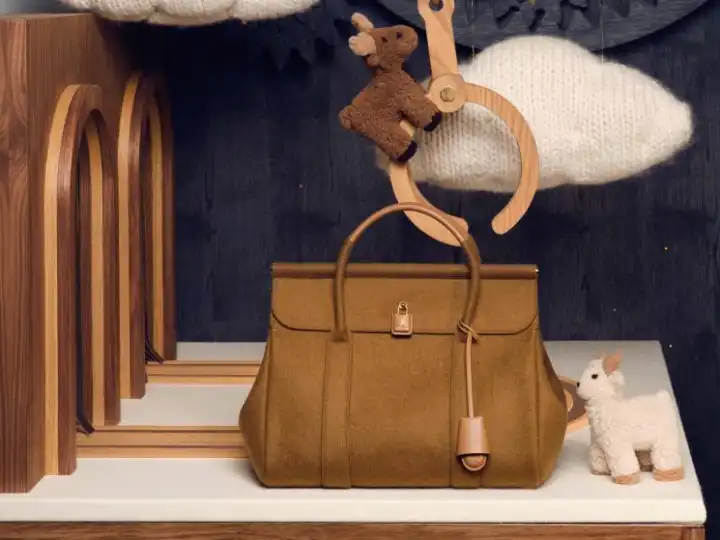
Five of the world’s most peaceful buildings, where architecture soothes the soul
Design 2025-12-20 11:21:08

Five of the world’s most peaceful buildings, where architecture soothes the soul

For millennia people have sought out places to visit where they can get away from the bustle of everyday life. Architecture has the ability to create moments of calm – think of how you feel when you stop at the threshold of an awe-inspiring hall, pause for a moment of contemplation in a city cathedral or clamber into a sauna in the middle of a Scandinavian winter. The fast pace of modern life means that there’s a greater need for such places than ever. That’s why Monocle has journeyed across the globe to bring you this selection of outstanding buildings that offer somewhere for our thoughts to drift – and give us space to breathe.1.A place of meditationKohtei art pavilionFukuyama, JapanNothing quite prepares the first-time viewer for the sight of Kohtei. Set in lush green hills to the west of the Japanese city of Fukuyama, the Buddhist meditation pavilion has a mysterious air, appearing to hover above a sea of stones. That was exactly the intention of Kohei Nawa, the contemporary artist who created the design. “Kohtei was designed to resemble a ship floating in the mountains,” says Nawa, who worked on the pavilion with architects Yoshitaka Lee and Yuichi Kodai as part of an art collective, Sandwich. The maritime echoes were no accident. The 1960s Zen temple of Shinshoji, in whose grounds Kohtei was completed in 2016, was founded by the president of Tsuneishi, a shipbuilding company based nearby. But the subject also offered a gracefulness to the project. Drafting in craftsmen from the area, Nawa and the two architects had 590,000 pieces of Sawara cypress layered on top of each other using a traditional roofing technique calledkokera-buki. In spite of the building’s size, stretching to some 45 metres in length, the delicate wooden shingles give the hull-like structure a sense of lightness.Then there is the sensation of entering the pavilion: plunging into total darkness is an immediate shock to the visitor’s system. “The idea was to create a meditative experience by interpreting Zen through contemporary art,” says Nawa. “The interior expresses an ‘ocean of consciousness’ through installations of water and light. In the darkness, faint light and rippling waves flicker, allowing visitors to engage in a quiet sensory experience that sharpens their senses.” The duration of the installation is set to 25 minutes, the same length of time it takes for a meditation candle used in Zen practice to burn out. Visitors emerge discombobulated by what is an unexpectedly profound experience. Without trying, they have touched on the simplicity and impermanence that is at the heart of Zen. “This work emerges as a space where the external and the internal; the hard and the soft; and architecture and art resonate with each other in harmony,” says Nawa.While the surrounding Shinshoji temple and gardens open a door to Zen, Kohtei is perhaps the most effective route into the Buddhist meditation practice. And there is much it can offer in the modern world, not least a way to switch off from our busy, overstimulated lives.szmg.jp2.A place to respect the deadSexto Pantéon Buenos Aires, ArgentinaHidden in the underbelly of the vast, flat plain of the Chacarita neighbourhood cemetery in Buenos Aires, the subterranean Sexto Pantéon (Sixth Pantheon) is a quiet, contemplative place of burial. Designed by Ítala Fulvia Villa, one of Argentina’s first active female architects and a keen urbanist who helped to shape the capital, its structure is a radical departure from traditional expectations of funerary architecture.On the surface of the cemetery’s 95-hectare plot (which makes it one of the largest in the world) there is little indication of what lies beneath. Since construction was completed in 1958, it has been largely overlooked by those seeking an architectural pilgrimage due to the lack of visible structure. But those who do visit find themselves at first surrounded by angular lawns and an expanse of sky. Occasional monolithic concrete structures stem upwards, resembling familiar mausoleums. “When you approach the central stairway, however, a new curiosity is immediately fired up,” says Léa Namer, author of 2024’sChacarita Moderna– the first major written work to highlight the necropolis and chronicle Villa’s story. “From above, you begin to see strange elements that entice you to make the descent. You see the darkness, the shadows. You spot the full-sized trees growing underground.”Passing down into the necropolis via its labyrinthine stairway is a sensory experience. “You enter an intermediary world,” says Namer. “It’s suddenly cold. The light changes. All sound falls away.” With those shifts come bigger existential realisations: the scale of the resting place, home to more than 150,000 bodies, must be confronted. “The architect achieved something remarkable. Through her designs, spatial planning and choices of material, Villa makes the visitor ask themselves some really, really big questions.”Time spent under the earth is dedicated to silence, paying respects or gaining perspective. But what follows is what the Ancient Greeks calledanabasis– the return to the land of the living. In myth, this is an important act; one that distinguishes the person who has a choice to leave from those who are forced to stay. Visitors returning to the surface from Villa’s Sixth Pantheon might even bring back a greater appreciation for life itself.chacaritamoderna.com3.A place to switch off the city noiseLöyly saunaHelsinki, FinlandAccording to the latest UN World Happiness Report, published in March, the Finns are the happiest nation on Earth. Perhaps this has something to do with the country’s three-million-plus saunas. Not only do the heated rooms provide a space to cleanse and purge, but they also present the chance for a moment of solitude and reflection. The sensation of stepping away from the stresses of daily life isn’t confined to the countryside either, as evidenced by urban saunas such as Löyly, near the harbour in Helsinki’s Hernesaari neighbourhood. “When we set about creating Löyly, the goal was to offer residents a place to check out of the hectic pace of life,” its co-founder Jasper Pääkkönen tells monocle. “We are inundated in modern society and our phones are constantly buzzing. But once you’re in the sauna, it’s just you for an hour or two.” Opened in 2016,  Löyly’s design plays a key role in setting up the sauna as a sanctuary. Shielded from the outside world by a pinewood shell, the rooms are kept dim, even in summer. Like the best saunas, it feels spartan, with the focus centred on the heat –löylyis a Finnish word describing hot steam evaporating from sauna stones. The mysterious ambience is accentuated by the use of wood within.What might surprise some is that this space for solitary reflection has become one of Helsinki’s most popular attractions. As Pääkkönen points out, there’s something  refreshingly down-to-earth about spaces where people are stripped of clothes and accessories, as well as wealth and status. “There are no distractions in the sauna,” says Pääkkönen. Instead, the world outside fades and time passes at a different speed. “I can’t think of a setting better suited to contemplation,” he says.loylyhelsinki.fi4.A place for creative reflectionKimbell Art Museum Fort Worth, USAThe Kimbell Art Museum in Fort Worth, Texas, is the kind of place you could visit for the building alone. Though the collection is highly impressive, with some 375 works by artists including Claude Monet and Michelangelo, the Louis Kahn-designed building is the real masterpiece. Opened in 1972, it was the last project that the Estonian-born American architect completed before he died. According to museum director Eric Lee, it was also Kahn’s personal favourite. With concrete vaults bathed in the bright Texas sun, walls clad in travertine (the same as used in the Getty Museum) and elements of cork and white oak, it invites tranquillity. “It is a place of serenity,” says Lee. The feeling of calm washes over visitors from the moment they set foot on the 3.9-hectare property, which is dotted with tall elm and yaupon holly trees. “It starts outdoors on the grounds,” says Lee, identifying the gentle bubbling sound of water from the fountain as a source of peacefulness. Deeper within the building, the Texas light becomes more subdued. “It’s a blend of natural and artificial light, so both cold and warm,” says Lee. “It’s very inward looking.” Some might consider the concrete vaults to be brutalist in design but Lee says that this is not the case. “It was built at a time when brutalist architecture was the dominant mode but this is not a brutalist building,” he says, adding that Kahn’s prerogative was to make it welcoming. “It is human scale.”The structure has a modernist feel but it also strikes a balance between contemporary and classic styles. “Kahn was very much inspired by ancient architecture,” says Lee. Inside, the cool space calls for a natural hush. “I never hear people raising their voices,” he says. “You speak in a whisper because it feels like a holy space, in the non-religious sense. It’s very spiritual.” More than that, it invites visitors to slow down and immerse themselves in an entirely different world for a couple of hours. “It offers an opportunity for people to take a break from ordinary life,” says Lee. “It’s magical.”kimbellart.org5.A place to reflectChapelle du Rosaire à VenceVence, FranceFrench artist Henri Matisse designed the Chapelle du Rosaire à Vence in 1951 but its merit is more than purely ecclesiastical. Indeed, its atheist creator, who had limited experience working with religious art, became disillusioned by divinity after cancer confined him to a wheelchair. This sanctuary in Vence was actually a token of gratitude for Monique Bourgeois, the night nurse who dedicated herself to overseeing his convalescence before becoming a Dominican nun in a convent that lacked a chapel. It was an opportunity that the French artist found himself impossible to turn down despite the limitations of his health. “Matisse had carte blanche within the constraints of such a place of worship,” Gaëlle Teste de Sagey, manager of Matisse’s chapel, tells monocle. Fatigued and unwell, he was forced to work slowly and the project took four long years to complete. But the result is a remarkable alliance between faith and artistic endeavour.Regarded as Matisse’s architecturalchef-d’oeuvre, it was the first time that the artist had created a monument in its totality. “Matisse saw the relationship between the objects as little worlds that fit together,” says Teste de Sagey. From the altar and crucifix to the ceramic murals featuring the figures of the Madonna and Saint Dominique, as well as the colourful vestments of priests, Matisse dedicated his final years to this deeply personal and reflective work. Under the guidance of French architect Auguste Perret,  a master of reinforced concrete, Matisse designed the L-shaped chapel’s two narrow naves in modest proportions due to the steep terrain on which the chapel is perched. Just 15 metres long by six metres wide, the glory is in its artistic value rather than its size.But this doesn’t detract from the chapel’s grandeur. “Matisse made every effort to give an impression of elevation,” says Teste de Sagey. Opting for a pared-back colour palette for the chapel’s 15 stained-glass windows, Matisse used blue inspired by the surrounding Côte d’Azur, yellow for sunlight – a divine glow that reaches every corner of the chapel – and distinctive green palm-leaf motifs as a reminder of the lush nature of the Riviera, which he appreciated from his window during his recovery. “The organ-pipe shape of the windows is very significant in a chapel with no organ,” says Teste de Sagey. “It corresponds with Matisse’s idea that the musicality in his chapel would come from the luminosity.”The dappled Provençal rays that dance around the chapel’s white-tiled interior still offer a sense of hope. “Matisse found the silent rhythm of the reflections in the stained-glass windows immensely soothing,” says Teste de Sagey. And so will anyone visiting today.chapellematisse.fr
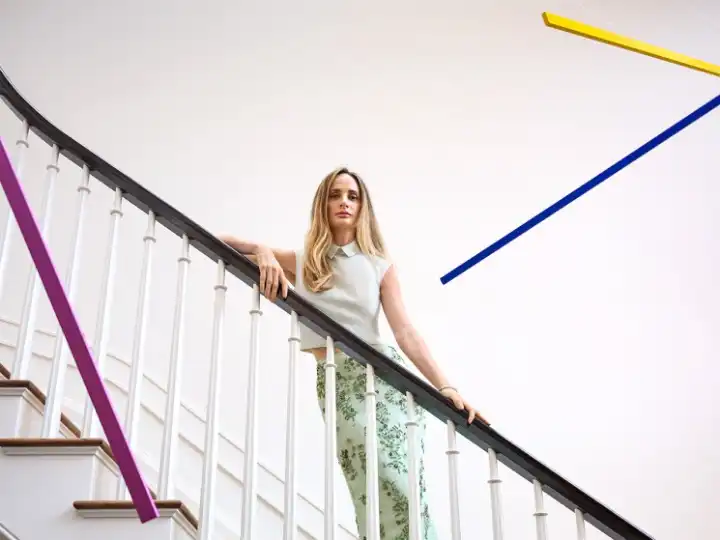
Forum Marbella, the luxury shopping destination redefining the resort region’s lifestyle experience
Fashion 2026-01-09 20:35:51

Forum Marbella, the luxury shopping destination redefining the resort region’s lifestyle experience

Marbella’s Golden Mile, an avenue stretching along the Costa del Sol, is home to some of Spain’s most opulent properties. Here, you’ll find spacious villas dotted among five-star hotels, designer shops and a constellation of Michelin-starred restaurants. But the Brendmoes, the Norwegian family behind the Antima Group, felt something was missing. “Marbella’s lifestyle is largely night-themed: restaurants, clubs and bars,” says Sivert Brendmoe, the youngest of three siblings driving the property developer’s latest project. “It lacked an offering for families and those seeking daytime activities. We wanted to create a place for people of all ages.”Approach to Forum MarbellaWith his brother Sander and sister Synne, Sivert opened Forum Marbella, a three-storey shopping development between Marbella’s Old Town and Puerto Banús. Among its tenants are five restaurants, a Swedish bakery, an eyewear retailer and a Danish skincare brand; a Pilates studio opened this summer. “It’s not the biggest mall so we had to be selective,” says Synne. “We didn’t want it to just offer food and drink – we envisioned it as an all-around destination that would appeal no matter what you’re interested in.”At the heart of the space is an Andalusian-style courtyard with bistro tables set around a stone fountain, where customers can sit for a morning coffee or a quick lunch. One recent afternoon, Spanish, English and Swedish conversations were discernible amid the chatter. “Half of our customers are Scandinavians and many come here for afika– a coffee and something sweet,” says Ella, who works at Swedish bakery Nybakat. Next door, delicatessen Baccara offers European food items that are hard to find in Spain, as well as fresh Spanish produce.Samantha Penfold and Gerda Jorgonin, founders of Planta BistrotBread from Nybakat bakerySteak at Beast restaurantOver the years, the Brendmoes have seen Marbella evolve from a holiday destination into a place where more people are choosing to put down roots. “We have noticed this with the residential properties that we sell,” Sivert says. “Before, people came looking for a second or third holiday home. Now we’re seeing those who want to work remotely and are seeking a primary residence.”Aside from shopping and F&B, Forum Marbella houses the Antima Group’s headquarters and the flagship for Sandon, its interior-design service. The shop showcases everything from cotton armchairs and mohair blankets to hand-painted ceramics from Granada. As Sandon’s creative director, Synne gave Forum Marbella’s interiors a “Spandinavian” touch. “We wanted to respect the Andalusian feel, both in the architecture and the building’s original design features,” she says. Lampshades were found in Paris, the tiles come from Seville and doors were sourced from nearby Ronda.Baccara DelicatessenThe terrace on the Plaza floorAbove all, says Sivert, Forum Marbella is a place where residents can feel at home, whatever their nationality. “We wanted it to feel as if it had always been part of Marbella.”forum.esWhat to savour at Forum MarbellaPlanta BistrotFounded by Samantha Penfold and Gerda Jerjomin, Planta is an all-day spot where wholesome brunches meet vibrant cocktails. Downstairs, a deli sells organic food. It also hosts private dinners and cooking classes.Plaza floorBeastFrom sushi rolls to spicy Thai soups and beef tartare, Beast delivers bold flavours in an elegant setting. The terrace on the fountain floor is the place to go if you’re hankering after an alfresco meal.Fountain floorOrganic Cold-Pressed JuiceryA post-workout crowd lines up here every day for juices, açaí bowls and plant-powered protein shakes. With a Pilates studio just opened at Forum Marbella this summer, this juicery is sure to stay at the heart of the scene.Plaza floorCharly CookFormer El Bulli and Noma chef Charly Cook crafts rolled ice cream using the best seasonal produce. Iced cocktails are also on the menu, as are dog-friendly scoops that have proven surprisingly popular.Fountain floorKofficlubOne of Marbella’s few speciality roasters, Kofficlub was inspired by a passion for coffee shared by a father and his two daughters. Their first permanent outpost (they originally ran the business from a tuktuk) is a corner window next to Nybakat bakery.Fountain floor

Street style from Rome: what to wear in the Eternal City
Fashion 2026-01-05 23:09:55

Street style from Rome: what to wear in the Eternal City

If Italian cities could be personified, Milan would be a bejewelled grand dame and Florence a dandy cycling along the Arno in a linen suit. But Rome? The capital is too vast, ancient and complex to distil into one stereotype. The city has exerted its gravitational pull on the world for millennia. It has been a melting pot since the days of the Roman Empire, when every road was said to lead there.The Eternal City has also been captured on screen by themaestriof Italian cinema, who used its Cinecittà film studio as a base in the mid-20th century. Directors including Michelangelo Antonioni, Bernardo Bertolucci, Federico Fellini, Roberto Rossellini and, more recently, Paolo Sorrentino have captured Rome on film in a seductive light, with leading men prowling the streets at night in tailored suits and tilted hats while their love interests dance at rooftop bars or splash around the Trevi Fountain (please don’t try this). Today, Romans navigating cobblestone streets in formal footwear or zooming past on Vespas stand out from the backpack-toting tourists. There’s a sharpness to Romans’ presentation and also in how they move through their city.Some of the city’s residents showcasing personal takes on Roman elegance on Tiber Island“Roman style is more sober compared to somewhere more eccentric such as Naples,” says master tailor Gaetano Aloisio when Monocle meets him at his atelier behind the Spanish Steps. Aloisio has dressed heads of state and royalty from around the world, receiving a knighthood from the president of the Italian republic in 2011 for his contributions to the country’s fashion industry. “I seek sophistication in every detail,” he says. “My aim is to craft suits that inspire strength and command respect.” One sartorial detail that Aloisio abhors is the shoulder pad. He prefers the fluid lines of Italian tailoring over the more military style associated with London’s Savile Row. And this soft shoulder has soft-power credentials – many city tailors and shoemakers rely on a moneyed global clientele from the US, the Middle East and France but rarely Italy. We hear similar stories at tailoring atelier Sartoria Ripense and shoemaker Bocache&Salvucci, where orders are more often placed from outside the Bel Paese.Professor Alessandro Leto, executive director of the Water Academy SRD Foundation“Roman style is effortless but also takes a lot of effort,” says Dylan Tripp, a florist on Via di MonserratoFrancesco Ragain is celebrating his newly minted degree in business engineering when we meet him at Bar San Calisto in TrastevereAlda Fendi at Rhinoceros, her hotel and art foundationBut a younger generation is poised to take up the mantle ofla bella figura. Throughout the day we spot students dressed for their graduation ceremonies, donning traditional Roman crowns of laurels instead of tasselled caps. In the afternoon we stop by Piazza de’ Ricci to meet the team behind Le Tre Sarte, a fashion brand spinning a modern take on formal womenswear and menswear. In its atelier, vests, dresses and jackets are crafted using end-of-roll materials – wool, linen, silk and velvet – from Italian factories. Customers can choose to dial up or down the saturation from a palette ranging from forest green and deep burgundy to light pinks, blues and a zesty yellow.“In Rome, we’re surrounded by beauty,” says Camilla Voci, who co-founded Le Tre Sarte with Niccolo di Leonardis in 2021. “If you’re always surrounded by materials that are high quality – bricks, marble – it translates into how you dress and your taste in design.” Di Leonardis agrees. “There’s a heritage of bespoke,” he says, “and tailors are passed down through families.” Exceptionally well-turned-out Romans who wouldn’t go near flip-flops with a barge pole assure us that the city’s style can be described as somewhere between “relaxed and elegant”.“This is my ode to Roman style,” says London-based writer Sennait Ghebreab, who was in Rome for a conferenceMaster tailor Gaetano Aloisio at his atelier in Via di Porta Pinciana. “I like suits that are elegant but still have personality,” he saysCamilla Vocci (on left) and Sophie Hasibeder of Le Tre Sarte, a brand breathing new life into Roman tailoringNiccolò di Leonardis (on left) and Lorenzo Tito of Le Tre Sarte, wearing the brand’s bespoke creationsBut perhaps Roman style isn’t something that can be bought or replicated so easily. It’s an attitude, the way that a jacket might be nonchalantly slung over one shoulder while strolling down the street, its owner holding a loud conversation on their phone. It’s the proud upward tilt of a chin, paired best with an aquiline nose. A fearless commitment to navigating cobblestones in heels rather than trainers. It’s thinking that a tailored suit paired with calf-leather brogues and a carmine red silk tie is a “sober, simple look”.As the sun sets, we make our way to the Rhinoceros hotel and art space foundation for our final appointment. We meet Alda Fendi and her sizeable entourage in the gallery. The last Fendi shareholder of the namesake luxury fashion house (now majority owned by LVMH) is wearing head-to-toe yellow and spiky sunglasses that echo her energetically coiffed blonde hair. As she reclines in a La Mamma armchair by Gaetano Pesce, we ask the doyenne of the city’s fashion scene how she would describe Roman style. “How people dress here reflects the city when it scintillates at night,” says Fendi with a smile. “It’s romantic and mysterious. It’s poetry.”

How 74Escape grew from a digital community to a cult-status hotel boutique
Fashion 2025-12-30 23:19:45

How 74Escape grew from a digital community to a cult-status hotel boutique

74Escape founder Demet Müftüoğlu-Eşeli inherited a “fervour for discovering new places” from her mother and spent decades travelling between New York and her home of Istanbul, building a vibrant, creative network through her work in the fashion industry.When she settled back home, she launched the digital community 74Escape to pay tribute to her mother and recount tales from her travels with her style-conscious peers. “I wanted an informal platform where we could share stories, tips and hidden gems,” says Müftüoğlu-Eşeli.But what started as an online platform quickly grew legs, and developed into a physical resort boutique. Housed in Bodrum’s Macakizi hotel every summer, the shop features many of the artisanal treasures that the founder and her friends pick up during their excursions. Here, she shares a little backstory alongside some of her summer 2025 highlights.How did 74Escape evolve from an online platform into a physical presence?I wanted to do something to support the fashion community by putting together a space filled with joy and energy that could be used to tell independent brands’ stories. It was all about elevating Turkish brands and bringing them into a wider conversation with international ones. We never set out on this journey with the intention of opening a shop, so it’s important that we set ourselves apart through community. [We want to] find an audience that appreciates culture, creativity, curiosity and craft. What are some of the highlights in this summer’s edit? I highly recommend our selection of crisp white linen dresses by Piece of White – they transition so well from day to night. Another favourite of mine is a line of upcycled pieces by Aslı Filinta, all meticulously hand-embroidered, reflecting generations of Anatolian craftsmanship and cultural heritage. In the menswear department you’ll find swimwear with playful prints and patterns, as well as resort wear, including linen shirts that reflect the classic ease of the season. It’s very much about the feeling of summer, so it’s always intended that the curation captures the carefree, joyful energy of being in the south.What makes Bodrum so special as a summer destination right now? Bodrum has always attracted interesting creatives from around the world, but in recent years it’s become a hotspot. It’s the first window into Turkey for many people, exposing them to all of the creative ventures, entrepreneurship and innovation coming out of the country. It’s an important opportunity [for us] to seize.  

Interview: Kristina Blahnik on making retail spaces speak for themselves
Fashion 2025-12-23 15:36:45

Interview: Kristina Blahnik on making retail spaces speak for themselves

Kristina Blahnik has been CEO of footwear brand Manolo Blahnik, first founded by her uncle, for more than a decade. Having spent much of her childhood in its London flagship, dropping by every afternoon after school, it was only natural for her to take over the family business. But not before she qualified as an architect. Even in her current role, Blahnik has continued to put her education to use, designing a number of the brand’s shops, including its new Shanghai outpost, typically combining a monochromatic palette with dynamic shelving to emphasise shoes on display. Here, Blahnik tells us more about her design ethos and her passion for spaces that reflectthe brand’s values.Tell us about the transition from working as an architect to becoming a CEO.I grew up in the shoe world: my mother was the managing director of the business. My home was the shop in London’s Old Church Street. So, in many ways, becoming the CEO was coming home. As I’ve matured into the role, I’ve carried over the architect’s ability to visualise the means of reaching the end result. At Manolo Blahnik I have to imagine what the business will look like in 20 years, or what it should be known for in 500 years. That helps to keep us on the right track. We’re not losing our direction, because we have the blueprint. How have you been approaching retail design?When I was still at the architecture practice, I wrote an article about retail in the late 2000s. One shop to the next was exactly the same. It was very efficient and you could argue that it helped with brand recognition. But my point was that we would actually end up in a retail coma. You had no idea where you were because shops lacked local identity. For me, our shoes are almost living things. To just be seen as objects in a shop, I think, does a disservice to them. You’ve been designing concepts unique to each location. We’re in an experience economy now. It’s not just about consumption; we need spaces where people can connect and bring our story to life. Where should we expect future openings? We’re pushing into Asia. Some of the region is struggling but it’s good to enter the market when it’s quieter. Then we’re opening in Milan. I’m looking forward to when our artisans have a celebratory drink in the shop. manoloblahnik.com

Portugal is laudably promoting media literacy – but there’s more to be done
Culture 2026-01-13 08:42:48

Portugal is laudably promoting media literacy – but there’s more to be done

When Lisbon experienced a 10-hour electricity blackout just over two weeks ago, rumours and conspiracy theories quickly filled the vacuum of official information. Wild speculation about the origin of the disruption spread through the streets. It was a timely reminder of how much we need reliable journalism. It also revealed a generational divide. Older people were the ones listening to their radios to hear updates from trusted voices. Getting more young people to engage with reliable news sources is a challenge that many countries are grappling with and Portugal might have an idea worth replicating. A new government programme offers teenagers aged between 15 and 18 a free two-year digital subscription to a range of vetted media outlets. Through a government portal, they can access respected newspapers and magazines, such as national daily Público, weekly Expresso and digital newcomers such as Observador, as well as financial and business titles. The goal is to combat disinformation with media and digital literacy, and while it is a considerable public investment – an estimated €5.9m – it’s a bargain when stacked against the social and democratic costs of fake news.Read all about it: Media literacy parses the noiseThe media industry puts vast amounts of effort and money into attracting younger audiences. Across the globe, we’re seeing fresh formats, with more audio, video and newsletter content to keep up with the changing times. All of that is welcome. But while it’s crucial that media organisations evolve to meet the moment, it’s also imperative that we can convey how journalism differs from social-media opinion. When I was growing up, we always had newspapers in the house and I had people around me who pointed me towards not only credible sources but to writers who made me think more deeply. That’s not the case for many young people in Portugal today, so any effort to encourage this is to be welcomed.Governments can and should play a role in fighting misinformation and initiatives that lift financial barriers to trustworthy sources are a good start. But perhaps more of us need to embrace the influencer within: we should show young adults the benefits of critical thinking and how longer, well-researched and deeply reported reads can be more rewarding. In Finland, information literacy is taught in kindergartens. Here in Portugal, Público recently launched an online resource for students and teachers with news written in more accessible language for classroom discussion. But good journalism cannot become homework. Suggest a subscription. Share an article. Recommend a columnist. Crucially, take the time to discuss ideas. A strong media landscape is essential to countering misinformation but it’s nothing without critical thinking.Gaia Lutz is Monocle’s Lisbon correspondent. For more opinion, analysis and insight, subscribe to Monocle today.This story originally appeared in The Monocle Minute…Monocle’s free-to-read daily newsletter. Sign up to get insight from Monocle in your inbox every day.Your EmailSubscribe


How singer-turned-architect Yarinda Bunnag turned a passion project into a thriving studio
Design 2026-01-12 05:02:44

How singer-turned-architect Yarinda Bunnag turned a passion project into a thriving studio

Yarinda Bunnag, a Thai architect, actor and singer, swapped the big smoke of Bangkok for the quiet beach town of Hua Hin, a three-hour drive south, during the pandemic. The change of location has been a success but, when it comes to her career, the 44-year-old polymath has by no means settled down. “I enjoy the creative process of making things within a wide range of disciplines, from music to acting and architecture,” Bunnag tells Monocle, while sitting on a plastic patio chair looking out to sea.In her latest Netflix show,Terror Tuesday, an eight-part horror series released in August 2024, Bunnag plays a haunted single mother. “I’m old enough now to accept the mum roles,” she says with a smile. It was the birth of her first child a decade ago that eventually ended her career as a recording artist: parenthood was incompatible with the songwriting process. Then, in 2018, Bunnag co-founded her own architecture studio, Imaginary Objects.Bunnag’s varied career can be traced back to a teenage deal she cut with her parents. While doing internships in West End London theatres and submitting a demo tape to Thai record labels, she would also apply to university. If she was accepted by a prestigious name, she would enrol.“At the time, I had no idea about architecture,” she says. Bunnag credits her father, a retired property developer, for suggesting architecture as a union of her many talents. Signed at 18 by a major label and accepted by an Ivy League university, she completed her first year of studies in upstate New York before taking a year out to go home and record, promote and tour her debut album,Yarinda. After returning to complete her undergraduate studies, she worked at several architecture practices in Bangkok while also releasing albums, lecturing at Thailand’s top university and completing a master’s degree at Harvard.Six years after co-founding Imaginary Objects with Roberto Requejo Belette – who had just left architectural firm OMA for a teaching job in Hong Kong – the pair can afford to be picky and prefer to take on fun projects over large paychecks. Last year also saw a move into products. A commission from a social enterprise to design a moveable playground for several children’s festivals led to Kitblox, a series of interlocking foam blocks that can be assembled into a variety of structures. The “Made in Thailand” kits have been bought by schools, libraries and daycare centres across Bangkok. Another career to add to the CV? “I’m not a good salesman and we’ve never sold products before, so we are horrible at marketing,” she says. It seems that simply doing what makes her happy is paying off.imaginaryobjects.coWant more stories like these in your inbox?Sign up to Monocle’s email newsletters to stay on top of news and opinion, plus the latest from the magazine, radio, film and shop.Your EmailSubscribe

Do concert films still matter in the age of scrolling? ‘Cornucopia’ makes a dazzling case for them
Culture 2025-12-21 06:59:14

Do concert films still matter in the age of scrolling? ‘Cornucopia’ makes a dazzling case for them

Directed by Ísold Uggadóttir and filmed live at Lisbon’s Altice Arena,Cornucopiais not simply a tour document – it’s a defiant act of orchestral storytelling. The film captures Björk’s performance from start to finish without behind-the-scenes interviews, which would have been fascinating but would have likely disturbed the flow. This is not a look backstage but rather an immersion into Björk’s theatrical subconscious. The visuals, which were designed by long-time collaborators Tobias Gremmler, come directly from the projections that were shown during the live performance, lending the film a hallucinatory coherence. Think of this less as documentation and more as a dreamscape: a multisensory, modernlanterna magicawith a set list spanning from “Isobel” to “Fossora”.In Björk’s cosmic universe, fashion functions as a narrative layer. For much of the show she floats in a tulle dress by Noir Kei Ninomiya that resembles an Arctic crustacean layered over a lace bodysuit by Sarah Regensburger. The musical ensemble wore Balmain couture with detours into pieces by Richard Malone and Kiko Kostadinov. The otherworldly masks are by James Merry. “All looks are always chosen by Björk,” says her long-time stylist, Edda Gudmundsdottir. “They have to resonate with her as they present the visual parts of her music.”(Photo: Santiago Felipe)But beyond the visuals lies something more urgent. Instead of endless costume changes,Cornucopiais punctuated by a stark spoken-word interlude on climate change, – underscoring Björk’s deep-rooted social consciousness and environmental urgency. This isn’t spectacle for spectacle’s sake but rather a poetic plea.The weight of it all was not lost on Uggadóttir. “Translating such a large work of art into film was daunting and, at times, quite humbling,” says the filmmaker. “But I was constantly moved and surprised by how exhilarating it was to make something so alive and singular.”Sonically,Cornucopiais a platform for Björk’s high-concept musicality and avant-garde vision. On stage, she orchestrates a rare convergence of classical rigour and experimental flair – pairing Viibra, a septet of ethereal flautists with the 50-strong Hamrahlíð Choir, an Icelandic institution she once belonged to. Add to that Grammy-nominated percussionist Manu Delago, who conjures rhythm from bowls and a tank of water during “Blissing Me”, and the result is as ambitious as it is transportive. “She wanted the audience to feel held,” says musical director Bergur Þórisson. “The sound had to be spacious, emotional and womb-like.” Translated from a 360-degree format into Dolby Atmos, the result is enveloping; each aluphone chime and flute phrase hangs in the air like fog.Visually, her collaborators deliver maximalist theatre. “It was about recapturing complexity without flattening it and keeping moments of intimacy too,” says James Merry, who serves as the artist’s co-creative director. “I was thinking about the fans who didn’t see the show in person and my hope was to give them as close an experience to the live audience as possible. To feel surrounded by the visuals and occasionally overwhelmed by them too,” he says. “Hopefully we did it justice.” The film quietly centres Björk’s lyrical brilliance. Often eclipsed by her aesthetic largesse, the singer’s songwriting finally takes the spotlight. Lines bloom across the screen in her own handwritten font. Standout missives include: “deadly demonic divorces demolished the idea”, “without love I feel the abyss”, and “hope is a muscle that allows us to connect”. To put it bluntly: Björk’s got bars.Despite our era’s fragmented attention spans,Cornucopiarequires full immersion. It asks the audience to look closer and listen with their whole self. And, in doing so, the film serves as a reminder that some art is too expansive to be trimmed into clips – it demands to be experienced in its entirety. DoesCornucopiabelong in a feed? No. But it just might reset your sense of what belongs on a screen.

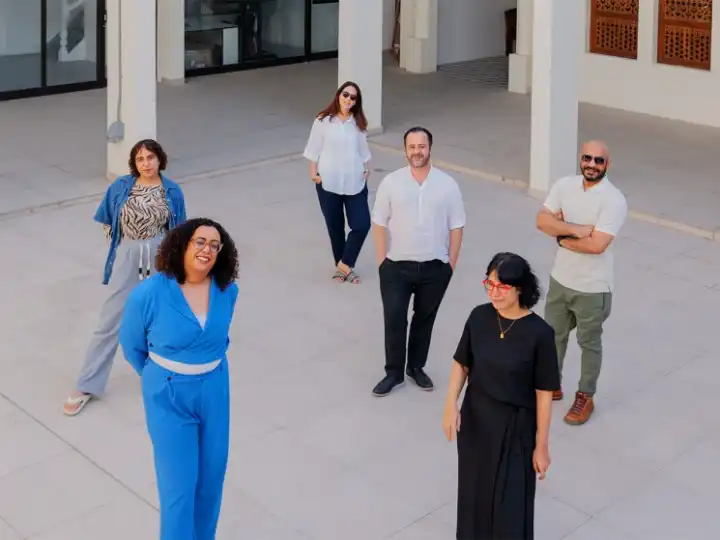

Craft as well as capital: Inside the gilded ambitions of India’s luxury boom
Fashion 2025-12-17 10:40:12

Craft as well as capital: Inside the gilded ambitions of India’s luxury boom

India is a curious holdout when it comes to traditional dress: take any street in Mumbai or any train in New Delhi and you’ll see draped saris, three-piecesalwarsets and Madras-checkeddhotisfluttering in the breeze, far outnumbering jeans and t-shirts. Homegrown luxury brands have long traded on this pride, with the likes of Sabyasachi and Tarun Tahiliani’s ornatelehengasand gilded occasion accessories, but tastes are evolving: the style set is now mixing Anite Dongre and Dior and tying Hermès silk scarves over Raw Mango shifts. India’s cachet is on the rise – and the luxury market is watching closely. Christian Dior’s Fall 2023 collection during a fashion show in Mumbai (Image: Indranil Mukherjee/AFP)Western brands have been eyeing the subcontinent for some time but many have seemed unsure on how exactly to go all in. Regulation is one reason: tight restrictions on foreign ownership means that luxury houses must team up with local partners to enter the market. Reliance Retail, headed up by Mukesh Ambani, has come out on top: its Mumbai mall, Jio World Plaza, opened in 2023 and introduced Balenciaga and Dior Mens to the country while expanding the footprint of houses such as Valentino, Versace and Louis Vuitton. Meanwhile, French multi-brand retailer Galeries Lafayette will launch in India in 2025 via a partnership with Aditya Birla Group. Some brands have already made inroads. For years, Jimmy Choo has crafted Diwali-specific capsule collections. “India has a deep-rooted appreciation for luxury, craftsmanship and glamour,” says the shoe label’s creative director, Sandra Choi. Namrat Klair, the marketing consultant behind LVMH’s presence in the country, has had a front-row seat to India’s growing appetite for luxury. “Over the past decade and particularly following the coronavirus pandemic, we’ve seen a major shift,” she tells Monocle. When travel was restricted, consumers began shopping domestically – and brands rose to the occasion by upping their in-person presence. They finessed their in-store offerings and pushed for access to collections in step with the global market. Chanel’s managing director of India, Amit Goyal, agrees: Chanel customers are now seeking “exceptional client experiences” at home as well as abroad. Since Chanel’s entry into the Indian market in 2005, the luxury landscape has shifted significantly. Goyal is optimistic and says he has observed “promising trends” and “consistent growth” for the French maison over the past five years. E-commerce is also promising: the launch of Chanel’s online beauty offering in 2024 was “met with enthusiasm, notably from tier-two and tier-three cities,” he adds. Goyal also teases the arrival of a new Mumbai outpost, which would mark the house’s 10th retail point in the country. In the wake of China’s slowdown and India’s rising purchasing power – the percentage of ultra high-networth individuals in the country is set to balloon by 50 per cent by 2028 – this is a market worth keeping an eye on. Want more stories like these in your inbox?Sign up to Monocle’s email newsletters to stay on top of news and opinion, plus the latest from the magazine, radio, film and shop.Your EmailSubscribe

Anticàmera, the scouting service that knows Milan’s most secret spots
Design 2026-01-10 12:37:24

Anticàmera, the scouting service that knows Milan’s most secret spots

Milan has a reputation for being a private city, with many of its most spectacular spaces hidden behind closed doors or inside internal courtyards. How much you get to see depends on your level of access. The idea of getting into restricted spaces appealed to Eléna Olavarria Dallo when she was growing up here. “I have always loved going into places that were closed,” she says. “I used to go with my mother to see houses for sale that were far beyond our reach to do just that.”Olavarria Dallo has turned her childhood fascination with unlocking the city into a job, co-founding location-scouting company Anticàmera in 2015. Every April during Milan Design Week, the city throws caution to the wind and opens its closely guarded spaces to the public, whether it’s the striking local government building Palazzo Isimbardi, used by Czech glass company Lasvit last year, or Brera’s San Simpliciano cloisters, which have been rented by Poliform and Saint Laurent in the past. Corps of location-scouting companies operate behind the scenes to secure the most unusual, stunning or best-positioned buildings for brands to use. Anticàmera, which currently has about 500 locations in Milan on its books, is leading the pack.Ceramics at the conventOlavarria Dallo“I was helping my future business partner, Rossana Passalacqua, to find a location for a fashion shoot in Paris,” says Olavarria Dallo, a former project manager at Milan’s Studio magazine. “We had such fun. So we said – with a third partner, Francesca Donnarumma – ‘Why don’t we do this for a living?’” Today the company’s work largely involves finding locations throughout Italy for fashion and design campaigns – but the intensity ramps up when it’s time for Milan’s springtime furniture shindig, with brands from across the design, fashion and lifestyle sectors seeking to outdo each other in the high-stakes game of finding the best Fuorisalone spot.Inside the Frati minori osservanti di San Francesco conventMonocle meets Olavarria Dallo just off Milan’s Via Monte Napoleone for a tour of the city to see some of the company’s mix of locations for rent in 2025. Down a side street, a custodian opens a grand iron gate and we enter a cloistered passageway with an inner courtyard featuring murals depicting regional landmarks, including the Certosa di Pavia monastery complex and Milan’s Castello Sforzesco. We’re opposite the city’s Bagatti Valsecchi Museum (which has been used by Prada in the past) in private residences that still belong to the Bagatti Valsecchi family. The courtyard that we’re standing in, alongside two at both ends of the passageway, can be rented for Design Week.Religious sites, some deconsecrated, are part of Milan Design WeekColin King and Robert Wright from Beni rugsThe private apartment block from the 1890s was built to resemble 16th-century noble residences and we glimpse what the apartments upstairs – which are still off-limits – must be like: discreet oases of peace in the heart of Milan’s Quadrilatero della Moda, complete with ample terraces. Olavarria Dallo established a relationship with the family through her extensive contacts. It’s all part of the game of gaining access, which requires equal doses of perseverance and diplomacy. “It’s about the network that you have,” she says. “Building trust is essential.” Olavarria Dallo says that she is constantly building Anticàmera’s portfolio by keeping her “eyes and ears open” all year.We spend the rest of the day visiting different sites around town – none of which is like any of the others. Take Piscina Romano, an outdoor swimming pool with vast, light-filled changing rooms (now out of use), or the Frati minori osservanti di San Francesco convent, a red-brick architectural gem built in the 1940s by one of Olavarria Dallo’s favourite architects, Giovanni Muzio. Its arched outdoor space can be rented. Olavarria Dallo started working with the convent after a call from a location manager with ties to the religious community.Changing room at Piscina RomanoCurved arches of Giovanni MuzzioOur final destination, in the Cinque Vie neighbourhood, is inside another internal courtyard. We have tagged along to a client meeting with Robert Wright, the US co-founder of Morocco-based rug-maker Beni, and the brand’s creative director, Colin King. Beni is returning to Milan Design Week for the first time since 2021, presenting a 10-rug collaboration with the Paris-based Studio KO called “Intersection”. The space that the brand has rented through Anticàmera is a ground-floor shopfront consisting of three connected rooms full of wooden shelving, which at various times functioned as a bank (there is still a safe in the wall), a button shop and a suit trimmings outlet. On the day that we visit, there’s an electricity connection to think about and unstuck floorboards to secure but it’s clear that the place exudes character.The open-air Piscina Romano“This collection is so strong and has such a point of view,” says Wright. “We were searching for a space with patina, marked by the passage of time. It’s about how we tell our stories. Stepping inside, you’re transported back.”Beni will transform the former shop into an experiential world of not just rugs but also lighting and sound, even featuring a bespoke fragrance made by London-based perfumer Azzi Glasser. It’s a hidden nugget of Milan that Beni would never have uncovered if it weren’t for the intrepid work of Anticàmera. “It feels as though so much of the city is hidden,” says Wright. “With Eléna, we get to peek behind the scenes.”

advertisement
H5PROJECT
  • Privacy Policy
  • Terms
Copyright © 2025-2026 All rights reserved | surf.h5project.top
  • About Us
  • Contact Us

Join our Newsletter

  • facebook
  • twitter
  • instagram
  • youtube